Mesa: One-Click Marketing Strategy Engine
The Problem
Every founder and growth team faces the same painful bottleneck: turning a blank page into a real marketing strategy takes weeks of research, agency briefs, and endless back-and-forth. Mesa was born from a simple frustration — why can't a tool just start from a URL and produce something actionable?
What It Does
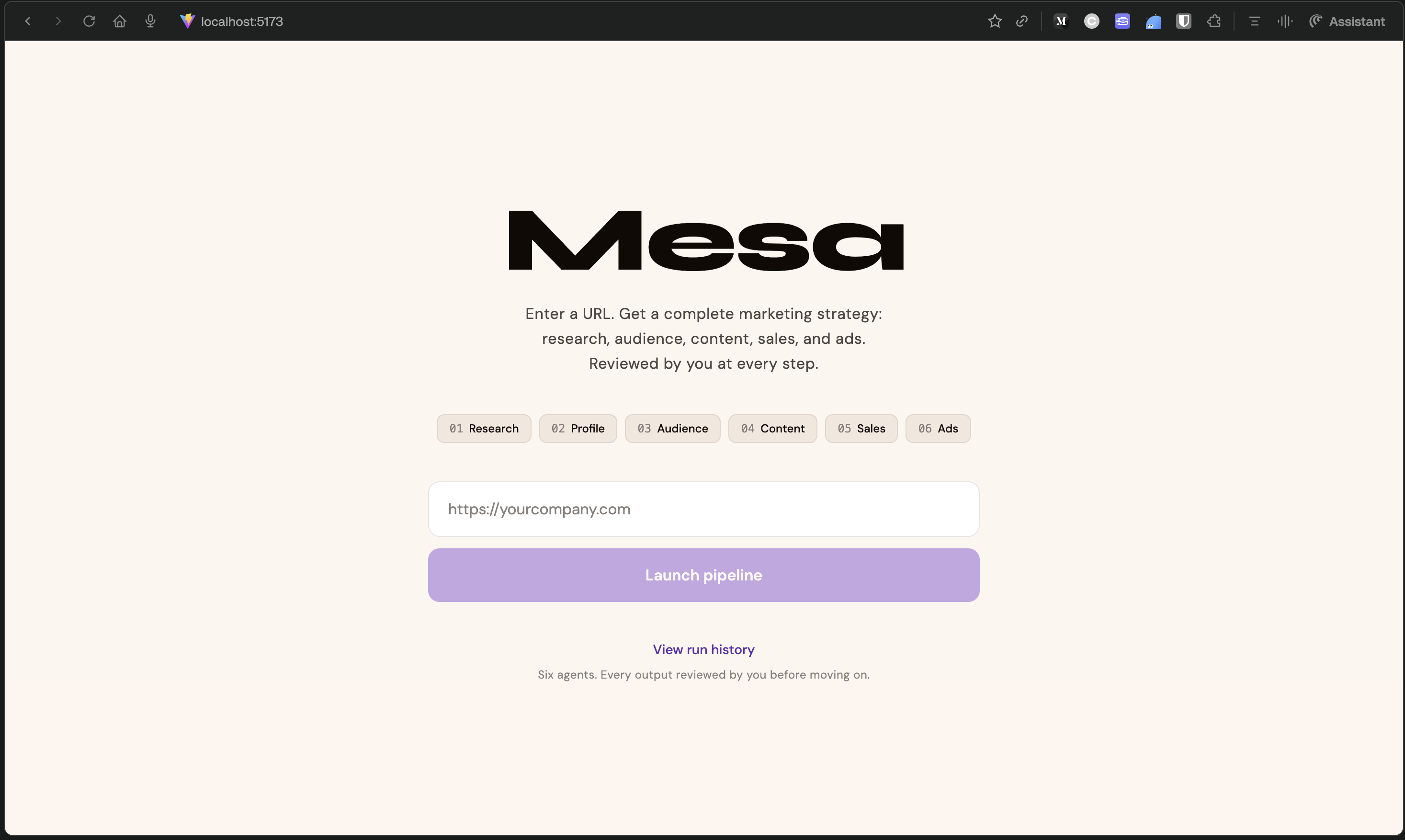
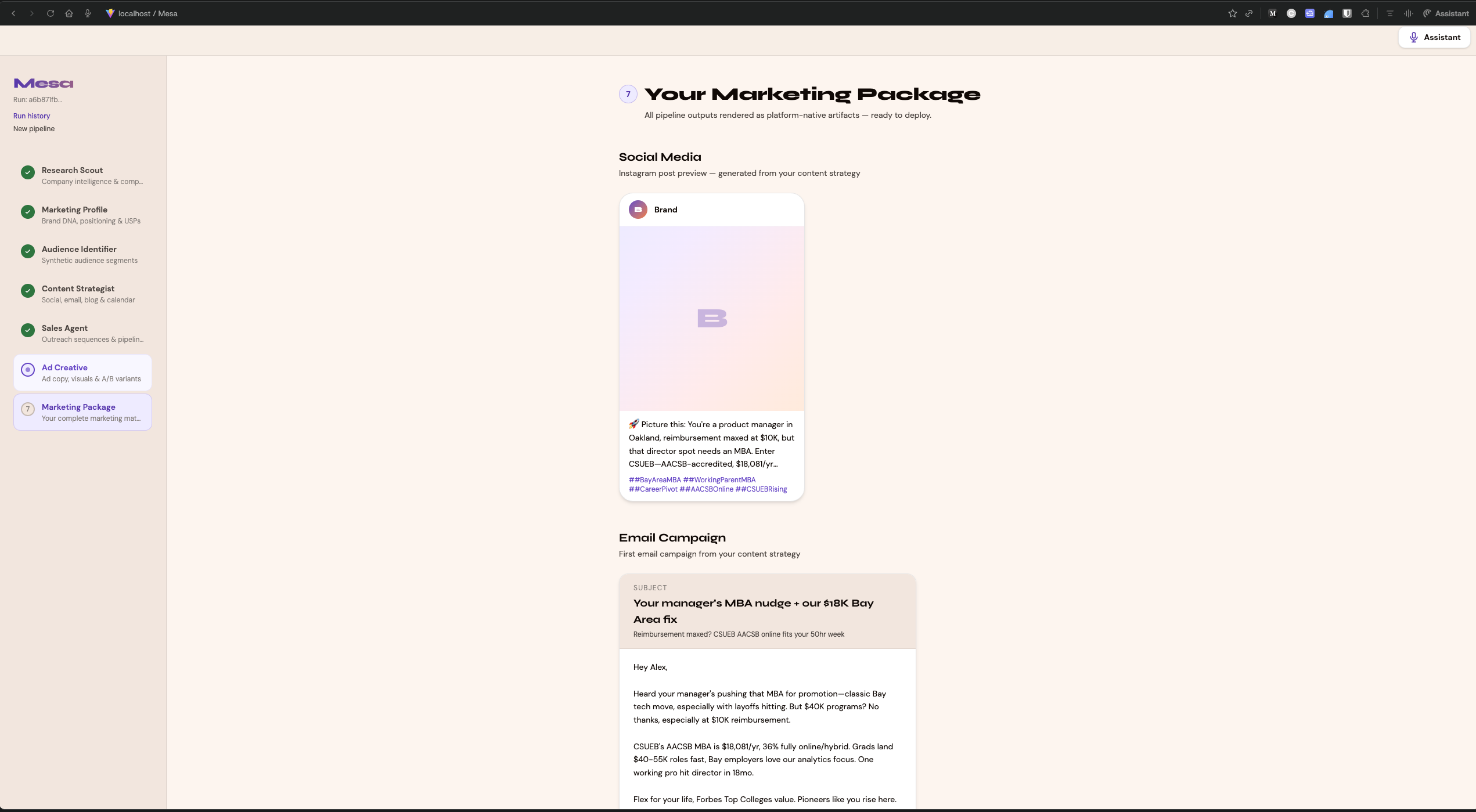
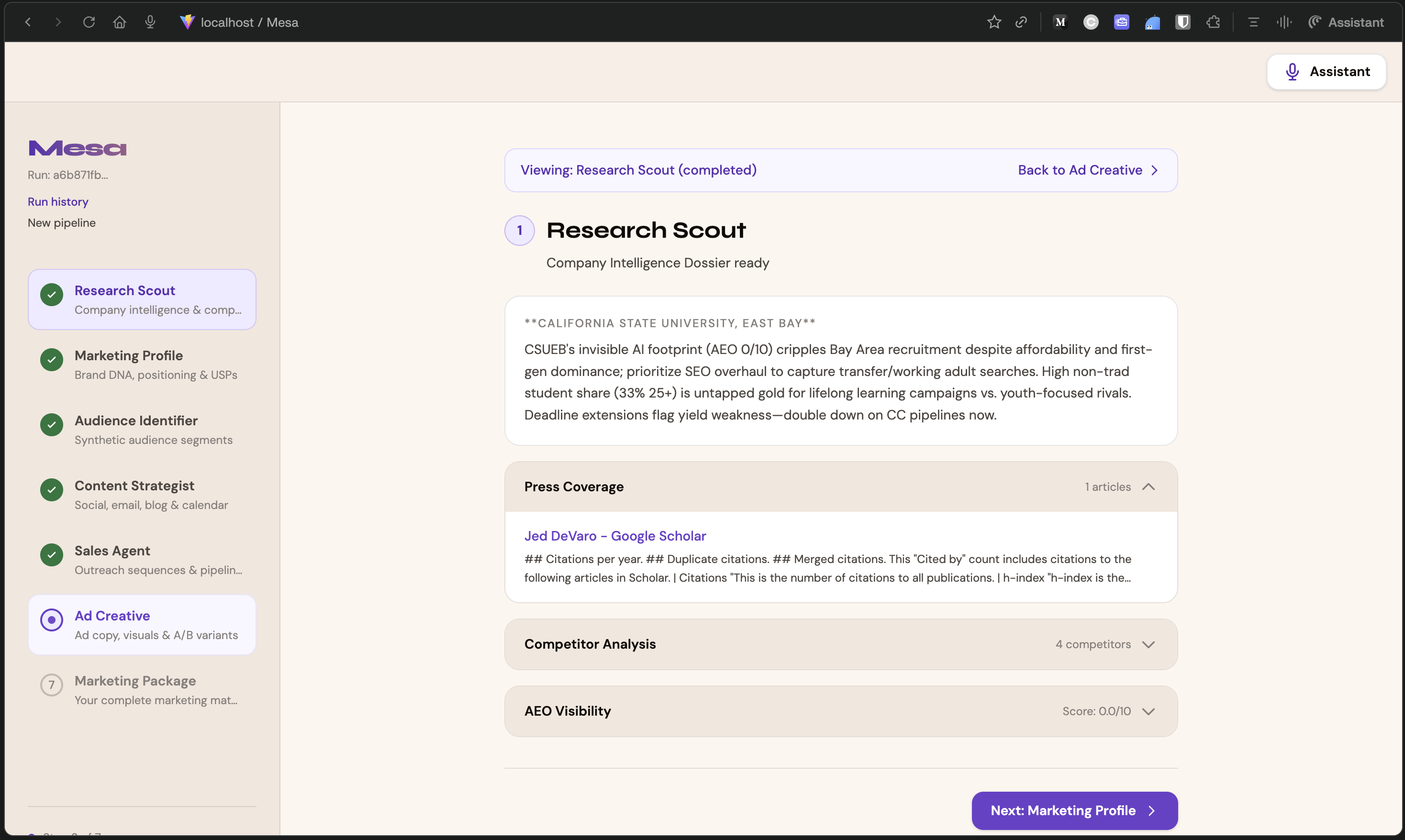
Mesa takes a single company URL and runs it through a six-agent AI pipeline, producing a complete marketing foundation in one run.
- Research Scout maps the market, identifies competitors, and performs AEO analysis
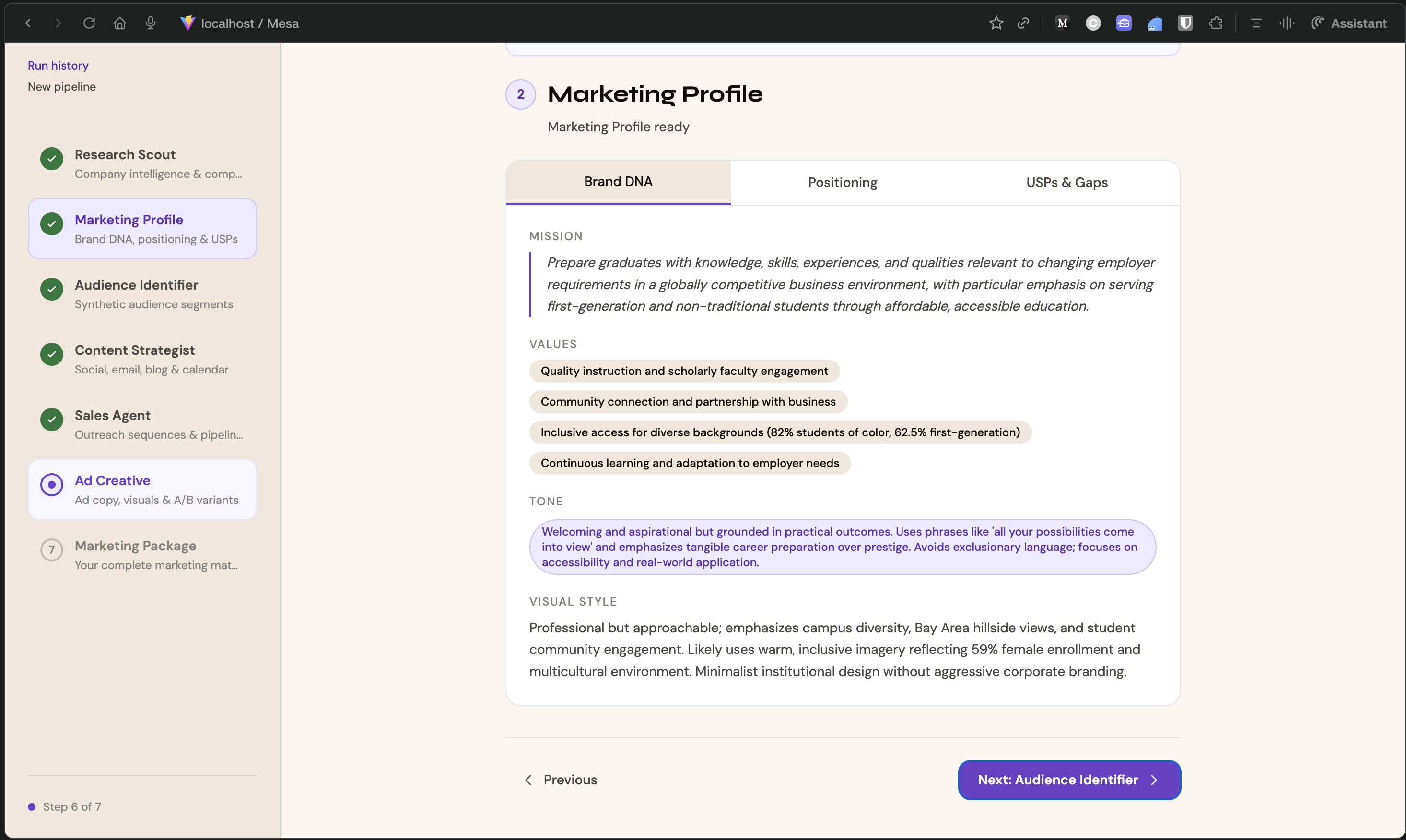
- Profile Creator extracts brand DNA, positioning, and core messaging
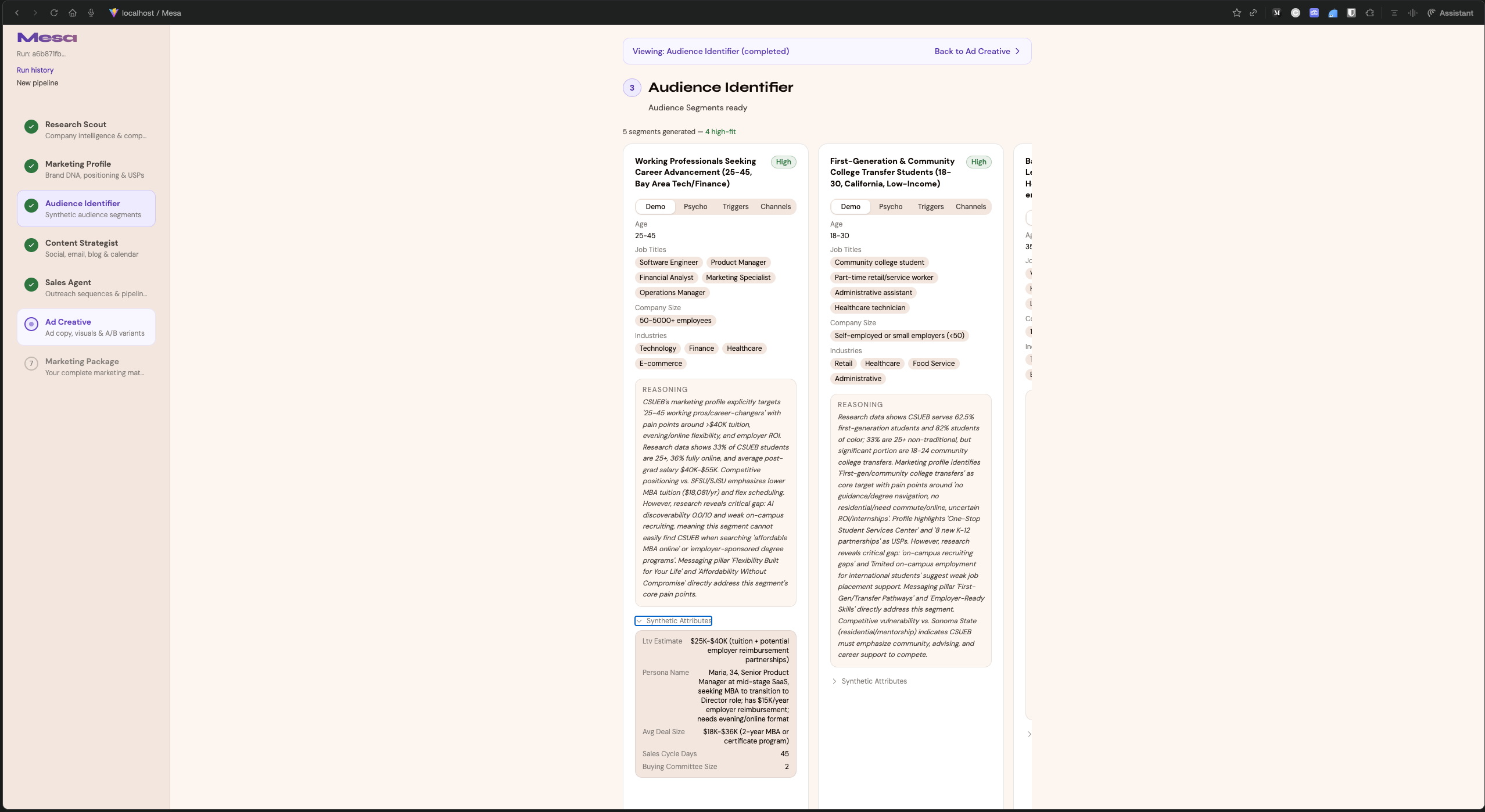
- Audience Identifier generates synthetic ICP segments with buying signals
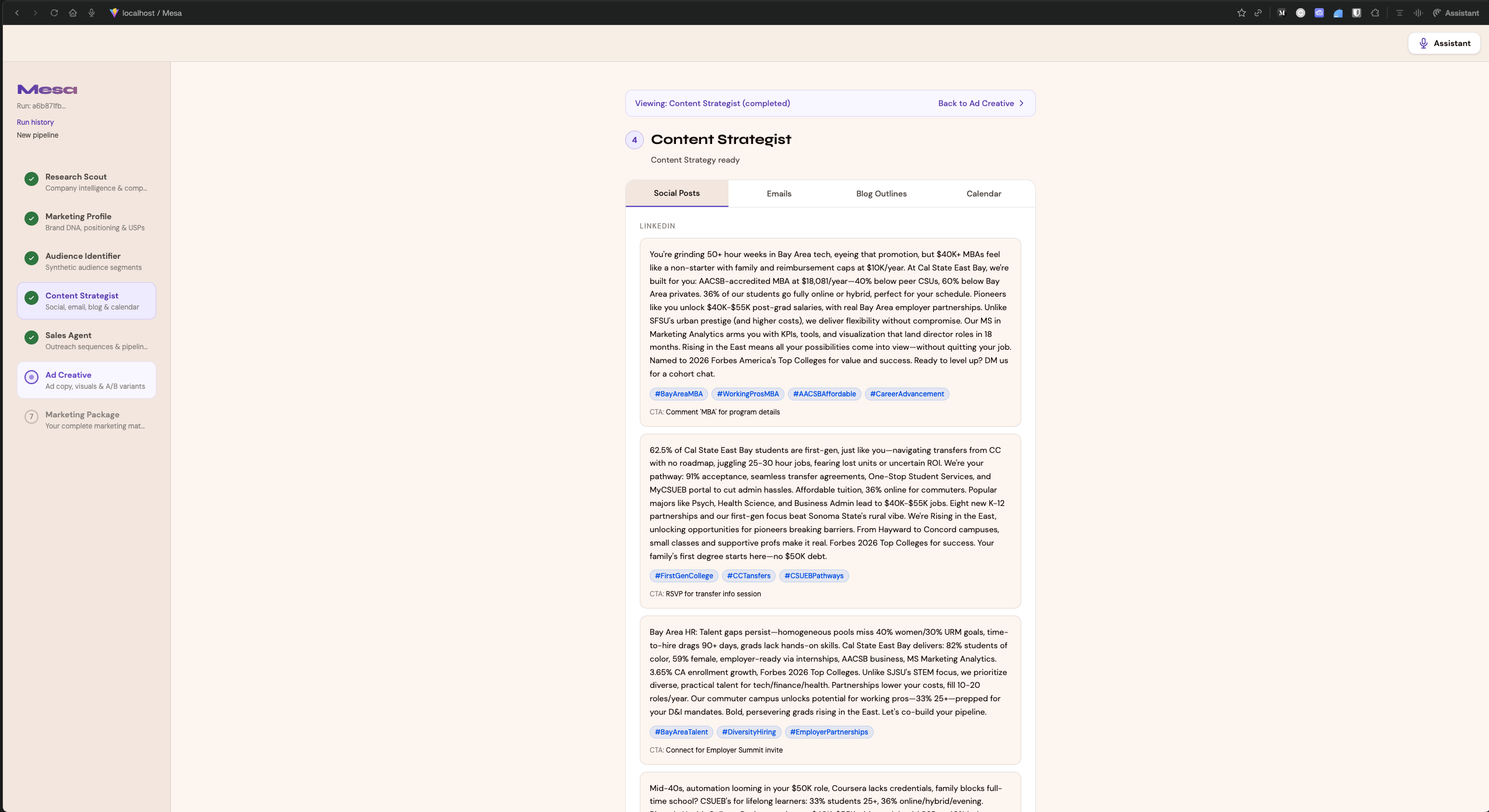
- Content Strategist builds a multi-channel content plan and 30-day calendar
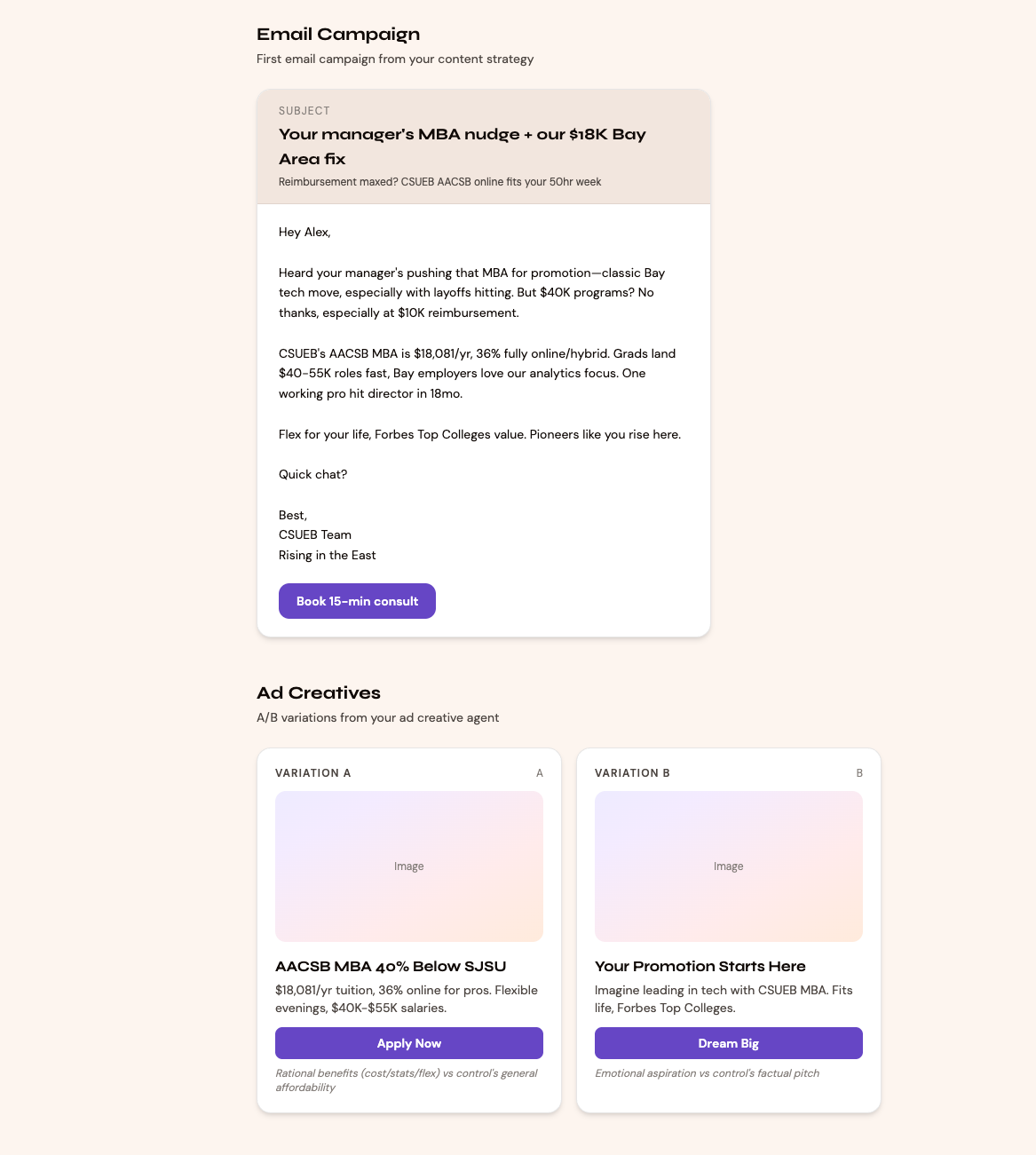
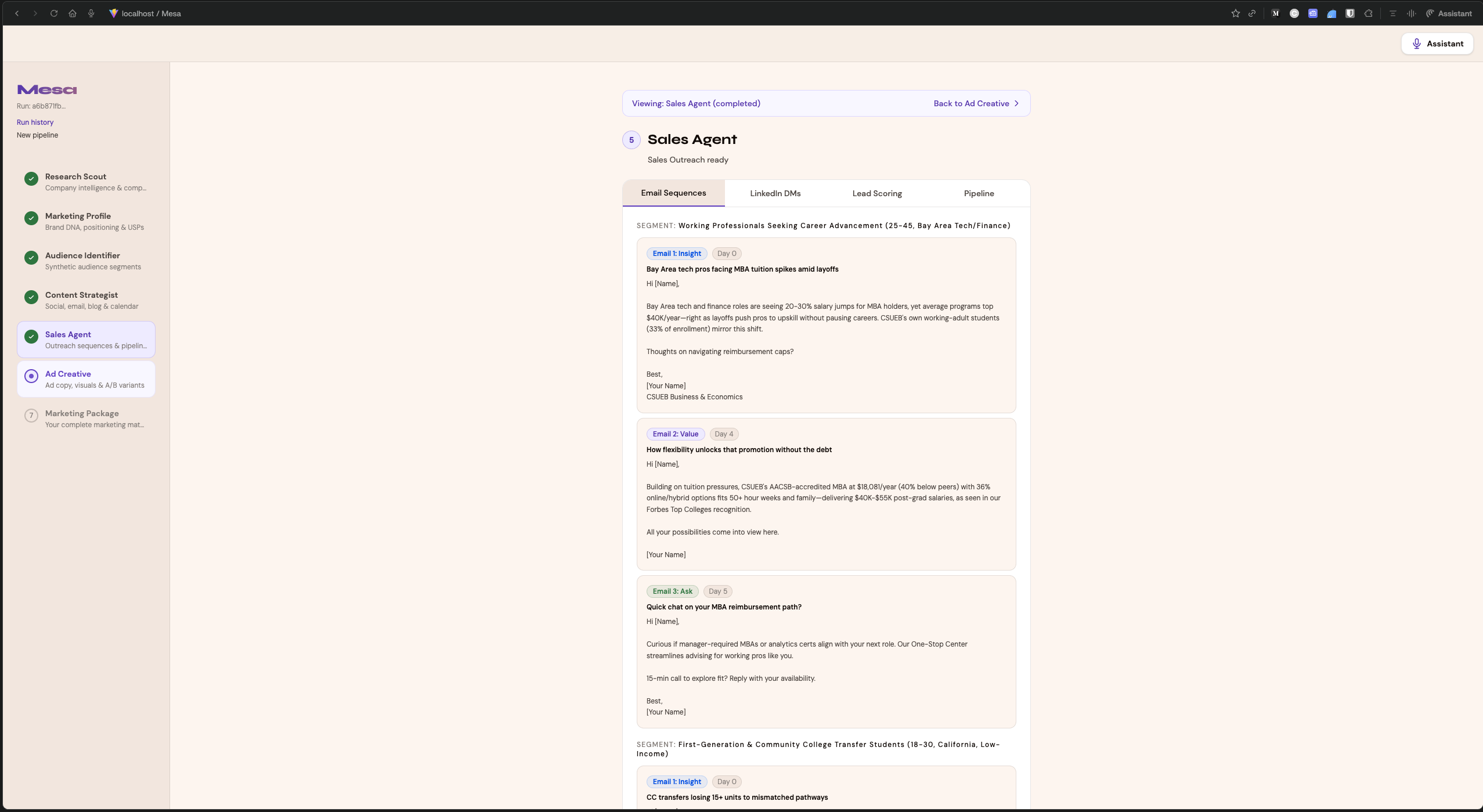
- Sales Agent writes email and LinkedIn sequences with a lead scoring framework
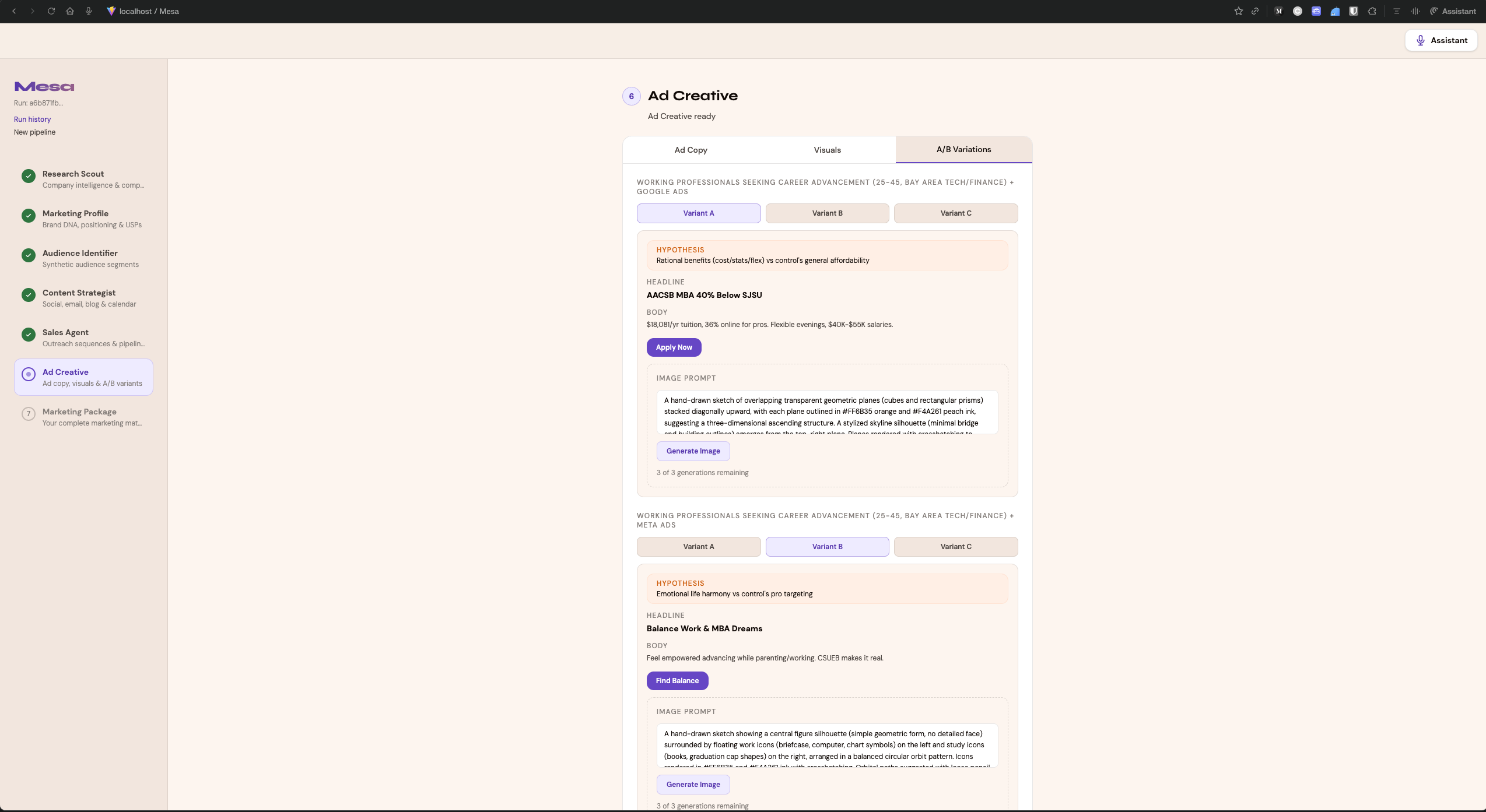
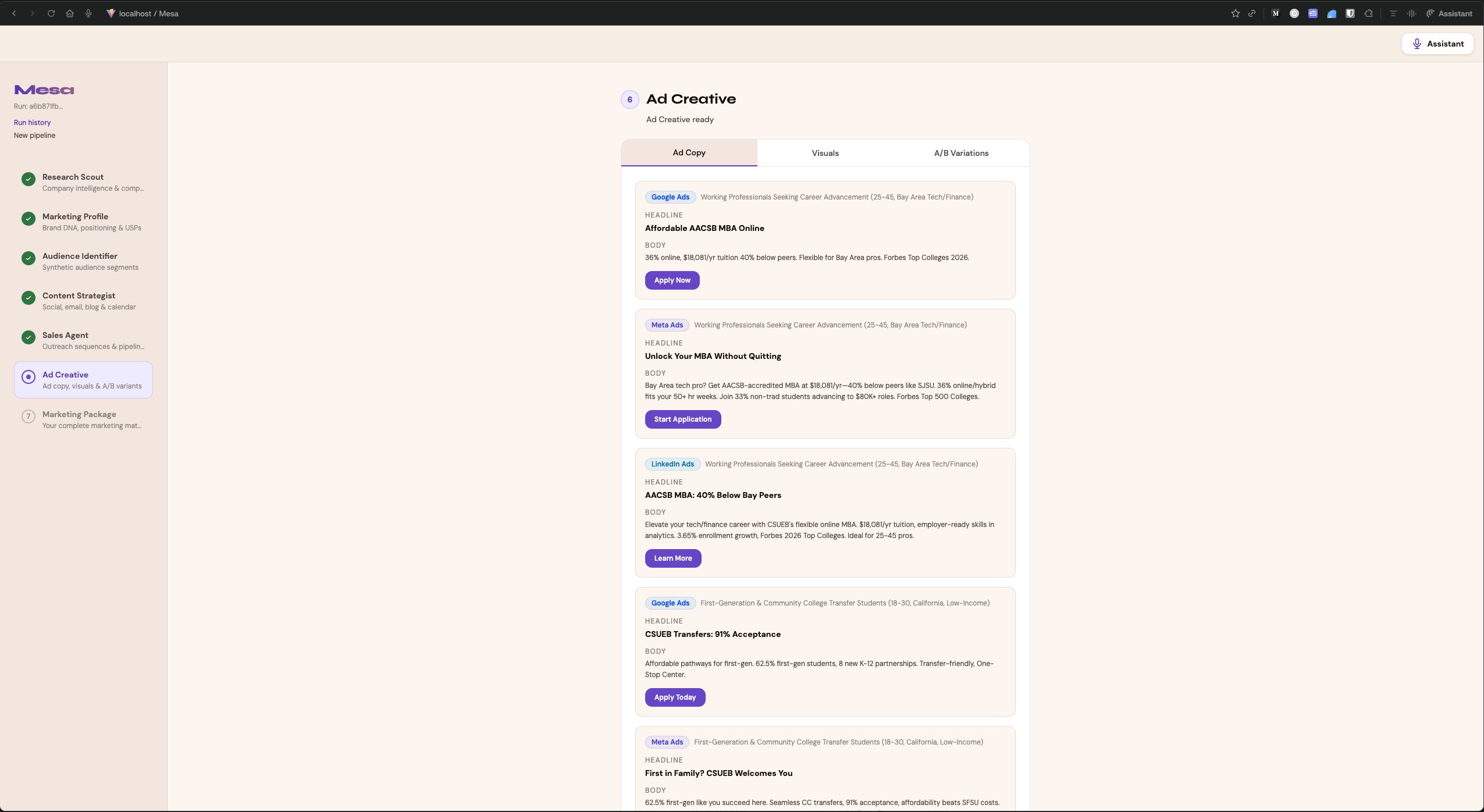
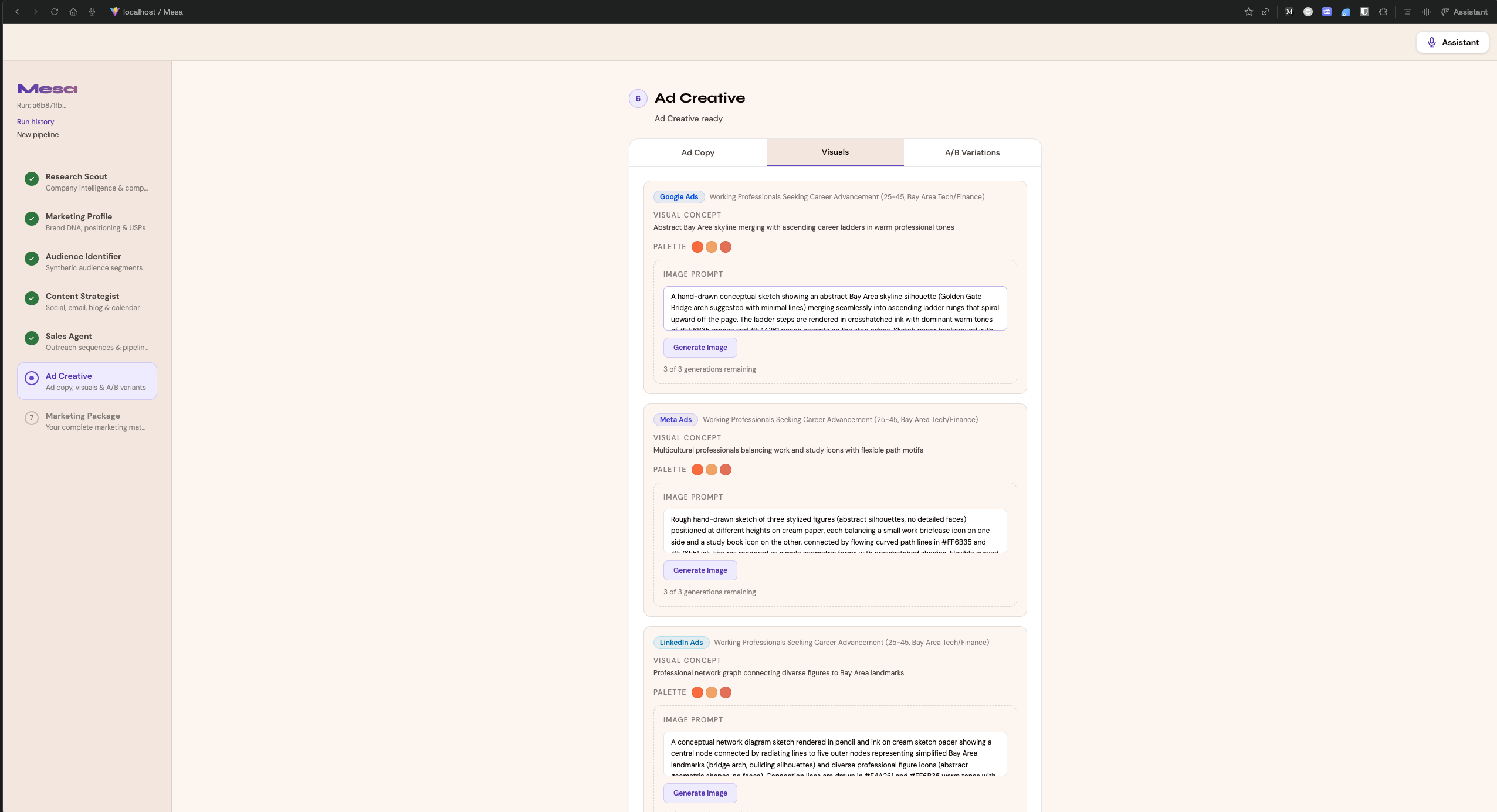
- Ad Creative Generator produces channel-specific ad copy and variants
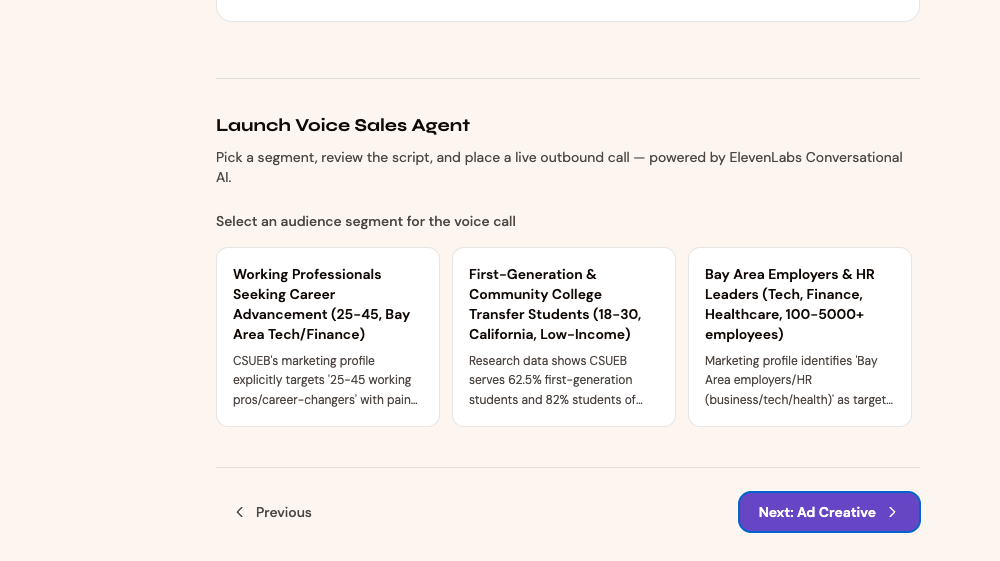
Users watch the pipeline execute in real time through a guided wizard UI with live streaming updates. Once complete, they can trigger a voice agent session to interrogate their strategy or generate ad image variants on demand.
How We Built It
Mesa is a full-stack orchestration system with a clear separation of concerns.
- Orchestration: LangGraph
StateGraphcoordinates all six agents in sequence, passing a sharedMesaStateobject between steps - Backend: FastAPI serves the API and pushes live updates over Server-Sent Events (SSE)
- LLM Routing: LiteLLM handles model calls with perplexity sonar for text generation and Gemini Imagegen for Image generation.
- Context Storage: ChromaDB persists each agent's output so downstream agents can read prior results and stay coherent
- Research Inputs: Tavily and Firecrawl handle live web research and URL scraping at pipeline start
- Lead Persistence: SQL via a dedicated
leads_db.pystores structured lead and run data - Frontend: React, TypeScript, Vite, and Zustand power the wizard, timeline, history views, and voice panel
- Voice Agent: ElevenLabs Conversational API drives the interactive voice layer with dynamic, run-specific prompts
- Image Generation: Google Imagen generates on-demand ad creative variants
Challenges We Ran Into
Getting six agents to stay contextually coherent was harder than expected. Early runs produced outputs where the Sales Agent had no awareness of the audience segments created two steps earlier. We solved this by treating ChromaDB as a shared memory layer that every agent reads before generating — not just a write-only log.
Streaming structured outputs reliably over SSE while the LangGraph graph was still executing required careful state management on both sides. We also hit rate limits with research APIs under rapid sequential calls and had to build retry logic and request pacing into the agent runners.
What We're Proud Of
- A true end-to-end pipeline that goes from a raw URL to campaign-ready assets in a single run
- A clean, guided UI that makes a complex multi-agent system feel approachable to non-technical users
- A voice agent layer that lets users actually talk to their strategy and ask follow-up questions
- Schema-driven structured outputs across later pipeline stages, which dramatically improved consistency and downstream usability
What We Learned
Multi-agent coherence is an architectural problem, not a prompting problem. The moment we stopped treating each agent as independent and started designing shared context as a first-class concern, output quality improved significantly. We also learned that streaming UX matters enormously for agentic tools — watching the pipeline run step-by-step builds trust in a way that a loading spinner never could.
What's Next for Mesa
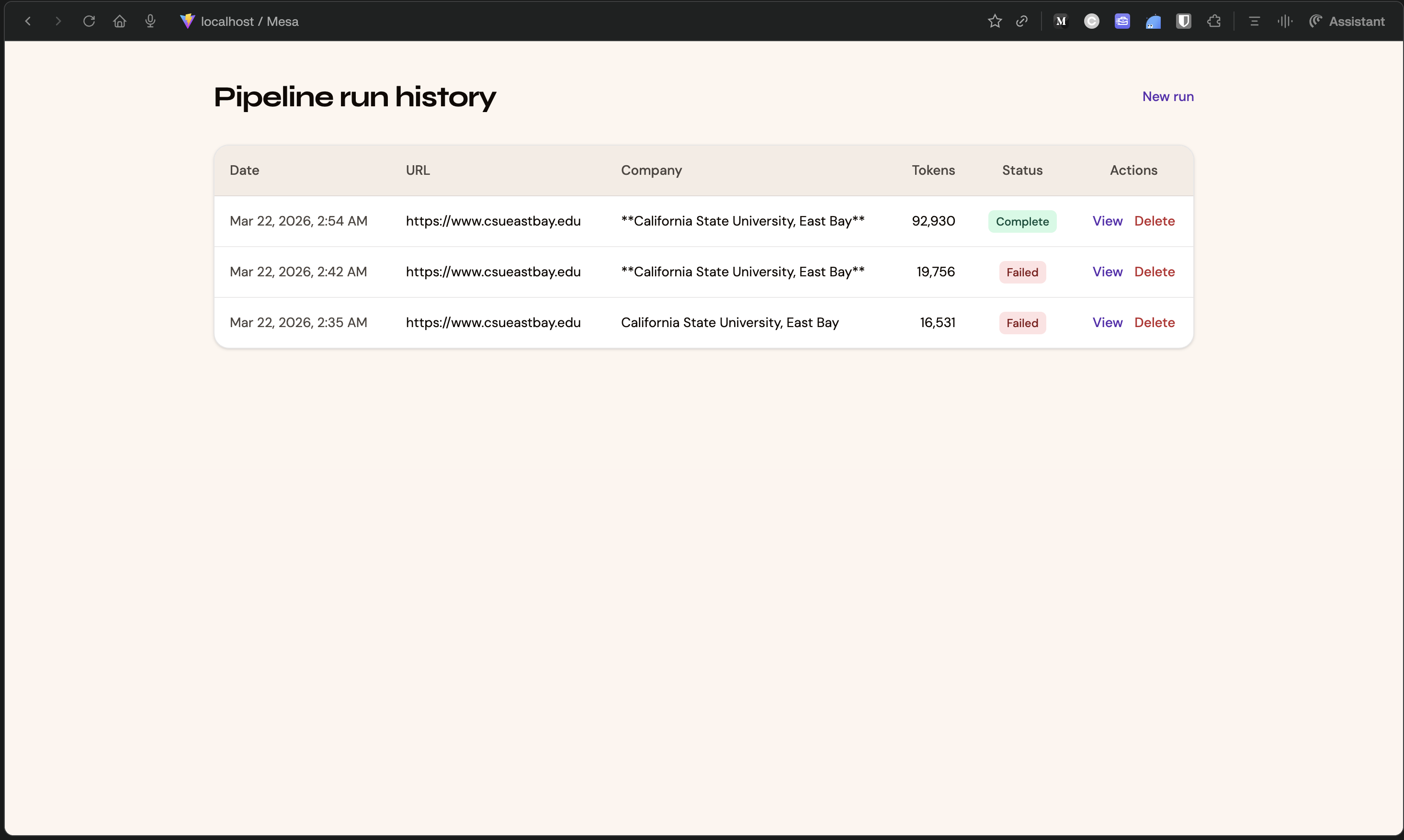
- Run history and comparison: Re-run a pipeline with a different URL and diff the outputs side by side
- Expanded ad visuals: Deeper image generation tied directly to brand profile outputs
- CRM integrations: Push leads and sequences directly into HubSpot or Notion
- Shareable strategy decks: Export the full run as a formatted PDF or slide deck
- Team collaboration: Multi-user access so an entire growth team can annotate and act on the same run

Log in or sign up for Devpost to join the conversation.