-
-
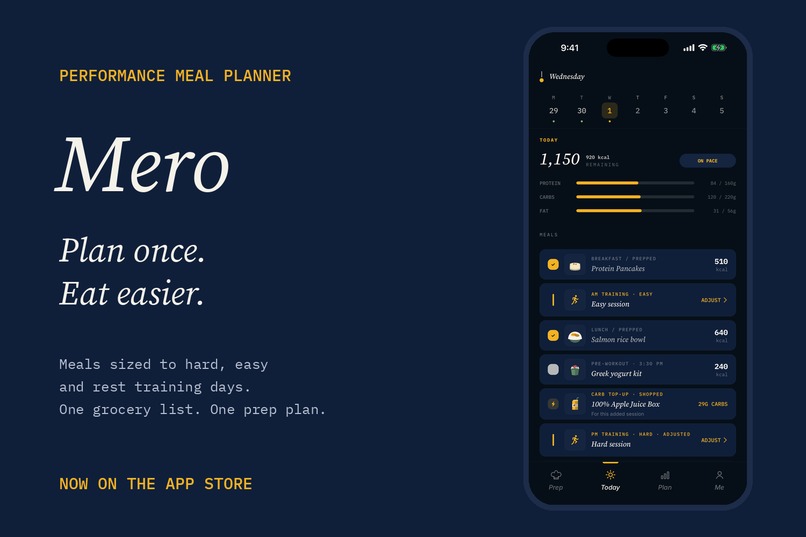
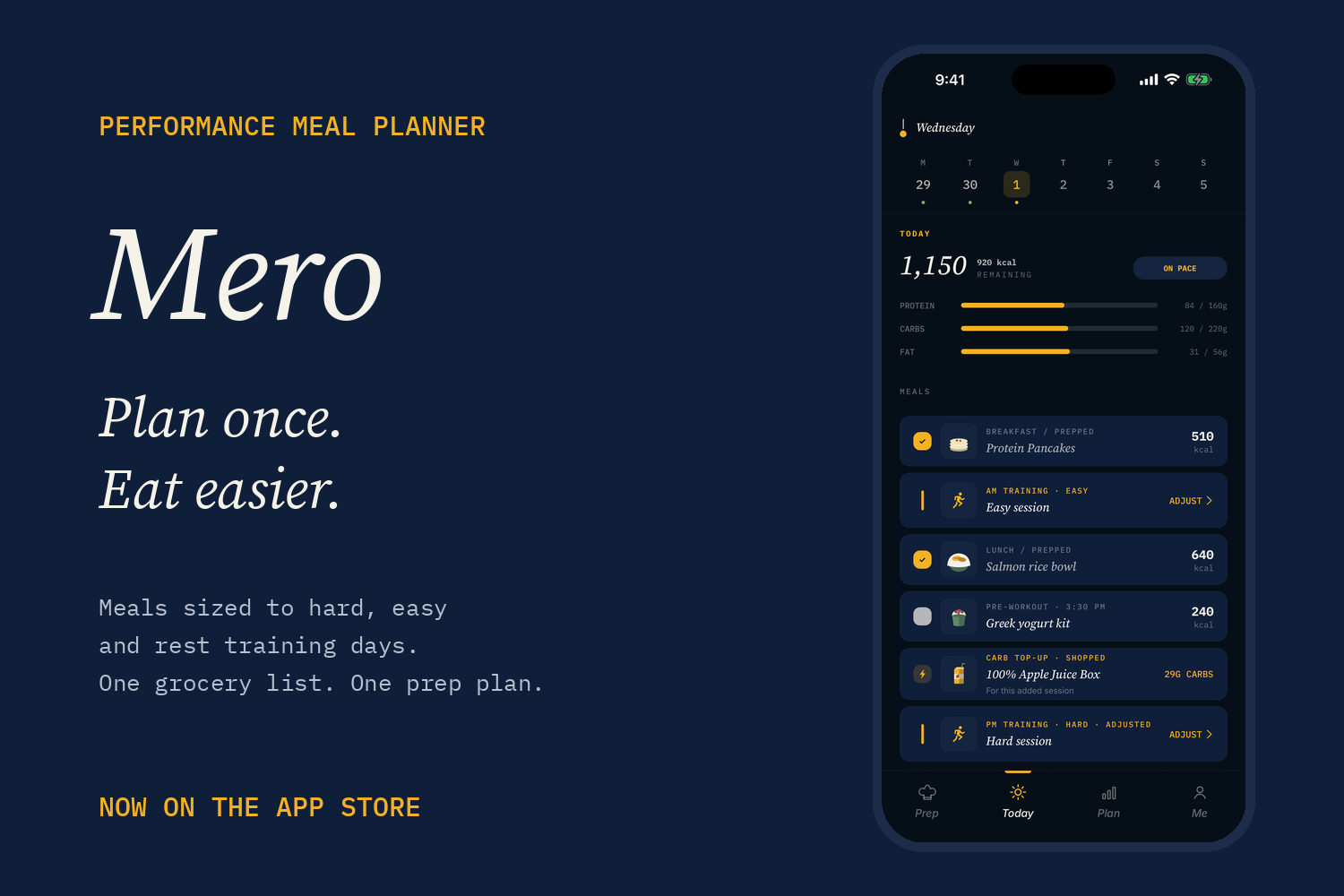
Mero, the performance meal planner for athletes. Live on the App Store.
-
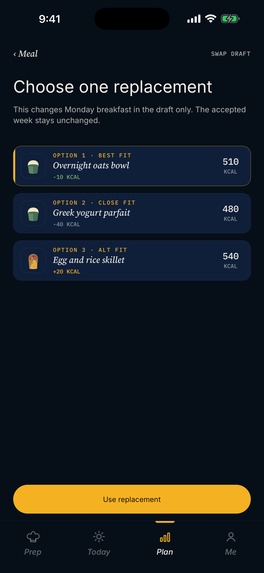
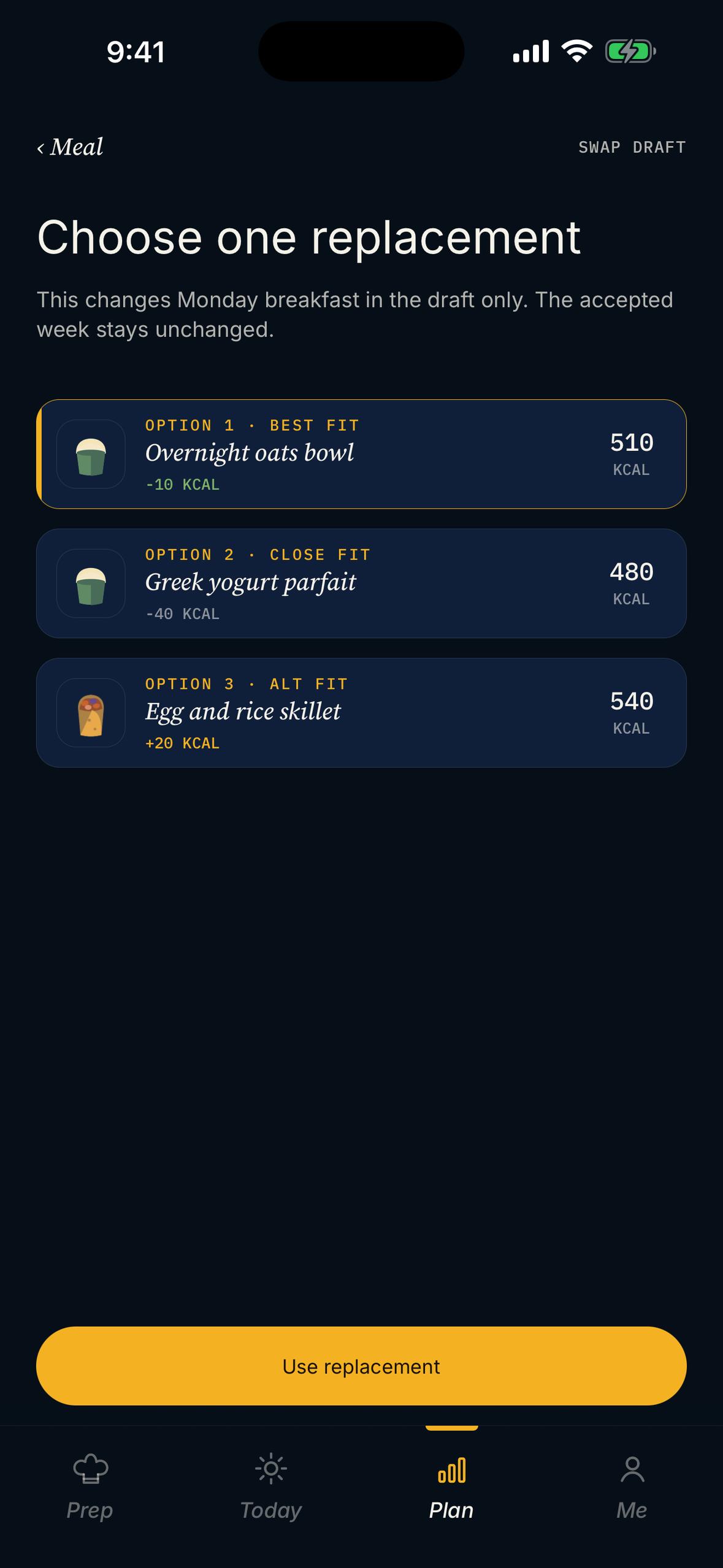
Choose available meal replacements before accepting your draft.
-
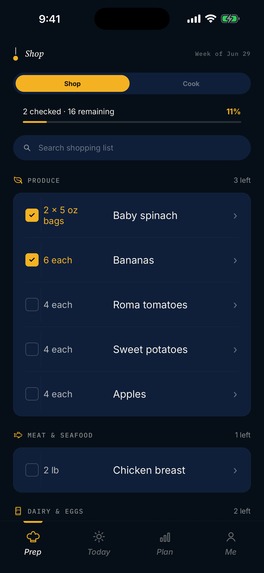
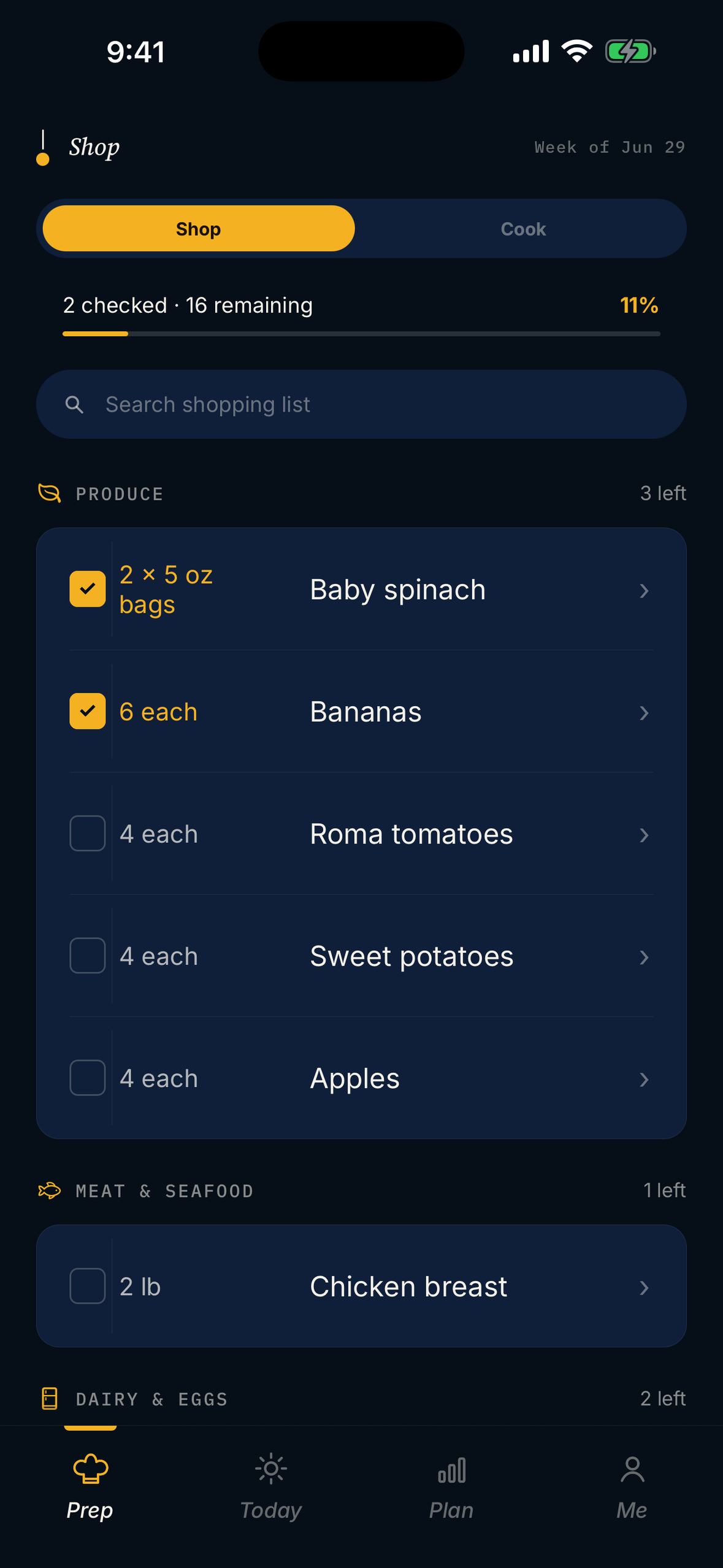
Shop: one grocery list for the week, grouped by store section.
-
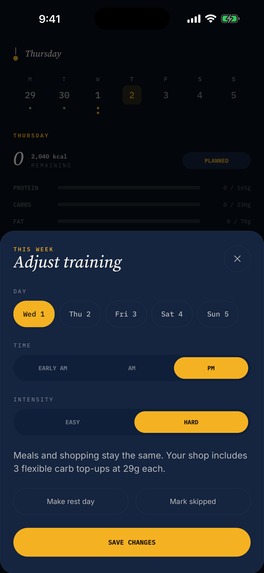
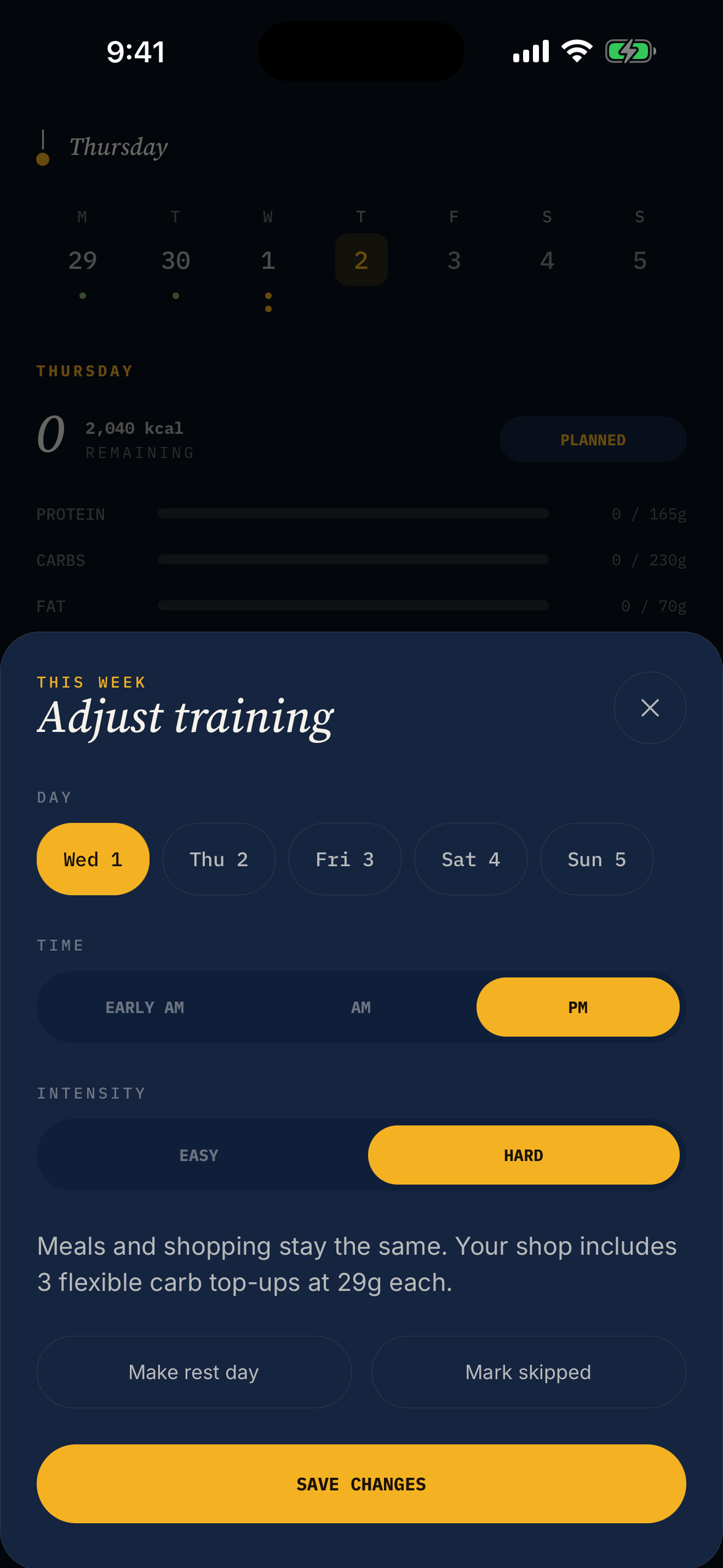
Adjust training while keeping accepted meals and groceries fixed. Fuel top-ups use the plan's limited reserve.
-
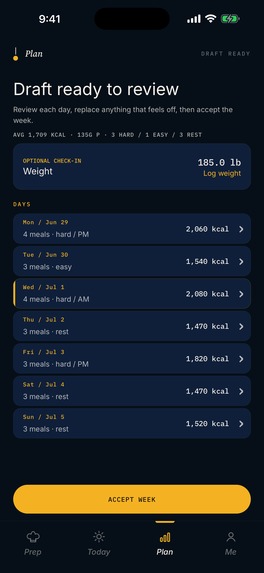
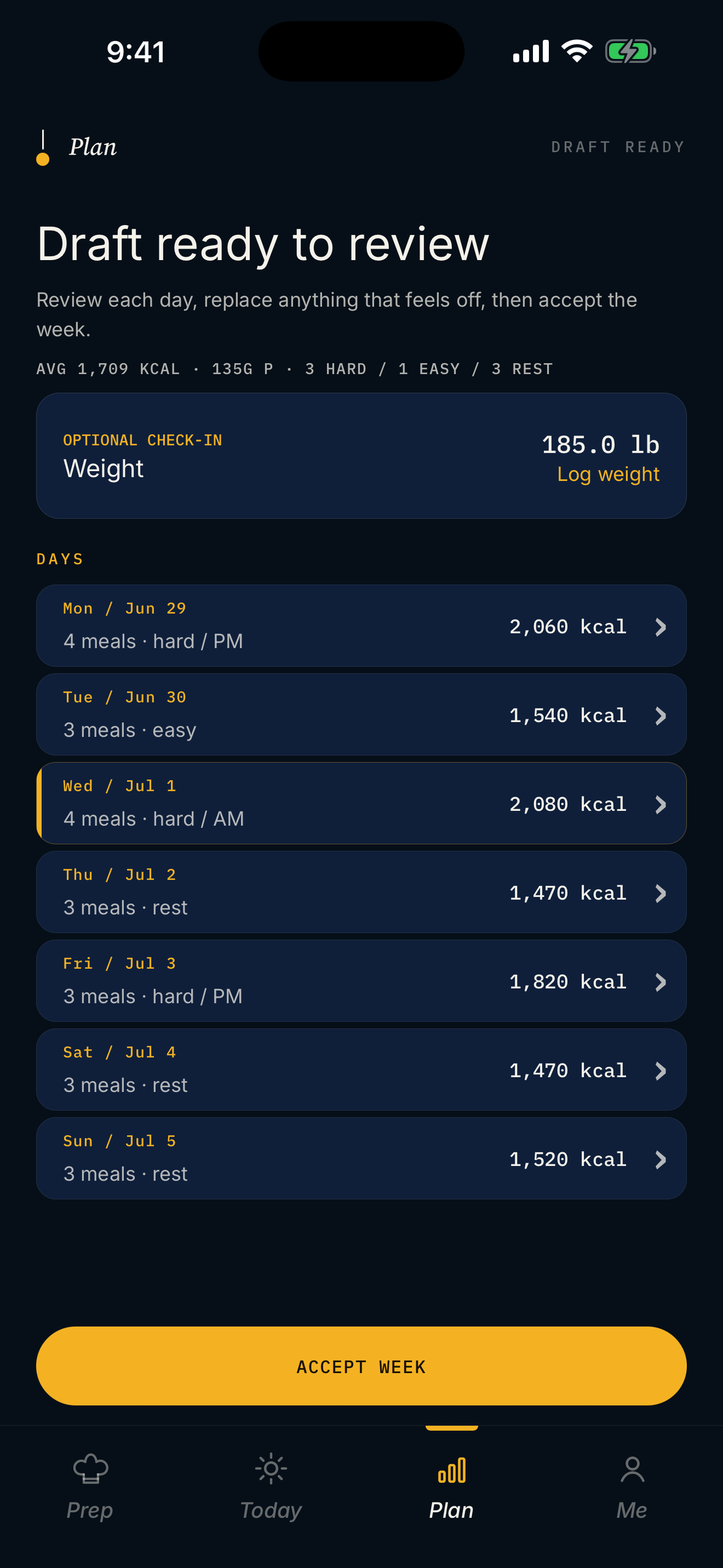
Plan: preview the full week before you commit.
-
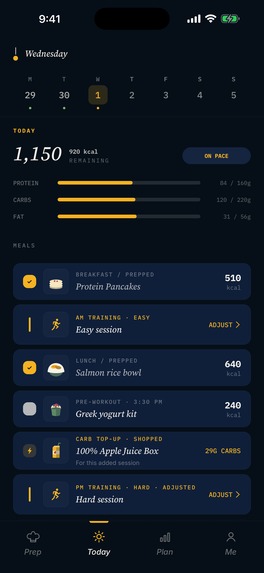
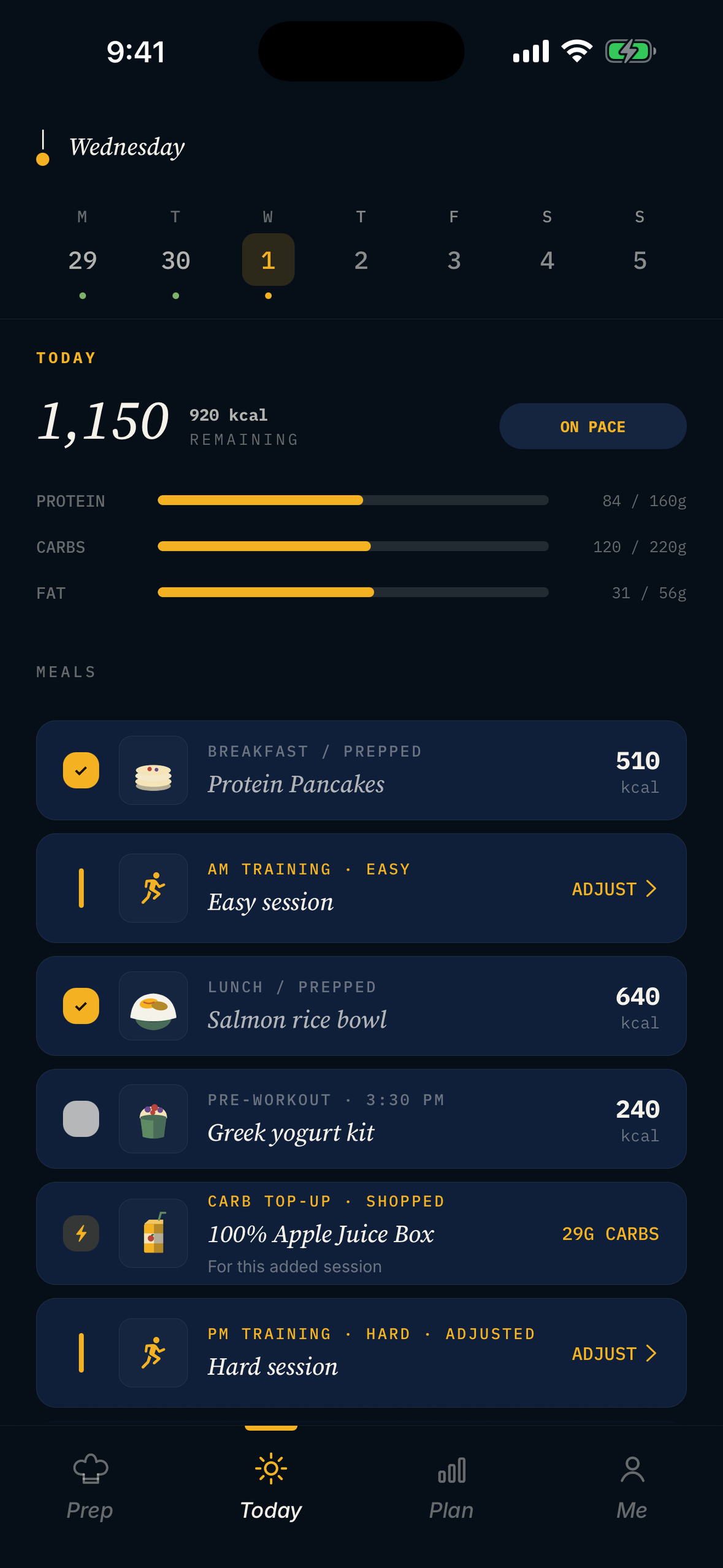
Today: meals and training in time order. Meal check-offs update calorie and macro progress.
-
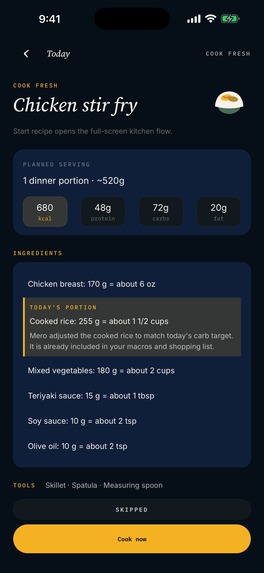
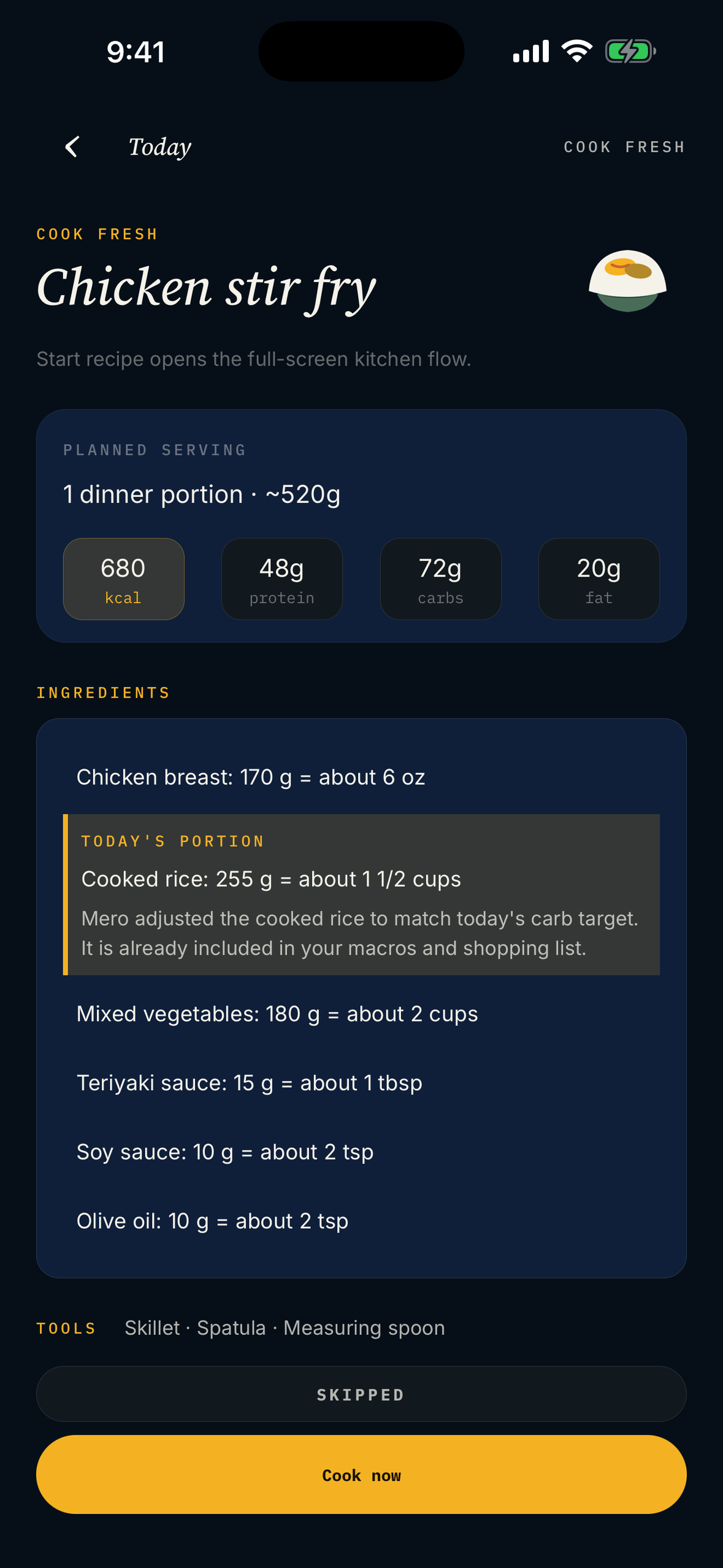
Meals portioned toward your targets, with no manual macro math.
-

App icon, 1024 x 1024.

What it does
Mero helps athletes turn their nutrition and training goals into a weekly routine: Plan, Shop, Prep, Eat. Set your goal, food preferences, and hard, easy, and rest days. Mero connects that intent to the meals you will eat, the groceries you need, and the cooking that makes the week possible.
The weekly cycle
- Plan. Mero does the portion and macro math to build meals around your goal and training schedule. Preview a seven-day meal draft before starting a subscription, and choose available meal replacements before accepting it. If you start midweek, a starter plan covers the remaining days.
- Shop. Turn the plan into one grocery list, grouped by store section, with the quantities you need. Knowing what to buy makes it easier to follow through on the meals you chose.
- Prep. Batch prep guidance and Kitchen Mode walk you through cooking ahead, so a busy day does not mean starting every meal from scratch.
- Eat. The Today view puts meals and training sessions in time order. Check off planned meals to see your calorie and macro progress against the day's targets.
How it supports your goals
A goal becomes easier to act on when you know what to do next. Mero carries the same plan from daily nutrition targets through portions, shopping, prep, and eating. Each step prepares you for the next: the plan tells you what to buy, the groceries support the prep, and the prepared meals make it easier to follow the plan.
The cycle continues with a check-in. As users log changes in their weight and update their goals or training schedule, Mero uses that information to tailor the nutrition targets and portions in future plans. This connects the user’s progress back to the next week of meals, helping them stay on track toward their goal as their needs change.
Targets reflect the training schedule used to build the plan. Once you accept a week, moving or adding training keeps its meals, targets, prep, and groceries fixed. Mero can suggest carbohydrate top-ups from a limited fuel reserve included in the original shop, and shows when that reserve cannot cover more sessions.
Inspiration
I spent nearly a decade losing weight and gaining it back. I loved cooking, and food was a way my family cared for one another. I needed a way to pursue my goals that I could sustain while still enjoying that part of my life.
I started Matt's Macros in 2022 to work through that problem. Learning about macros helped me connect the food I cooked with what I wanted to achieve. Over time, my ambitions grew: get stronger, build endurance, and recover well enough to keep going. In 2026, I finished my first 50K ultramarathon.
Mero grew out of the routine behind that change. Knowing my nutrition targets was only useful if I could turn them into meals, buy the ingredients, and get the cooking done around training and everyday life.
I built Mero to make that process easier for other people: plan ahead, shop, prep, eat, and adjust as their needs change. It brings together two things I care about deeply: enjoying food and discovering what I am capable of.
How I built it
- Mobile app: React Native and Expo SDK 57 with TypeScript, Expo Router, TanStack Query, and Zustand. EAS handles builds and store submissions.
- Backend: A Laravel API calculates targets and generates weekly plans, shopping lists, and prep blocks. The planner selects and portions recipes from a structured catalog using rules and constraints.
- Subscriptions: RevenueCat's React Native SDK supplies offerings, purchases, restores, and entitlement checks. Apple handles App Store checkout and billing. The Laravel API mirrors access through RevenueCat webhooks, with scheduled reconciliation to repair missed or stale updates.
- Recipes: The catalog includes cook-ahead meals, cook-fresh meals, and convenient snacks, with ingredient nutrition data and defined serving rules.
- Quality: Automated unit and integration tests, Maestro end-to-end flows, and release checks cover the planning loop, onboarding, purchases, and privacy disclosures.
Challenges
- Practical portions. A mathematically close plan is not useful if the portions are awkward. The generator balances daily targets with serving limits, recipe variety, and prep constraints.
- Training changes after shopping. Rebuilding an accepted week would undo the user's shopping and prep. Schedule adjustments preserve that week and use a bounded fuel reserve instead.
- Showing value before checkout. Users can inspect a complete meal draft before subscribing. The handoff from anonymous setup to an account and paid access has to preserve that work.
What I learned
The hardest part was making the whole week usable. Targets, meals, shopping quantities, and prep steps have to agree. A change that looks sensible on one screen can create extra work in the kitchen.
RevenueCat let me build subscription access around the weekly routine without building a billing system. Mero offers one monthly tier at US$9.99, with a 14-day introductory trial for eligible App Store subscribers. The trial gives users time to try the planning, shopping, cooking, and daily check-off flow.
What's next
Bring Mero to Google Play, expand recipe choice, and refine weekly feedback and recaps based on how people use their plans.
For judges
Mero is available on the U.S. App Store for iPhone. A two-month free access code and step-by-step review instructions are included in the private judge notes. The demo shows real app screens from an iPhone App Store build and the iOS Simulator, labeled on screen.
Built With
- eas
- expo-router
- expo.io
- ios
- laravel
- maestro
- php
- react-native
- revenuecat
- tanstack-query
- typescript
- zustand

Log in or sign up for Devpost to join the conversation.