Inspiration
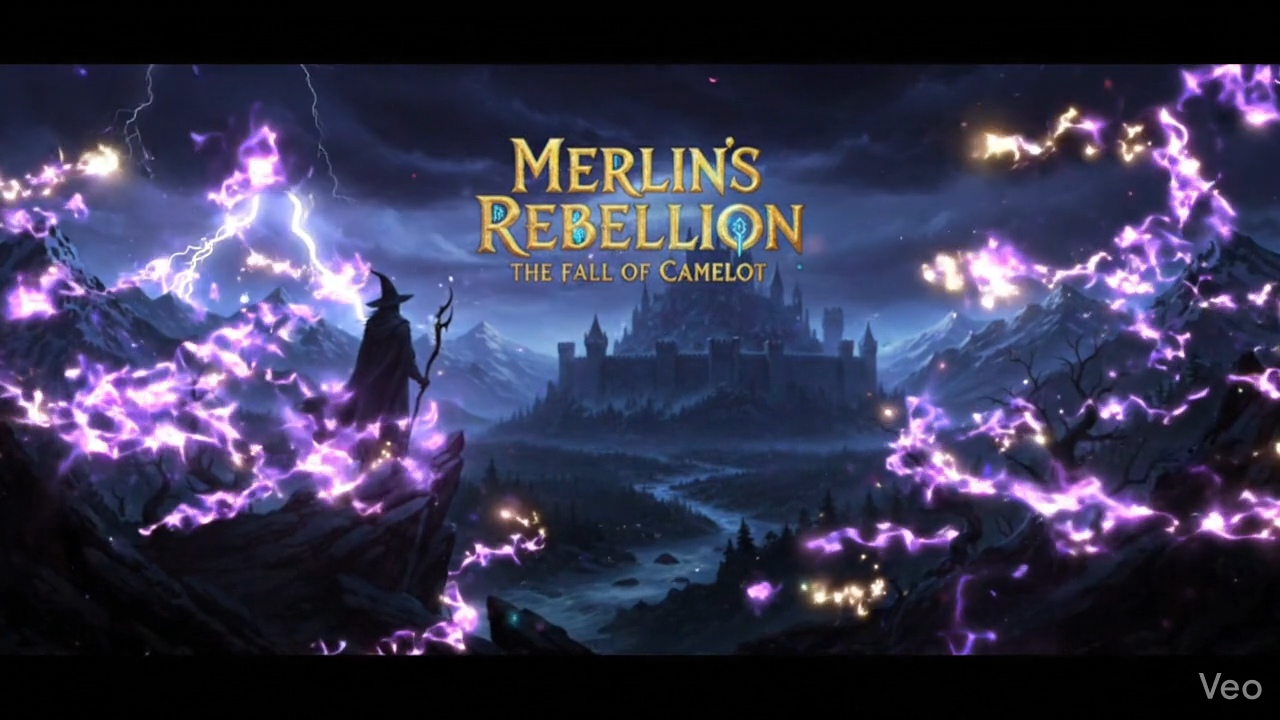
Merlin’s Rebellion: The Fall of Camelot was inspired by one question: what if the most powerful wizard in Camelot became the villain — and he learned from everything you did?
I wanted to take the familiar legend of Camelot and flip it into a darker, more personal strategy game. Instead of playing as the chosen hero in a perfect kingdom, the player enters a broken Camelot where Merlin has corrupted the land, turned magic against the people, and watches every move the player makes.
The goal was to create a mobile-first fantasy strategy experience that feels dramatic, readable, and emotional. Camelot is not just a background. It is falling zone by zone, and every battle feels like a rebellion against a villain who remembers your tactics.
What it does
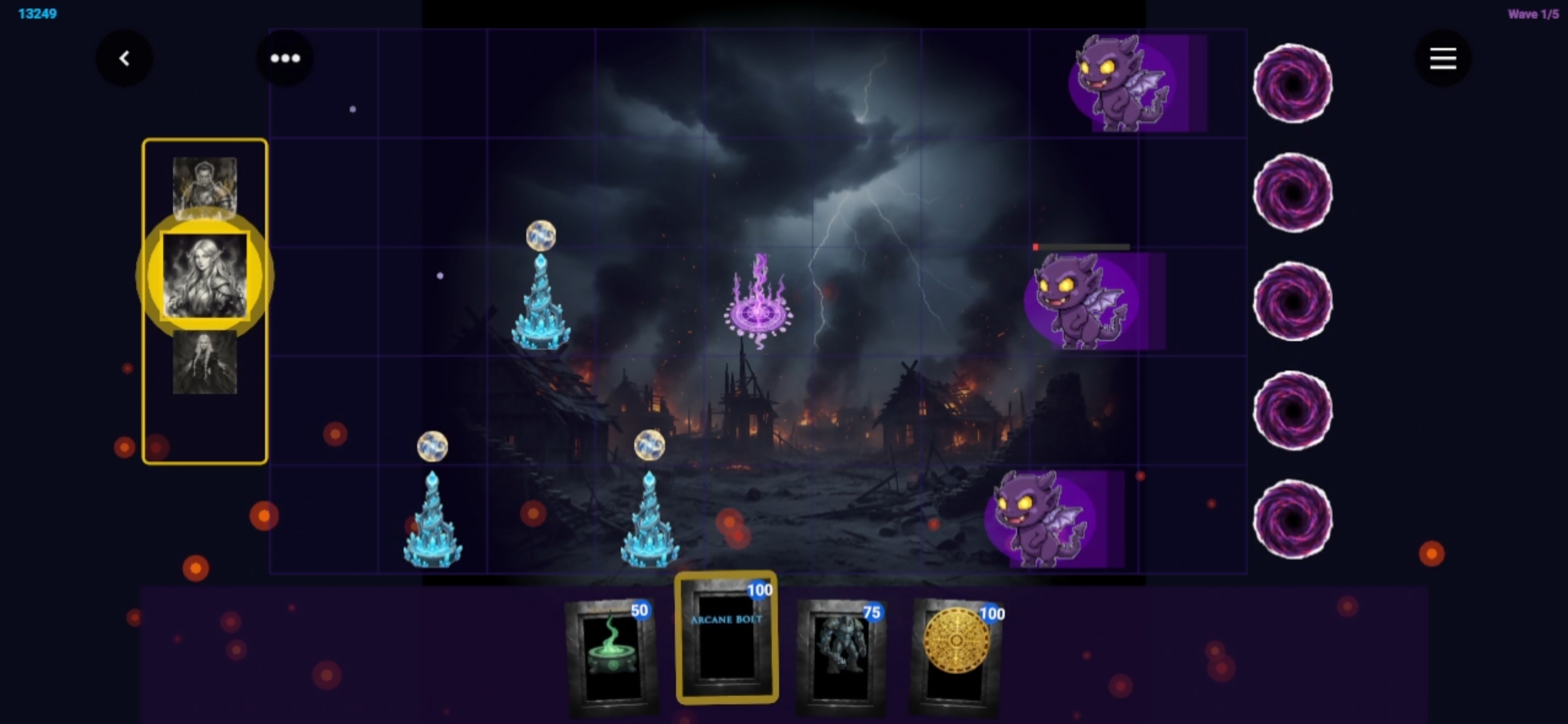
Merlin’s Rebellion: The Fall of Camelot is a mobile landscape strategy game where players defend lanes, place spells, manage mana, upgrade magical cards, and fight through a corrupted version of Camelot.
Players choose a resistance leader, unlock spells through the Grimoire, and battle Merlin’s corrupted forces across multiple checkpoints. The main twist is Merlin’s adaptive interference system: if the player relies too much on one tactic, Merlin reacts by changing enemy behavior, resistances, or wave pressure.
The core gameplay loop is:
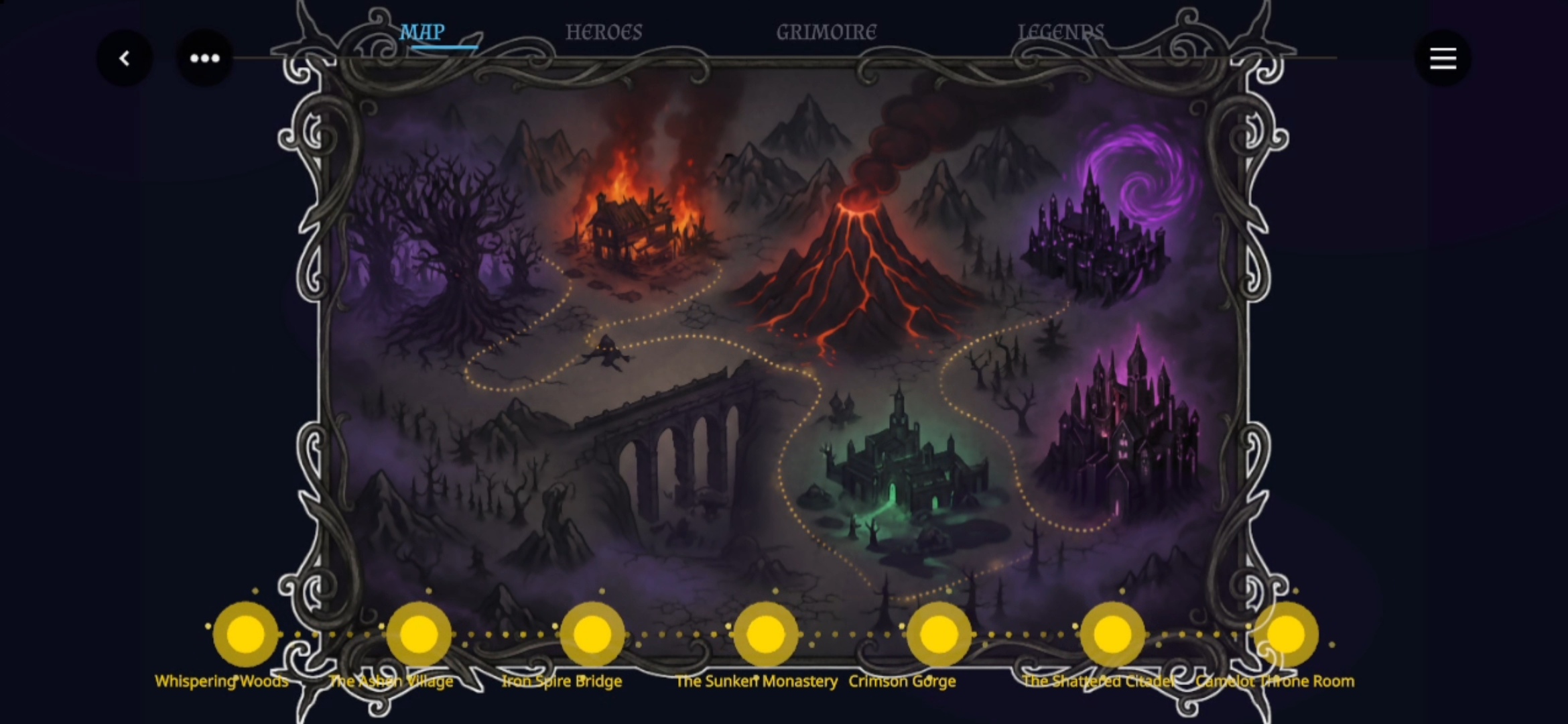
- Choose a checkpoint on the Camelot map.
- Enter a lane-based battle.
- Place spells and counter enemy waves.
- Survive Merlin’s adaptive changes.
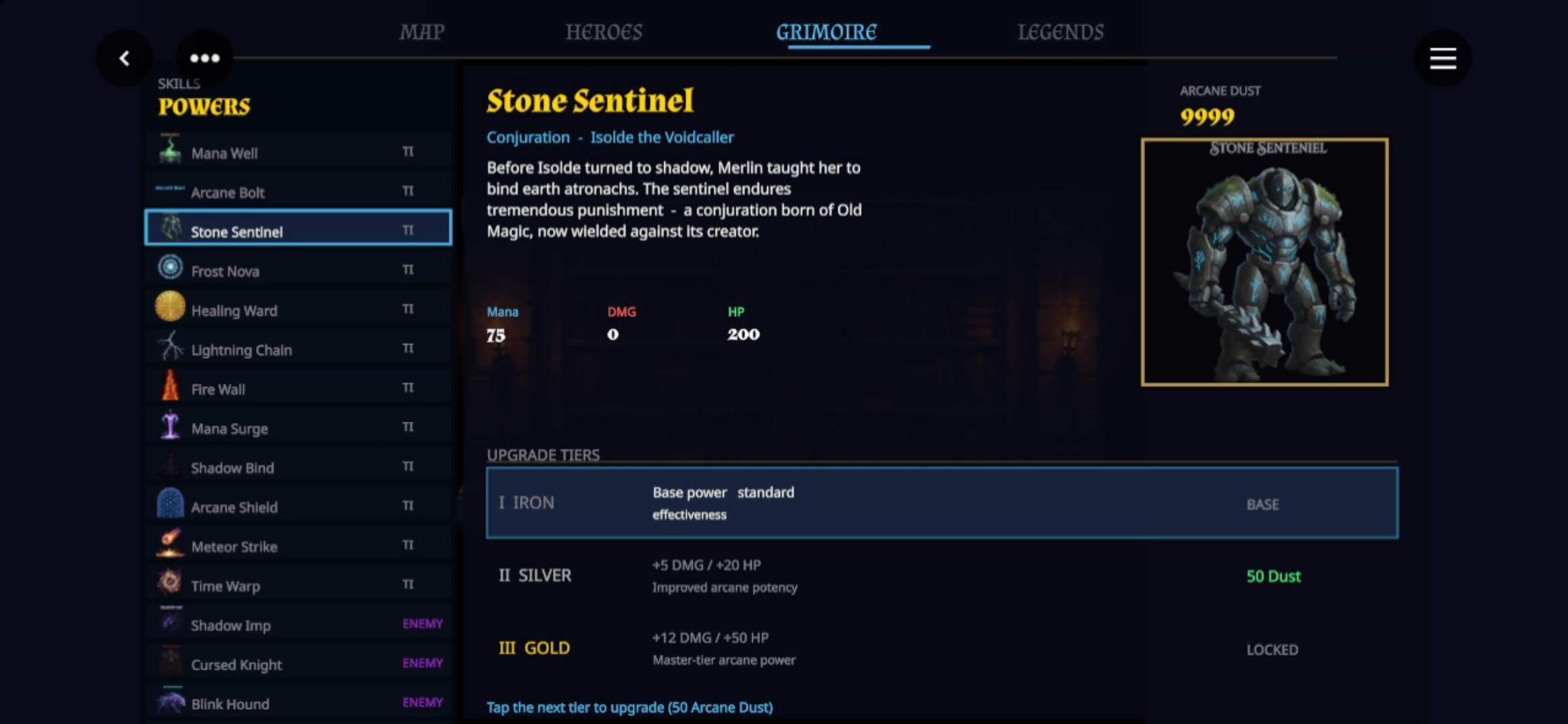
- Earn Arcane Dust, XP, and new upgrades.
- Return stronger for the next battle.
The design goal is simple:
$$ Player\ Strategy + Merlin\ Adaptation = Every\ Battle\ Feels\ Personal $$
How we built it
We built the project around a mobile landscape layout so the game would feel natural on phone screens. The screen is divided into clear gameplay zones: status at the top, tactical grid in the center, incoming portals on the right, leader identity on the left, and spell cards in the bottom thumb zone.
The visual direction uses a dark fairytale style with strong color rules:
- Cyan represents player magic and safety.
- Purple represents Merlin’s corruption and enemy pressure.
- Gold represents selection, rewards, and progression.
- Red represents danger and damage.
The game was designed through multiple connected artifacts: a Game Design Document, Player Journey Map, Production Plan, and Visual Concept Package. Together, these helped define the mechanics, player flow, emotional arc, UI readability, and production scope.
The biggest focus was making sure the game looked premium while still staying clear and playable on mobile.
Challenges we ran into
One major challenge was balancing fantasy style with mobile readability. Dark magical visuals can look great, but if the player cannot instantly understand where danger is coming from, the game becomes frustrating. We had to make every glow, outline, and color serve a gameplay purpose.
Another challenge was designing Merlin as more than a final boss. We wanted him to feel present throughout the whole game, so we built the concept around taunts, UI flashes, adaptive enemies, and visible corruption spreading across the map.
We also had to keep the scope realistic. A dark fantasy strategy game can become too large very quickly, so we focused on a strong first-session experience, readable battles, a clear upgrade system, and a small set of heroes that each represent a different playstyle.
Accomplishments that we're proud of
We are proud that the project has a strong identity. It does not feel like a generic fantasy defense game — it has a clear villain, a broken world, and a gameplay hook built around adaptation.
We are also proud of the mobile HUD direction. The layout makes the player’s choices easy to understand while still keeping the battlefield cinematic.
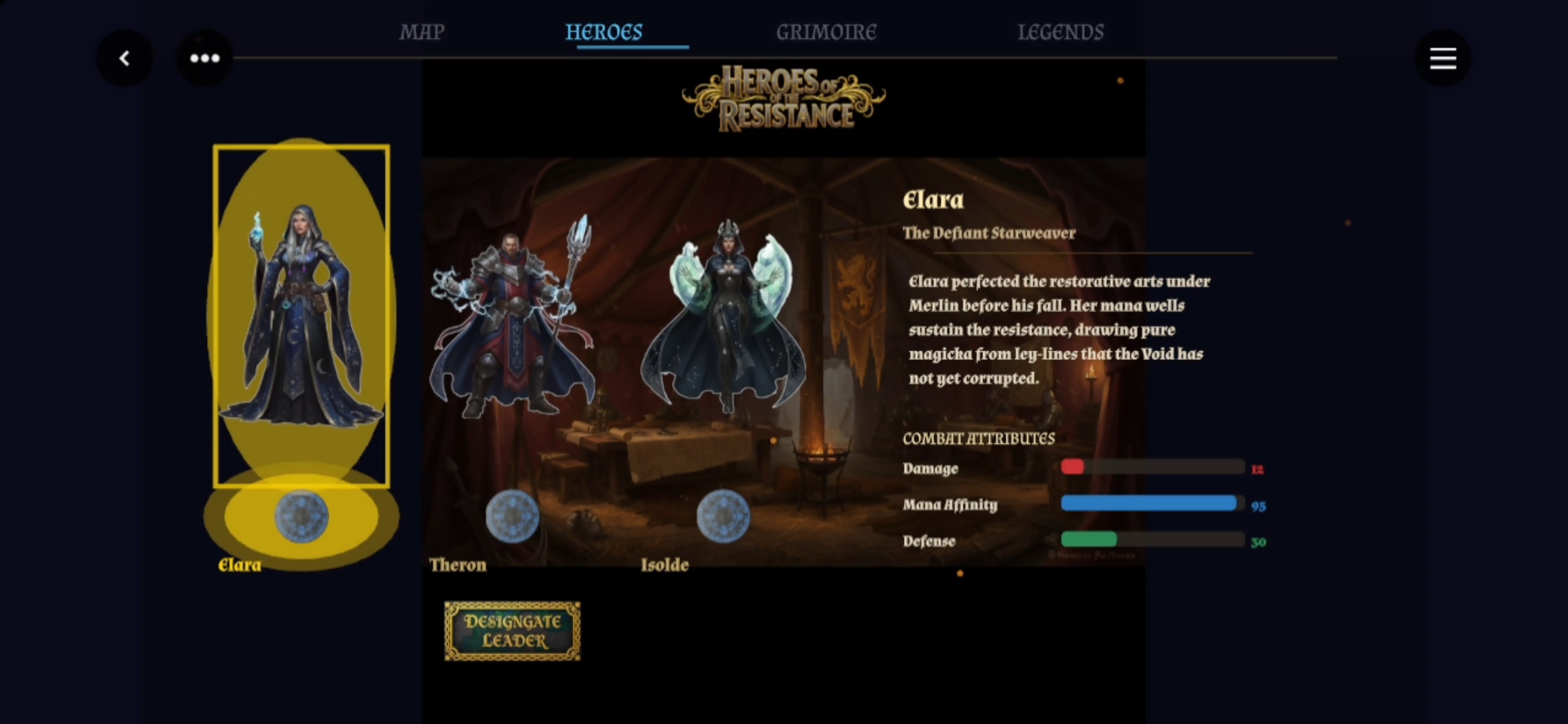
The hero system is another strong part of the project. Elara, Theron, and Isolde are not just characters; they represent different strategies: mana generation, offensive power, and defensive summoning.
Most importantly, we are proud that the game connects mechanics to emotion. The player is not just clearing waves. They are fighting back against Merlin, reclaiming corrupted magic, and watching Camelot change because of their actions.
What we learned
We learned that UI is not separate from game design — UI is part of the gameplay. Where information appears on the screen changes how fast the player reacts, how confident they feel, and how fair the game feels.
We also learned that a strong visual concept needs rules. The color palette, glow effects, map structure, character silhouettes, and upgrade screens all need to speak the same language.
Another big lesson was that a villain can be designed through systems, not only cutscenes. Merlin becomes more memorable because he affects gameplay directly. When the player repeats a tactic and Merlin counters it, the rivalry becomes personal.
What's next for Merlin’s Rebellion: The Fall of Camelot
Next, we want to turn the concept into a playable vertical slice focused on the first 15 minutes of gameplay. This would include the opening cinematic, the first tutorial battle, Merlin’s first adaptive interference, the Grimoire upgrade screen, and the second checkpoint with expanded lane pressure.
After that, the next steps are:
- Build the first playable battle prototype.
- Add the first three spell cards.
- Create the first Merlin adaptation event.
- Implement Arcane Dust upgrades.
- Polish the mobile HUD and touch placement.
- Replace all placeholder visuals with original or rights-cleared artwork.
- Expand Camelot’s map into seven playable checkpoints.
The long-term goal is to make Merlin’s Rebellion: The Fall of Camelot feel like a premium mobile strategy game where every battle is readable, every upgrade feels meaningful, and every victory feels like taking Camelot back from the wizard who broke it.
Built With
- ai
- chatgpt
- gemini
- mockui


Log in or sign up for Devpost to join the conversation.