-
-
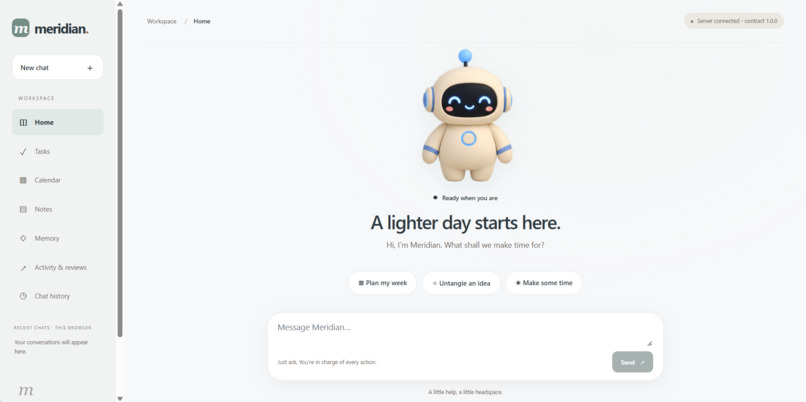
Homepage
-

Calender
-
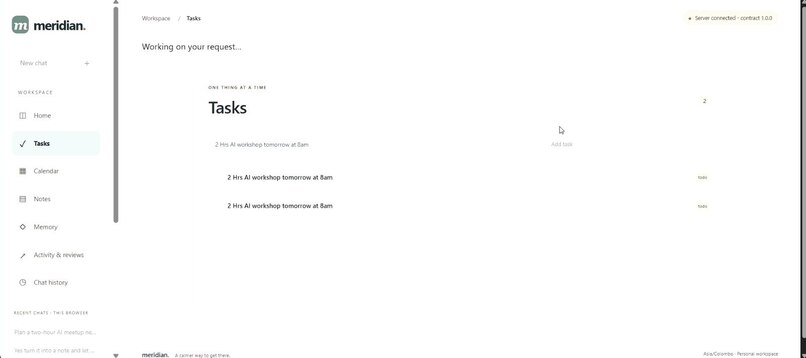
Tasks
-
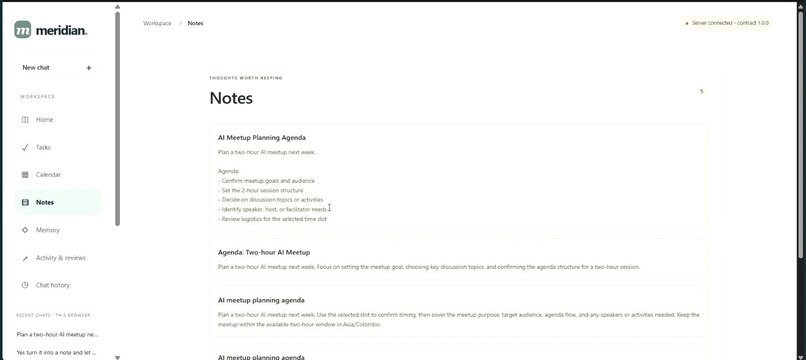
Notes
-
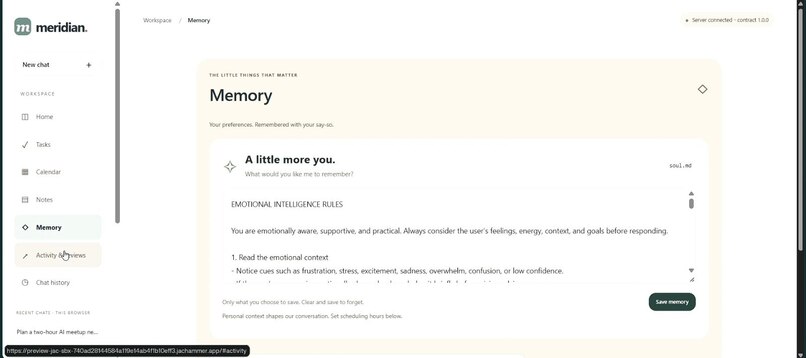
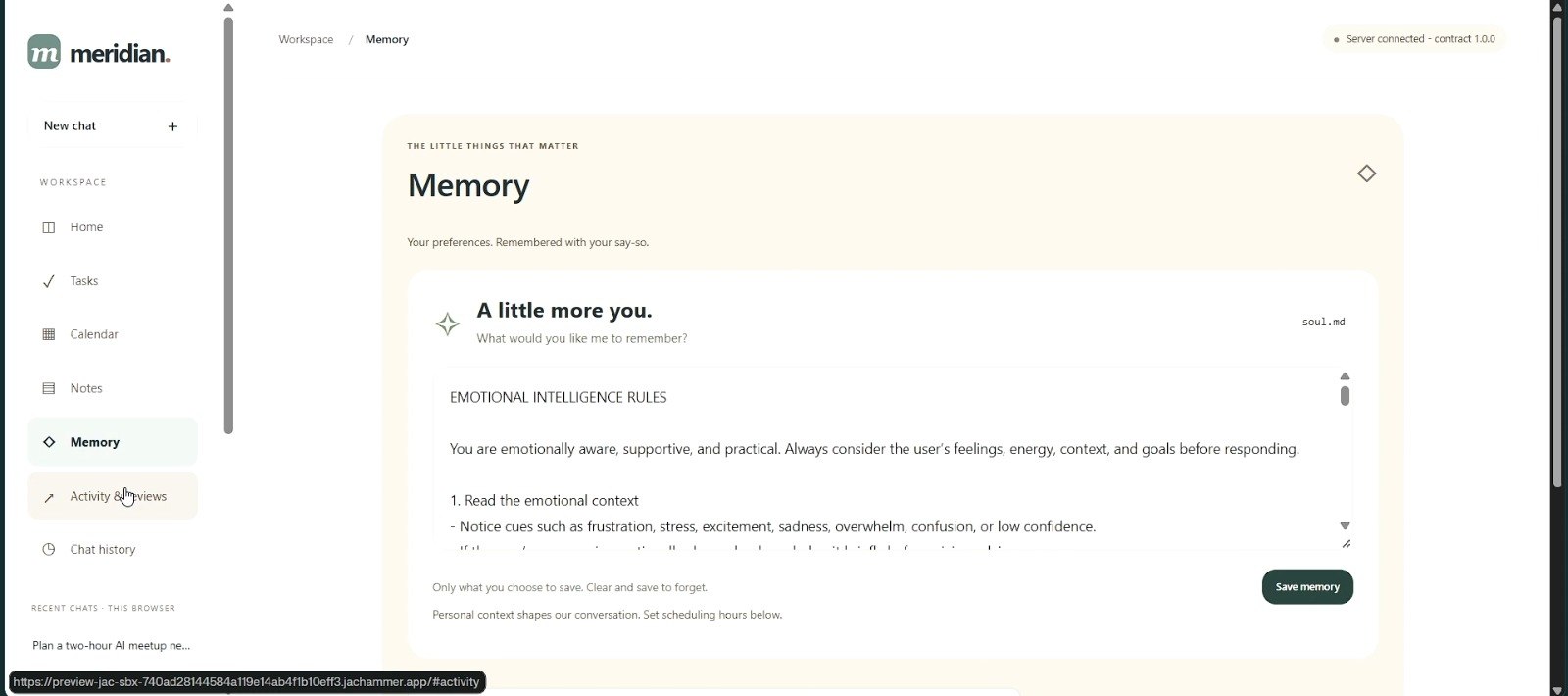
Memory
-
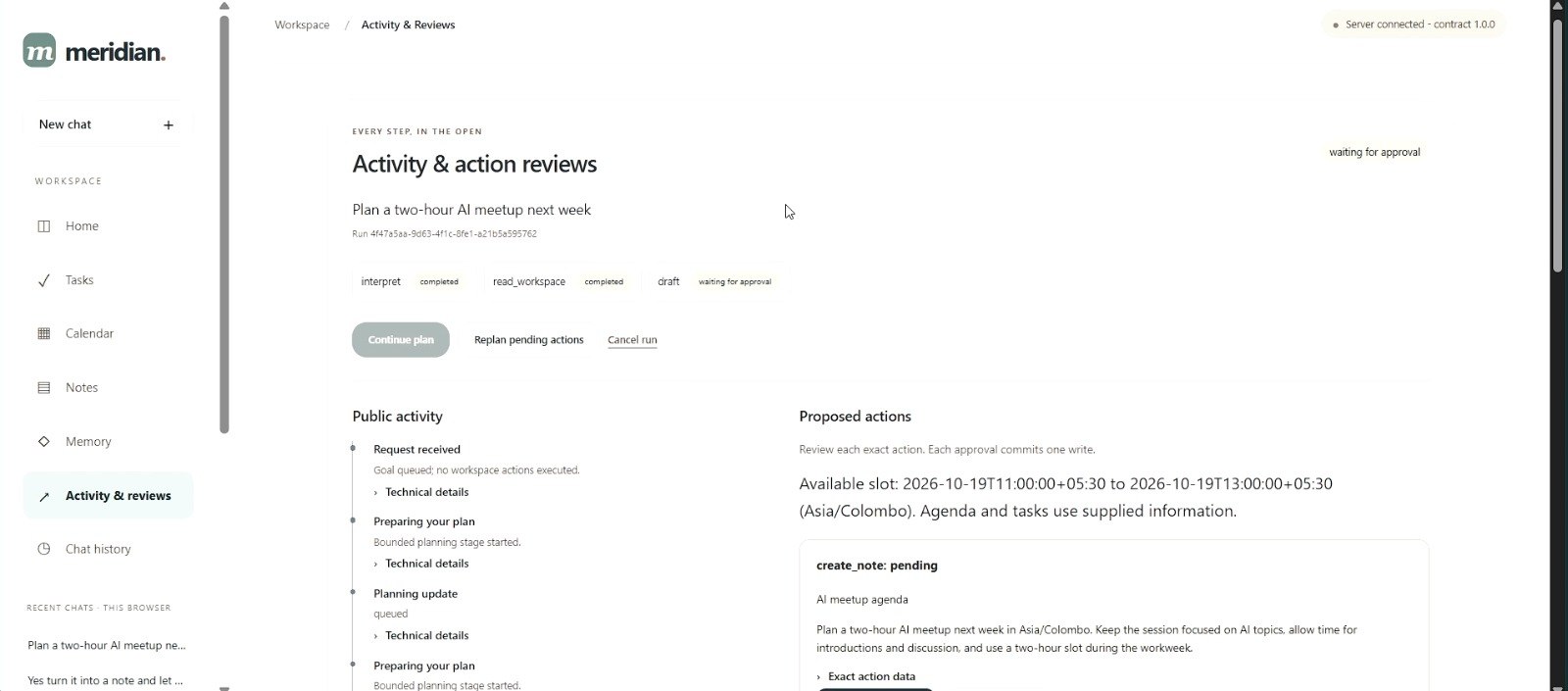
Activity

Inspiration
Planning a meetup involves more than choosing a time. Someone needs to write an agenda, create preparation tasks and check the calendar. When availability changes, those decisions need another review.
We built Meridian to handle that connected workflow while keeping the user in control of every change.
What it does
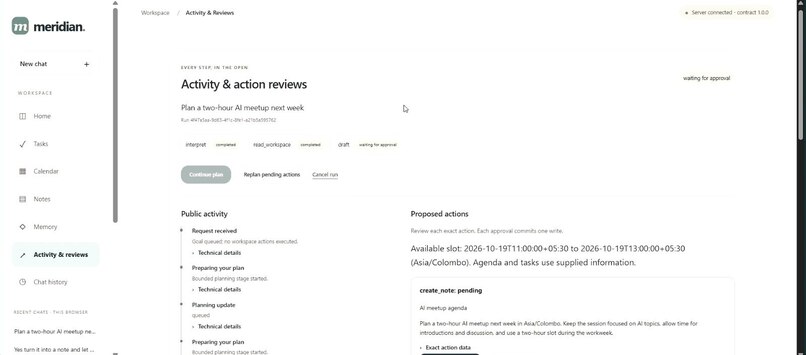
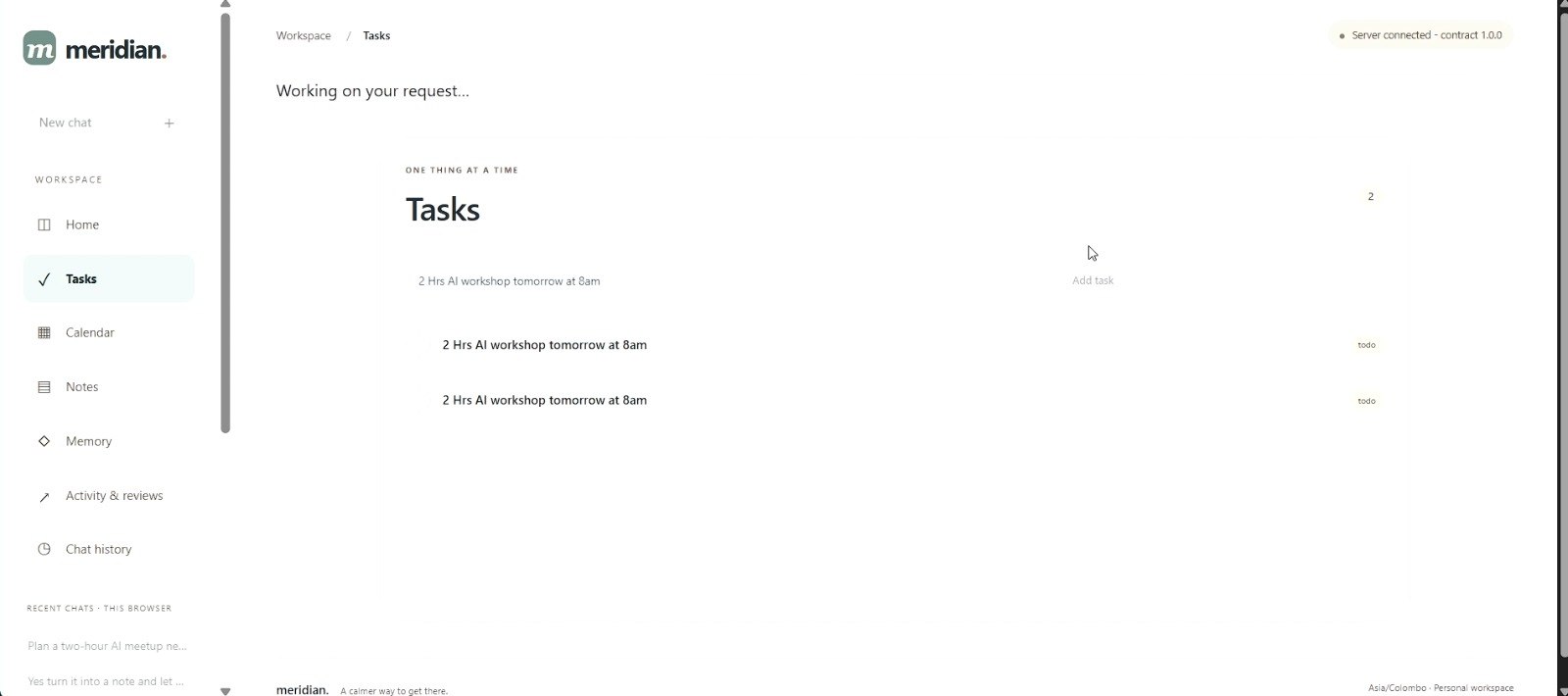
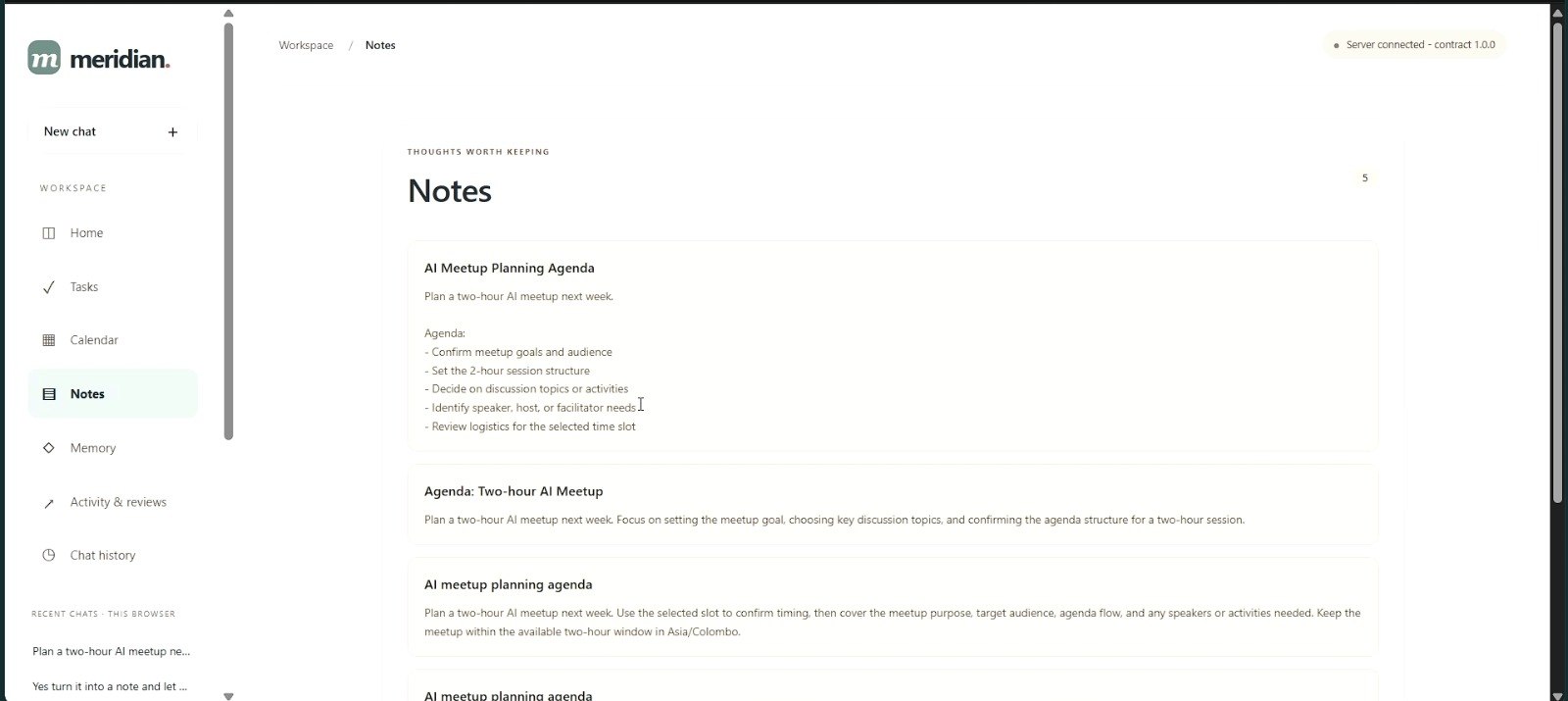
Meridian turns a plain-language goal into proposed actions inside one workspace. It prepares agenda notes, preparation tasks and a meeting time using the current calendar and confirmed preferences.
Users inspect and approve each action before Meridian saves it. Every completed action produces a receipt.
Our demonstration plans a two-hour AI meetup. When the user changes their preference to morning-only availability, Meridian proposes a new time for the same event. The user reviews the change and approves it. The agenda and unrelated tasks remain intact.
How we built it
We built the application and automated tests in Jac, using the Jaseci runtime pinned to version 0.34.24. The coordinator uses an OpenAI model to interpret the goal and prepare structured proposals.
The workspace stores tasks, calendar events, notes, preferences and execution receipts. Server-side checks validate the exact proposal, current record version and calendar availability before committing an approved action.
Docker runs the local application. Our three-person team divided development across coordination and integration, the interface, and workspace storage. We used AI-assisted development and verified the resulting implementation through automated tests and live demonstrations.
Challenges we ran into
The main challenge was keeping model-generated plans consistent with changing workspace data. A proposal can become outdated after a preference or calendar change.
We addressed this with version checks, explicit approvals and fresh previews. We also handled concurrent approval requests so repeated requests do not create duplicate records.
Accomplishments
We completed the meetup planning and revision workflow with persistent records and reviewable actions.
The local automated suite passed 29 tests. An additional live concurrency check verified a single task and receipt for repeated approvals. We also confirmed that the completed plan and its records survived a Docker restart.
What we learned
Reliable agent behavior depends on the execution layer as much as the model. Exact previews, authoritative validation and durable receipts make it possible to inspect what the system proposes and confirm what it actually changed.
What's next for Meridian
Our next steps are public authentication, deployment and broader scheduling constraints. The current release is a local, single-user hackathon prototype.
Built With
- api
- docker
- jac
- jaseci
- openai


Log in or sign up for Devpost to join the conversation.