-
-
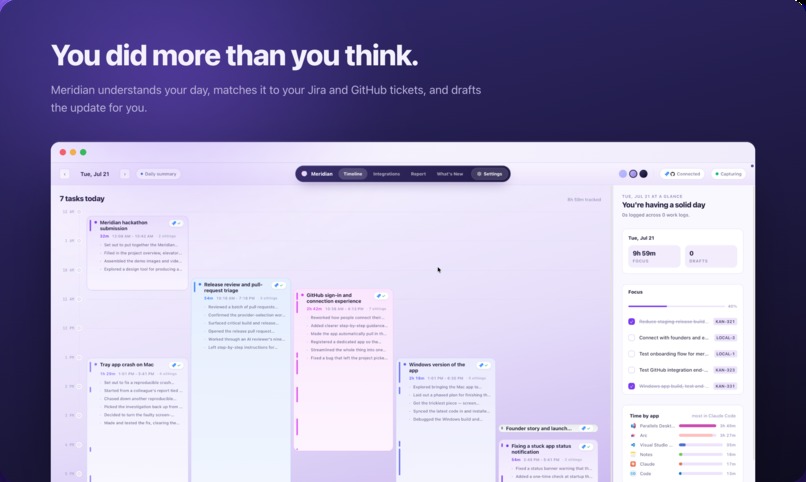
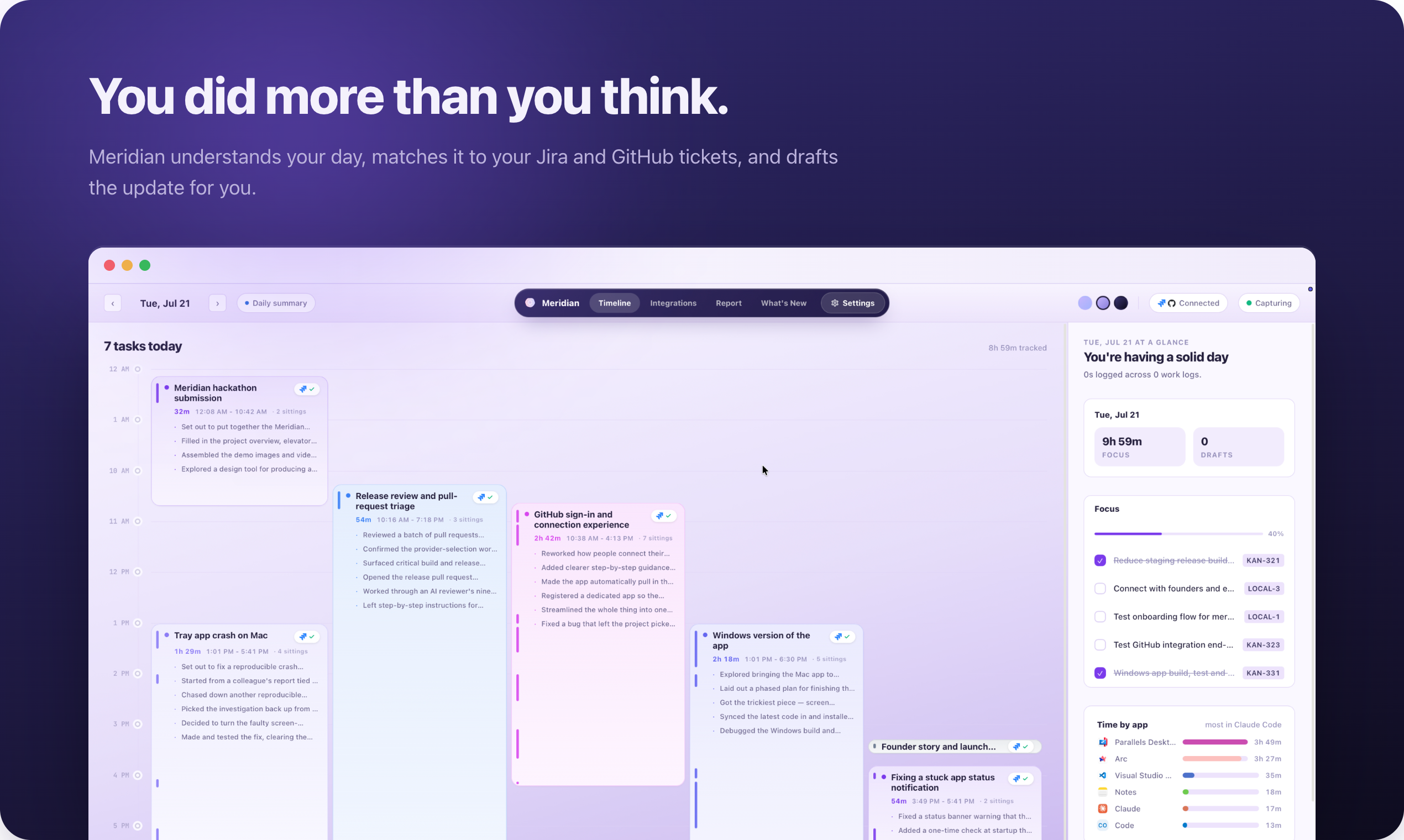
dashboard
-

reddit post went viral
-
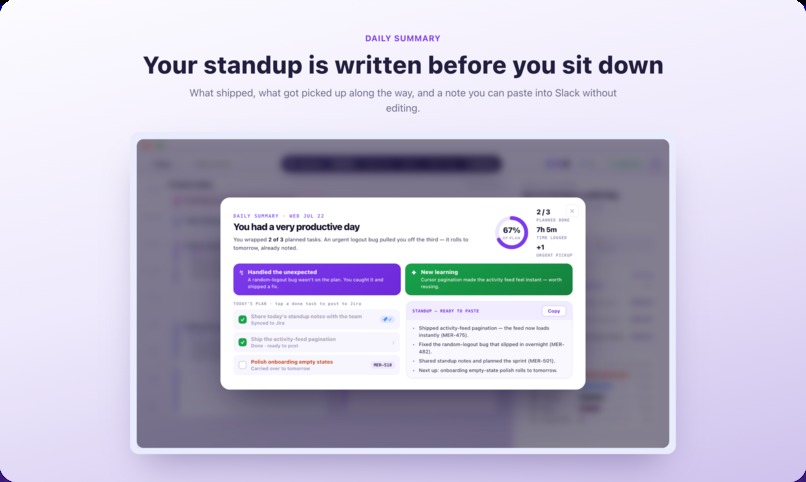
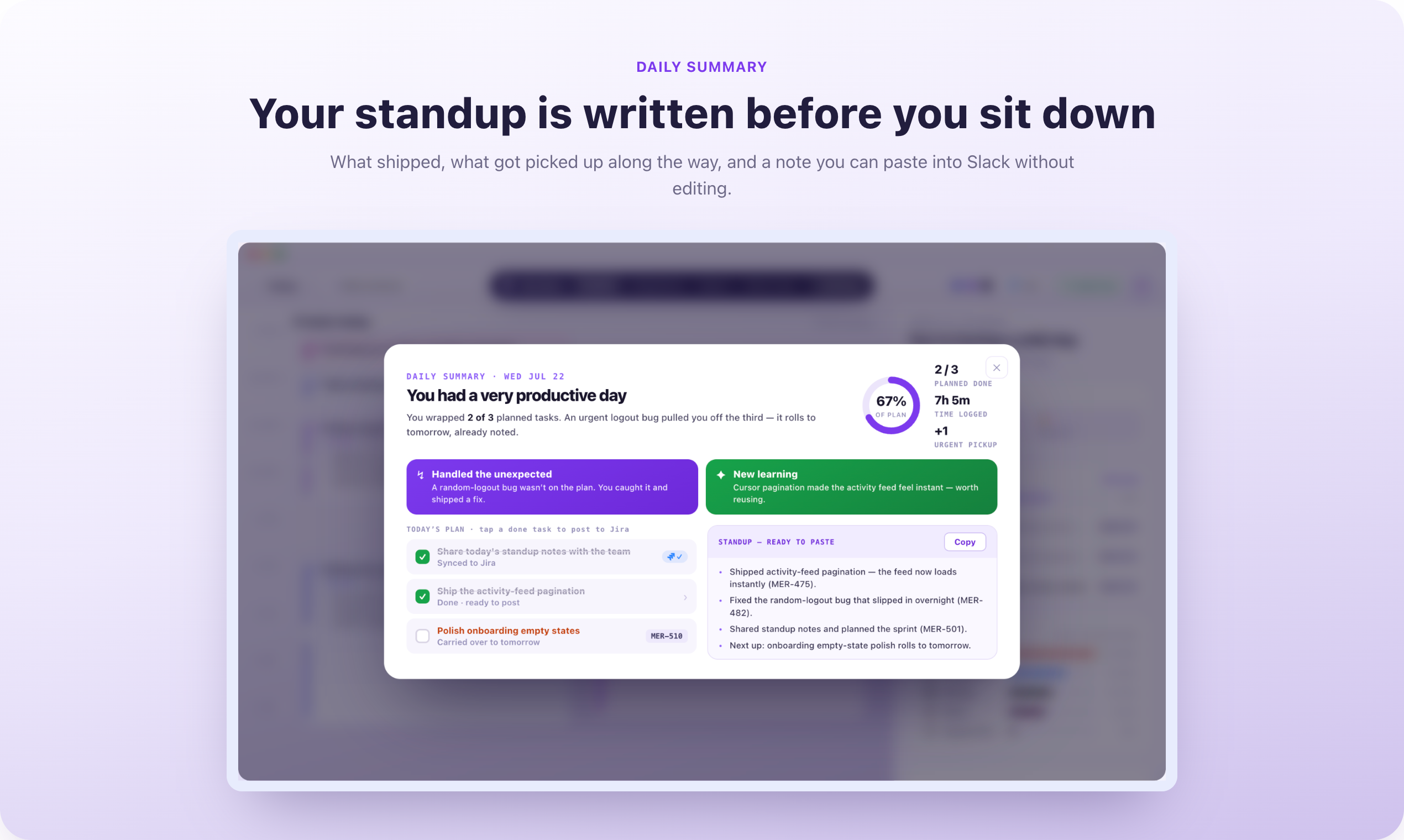
daily summary
-
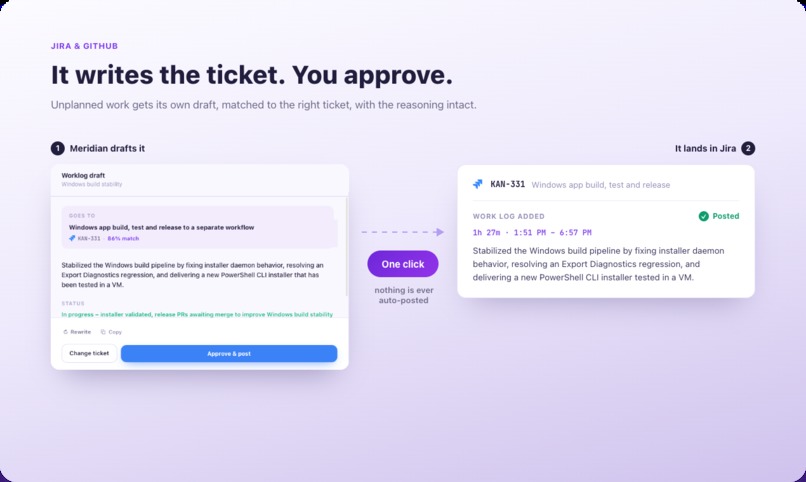
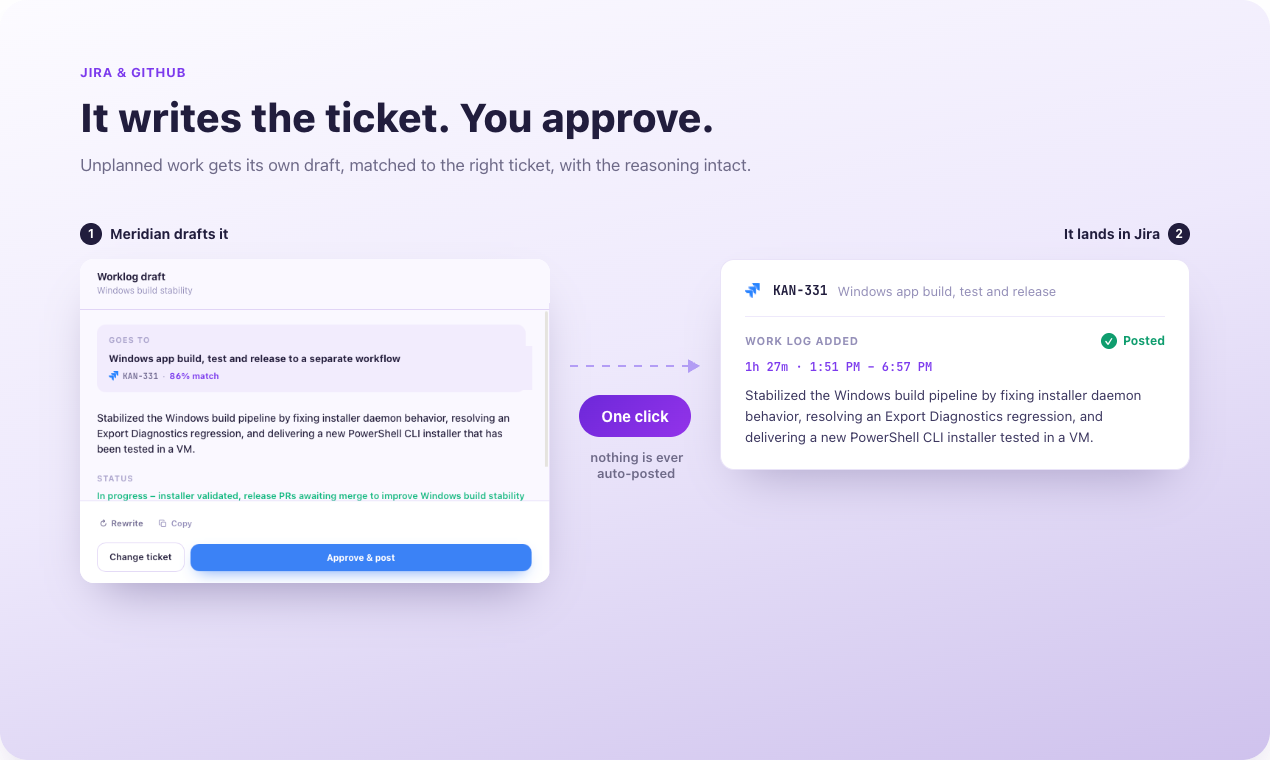
worklog draft one click update
-
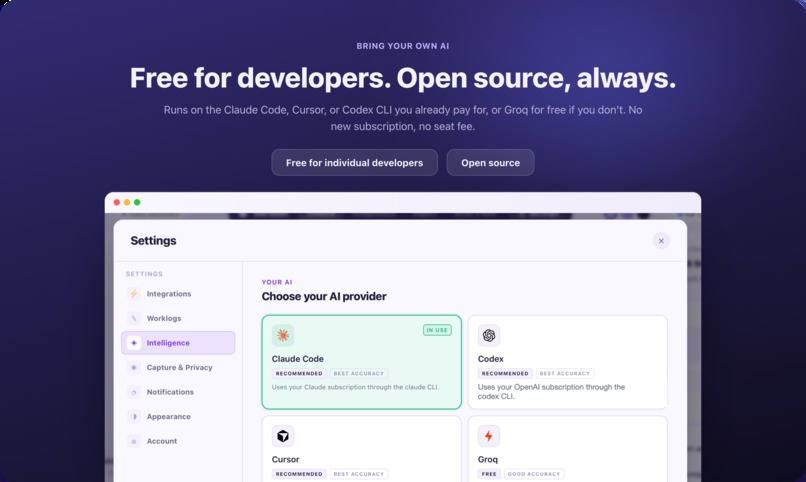
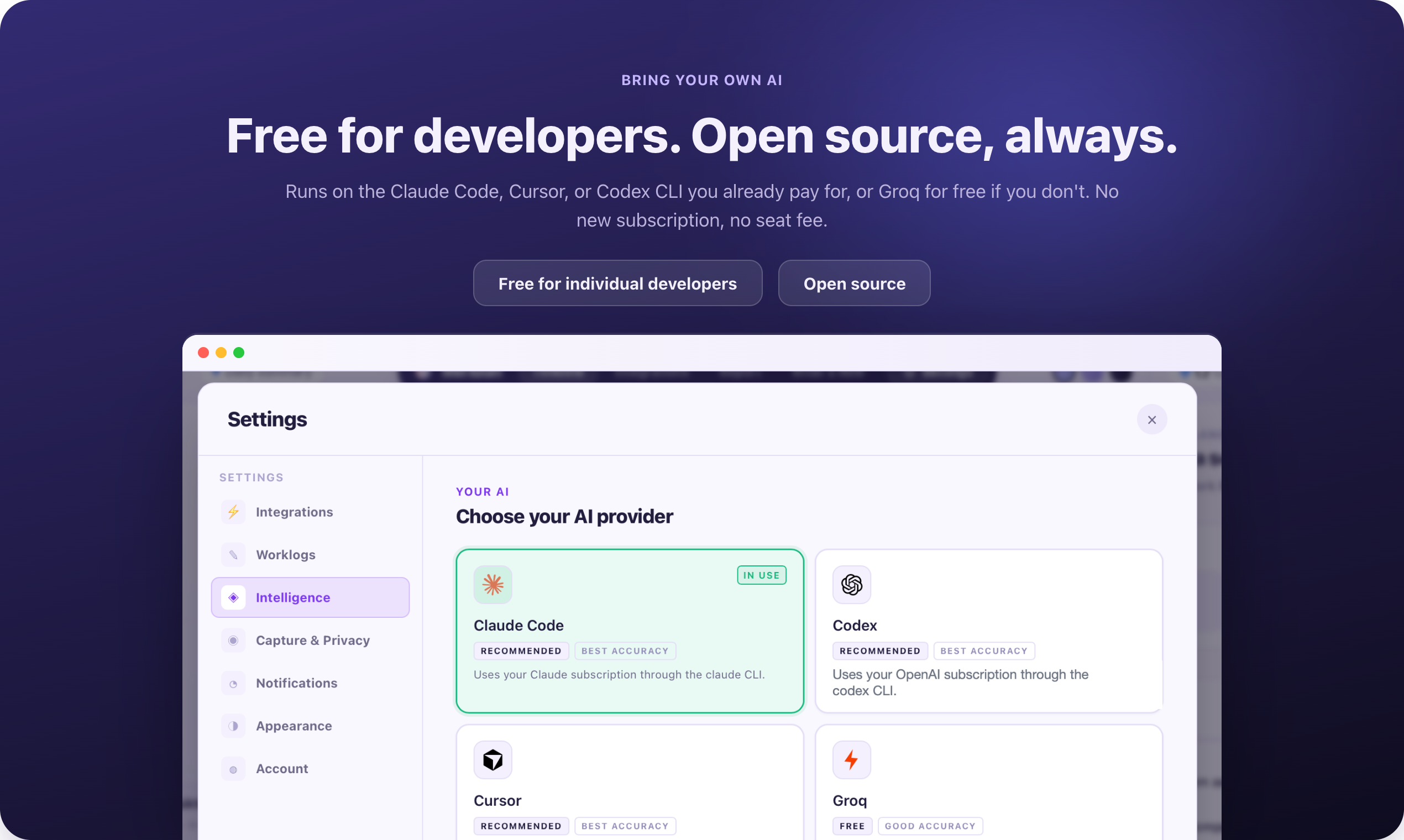
AI providers
-
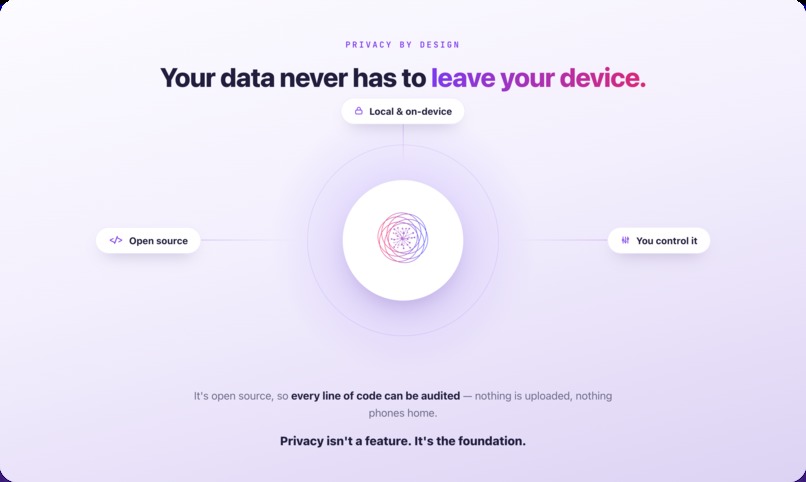
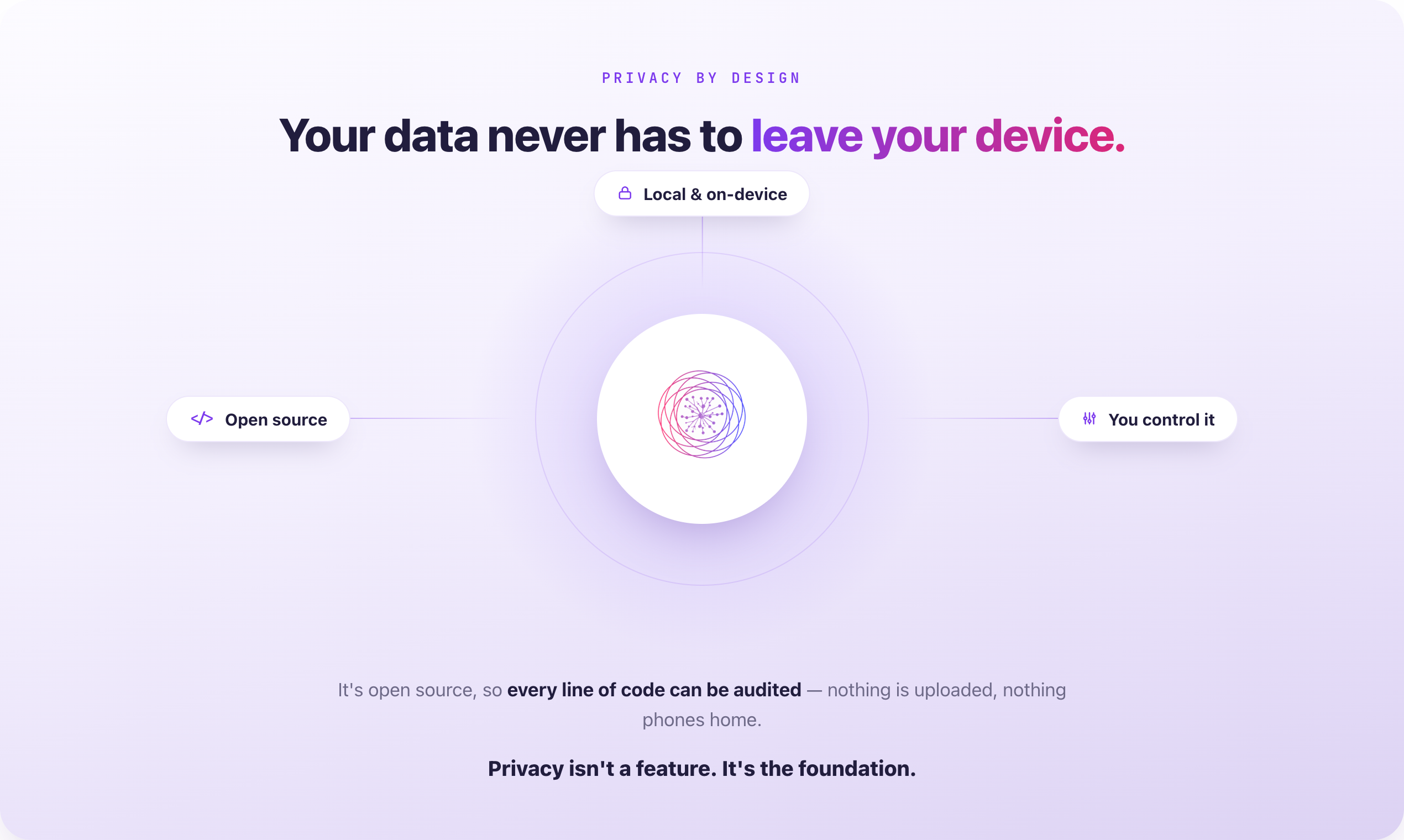
local and privacy first and open-source

Inspiration
Engineering tools record planned tickets and final commits, but much of the actual work remains invisible: debugging, investigation, code review, interruptions, experiments, and context switching. AI coding agents have accelerated implementation while increasing the review and debugging burden. After interviewing more than 50 engineers and engineering leaders, we built Meridian to capture this missing layer of development work automatically.
What it does
Meridian is a local-first, open-source AI work journal for developers and engineering teams. It runs quietly in the background on macOS and Windows, reconstructing work from activity across coding agents, IDEs, browsers, terminals, and related development tools.
It organizes activity into a meaningful timeline, connects work with relevant Jira and GitHub tickets, and generates:
- Daily work summaries
- Worklogs and stand-up notes
- Draft project updates
- A searchable record of completed and unplanned work
Users review and approve generated content before sharing it. Meridian requires no cloud account, keeps data on the device until the user chooses to share it, and is MIT-licensed for individual developers.
How we built it
We built Meridian with TypeScript, React, Rust, Swift, Python, Tauri, and SQLite. GitHub and Jira integrations use their APIs and OAuth to connect captured activity with project context. Local LLMs transform raw activity into structured summaries and updates.
We use PostHog and Sentry for product analytics and reliability monitoring, with GitHub Actions, Docker, and Kubernetes supporting development and delivery.
Challenges we ran into
The hardest challenge was converting fragmented activity into an accurate work timeline without overwhelming users with noise. We also had to make background capture reliable while preserving privacy and keeping processing local.
Other major challenges included AI provider connection failures, OAuth token-refresh race conditions, database corruption recovery, telemetry pruning stalls, daemon startup reliability, and maintaining stable integrations across macOS and Windows.
Accomplishments that we're proud of
- Built a working local-first product for macOS and Windows
- Released Meridian as an MIT-licensed open-source project
- Integrated GitHub and Jira into an automatic work-journaling workflow
- Tested the product with 20 beta users, including several who became regular users
- Reached #1 Product of the Day and #3 Product of the Week on Product Hunt
- Created a privacy-conscious system that keeps users in control of what gets shared
What we learned
Capturing activity is easier than understanding it. Useful work journals require context, careful filtering, and strong user control rather than simply collecting more data.
We also learned that AI coding tools do not eliminate engineering work. They shift more effort toward reviewing, debugging, validating, and coordinating changes. Those activities need better visibility if teams want an accurate understanding of how software gets built.
What's next for Meridian
Next, we will improve Meridian's memory, activity reconstruction, and local AI capabilities while expanding integrations with the tools engineering teams already use. We will also develop an enterprise offering in collaboration with engineering teams signed on as design partners, with stronger team insights, administration, and privacy controls.

Log in or sign up for Devpost to join the conversation.