-
-
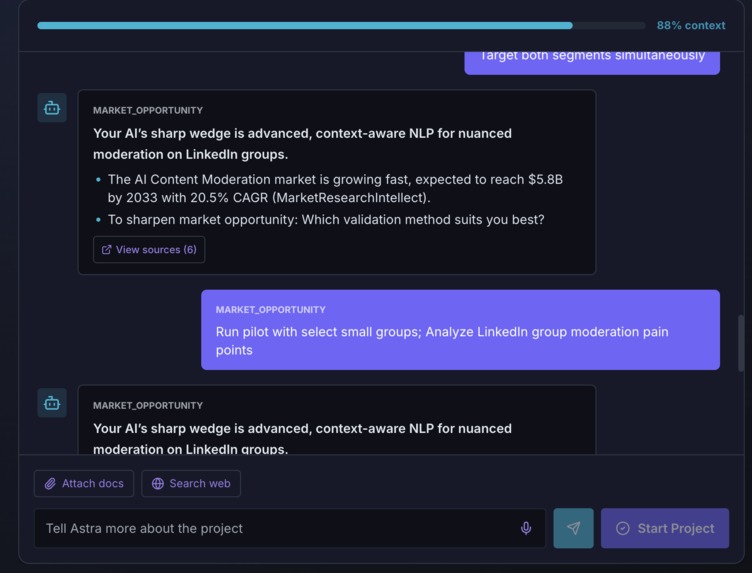
Onboarding flow
-
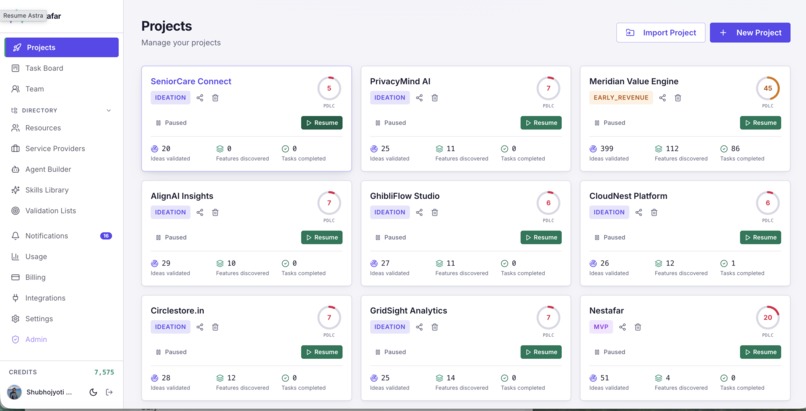
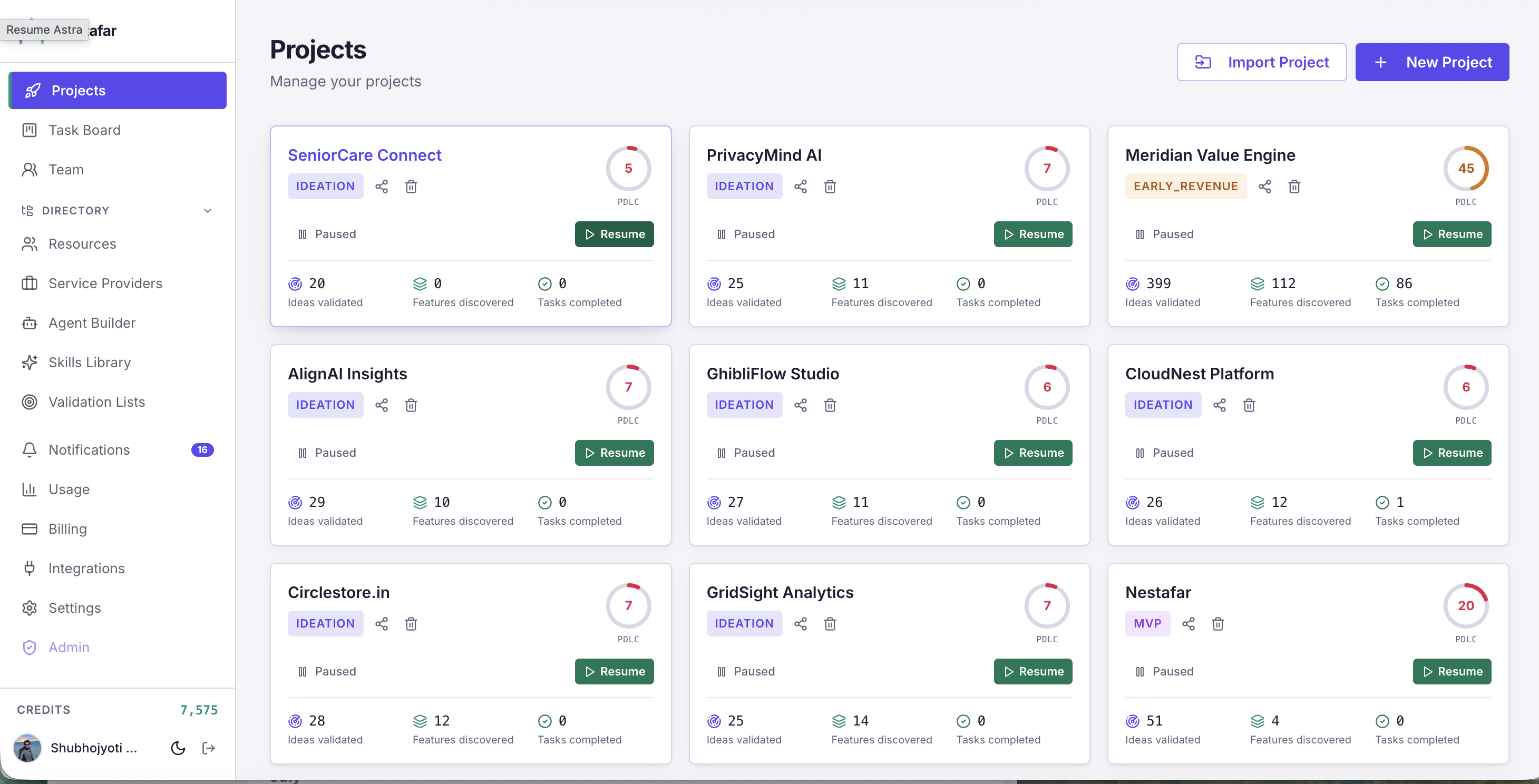
Organization Projects
-
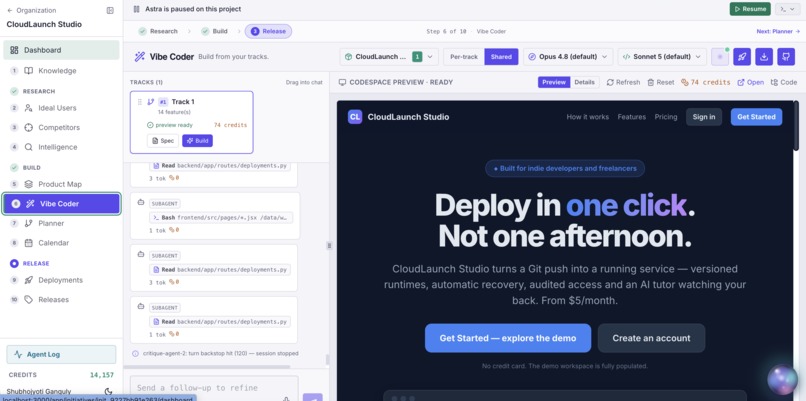
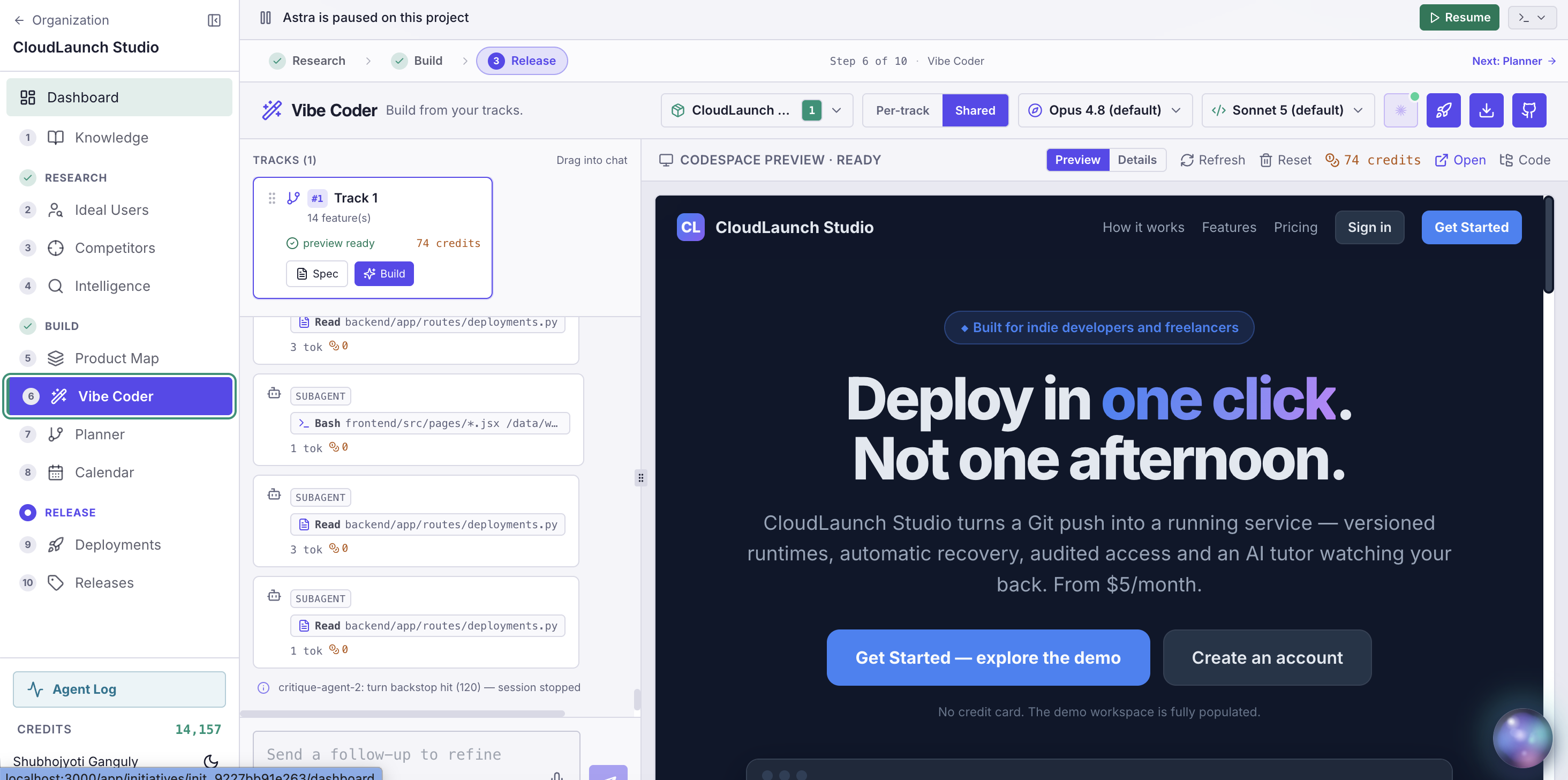
Vibe coding
-
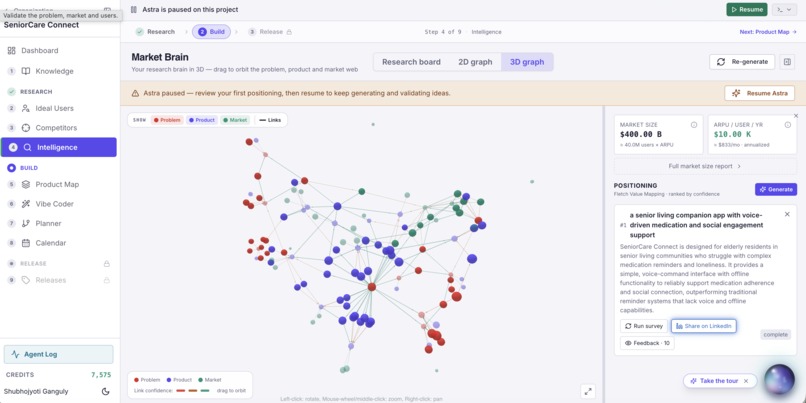
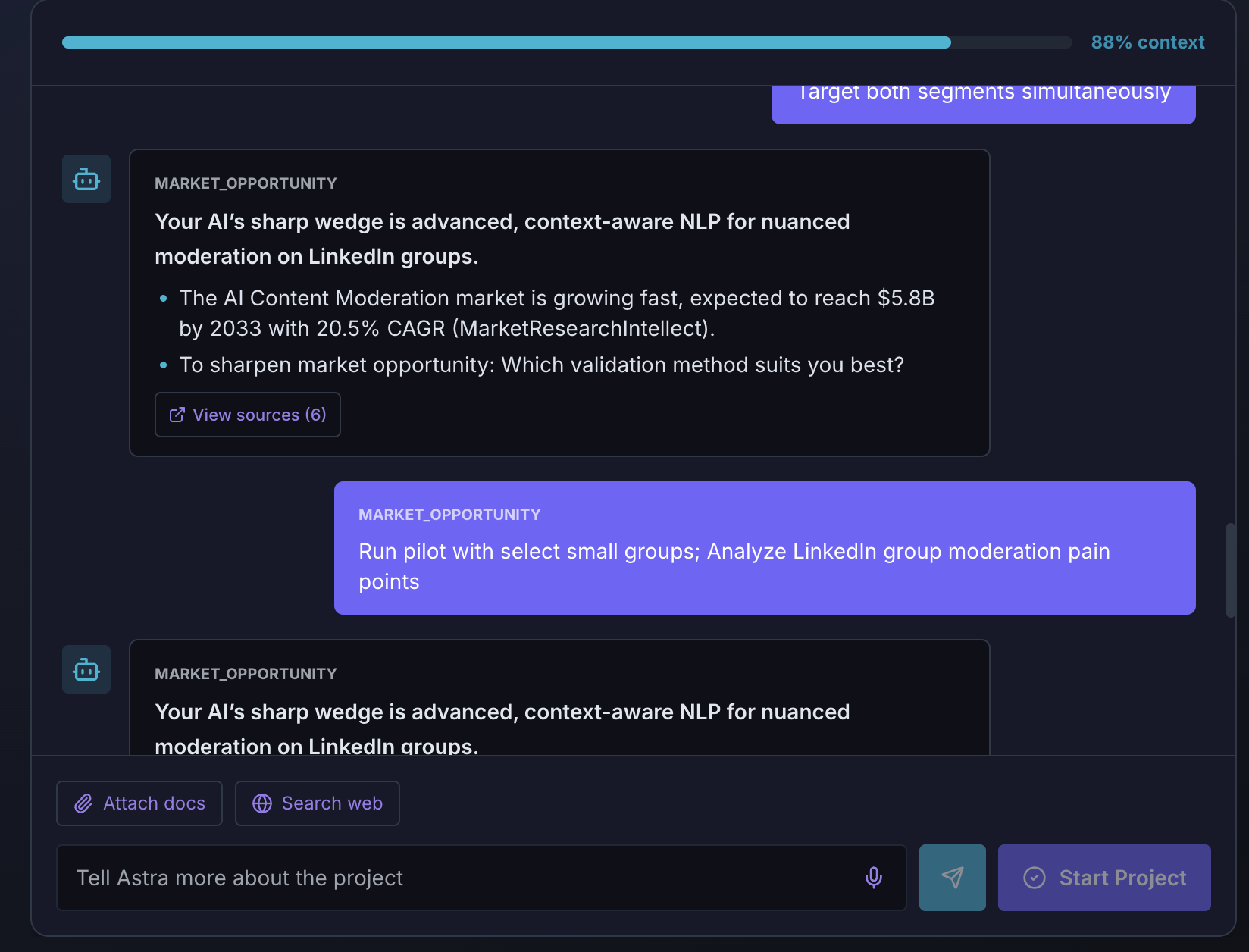
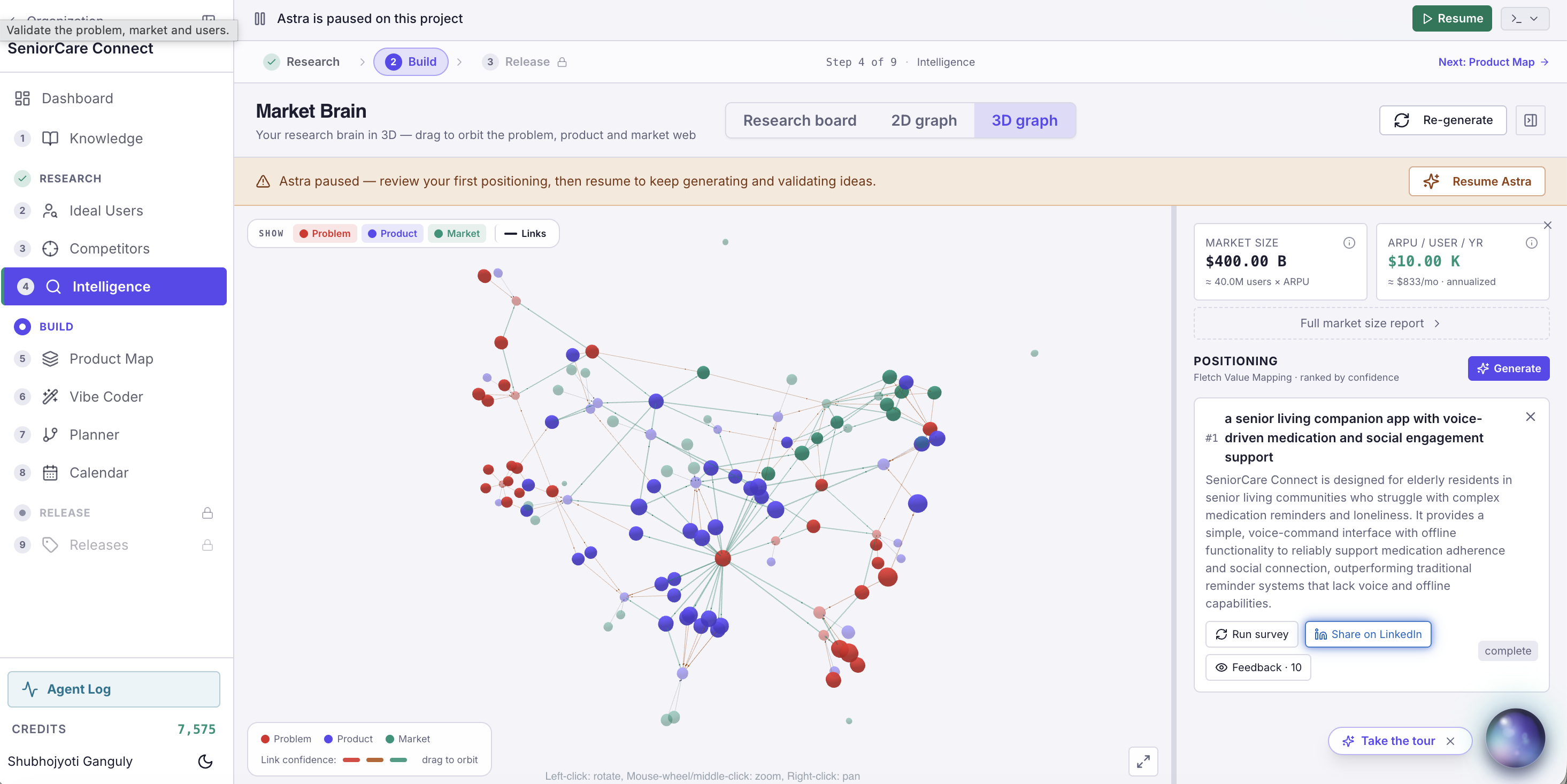
Market brain
-
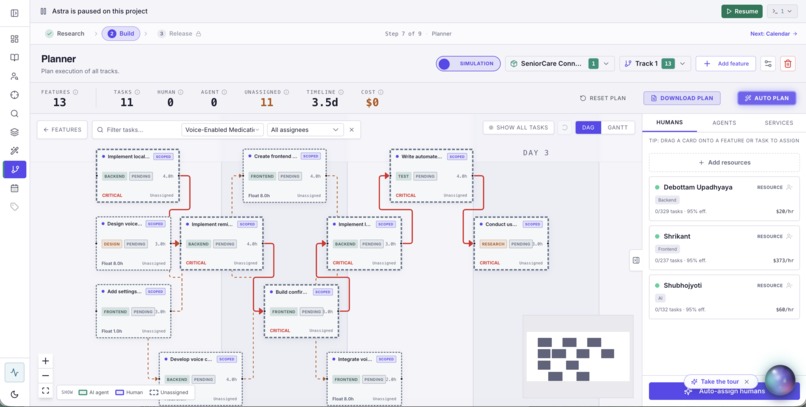
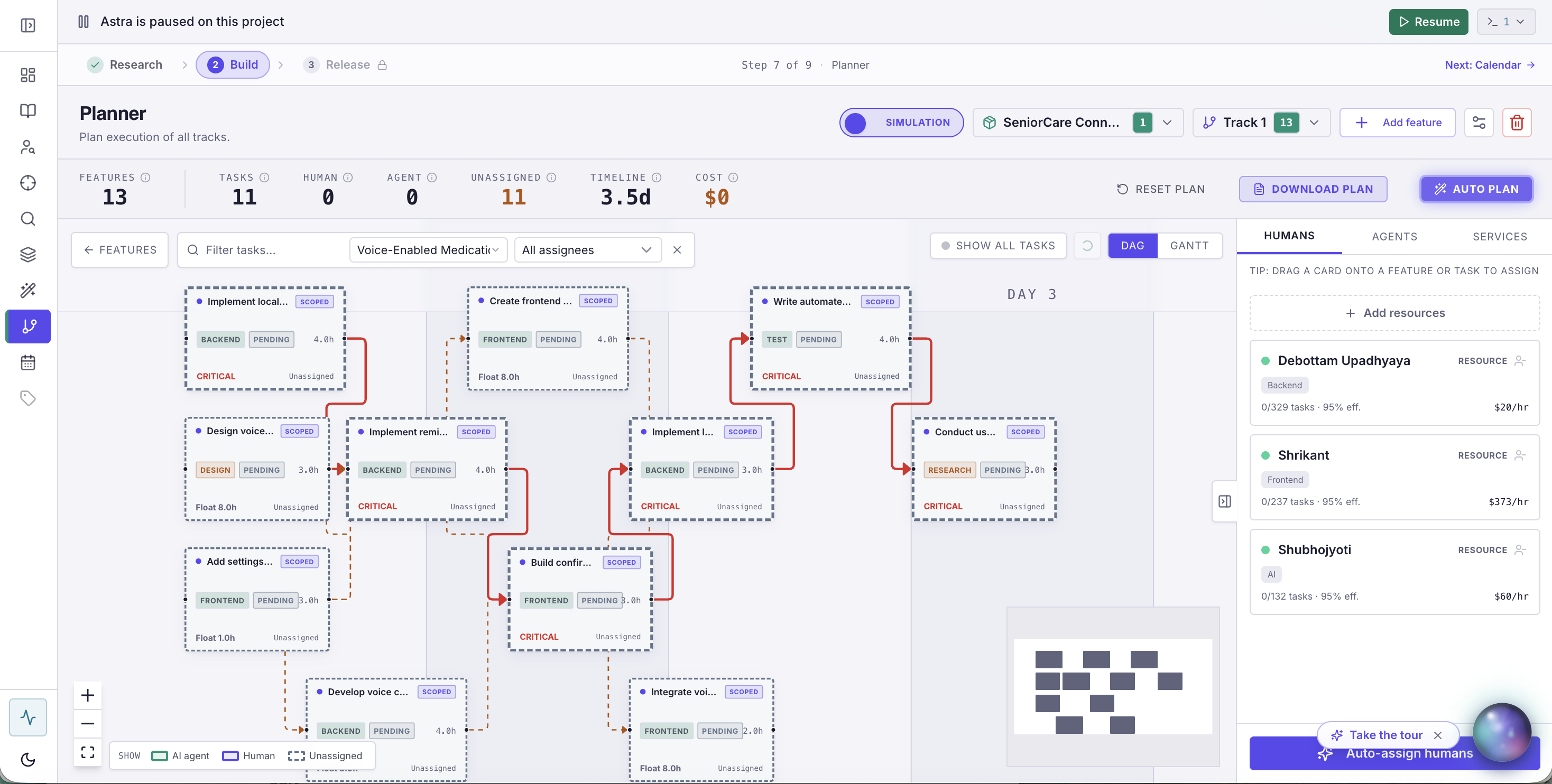
Human-agent planner
Inspiration
Our last startup, Nestafar, didn't fail because the product was broken — the code worked fine. It failed because we spent months building before we really knew whether the market wanted what we were making. That's a product-market fit problem, and we found out about it far too late and far too expensively.
It turns out that's the single biggest reason startups die — no market need, not bad engineering. And AI has quietly made it worse. Building is basically free now, so people ship an app the moment they have a prompt, before anyone checks whether there's real demand behind it.
We wanted to flip the order: validate first, build second. And we wanted it to work for the person who still has a day job and is trying to figure out whether their idea is actually worth quitting for.
What it does
Meridian is an ideation-to-MVP platform that helps you find product-market fit before you write a line of code.
You bring a raw idea. Meridian researches the market, simulates demand against a synthetic user base, and scores which features are actually worth building — then builds the MVP and puts it in front of real beta users so you can see whether it's worth pursuing full-time.
Tools like Replit and Emergent build whatever you ask them to, then leave the validation and the "is this a business" question to you. Meridian covers the whole line — research, validate, scope, build, release — so demand is proven before the build starts, not hoped for after it ships.
How we built it
Meridian is five modules on one engine — Research, Validate, Scope, Build, Release — with an agent called Astra walking the user through each stage.
The core is our Value Engine, a product-market brain. It runs a synthetic market of AI agents modelled on real personality distributions (OCEAN), attaches an Expected Commercial Value score to every feature so you know what each one is worth before building it, and then handles the agentic build.
The stack is React on the front end, a Node/Express gateway, and Python FastAPI agent workers running on Claude and GPT, with Postgres and pgvector on Supabase, Voyage AI embeddings, and AWS underneath. The first version was intense: we shipped roughly 90% of the codebase in two days at VibeCon and placed in India's top 20.
Challenges we ran into
The hardest part was making synthetic users feel like real people instead of a homogeneous crowd that agrees with everything. We fixed it by generating the population's trait distribution first, then expanding each persona individually — so the market pushes back the way a real one does.
The second was trust around cost. Every validation and build run spends real money, and our first credit system was fire-and-forget. We rebuilt it as a server-owned run state with a cost preview before you commit and a hard budget ceiling that actually auto-pauses. The last one was keeping the market model honest over time, which our sync layer handles by continuously correcting the synthetic market against real signal.
Accomplishments that we're proud of
Shipping 90% of a real product in two days and placing top-20 nationally — then turning that sprint into something durable instead of throwing it away.
On traction: 50+ users, a paying enterprise client, and a ₹3.1L ARR run-rate, all 100% organic with zero ad spend. We also picked up weekly mentoring from a Director of Engineering at Razorpay along the way.
The one we like most is quieter: we validated Meridian using Meridian. The product is built on its own medicine.
What we learned
Building is solved. Knowing what to build is the real competitive advantage now — and almost no tool is aimed at that.
We also learned that validation only works if it's baked into the workflow. Make it a separate step and people skip it, every time. And because our engine keeps every research finding, decision, and outcome, it gets sharper with each cycle — the product brain compounds, which means leaving it behind gets more expensive the longer you use it.
What's next for Meridian
Next up is distribution — the third leg alongside ideation and development — so Meridian takes you from idea all the way to first users, not just to a shipped MVP.
After that: domain-specific validation agents for verticals like fintech and healthtech, where two of our early users have already asked for them unprompted, and expansion beyond India into Singapore and the EU.
Built With
- amazon-web-services
- anthropic
- claude
- claude-code
- digitalocean
- docker
- fastapi
- github-api
- google-gemini
- javascript
- keda
- kubernetes
- litellm
- mcp
- mongodb
- openai
- python
- react
- redis
- stripe
- tailwindcss
- terraform
- tree-sitter
- websockets

Log in or sign up for Devpost to join the conversation.