-
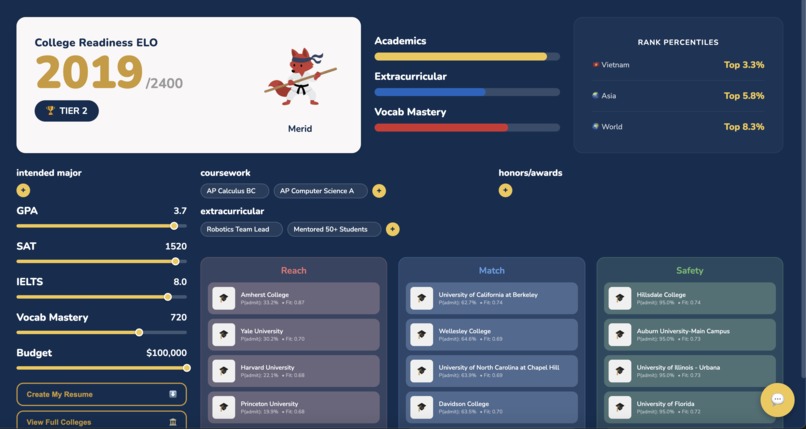
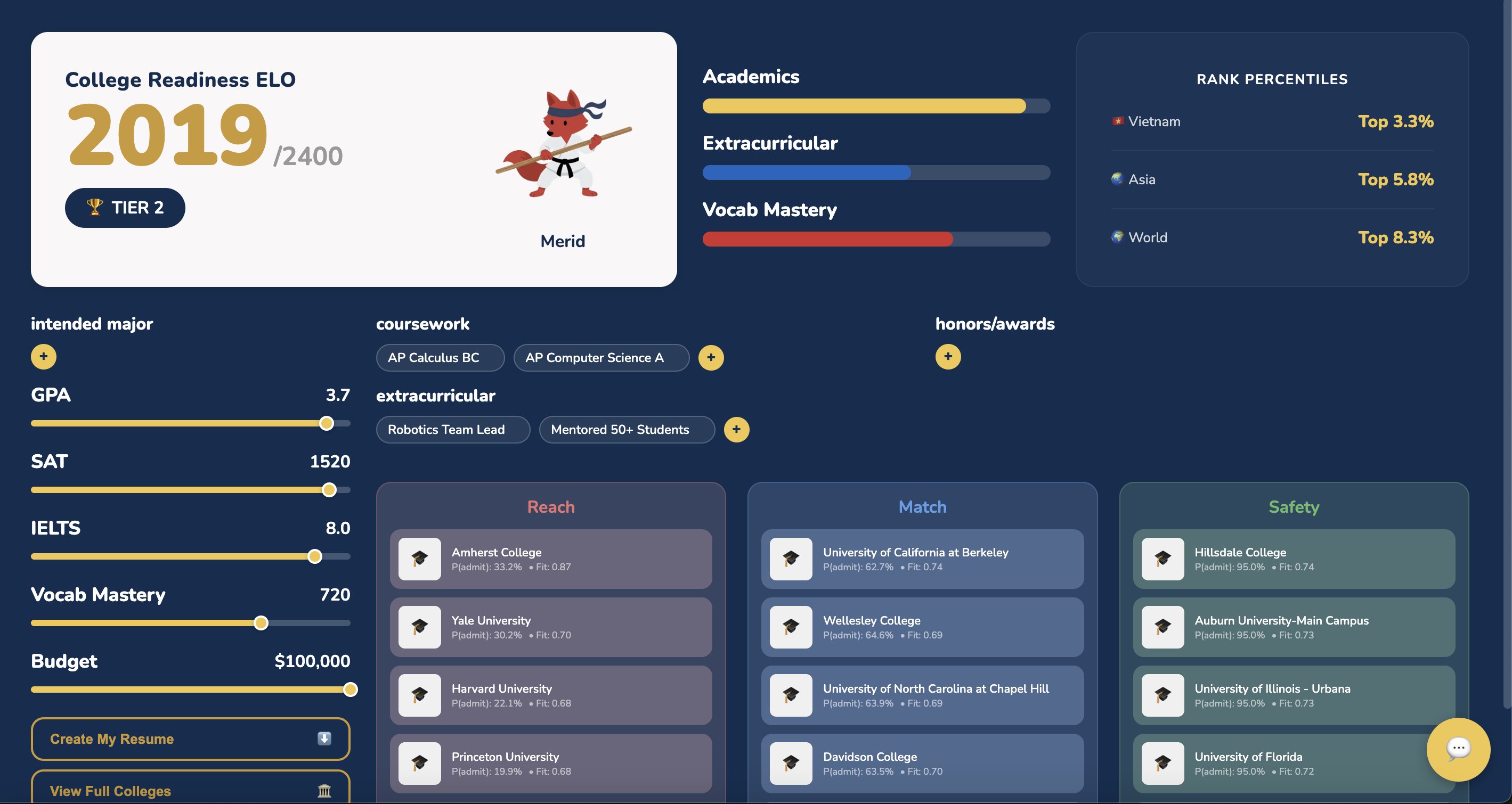
Our main Merid dashboard
-
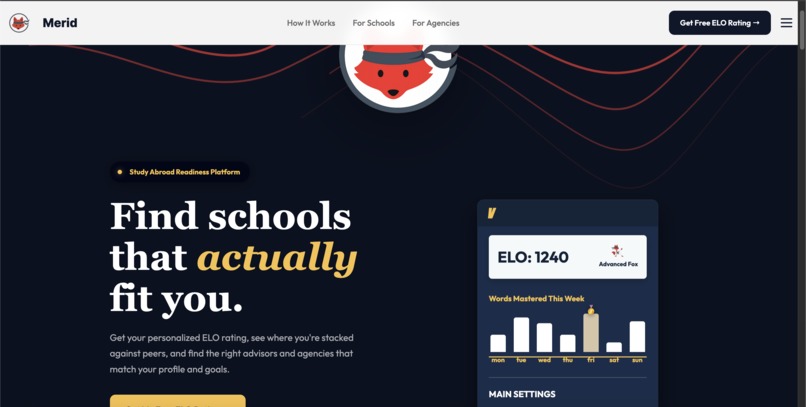
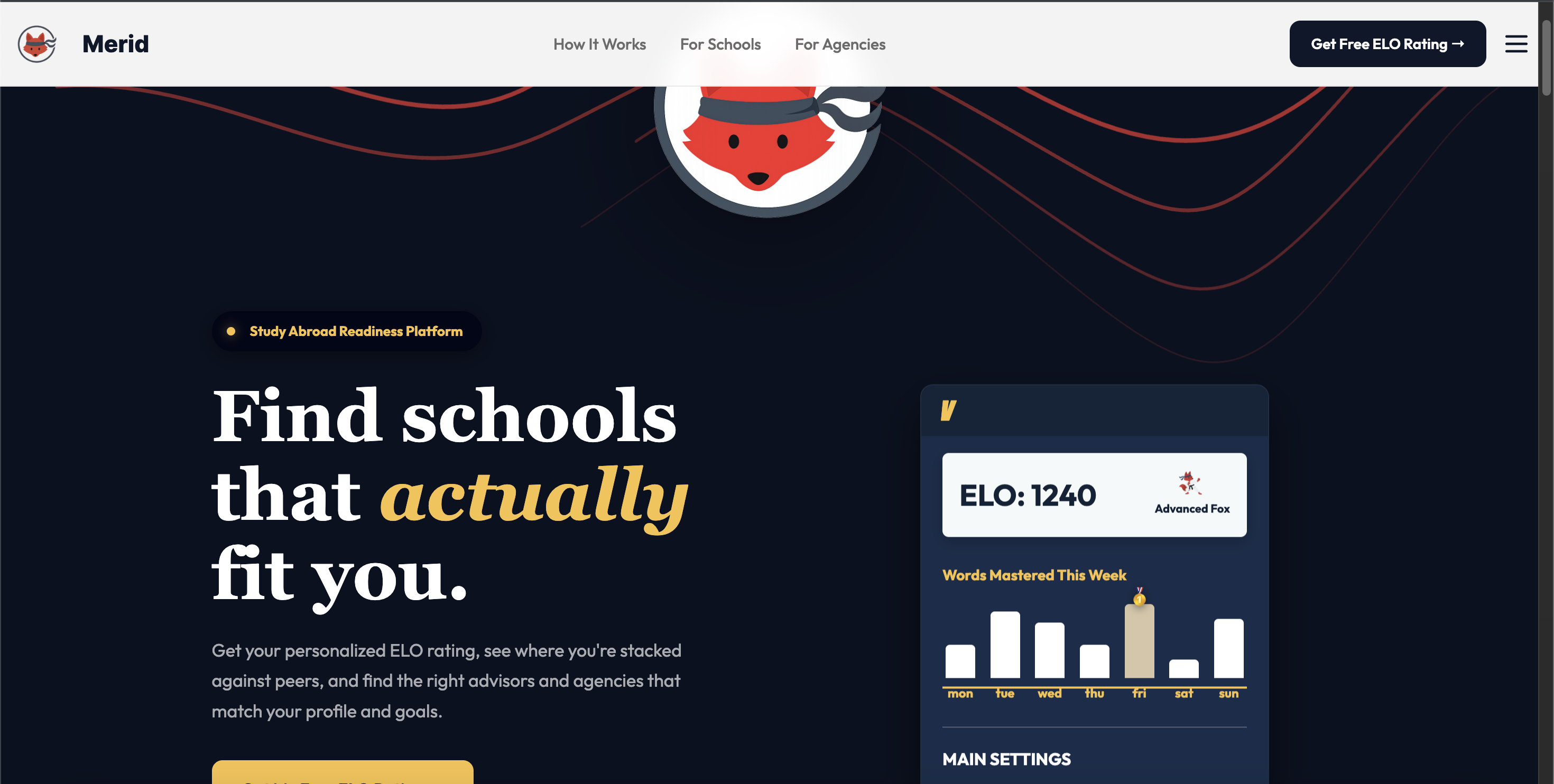
Main website
-
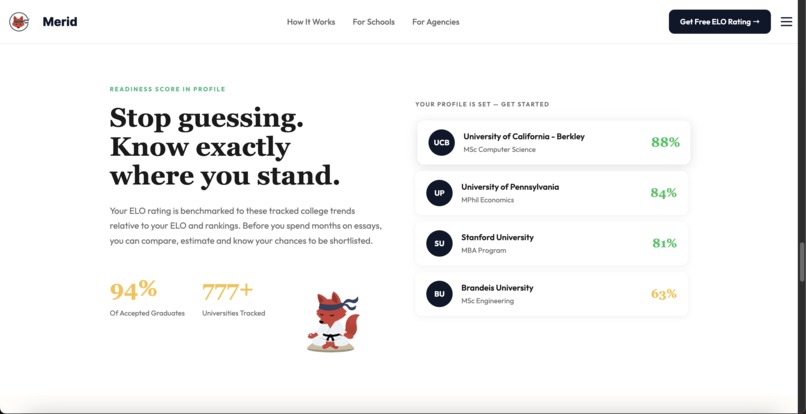
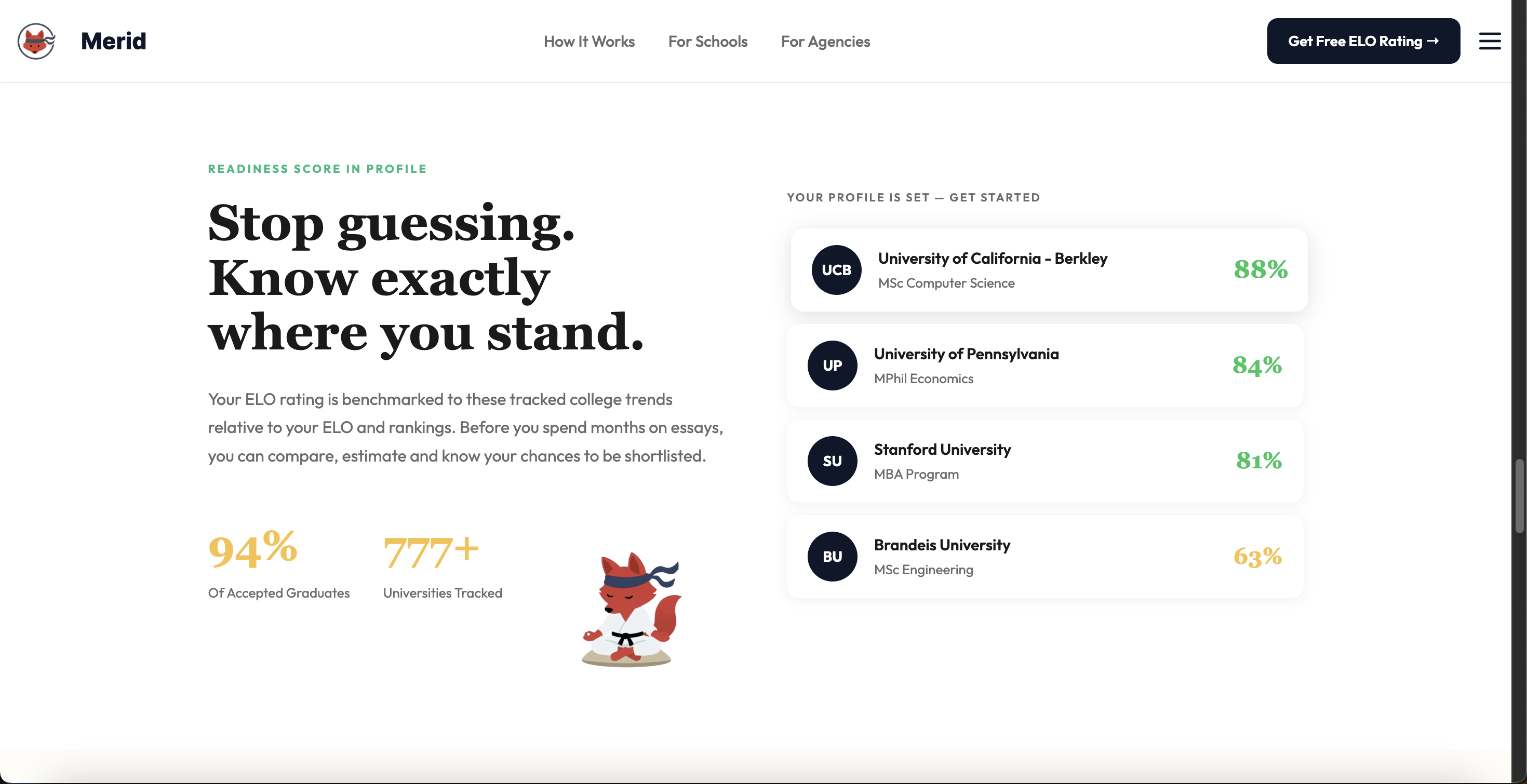
Main website 2
-
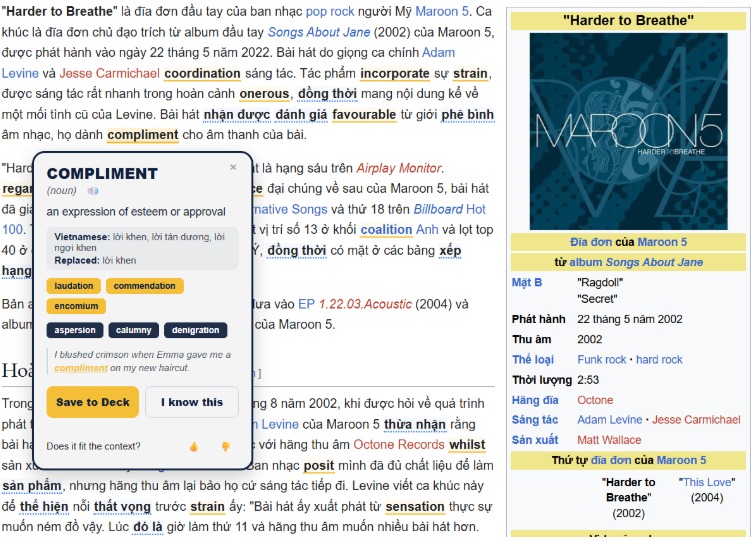
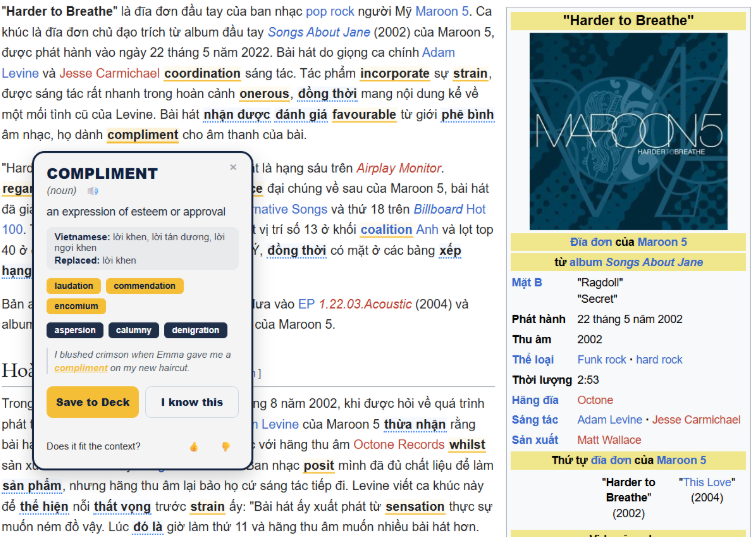
Contextual in use
-
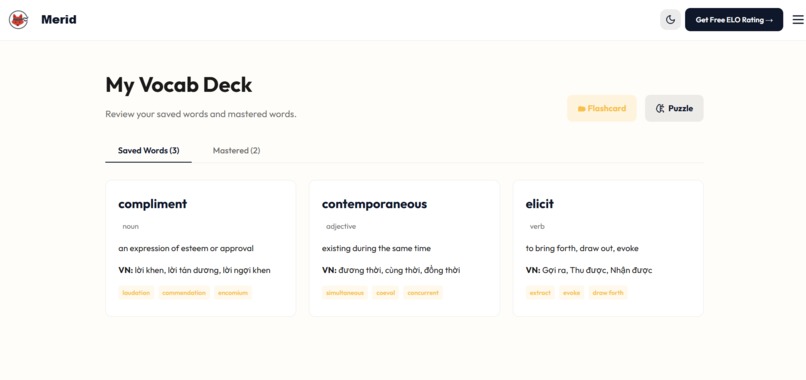
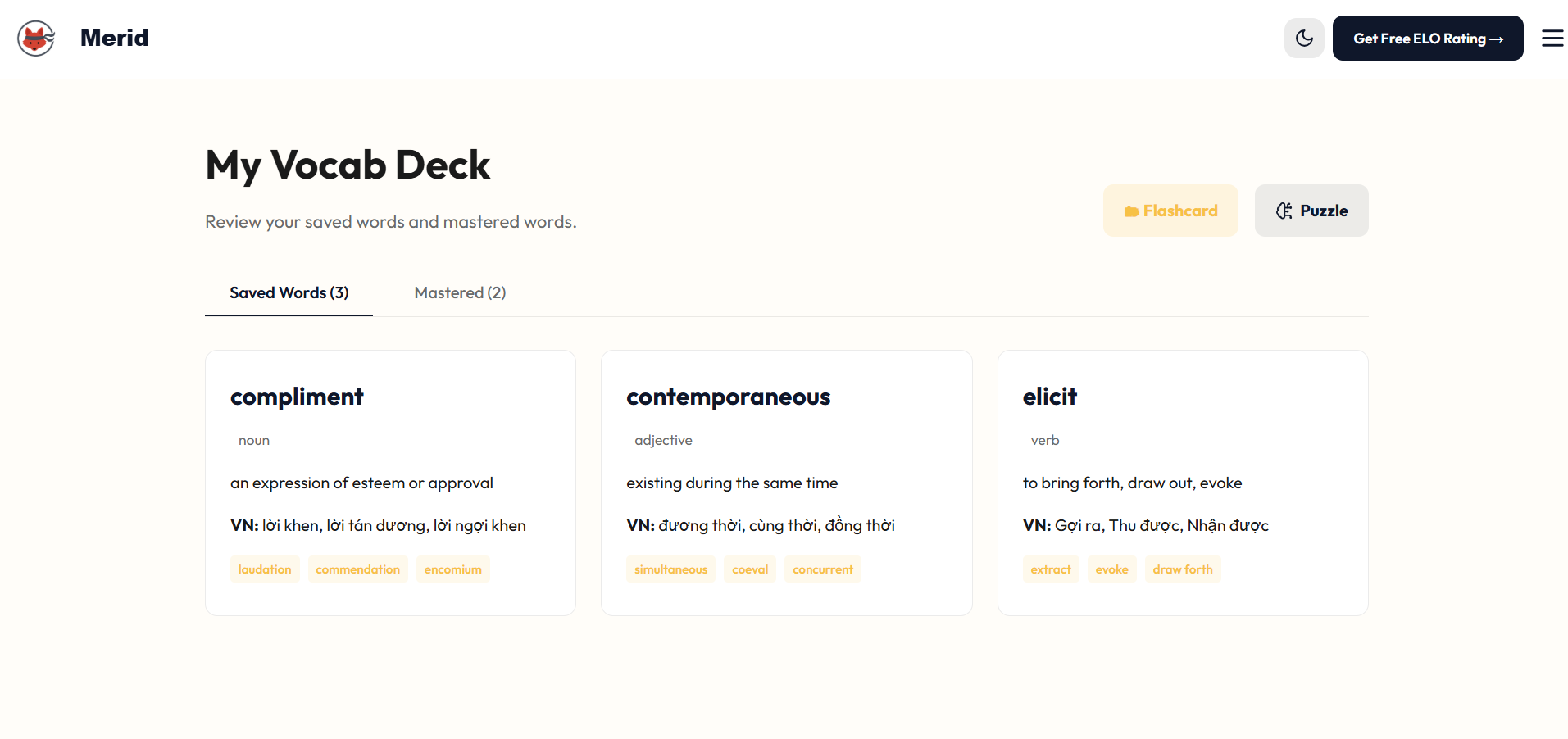
Vocab Deck
Inspiration
Students are lost in a sea of Universities. Agencies are burning budgets cold-calling uninterested students. Both are searching for something they can't find. There is no bridge leading anyone anywhere
So we built that
But not in the traditional way of a “University matching” app that’s exactly like 100 others out there.
What it does
Merid is a two-sided Edtech platform that acts as a bridge, benefiting both the student and the agency.
For students: Meet Contextual by Merid, a Chrome extension for passive vocabulary learning. As students doomscroll or browse their normal web pages, Contextual underlines everyday Vietnamese words and instantly provides their high-level SAT/IELTS English equivalents to assist with test prep. As students build a daily habit, we use gamified progressive profiling to gently collect their academic data, which drives them to Merid, where they are highly motivated to complete their full profile to unlock their ultimate reward: a personalized, right-fit college list and plan.
For agencies (ETEST): Once the students complete their profiles on Merid, our B2B dashboard allows agencies to bypass the noise and query our database to directly match with Vietnamese students who perfectly fit their specific program requirements. Our app acts as a bridge connecting these agencies with desperate parent-students.
How we built it
We split the architecture into two components: the extension 'Contextual' by Merid and the main matchmaking web app 'Merid':
- Frontend built with CSS3 and HTML5
- Firebase for the database
- Google OAuth for login security
- Gemini API calls for the complete dataset
- Valsea API for Vietnamese context comprehension
- Customized MutationObserver, TreeWalker, and PostMessage functions
- Regex to extract text from webpages
- Vite to run ReactJS
- ElevenLabs voice agent as a personalized assistant
Challenges we ran into
A major challenge we faced was the system blindly replacing words based on a dictionary dataset; users reading a simple instruction like "Clear the table" were suddenly looking at "Lucid the table." Worse, when reading Vietnamese articles, the system was tearing apart compound words and translating proper nouns. The province of "Bình Thuận" became "Bình advantageous," and the word "Cai trị" (to rule) was humorously split into "Forsake trị."
Another pain in the ass was pushing the whole thing up and running. We encountered tons of backend and database problems, because our project uses NodeJS, publishing normally to GitHub was not so preferable.
Chrome's Web Store review process takes longer than expected. Because of this, we are currently distributing Contextual as a closed beta via developer mode while we await official publication.
Accomplishments that we're proud of
- Our proudest achievement is the extension and web, of course. Connecting everything and seeing that it FINALLY works was satisfying
- Successfully routing data between our browser extension, our web platform, and our backend architecture.
- The IDEA! How it solves 2 pain points at the same time.
- Engineered an AI that grasps actual webpage context for exact translations, completely ditching blind dictionary swaps (our first model :) )
- As absolute beginners to Chrome extension development, getting a fully functional product running was a huge win.
What we learned
Cooperation and workflow. We had a cooperating team where dividing the work was pretty seamless; no one had work-related bottleneck issues, which led to us being quite proud of how Merid turned out.
Networking plays an important part. As highschoolers at an event packed with seasoned engineers, it was initially intimidating to speak up. It took us some time to gather our courage initially. If we had been too scared to ask experienced developers for help, we could have been stuck on a single problem for ages.
We also learnt how complicated and tangled a working site could be. We never expected so ordinary a site would require such intricate attention to detail. The number of bugs we ran into when trying to connect 2 parts of a website CANNOT be shown in numbers.
What's next for Merid
- Scale Merid to support multiple languages and better datasets for standardized tests
- Build a more robust, personalized assessment system
- Use the crowdsourced feedback to train our own lightweight ML model, which would lessen the stress on API calls and perfect the contextual translation locally.
- Continue refining the UI/UX for a more seamless flow
- Deploy, beta testing, and actually connect with students and agencies
We started this project because of the abundance of English -> Vietnamese translation app but not otherwise. We realized the abundance of "University matching" apps that could not connect students OR agencies. Merid was built to solve this exact dual pain point. Our long-term goal is to be the ultimate bridge between these two parties.
Built With
- css
- elevenlabs
- firebase
- html
- javascript
- manus
- openai
- react


Log in or sign up for Devpost to join the conversation.