Inspiration
Our inspiration for this project is to help professionals, students, and content creators have an easier time with speaking
What it does
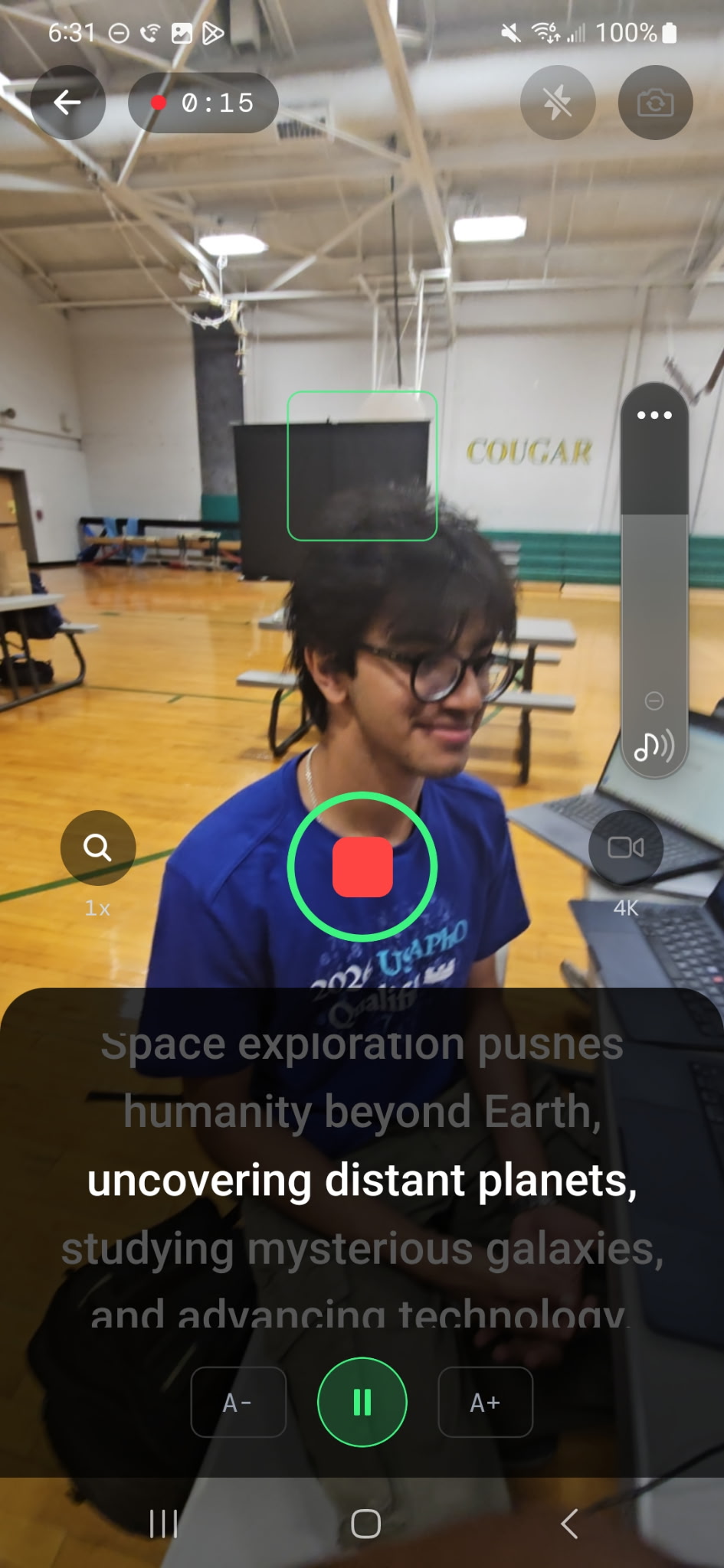
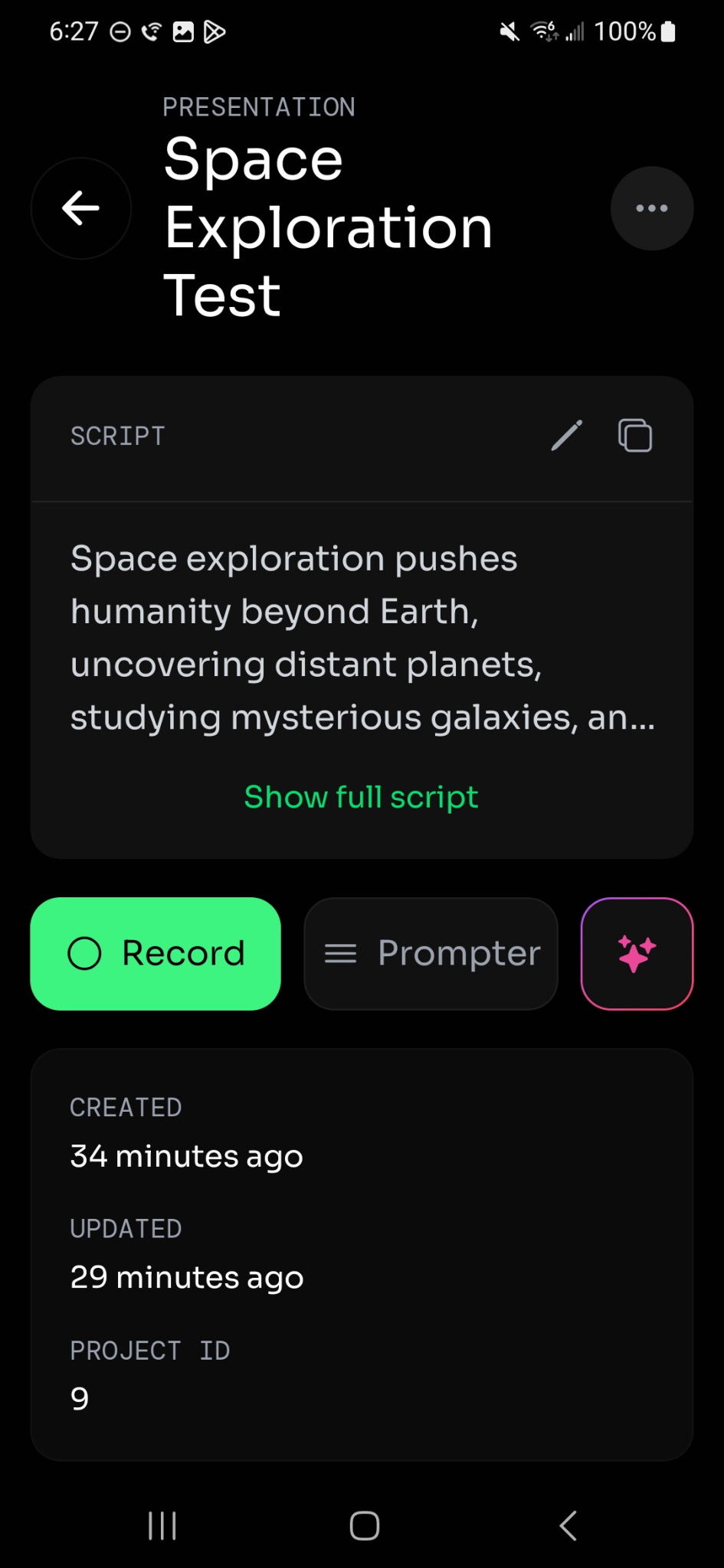
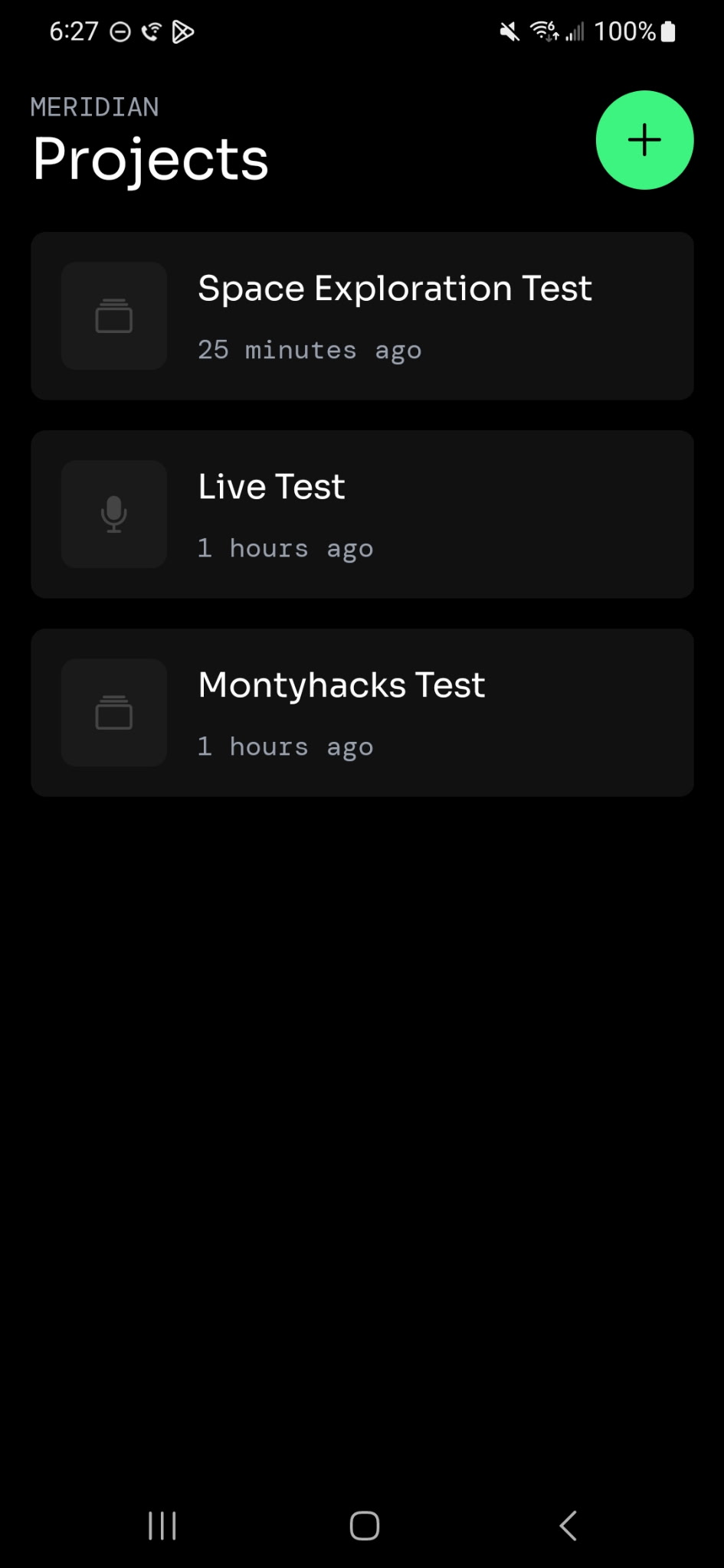
Our product provides a video recording pipeline that allows people to record video and audio with a voice-based transcript.
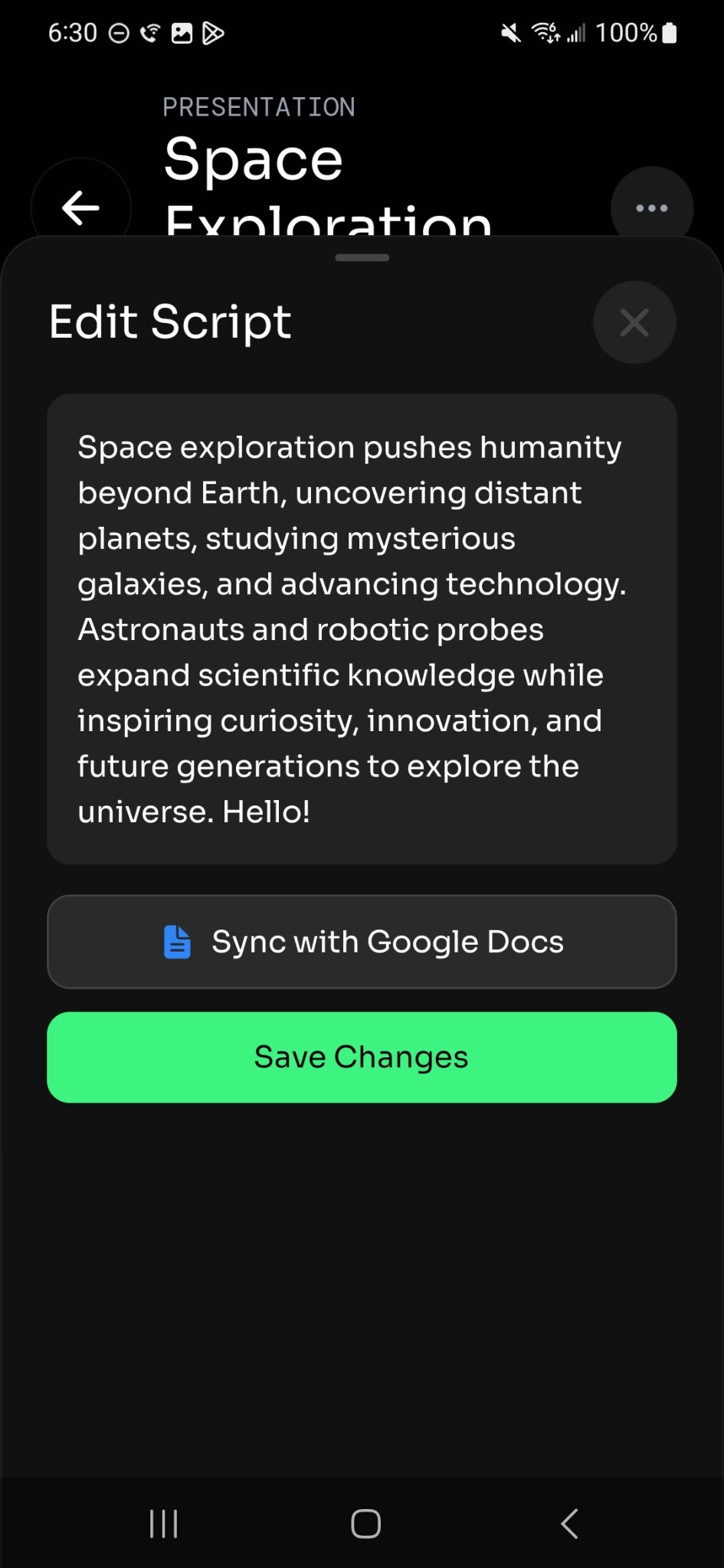
One of the main features of the app is a teleprompter that uses on-device ML models to move the teleprompter with the audio that is currently being said. We have it as a standalone or integrated into a video recording screen. Here, you have granular control over features like exposure, flash, and video quality, which is tuned by more on-device ML models.
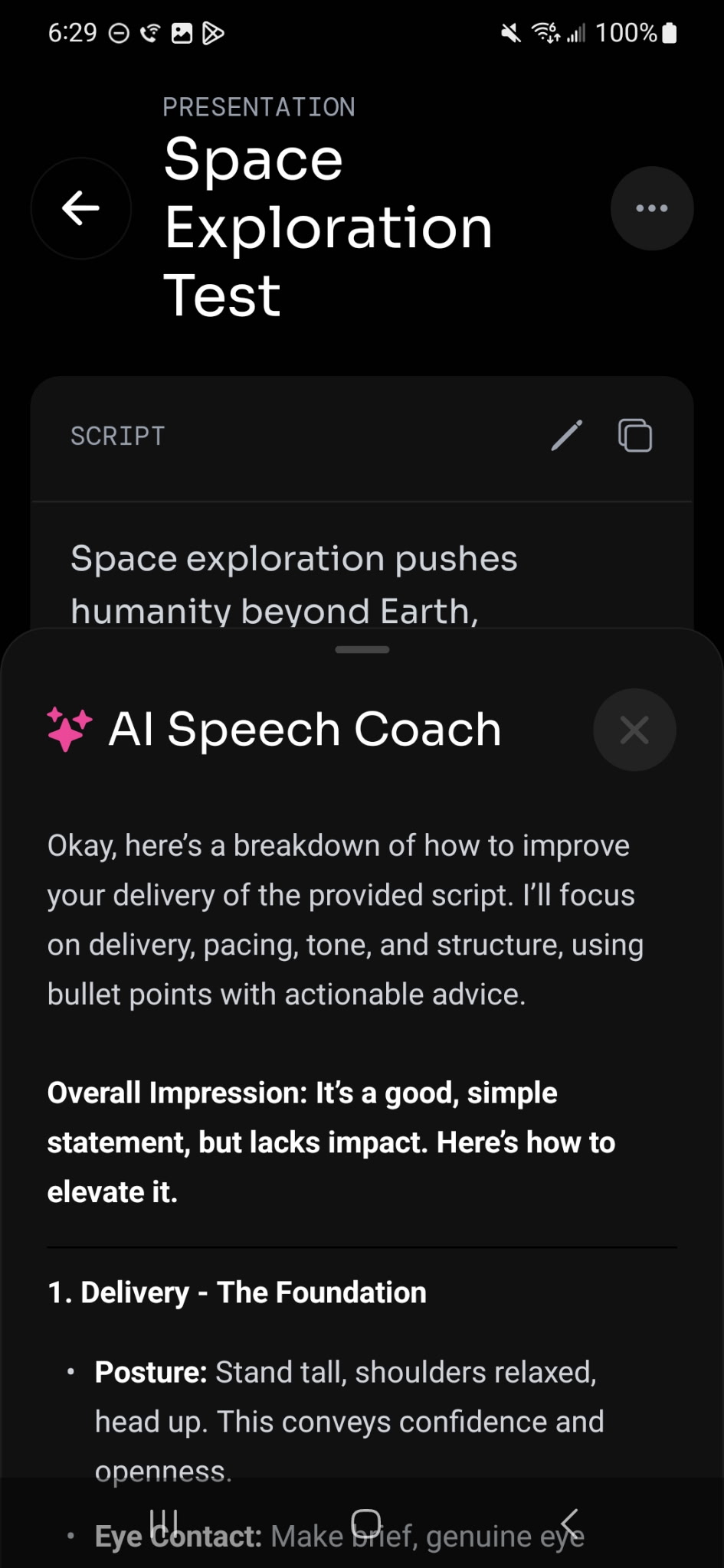
We also have an AI Speech Coach powered by Gemma E2B running on Nvidia Inference Models, allowing users to get real-time deep feedback into how they can improve their scripts. This is especially helpful for content creators to build their followings, or for businesses and entrepreneurs to give more compelling speeches and presentations.
How we built it
We used React Native with Expo to create a performant, powerful cross-platform mobile application. We utilized the power of modern devices and on-device models to create a uniquely elegant and fast interface. Libraries like expo-router and react-native-vision-camera were just some of the tools that we used to bring these features to life during Montyhacks IX. Using Claude as a designer, we crafted a sharp user interface to tie it all together.
Challenges we ran into
One challenge we ran into was integrating all of these features together given the strict time that we had. We got around that by creating UI blueprints and then passing in Claude-designed layouts to Github Copilot and Gemini 3.1, which created the front-end beautifully with our pre-designed components while allowing us to focus on creating a complete backend experience.
Accomplishments that we're proud of
We are proud of accomplishing deep integration with AI/ML models like OpenAI Whisper, Gemma E2B, and Google on-device TTS. This allowed us to take our app to the next level, bypassing cloud-based models and allowing us to keep the app on-device, open source, and privacy focused. If the user doesn't want to, all of their information, from the script to the video, will stay on their device. In addition, the app can be 100% free if they choose not to use the AI Speech Coach.
What we learned
We learned how to create applications that integrate more closely with the system. Using expo-dev-client, we were able to load APKs onto Android testing devices and integrate with low-level drivers and software like Vulkan and GPU/NPUs, allowing for incredible performance and near real-time speech-to-text.
What's next for Meridian
We plan to expand with deeper integration like Adobe Premiere and Capcut (right now, people have to upload video and audio from their camera roll which isn't terrible) and make it compatible with social media platforms' data and upload pipelines. We also want to polish it up and upload it to the iOS and Android app stores (like Shashank did with his app last year, Quasar, which now has over 3000 users worldwide!). Cleaning up the app, speeding up the voice detection, and adding even more features for creators and innovators is definitely in the future for Meridian.
NOTE: One of our demo videos is in the Try It Out section.
Built With
- expo-dev-client
- expo-router
- expo.io
- javascript
- nvidia-inference-models
- react-native-reanimated
- react-native-vision-camera

Log in or sign up for Devpost to join the conversation.