Inspiration
India generates over 62 million tons of waste every year, yet less than half is processed scientifically. The rest piles up on streets, open lands, and water bodies — not because solutions don’t exist, but because coordination between citizens, workers, and governments is broken.
We noticed a common frustration everywhere:
Citizens want cleaner neighborhoods but don’t know where or how to report waste effectively
Sanitation workers receive inefficient, random assignments
Officials lack real-time visibility and are forced to react instead of prevent
After studying waste systems in Indian metro cities and global leaders like Finland, Singapore, and South Korea, we realized the missing piece wasn’t hardware — it was an intelligent, unified coordination platform. That insight became Meri Dharani.
What it does
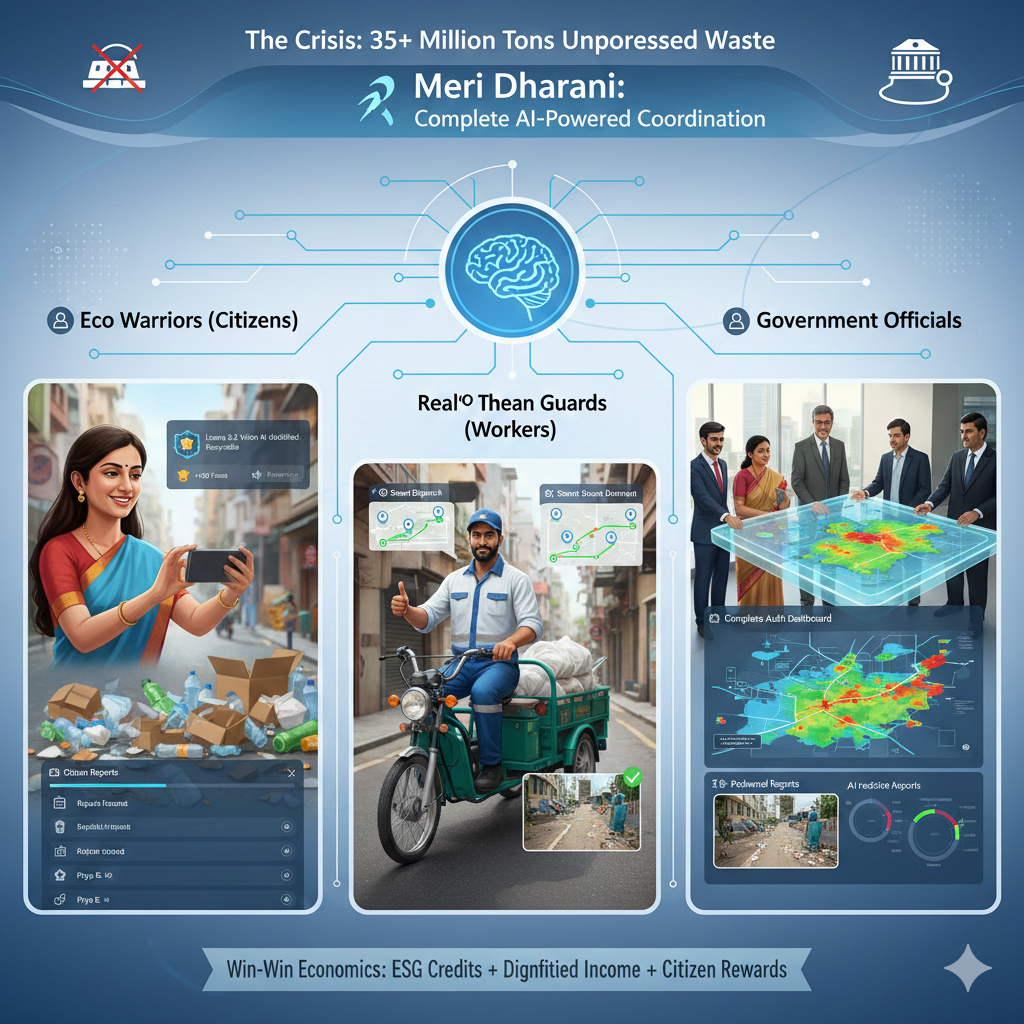
Meri Dharani is an AI-powered smart waste management ecosystem that connects citizens, cleanup workers, and government officials on one real-time platform.
Citizens report waste with photos
AI validates and classifies waste automatically
Workers receive optimized cleanup routes
Officials get live dashboards, heatmaps, and predictions
The platform transforms waste management from complaint-driven to data-driven, ensuring accountability, transparency, and sustained community engagement.
How we built it AI & Machine Learning
Llama 3.2 Vision (11B) for real-time waste detection and classification from photos
Llama 3.3 (70B) multilingual AI chatbot via Groq Cloud (Hindi, Telugu, English)
Predictive models for waste hotspot forecasting
Backend
FastAPI for high-performance APIs
AWS Lambda for scalable, serverless notifications
MongoDB Atlas for real-time data storage
Google OAuth for secure authentication
Frontend
Progressive Web App (PWA) with offline support
Mapbox for interactive live maps and heatmaps
Tailwind CSS for a clean, responsive UI
Full multilingual support
Challenges we ran into
Accurate waste detection: Differentiating real waste from irrelevant images
False reporting: Preventing misuse while keeping the system accessible
Route optimization: Balancing efficiency with worker flexibility
Scalability: Designing a system that works from a single ward to an entire state
Stakeholder alignment: Building one platform that serves citizens, workers, and officials equally
Accomplishments that we're proud of
Built a complete end-to-end AI-driven waste coordination system
Achieved 95%+ accuracy in waste classification using Vision AI
Designed a verified cleanup system using before/after images
Created a fair gig-economy model for sanitation workers
Enabled real-time heatmaps and predictive analytics for governments
Delivered a fully functional PWA, not just a concept
What we learned
Waste management is more about behavior and coordination than technology alone
Citizens engage more when they see real impact and rewards
AI can dramatically reduce manual workload for governments
Transparency builds trust across all stakeholders
Designing for inclusivity (language, accessibility, offline use) is critical in India
What's next for Meri Dharani
Pilot launch in Andhra Pradesh with municipal partnerships
Integrate carbon credit tracking and ESG reporting
Expand AI predictions for seasonal and event-based waste surges
Add smart bin & IoT integrations
Scale to 4,000+ urban local bodies across India
Adapt the platform for other developing nations facing similar challenges
Built With
- ai-&-machine-learning-llama-3.2-vision-(11b)-for-real-time-waste-detection-and-classification-from-photos-llama-3.3-(70b)-multilingual-ai-chatbot-via-groq-cloud-(hindi
- challenges
- english)-predictive-models-for-waste-hotspot-forecasting-backend-fastapi-for-high-performance-apis-aws-lambda-for-scalable
- full
- multilingual
- ran
- responsive
- serverless-notifications-mongodb-atlas-for-real-time-data-storage-google-oauth-for-secure-authentication-frontend-progressive-web-app-(pwa)-with-offline-support-mapbox-for-interactive-live-maps-and-heatmaps-tailwind-css-for-a-clean
- support
- telugu
- ui
- we

Log in or sign up for Devpost to join the conversation.