-
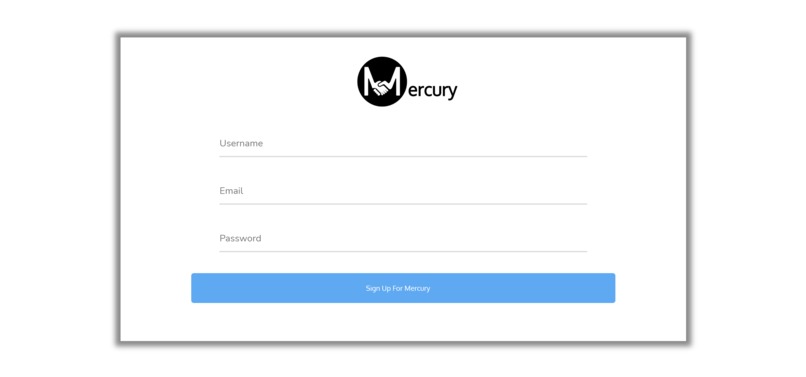
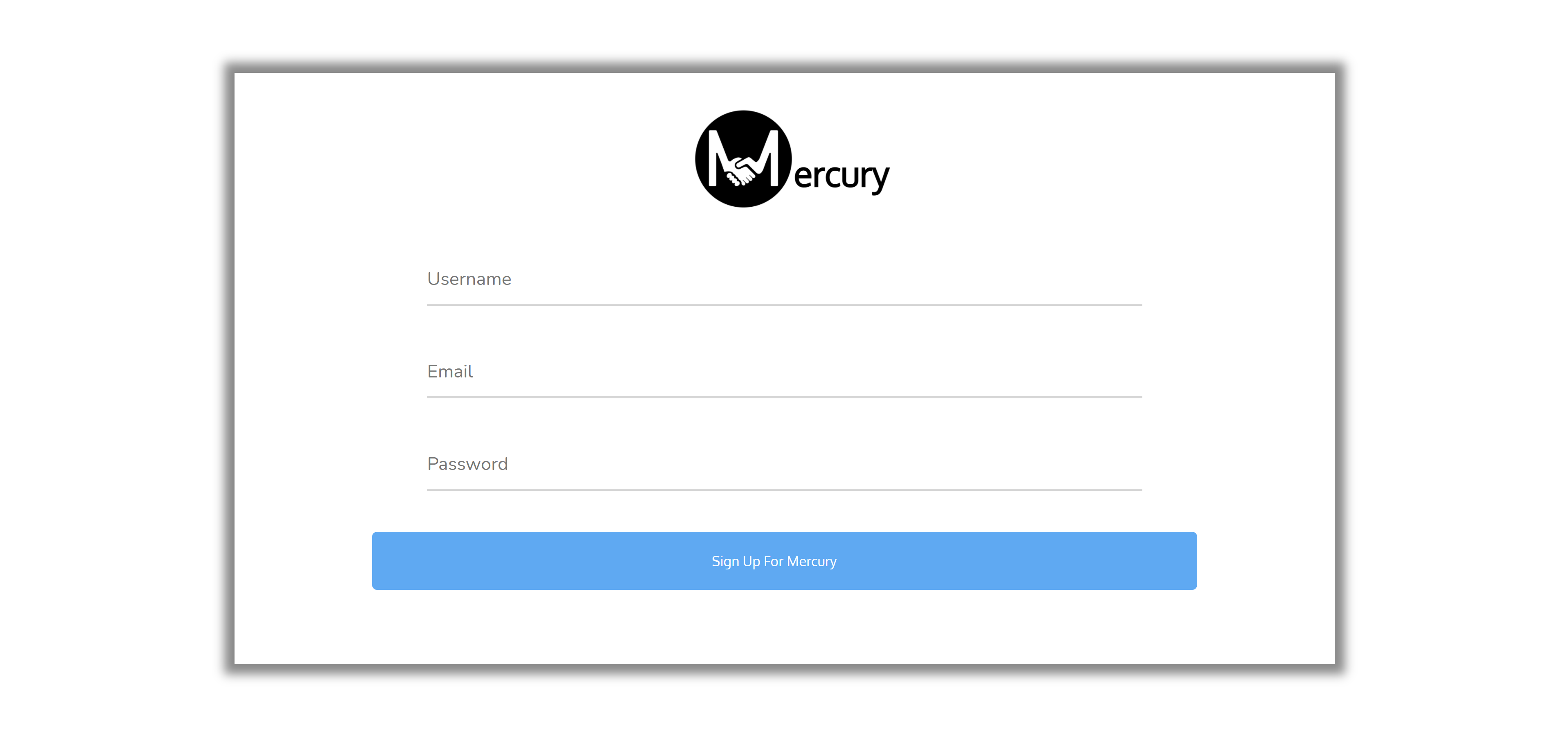
Sign Up page for Mercury
-
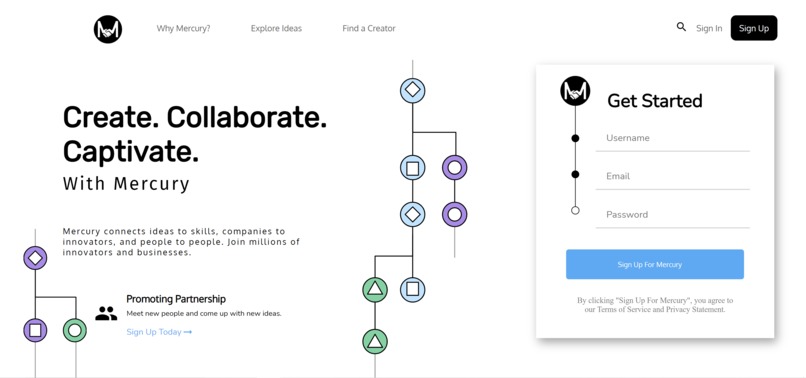
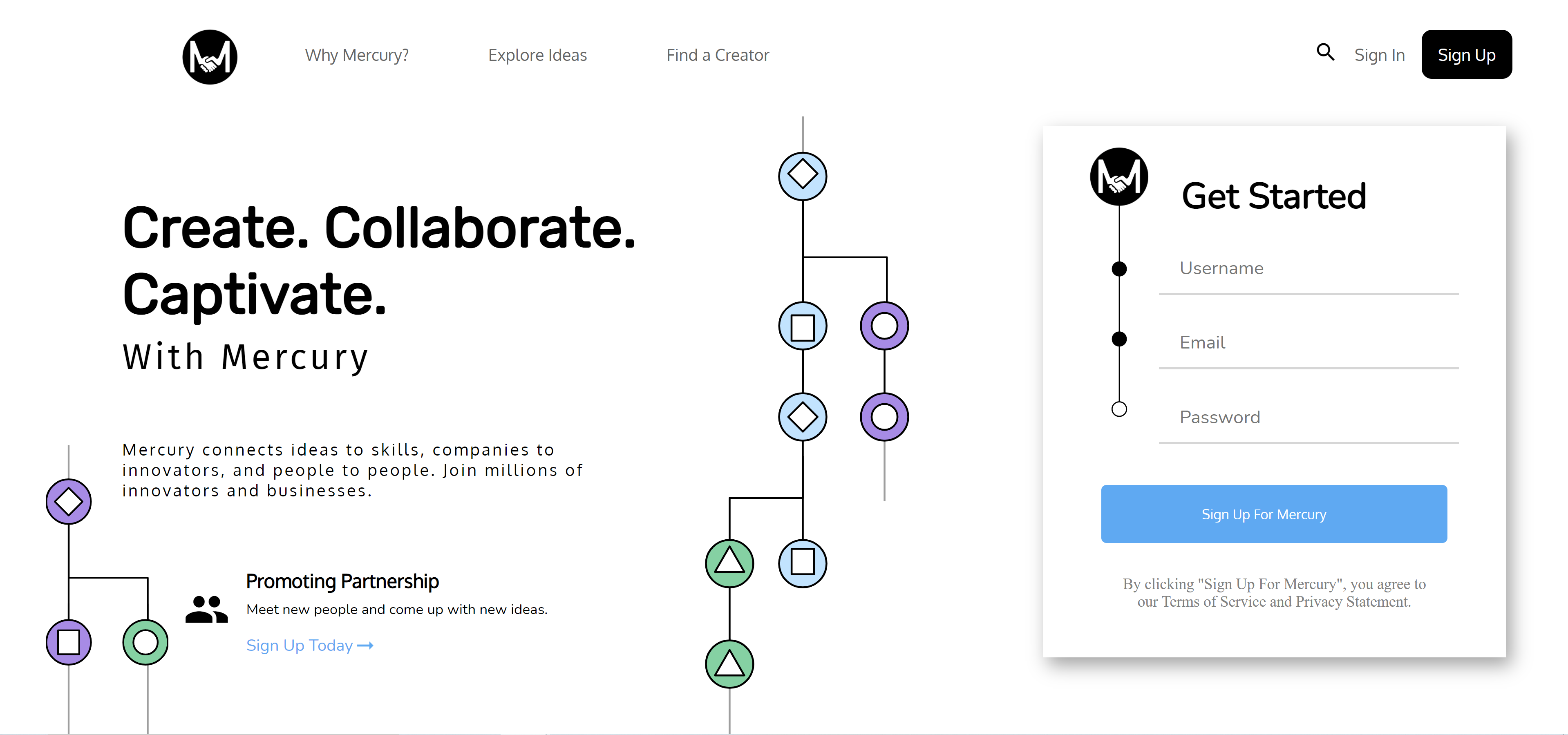
Home page of Mercury
-
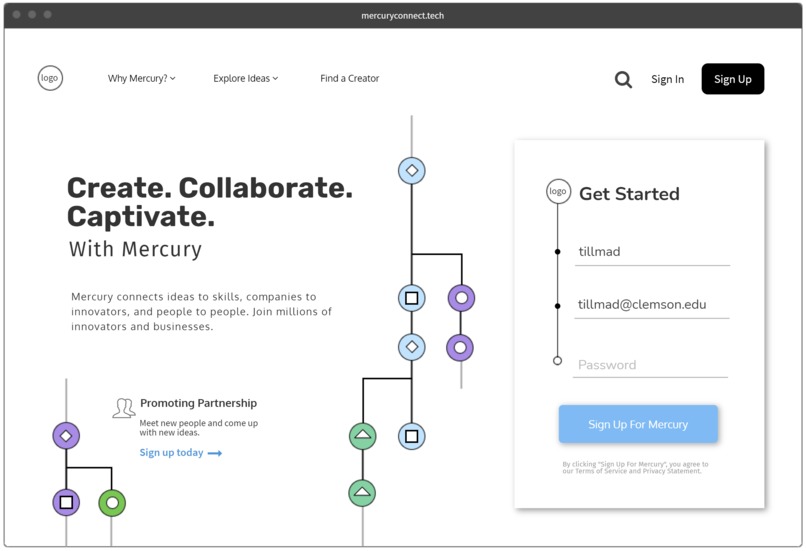
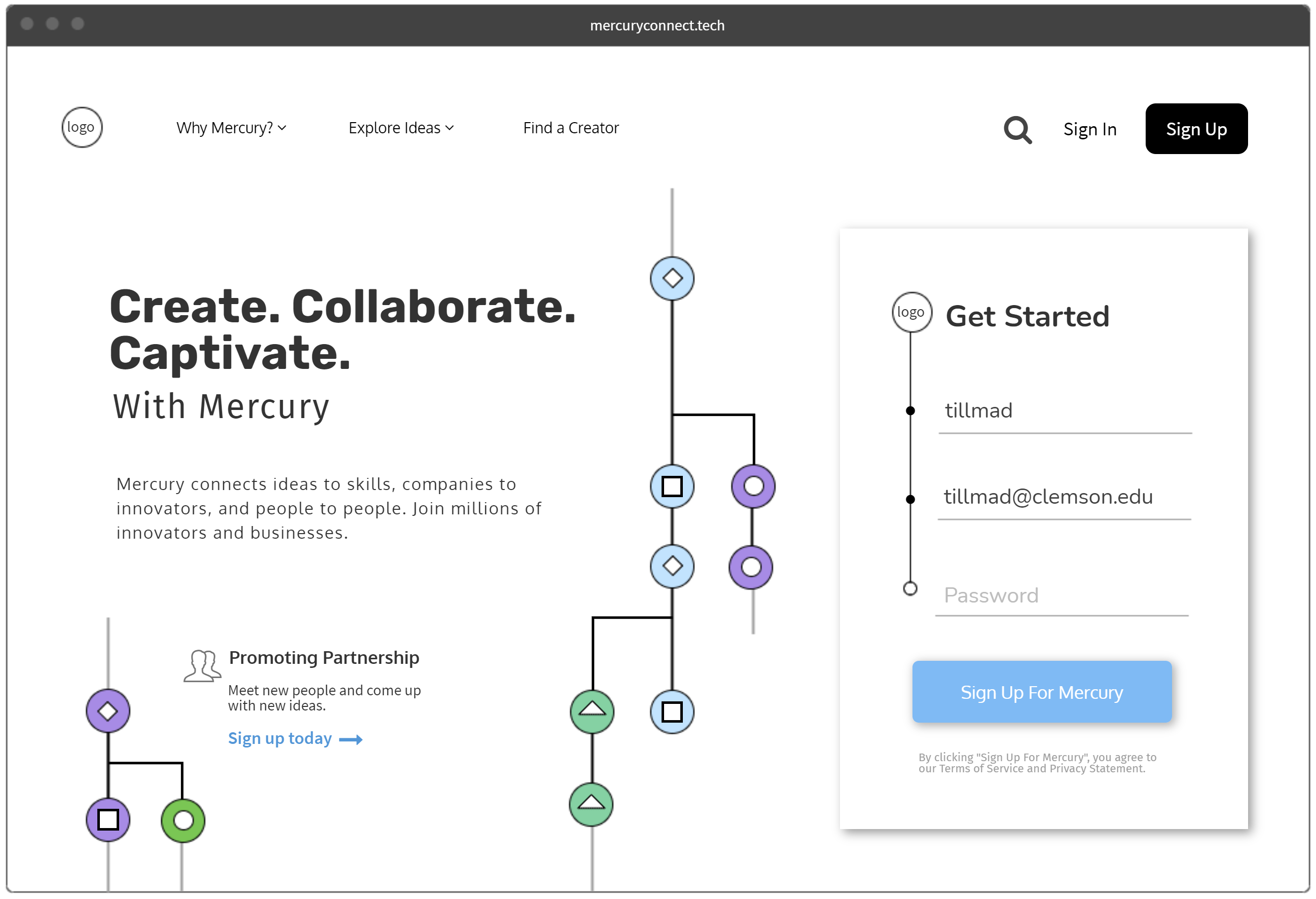
Original mock-up of Mercury
-
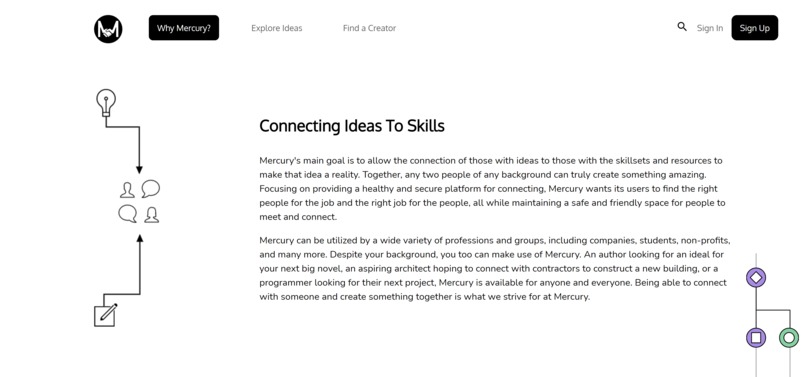
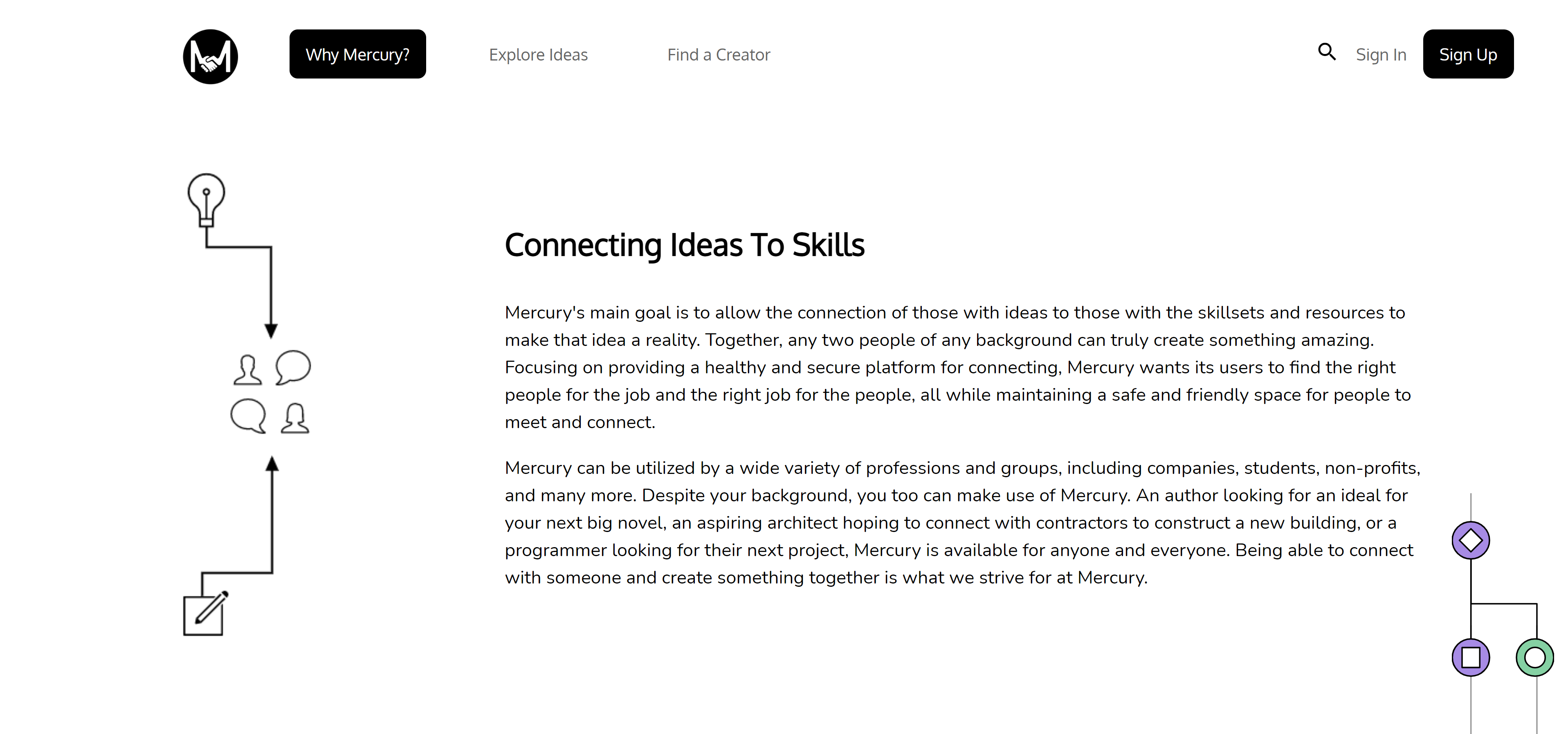
Why Mercury? Page
Inspiration
Beginning this hack-a-thon, we could not come up with a single idea of what to create. Too often, this is the issue: a programmer's vice is a lack of creativity. With Mercury, people will ideas (but not the skills to see them through) can be connected with people with skills (but not the new ideas) to complete a task. Now, you may be wondering where the name "Mercury" came from and how it applies to this website. Mercury is the Greek God of many things, including communication, a major theme we are attempting to portray in our website. By communicating, a project that may never see the light of day can be much more than just a small startup app. Teamwork truly does make the dream work.
What it does
Mercury was intended to connect people of all backgrounds, not just programmers, to get a variety of projects done: connecting an author to a someone with a novel plotline, an aspiring architect to a contractor, and even companies to a plethora of different clients. After some major challenges we ran in to, Mercury was sadly not fully functional for launch, however the site can still be accessed and with just another 24 hours and some teamwork, Mercury could be much more than just a hack-a-thon project.
How we built it
For the frontend, we created a modern webpage in HTML, CSS, and JavaScript using Notepad++, which was then launched using FastAPI in a docker container on a Google Cloud virtual machine. For the backend, FastAPI was once again used to create a simple SQL database of users that would then communicate with the frontend webpage to display the data in tables. Many fonts and icons are imported through the Google apis including the font "Oxygen". As for the domain name, it is registered through domain.com and redirects to the external ip address of the virtual machine hosting the website.
Challenges we ran into
Starting with 4 competitors, we set out for a high risk, high reward project that could impact the lives of many. However, after just 2 hours in to the competition, 2 teammates had to drop out for family matters, leaving the remaining teammates with much more than we could chew. Additionally, it was a challenge to learn many required systems to run our webpage, such as FastAPI and docker, which we had never done before and became the major focus of the code. Nevertheless, we continued forward with high hopes of finishing our project.
Accomplishments that we're proud of
Personally, I am proud of how much I learned during this competition. Coming in, I had done quite a bit of coding and made many websites, but I always strayed away from using frameworks or libraries to write the code vanilla instead. Being able to learn FastAPI and docker during this hack-a-thon while still being able to produce a result is amazing to me and makes me glad that I partook in this event.
What we learned
Not only did we learn a lot of programming environments, procedures, and languages, but we also learned truly how much we code we knew and could produce in just 24 hours. Never before have I created even this much of a website in this short period of time and this alone makes me feel like I am a better programmer than I previously believed.
What's next for Mercury
Oh, where do we start? First, I'd say that we finish setting up the database connectors through FastAPI and therefore achieve working log-in pages and output data on the two search pages. After our scope for this hack-a-thon is completed, Mercury's next steps would be implementing a video or chat feature to allow partners to communicate face to face or via chat box to make sharing of ideas easier and more effective.

Log in or sign up for Devpost to join the conversation.