-
-

App Icon
-
-
-
-
-
-
-
-
-
-
-
-
-
-
-
Inspiration
A Little Companion, Always Close
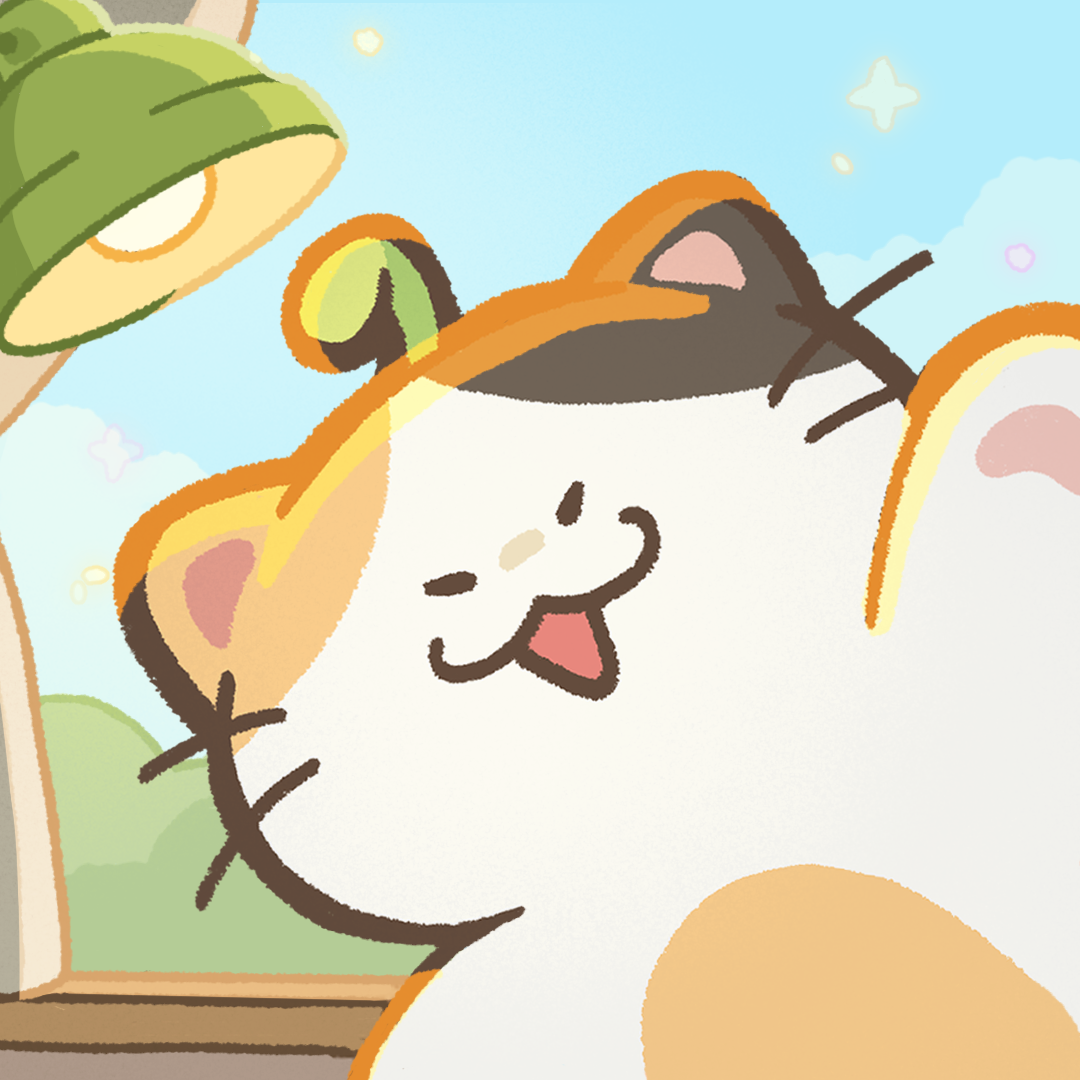
Meowchi was inspired by my own cat and a simple wish: to have a little companion by my side while I study, work, and go through life.
We never know how life might change, or how much time we'll get with the ones we love. So I created a little cat I could carry in my phone, one who would bake mochi alongside me while I worked toward my own little goals.
Meowchi is my way of holding on to that feeling of companionship, and sharing it with anyone who could use a little company, too.
I wanted to create more than a pet that simply sits beside you or depends on you for motivation. I wanted a companion with a passion of her own, whose joy, energy, and dedication could inspire you to reconnect with yours.
Meowchi loves making mochi. As you work toward your own goals, she works toward hers. Her enthusiasm is contagious, her presence feels alive, and together, you bring out the best in each other.
Inspired by the Vietnamese saying, “Stay near the light, and you brighten,” Meowchi is built on a simple belief: sometimes, the best motivation comes from being around someone who genuinely loves what they do.
What is Meowchi?
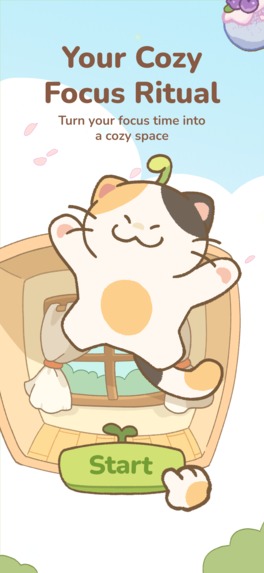
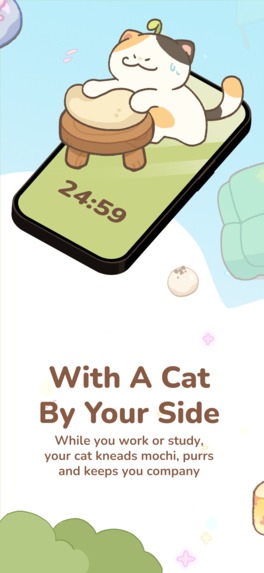
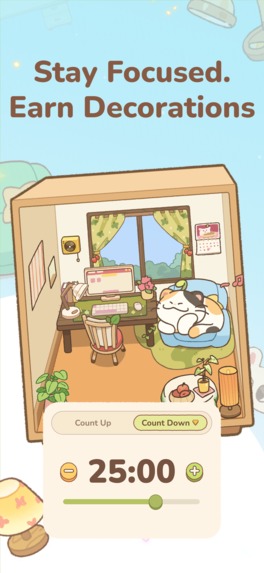
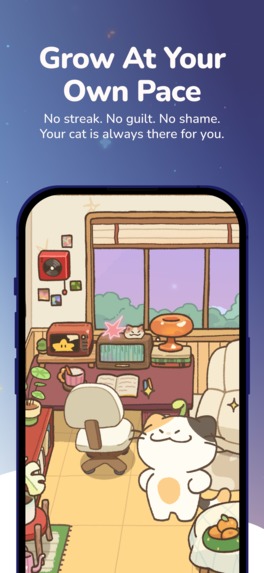
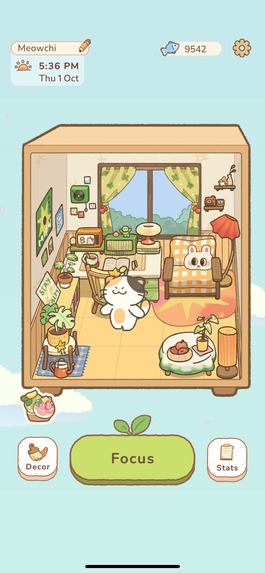
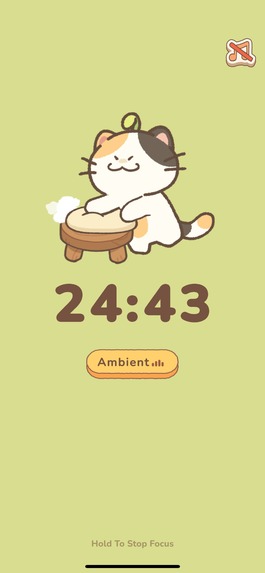
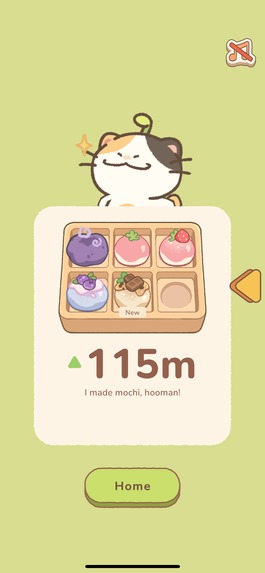
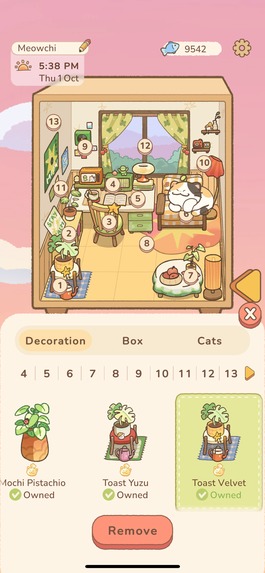
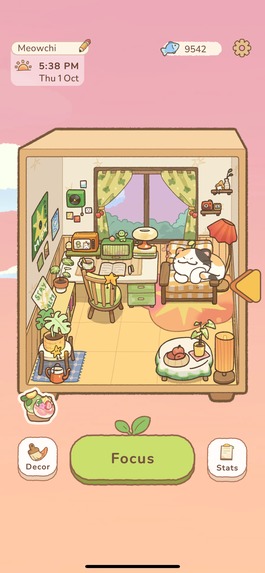
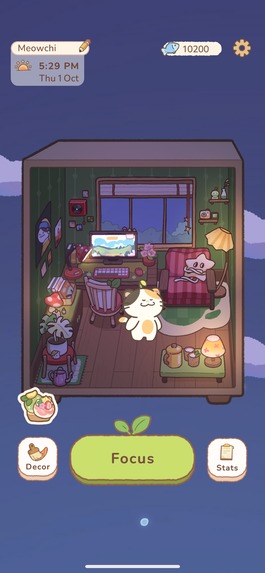
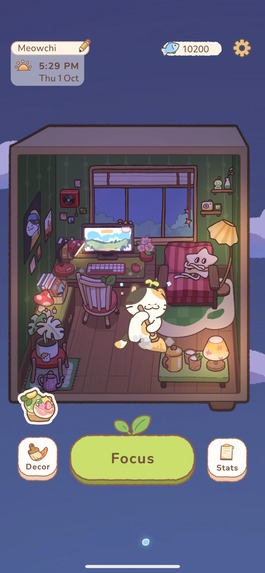
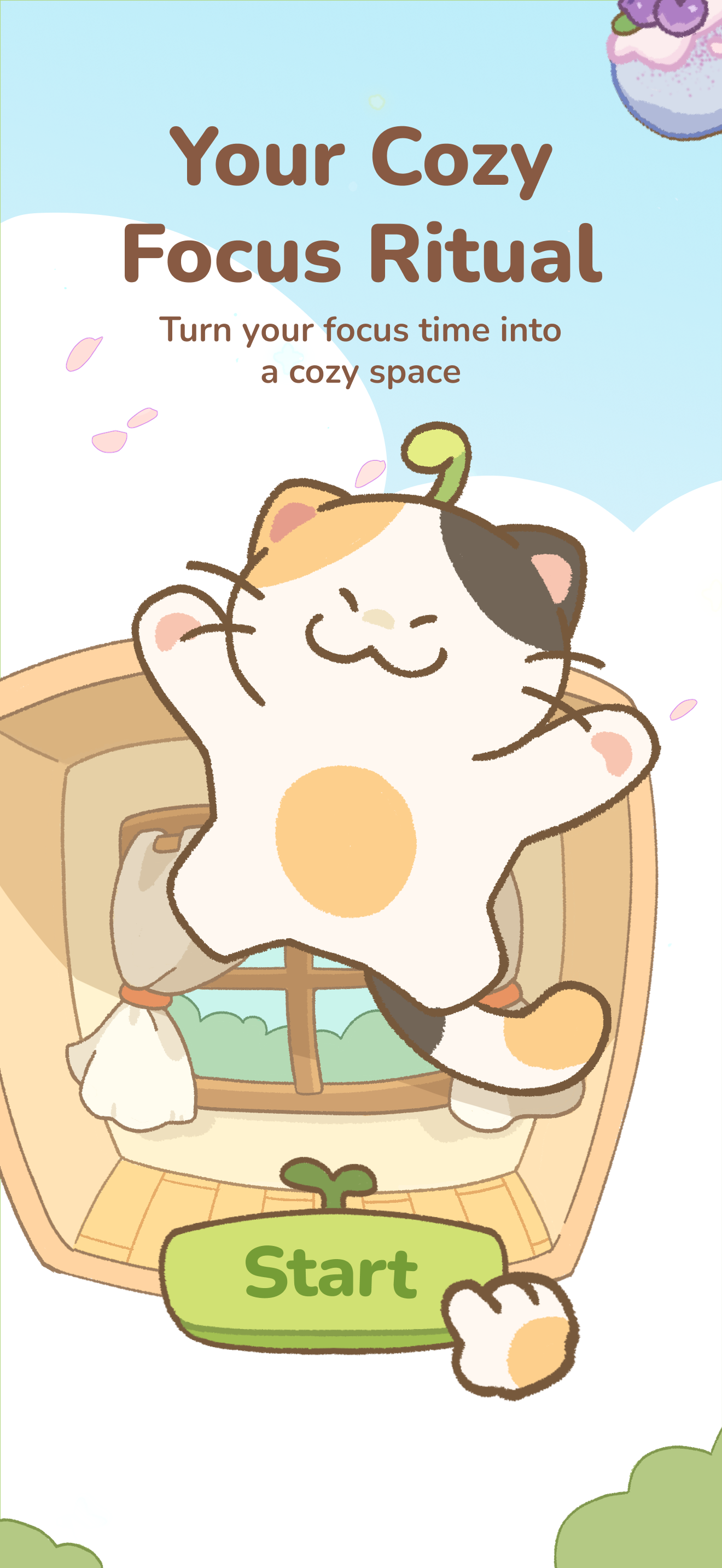
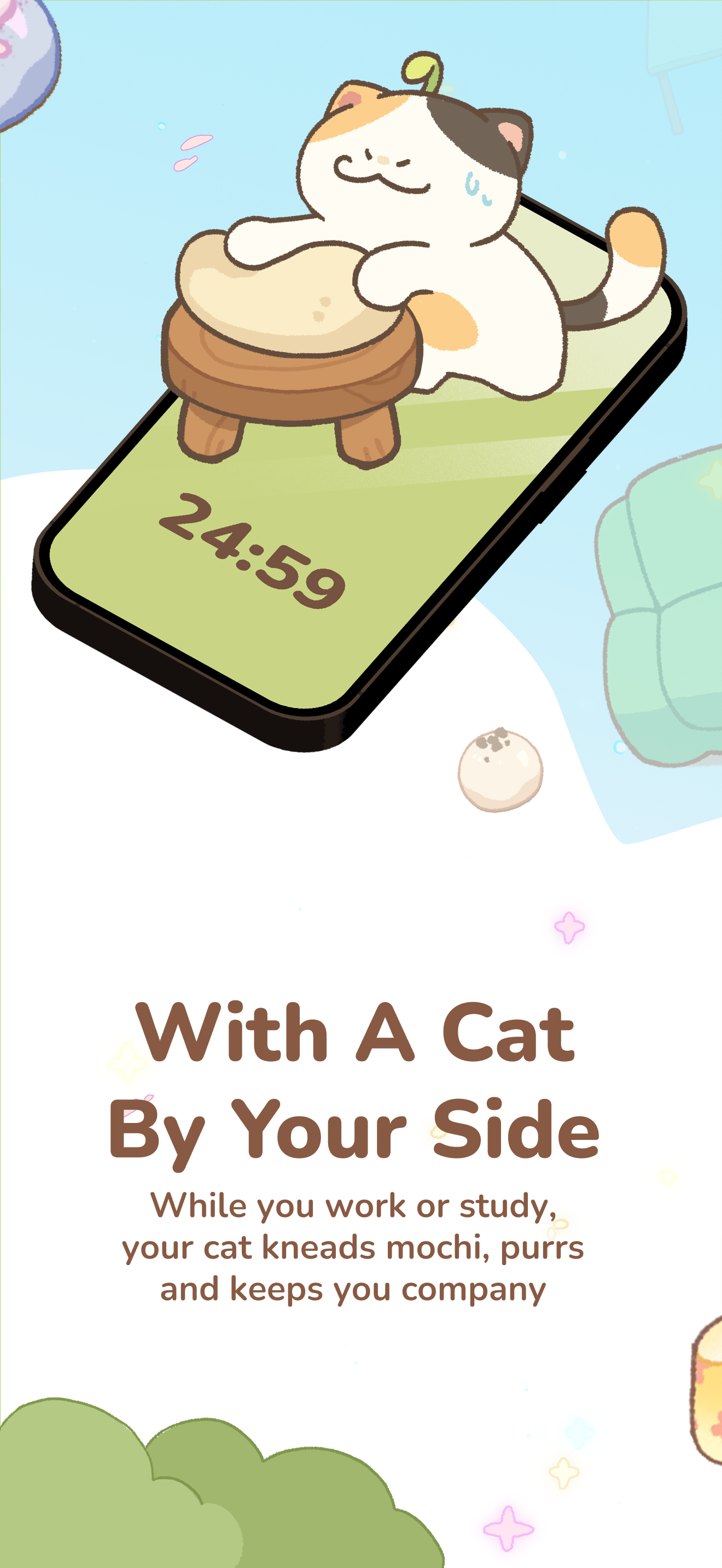
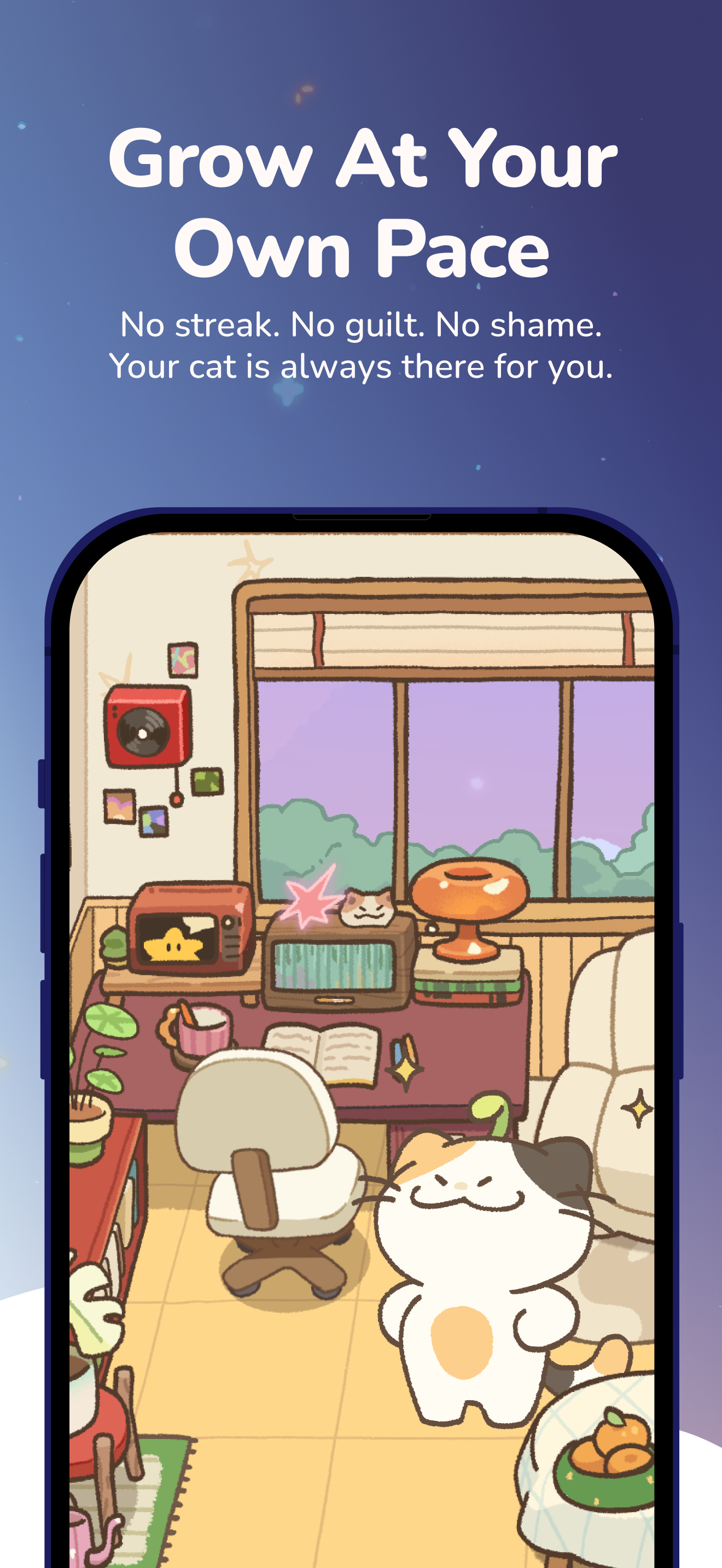
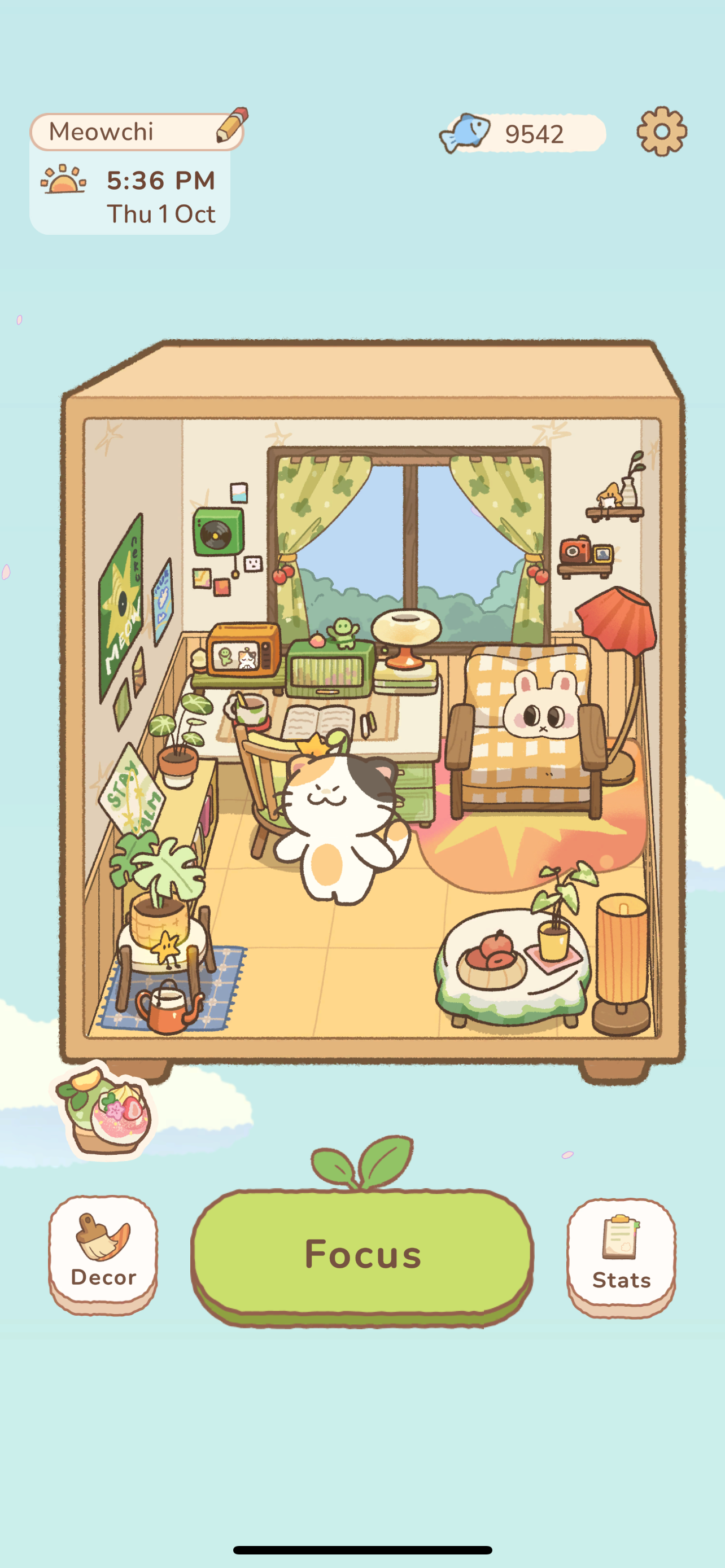
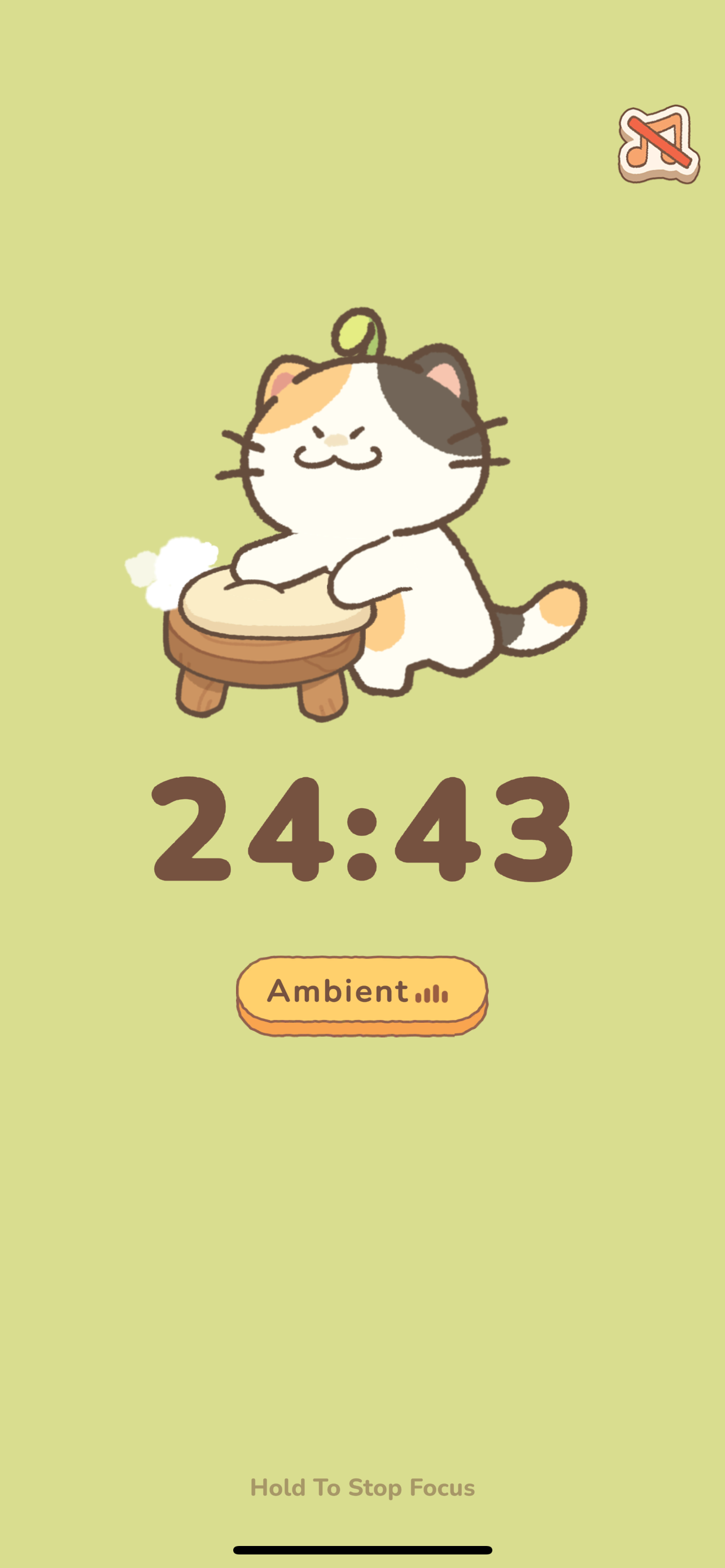
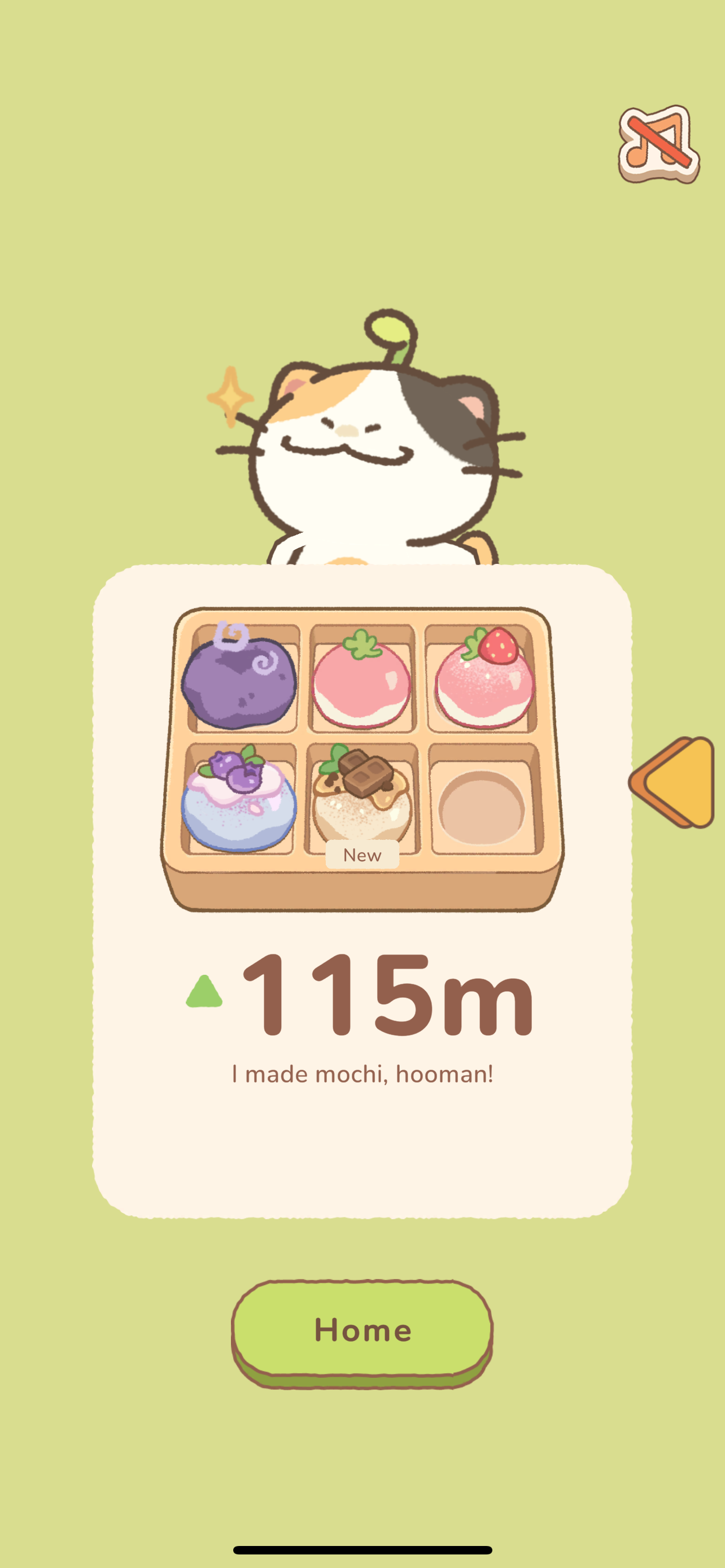
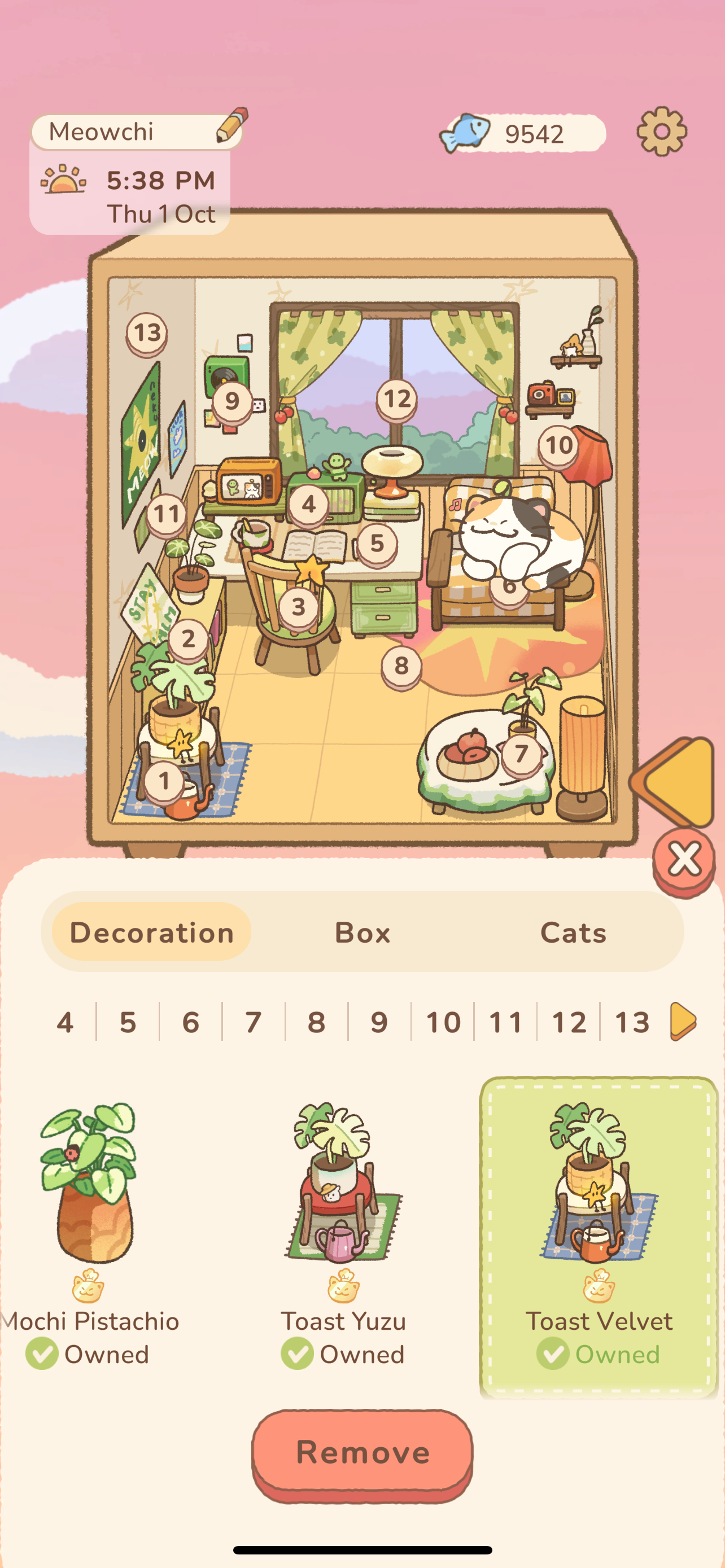
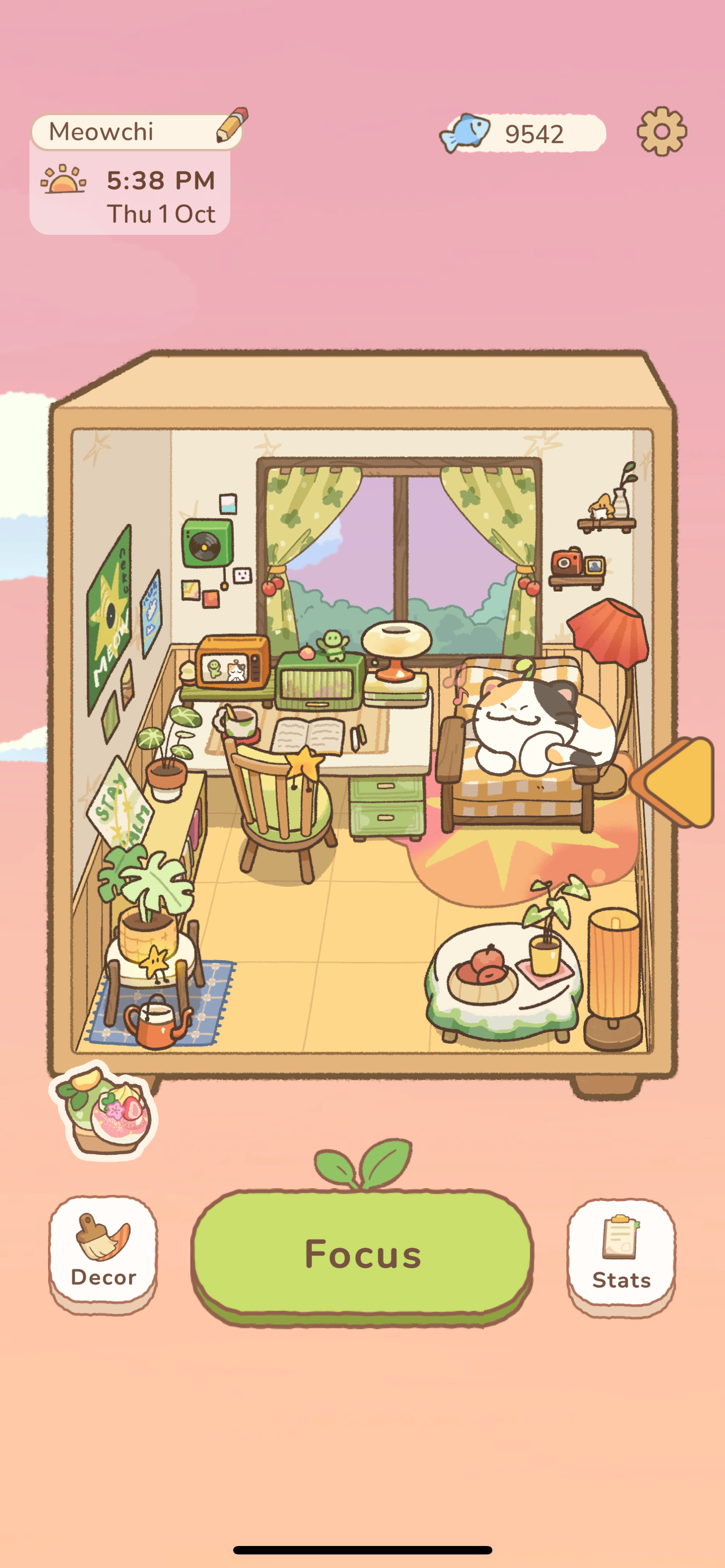
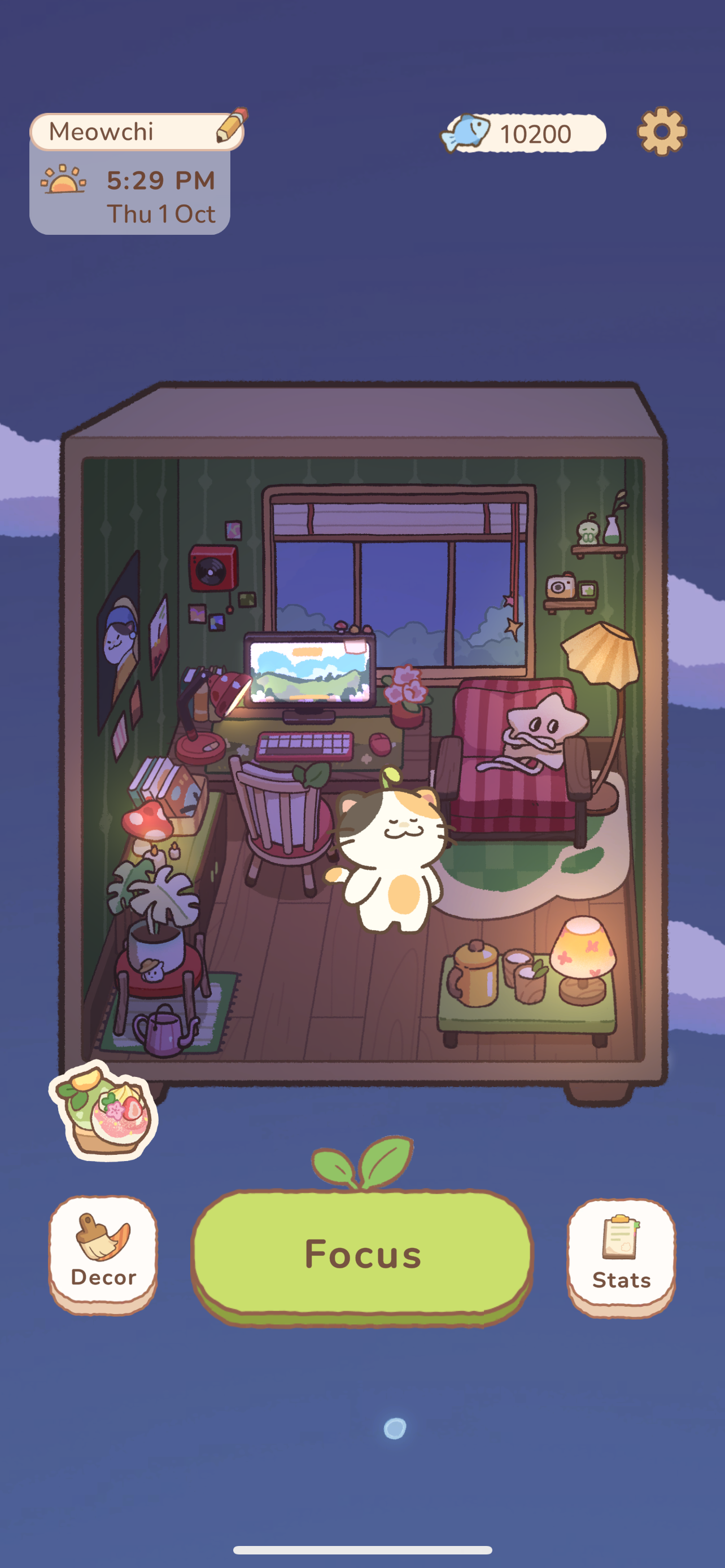
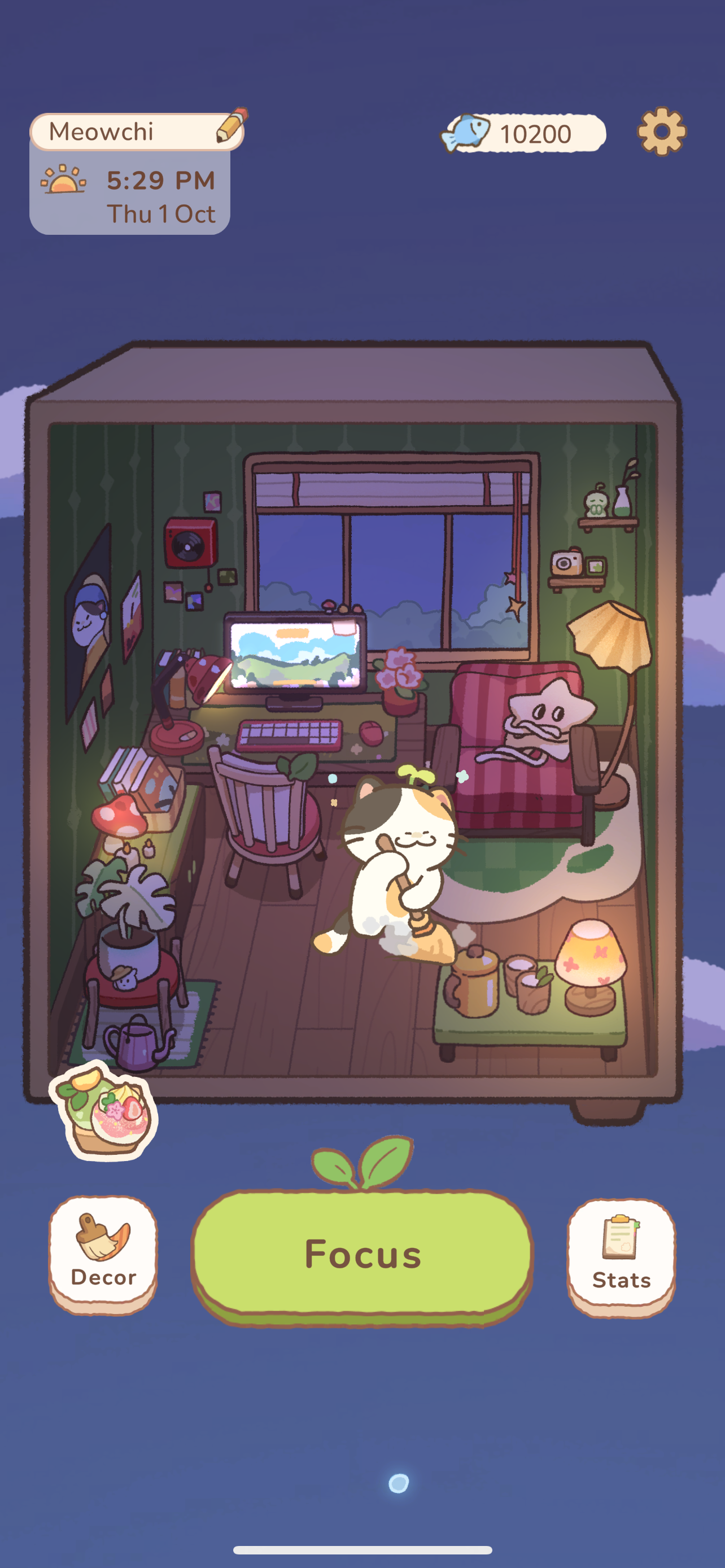
Meowchi is a focus app designed as a wholesome cozy game. At its center is a straightforward relationship: you focus on your things, Meowchi focus on practice her crafts. Start a focus session, and she kneads mochi alongside you. Longer, steadier sessions give her time to improve the dough. Mochi was chosen precisely because it is a real craft built on repetition and patience. When a session ends, focused time becomes something visible: a mochi placed into a six-slot delivery box. Complete the box, ship the order, earn fish, and gradually furnish her room.
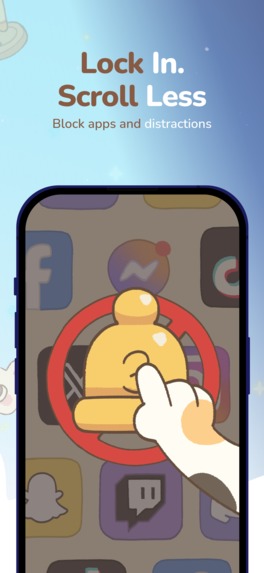
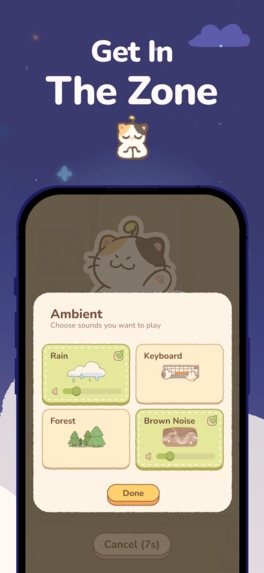
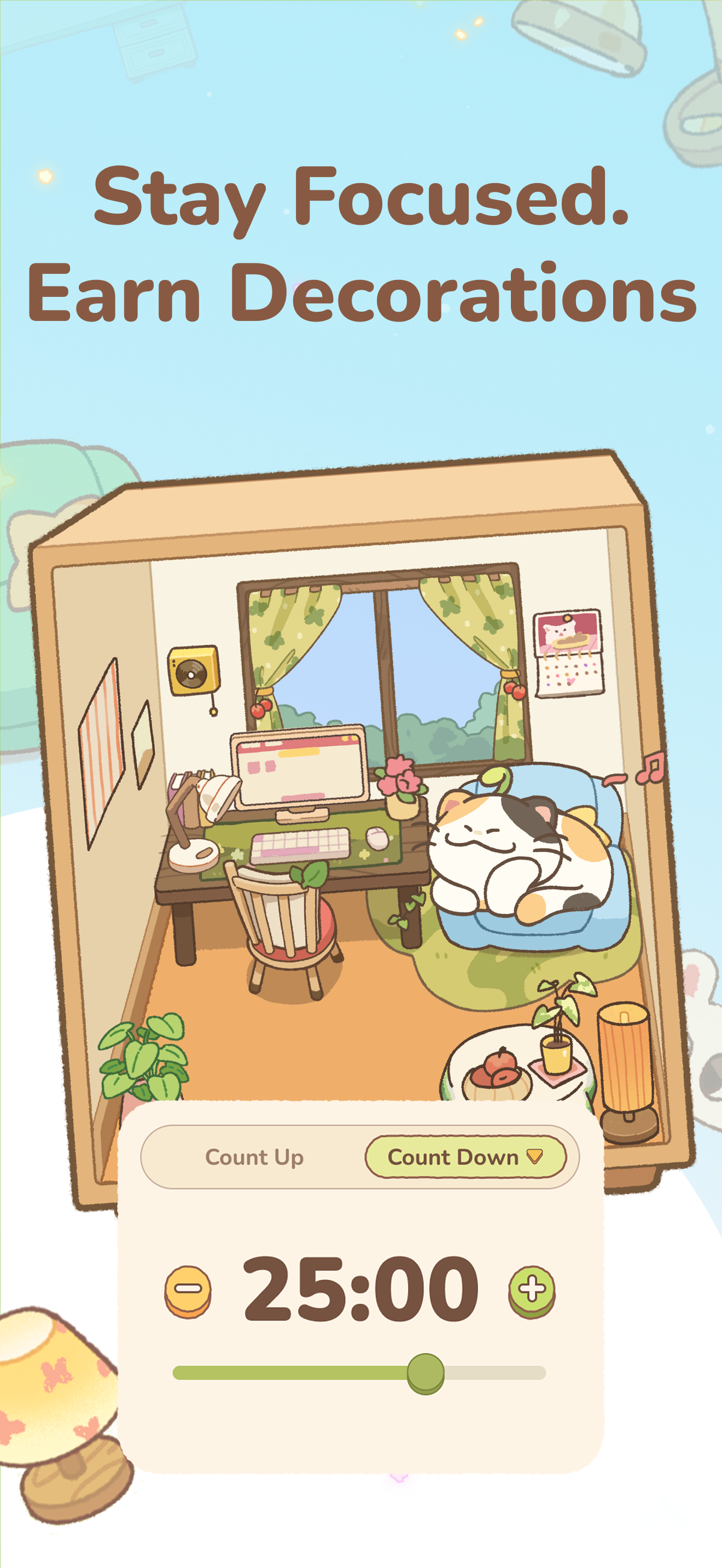
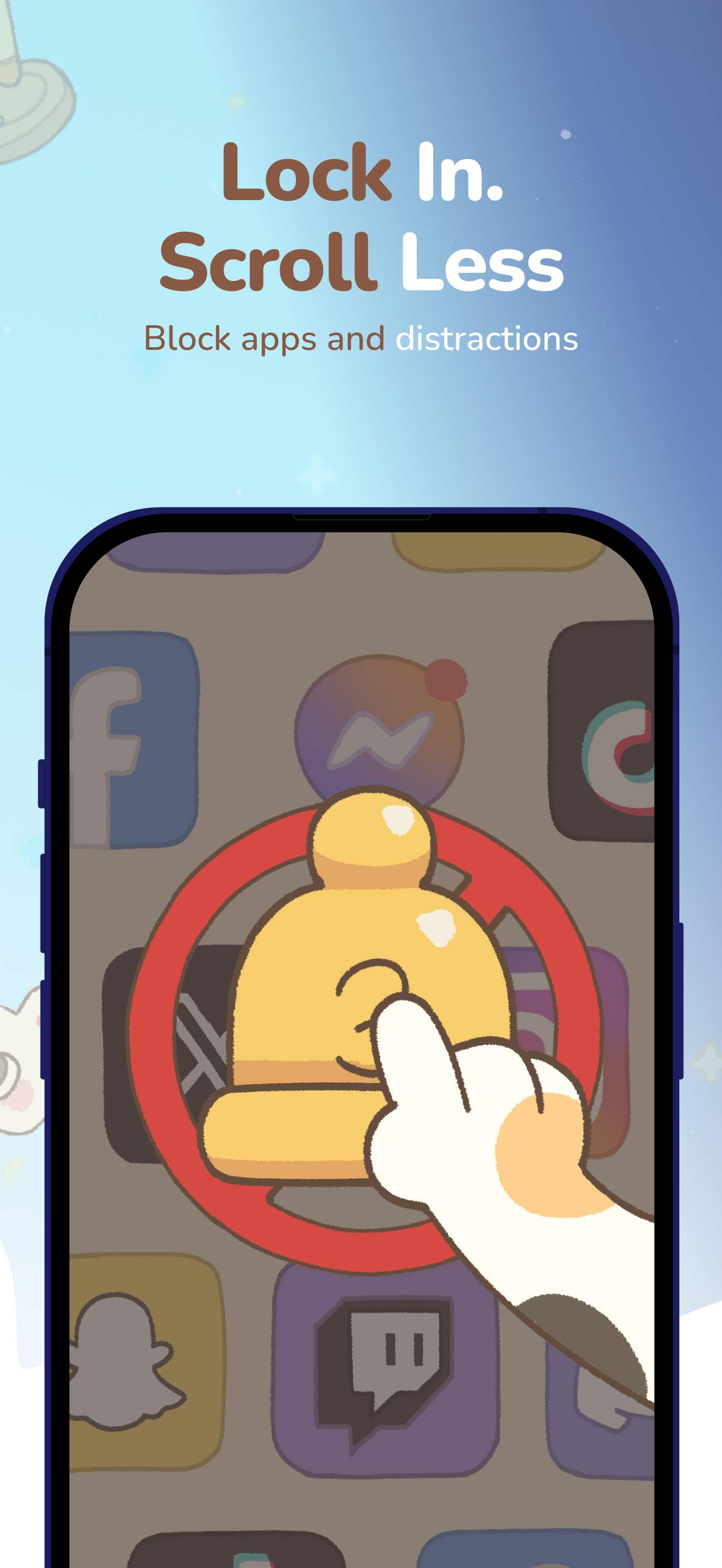
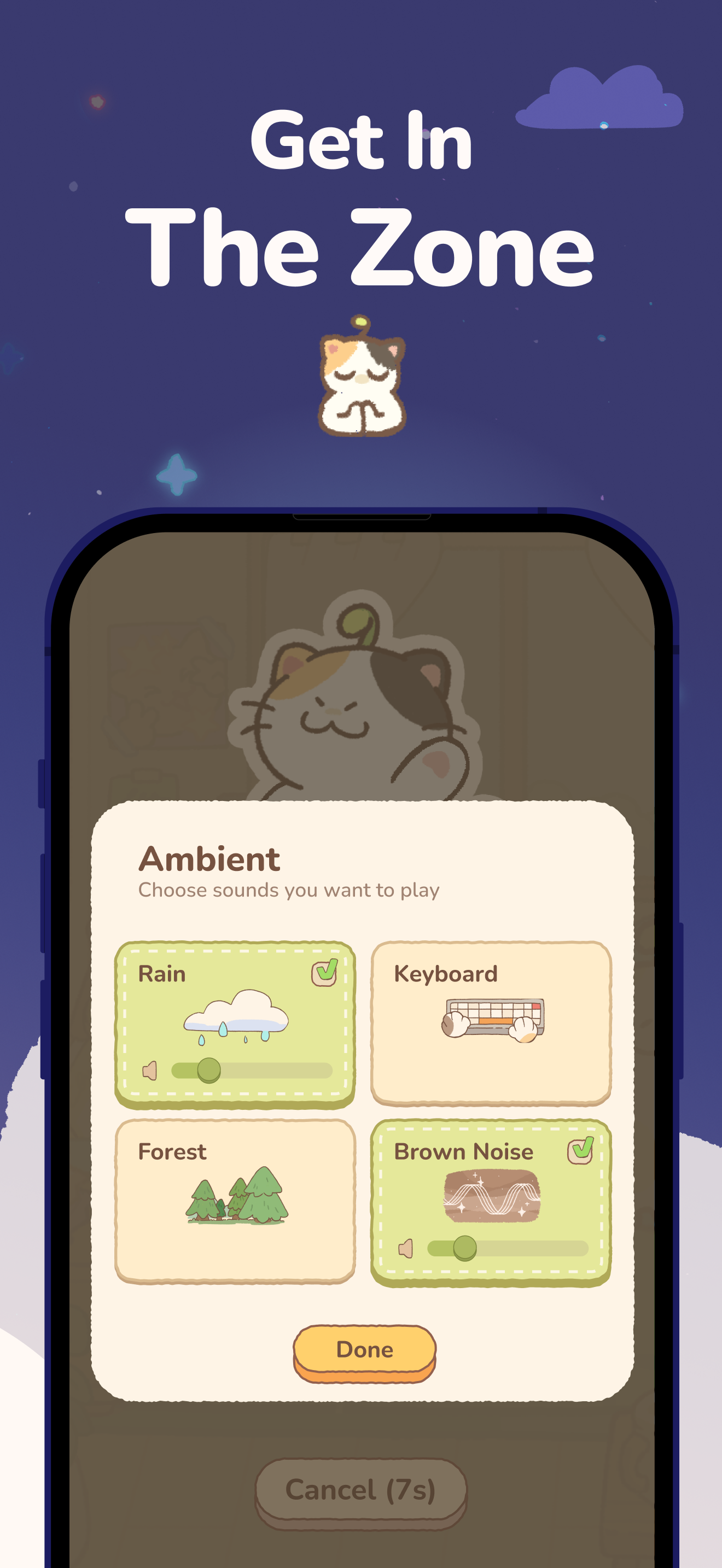
One focus session leads naturally into the next: focus, make, complete, ship, grow. That loop is wrapped in practical focus tools: countdown or count-up timers, breaks, apps blocking, quick-start widgets, and live activities that let the session run without reopening the app.
The game gives shape and continuity; the tools protect the user's time. The question it explores is whether a full game design system - character, progression, anticipation, collection - can be pointed at an offline habit. In other words, a mobile game whose progress depends on time you spend away from it, focused on your own.
How We Built It
Meowchi began as a project I started on my own. I had the product vision, but turning that vision into something real required finding people who could understand not only what I wanted to build, but also how I wanted it to feel.
I initially hired freelance developers and artists, but finding the right collaborators proved far harder than I expected. I went through three different attempts with developers and artists before finding the team that could truly align with the project’s creative direction.
The current team came together almost by chance. I met Bảo, our developer, at a Garena Vietnam Game Jam, and our artist was later introduced to me through someone I had worked with previously. With both of them, the alignment felt immediate. We shared the same willingness to question unfinished ideas, discard work that did not feel right, and keep refining until the experience matched the original intention.
From there, the three of us began sketching, prototyping, and testing Meowchi together.
Before we committed fully to development, we spent a significant amount of time exploring the product visually. We tested different characters, environments, layouts, interfaces, and art directions, and discarded many of them. We tried different characters before choosing a cat, moved from the idea of a larger dollhouse toward a more intimate diorama, and rebuilt the interface several times.
We were not iterating toward a more attractive product; we were iterating toward emotional credibility.
Once we felt that the direction was coherent enough, we translated it into a detailed Figma prototype and shared the concept on Threads, initially only in Vietnam. It reached more than 75,000 views, generated close to 1,000 waitlist sign-ups, and brought roughly 300 people into our Discord community.
Those numbers did not prove that the product would succeed, but they gave us an early signal that the concept was resonating. More importantly, that initial traction gave us real users with whom we could continue building.
Once development began, validation moved from concept to actual use. We ran multiple rounds of public testing, spoke directly with users, and continued revising the core interactions, interface, and companion herself. Development and user research happened in parallel.
At the same time, we were learning how to build a product that sat between two disciplines: a focus tool and a game.
On the design side, we studied and applied principles from UI/UX design, interaction design, motion, behavioral design, motivational systems, game economy, decoration systems, and information visualization. We had to understand how game progression could map to real focus without making the game itself another source of distraction.
On the engineering side, Meowchi is built in Unity, but several of the experiences we wanted depended on native iOS functionality. We learned how to connect the game layer with features such as app-distraction blocking, widgets, Live Activities, notifications, and other native iOS interactions.
We also invested deeply in animation and sound. We spent roughly two months refining animation, from major actions to tiny gestures, and invested a comparable period in finding the right composer and developing Meowchi’s original music and sound effects.
For us, animation was never decorative polish. It was how Meowchi’s personality became visible. Music and sound were not simply background layers; they were how that personality extended into the world around her.
Challenges
The central challenge in building Meowchi was not simply creating a functional focus timer.
It was translating an abstract idea into something users could genuinely feel:
How could we design a fictional companion whose passion felt real enough to become motivating to someone working beside her?
That question affected nearly every discipline involved in the product.
A character can be described on paper, but qualities such as warmth, passion, awkwardness, determination, or emotional presence cannot be implemented through a specification alone. We often had to build something before we could understand whether it felt right.
That meant being willing to throw work away.
Layouts were rebuilt. UI flows changed. Character concepts were discarded. The world shifted from a larger dollhouse to a smaller diorama. Animation timing was repeatedly adjusted. Even tiny gestures could make the difference between Meowchi feeling like a decorative mascot and feeling like a character with an inner life of her own.
Another challenge was making the two halves of the product reinforce rather than undermine each other.
The game needed enough progression, anticipation, collection, and reward to create motivation. At the same time, the app existed to help users leave the screen and focus on something else.
Every system therefore had to answer two questions at once: does this make the game more meaningful, and does it still protect the user’s attention?
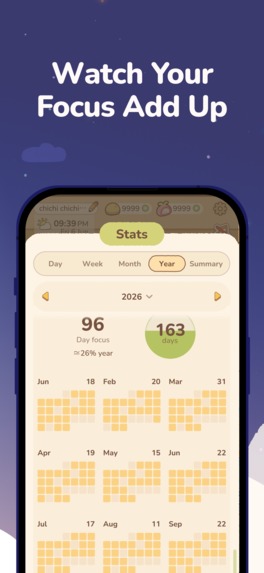
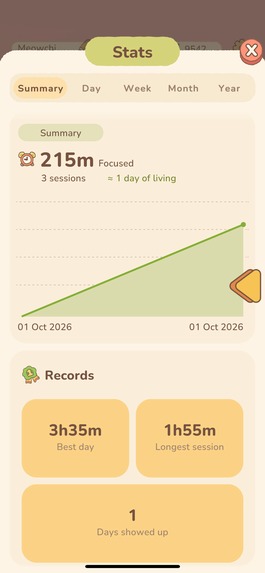
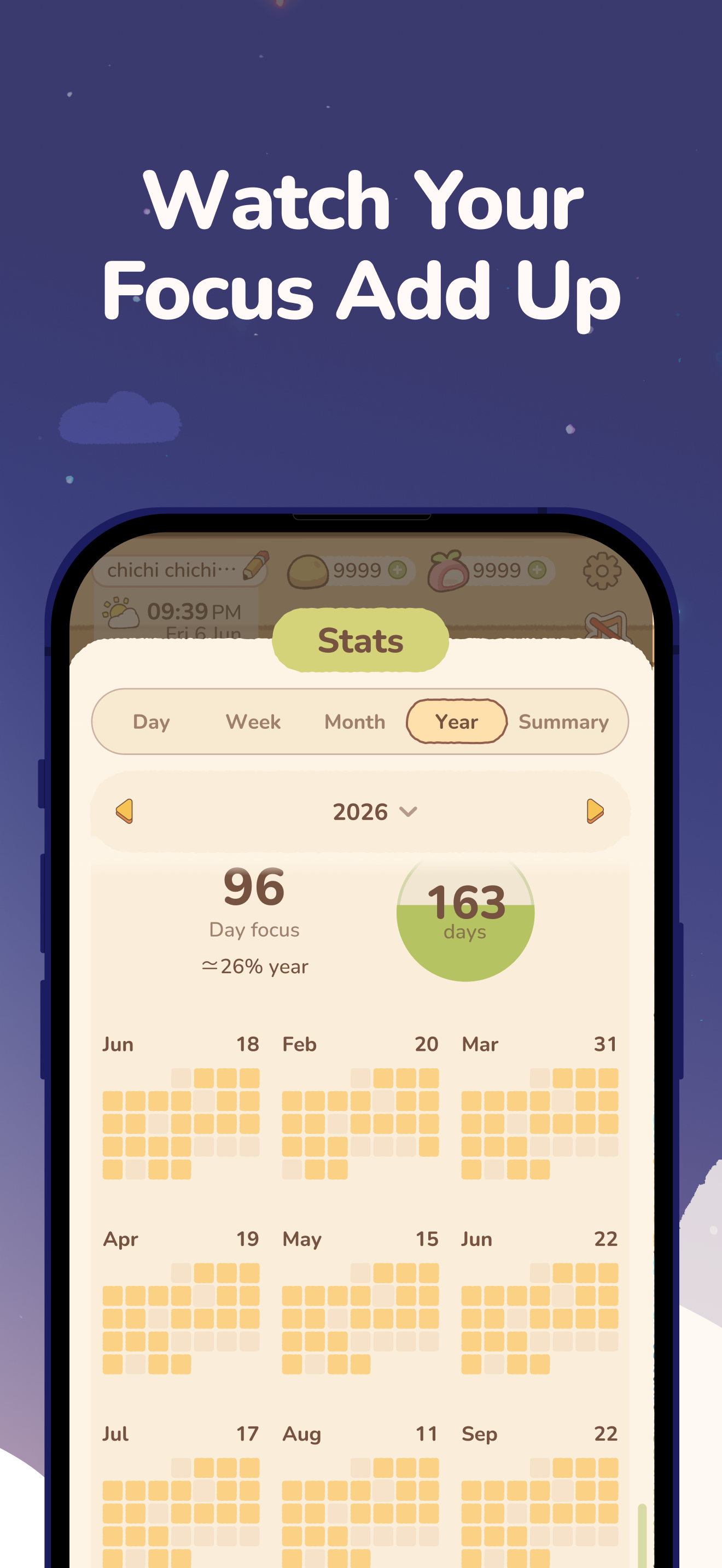
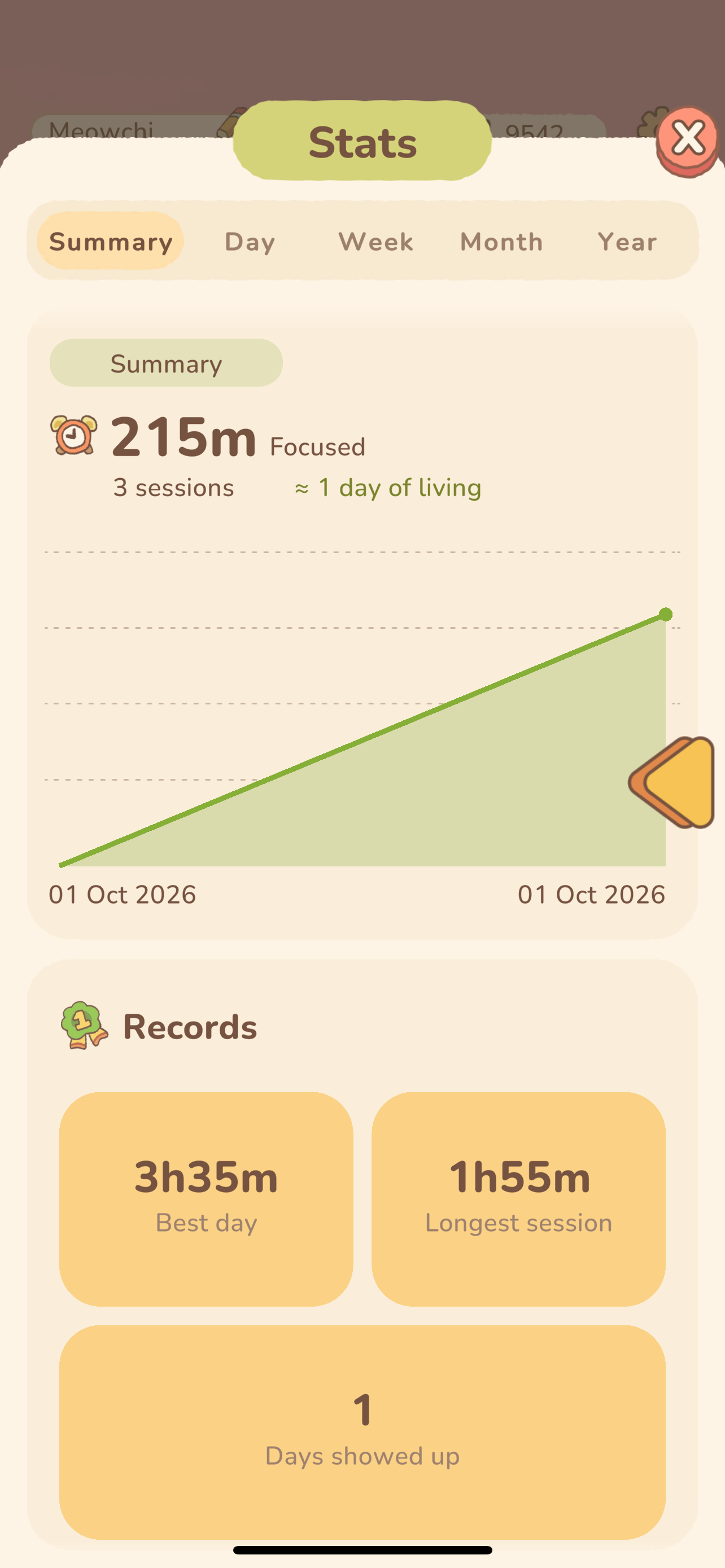
Focus time had to become meaningful game progress. Rewards needed to create anticipation without encouraging compulsive interaction. Statistics had to make effort visible without becoming another performance dashboard. Decoration needed to feel rewarding without creating pressure. Native iOS focus tools had to coexist naturally with a Unity-based game world.
For a three-person indie team building this kind of product for the first time, we were constantly learning across disciplines while trying to make the final experience feel seamless.
Building Meowchi ultimately became an exercise in translation: translating an idea about motivation into character, movement, space, interface, game systems, native technology, sound, and finally into a feeling another person could recognize without being told what to feel.
Accomplishments We’re Proud Of
One of the accomplishments we are most proud of happened before Meowchi was even a finished product. We shared an early Figma sketch on Threads in Vietnam to see whether the idea resonated beyond our own team. That single post reached more than 75,000 views, generated nearly 1,000 waitlist sign-ups, and brought roughly 300 people into our Discord community (https://www.threads.com/@meowchi.app/post/Da_0JSFkiW_).
More important than the reach itself was what came after. Those people became our first real community of users, giving feedback, joining discussions, and accompanying us through two rounds of public testing as Meowchi moved from concept to product.
On September 4, 2026, we quietly opened Meowchi to the Vietnamese market. We had not announced an official launch, run a coordinated marketing campaign, or invested in paid acquisition. Even so, Meowchi has since reached nearly 1,200 downloads and 13 paying users, most of them from Vietnam.
This is one of the milestones we are most proud of precisely because those paying users are Vietnamese. Meowchi is free to download, which means every conversion requires a user to make an additional, deliberate decision: the free experience is already available, yet they still choose to pay to support and deepen it.
In Vietnam, recurring consumer subscriptions remain a difficult purchase behavior to establish, particularly for a focus and digital-wellness app, where the value is less immediately tangible than entertainment, commerce, or essential services. In the current economic climate, discretionary digital spending is also more carefully considered, which makes that decision even harder.
For that reason, 13 paying users before our official launch is meaningful to us beyond the revenue itself. It tells us that a small group of people did not merely enjoy Meowchi; they valued it enough to cross one of the hardest thresholds in our local market: paying for a digital subscription when continuing for free was already an option.
For a three-person Vietnamese indie team with no paid marketing, no influencer distribution, and no established brand behind us, that early willingness to pay is one of the strongest signals of trust we have received so far.
What has surprised us even more is the kind of support behind those numbers. Some users have asked whether they could donate to the project even though we never requested donations. Android users have continued asking when their version will arrive, with some following the project and waiting for months despite the app currently being available only on iOS.
These moments matter to us because they suggest that people are not simply trying a utility; some are beginning to care about Meowchi as a product, a character, and a small world they want to see continue.
Our social growth has followed a similar pattern. We have never treated Threads as a polished marketing channel. Much of what we share is simply work in progress, sketches, development updates, and pieces of the process. Yet the account has accumulated approximately 400,000 total views.
For an indie team building primarily from Vietnam, that organic response has given us confidence that the emotional language of the product can travel further than our immediate network.
What we are proudest of, however, is not any single number. It is the sequence behind them: a sketch became a waitlist; a waitlist became a community; that community became testers; testers became early users; and some of those users chose to pay, wait, advocate, and ask how they could support us further.
For a product that has not yet had its official global launch, that progression is the clearest evidence we have that Meowchi is beginning to mean something to people beyond the three of us who built it.
What We Learned
The most important lessons from building Meowchi were not obvious at the start. Many of them only emerged when ideas met reality.
First, we learned that a companion is not created simply by adding a character. It is created by designing a believable relationship.
Early on, we knew we wanted Meowchi to feel warm and relatable, but we did not yet understand what kind of relationship users would recognize intuitively. Through user conversations and repeated testing, we learned that character design, motion, wording, interaction, and even silence all contribute to whether that relationship feels believable.
Second, we learned that some creative problems cannot be solved in theory.
We often had to build before we could think clearly. Animation, music, sound, interaction, world-building, and UI demanded trial, observation, and revision rather than perfect planning.
An emotional product cannot simply be specified and executed. It has to be made, tested, felt, observed, and remade.
Third, we learned that constraints can refine an idea rather than diminish it.
Our original vision was much larger: a bigger home, more rooms, more space. But on a mobile screen, that scale became noise. The limitation of the device forced us to concentrate, and the diorama approach that emerged from that constraint ultimately became one of the strongest parts of Meowchi’s visual identity.
Fourth, we learned that building a hybrid product requires learning how different disciplines connect.
Game design had to connect to real-world behavior. Unity had to connect to native iOS functionality. Animation had to connect to motivation. Economy had to connect to focused time. Data had to connect to reflection. And all of these systems had to feel as though they belonged to one coherent experience.
Finally, we learned that craftsmanship and distribution are entirely different disciplines.
Building something we believed in was difficult. Helping it reach people has proven just as challenging. That realization has changed how we think about product development.
Distribution is not something that happens after the product is complete. It is part of building itself.
These lessons have not only shaped Meowchi. They have shaped us as builders.
What’s next
We are still at the beginning.
Meowchi started from a simple hypothesis: when we are close to someone who is deeply absorbed in something they love, their passion can quietly shape how we show up for our own work. We wanted to see whether that kind of positive energy could be translated into a digital companion - one whose presence does not pressure the user, but gently makes focus feel easier to return to. The response so far gives us reason to believe the idea resonates. What it does not yet tell us is whether that resonance can last.
The next stage for Meowchi is about testing durability. As we introduce Meowchi to a broader global audience, we want to understand whether the same emotional premise can resonate across different cultures and relationships with productivity.
More importantly, we want to learn whether people return not out of obligation, but because the ritual genuinely supports the way they want to show up. That means continuing to examine the core loop itself. Can focusing beside Meowchi, watching her practice her craft, making mochi together, become a rhythm people genuinely want to return to? Can progression and character deepen that relationship without turning focus into another form of optimization pressure?
At the same time, we face a question familiar to many small teams: how to make this sustainable without compromising what makes it meaningful. Sustainability matters, but so does protecting a calm, generous space in a digital environment that often competes for attention. Ultimately, what comes next is larger than adding features or increasing downloads. We want to keep exploring whether technology, which so often fragments our attention, can instead create an environment that helps us return to what we care about. The question that brought us this far was whether we could create “the passion” to be contagious. The question ahead is whether that feeling can endure.
There is also a broader question we want to explore through Meowchi. Can the principles of real game design meaningfully support behavior change in health and wellness products? Gamification often borrows the surface language of games. points, streaks, rewards. We are interested in something deeper: whether complete game design systems, with meaningful loops, emotional feedback, character, anticipation, and ritual, can help people build healthier patterns because the experience itself becomes worth returning to. Meowchi is our first experiment with that idea. If design can make focus feel intrinsically rewarding, the same principles may eventually be explored in other areas of everyday well-being. Routine, reflection, rest. We do not yet know how far that can go. That is precisely what we want to test.


Log in or sign up for Devpost to join the conversation.