-
-
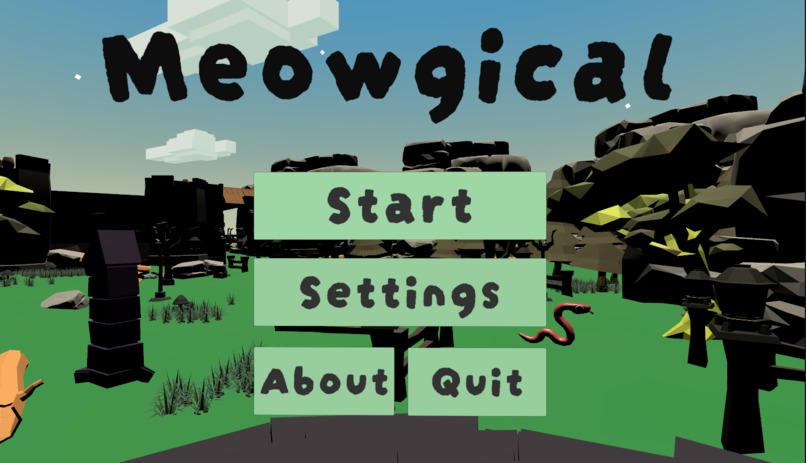
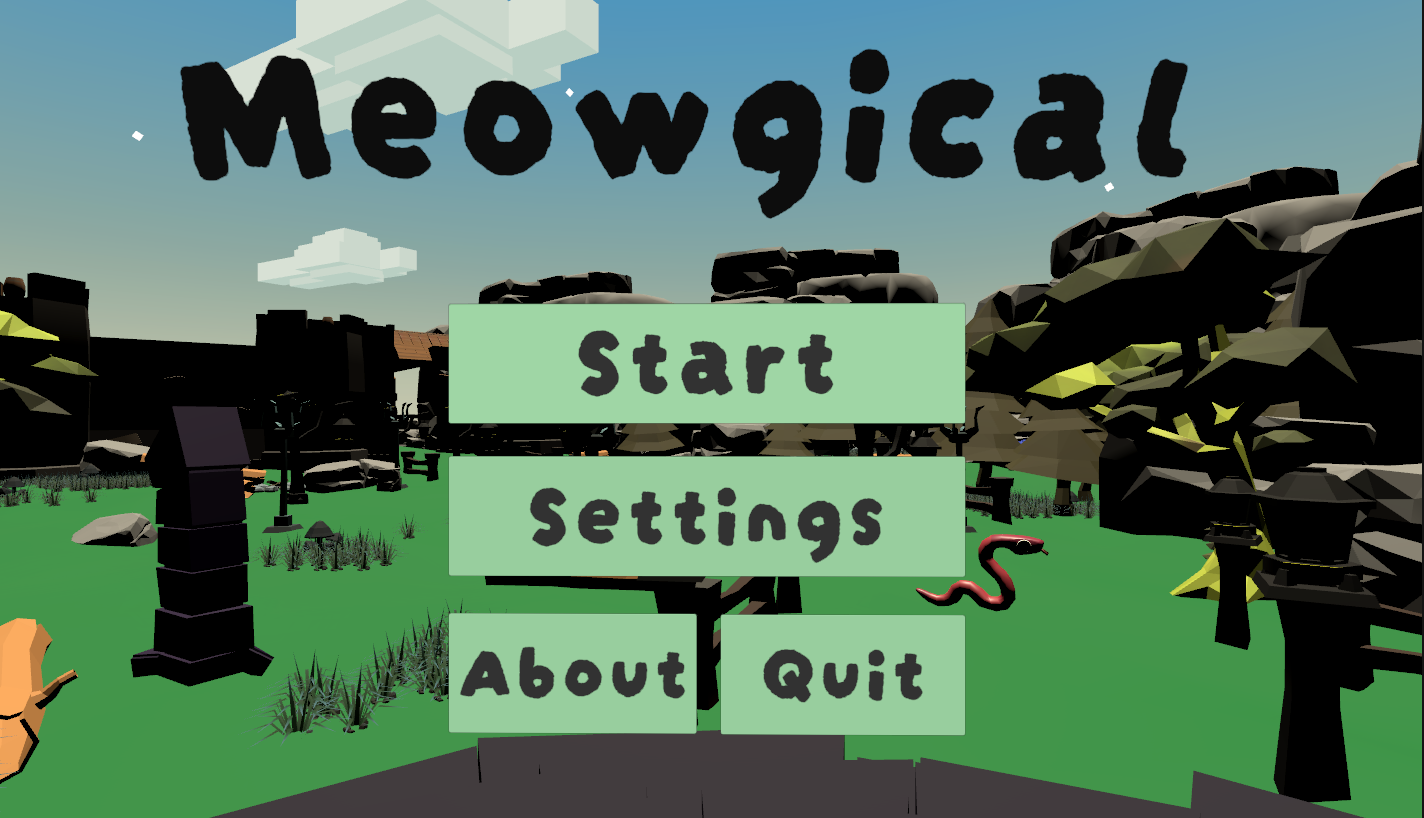
Title screen of the game
Inspiration
Going into this Hackathon, my teammates and I have been enthusiastic about the idea of game development. It had always been a topic that we discussed now and then, but never took the time to truly get into. Seeing that UGAHacks 11 set aside a dedicated time and space for us to explore possible interests, we felt that this was the opportune time to mess around and create something we could be proud of. Having taken a class revolving around extended reality technology (Kevin), we decided to go into the VR development platform since there was some familiarity. We wanted to create a game in a popular genre of endless gameplay, where the player tries to achieve the highest score possible, and we strove to incorporate this year's theme of magic.
What it does
The game revolves around the player working to survive an endless pursuit of forest animals. However, they are equipped with magic spells, which they can cast through drawing the appropriate shapes and then firing away. Each spell has its own unique properties, and so it is up to the player to make strategic use of their arsenal to clear the waves of enemies as long as they can.
How we built it
The game was primarily built using the Unity Engine, with the coding being facilitated through Visual Studio Code. Much of the code was implemented using Anthropic's Claude AI model, with the majority of our work being used to properly configure game assets and prompt engineer Claude's responses. Assets in the game were obtained from the Unity Asset Store, itch.io, and SketchFab. Asset and code management were shared and completed through GitHub Desktop.
Challenges we ran into
Many of our problems went into debugging and interpreting the code generated from Claude, since it was dealing with a language and area of game development we weren't largely familiar with. One of our primary features is the ability for the game to recognize the shapes that the player draws as part of their spell cast. However, a large chunk of our time was spent figuring out why the pattern recognition results would come out messy at times. We eventually concluded that the omission of the Z-axis values had likely tampered with how our 3D drawings projected into a 2D plane would be interpreted. Additionally, we believe that our data set is likely still being tampered with by where the player was in a 3D space at the time of recording coordinates into the data set, making it give weird results in spaces/areas where we did not record our shape drawings
Accomplishments that we're proud of
We were proud of creating a full game that incorporated some of the main features that we envisioned, such as the ability for the player to cast certain spells based on the shapes they drew. We were skeptical about whether the feature could be done in the limited amount of time we got, but it turned out to work better than we expected. Furthermore, we feel that we did a great job at developing a cutesy aesthetic in our UI font typing and asset choices.
What we learned
Through this project, we became much more comfortable working and navigating through the features of Unity. We also became more efficient at navigating different versions and conflicts by using GitHub. After interpreting some of the scripts developed by Claude, we better understood the methods and general development process behind some of the common features/mechanics that go into games.
What's next for Meow-gical
We hope to expand on the scope of the game, possibly introducing new levels and scenes for the player to explore and battle on. We would like to further develop the AI enemy navigation patterns, since we found the concept of having a rendered map mesh for the AI to navigate through, to be interesting. Finally, we hope to eventually incorporate our own assets that we designed, having used our current assets as placeholders.

Log in or sign up for Devpost to join the conversation.