Inspiration
Walking into dozens of local Thai eateries, I was struck by a paradox: the food was bursting with flavor, yet the menus felt uninspired—grainy photos, clunky layouts, and text that didn’t do justice to each dish. As someone who’s built CatChaChat and Waste Protocol using AI and blockchain, I knew generative models could transform this experience. I set out to bring world-class menu design—tailored for Thai language and culture—to every small restaurant owner.
What it does
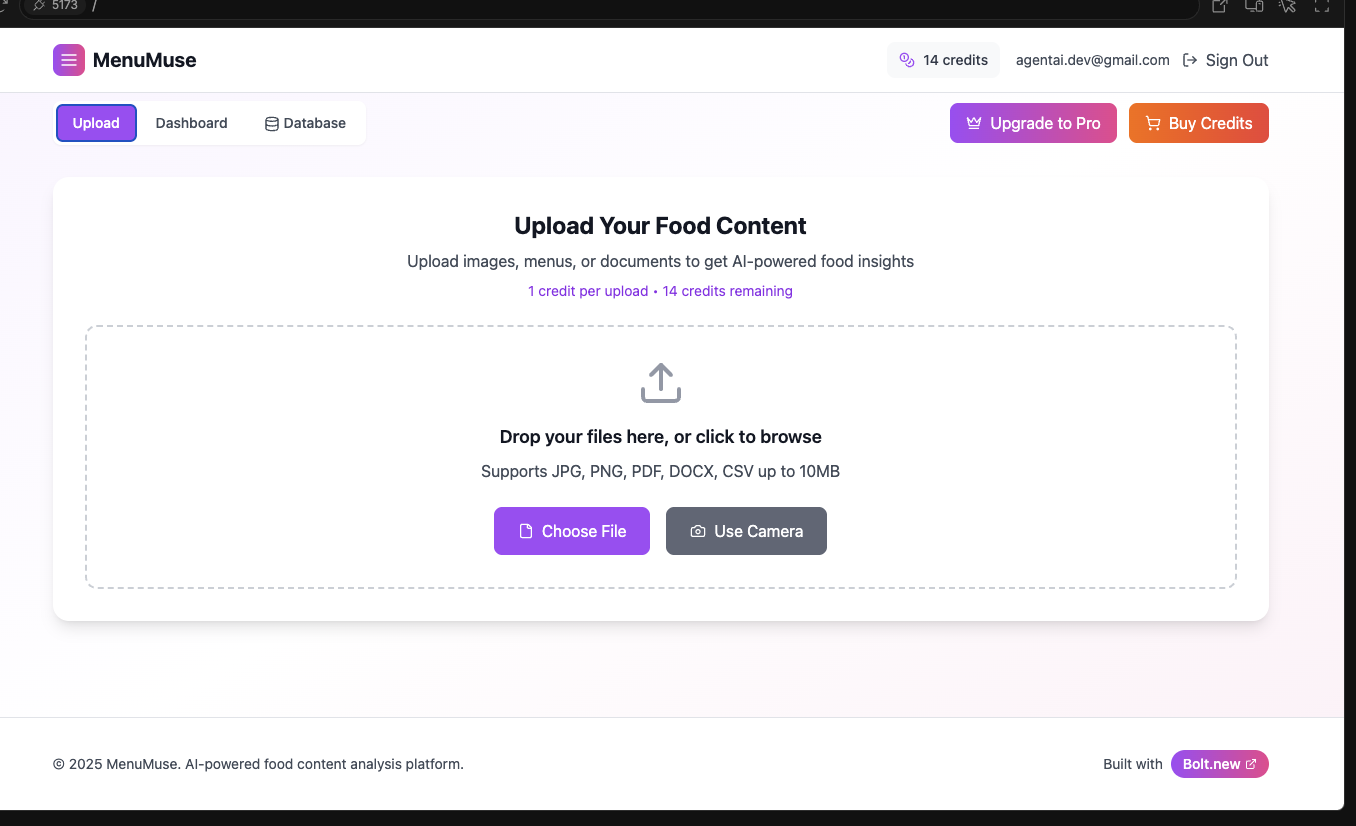
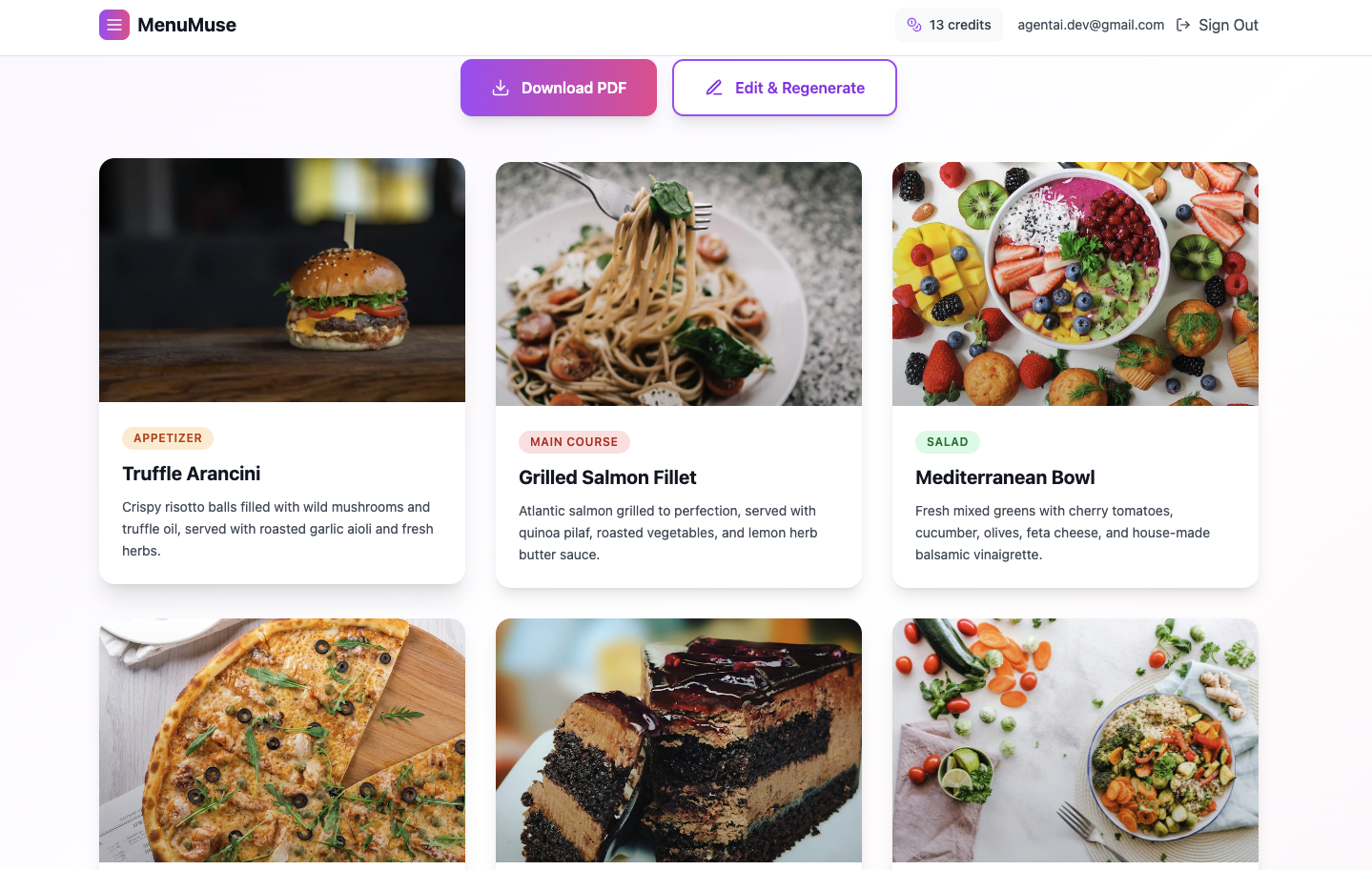
MenuMuse uses an AI-powered OCR engine to scan your handwritten or simple digital menu and instantly extract dish names, descriptions, and prices. A generative design module then automatically builds a polished, image-rich menu layout with Thai-ready fonts, color palettes inspired by traditional motifs, and appetizing food visuals—all in under a minute. No designer needed, no language barrier.
How we built it
- OCR Engine: Fine-tuned an open-source OCR model on 5,000+ real Thai menu images to reach over 95% text-extraction accuracy.
- Generative Layout: Integrated a custom Stable Diffusion pipeline for food photography and a templating system that arranges text, images, and decorative Thai elements.
- Backend & Hosting: Deployed on AWS Lambda and S3 for serverless scalability, using API Gateway to route OCR and generation requests.
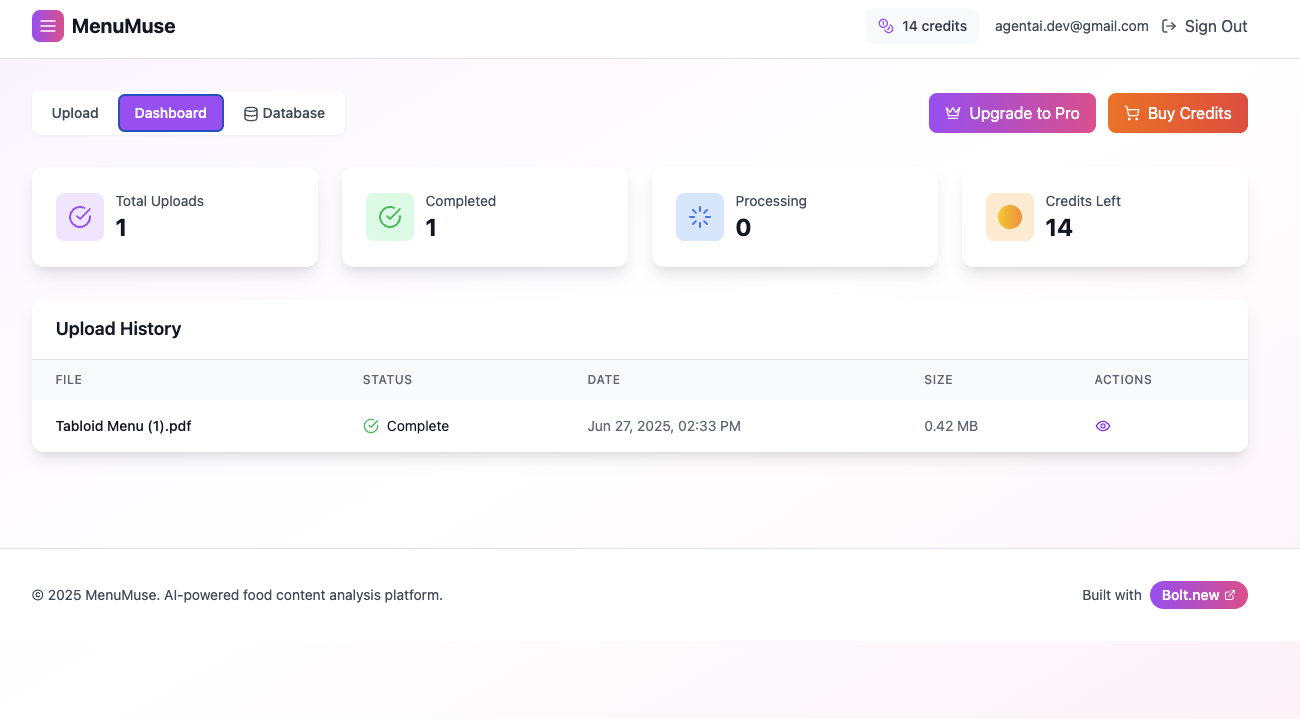
- Frontend: Built a Vue.js single-page app with Vuetify, allowing drag-and-drop uploads, live previews, and one-click downloads in PDF or image formats.
Challenges we ran into
- Thai OCR Accuracy: Off-the-shelf OCR struggled with stylized Thai fonts. We collected our own dataset and retrained a model to handle local scripts and scan artifacts.
- Image Consistency: Generating uniform, high-quality food images across dozens of dishes required extensive prompt engineering and filtering to avoid mismatched lighting or backgrounds.
- Fast Turnaround: Balancing quick response times with heavy image-generation workloads meant careful batching, caching, and using on-demand GPU instances without blowing up costs.
Accomplishments that we're proud of
- Achieved 95%+ OCR accuracy on real Thai restaurant menus.
- Generated professional-quality menu layouts in under 60 seconds per menu.
- Pilot tested with 20 local eateries in Bangkok—saw a 15% lift in orders for featured dishes and 80% customer satisfaction on menu readability.
What we learned
- Domain-specific data collection is crucial: a small, focused Thai-menu dataset vastly improved OCR performance.
- Prompt engineering isn’t one-and-done; iterating on hundreds of visual prompts led to the most appetizing, consistent imagery.
- Serverless architectures can scale creative AI workloads cost-effectively when carefully orchestrated.
What’s next for MenuMuse
- Multi-language support: Add English, Chinese, and Japanese menu versions with localized fonts and translations.
- Interactive QR menus: Turn static PDFs into interactive web menus with ordering and dietary filters.
- Partner integrations: Plug directly into food-delivery platforms (Grab, DoorDash) for automated menu updates.
- Mobile app: Allow on-the-go menu generation and management for restaurateurs via iOS/Android.
What it does
How we built it
Challenges we ran into
Accomplishments that we're proud of
What we learned
What's next for MenuMuse
Built With
- and-object-storage-**netlify**-?-full-stack-deployment-(??-deploy-challenge)-**supabase**-?-postgresql-database
- and-storage-*-**netlify**-?-full-stack-deployment-(??-deploy-challenge)-*-**supabase**-?-postgresql-database
- api
- api-gateway**
- api-routing
- authentication
- bolt.new
- cloudinary
- diffusers
- docker
- github
- lambda
- lambda**
- netlify
- paddleocr
- python
- pytorch
- s3
- s3**-?-serverless-functions
- supabase

Log in or sign up for Devpost to join the conversation.