-
-
Ments: turn a founder pitch into a mutual introduction.
-
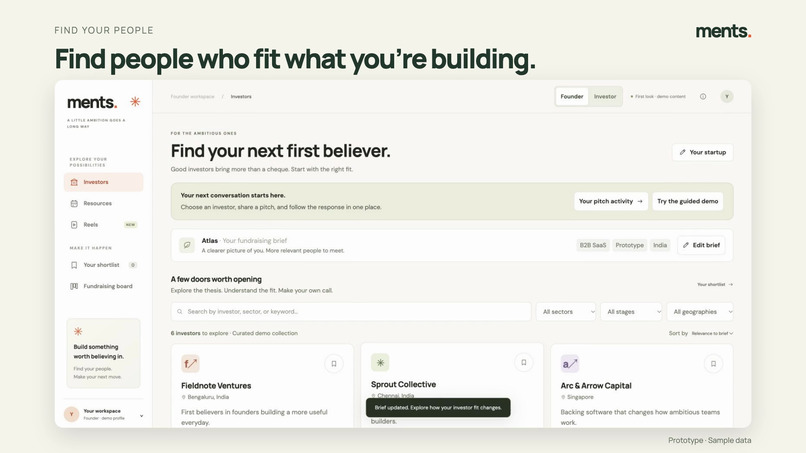
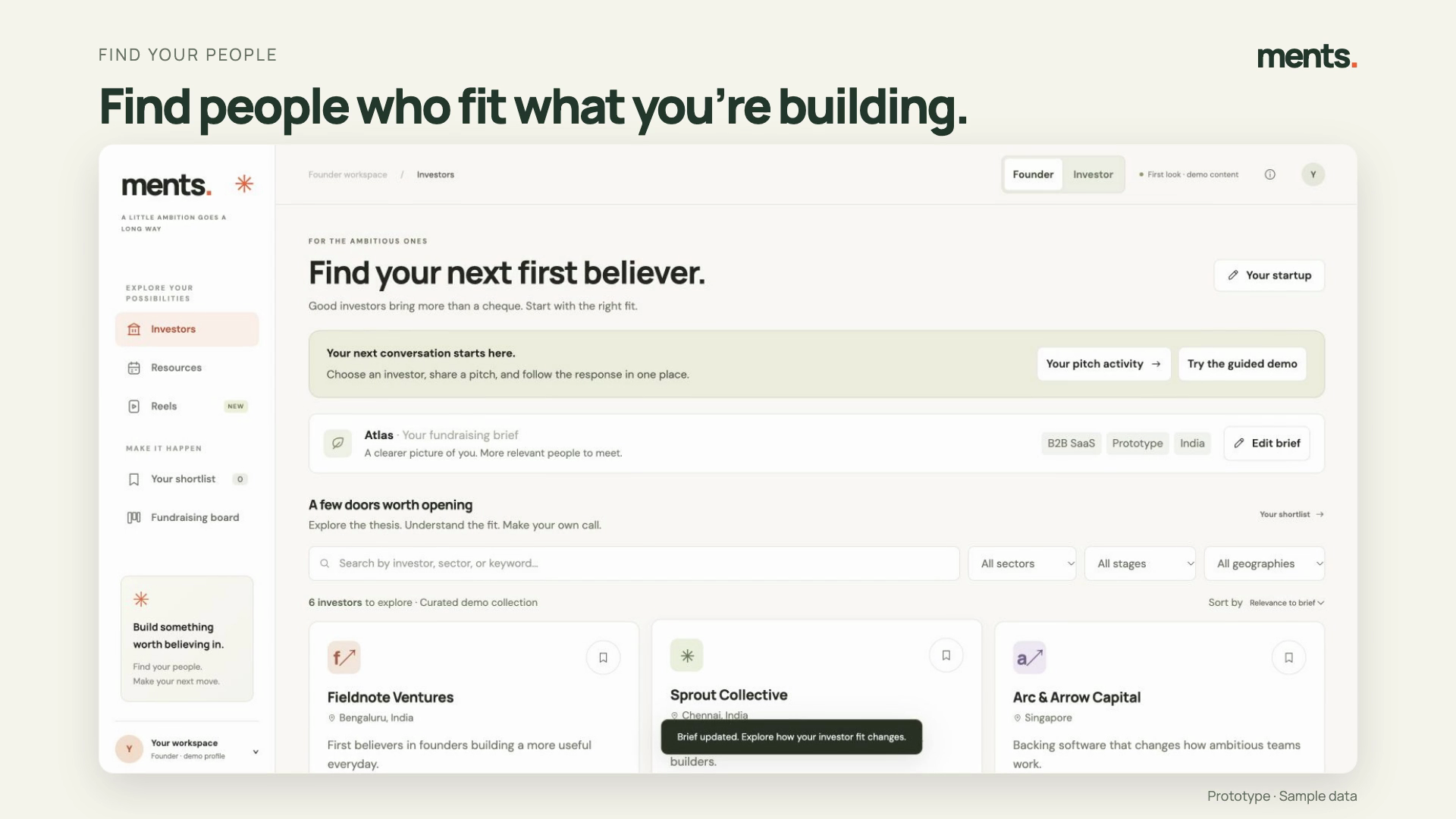
Discover relevant investors using startup context and plain-language fit.
-
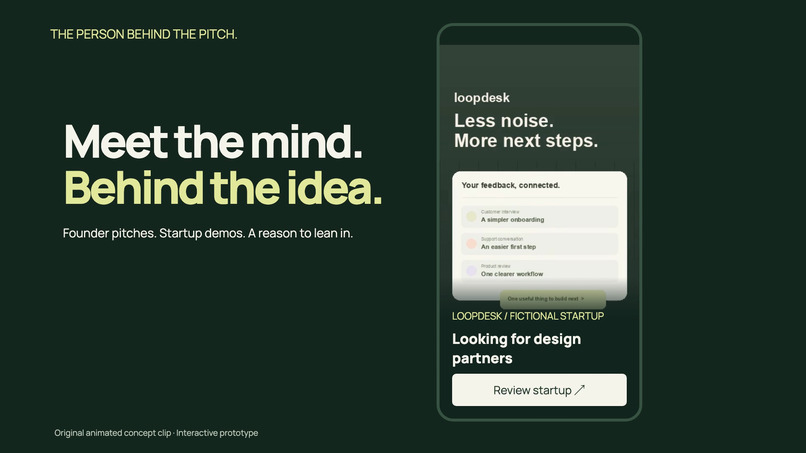
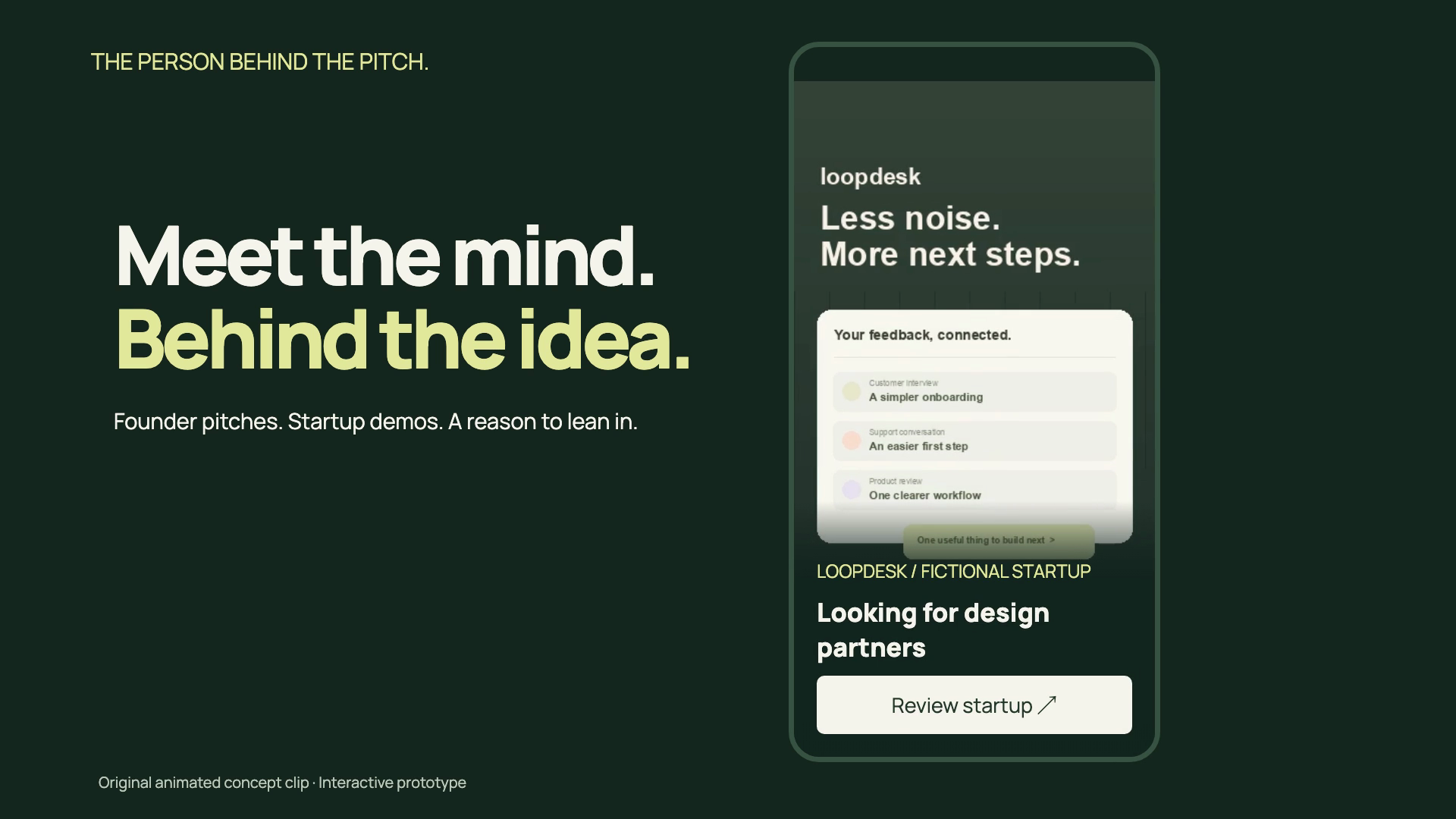
Immersive startup-demo Reels lead to the full startup context.
-
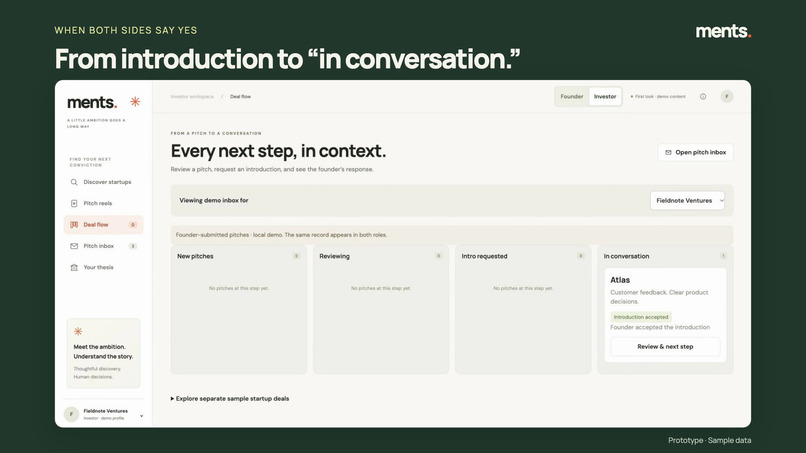
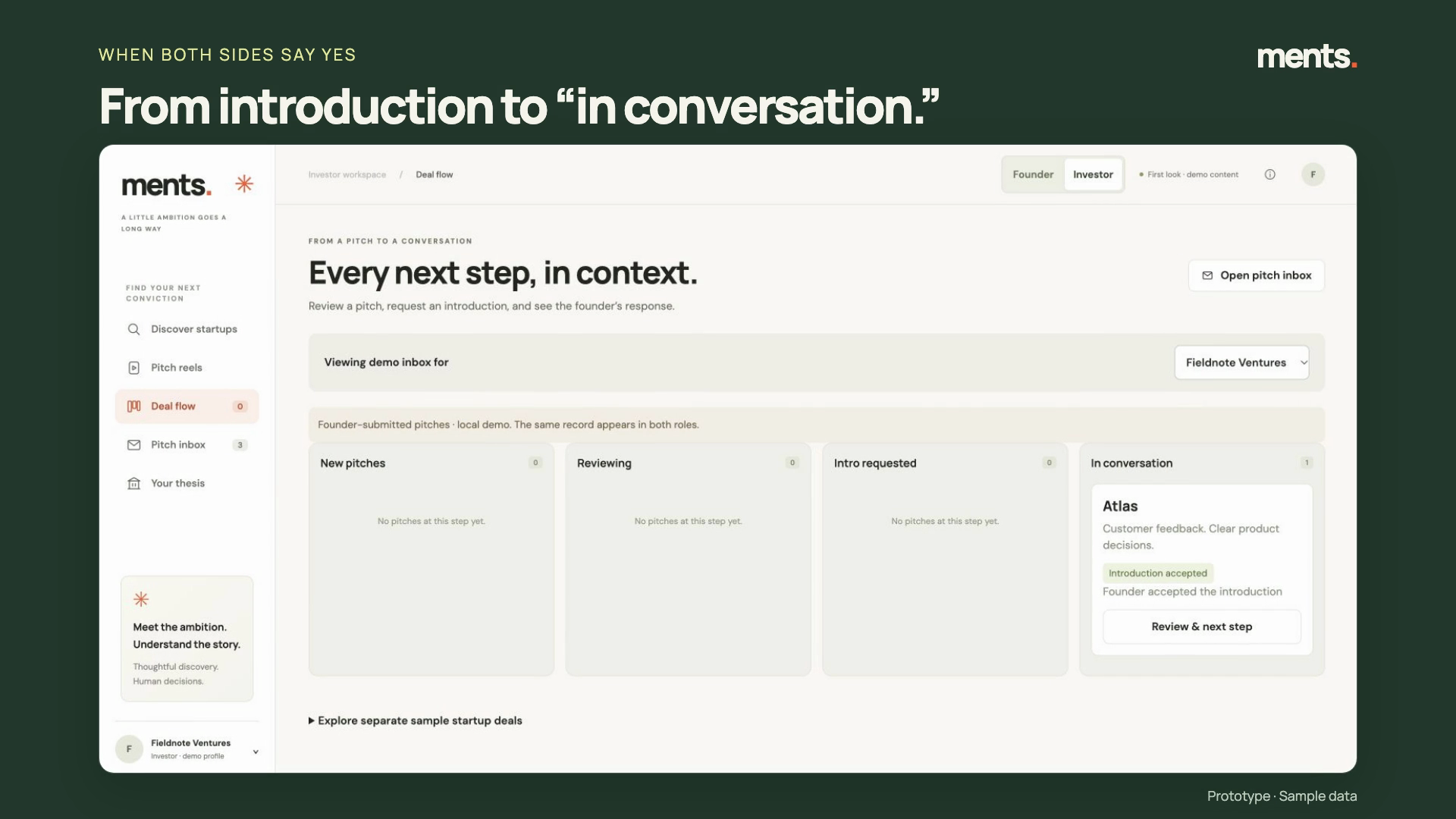
The investor board reflects the founder’s accepted demo introduction.
-
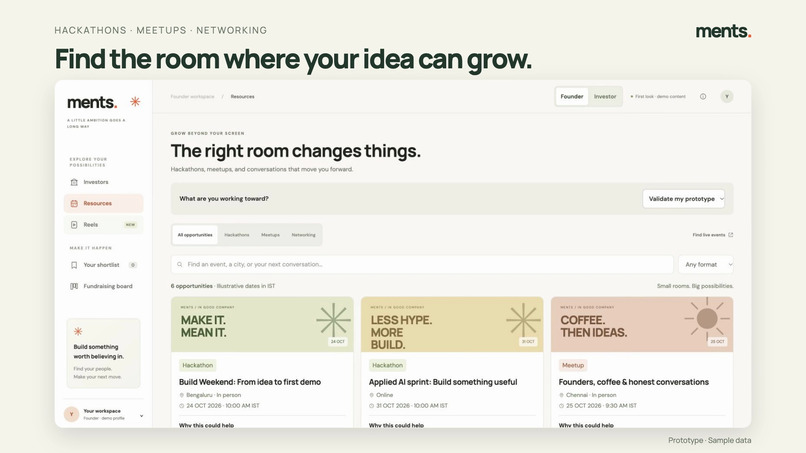
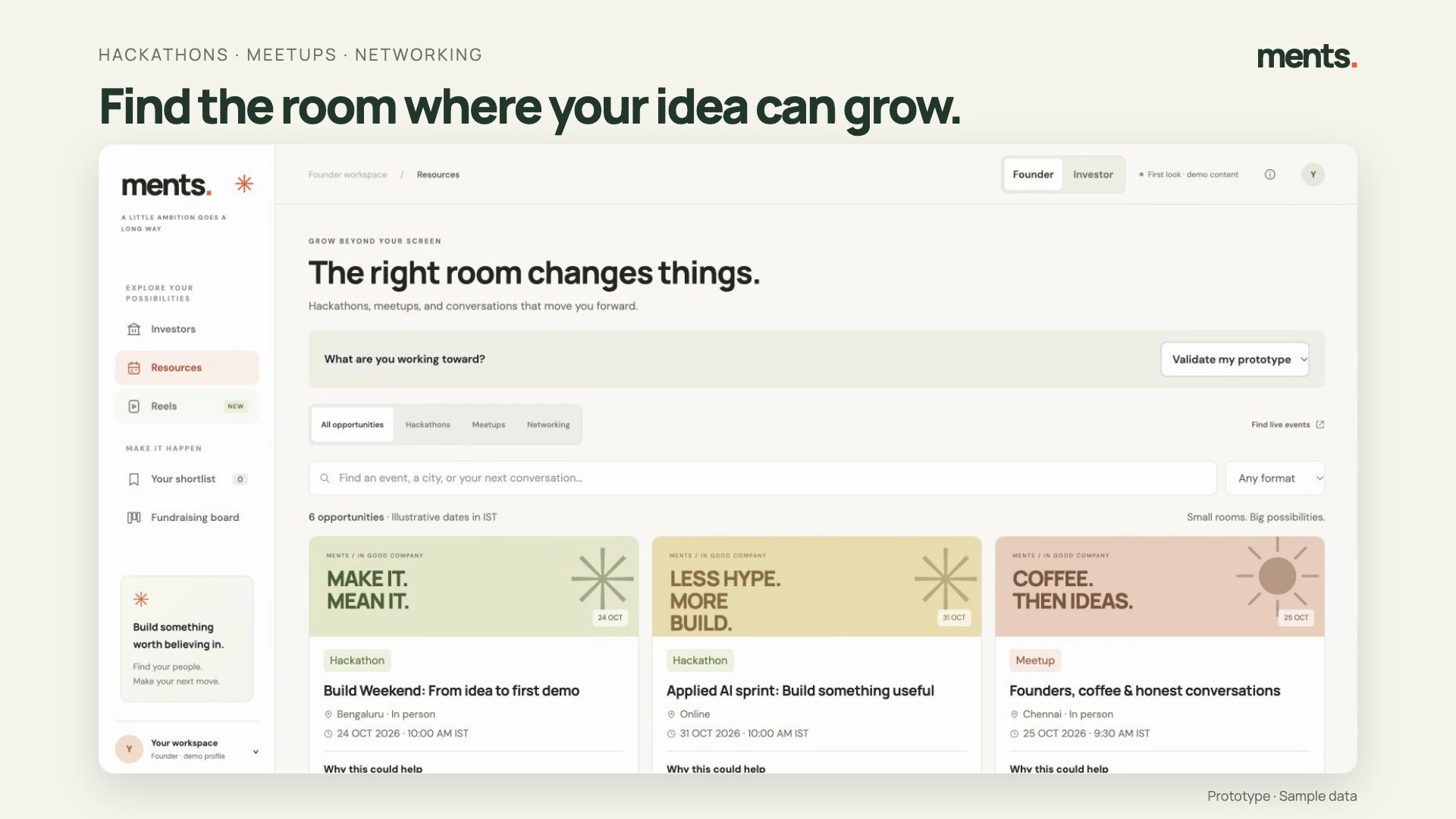
Founder opportunities connect to a concrete preparation plan.
Inspiration
A founder can find hundreds of investor names and still struggle to start one useful conversation. Investors face the other side: pitches without enough context to decide what to do next. We redesigned that handoff around relevance, a clear ask, and mutual choice.
What it does
Ments is a founder-and-investor UI/UX prototype. Founders define their startup, explore relevant investors with plain-language fit explanations, and prepare a pitch with product context, evidence and a specific ask. The submitted pitch becomes the same record in the selected investor’s demo inbox. An investor reviews it and requests an introduction; the founder accepts or declines. Both workspaces reflect the outcome.
Startup-demo Reels offer a quick way to meet an idea before opening its full context. Resources brings together fictional hackathons, meetups and networking opportunities, with a preparation plan tied to the founder’s next goal.
Design decisions
We used separate workspaces for separate decisions, visible status changes, and a shared pitch history so context survives each handoff. A restrained cream, green and coral palette, readable type and immersive Reels keep discovery approachable. Semantic controls, keyboard alternatives, dialog focus handling and reduced-motion support are implemented; this is not a claim of a completed accessibility audit.
How we built it
The prototype uses HTML, CSS and JavaScript with localStorage for demo persistence. The video uses React, TypeScript and Remotion, combining actual prototype captures with original motion graphics. Codex assisted with implementation and iteration. OpenVC inspired the investor-discovery concept; interface artwork and fictional records were created for this prototype.
Challenges and what we learned
The hardest design problem was preserving context while switching roles. We connected submission, review, request and response through one pitch record, keeping drafts separate from submitted snapshots. We also revised the presentation from a dense modal-by-modal walkthrough into an 87-second story with focused product moments. A useful next action communicates more than a long feature list.
Prototype scope and next steps
This is a new standalone design exploration using the existing Ments name, not a claim that the existing Ments product was built during this event. Profiles, startups, evidence and events are fictional. Role switching simulates two perspectives in one browser; it is not authentication. No real messages, investments or registrations occur. No participant usability study or measured conversion improvement is claimed. Next: task-based testing with founders and investors, verified opportunity data, and authenticated server-side delivery.
Demo instructions
Watch the embedded 87-second product film. It shows investor discovery, a pitch preview, the receiving investor inbox, the conversation board, startup-demo Reels and opportunity planning. The film combines actual prototype captures with authored motion graphics and omits intermediate clicks. The interactive site remains private; this submission is presented through video and gallery. All prototype activity remains local to the same browser and origin.
Music in the film: Cat Walk by Arulo, used under the Mixkit Stock Music Free License.


Log in or sign up for Devpost to join the conversation.