-
-
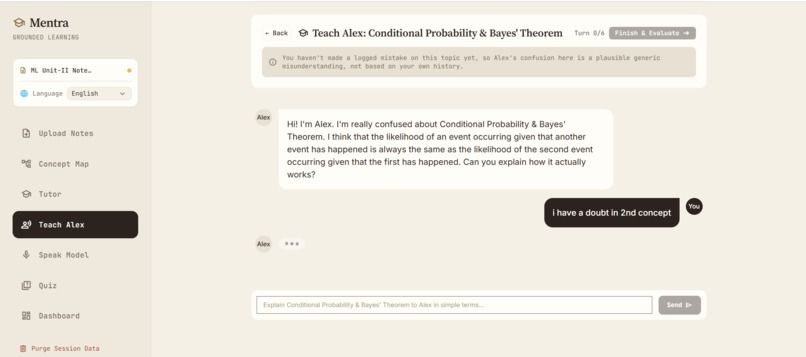
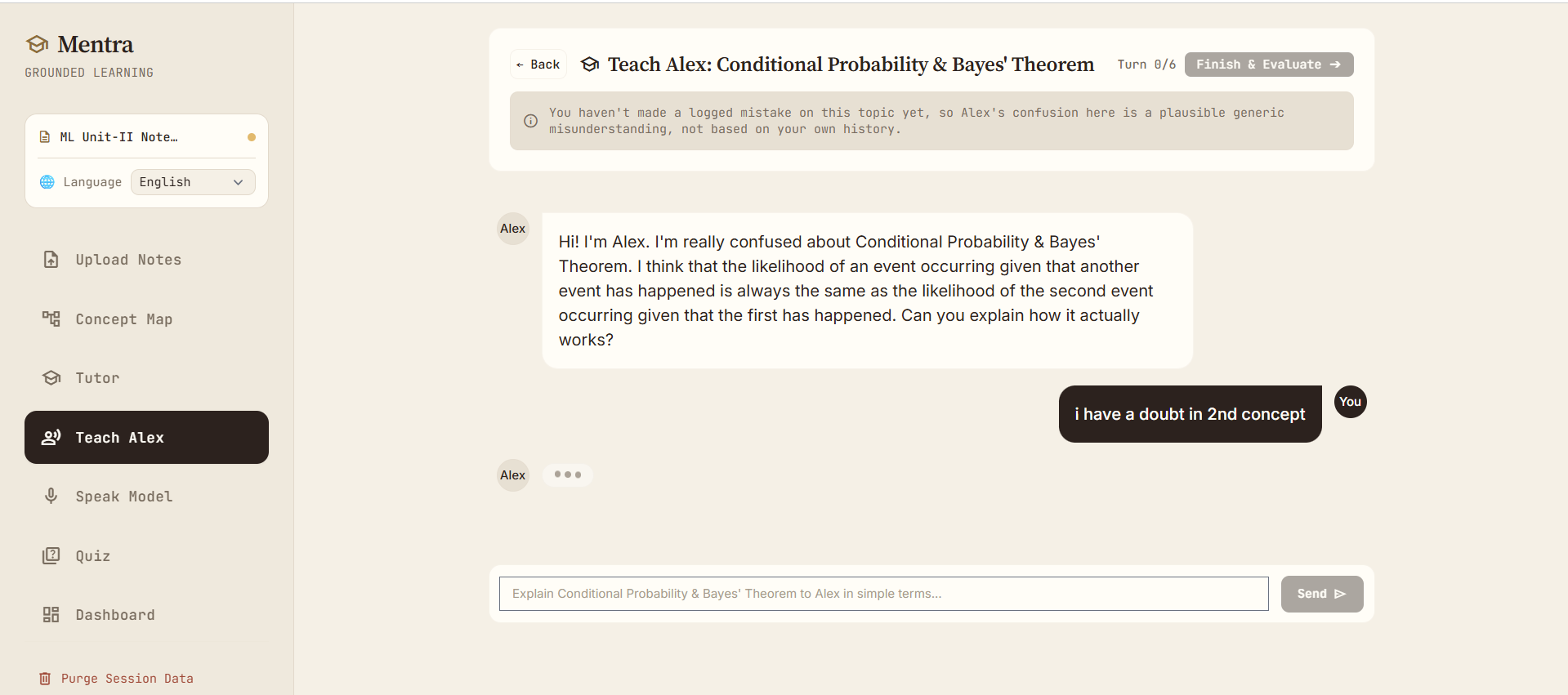
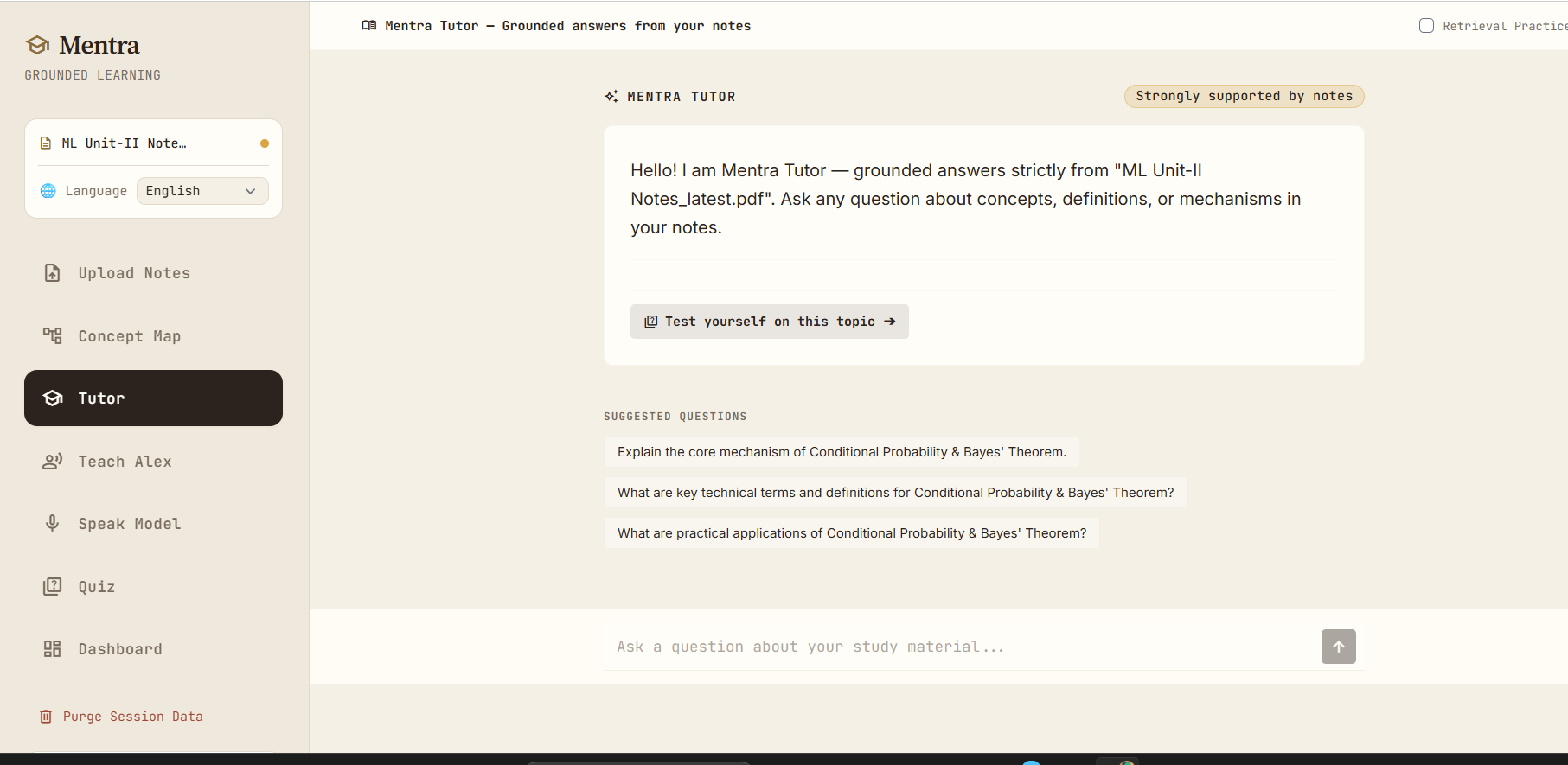
Chatbot for teaching the specific concept
-
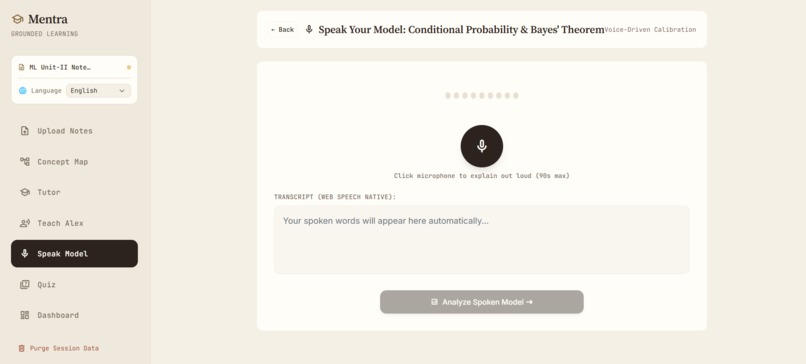
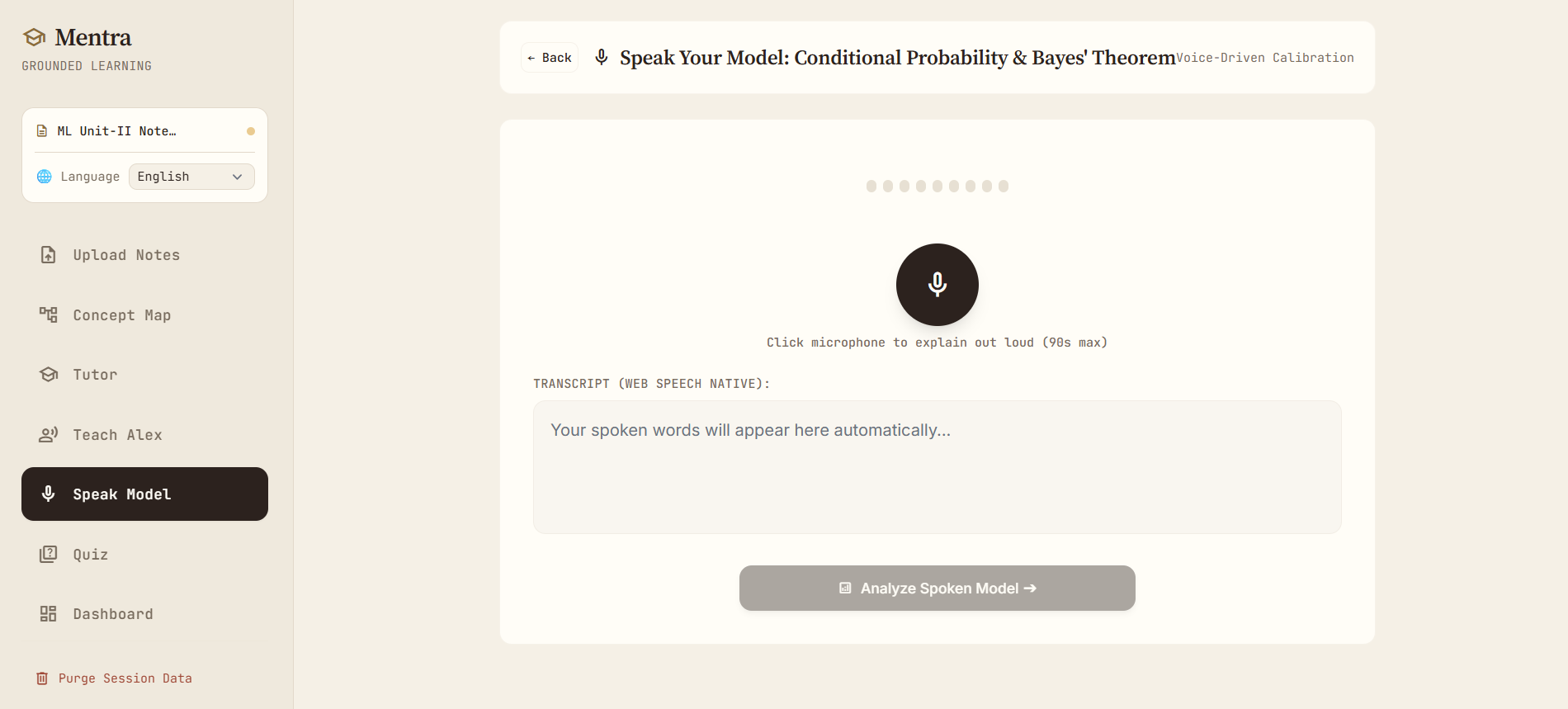
Voice command which enables easy learning
-
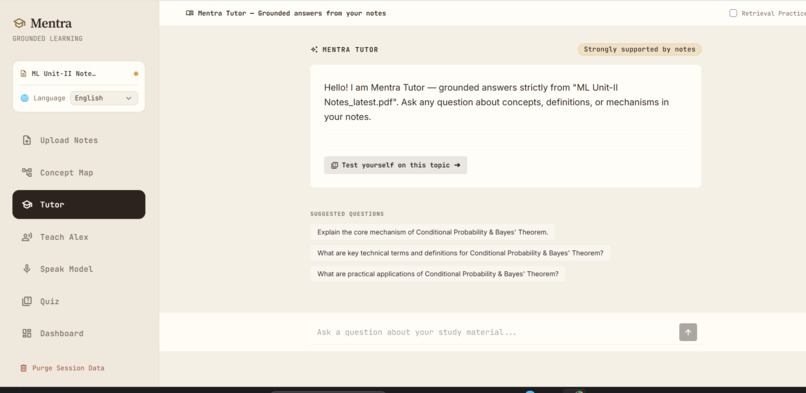
A Personalized Tutor
-
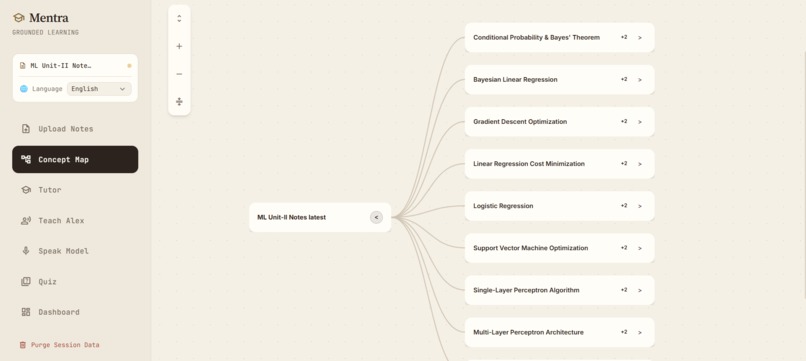
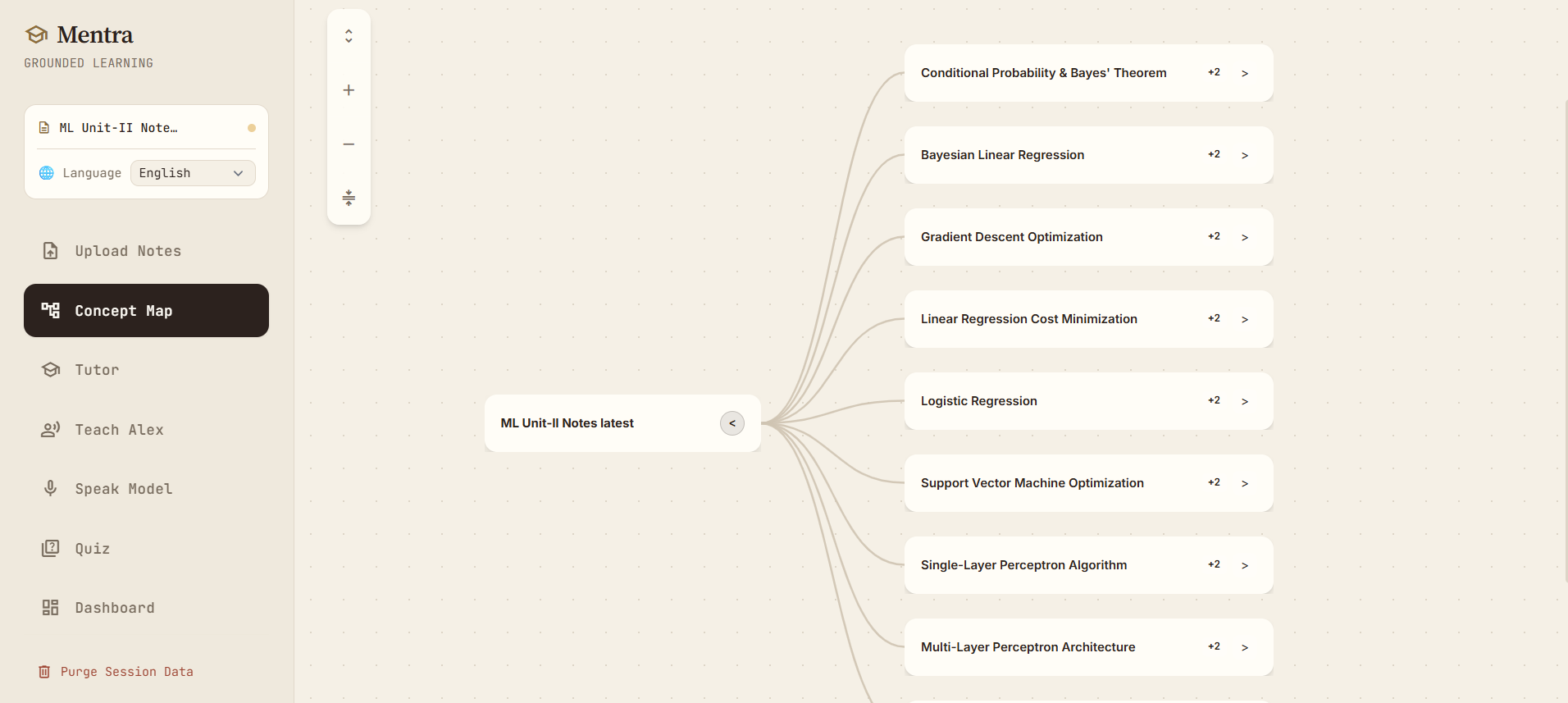
Overall Concepts
-
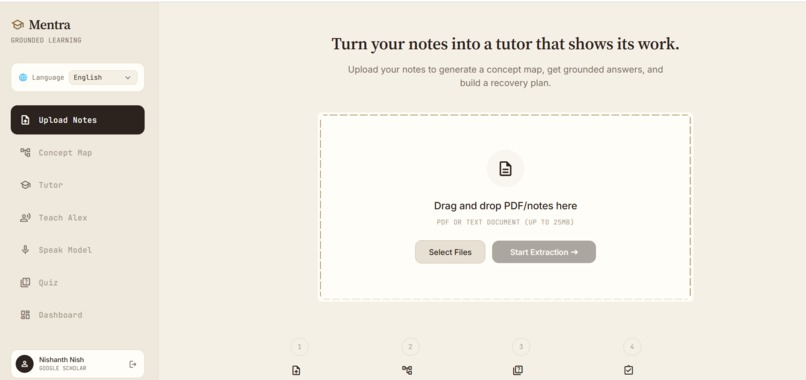
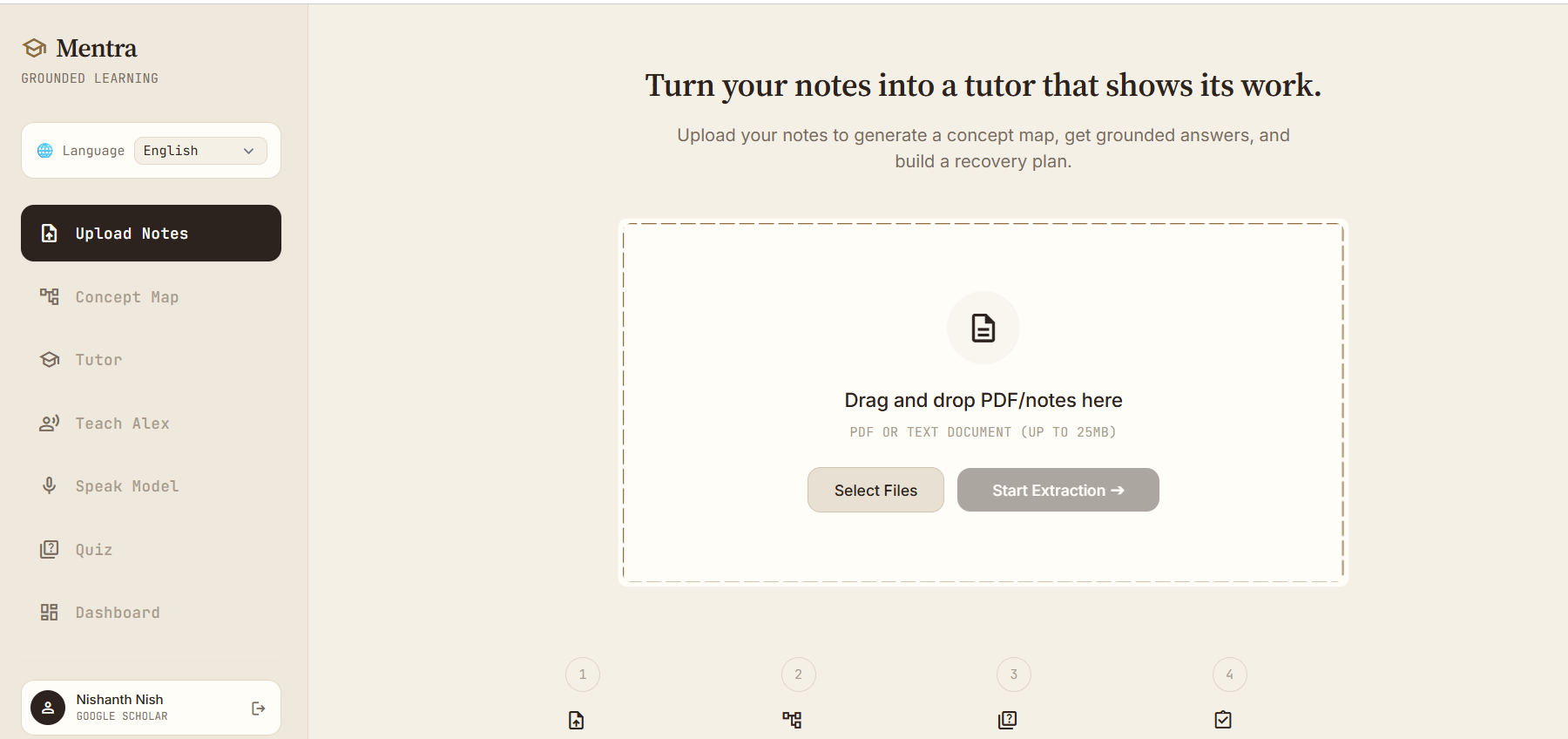
Uploading notes
-
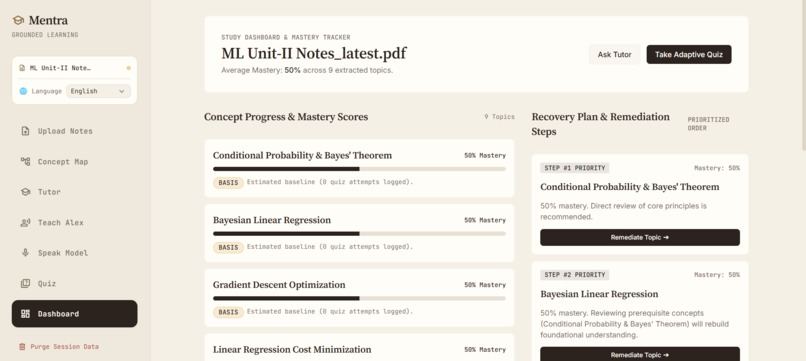
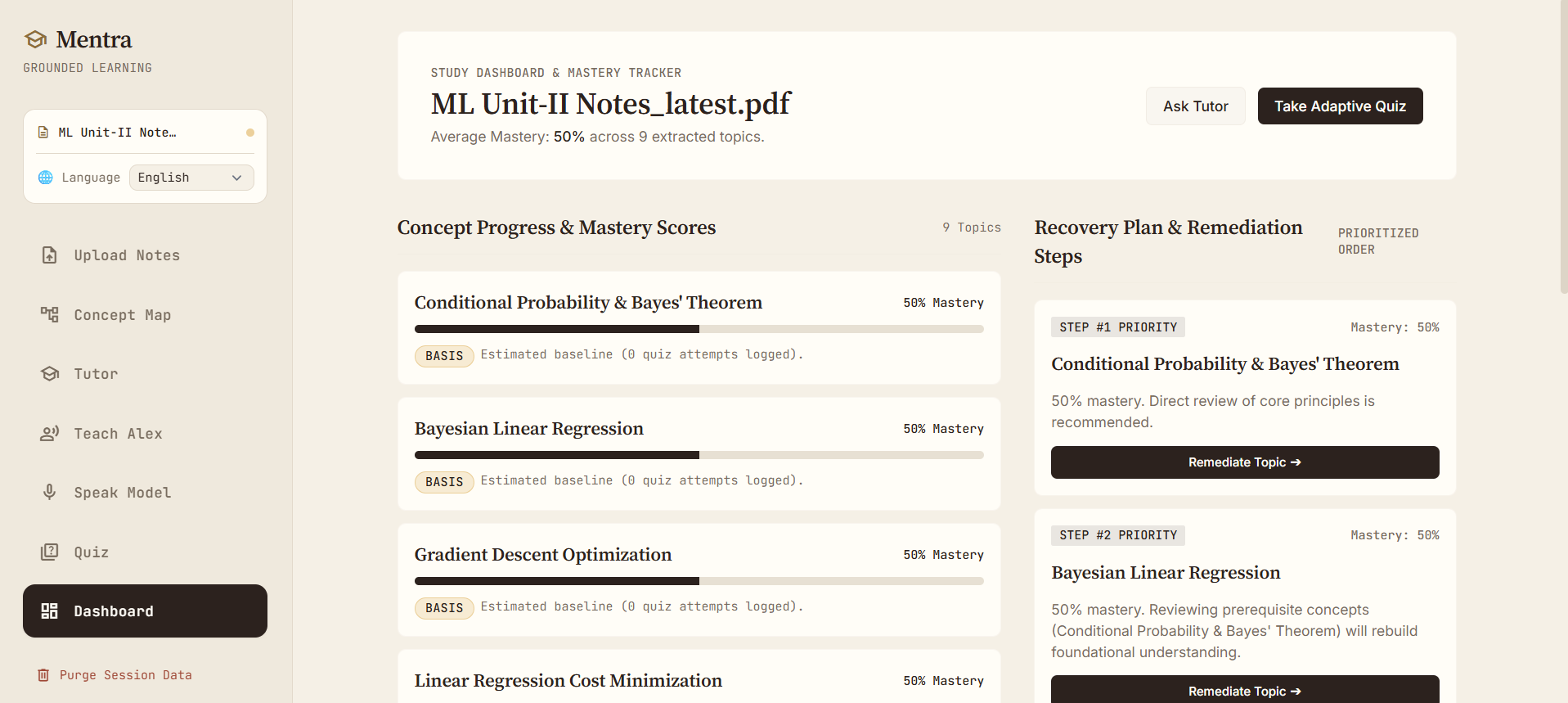
Overall Dashboard
-
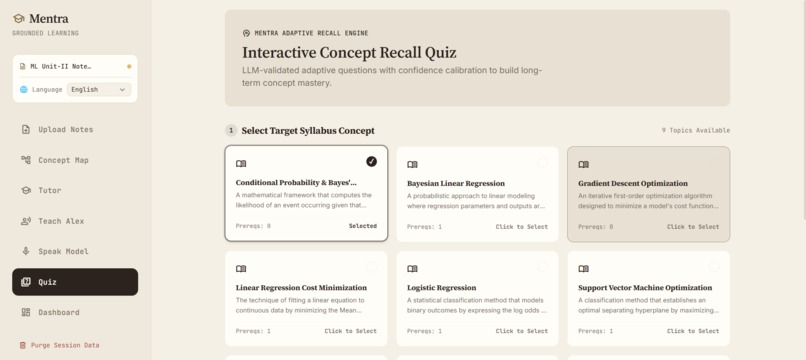
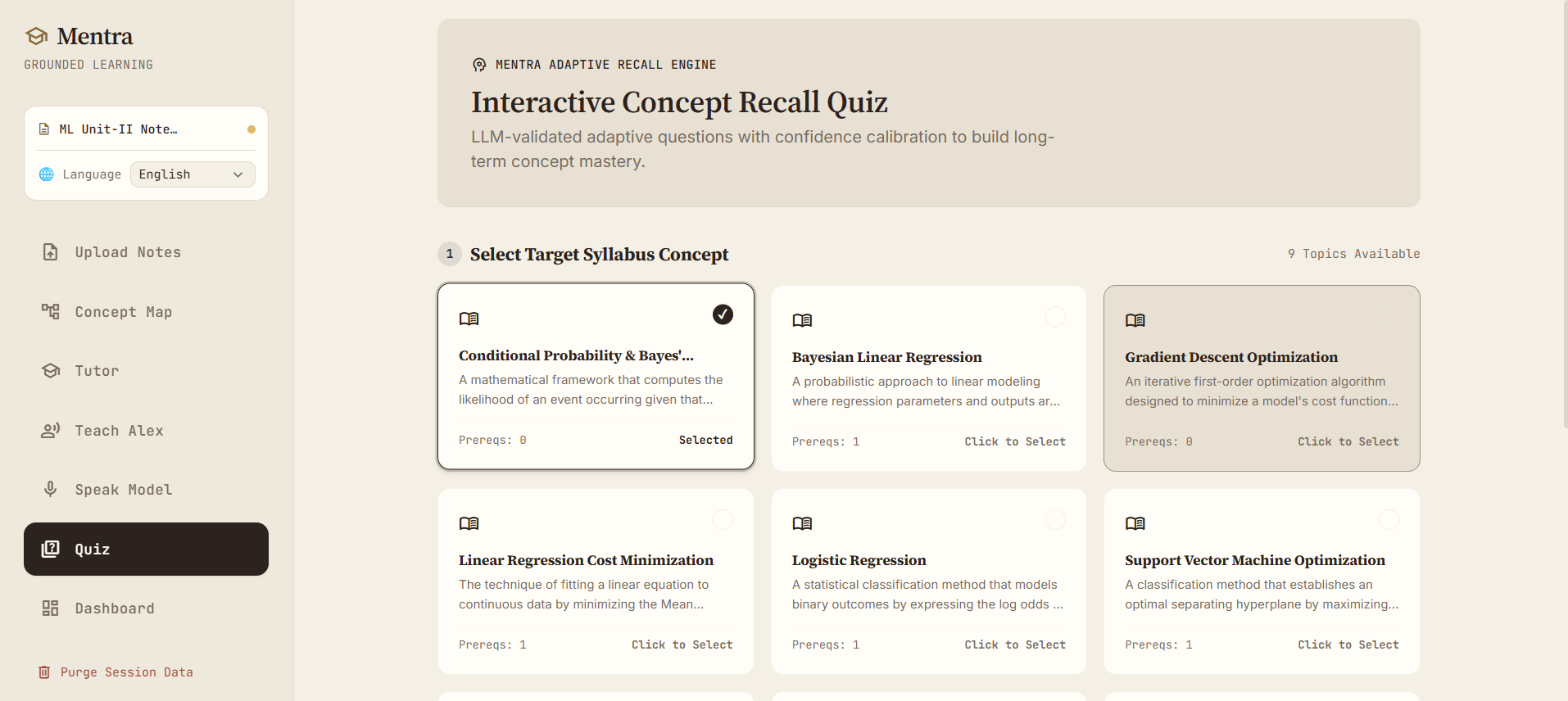
Quiz conduction
Inspiration
Learning today is fragmented across lectures, PDFs, videos, notes, and AI tools. Most AI tutors can answer questions, but they don't truly understand what a student already knows or where they struggle. This inspired us to build Mentra AI, an adaptive learning platform that continuously understands and evolves with each learner.
How We Built It
Students upload their study materials, which Mentra AI processes into structured knowledge. We use RAG (Retrieval-Augmented Generation) and semantic search to provide answers grounded in the uploaded content. We then generate a Personal Concept Graph that connects concepts and prerequisites. The learner model is continuously updated based on interactions, helping the system identify knowledge gaps, generate personalized quizzes, and recommend what the student should learn next.
The frontend was built using React, TypeScript, and Tailwind CSS, while the backend uses Python and FastAPI. AI capabilities are powered by LLMs, RAG, semantic search, concept graph generation, and an adaptive learning engine.
Challenges We Faced
One of our biggest challenges was going beyond a traditional chatbot and designing a learner model that could continuously evolve. We also had to ensure that AI responses stayed grounded in the user's uploaded material rather than relying only on general model knowledge. Integrating the React frontend with our FastAPI backend and deploying the system across Vercel and Render also required careful testing and debugging.
What We Learned
Building Mentra AI taught us how to combine Generative AI, RAG, knowledge representation, semantic search, adaptive learning, backend development, and deployment into a single product. More importantly, we learned that building an intelligent AI system is not just about generating answers—it is about understanding context, maintaining meaningful learner state, and turning every interaction into a better learning experience.
Impact & Future
Mentra AI can support university students, competitive exam aspirants, self-paced learners, and professional training programs by providing personalized, concept-driven learning.
Our future roadmap includes multimodal learning, long-term learner memory, predictive academic risk detection, institution-wide learning analytics, and AI teaching assistants.
Our goal is simple: transform AI from a system that merely answers questions into one that truly understands every learner.
Built With
- css-frameworks:-react
- fastapi
- html
- javascript
- languages:-python
- rag
- rest-api
- semantic-search-deployment:-vercel
- tailwind-css-apis/ai:-llm-apis
- typescript


Log in or sign up for Devpost to join the conversation.