-
-
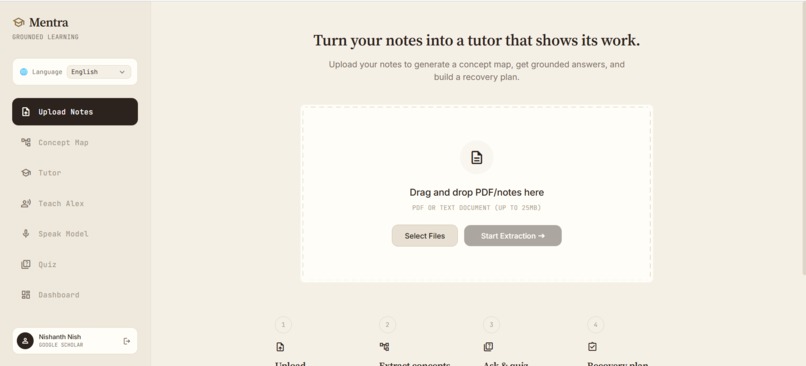
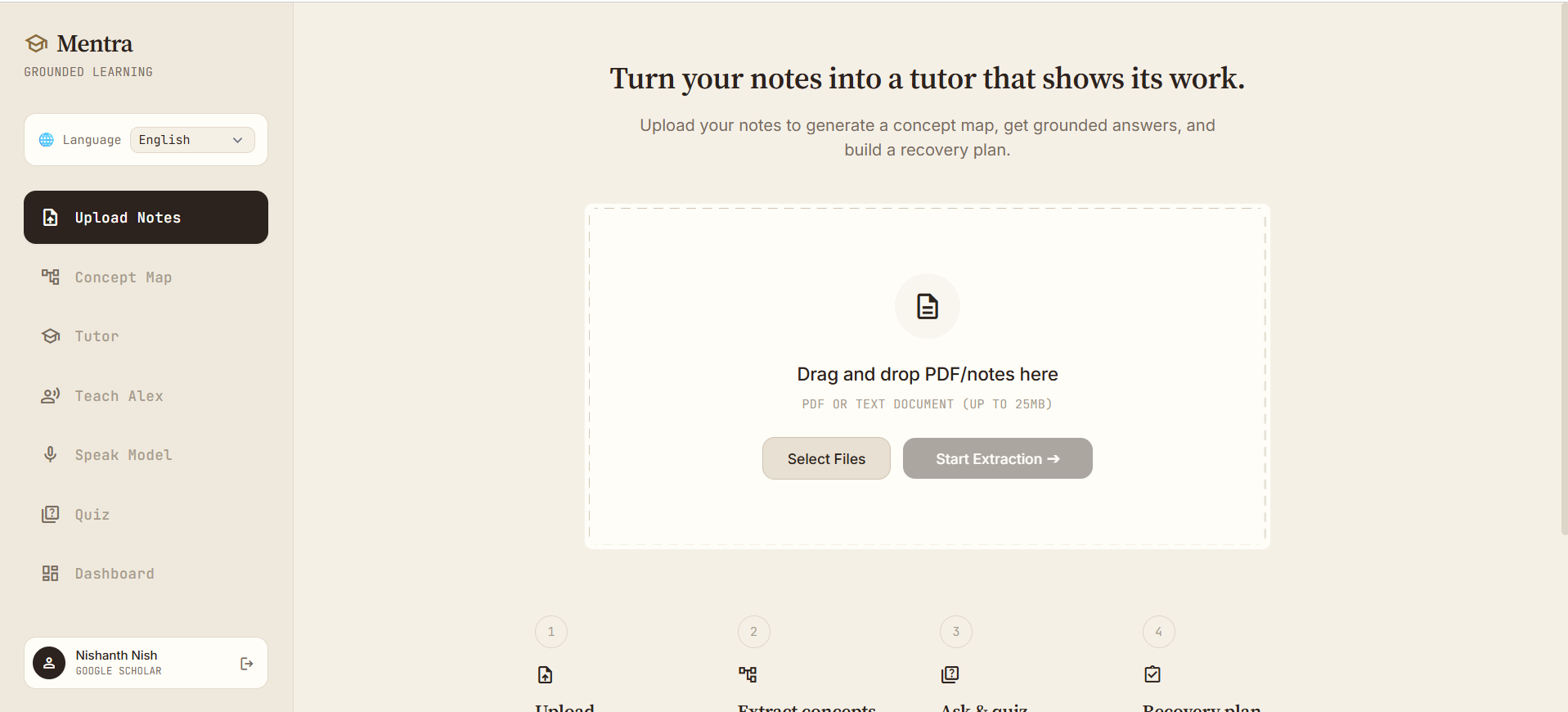
File upload
-
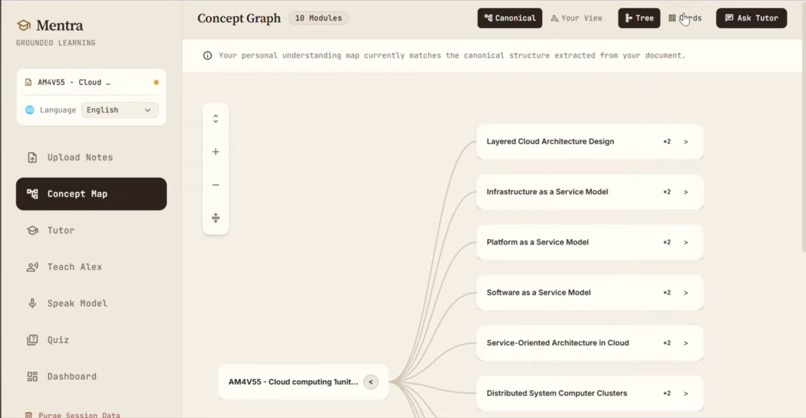
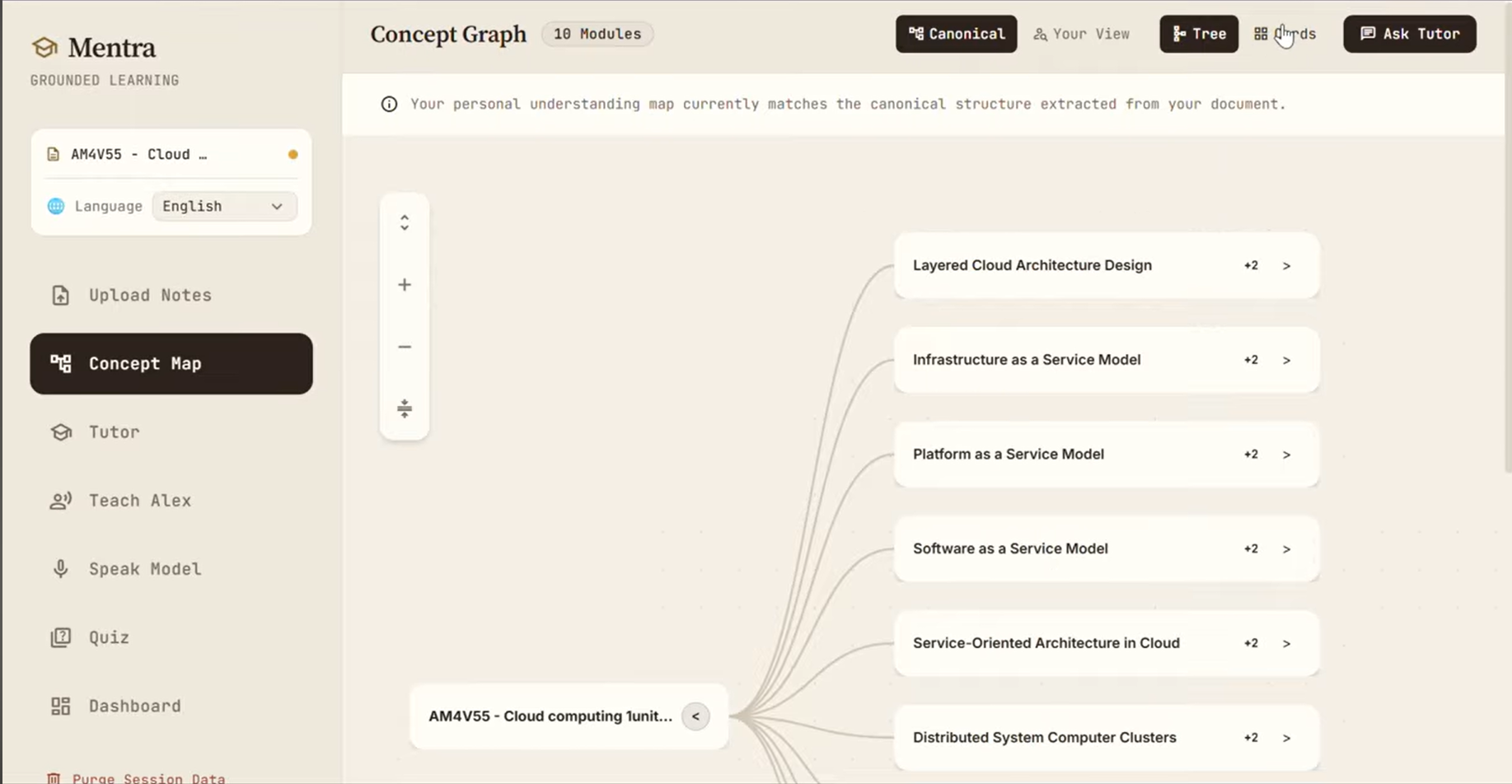
Concept Tree
-
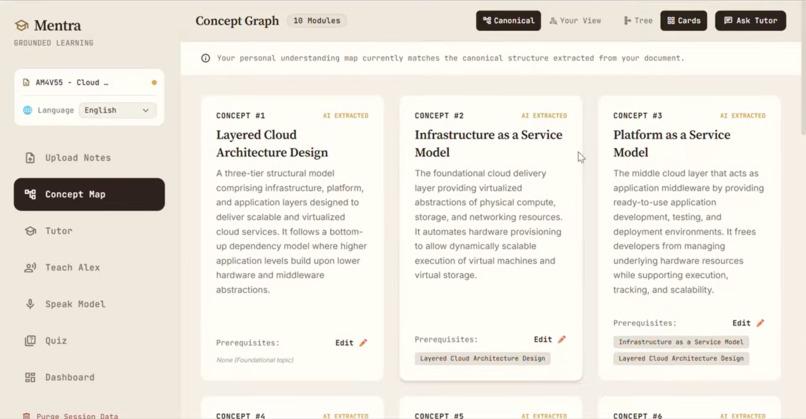
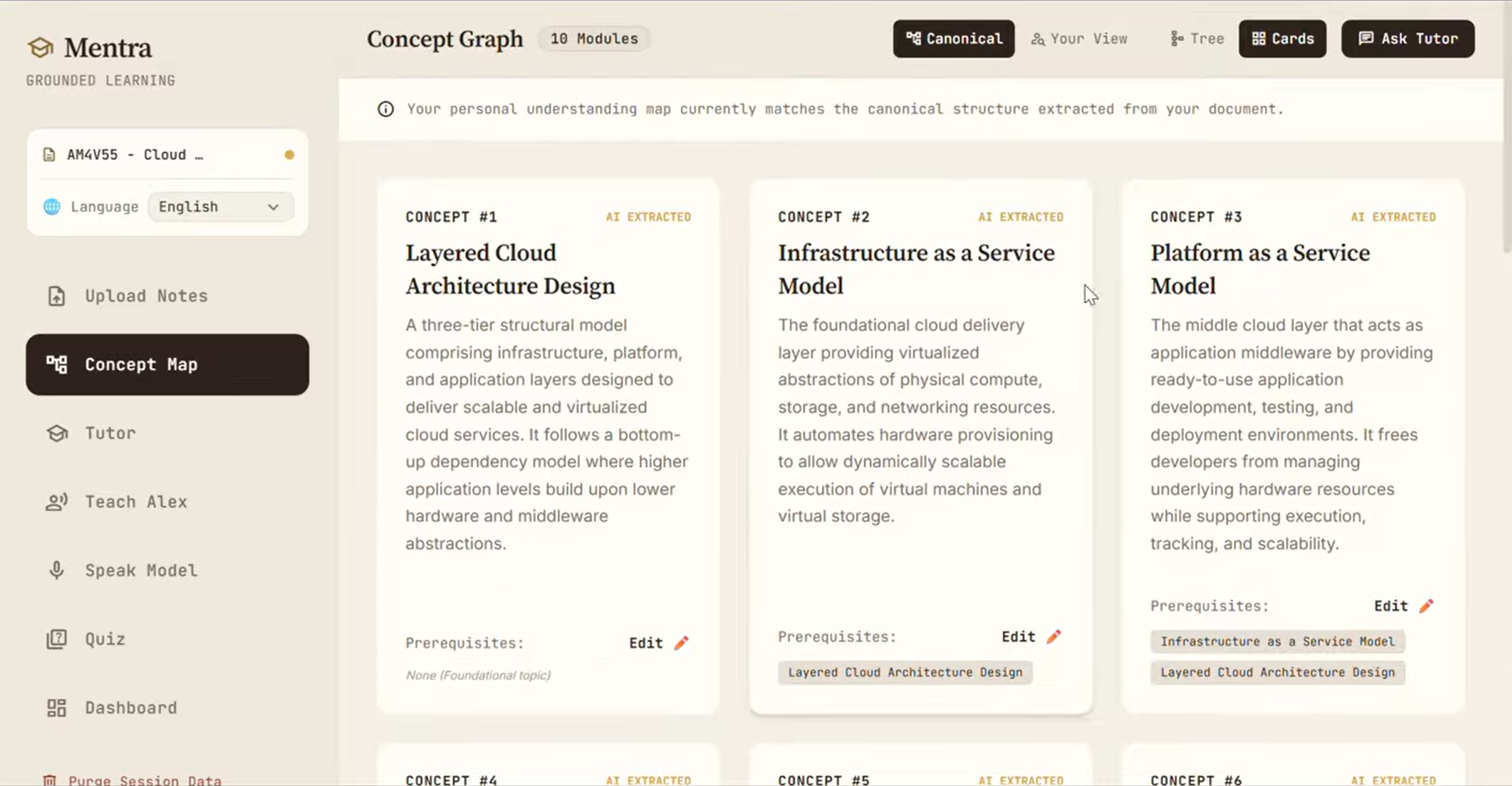
Concept Cards
-
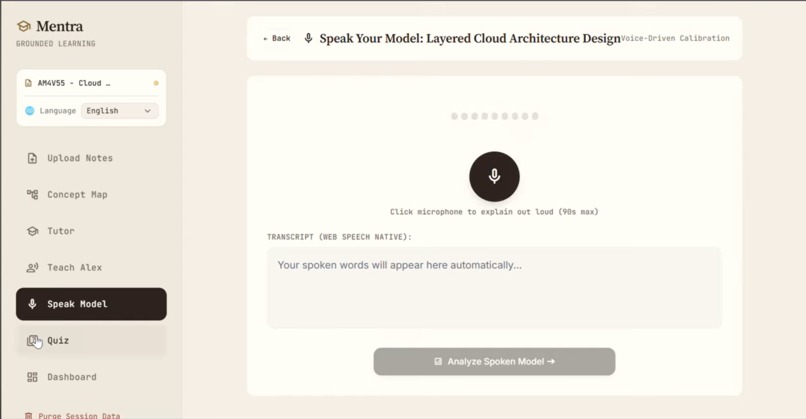
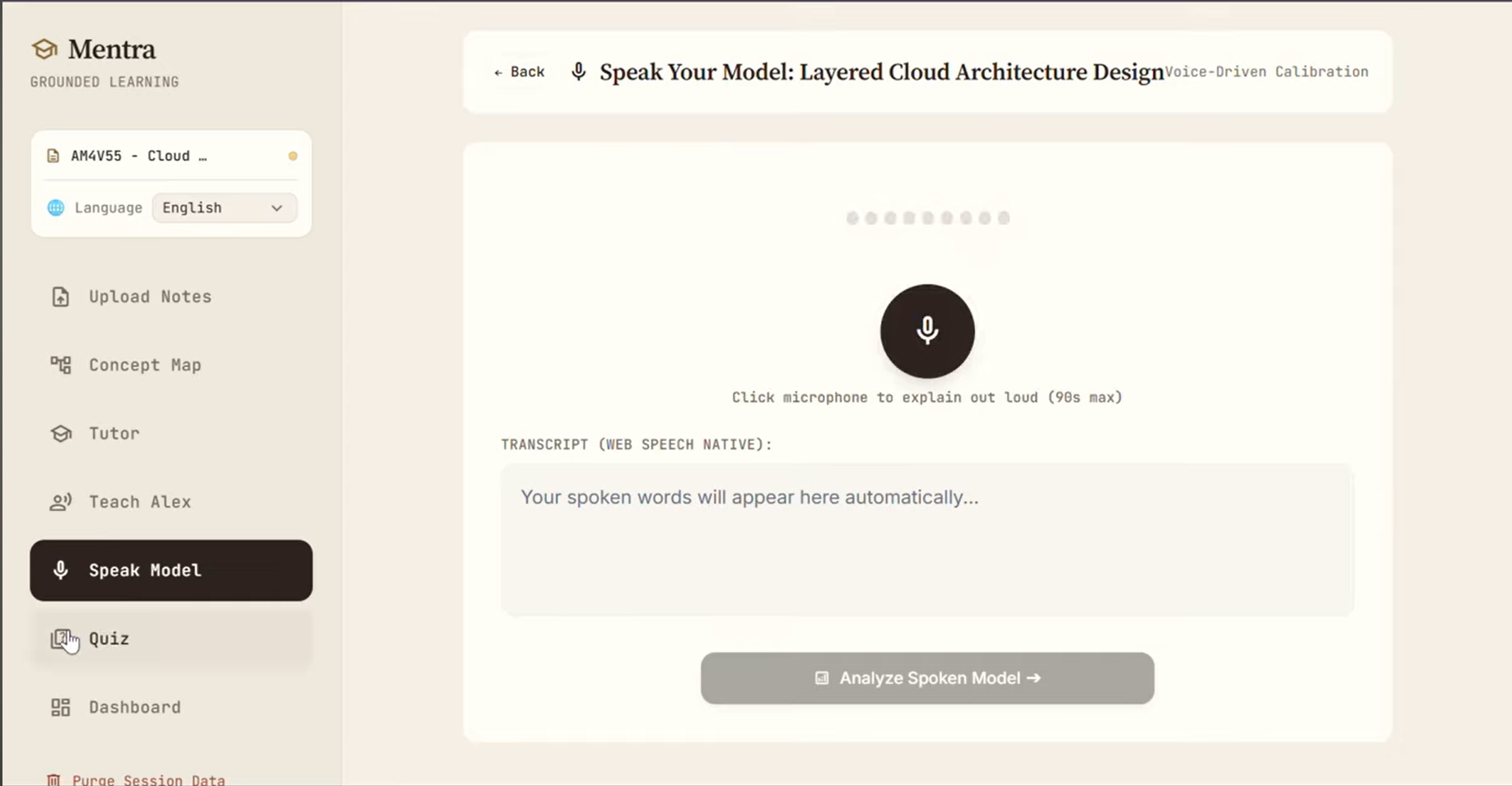
Voice
-
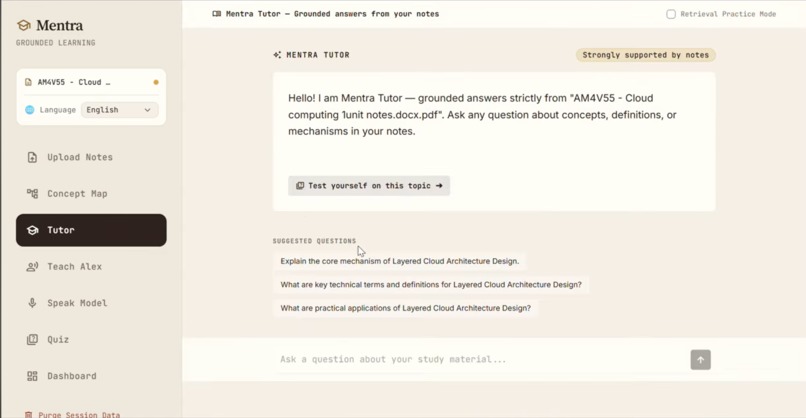
Customized Tutor
-
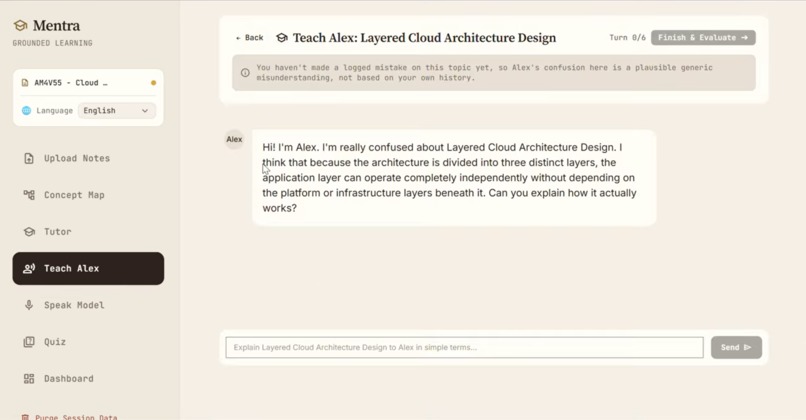
Personalized learn
-
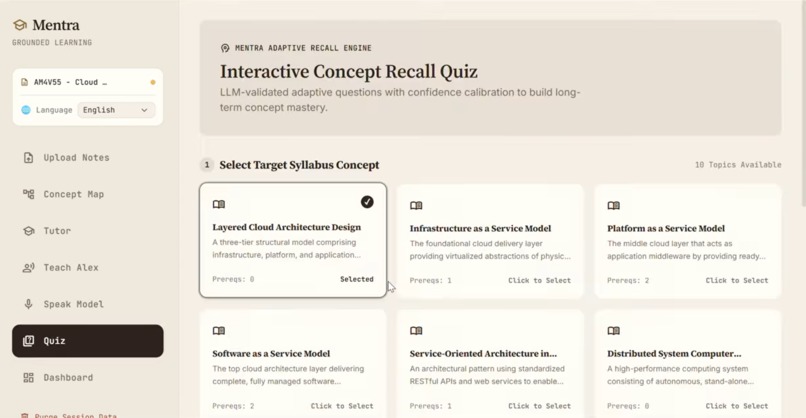
Quiz assesment
-
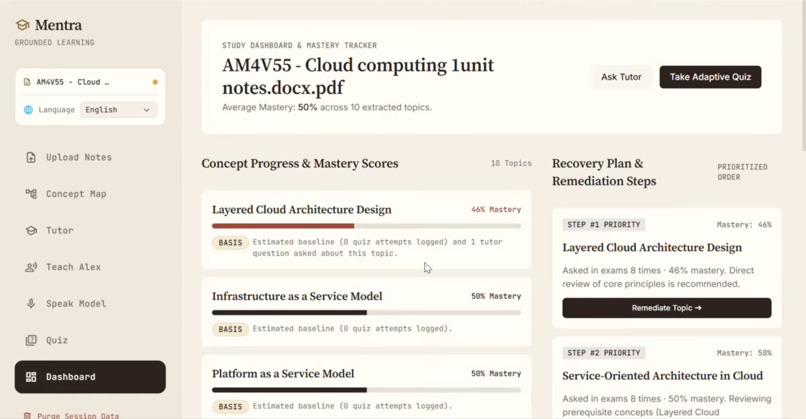
Dashboard
Inspiration
Modern learning is fragmented across lectures, PDFs, videos, notes, and AI tools. Most AI tutors are reactive—they answer questions but don't truly understand what a student already knows. This led us to ask: What if AI could continuously understand a learner and adapt to their needs?
That idea became MENTRA AI—an adaptive learning platform designed to help students move beyond simply getting answers toward achieving conceptual mastery.
What it does
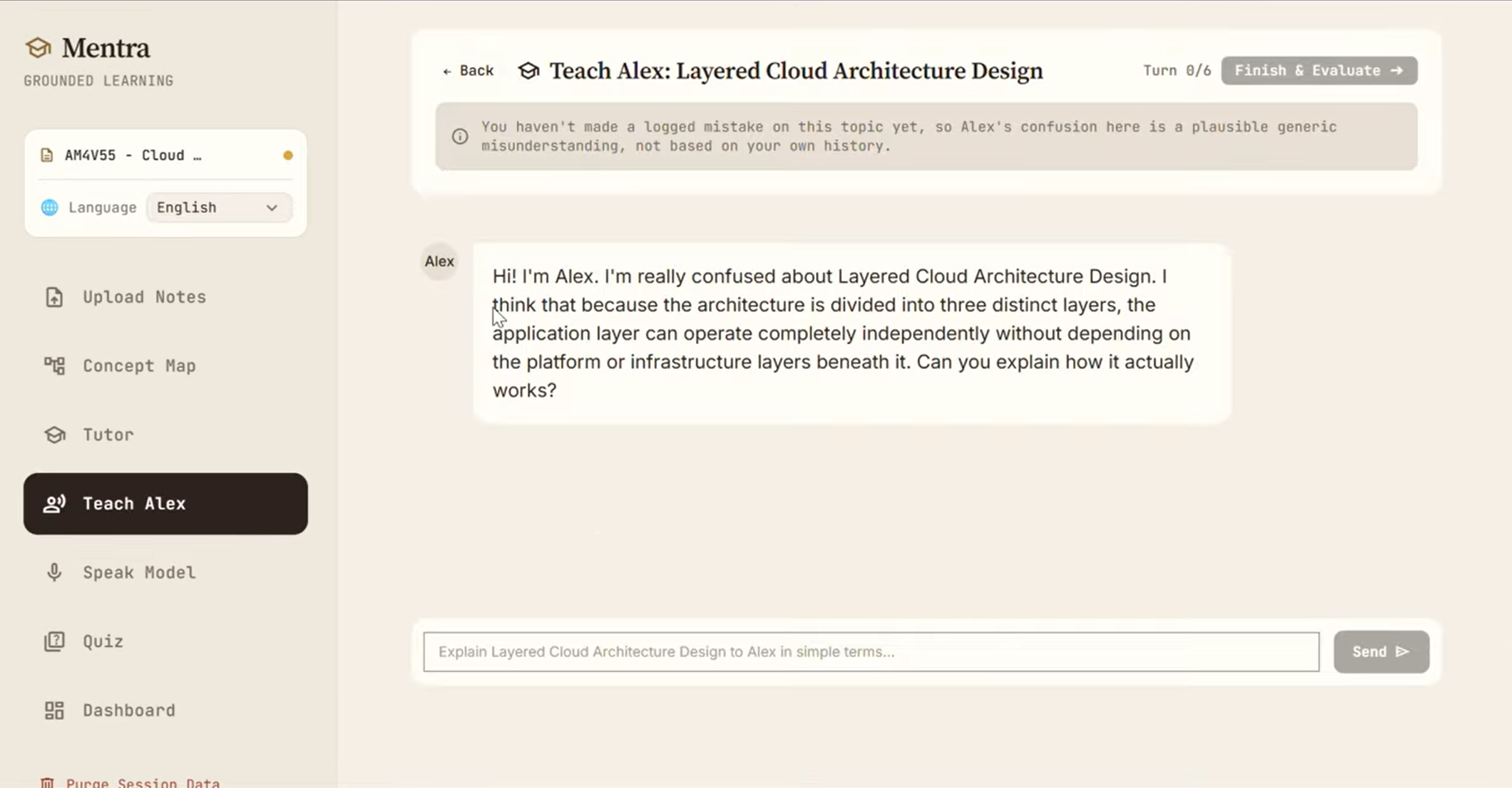
MENTRA AI transforms a student's study material into a personalized learning ecosystem.
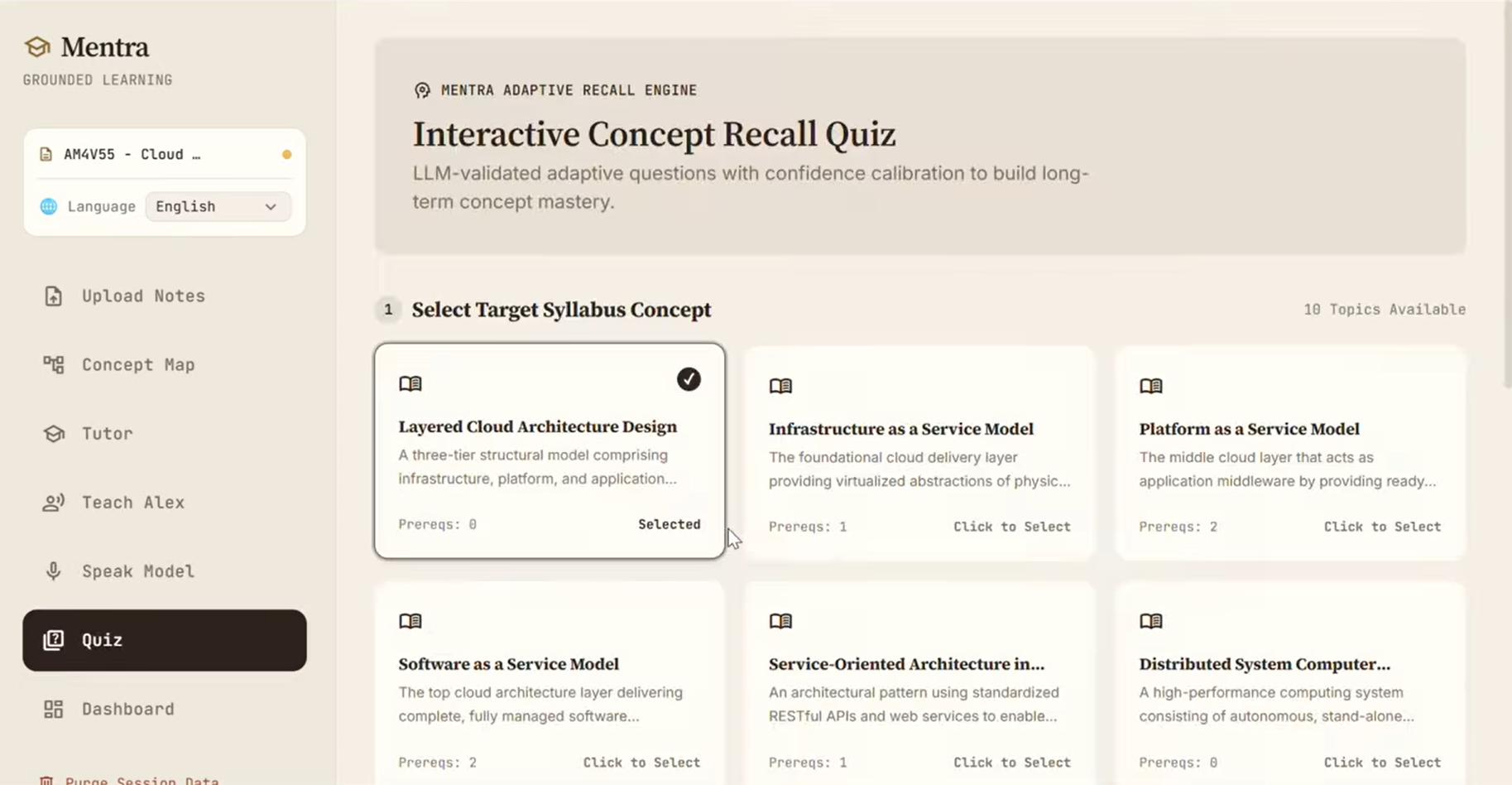
Students can upload their notes or PDFs, and the platform extracts the underlying knowledge, creates interactive concept maps, builds a Personal Concept Graph, identifies conceptual gaps, and generates personalized learning paths and quizzes.
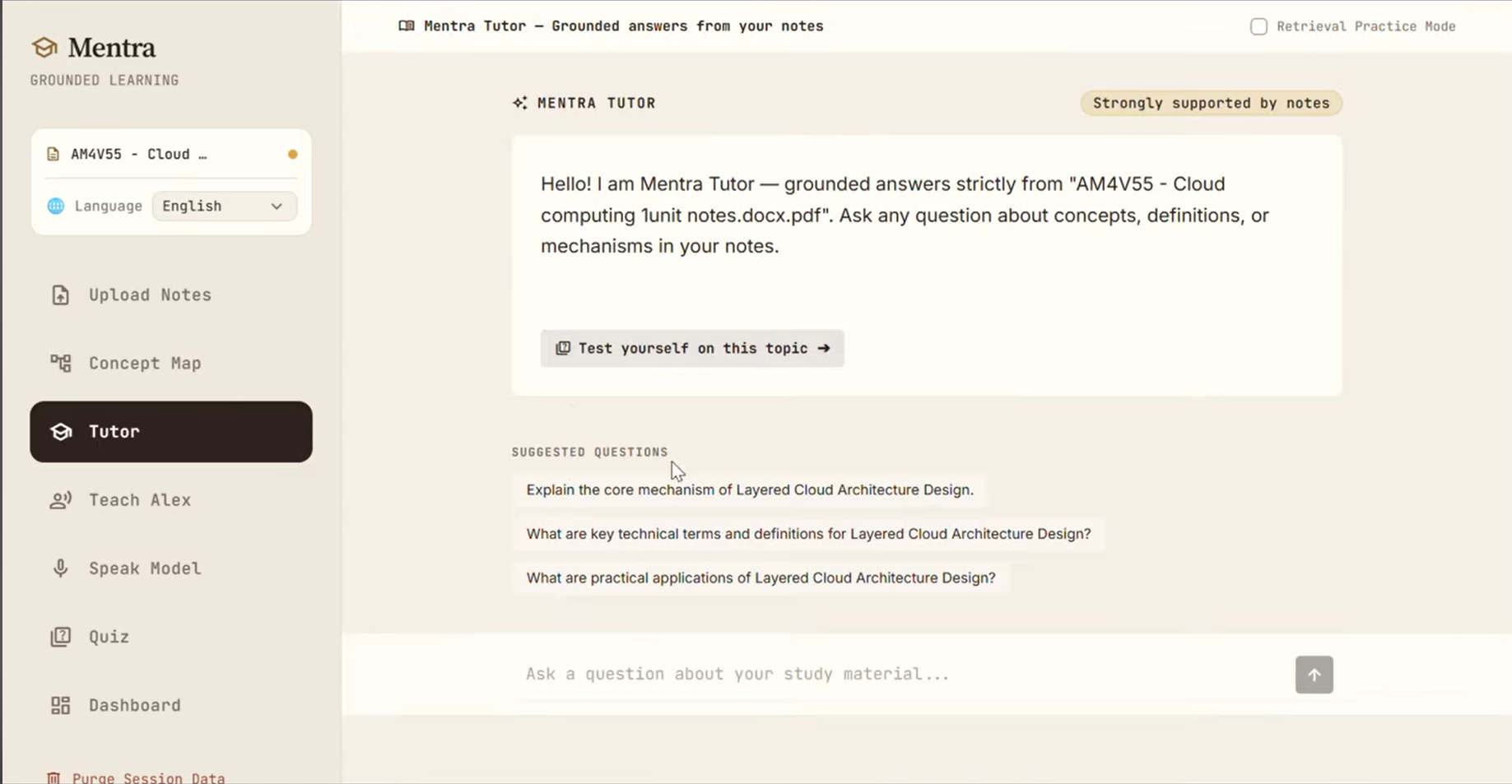
Its AI tutor uses Retrieval-Augmented Generation (RAG) to provide evidence-grounded answers based on the student's uploaded material.
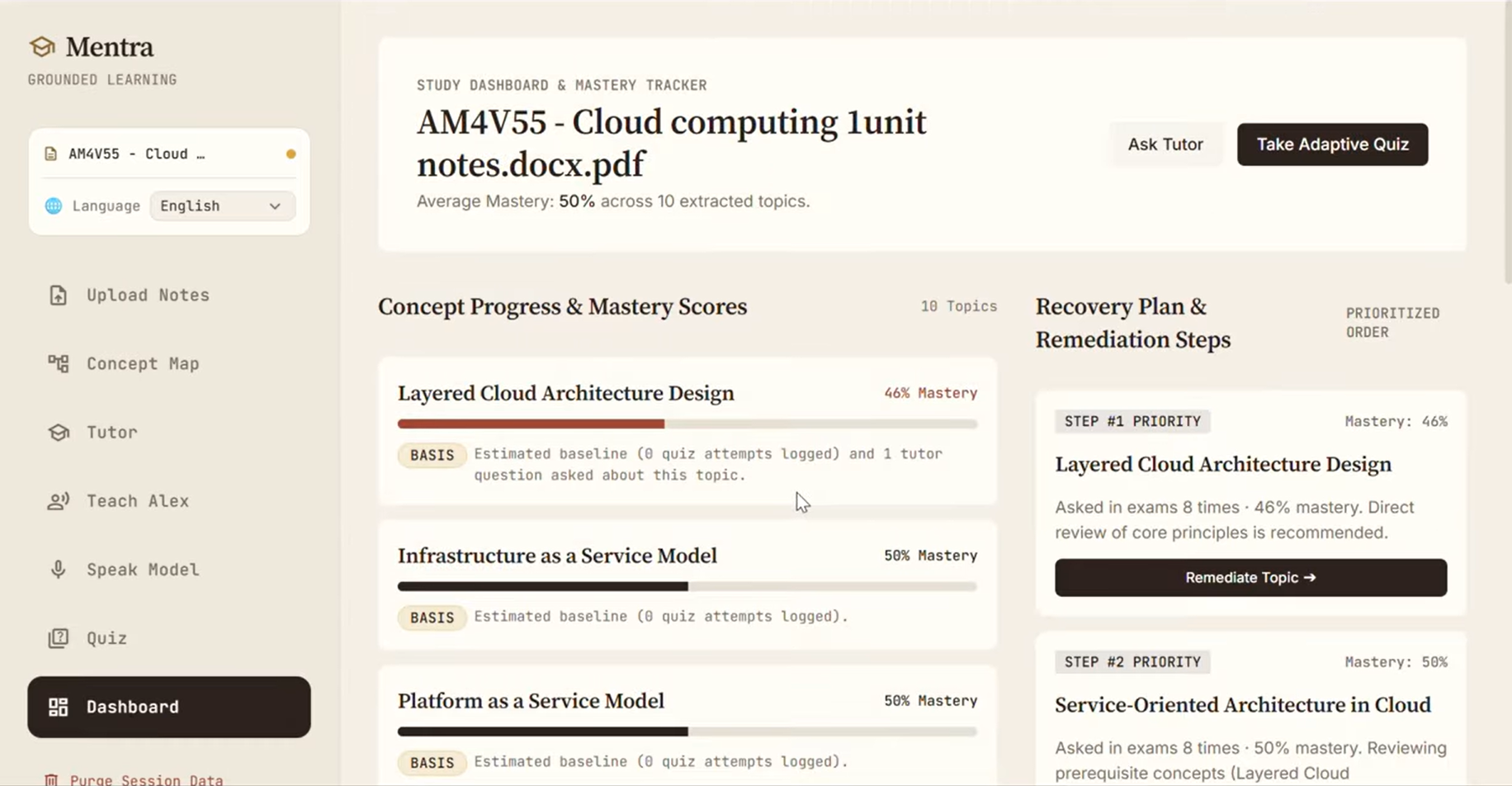
The key feature is the Personal Concept Graph, which continuously evolves based on the learner's interactions. As students learn, the system updates their mastery, identifies weak concepts, and adapts future learning recommendations.
How we built it
We built MENTRA AI using a modern full-stack architecture.
The frontend was developed with React, TypeScript, and Tailwind CSS, while the backend was built using Python and FastAPI.
For the AI layer, we integrated Large Language Models (LLMs), RAG, semantic search, concept graph generation, and an adaptive learning engine.
The overall workflow is:
Study Material → Document Processing → Semantic Retrieval → Concept Graph → Learner Model → Adaptive Learning
The learner model is continuously updated after interactions, allowing MENTRA AI to personalize quizzes, identify knowledge gaps, and recommend the next learning objective.
Challenges we ran into
One of our biggest challenges was designing an adaptive learner model that goes beyond the behavior of a traditional chatbot.
We also had to ensure that generated answers remained grounded in the student's uploaded content rather than relying only on the model's general knowledge.
Another challenge was integrating and deploying our React frontend on Vercel with our FastAPI backend on Render, while maintaining reliable communication between the different components.
Accomplishments that we're proud of
We are proud of turning the idea of a continuously evolving learner model into a working platform.
The Personal Concept Graph is one of the core accomplishments of MENTRA AI because it allows us to represent learning as connected concepts rather than isolated questions and answers.
We also successfully combined RAG, semantic search, knowledge representation, and adaptive learning into one unified system.
What we learned
Through this project, we learned how to build an AI application beyond a simple chatbot.
We gained practical experience in RAG pipelines, semantic search, knowledge graphs, learner modeling, FastAPI backend development, frontend-backend integration, deployment, and AI system design.
Most importantly, we learned that effective educational AI should not only generate answers—it should understand context, track learning progress, and continuously adapt to the learner.
What's next for MENTRA AI
We want to make MENTRA AI more intelligent and accessible by introducing:
- Multimodal learning for text, images, and other learning resources
- Long-term learner memory for deeper personalization
- Predictive academic risk detection
- Institution-wide learning analytics
- AI teaching assistants
- More advanced adaptive assessments
Our long-term goal is to transform AI from a system that simply answers questions into an intelligent learning system that truly understands every learner.
Built With
- and
- fastapi
- knowledge-graphs
- llms
- python
- rag
- react
- semantic-search
- tailwind-css
- typescript
- vercel

Log in or sign up for Devpost to join the conversation.