Inspiration
We believe that access to open, reliable, and quality education is one of the most significant social issues of our time. Seeing the rapid improvement in the capabilities of AI, especially open source models, we were motivated to create Mentra as a tool that gives users access to personally curated courses on any topic they want.
Traditional education largely relies on a single static curriculum, which may or may not present materials in the most effective format for every student. With Mentra, we wanted a platform that presents core concepts in a more individualized manner, allowing users to learn based on their preferred style, current skill and understanding, and pace.
What It Does
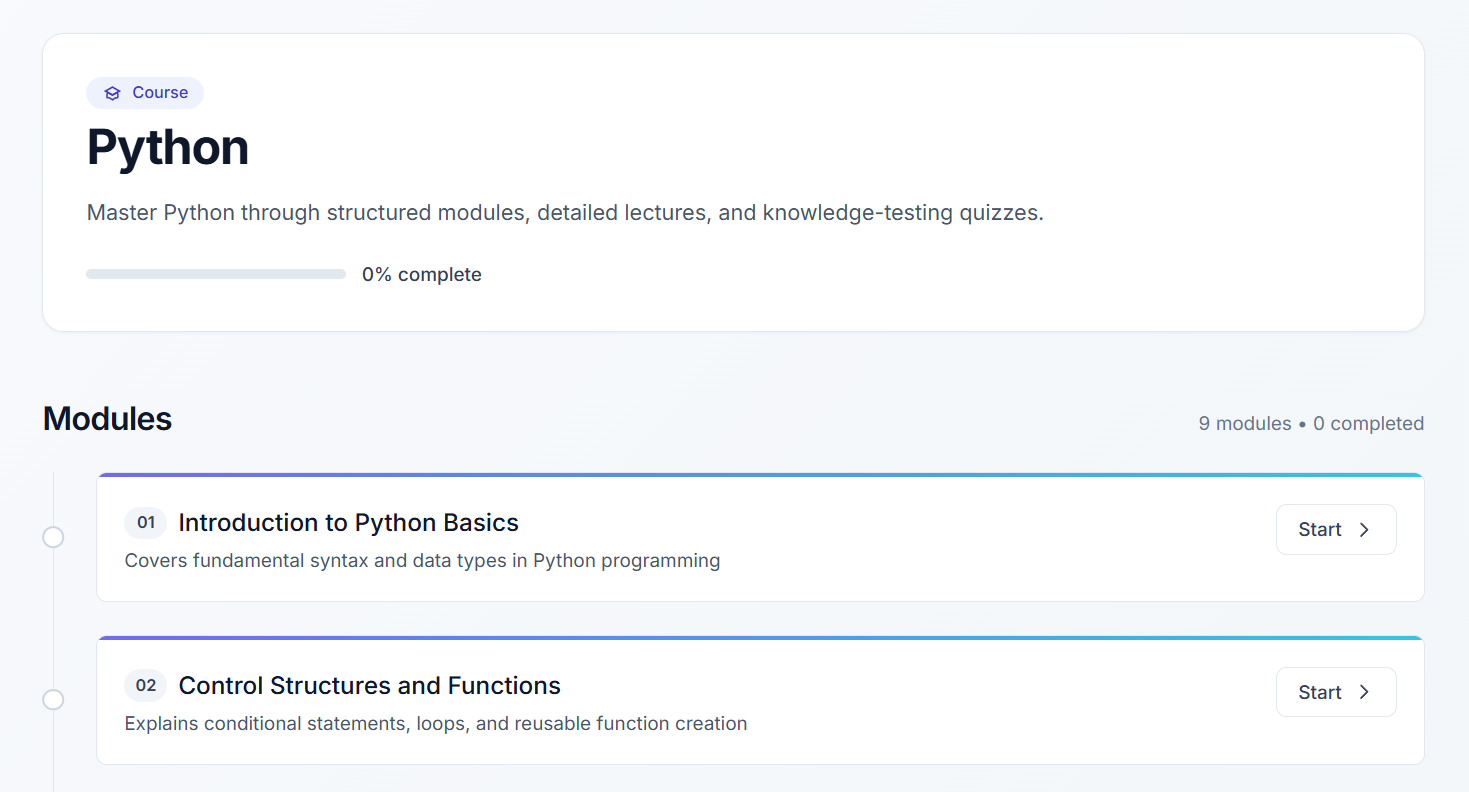
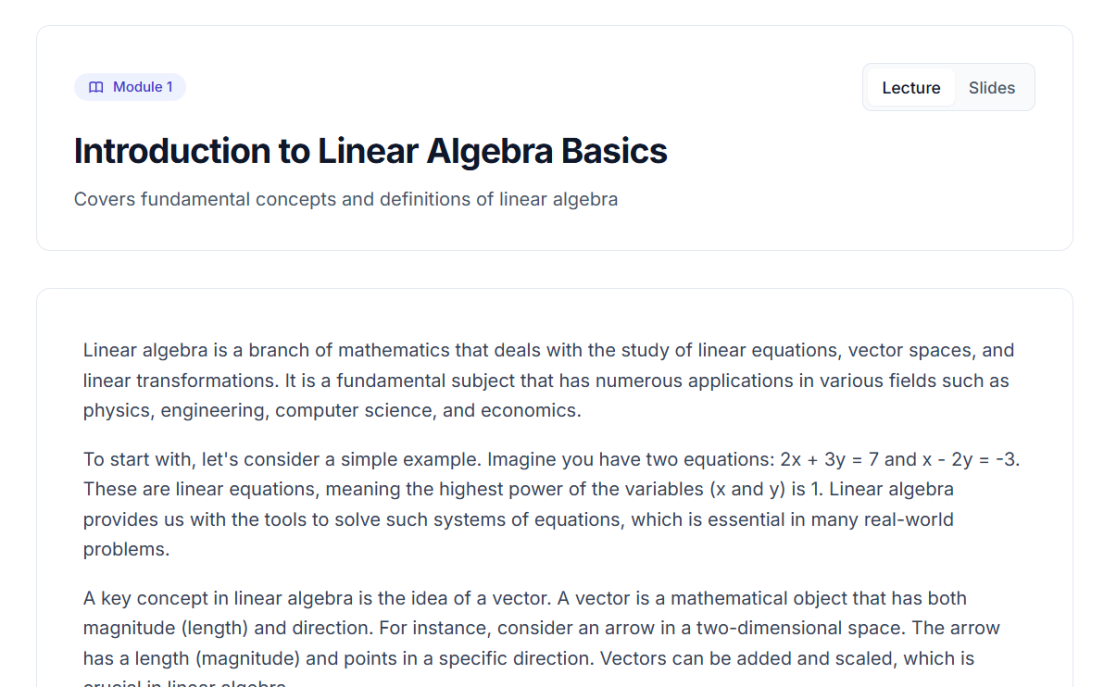
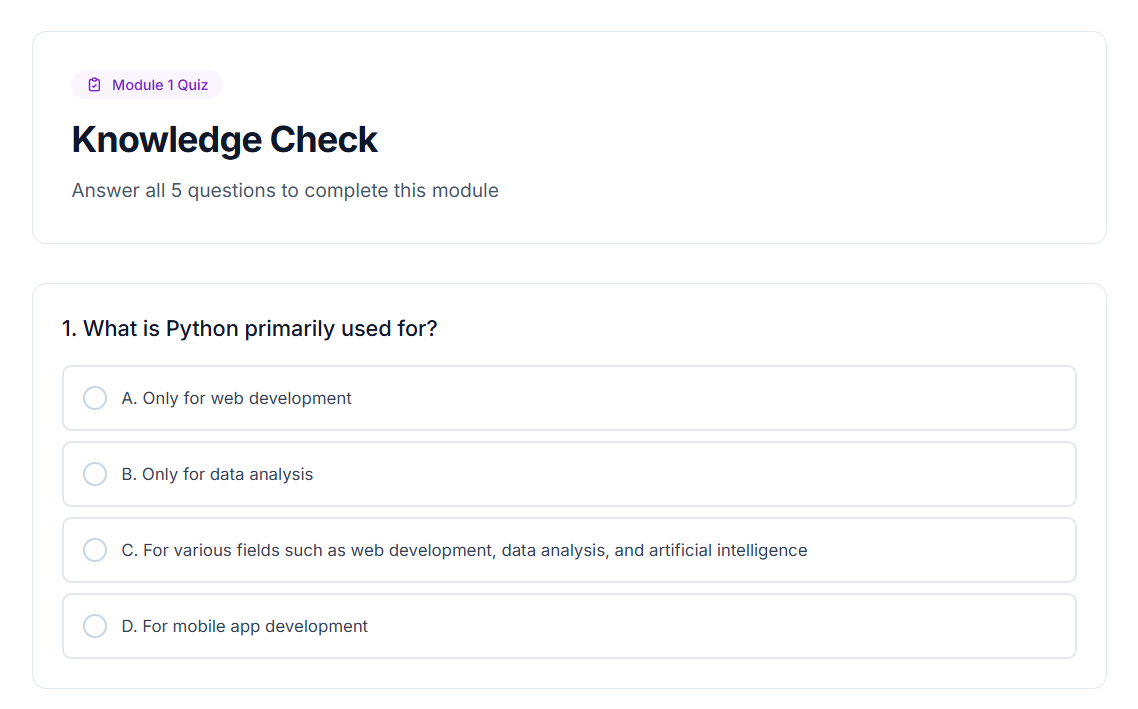
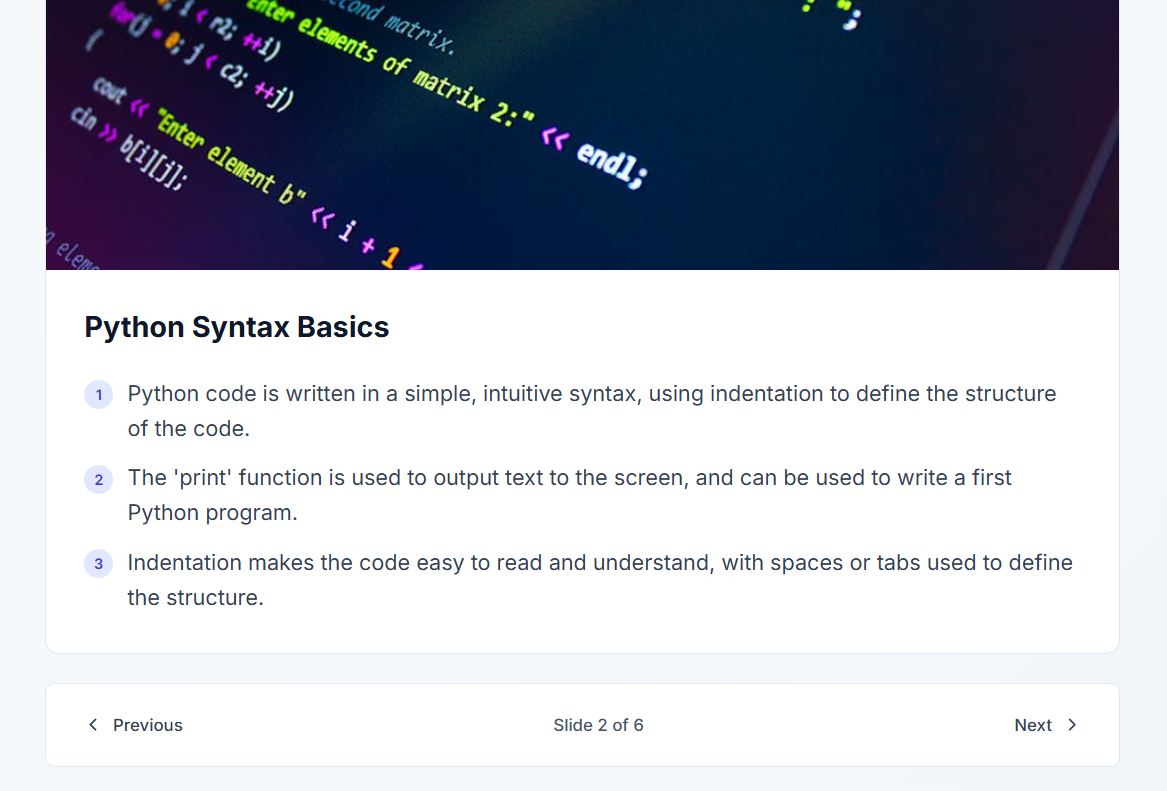
Mentra provides an intuitive interface where users can generate full classes complete with text-based lectures, slideshows with integrated visuals, quizzes to check understanding on module concepts, audio playback, and more. The user enters a subject they want to learn more about, whether it be specific or general, then Mentra constructs a series of digestible modules that build on each other as the user progresses through the content.
We recognize the importance of providing multiple ways to learn, so Mentra supports both traditional written lectures as well as a more engaging slideshow mode. Both forms also include spoken audio powered by Fish Audio for the user to listen to. At the end of each module, the user has a chance to check their understanding with a short multiple choice quiz on the content they just explored, giving them near-instant feedback about what they've mastered and where they can improve before continuing on.
Mentra is fundamentally a personal learning platform, with quizzes and content that adapt based on the user's progress. With this, we fill the gap in traditional education by tailoring key content to each user.
How We Built It
We used Next.js to build the frontend of our website. Users' course content is generated using the open source Llama 3.3 70B model run with the Groq API. Our prompts are designed to produce concise, accurate, and engaging content for users to learn from. The Fish Audio API supports our slideshow audio for more accessible learning.
Challenges
We had several challenges creating an effective and intuitive UI for the Mentra website, but learned a lot along the way. Our knowledge of Next.js UI components and Tailwind CSS both improved greatly through the several iterations of the different pages on the website.
Accomplishments
We're incredibly proud of building a fully functional educational platform from scratch in such a short timeframe. Successfully integrating multiple AI APIs into one user experience was a major achievement. We're especially happy to have made a multi-modal learning experience that caters to different learning styles through text, slides, audio, and interactive quizzes.
What We Learned
Building Mentra taught us the power and challenges of working with open source AI models. In particular, we gained experience with writing effective prompts to generate appropriately structured content. Our skills in Next.js and Tailwind CSS grew significantly as we iterated through different UI designs.
What’s Next
In the future, we would like to expand the multimedia capabilities of Mentra even further by adding support for video content and interactive diagrams to make complex topics even more accessible. Adding more quiz question formats would also definitely improve Mentra's educational power. Community features like the ability to share custom courses and collaborate on learning paths could make for a more social learning experience, allowing like-minded students to work together and achieve a higher level of understanding in groups.


Log in or sign up for Devpost to join the conversation.