Inspiration
The inspiration for MentorMentee came from recognizing how difficult it can be for students, especially first-generation and underrepresented students, to find guidance that actually fits their goals. As a first-year Computer Science major at Howard University, deeply involved in mentorship and outreach, we wanted to build a platform that makes access to support more structured, intentional, and personalized. The idea was to create a tool that bridges gaps in opportunity by matching students with mentors who can truly help advance their academic and professional journey.
What it does
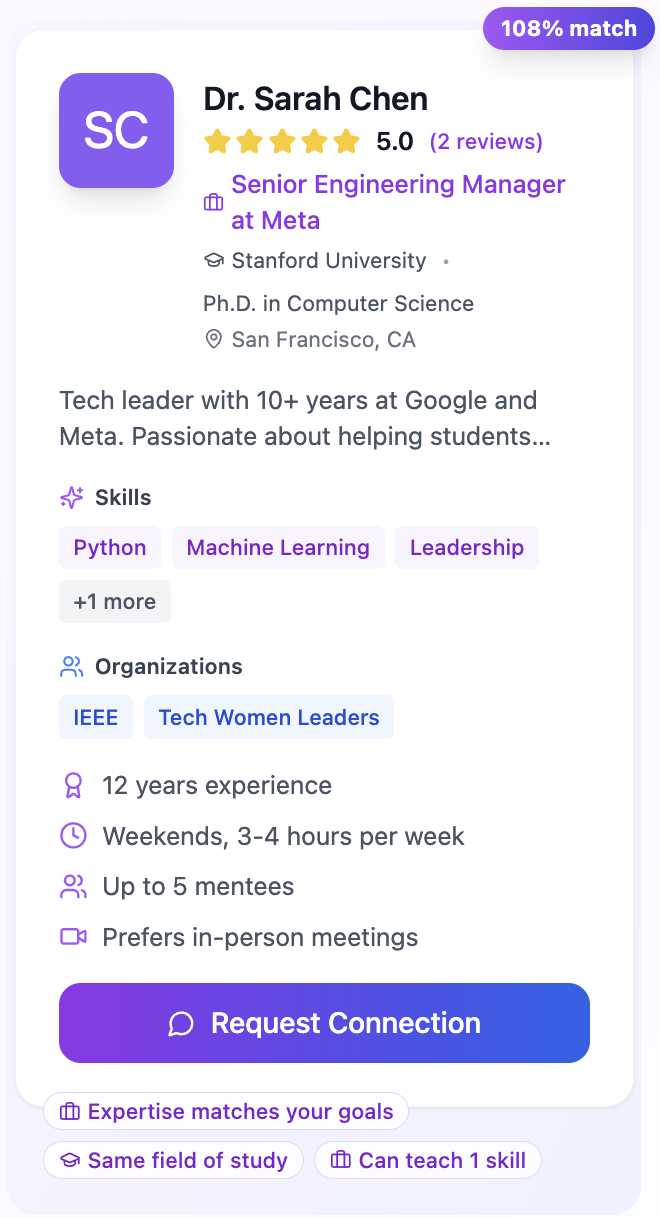
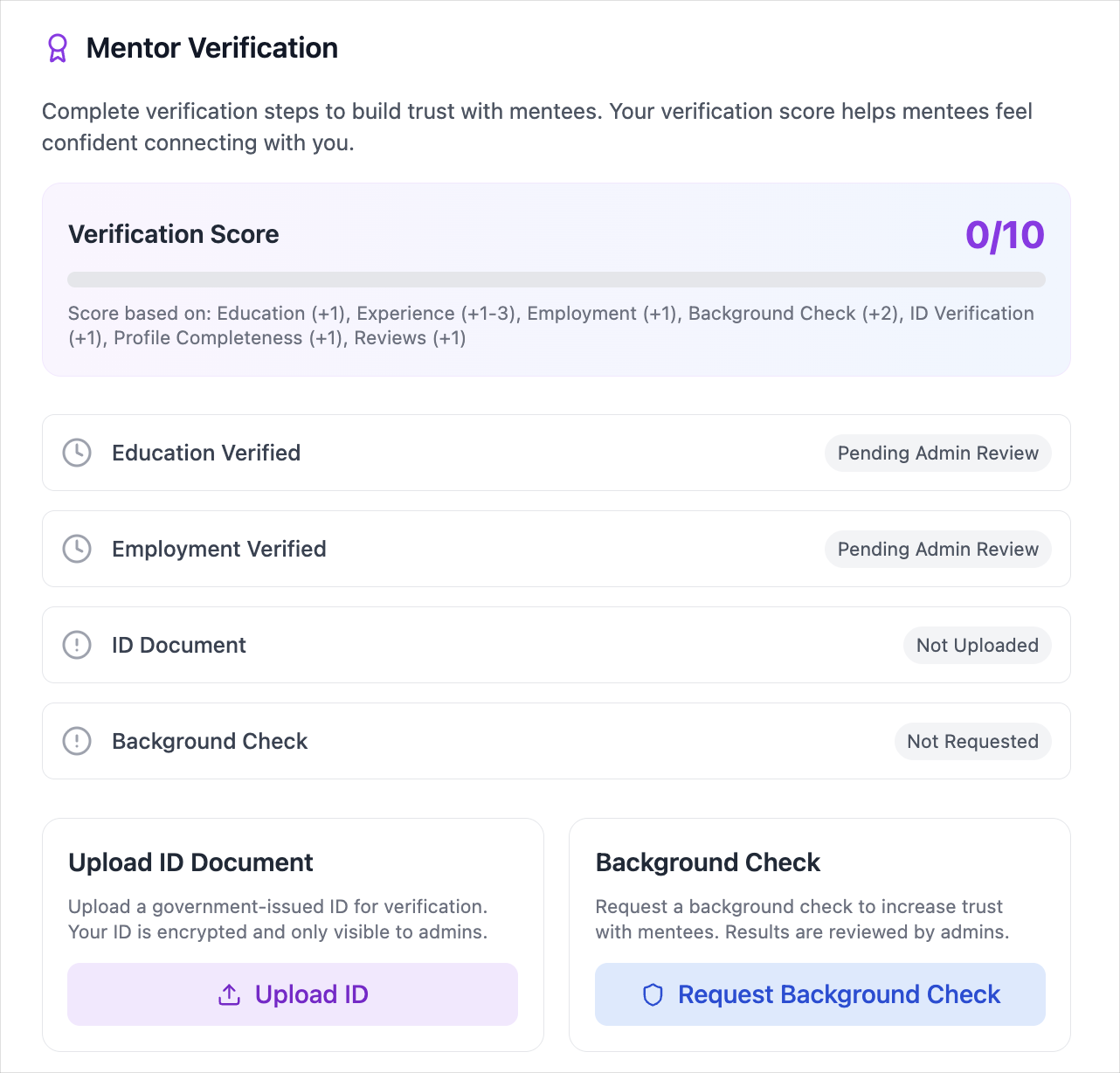
MentorMentee is a full-stack mentorship matching platform that connects mentees with mentors using a structured, data-driven approach. It allows users to: Create detailed mentor or mentee profiles. Match based on skills, interests, experience, and long-term goals. Communicate through a clean, user-centered interface. Track progress and maintain accountability throughout the mentorship journey. The mission is simple: make meaningful mentorship more accessible, more organized, and more scalable.
How we built it
MentorMentee is built using a modern full-stack architecture designed for reliability and future scalability. Our stack included: Frontend: React with a clean, intuitive UI focused on simplicity and smooth onboarding. Backend: Node.js/Express for routing, matching logic, and API handling. Database: MongoDB (or SQL if preferred) to store user profiles, skills, and match data. Matching Logic: Weighted scoring system comparing skills, interests, and stated mentorship goals. Design: Wireframes and UI components focused on warm colors, accessible layout, and easy navigation.
Challenges we ran into
A few hurdles shaped the development: Designing a matching algorithm that feels fair and intentional, not random. Balancing clean UI/UX with the amount of information mentors and mentees need. Handling asynchronous database calls and ensuring efficient data retrieval. Aligning schedules and user needs across different types of mentorship relationships. Maintaining a scalable code structure as new features get added.
Accomplishments that we're proud of
Some wins from the project: Building a functional prototype that makes mentorship matching easy and intuitive. Creating a UI that feels warm and welcoming for students seeking support. Implementing early versions of the matching logic with strong accuracy. Establishing a foundation that can grow into a larger platform or student-support tool. Demonstrating real-world software engineering skills as a first-year CS student.
What we learned
Through building MentorMentee, we learned: How to design a product around user pain points, not assumptions. Better ways to structure full-stack applications for growth. How to integrate front-end and back-end systems smoothly. The importance of user experience in empowering students and mentors. That mentorship systems require empathy, clarity, and accountability—not just code.
What's next for MentorMentee
Future development plans include: Adding scheduling and automated calendar syncing. Building out a progress-tracking dashboard for mentors and mentees. Integrating messaging or video-call functionality. Improving the matching algorithm with weighted AI-powered recommendations. Creating school- or organization-specific onboarding portals. Expanding the platform to support group mentorship, communities, and peer-to-peer matching.


Log in or sign up for Devpost to join the conversation.