-
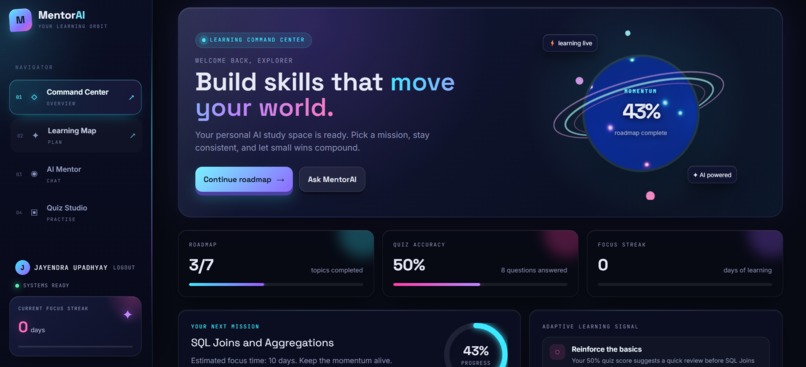
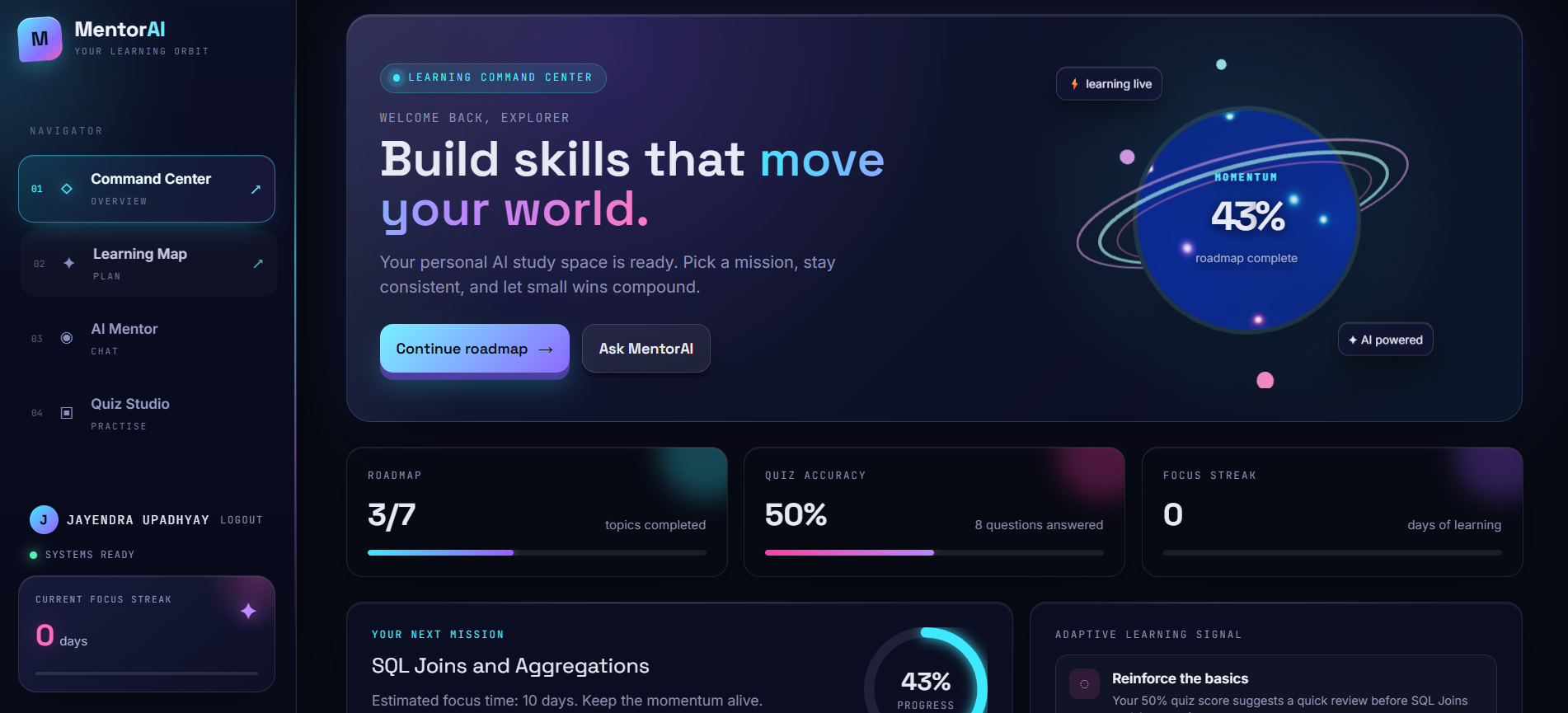
Command Center dashboard — track your learning progress, current streak, and quick access to every feature at a glance.
-
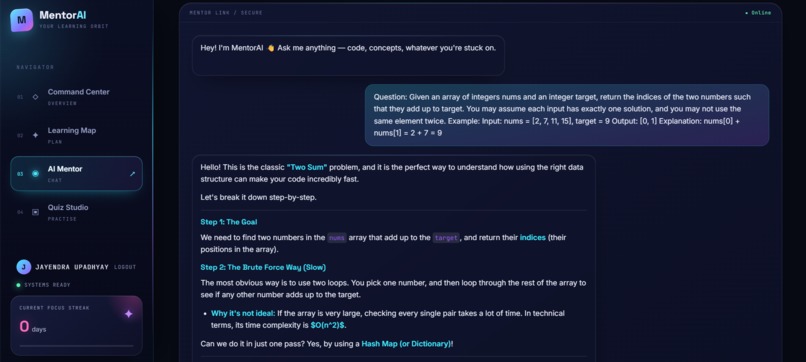
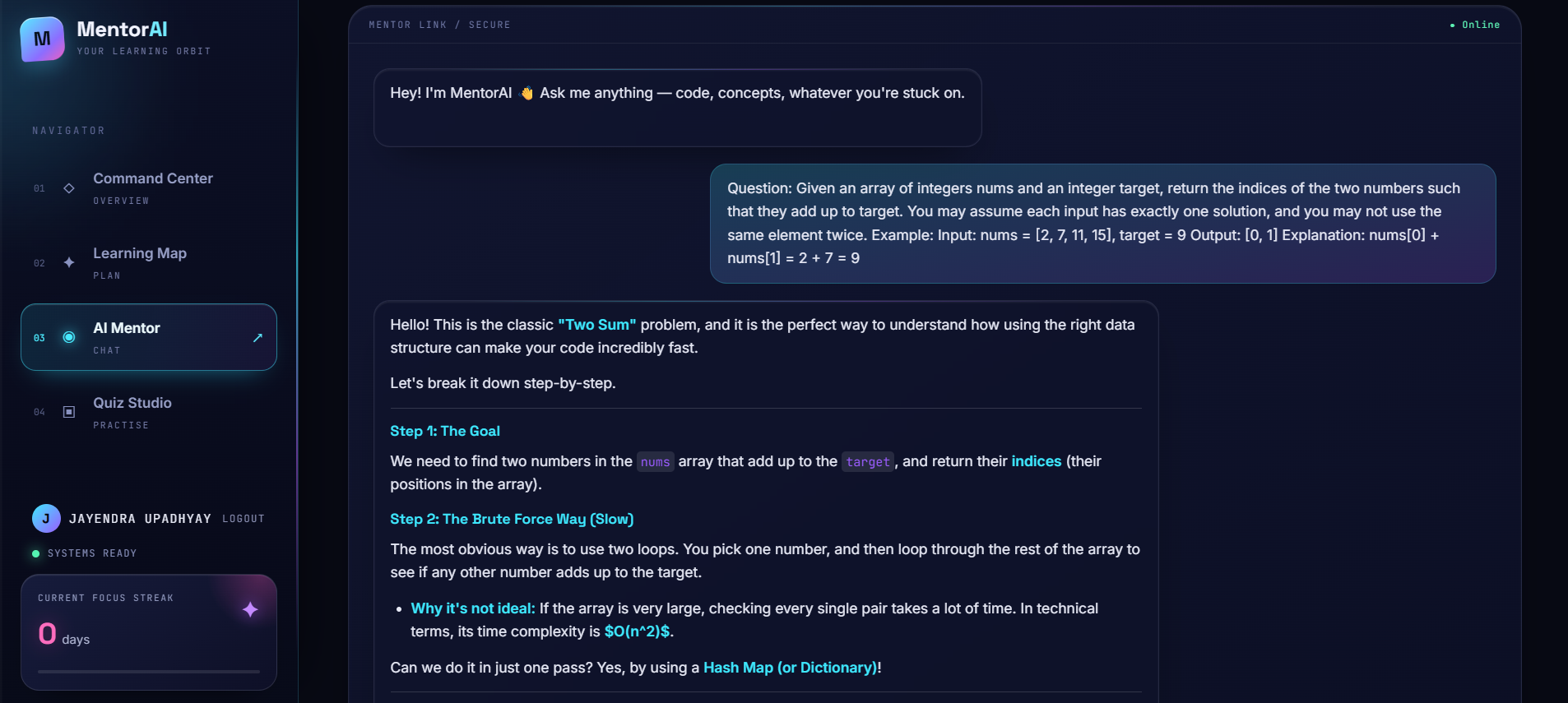
Ask MentorAI any doubt and get clear, step-by-step explanations powered by the Gemini API in real time.
-
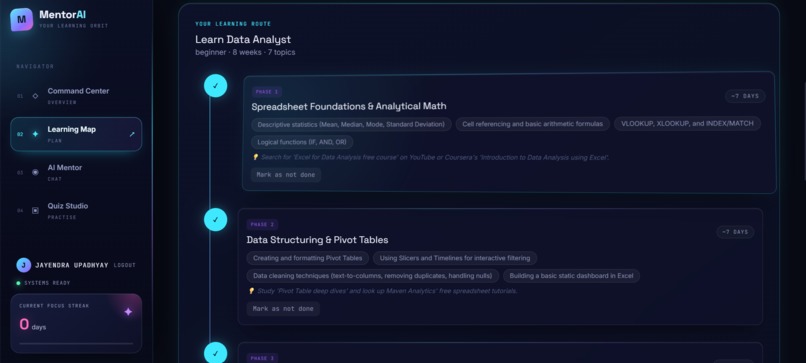
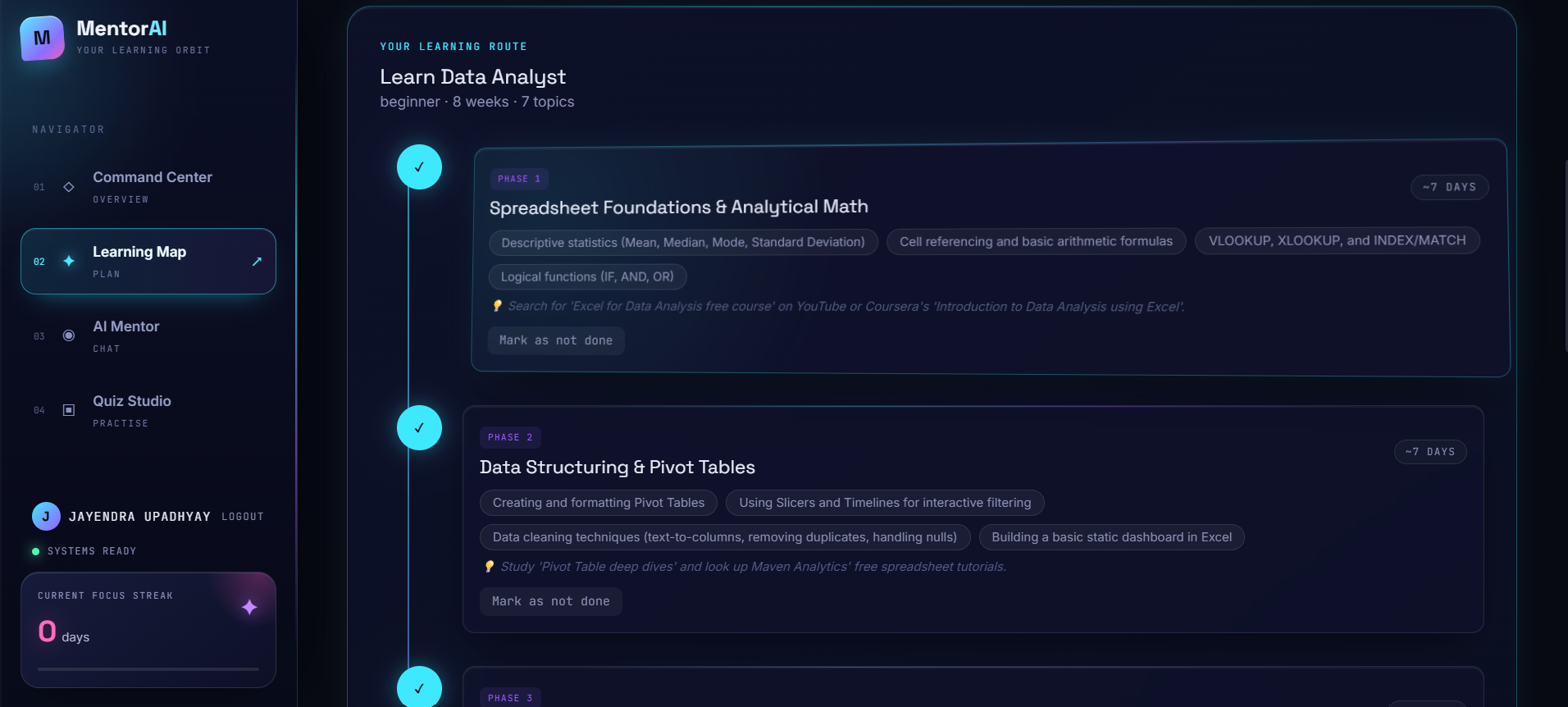
AI-generated personalized roadmap — enter any goal and get a week-by-week learning path with topics and time estimates.
-
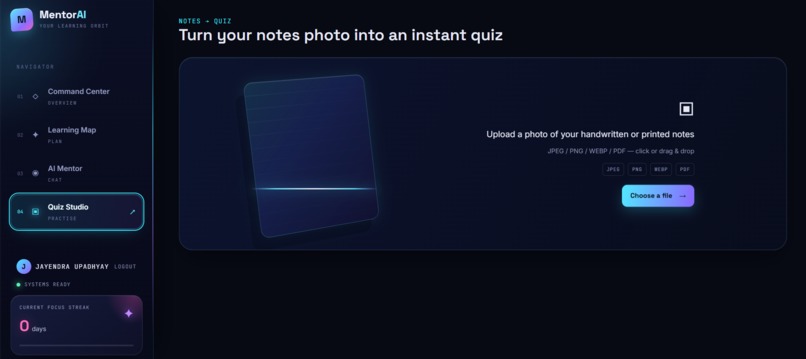
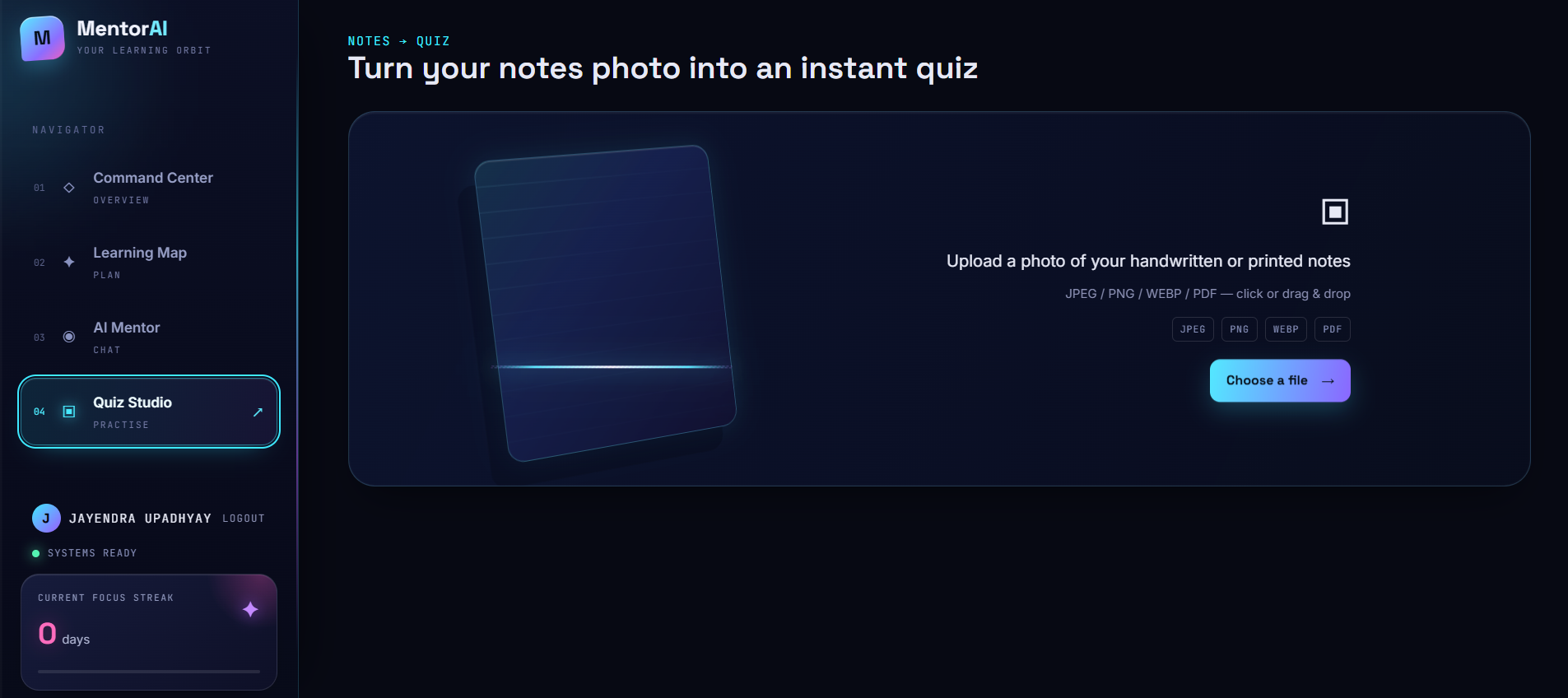
Quiz Studio — turn your notes into an instant quiz to test what you've learned and reinforce your knowledge.
Inspiration
Most students hit a wall when they're stuck on a doubt at 11 PM with no one to ask, or they want to learn a new skill but don't know where to start — which topics matter, in what order, and how long it'll realistically take. We wanted to build something that acts like a personal mentor: available anytime, breaks down any doubt into simple explanations, and turns a vague goal like "learn Data Analytics" into an actual structured plan.
What it does
MentorAI is an AI-powered learning companion built around three core features:
- Learning Map — Enter any goal (like "Learn DSA" or "React advanced concepts"), pick your level and timeline, and Gemini generates a personalized, week-by-week roadmap with topics, subtopics, resource suggestions, and an estimated difficulty/pace assessment.
- AI Mentor (Doubt Solver) — A real-time chat where students can ask any doubt — code, concepts, anything — and get clear, step-by-step explanations rendered with proper markdown formatting (code blocks, lists, headings). Replies can also be read aloud with one tap.
- Quiz Studio & Progress Tracking — Students can mark topics as done, track their focus streak, and reinforce what they've learned.
Everything lives inside a clean, focused dashboard so students always know what to do next.
How we built it
- Frontend: React + Vite, Tailwind CSS for styling, custom components for the roadmap timeline, chat interface, and progress tracking, deployed on Netlify.
- Backend: FastAPI (Python) serving REST endpoints, with SQLite for storing users, roadmaps, and progress. Deployed on Render.
- AI: Google's Gemini API powers both roadmap generation (structured JSON output) and the doubt-solving chat, with conversation history passed in for context-aware follow-ups.
- Auth: Simple email/password authentication with hashed passwords, scoped per user so roadmaps and progress persist across sessions.
Challenges we ran into
- Getting the AI to reliably return structured, parseable roadmap data (topics, subtopics, realistic time estimates) instead of free-form text required careful prompt design.
- Balancing an ambitious visual design (glassmorphism, glowing gradients, smooth animations) with performance and readability.
- Debugging deployment-specific issues — CORS between the Netlify frontend and Render backend, and making sure environment variables and build paths were correctly configured across two separate hosting platforms.
Accomplishments that we're proud of
- A fully working end-to-end product — auth, AI roadmap generation, AI doubt chat with text-to-speech, and progress tracking — built and deployed within the hackathon timeline.
- A cohesive, polished UI that doesn't feel like a typical hackathon prototype.
What we learned
- How to design prompts that get consistent, structured output from an LLM instead of unpredictable free text.
- Practical experience deploying a decoupled frontend/backend architecture across two different platforms and debugging real production issues like CORS.
What's next for MentorAI
- Voice input for the doubt chat (speech-to-text), so students can ask questions hands-free.
- Adaptive quizzes generated directly from a student's own notes.
- Migrating from SQLite to a persistent hosted database for reliability at scale.


Log in or sign up for Devpost to join the conversation.