-
-
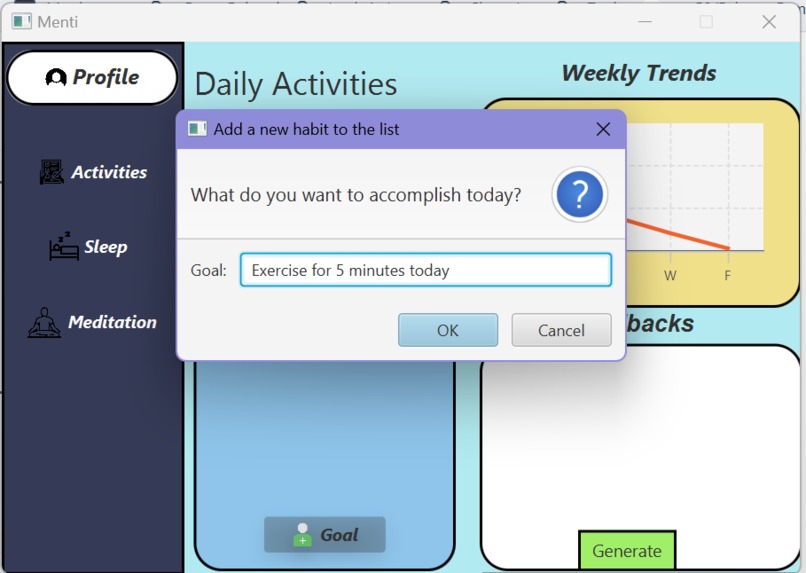
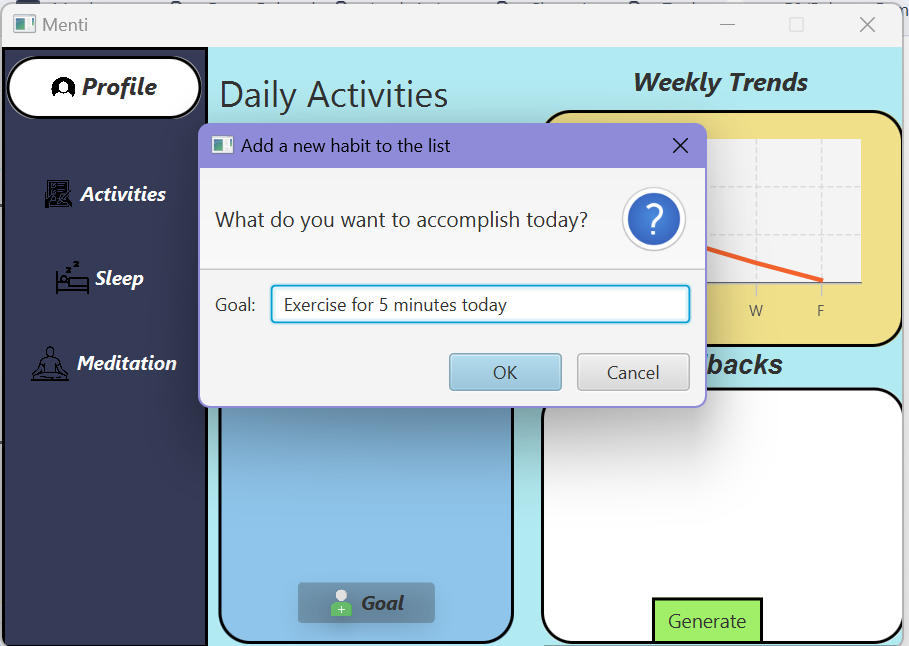
This is the interface when the user clicks the +Goal button, it allows them to add a new goal they would like to accomplish.
-
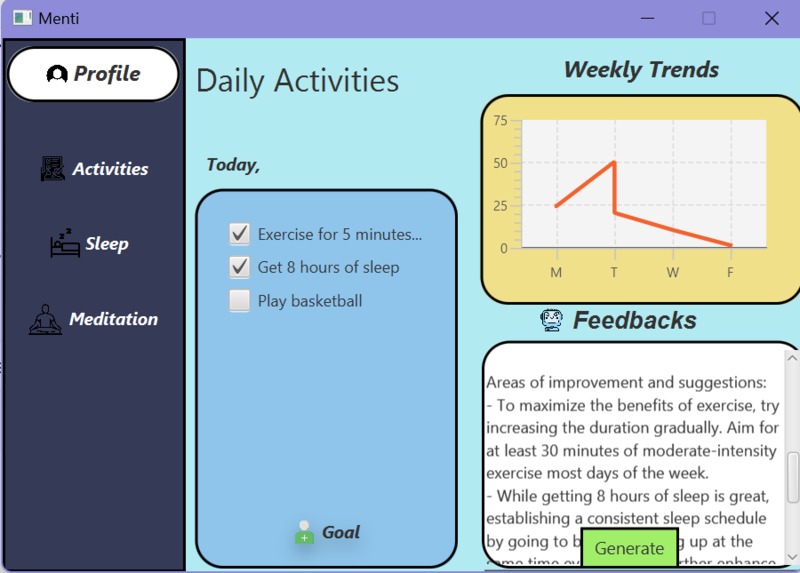
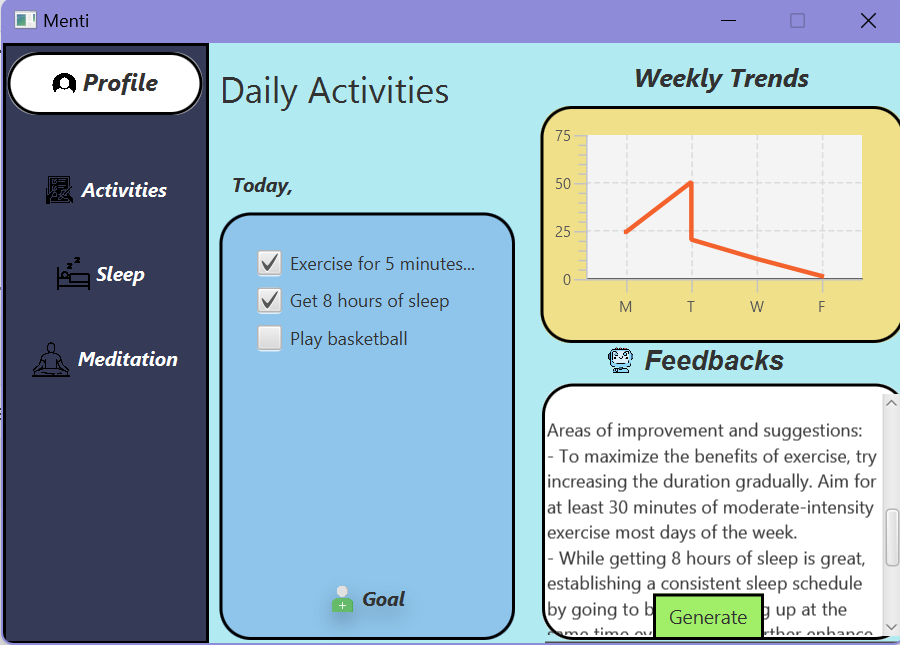
After listing tasks on the check list and clicking generate, the AI provides feedback and suggestions.
-
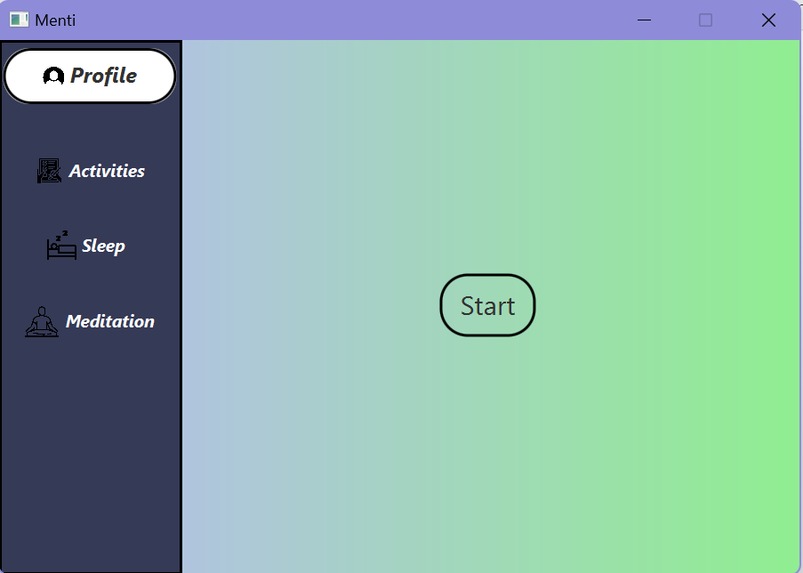
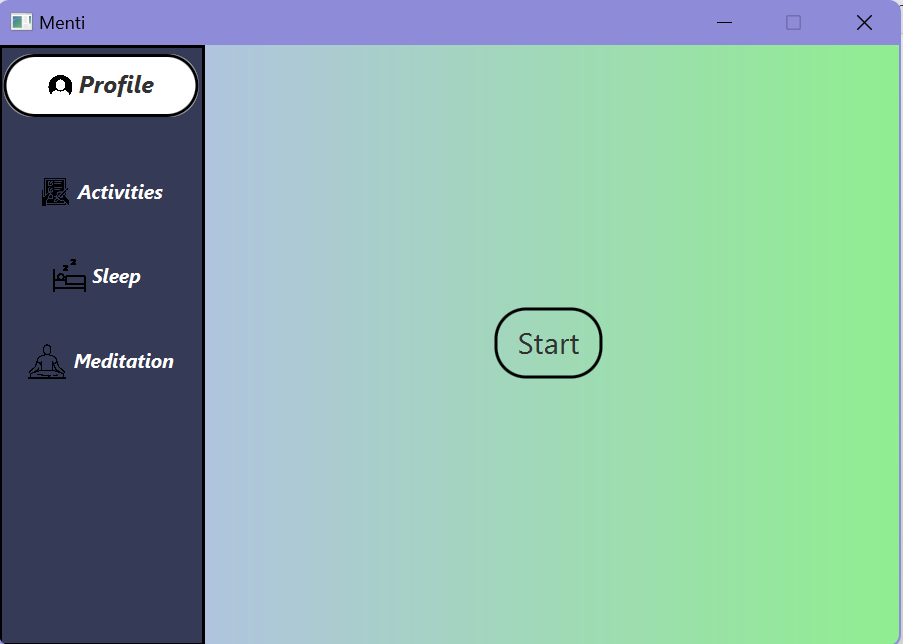
After clicking meditation tab on the side it brings to this menu
-
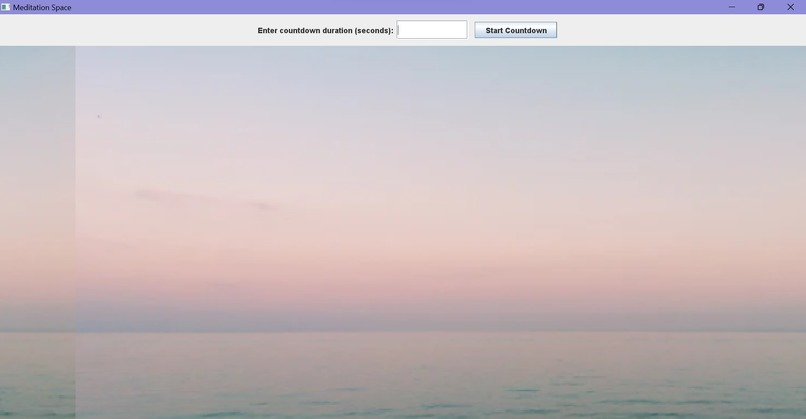
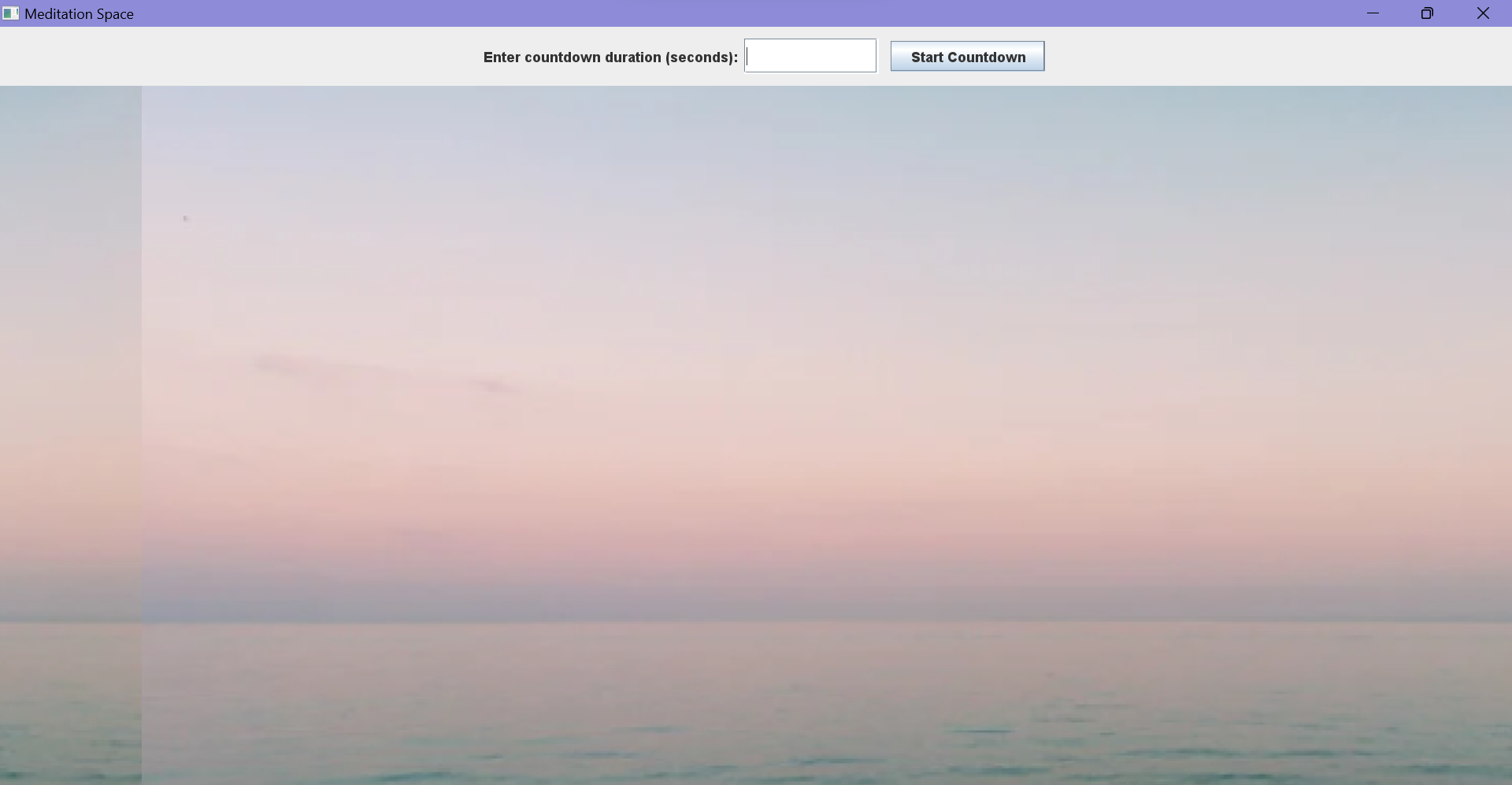
Clicking start brings you to this window where you can set a meditation time that slowly counts down and plays calming music.
Inspiration
As students we wanted to create an easily manageable way to deal with mental health, due to various daily activities, and accumulated academic stress. We wanted to create an easy to use habit tracking app that gives live and adaptive feedback and suggestions as well as encouragements to it's users.
What it does
Menti is a habit tracking app with AI integration. It is a desktop app that allows you to create a simple checklist representing your habits, these habits over the entire course of a week will be graphed giving an easily accessible visual representing the accomplishments over the course of the week. The AI is integrated as a suggestion and feedback assistant who gives encouragement and suggestions to further improve the habits the user inputs into the app. The app also has planned features such as sleep tracking.
How we built it
The backend was built using the Java Spring framework incorporating the OpenAI API to use their gpt-3.5-turbo language model as our AI assistant that provides feedback and suggestions to the user. The backend requires an OpenAI API key and the downloads can all be found in MentiBackEnd. As for the front end of the app, this uses the JavaFX framework incorporating different user interfaces and interactive elements such as buttons all to perform different tasks. The Menti app can be downloaded from Menti App.
Challenges we ran into
There were many challenges that we encountered during this hacakthon, for the backend it was learning how to even use OpenAI API and take a prompt input receive an answer and send it back for the user to be able to see, this was done by sending POST requests to form a HTTP connection between the OpenAI language model and our application. The challenges with the front end was creating an appealing and interactive user interface for the best possible user experience. One of the biggest challenges was actually combining the back-end and front-ends together, we had many difficulties but eventually persevered through completion our project.
Accomplishments that we're proud of
We did not think we would be able to get this far in the limited time we had, our entire team is very proud for what we were able to accomplish, creating this desktop application with AI integration was way beyond our expectations for what we could make coming into this hackathon.
What we learned
We learned many different and new skills during this hackathon, we did our best to make use of all the available resources and online documentation to learn. We had learned to use Spring and JavaFX frameworks, frameworks that we were not very familiar with entering into this hackathon.
What's next for Menti
Our project was not perfectly completed in the time we were given as there were features we wanted to make and incorporate into our product but weren't able to in the time we were given, there are future plans in create sleep tracking and improve the AI integration to also give feedback and suggestions based on the sleeping data.


Log in or sign up for Devpost to join the conversation.