Inspiration
Like most students, I found myself juggling a dozen different paths at once — hackathons, internships, fellowships, research programs — with no real way to tell which ones actually fit me. Every opportunity looked equally urgent and equally uncertain. I'd bookmark things, forget them, second-guess a resume update, and burn a weekend deciding instead of doing. There was no single place that understood who I was and used that to cut through the noise. MENTAURI started from that exact frustration: I didn't want another list of opportunities — I wanted something that mapped them against me.
What it does
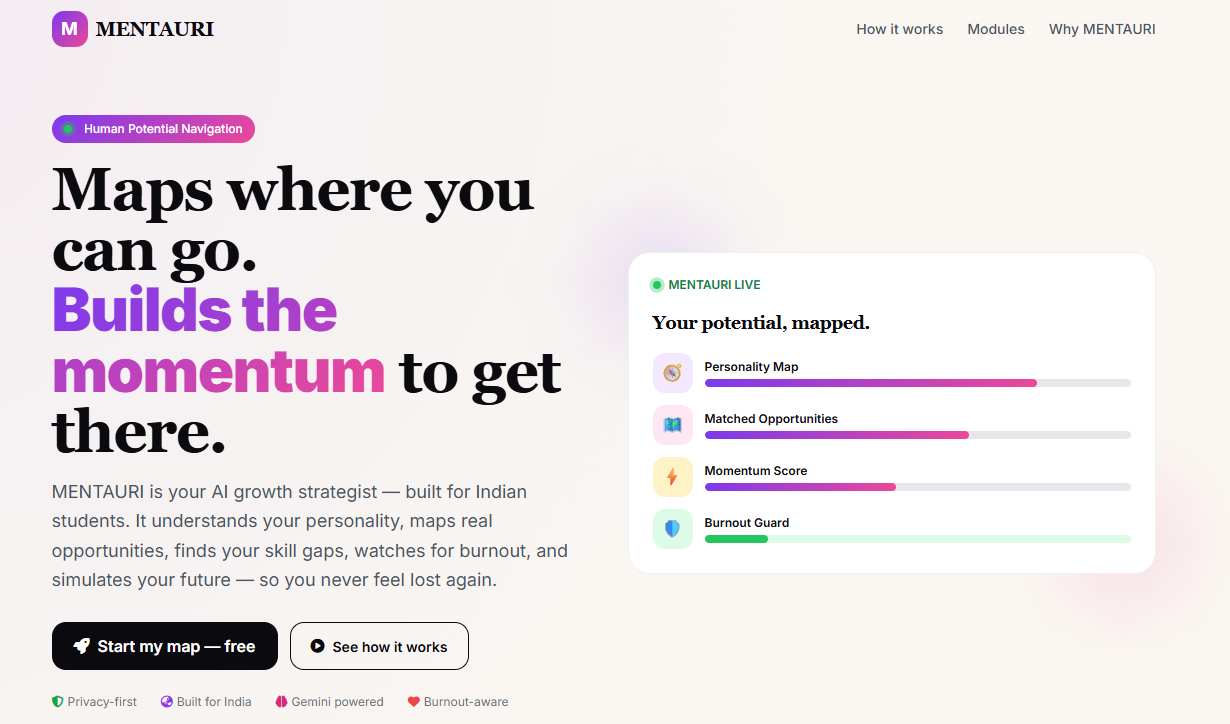
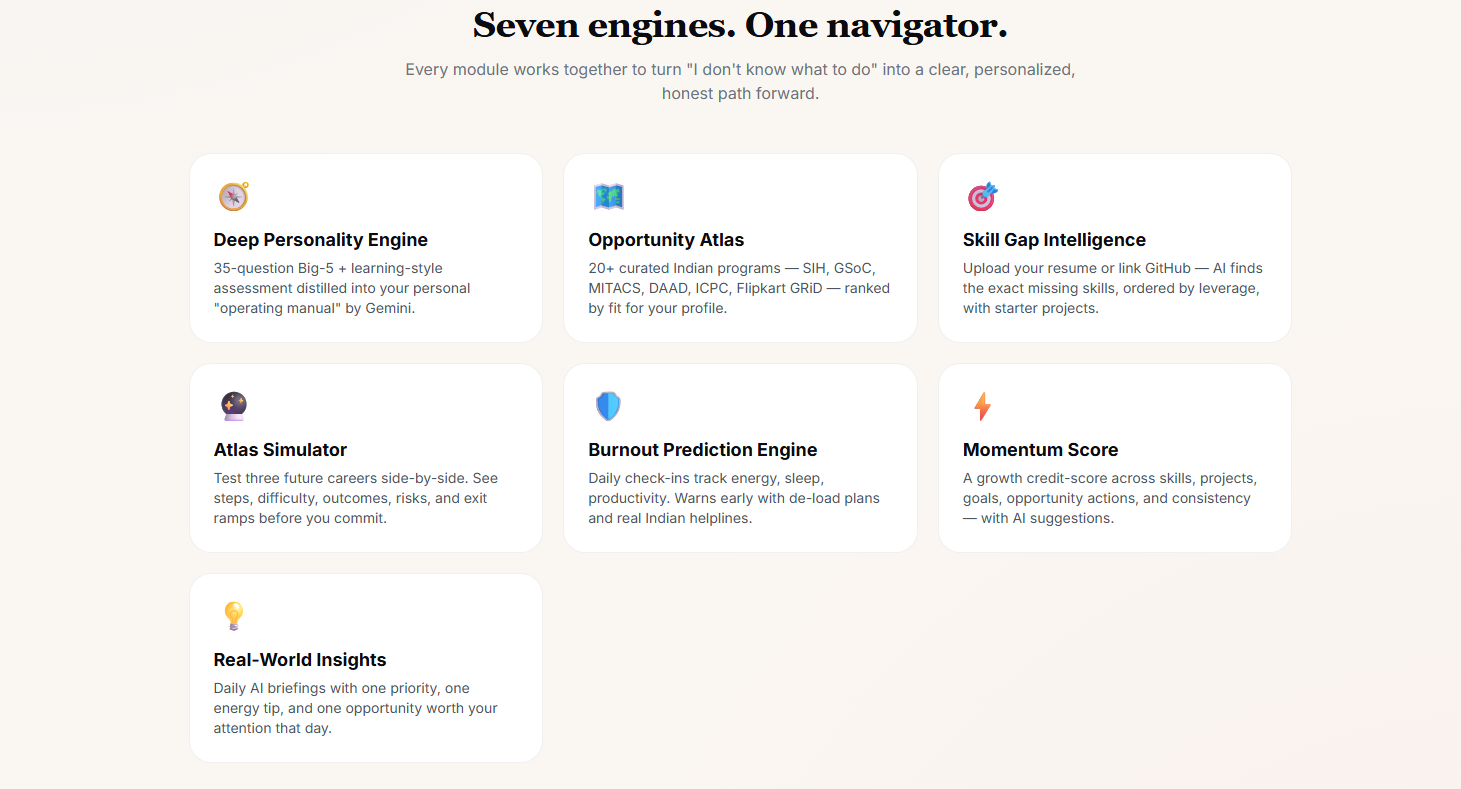
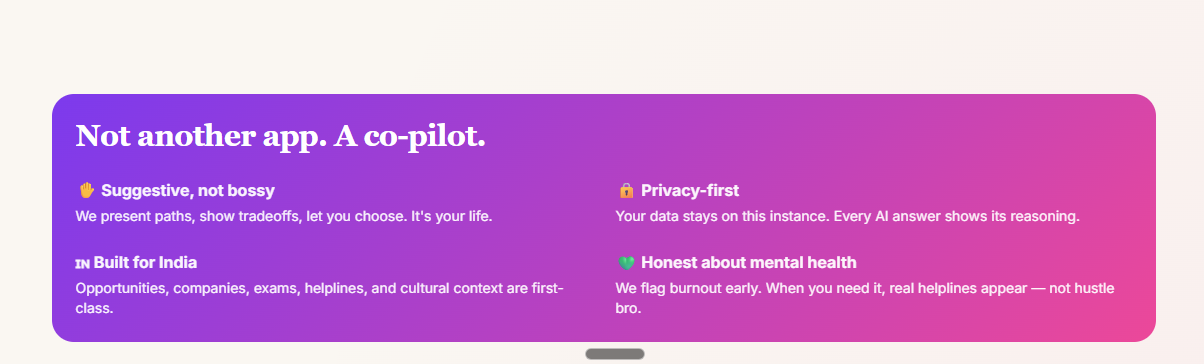
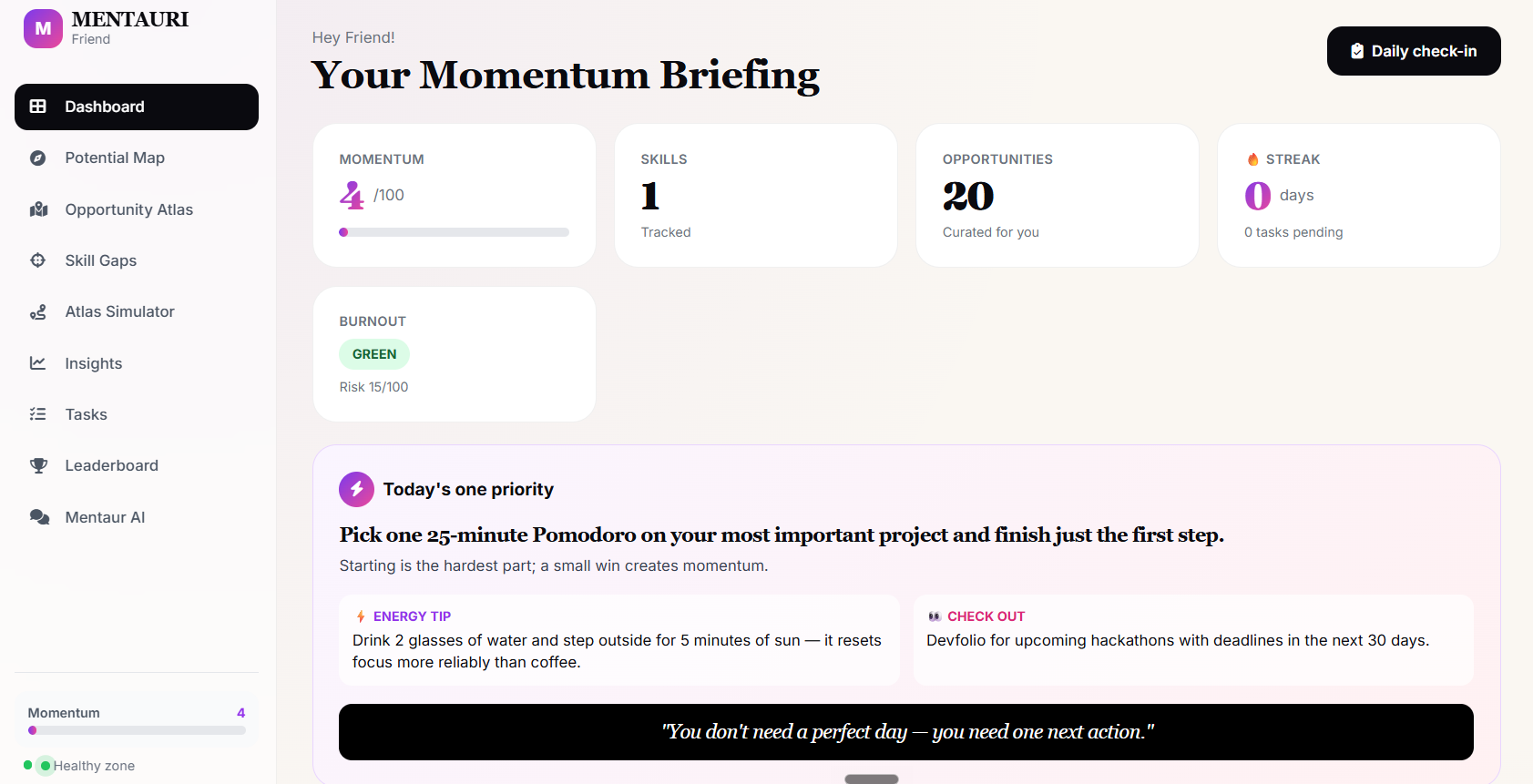
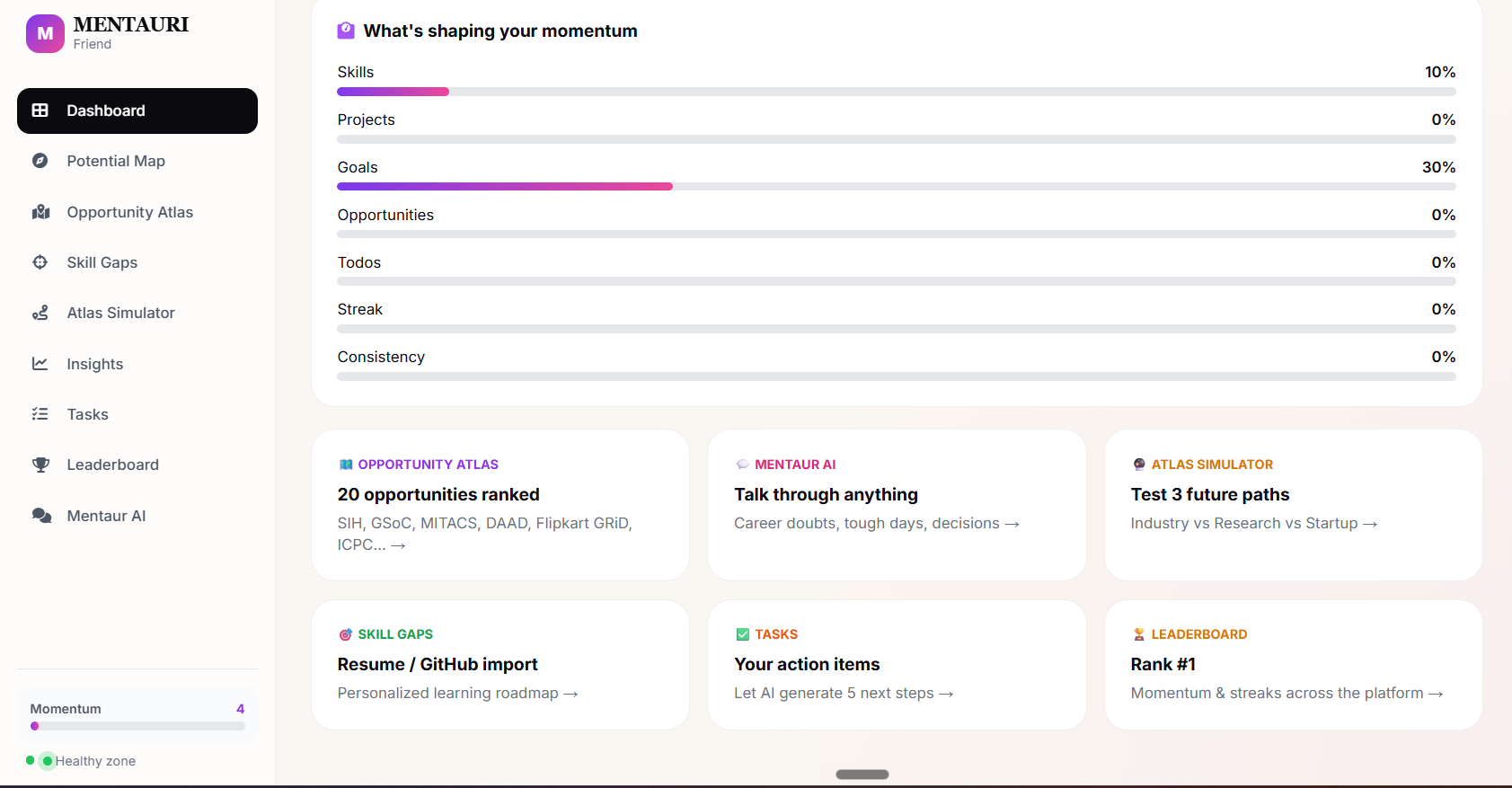
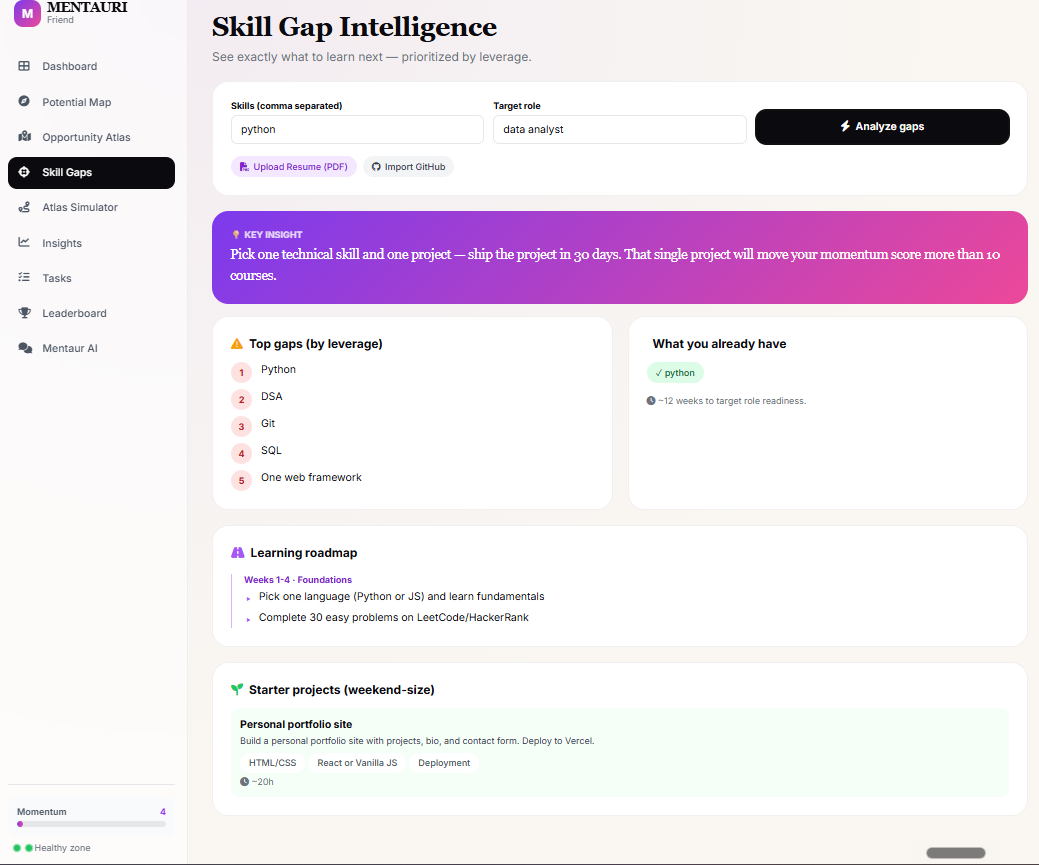
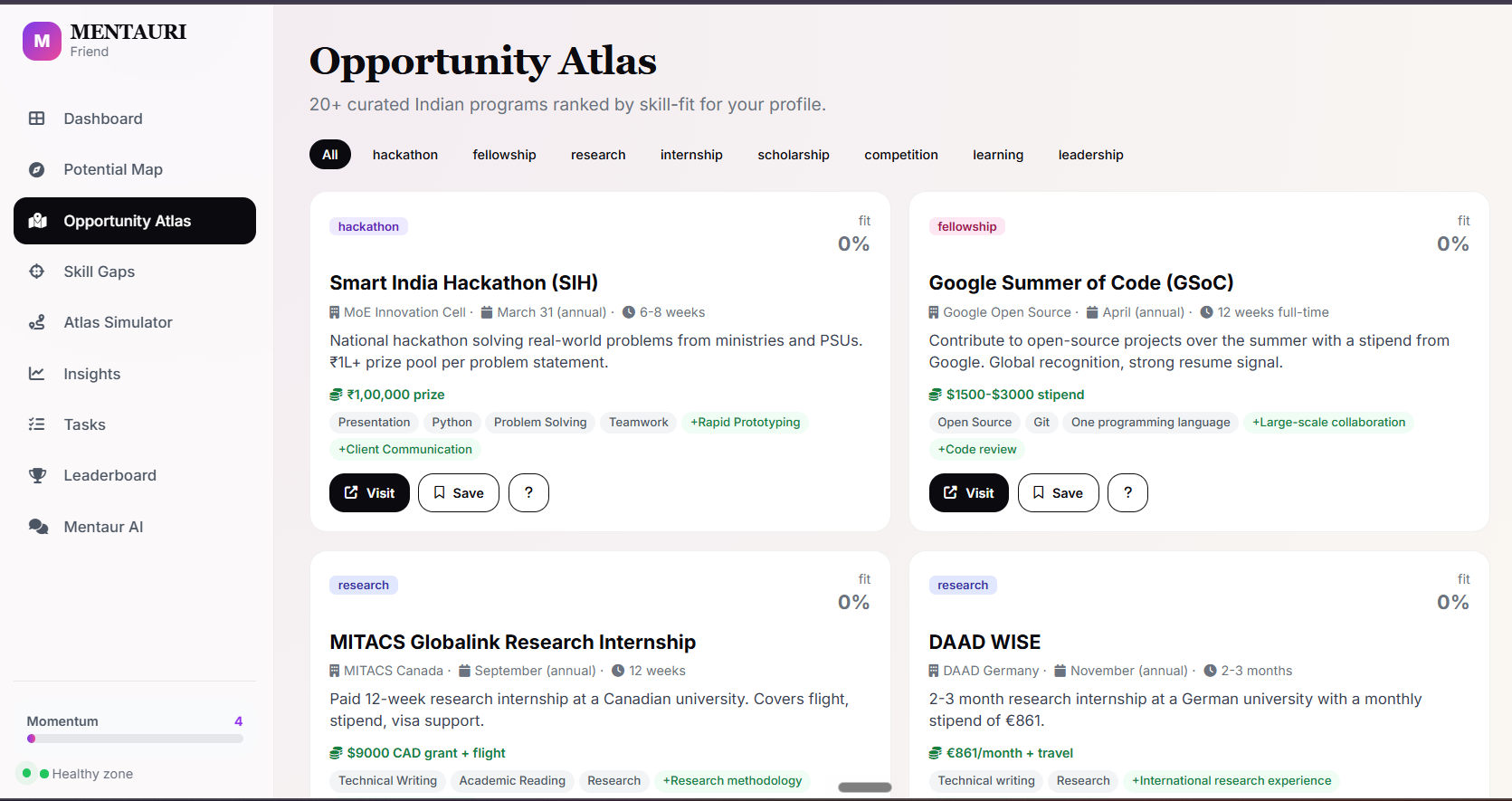
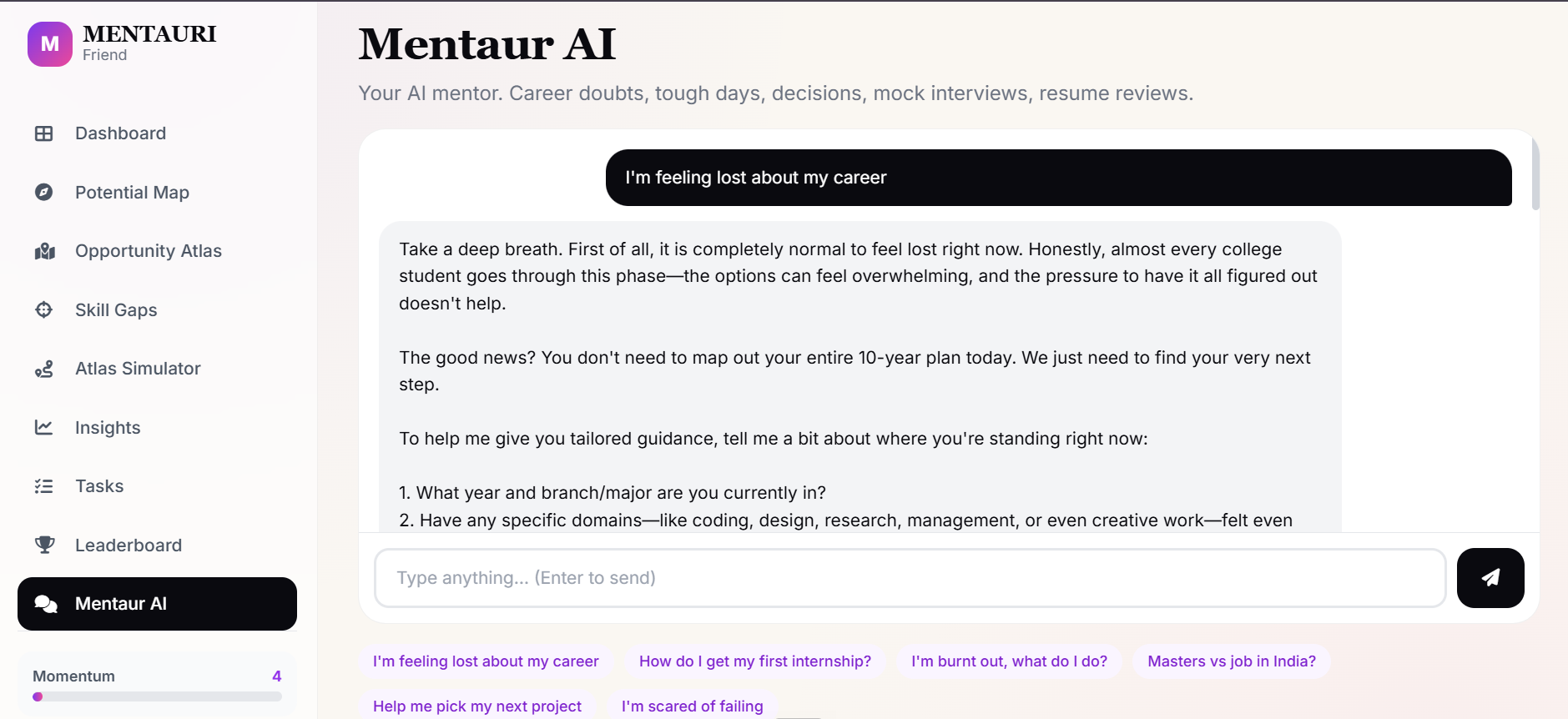
MENTAURI is a Gemini-powered AI growth strategist for students. It profiles you through a 35-question Big-5 and learning-style assessment, then uses that profile to rank 20+ seeded Indian opportunities (SIH, GSoC, MITACS, DAAD, ICPC, Flipkart GRiD, Amazon MLSS, Microsoft Engage, and more) by actual skill-fit — not just relevance. It finds skill gaps from a resume or GitHub import and generates a 3-phase roadmap to close them, simulates three realistic paths to a target role with real steps, difficulty, and INR salary bands, and tracks burnout risk through daily check-ins with real Indian helplines on standby. All of it rolls up into a single Momentum Score, a 30-day streak heatmap, and a context-aware AI chat that already knows your profile.
How we built it
The backend is a FastAPI service with 36 routes, backed by SQLite through
SQLAlchemy — self-contained and zero-config, so it runs anywhere Python runs.
The AI layer uses Gemini 2.0/2.5/3.6 Flash in automatic fallback order,
handling the personality write-up, opportunity ranking, skill-gap analysis,
path simulation, and the daily briefing. The frontend is a single-file SPA
built with Tailwind and Chart.js, talking to the backend over a lightweight
session-based API. The whole thing launches with one command —
python run.py — which auto-installs missing dependencies, starts the
server, and opens the browser.
Challenges we ran into
The hardest part wasn't the AI integration — it was getting the personality-to-opportunity ranking logic right. Two students with similar skills but very different personality profiles shouldn't get the same ranked list, but a naive scoring approach kept collapsing into "just recommend the popular ones." Getting the ranking to actually reflect learning style, risk tolerance, and stated goals — instead of defaulting to generic popularity — took real iteration on how the personality profile gets weighed against each opportunity's requirements.
Accomplishments that we're proud of
Getting all 7 modules to genuinely feed into each other, instead of shipping as 7 disconnected tools, is what we're most proud of. Your personality shapes your opportunity ranking. Your skill gaps shape your roadmap. Your daily check-ins shape your burnout score. It's one coherent system, not a bundle of features.
What we learned
Personalization is only as good as what you weigh, not what you collect. It would have been easy to gather a lot of user data and still hand back generic recommendations — the real work was in deciding what actually changes the output between two different students.
What's next for Mentauri
Expanding the seeded opportunity set beyond the initial 20+ programs, persistent hosted storage so momentum and streaks survive across sessions and devices, and tightening the burnout model with more signal over time rather than just daily self-reports.
Built With
- fastapi
- gemini-api
- google-genai
- javascript
- python
- sqlalchemy
- uvicorn


Log in or sign up for Devpost to join the conversation.