-
-
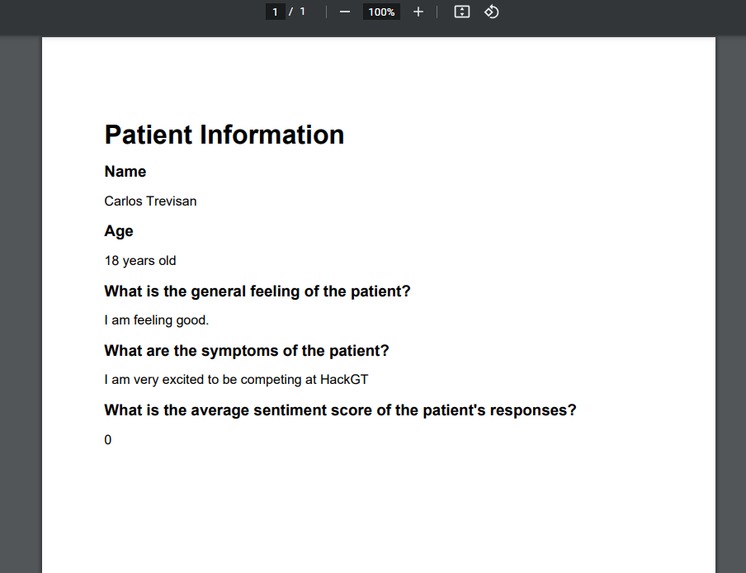
Generated PDF for Health Doctors
-
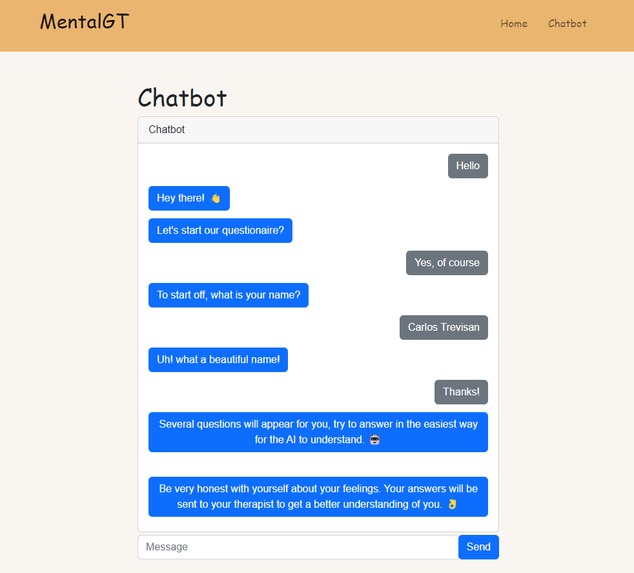
MentalGT AI-powered Chatbot
-
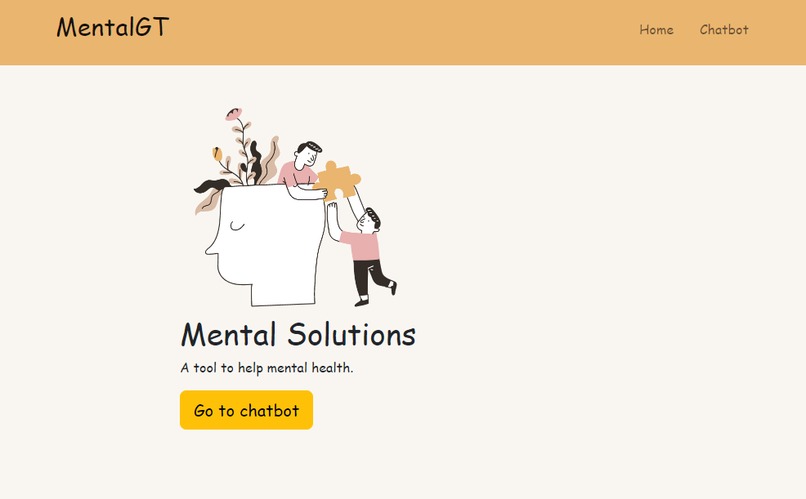
MentalGT Home Page
Inspiration
As a society, we are facing an increasing number of psychological problems. With that in mind, our team tried to bring efficiency and technology to mental health consultants. Often, therapists may spend a large amount of time interviewing their patients to determine what they need help with. To simplify this process, a chatbot can be used to gather valuable information regarding the patient and compile it into a single document. Furthermore, Machine Learning techniques such as Natural Language Processing can determine the general tone of the patient's responses. This can be used to get a good idea of how the patient is currently feeling and can also be used to keep track of their progress.
What it does
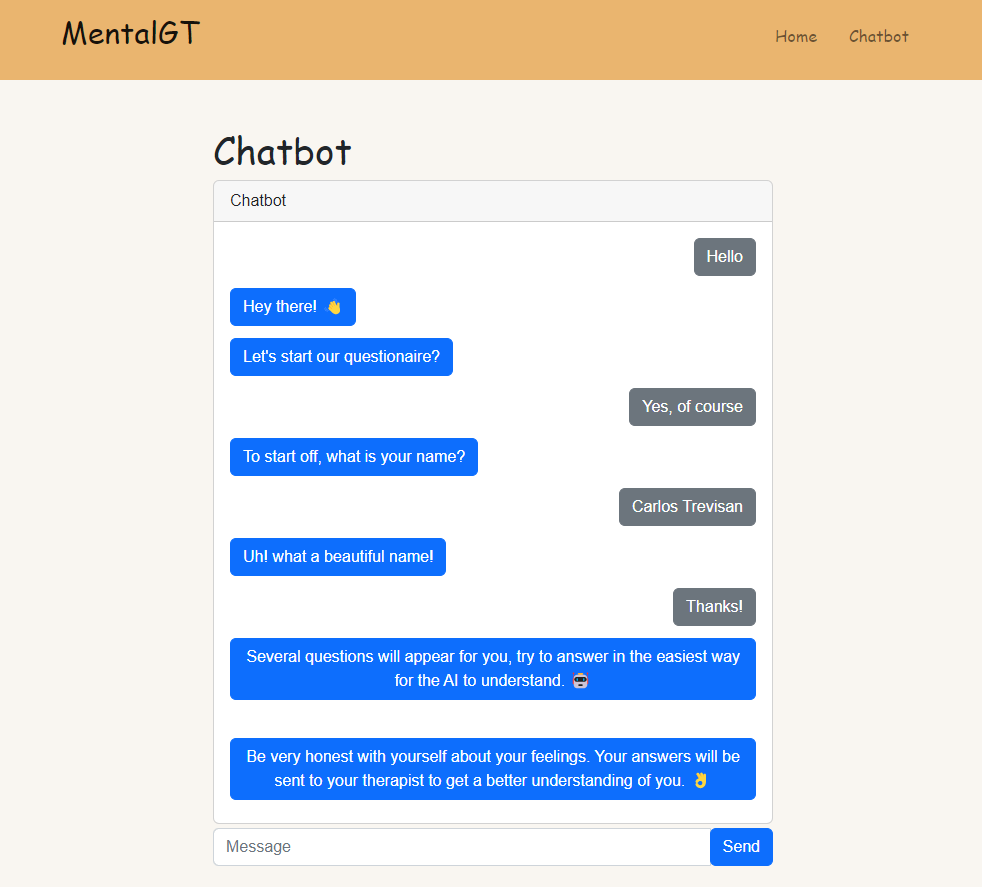
We have made an AI-powered chatbot that will ask the patient's feelings, process their responses and compile them into a .pdf file which they can then send to their mental health specialist. Thus, the mental health specialist can have a better understanding of the patient beforehand, allowing them to spend more time dealing with the issues rather than determining them.
How we built it
We built our website using HTML/CSS, JavaScript and Bootstrap. For sentiment recognition using Natural Language Processing, we used the TextBlob library in Python. This takes in a text and gives it a score between -1.0 and 1.0 indicating a negative or positive tone respectively. We then used AJAX and jQuery to connect the Python script to JavaScript.
Challenges we ran into
We couldn't get the JavaScript to successfully communicate with the Python code and thus couldn't calculate an accurate sentiment value for the responses. We also could not successfully implement machine learning into our chatbot. Additionally, making the PDF generator and chatbot from scratch with little knowledge of web development was difficult.
Accomplishments that we're proud of
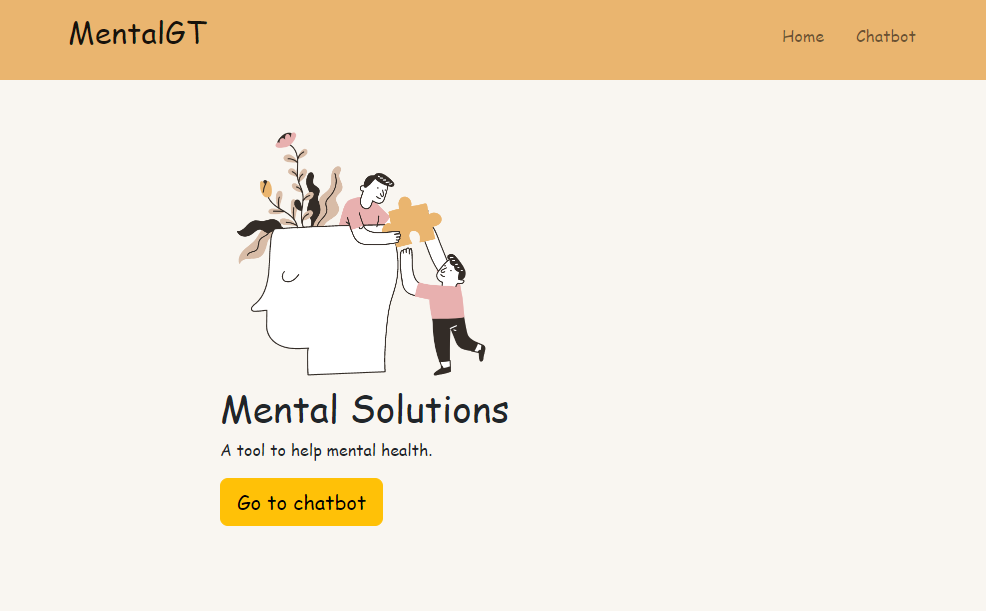
We are especially proud of our website design, which is very clean and matches the problem we are trying to solve. We have a basic functioning chatbot that does what it is supposed to do. It is a good start and can be easily built upon in the future.
What we learned
We learned how to use libraries like Bootstrap and also how to make the PDF generator. We also learned about Machine Learning and how it can be applied to solve real-world problems.
What's next for MentalGT
We have several plans to improve MentalGT. First, we plan on fixing the AJAX connection between the Python code and the JavaScript so that we can run the sentiment recognition on the client responses. We may also add features like daily diary entries utilising sentiment recognition to track the client's mental health progress on a daily basis. An end-goal feature we would like to include is using machine learning techniques like Natural Language Processing or potentially Cosine Similarity to compare keywords in the client's responses to symptoms of mental disorders. We would also like to improve the AI using machine learning techniques, making it feel more humane and therefore allowing the patient to feel more comfortable opening up and expressing their feelings. All of this combined can help mental health specialists easily diagnose their patients with more accurate results.
Built With
- ajax
- bootstrap
- css
- html
- javascript
- jquery
- natural-language-processing
- python
- sentiment-analysis
- textblob

Log in or sign up for Devpost to join the conversation.