-
-
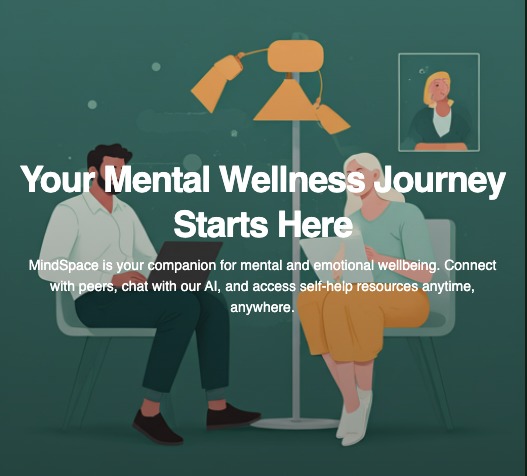
hoempage
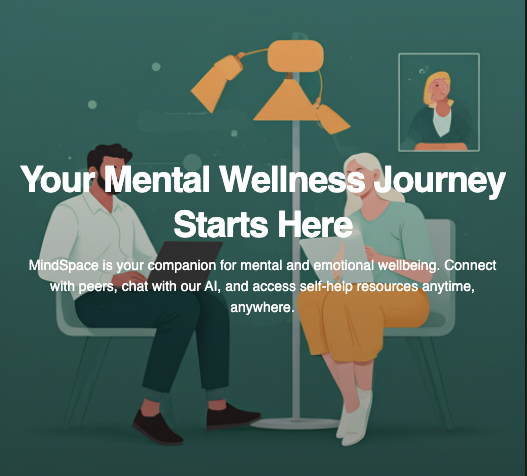
Inspiration
The growing mental health crisis, especially among young people and students, inspired us to build this project. We saw how stigma, lack of access to professional help, and uncertainty about where to turn leave many people struggling in silence. Our goal was to create a safe, stigma-free, and supportive platform where anyone can seek help—whether from empathetic peers or an AI companion—while maintaining privacy and control over their experience.
What it does
Peer Support: Connects users with empathetic peers for real-time. AI Companion: Offers 24/7 support through an AI chatbot that provides empathetic, context-aware conversations and emotional assessments. Emotional State Assessment: Analyzes user input to detect emotions and, when needed, offers peer matching or crisis intervention. Peer Matching & Ticketing: Users can create support tickets (“flags”) to request or offer help, browse active requests, and connect with others based on emotional state and needs.
How we built it
Frontend: Built with React and TypeScript for a robust, type-safe UI. Tailwind CSS was used for rapid, modern styling. Framer Motion provided smooth animations, and React Hook Form managed multi-step onboarding and profile forms. Backend & Infrastructure: Supabase handled authentication, PostgreSQL database, and real-time chat/ticketing. Supabase Realtime enabled instant messaging and updates. AI Chatbot: Integrated the Qwen2.5 72B Instruct model via the OpenRouter API for empathetic, context-aware conversations and emotional state assessments. Peer Matching: Designed a flexible ticket/flag system for support requests, with privacy-first controls and Gen Z–friendly tags.
Challenges we ran into
Balancing Privacy and Functionality: Ensuring users could control what they share while still enabling meaningful connections required careful UI and database design. AI Emotional Assessment: Tuning the AI to accurately assess emotions and trigger appropriate actions (like peer matching or crisis intervention) was complex and required iterative testing. Real-Time Communication: Achieving low-latency, reliable chat across different user devices and network conditions was challenging, especially with scaling in mind. User Experience: Designing onboarding and feedback flows that are comprehensive but not overwhelming took several iterations and user feedback sessions. Database Constraints: Handling data types (e.g., ensuring sleep duration is always an integer) and enforcing validation both on the frontend and backend to prevent errors.
Accomplishments that we're proud of
Built a privacy-first, user-centric platform for mental wellness. Seamlessly integrated a powerful AI companion for empathetic support. Developed a real-time peer matching and chat system. Designed flexible onboarding and profile management with granular privacy controls. Fostered a safe, supportive, and stigma-free environment for users.
What we learned
The importance of user privacy and consent in mental health applications. How to integrate and tune large language models for emotional intelligence and context awareness. Best practices for building real-time, scalable chat systems. How to design onboarding and support flows that are both comprehensive and user-friendly.
What's next for Mental wellness website- kindness in every connection
Mobile App: Expanding to mobile platforms for greater accessibility. Group Support: Adding group chat and support circles. Advanced AI Features: Improving emotional assessment and crisis detection. Resource Library: Curating mental health resources and self-help tools. Community Events: Hosting virtual events and workshops for mental wellness. Gamification: Badges, achievements, and community recognition. Localization: Supporting multiple languages to reach a broader audience.
Built With
- bolt.new
- eslint
- framer
- javascript
- lucide
- openrouter
- react
- sql
- supabase
- tailwind
- typescript
- vite
- zustand


Log in or sign up for Devpost to join the conversation.