💡 Inspiration
A Harvard Business Review study (March 2026) of 1,488 full-time employees found that 14% of heavy AI tool users suffer from "Brain Fry" — cognitive fog, trouble concentrating, and slower decision-making caused by intensive AI usage. The catch: most people don't connect the dots between their AI habits and how foggy they feel. They keep going, and the overload quietly compounds.
We use AI tools every day on our own team — ChatGPT, Gemini, Claude, Copilot, Midjourney — and recognized this pattern in ourselves before we ever read the study. We wanted to build the tool we wished we had: something that notices the fog forming and nudges you before it becomes a problem, not after.
🧠 What It Does
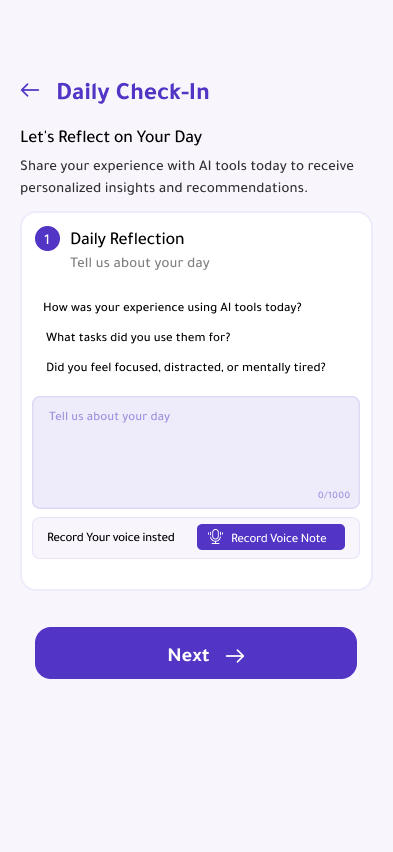
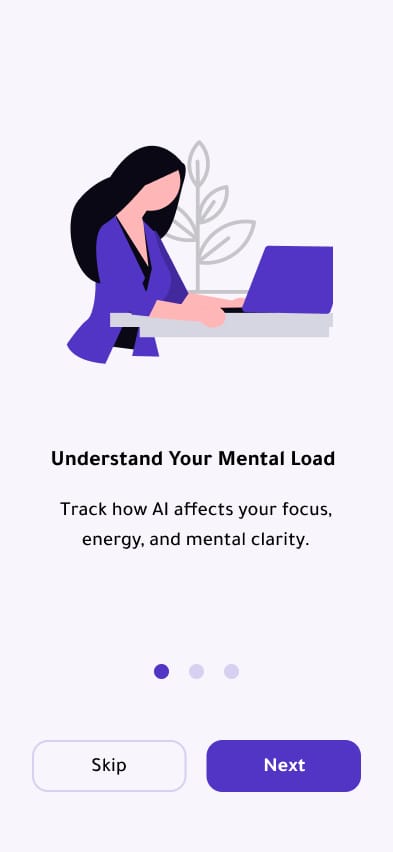
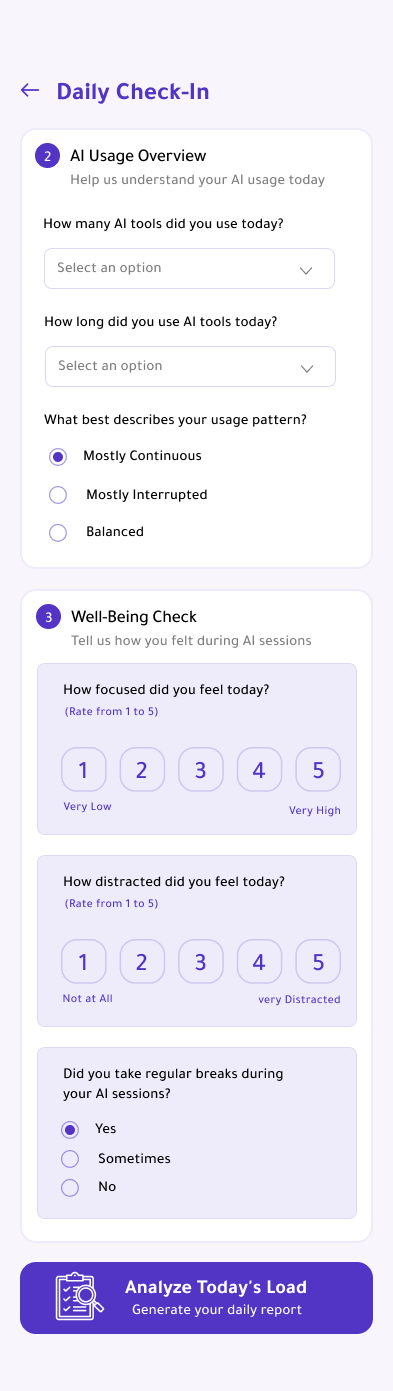
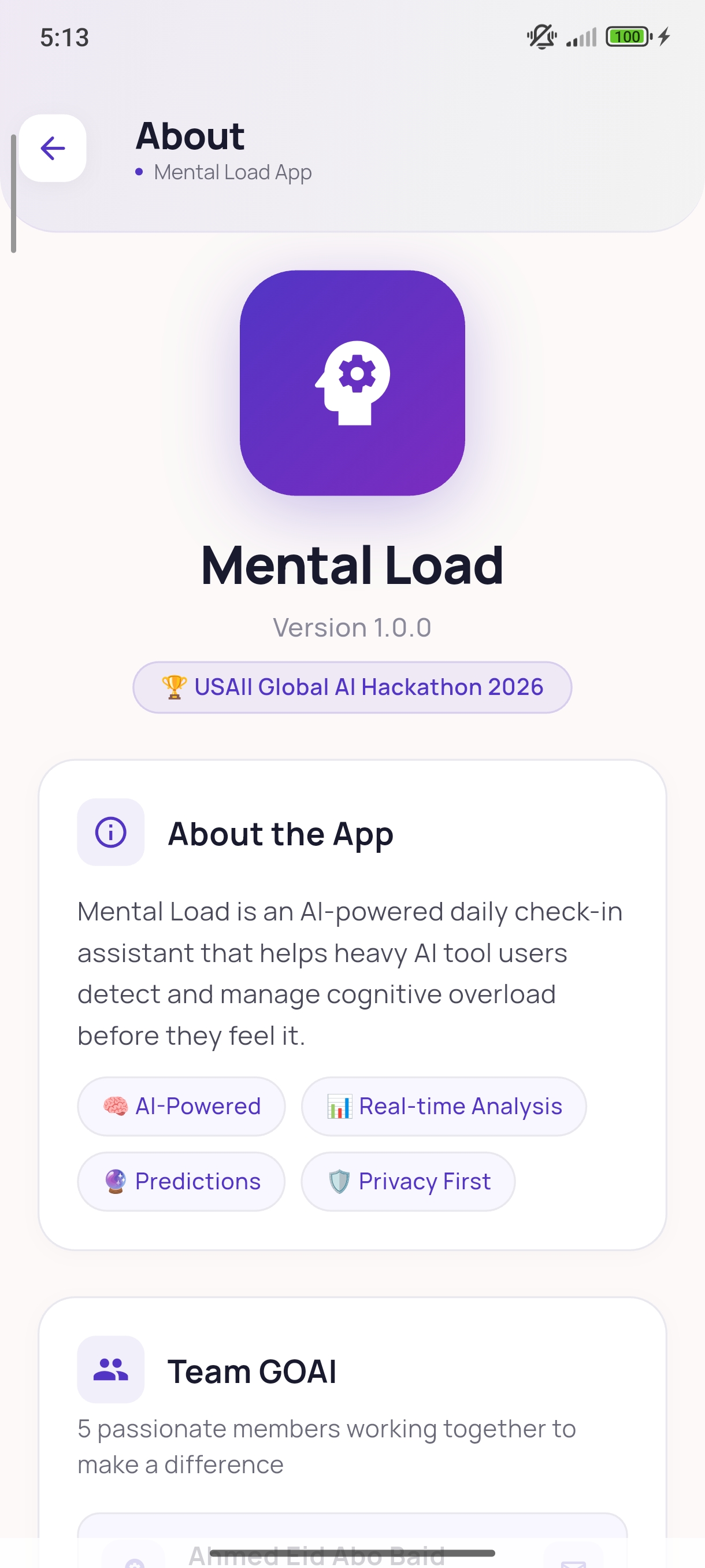
Mental Load is a daily check-in companion. Each day, the user writes (or speaks) a short reflection on how they're feeling and how they used AI tools that day. From there:
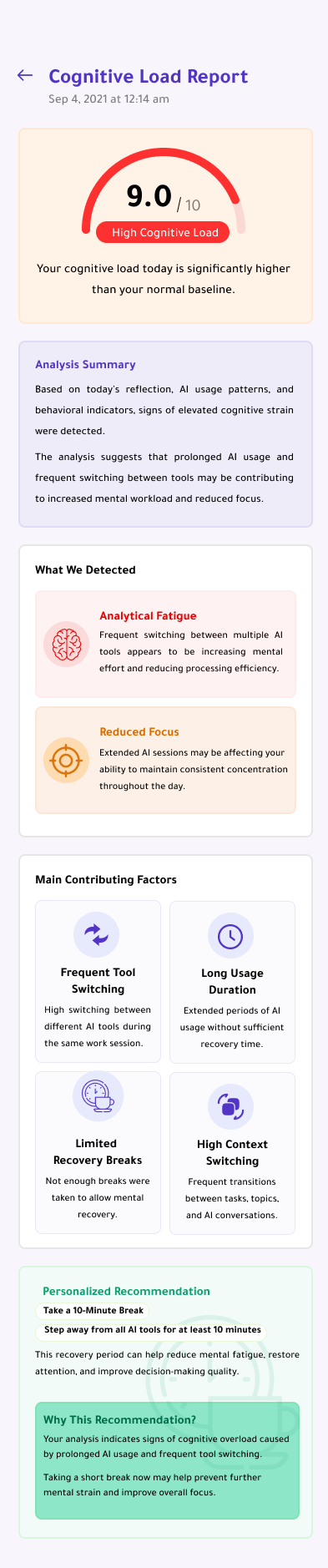
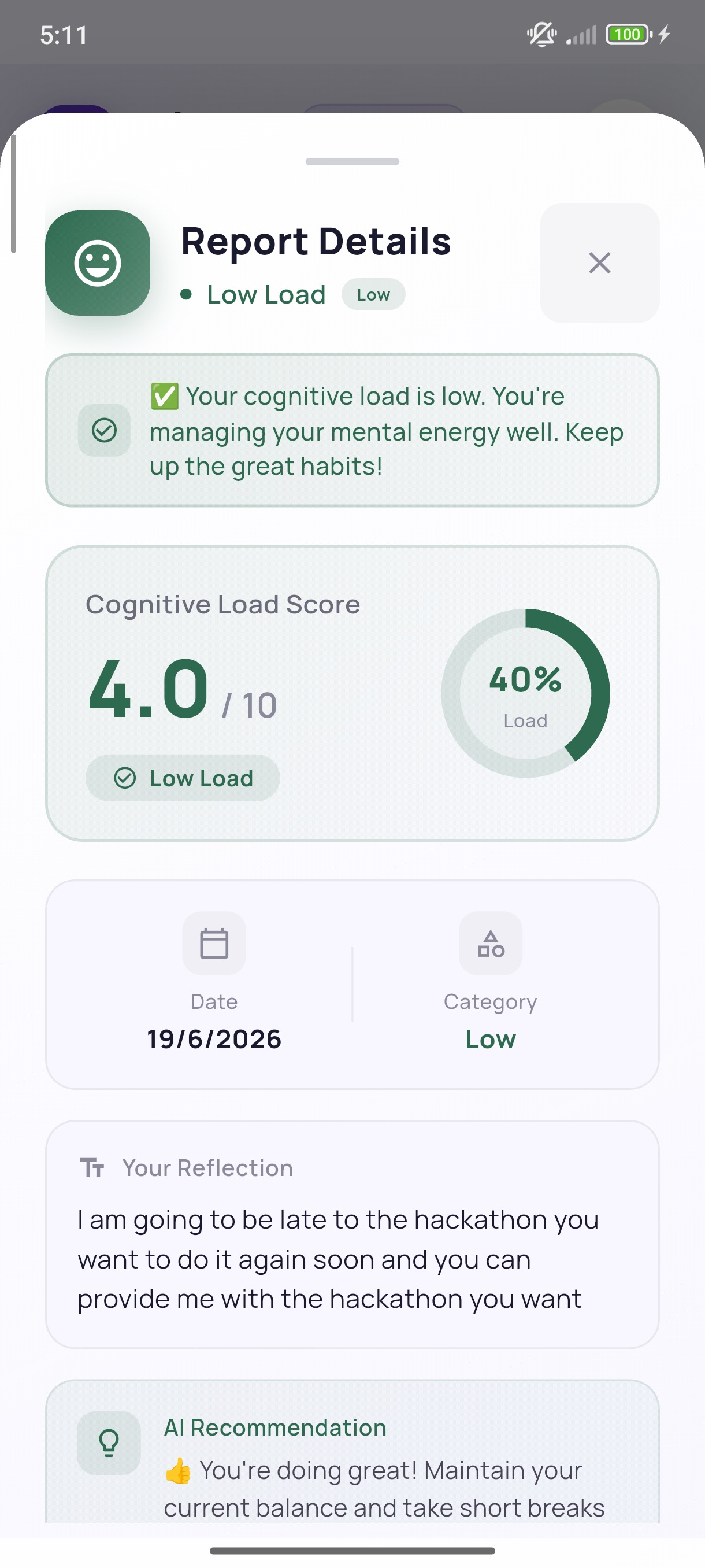
- Cognitive Load Score (1–5): An NLP (Natural Language Processing) and Machine Learning (ML) model reads the free-text entry and scores cognitive load, with a confidence percentage.
- Personalized Recommendation: API key from open AI turns that score into a specific, actionable suggestion — not generic advice.
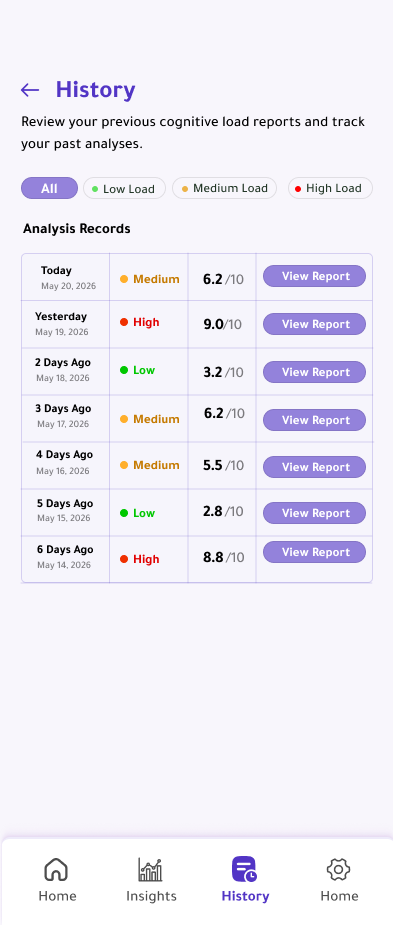
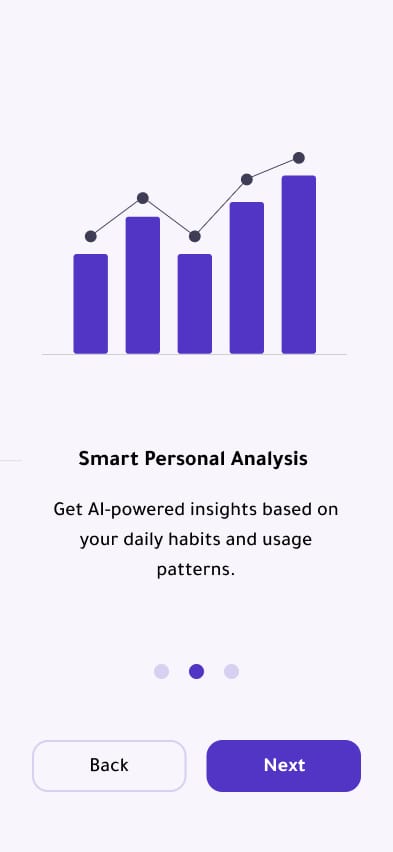
- Trend Analysis: By analyzing patterns in the user's input data, the app can predict the general direction of the user's cognitive state, allowing them to course-correct early.
- Recovery Tracking: The app follows up the next day to ask whether the user followed the recommendation, then compares outcomes to show what actually works for that person.
- Voice Check-ins: Users who don't want to type can speak their check-in; Whisper API transcribes it before the NLP model analyzes it.
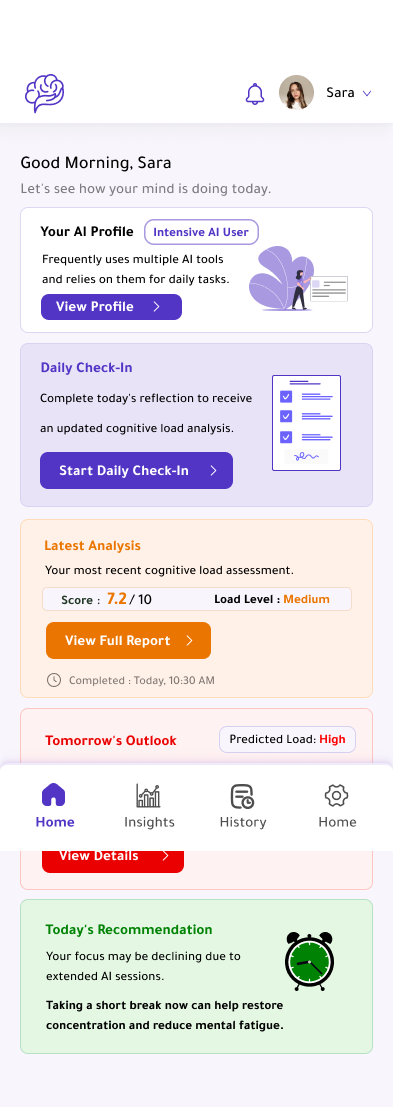
All of this lives inside a calm, glassmorphic Flutter interface designed specifically not to add to the cognitive load it's trying to measure.
🛠️ How We Built It
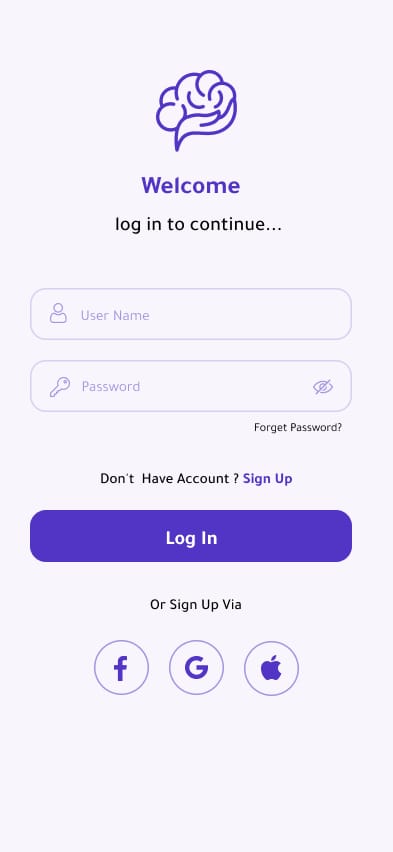
- Frontend: Flutter, covering 13 screens from onboarding through analytics, styled with a glassmorphism design language and Google Fonts (Tajawal + Inter) for bilingual support.
- Backend: Supabase (PostgreSQL) handles authentication, real-time sync, and storage, secured with Row Level Security (RLS) so each user can only access their own data.
- Text Analysis Layer: An NLP (Natural Language Processing) and ML (Machine Learning) model trained to analyze free-text entries and classify them into a 1–5 cognitive load score.
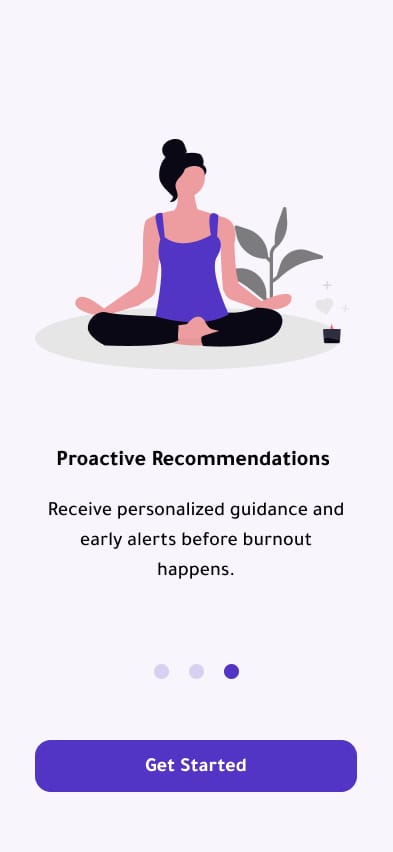
- Recommendation Layer: The score and recent history are passed to Gemini 1.5 Flash, which generates a tailored recommendation based on data analysis.
- Voice Layer: Whisper API by OpenAI converts spoken check-ins to text before they enter the analysis pipeline.
- Charts: fl_chart powers the analytics dashboard and pattern view.
We split the 7-day build across the team: backend and auth first, then the analysis pipeline (NLP/ML), then the human-in-the-loop and guardrail layer, then recommendations and analytics, finishing with polish, testing, and the submission video.
⚠️ Challenges We Ran Into
- Tuning the NLP/ML model on a small, self-collected dataset without overfitting to our own team's writing style.
- Balancing intervention with intrusiveness — an app meant to reduce mental load can't itself feel like another thing demanding attention. We iterated heavily on copy and notification frequency to keep it calm.
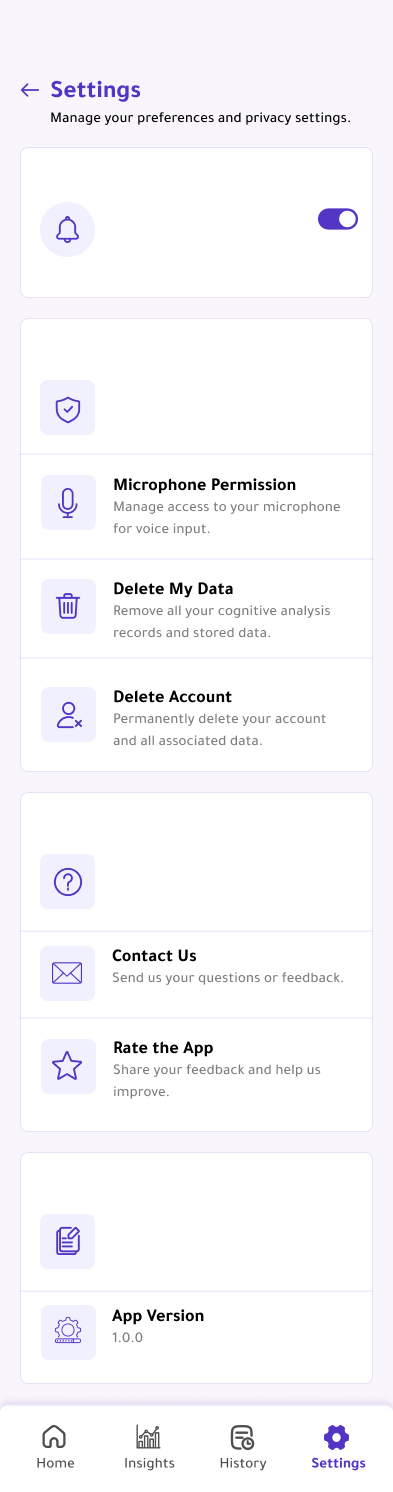
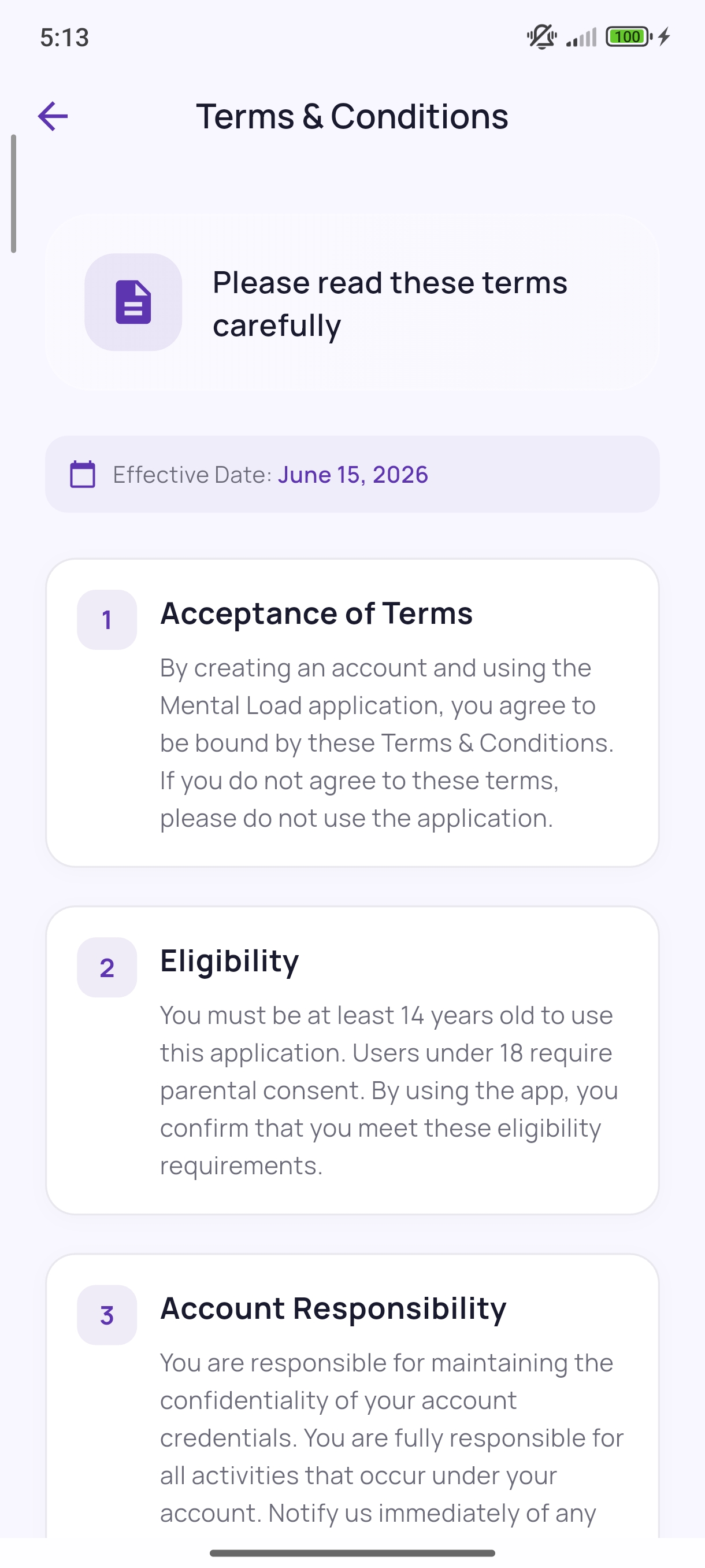
- Getting the human-in-the-loop layer right — letting users correct the AI's score, requiring explicit consent before surfacing professional help resources, and adding parental consent flows for underage users, all without slowing down the core daily check-in.
- Analyzing patterns with limited data — pattern analysis needs a reasonable run of data points per user, so early-stage users get a preliminary analysis with a wider confidence interval rather than falsely confident predictions.
🏆 Accomplishments We're Proud Of
- A complete, working analysis pipeline (voice → text → score → recommendation) running end-to-end on real Supabase infrastructure.
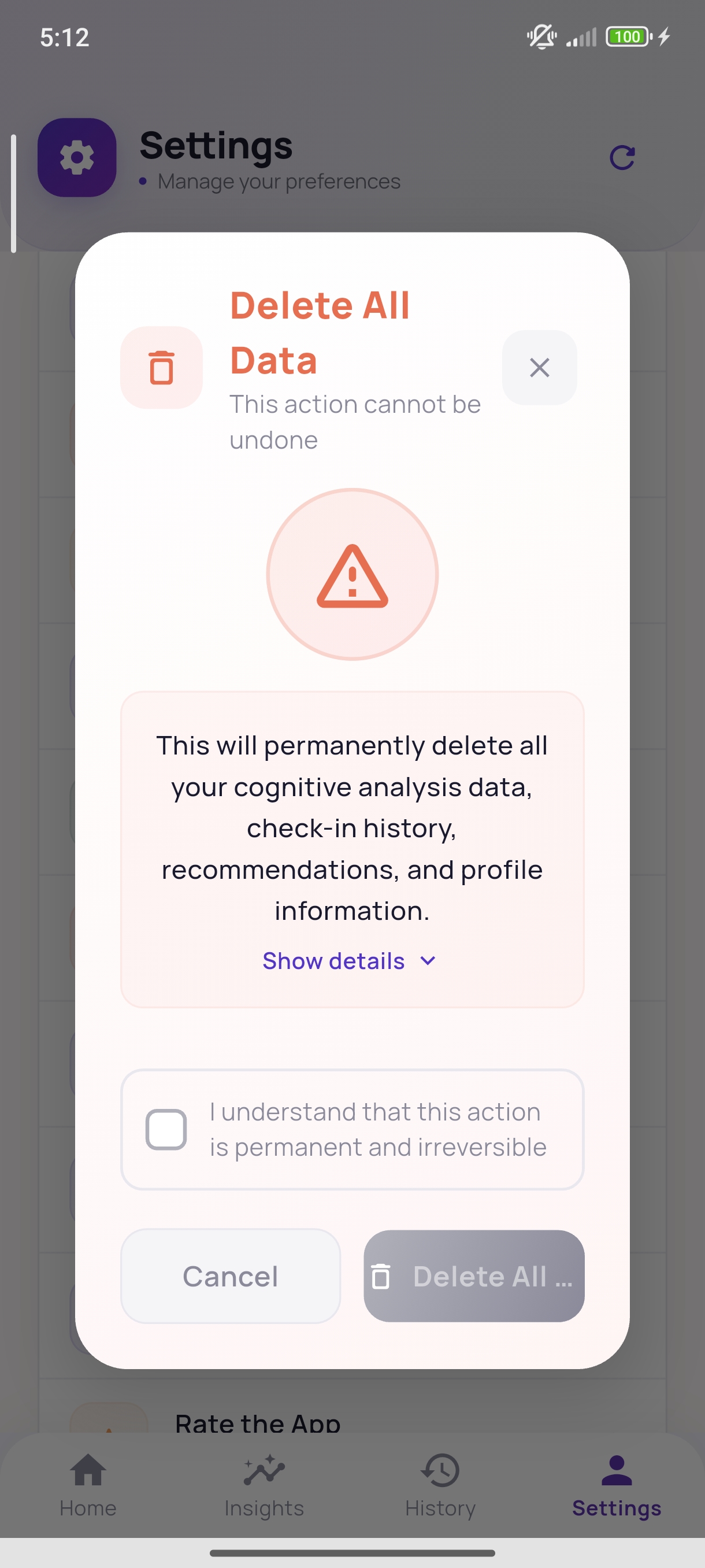
- A responsible-AI layer that isn't just a disclaimer at the bottom of the screen: score correction, explicit consent for professional-help suggestions, and parental consent for minors are built into the product flow itself.
- A UI that actually feels calm to use — tested directly against our own goal of not adding to the problem we're solving.
📚 What We Learned
- Detecting cognitive load from text is as much about consistency over time as it is about any single entry — trends matter more than one-off scores.
- Guardrails and human-in-the-loop design work best when designed in from day one, not bolted on at the end.
- Small teams move fast when AI/ML, backend, and design work in parallel rather than in sequence — our Day 3–5 overlap between Gemini integration and pattern analysis/analytics was the most productive stretch of the week.
🔮 What's Next for Mental Load
- Multi-language support for the NLP model to reduce bias toward English-language entries.
- A richer recovery-tracking dashboard showing which recommendation types work best for each user over time.
- Integration with browser/desktop AI tool usage data (with consent) to reduce reliance on self-reported usage patterns.
- Expanded clinical-resource partnerships for users who consistently score in the high-risk range.
© 2026 Team GOAI 🇵🇸
Built With
- arima
- dart
- fl-chart
- flutter
- huggingface
- ml
- natural-language-processing
- openai
- postgresql
- statsmodels
- supabase
- whisper-api


Log in or sign up for Devpost to join the conversation.