-
-
-
-
-
-
-
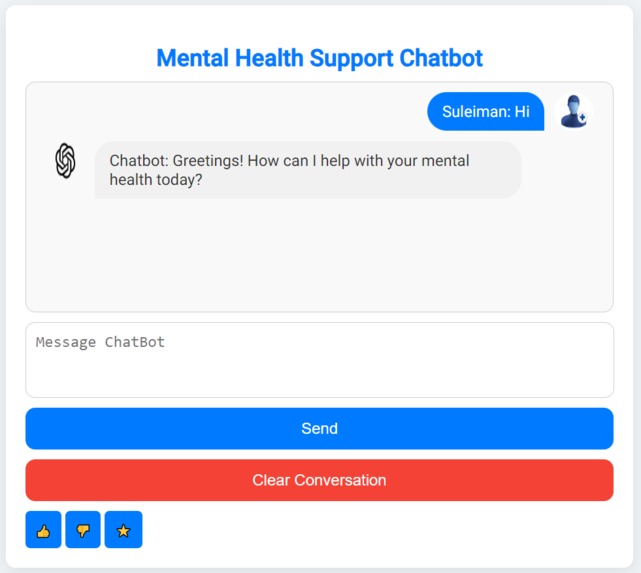
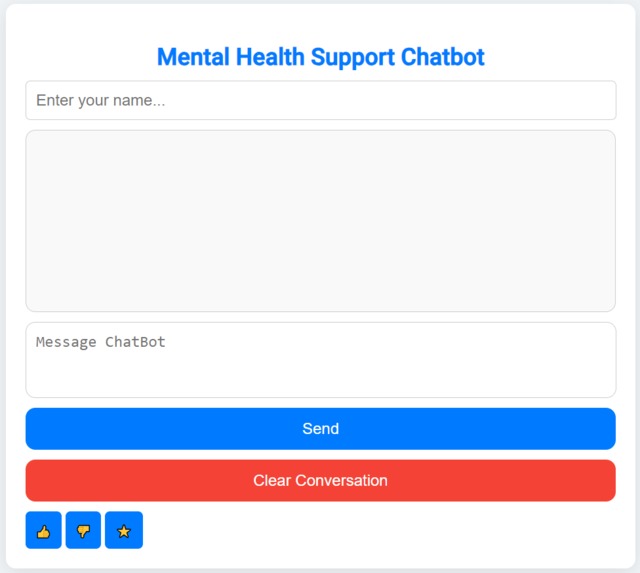
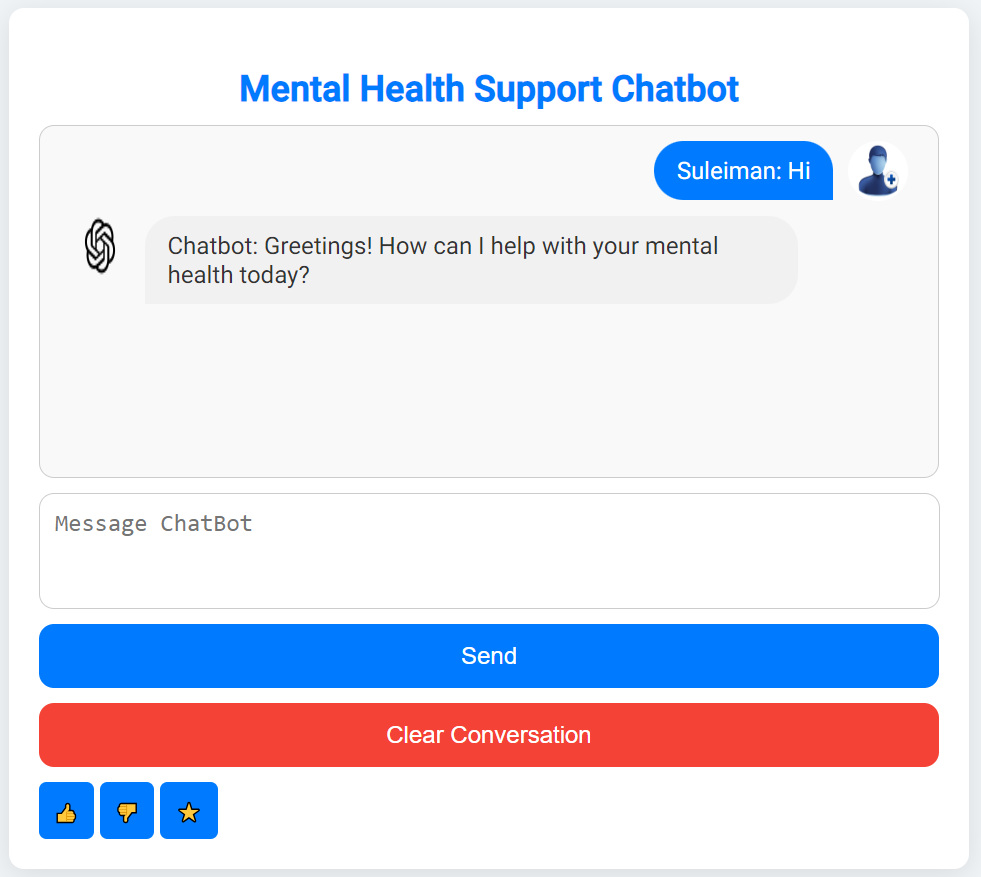
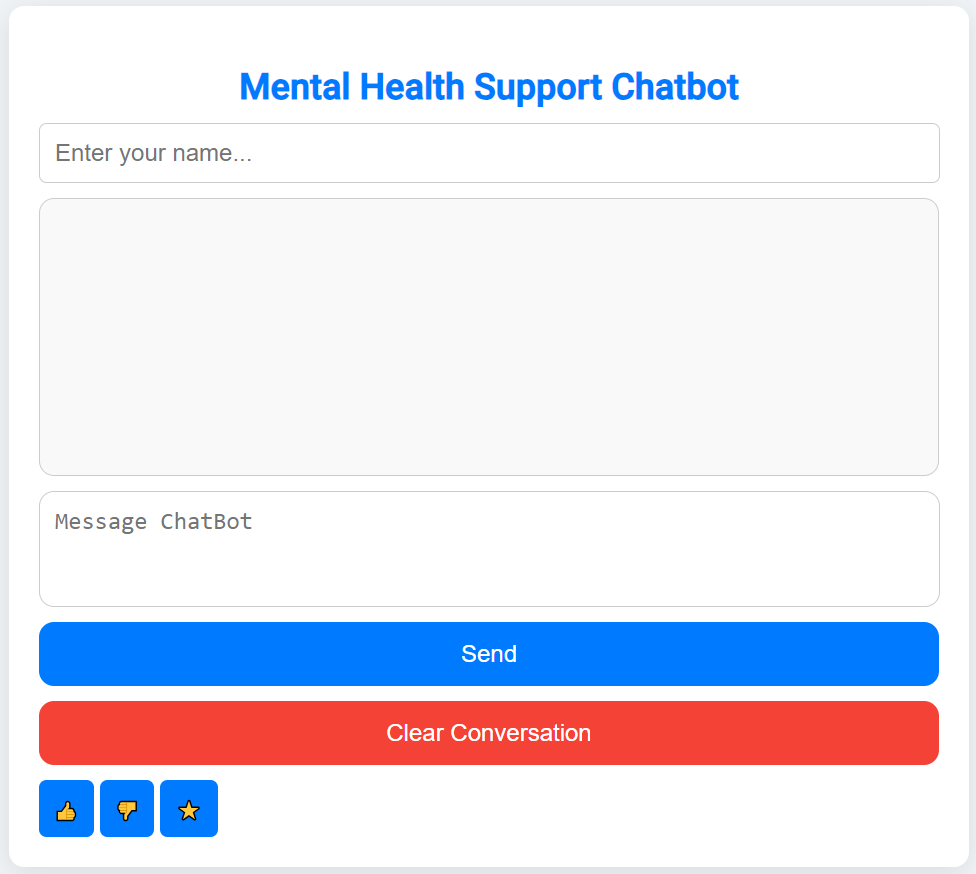
Greeting
-
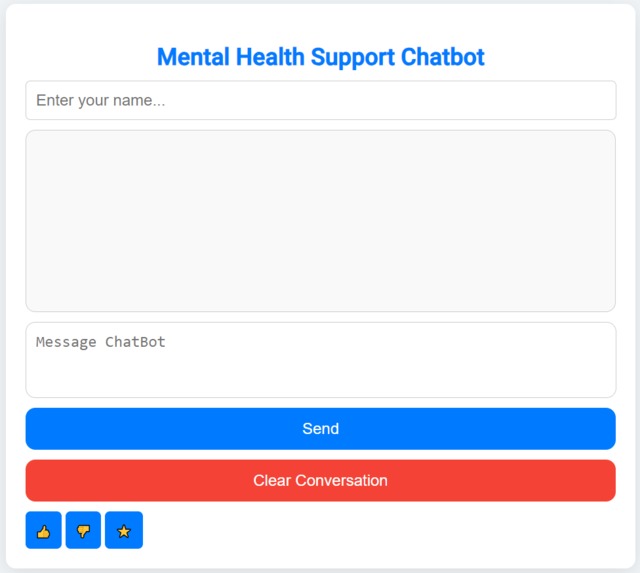
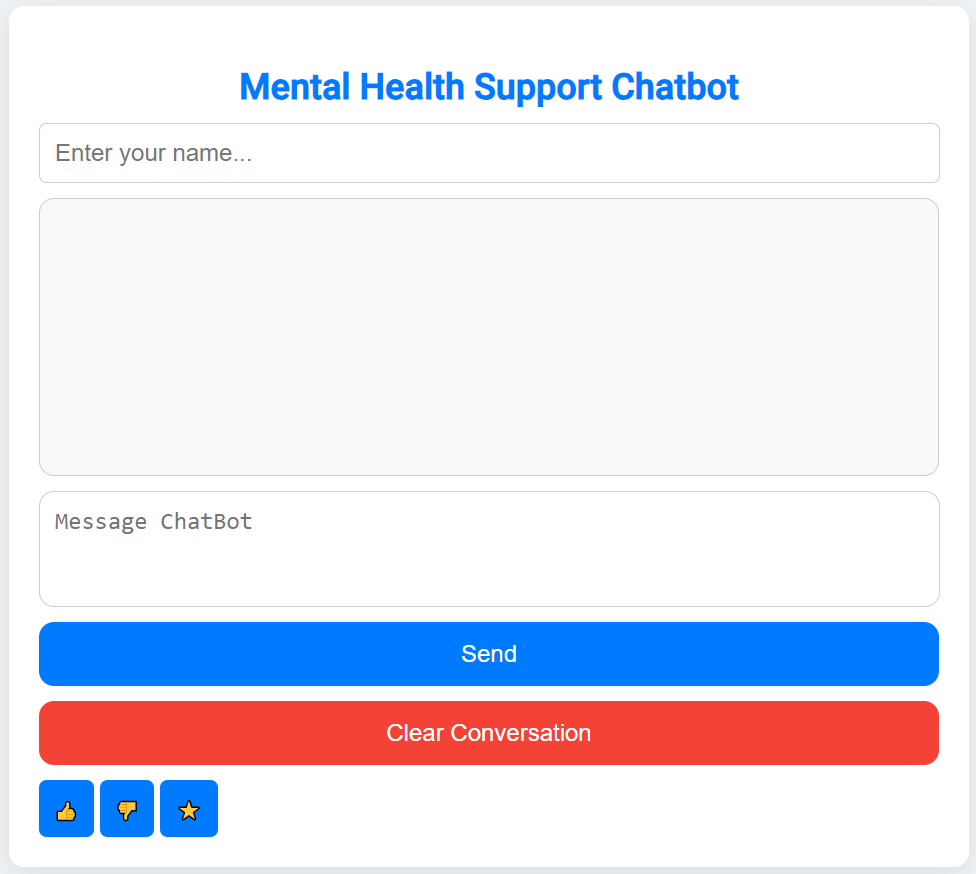
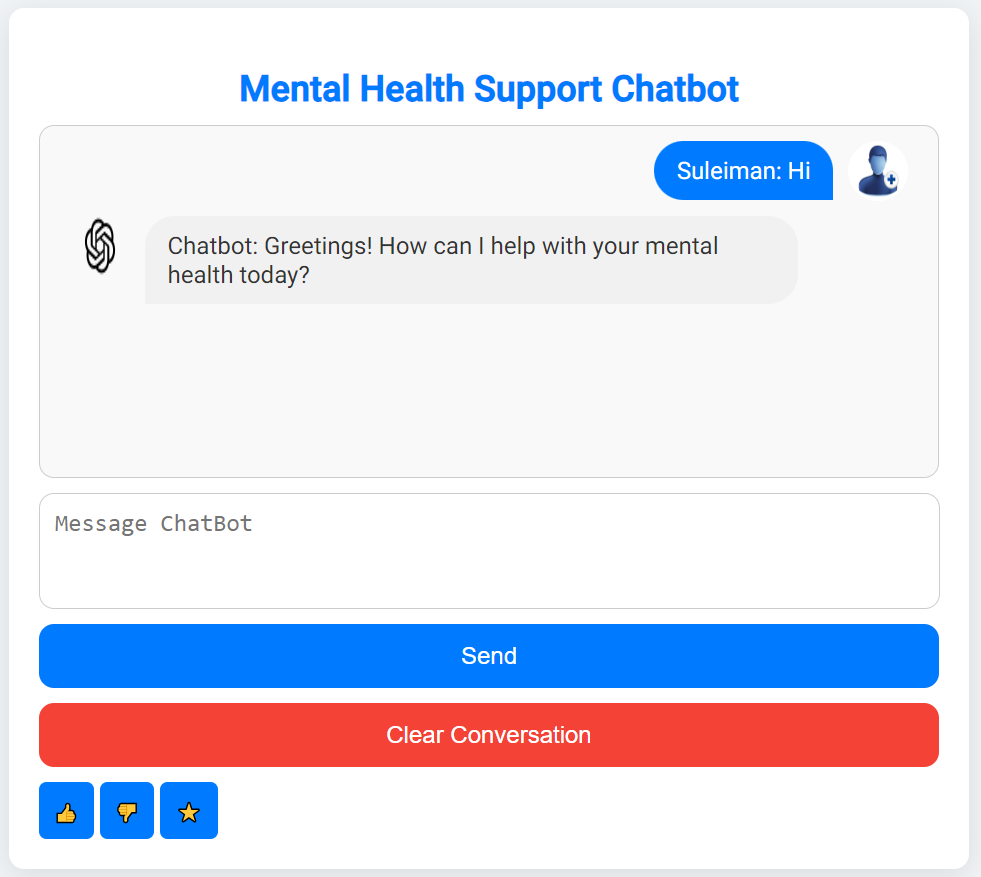
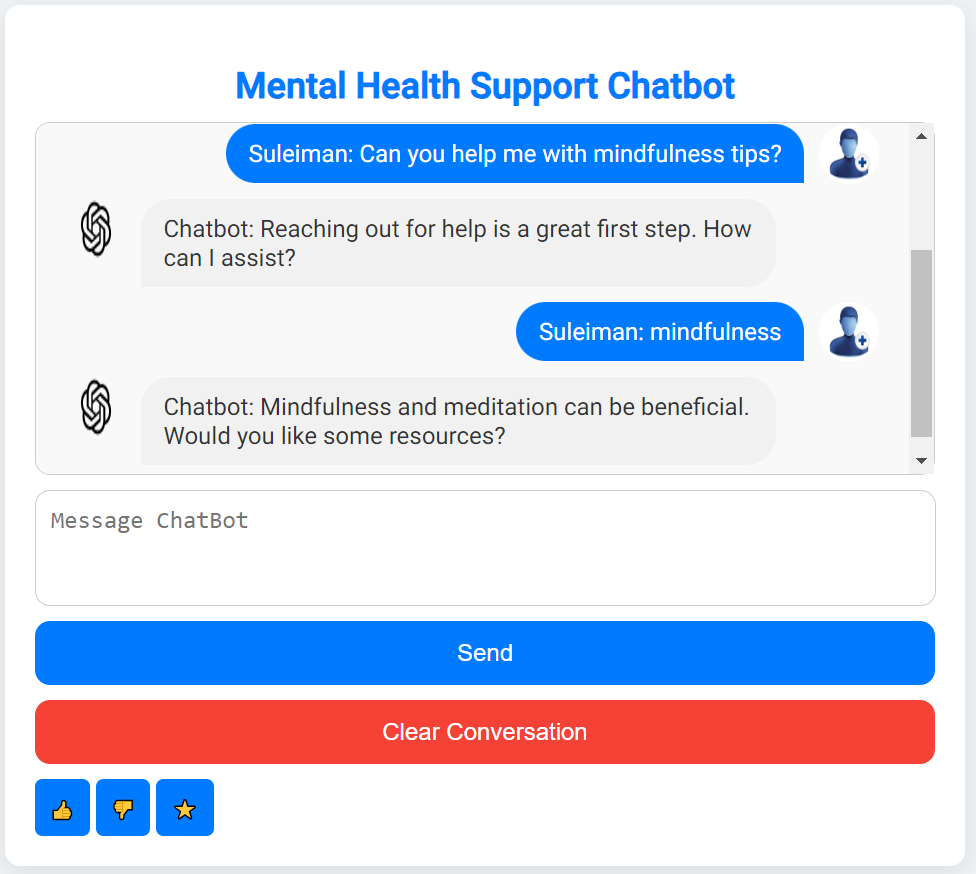
Chating environment
-
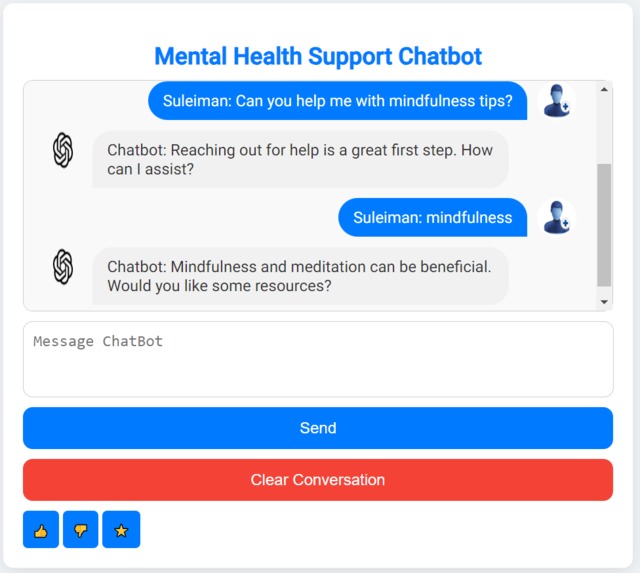
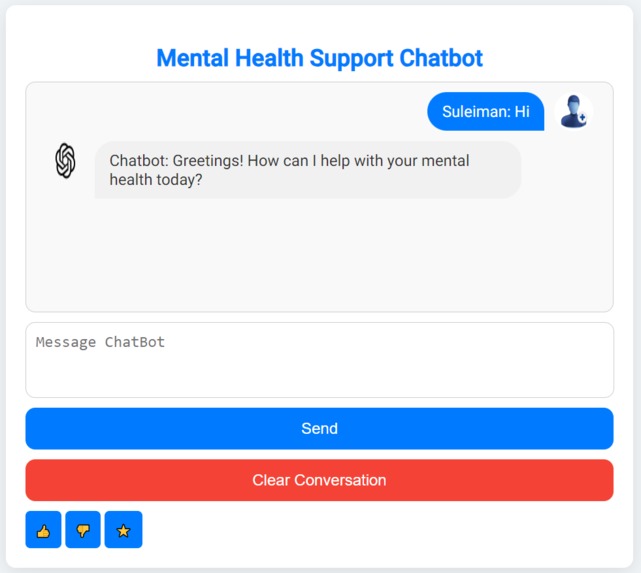
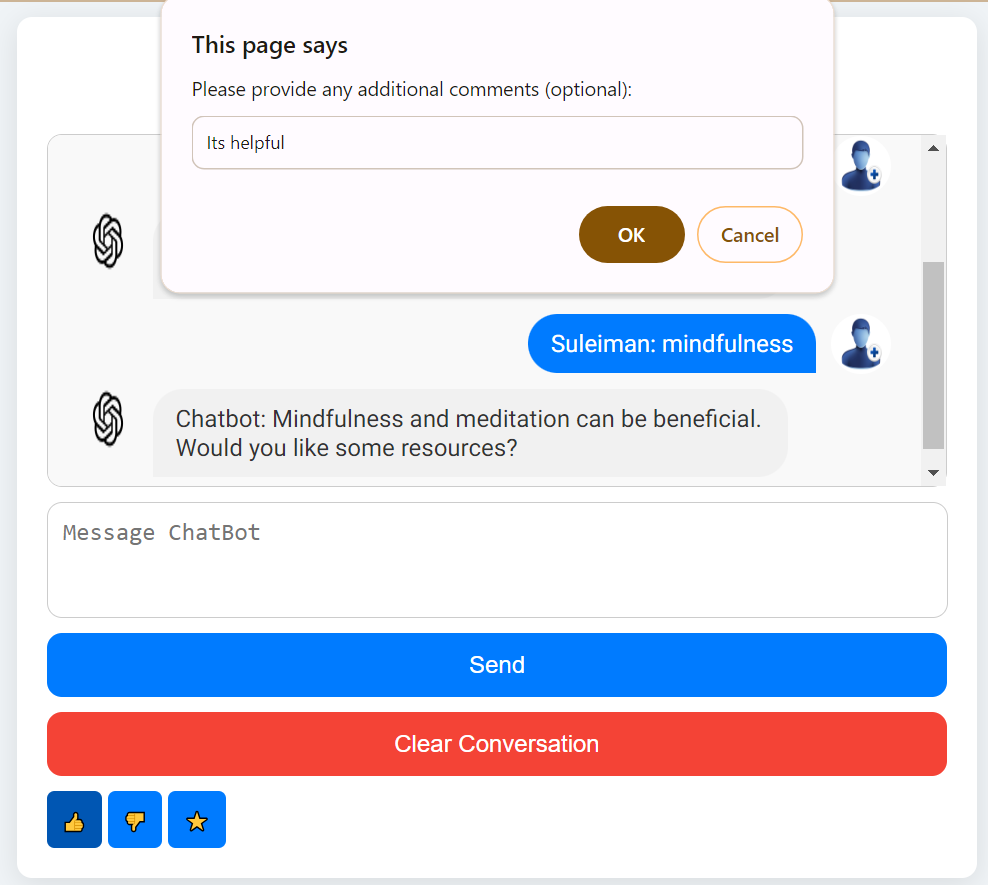
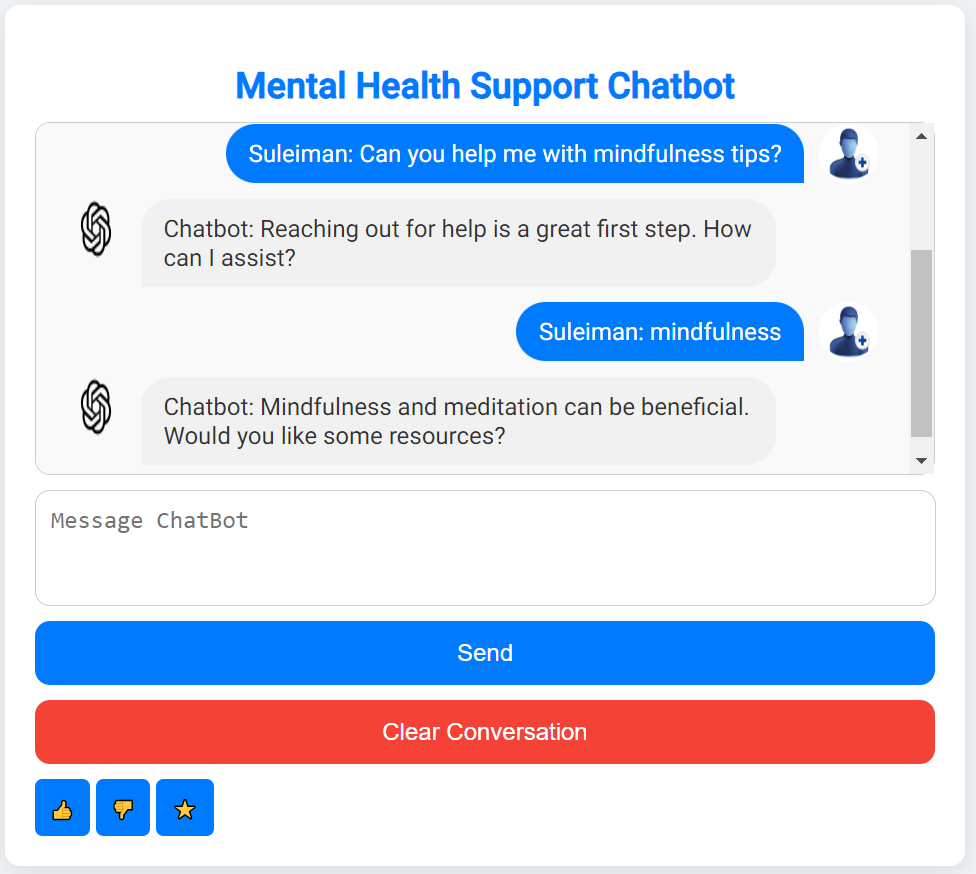
Chating with ChatBot
-
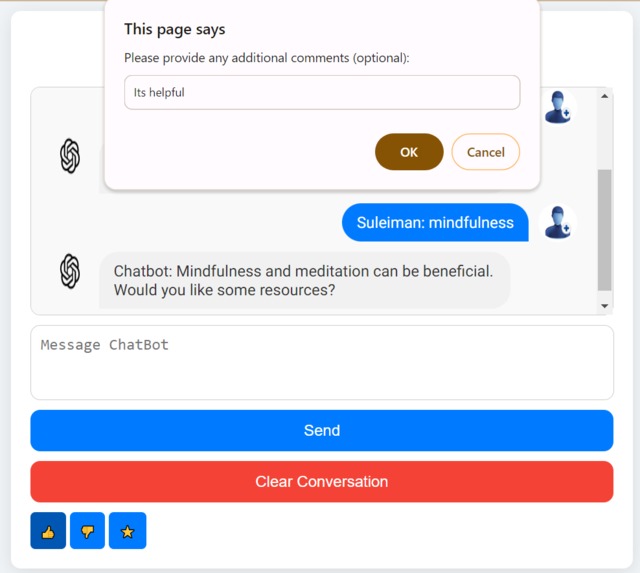
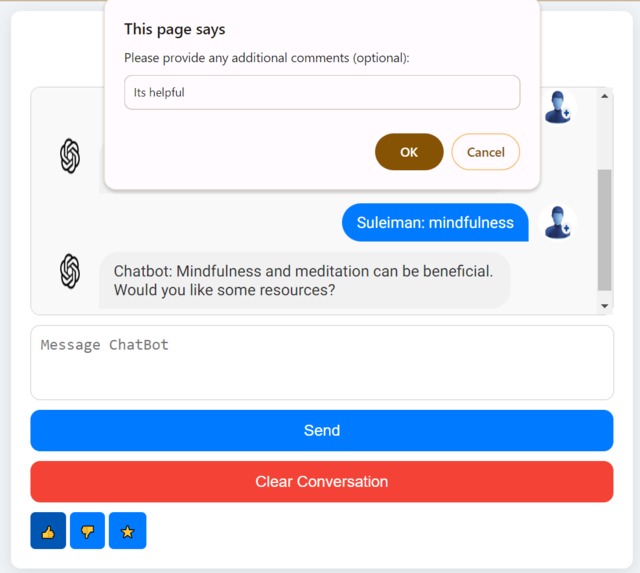
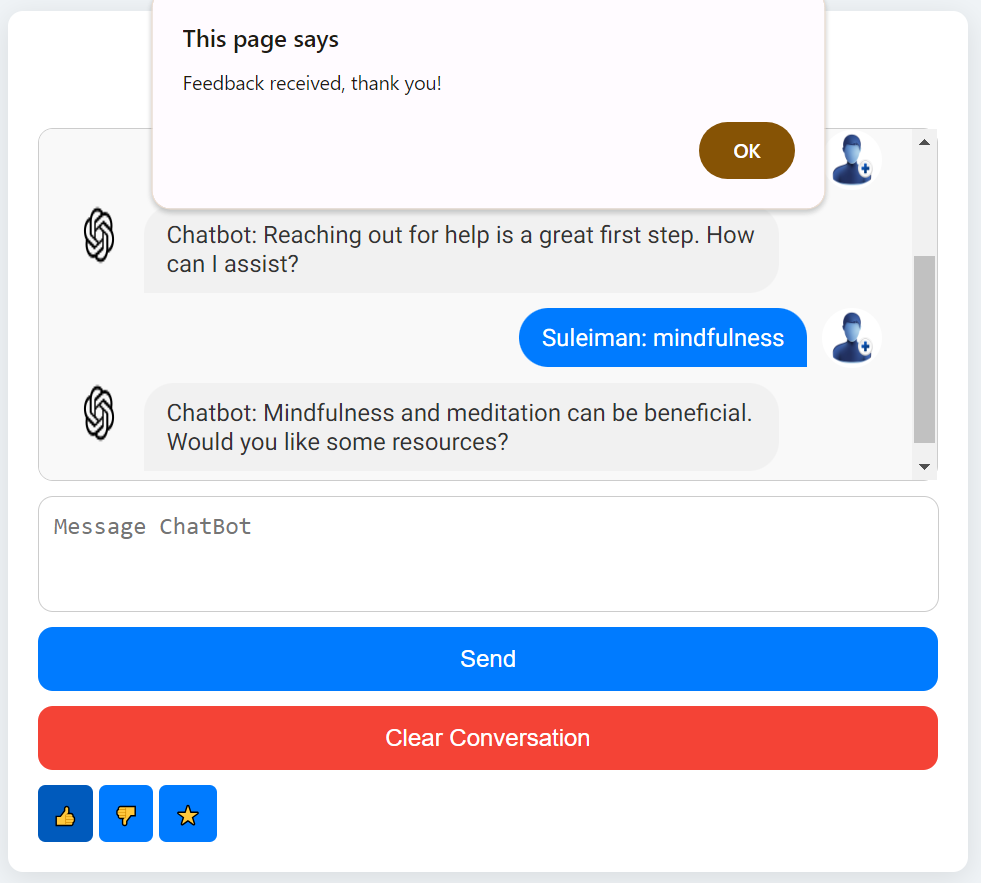
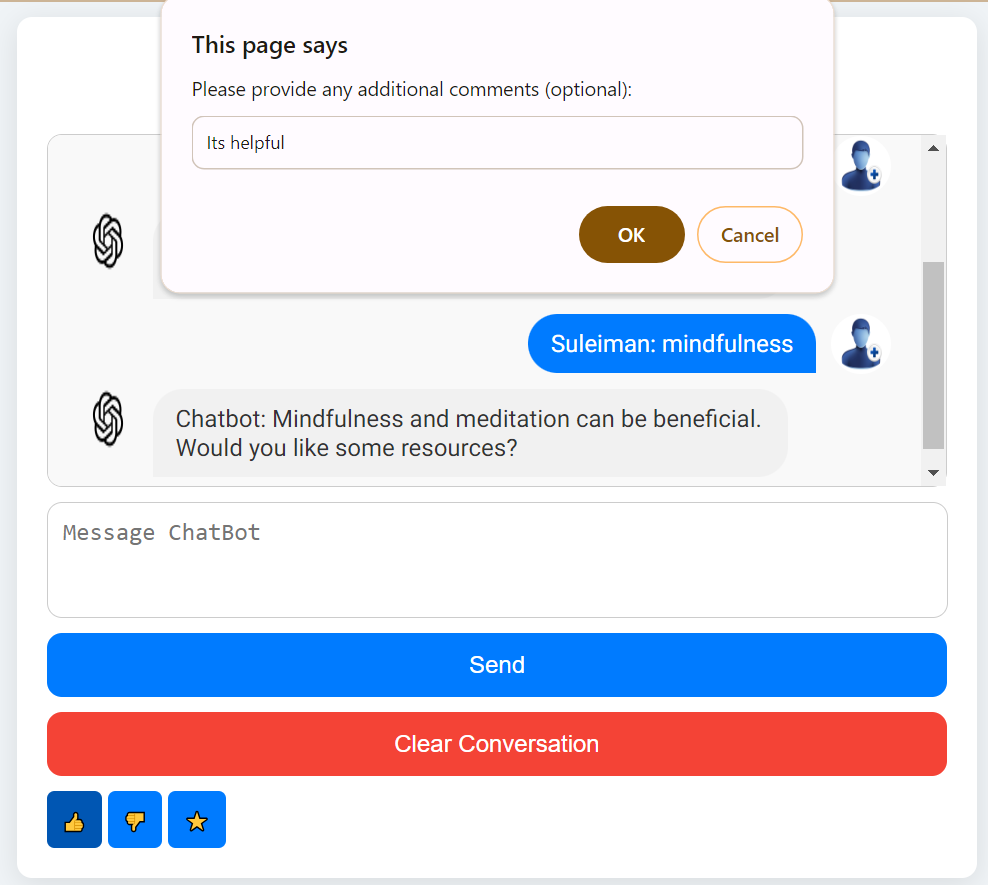
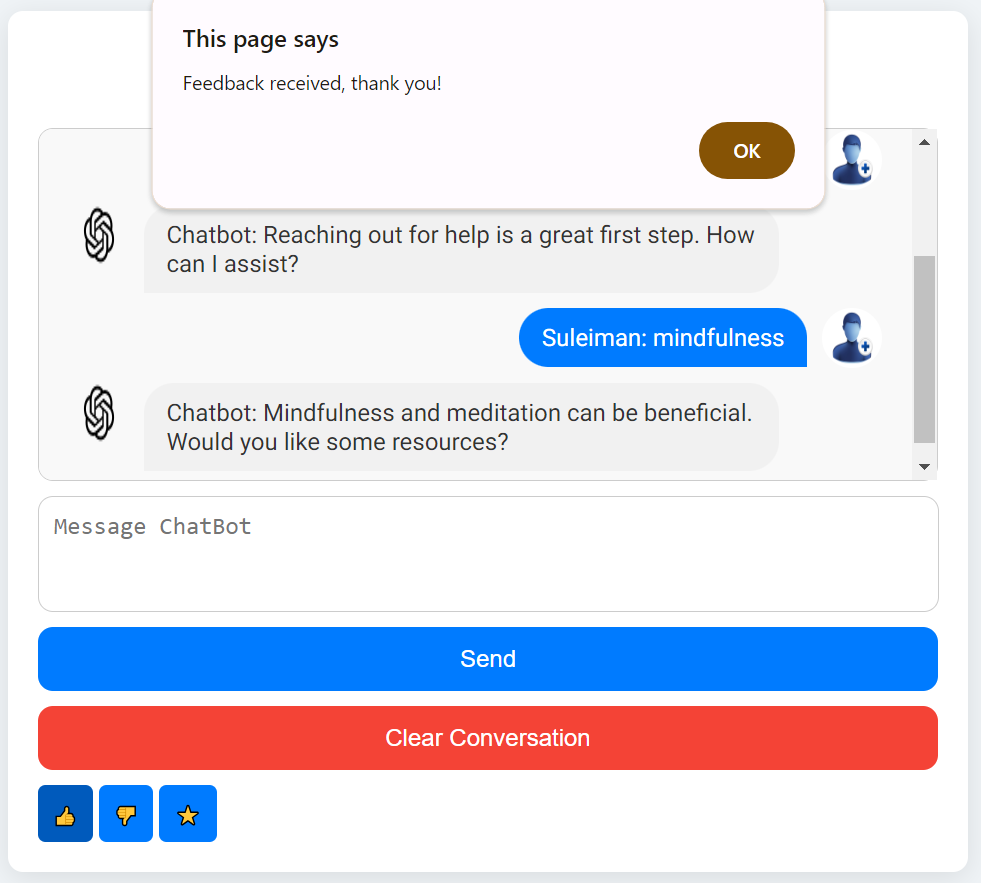
Feedback from User
-
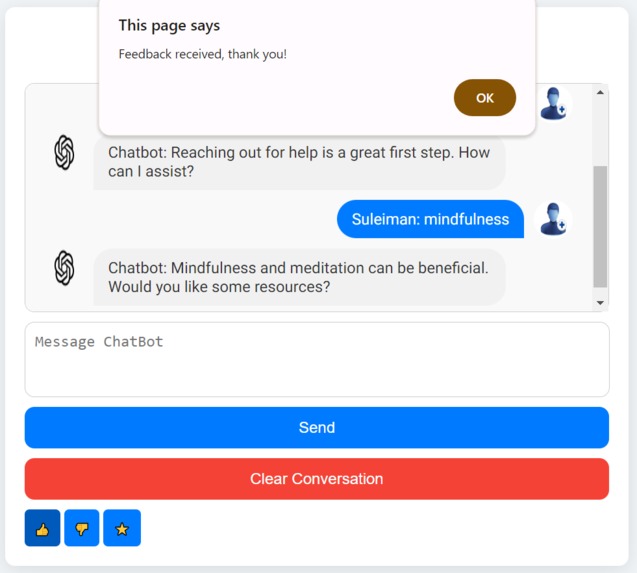
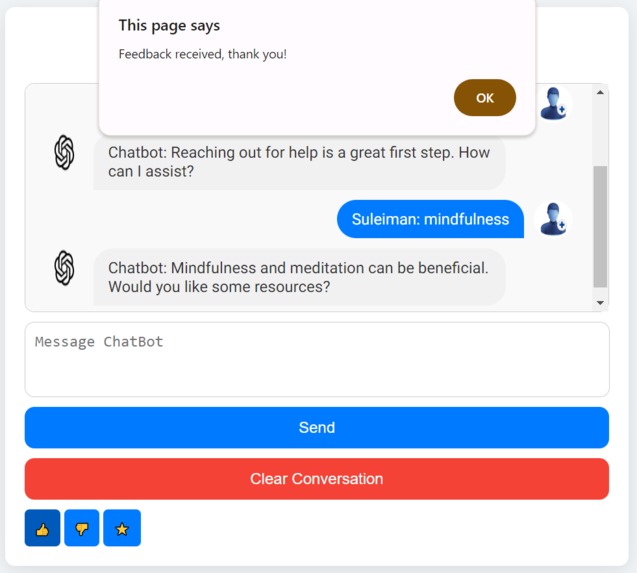
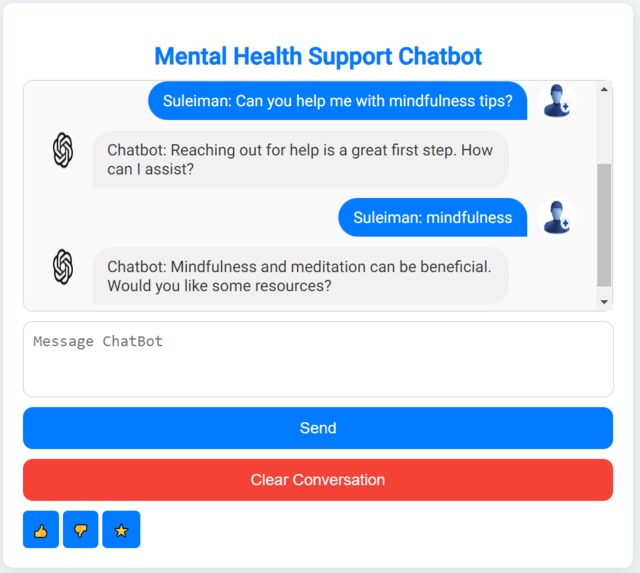
Responsed from ChatBot
Inspiration
The inspiration for this project came from the growing awareness and importance of mental health, especially in today’s fast-paced and high-pressure environment. Many people face challenges related to mental well-being but hesitate to seek professional help immediately. A chatbot provides a low-pressure, private space for individuals to share their feelings and get guidance toward proper mental health support. The aim was to create a chatbot that could offer a compassionate and non-judgmental space, where users can engage with mental health-related resources and receive gentle, guided support.
What it does
This project is a Mental Health Support Chatbot designed to provide users with a safe and compassionate space to discuss mental health concerns, get advice, and access helpful resources. i. Offers Mental Health Support: Users can engage in a conversation with the chatbot by typing questions or sharing feelings. The bot responds with appropriate guidance, offering advice, encouragement, and information related to mental health, mindfulness, and emotional well-being. ii. Provides Mindfulness Tips: The chatbot can suggest mindfulness and meditation techniques to help users cope with stress and anxiety. Users can ask for mindfulness resources or simply mention stress-related terms, and the chatbot will offer practical advice. iii. Encourages Community Support: The chatbot also encourages users to share experiences and seek support from friends, family, or mental health professionals. It provides suggestions on where to find help, including online communities and support groups. iv. Collects Feedback for Continuous Improvement: After interacting with the chatbot, users can provide feedback on how helpful they found the response. This feedback helps in refining the chatbot's future interactions and improving the quality of advice provided. v. Handles Various User Inputs: The chatbot is designed to recognize a range of keywords related to mental health, including greetings, requests for help, or specific topics like meditation. It gives personalized responses based on user input, making the experience more conversational and less scripted.
How I built it
Frontend: Built with HTML, CSS, and JavaScript, the user interface is responsive, intuitive, and easy to navigate. The chatbot's design focuses on simplicity while being welcoming. Features like smooth scrolling, message input, and clear conversation history provide a seamless chat experience. Backend: The server was developed using Node.js and Express. It handles user inputs, processes them, and sends appropriate responses based on keyword matching. The responses are stored in an expandable array to ensure flexibility for future updates. API Endpoints: I created an endpoint for users to send feedback about the responses they received, which allows me to continuously improve the bot’s performance. Database: While the project currently uses in-memory data storage, it can be extended to use databases like MongoDB or MySQL for more scalable and persistent data handling. Deployment: I plan to deploy the project to a hosting platform like Heroku or Vercel, ensuring that it's accessible from any device, whether desktop or mobile.
Challenges I ran into
i. Handling Complex User Inputs: One of the main challenges was to ensure that the chatbot could handle a wide range of user queries related to mental health while maintaining a friendly and helpful tone. Natural language is often ambiguous, and matching user inputs with the right responses required careful planning and testing. ii. Ensuring Sensitivity: Since mental health is a delicate subject, it was challenging to create responses that were both supportive and encouraging without coming off as too robotic or inappropriate. I had to be careful with the wording of the bot's responses to avoid any misunderstandings or negative impact. iii. Implementing Feedback Mechanism: Creating a feedback system where users can rate responses was more challenging than expected. Ensuring that the feedback was correctly recorded and used for future improvement required a thoughtful approach in terms of both backend logic and user interface design.
Accomplishments that I'm proud of
i. Creating a Meaningful Solution: I'm proud to have built a chatbot that provides mental health support, offering users a safe space to express their concerns and get valuable guidance. The fact that it has the potential to help people struggling with their mental well-being is a huge accomplishment. ii. Implementing User Feedback: Adding a feedback mechanism allowed the project to continuously improve based on real-time user input. This feature helps ensure that the bot is always learning and evolving to better serve users. iii. Responsive Design: Ensuring that the chatbot works seamlessly on both desktop and mobile devices is a major win. Making the chatbot accessible on multiple platforms improves user reach and inclusivity. iv. Building a Real-Time Chat Experience: Creating a chatbot that can respond in real-time with meaningful insights, suggestions, and resources based on user queries was both challenging and rewarding. This was especially fulfilling, given the complexities of handling diverse user inputs. v. Overcoming Technical Challenges: From creating a flexible keyword-matching system to refining the feedback functionality, overcoming the technical challenges throughout the project’s development has been a significant accomplishment.
What I learned
This project allowed me to deepen my knowledge in several areas, including: i. Natural Language Processing (NLP): Understanding how user inputs can be matched with relevant responses and providing context-appropriate feedback. ii. User Experience (UX): Learning how to design a chatbot interface that feels friendly and accessible, particularly for sensitive topics like mental health. iii. Frontend and Backend Integration: Building a full-stack application that integrates a responsive frontend with a backend API, and ensuring smooth communication between the two. iv. Handling User Feedback: Implementing feedback systems helped me understand the importance of continuous improvement and user-centric design. v. Challenges in Mental Health: Researching mental health challenges and support methods enhanced my understanding of what kind of responses and resources would be most beneficial for users.
What's next for mental-health-support
i. Natural Language Processing (NLP) Integration: The next step is to enhance the chatbot with advanced NLP capabilities to better understand user queries, provide more nuanced responses, and address complex mental health topics more effectively. ii. Database for Resources: Build a comprehensive database that includes professional mental health resources, self-help materials, and recommended mindfulness practices, offering users tailored advice based on their needs. iii. Anonymous Group Chat Feature: Integrate a feature where users can join anonymous group chats, fostering community support by connecting individuals who share similar experiences. iv. Multilingual Support: Expand the chatbot’s reach by adding support for multiple languages, making it accessible to a more diverse global audience.
Built With
- css3
- express.js
- github
- html5
- javascript
- node.js
- web-browser


Log in or sign up for Devpost to join the conversation.