-
-
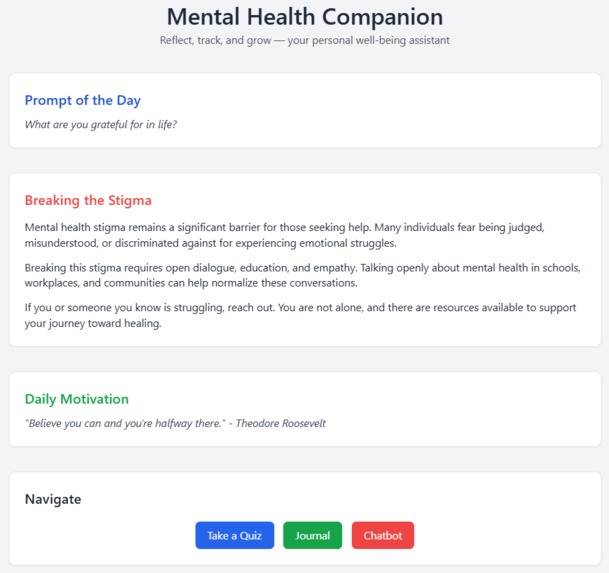
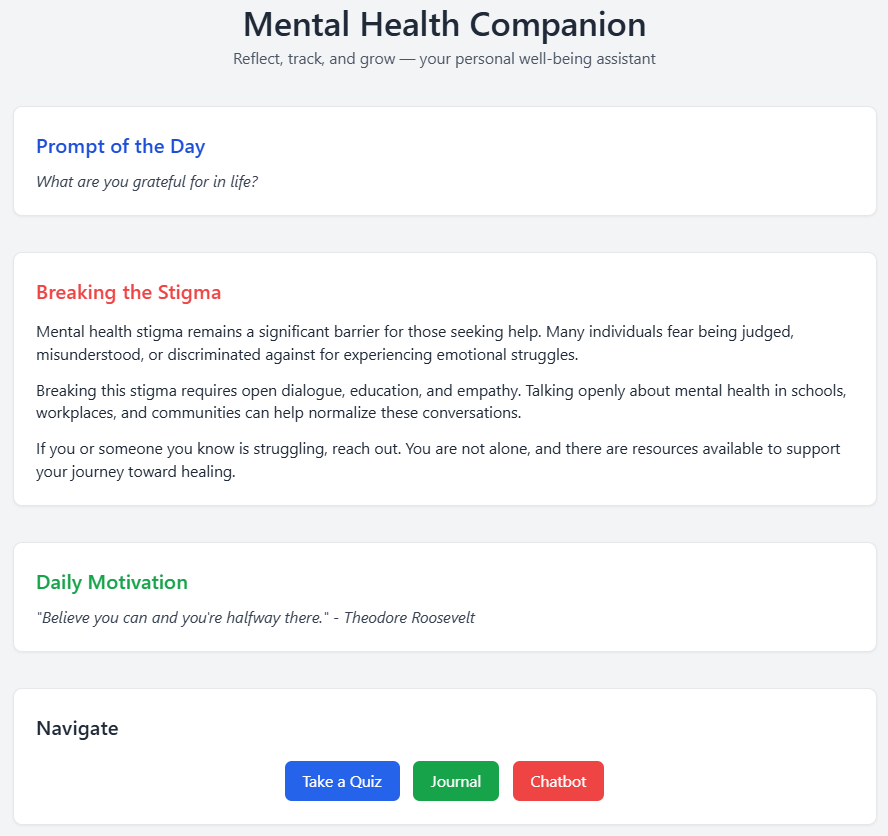
My Home Page
-
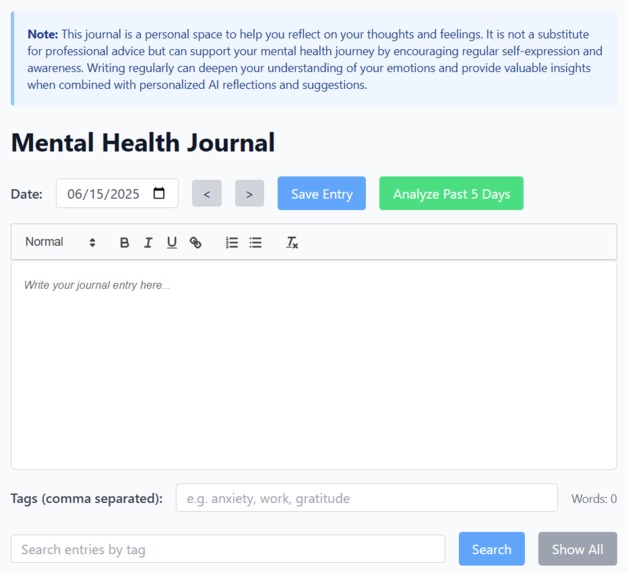
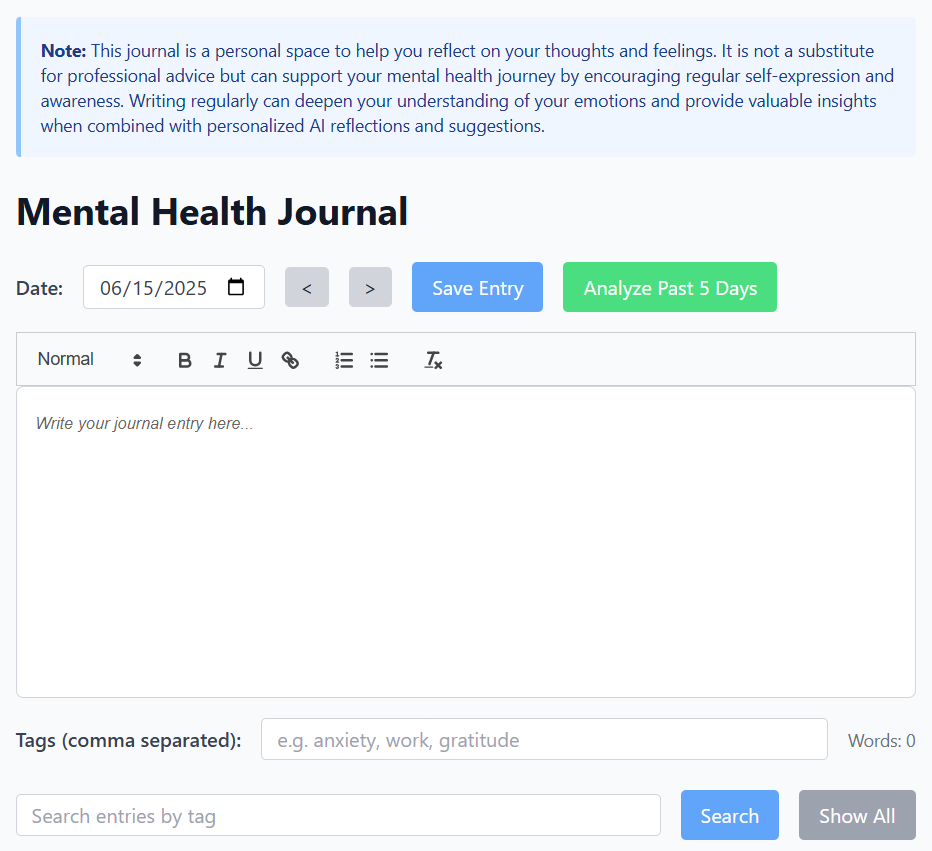
My Journal Page
-
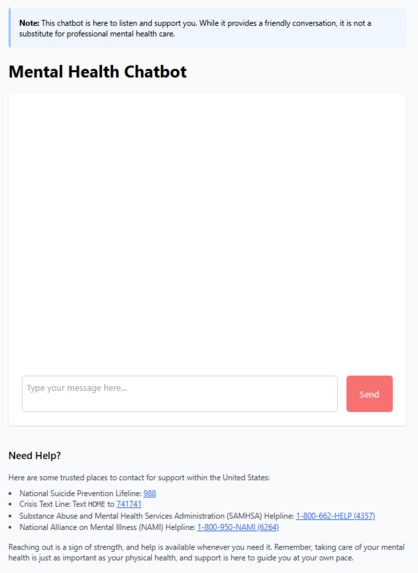
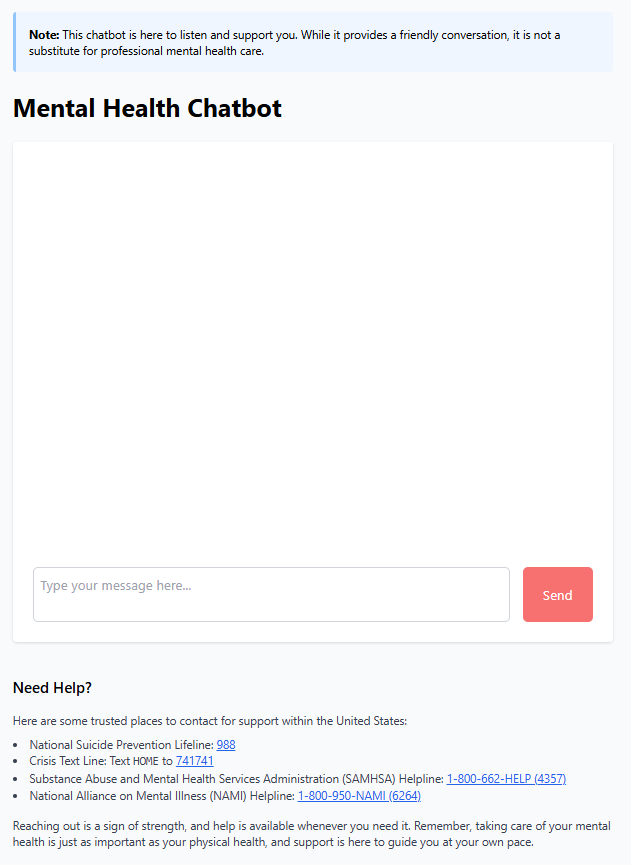
My Chatbot Page
-
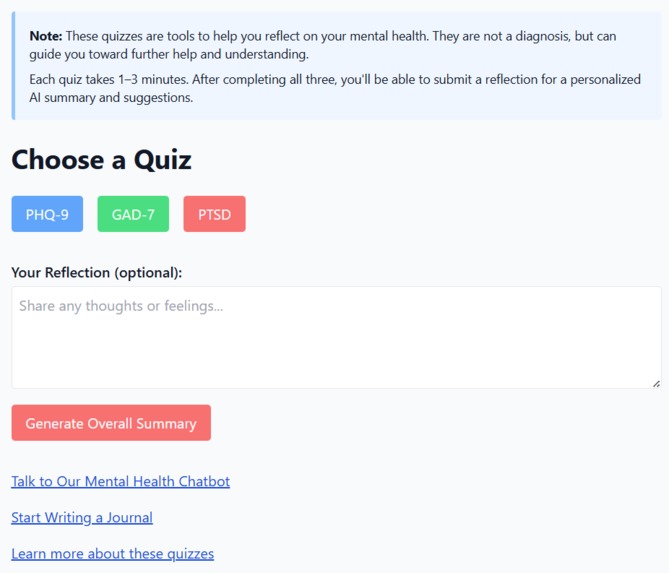
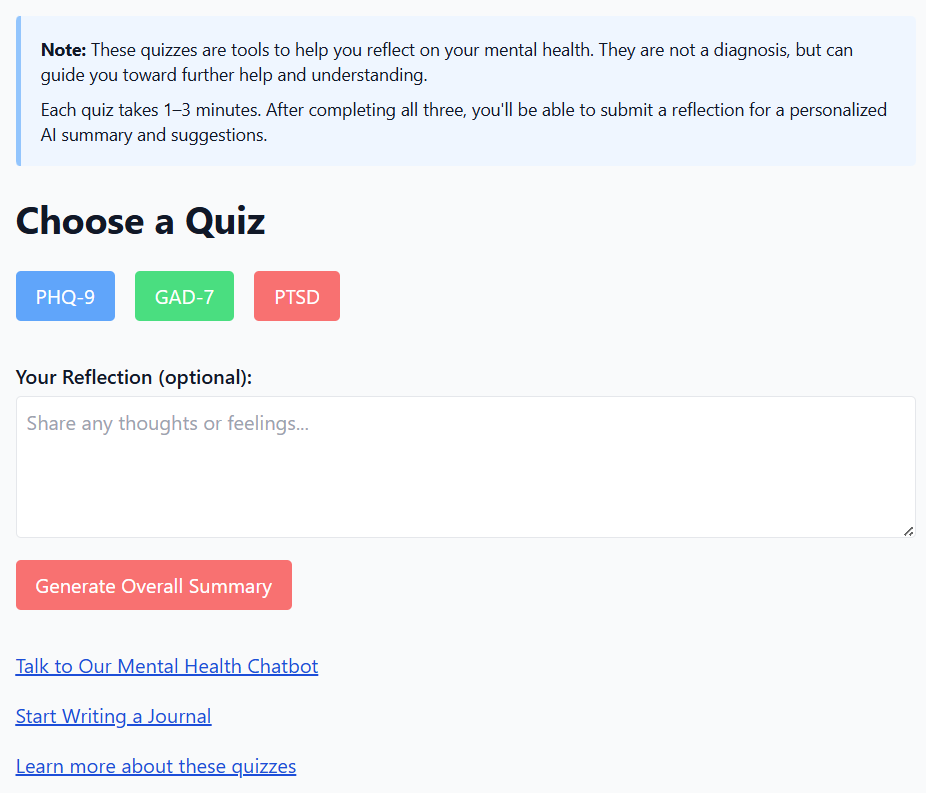
My Quiz Page
Inspiration
My inspiration for this project (which I developed independently) stems from a deep recognition of how critical mental health is in shaping our daily lives, relationships, and overall well-being. In today’s fast-paced world, mental health often goes unaddressed due to stigma, lack of resources, or simply not knowing where to begin. I wanted to create something that could lower that barrier—a digital space that feels supportive, approachable, and intelligent. While I had several potential project ideas at the start of the hackathon, this one stood out because it aligned most naturally with the theme of computational linguistics. I saw an opportunity to combine language processing with emotional intelligence to create something not just technically interesting, but genuinely helpful. This project brings together tools like AI-powered journaling, mood analysis, and conversational support, powered by natural language processing and machine learning—to build a solution that could have a real, positive impact on people’s lives. Ultimately, my goal was to demonstrate that technology, when combined with empathy, can be used to support mental wellness in a meaningful, human-centric way. That’s what motivated me to bring Mental Health: Recognition, Analysis, Tracking, and Support to life.
What it does
This website consists of four parts. The first is a simple title page [index.html] which provides an overview of the project and serves as a straightforward navigation hub. Next is the quiz section, which leverages scientifically curated questions aimed at diagnosing various mental health issues (e.g., depression, anxiety, and PTSD). These are then coupled with a user input of how they are feeling at the moment/what is on their mind, to generate a complete, in-depth analysis of their mental state. Additionally, a journaling mechanism combined with AI tools allows the client to upload their thoughts (a stress-relieving strategy) and analyze them with AI to provide recommended next steps for alleviating mental pain. Lastly, there is a chatbot linked with helpful sources that serves as a thing you can talk to and seek help from.
How I built it
The front end utilizes HTML, CSS, and JS, while the backend is run on Python + Flask. Information is stored in JSON files.
Challenges I ran into
Getting the ChatGPT APIs to work properly was a long process. While I have used ChatGPT APIs before, I have never used them while linking to Flask and Python, which served as a major roadblock in my project. I eventually was able to persevere; however, this took a large portion of my time (1.5 - 2 hours)
Accomplishments that I am proud of
My entire project works end-to-end, and that in itself is an incredible milestone. I'm especially proud of how much I've grown technically throughout this hackathon. This is my first time successfully integrating ChatGPT into a live project, which opens up a whole new realm of possibilities for future applications. I also created a multi-page mental health support platform with features like quizzes, journaling with AI feedback, chatbot support, and even a goal-setting tracker—all within a cohesive Flask application. Seeing it all come together has been both rewarding and empowering.
What I learned
This project has been a tremendous learning experience. I learned how to use Flask to connect the front-end and back-end, something I had never done before. I also dove deep into JavaScript, which had previously been a weak spot for me, and now feel far more confident working with it—especially in managing client-side interactivity and logic. I explored rich text editing, auto-saving mechanisms, calendar-based interfaces, and even data persistence with .json files—something that had been on my to-do list for a while. This experience has taught me not just technical skills, but also how to break down a complex idea into manageable steps and build something meaningful from the ground up.
What's next for Mental Health: Recognition, Analysis, Tracking, and Support
Next, I plan to polish the user interface and make it fully responsive and mobile-friendly. I’m also exploring the idea of building a native iOS version using Swift and SwiftUI—technologies I've been independently learning. Feature-wise, I hope to add secure user authentication, cloud storage options, and sentiment/mood trend visualizations over time. The ultimate goal is to turn this into a personalized mental health companion app that genuinely supports users in managing their mental wellness through accessible and intelligent tools.


Log in or sign up for Devpost to join the conversation.