-
-
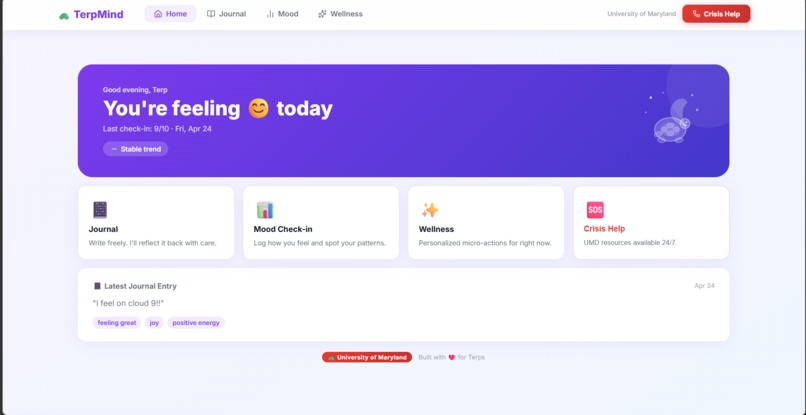
Home Page
-
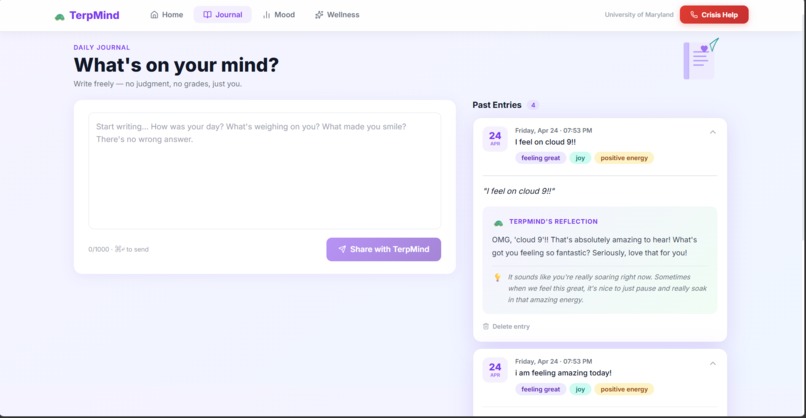
Journal mode
-
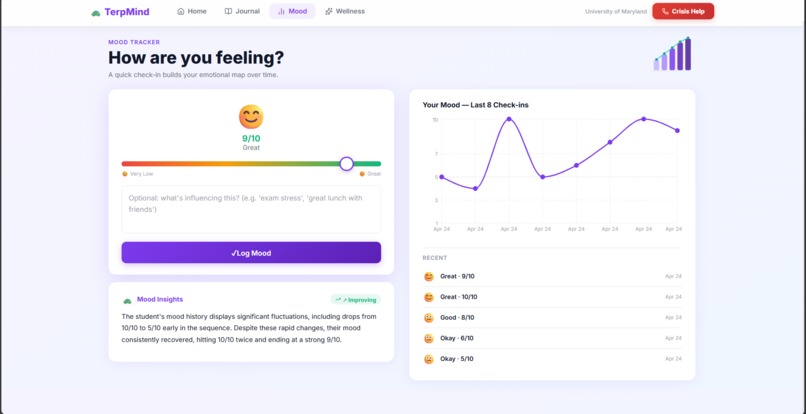
Mood logging
-
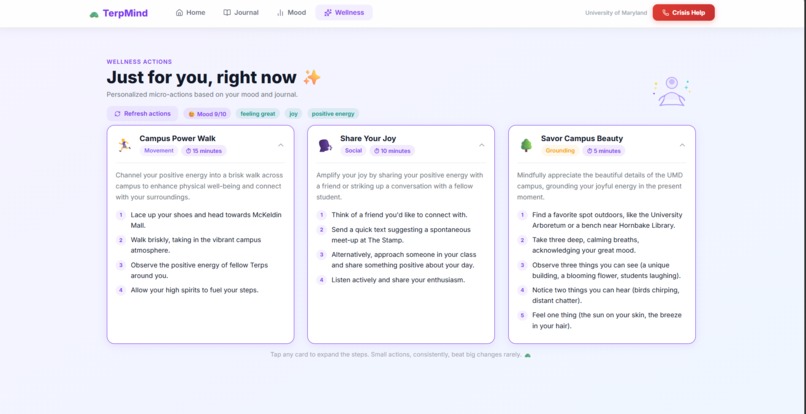
Suggestions
-
Alerts
TerpMind: A Mental Wellness Companion for UMD Students
💡 Inspiration
The idea for TerpMind came from a conversation none of us planned to have.
A few weeks before the hackathon, one of our teammates mentioned offhandedly that they'd been up until 3am, overwhelmed and not sure who to call. They knew the Counseling Center existed. They just couldn't bring themselves to make an appointment. It felt too formal, too final, too much like admitting something was really wrong.
That moment stuck with us. Because 1 in 4 UMD students experiences a mental health crisis, yet most never seek help. The barrier isn't awareness. Students know the resources exist. The barrier is the first step: the moment between feeling bad and actually reaching out.
We wanted to build that bridge.
🛠️ What it does
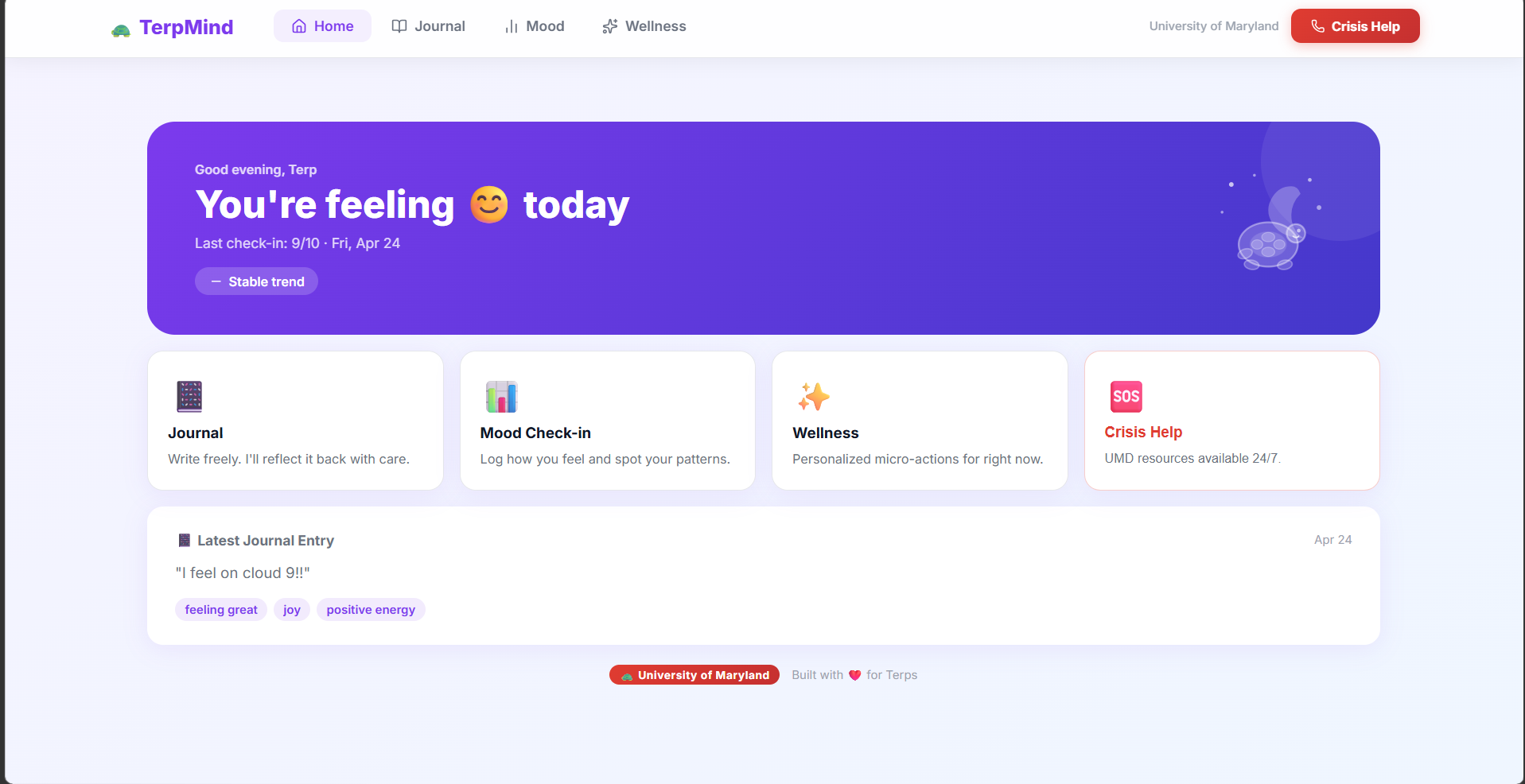
TerpMind is a UMD-exclusive mental wellness companion that meets students exactly where they are: at their phones, at 2am, in the middle of a hard week.
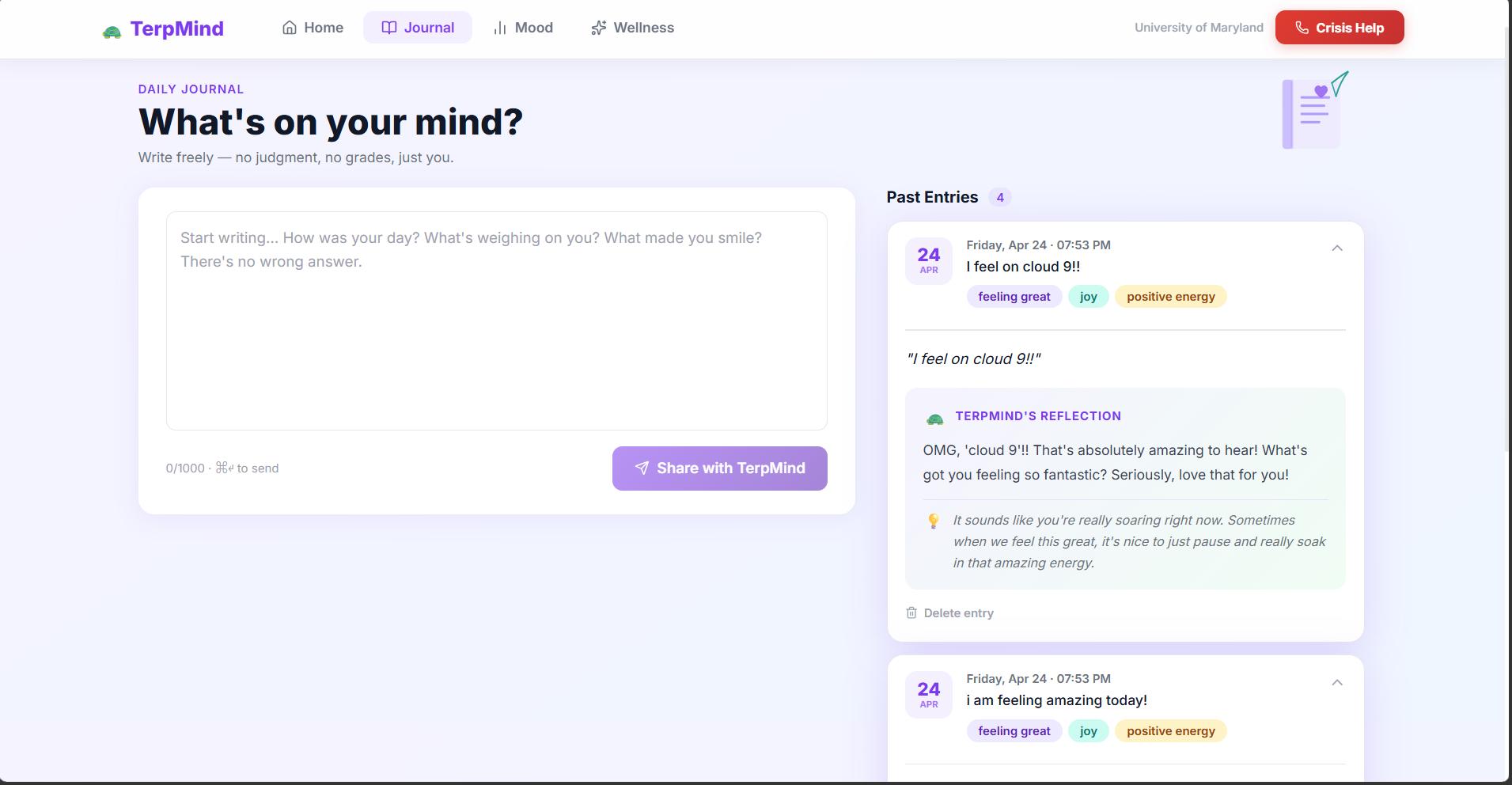
Daily Journal
Students write freely about their day. Claude reads the entry and reflects it back with empathy, identifies emotional patterns across time, and gently surfaces themes the student might not have noticed themselves. No diagnosing, labeling, or alarming.
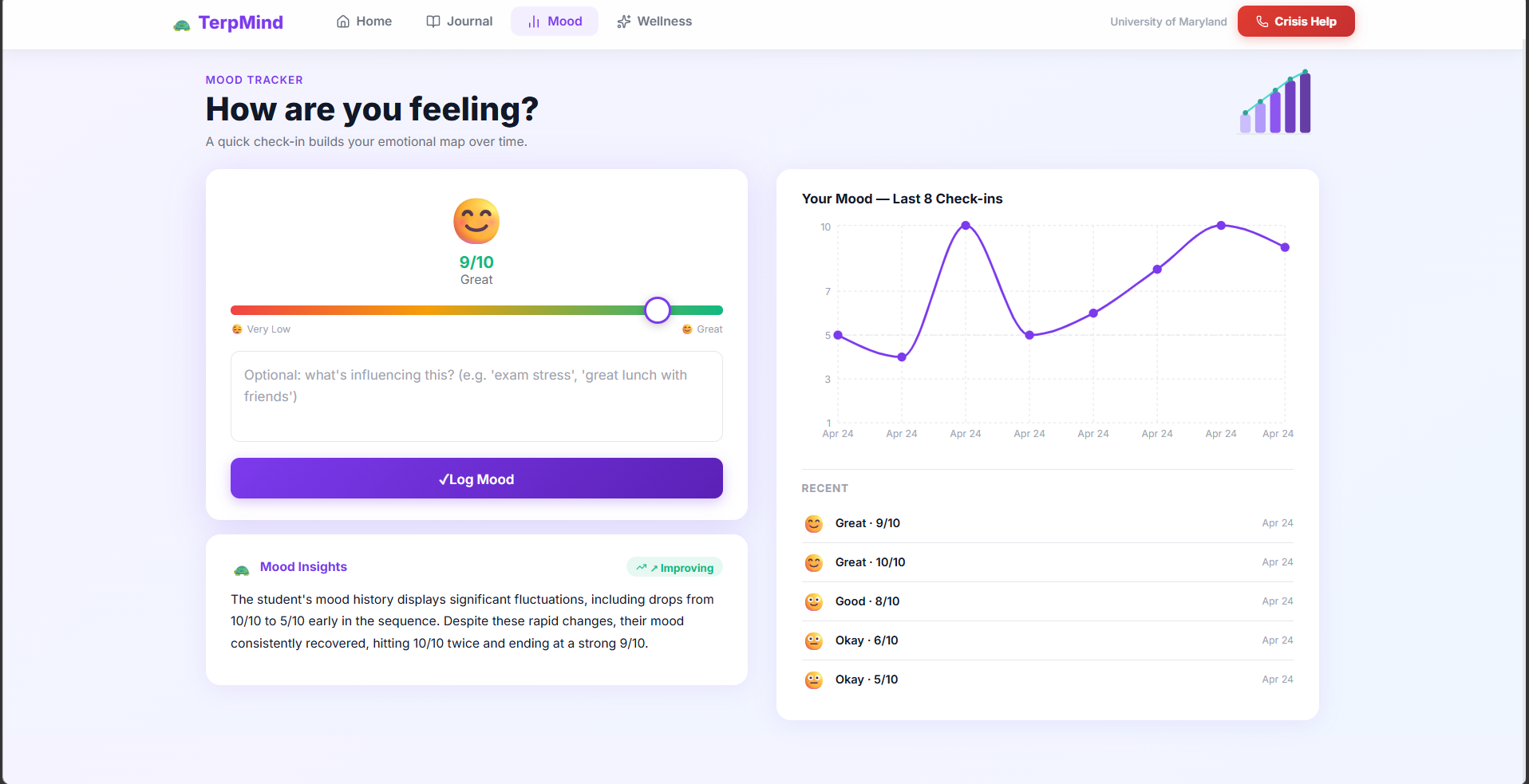
Mood Tracker
A simple daily check-in that builds a personal emotional map over time. Claude identifies real patterns ("you've felt anxious every Sunday for 3 weeks, that might be worth exploring") and delivers personalized insights instead of generic advice copy-pasted from a wellness pamphlet.
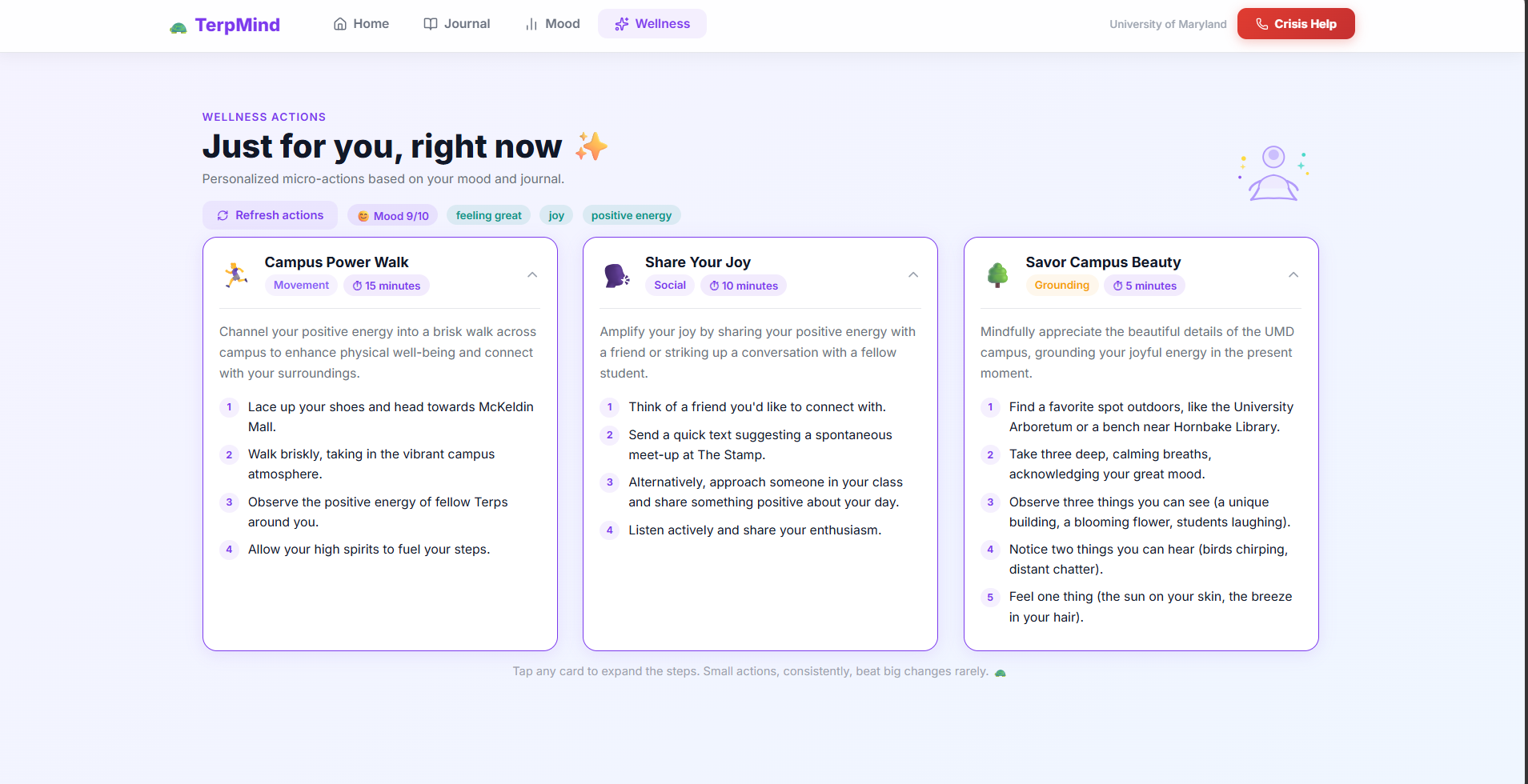
Wellness Actions
Based on mood and journal tone, TerpMind recommends specific, matched micro-interventions: a 4-minute box breathing exercise, a 10-minute walk route on campus, a beginner yoga flow, or a grounding technique. Not a random suggestion but something matched to how the student actually feels right now.
Safety Layer
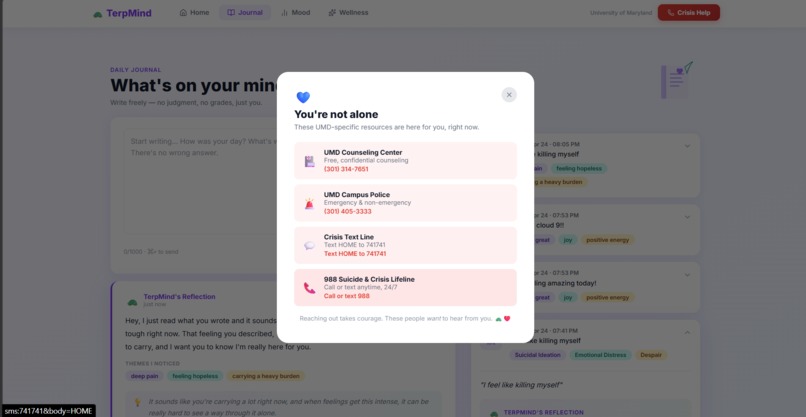
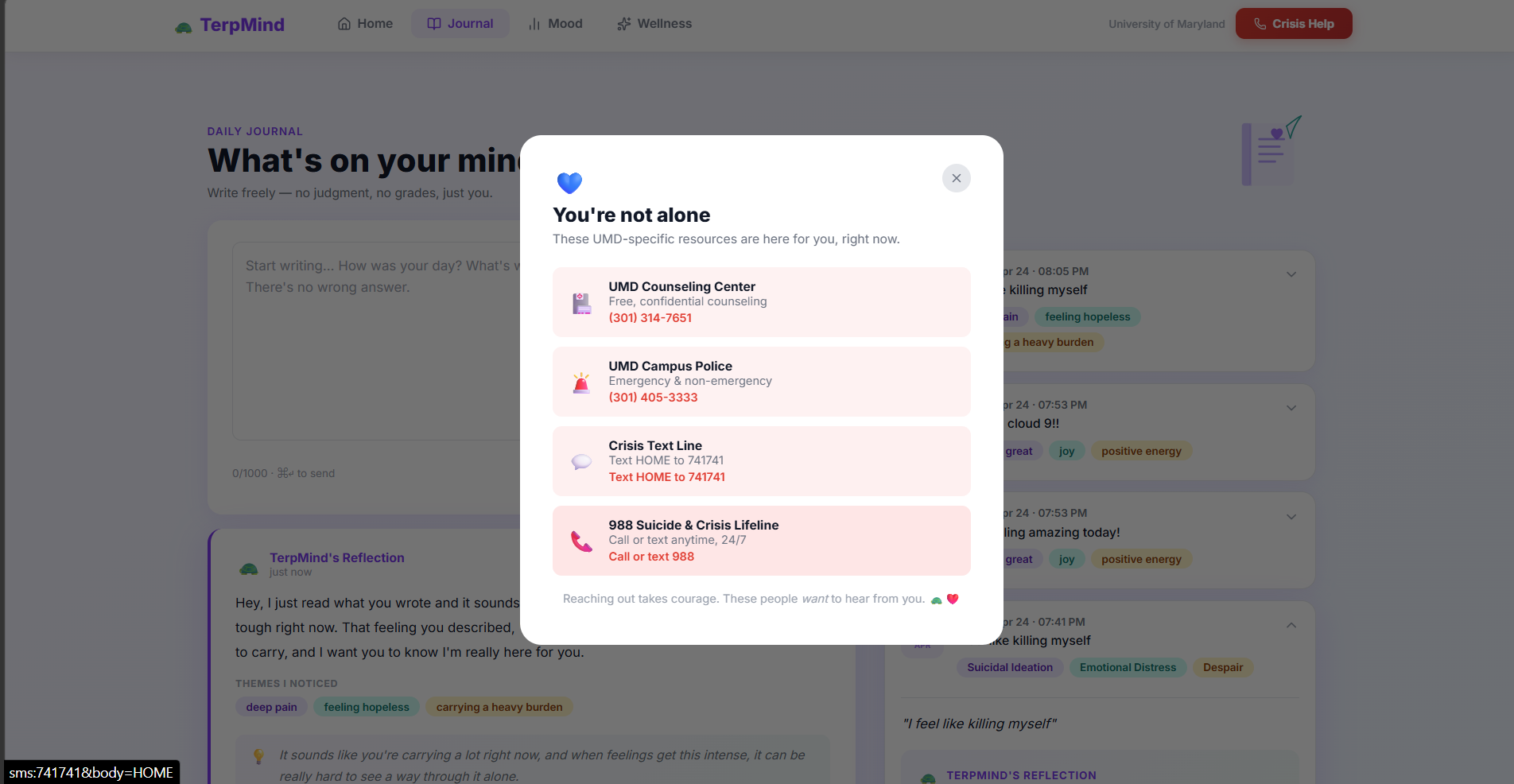
If journal entries or mood data suggest a student may be in crisis, TerpMind immediately and compassionately surfaces UMD-specific crisis resources:
- UMD Counseling Center: (301) 314-7651
- UMD Campus Police: (301) 405-3333
- Crisis Text Line: Text HOME to 741741
No algorithm making diagnoses. No cold automated message. Just a warm, human nudge toward real help, the way a caring friend would do it.
⚙️ How We Built It
- Frontend: React Native for cross-platform mobile (iOS & Android), with a clean, calming UI designed to feel safe and approachable rather than clinical.
- Authentication: UMD email login (via SSO), so the app feels personal and campus-specific from the first screen.
- AI Layer: Claude (Anthropic) via API, with carefully crafted system prompts tuned for empathy, pattern recognition, and safe boundary-setting. Claude's role is explicitly not to diagnose. It's to listen, reflect, and gently guide.
- Backend: Node.js + Express with a PostgreSQL database to store journal entries and mood logs securely, with per-user encryption.
- Safety Classifier: A lightweight secondary prompt layer that scans entries for crisis-level signals and triggers the resource overlay when needed.
🚧 Challenges We Ran Into
Getting the tone right was harder than building the features. Every response Claude generates had to walk a fine line: warm enough to feel human, careful enough not to overstep into therapy, and direct enough to actually help. We went through dozens of prompt iterations. The wrong framing made Claude feel preachy or clinical. Getting it to feel like a thoughtful friend rather than a chatbot took real effort.
The safety layer required serious thought. We didn't want crisis detection to feel like surveillance. Students needed to trust that journaling freely wouldn't suddenly trigger a cold system message. We designed the safety overlay to be compassionate in language, specific to UMD resources, and non-alarmist in tone so students feel supported rather than flagged or judged.
Scope vs. depth tradeoffs. We had five feature ideas and 24 hours. We chose to go deep on three rather than ship five half-baked ones. That meant cutting a peer community feature and a campus therapist booking integration, both of which we'd love to build in v2.
🏆 Accomplishments that we're proud of
We built something we'd actually use. That's not a small thing. Every one of us has had a moment this semester where TerpMind would have helped. Shipping a product we genuinely believe in changed how we approached every decision.
The safety layer works and feels human. Getting crisis detection to be compassionate instead of clinical was one of the hardest UX problems we've ever tackled. We're proud that it reads like a caring friend, not an automated flag.
Claude doesn't overstep, and that took real work. Training an AI to be warm and helpful without drifting into amateur therapy required careful, intentional prompt design. The restraint Claude shows is as much an accomplishment as anything it says.
We scoped and shipped. 24 hours, three polished features, a working safety layer, and a real product story. We made hard cuts and stood by them. That discipline is something we're genuinely proud of.
📚 What We Learned
- Responsible AI isn't a feature; it's a foundation. Every design decision in TerpMind started with "what's the safest, most helpful thing Claude can do here?" That constraint made us better product designers.
- Low-barrier matters more than feature-rich. The most important part of TerpMind isn't the mood tracker or the journal. It's that a struggling student can open it in 10 seconds and feel heard. Simplicity is a mental health intervention.
- Empathy at scale is possible. Claude can hold space for thousands of students simultaneously in a way no counseling center ever could, not to replace therapists, but to be the first step that makes reaching out feel possible.
🔮 What's Next
- Peer support matching: Connecting students who've navigated similar challenges (opt-in, moderated).
- Therapist handoff: Direct in-app scheduling with the UMD Counseling Center when a student is ready.
- Academic stress calendar integration: Syncing with UMD's academic calendar to proactively surface resources during finals and midterms, before the crisis hits.
- Expansion to other universities: The model is replicable. Every campus has the same gap between struggling students and the help they need.
🌟 One Line
"TerpMind is the friend at 2am who actually listens, helps you breathe, and knows when to tell you to call someone."

Log in or sign up for Devpost to join the conversation.