Inspiration
Mental health is often overlooked, yet it affects everyone. We wanted to create a tool that not only helps users understand their emotions but also provides personalized strategies to manage them. The idea was inspired by the need for accessible, AI-powered mental wellness support, especially in stressful or isolating situations.
What We Learned
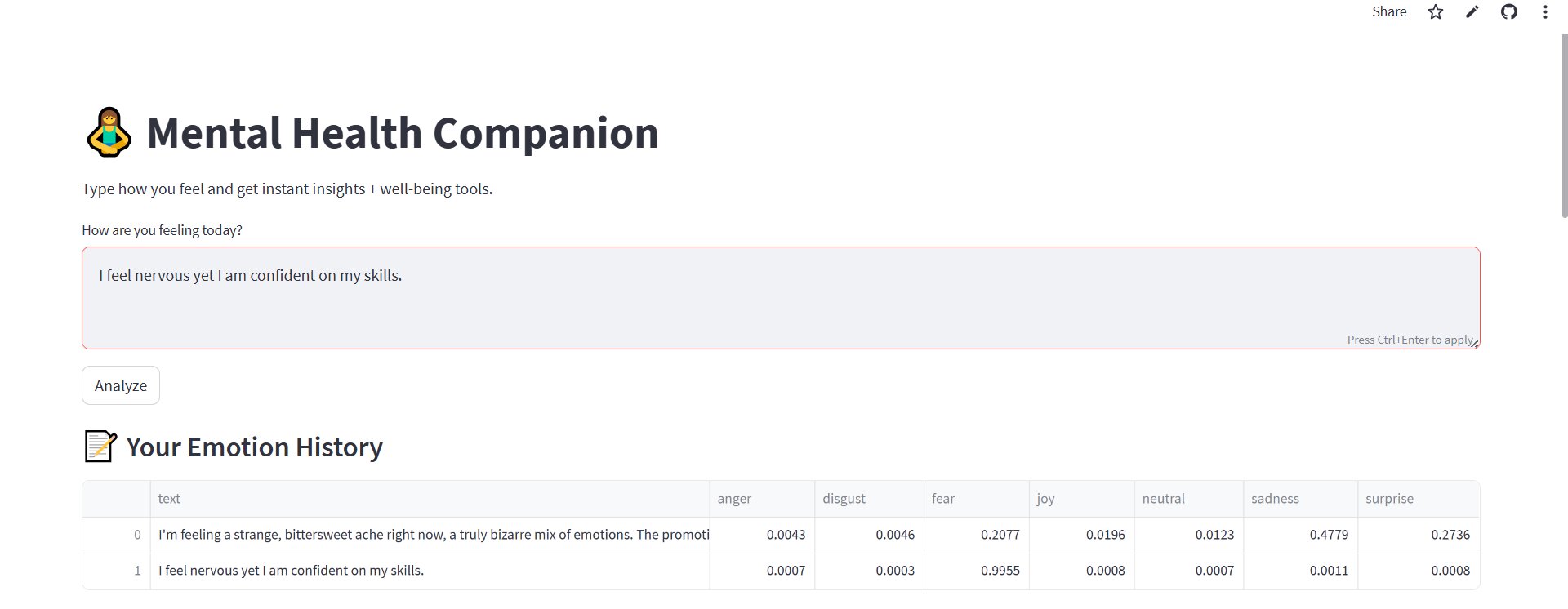
How to implement text-based emotion detection using NLP models.
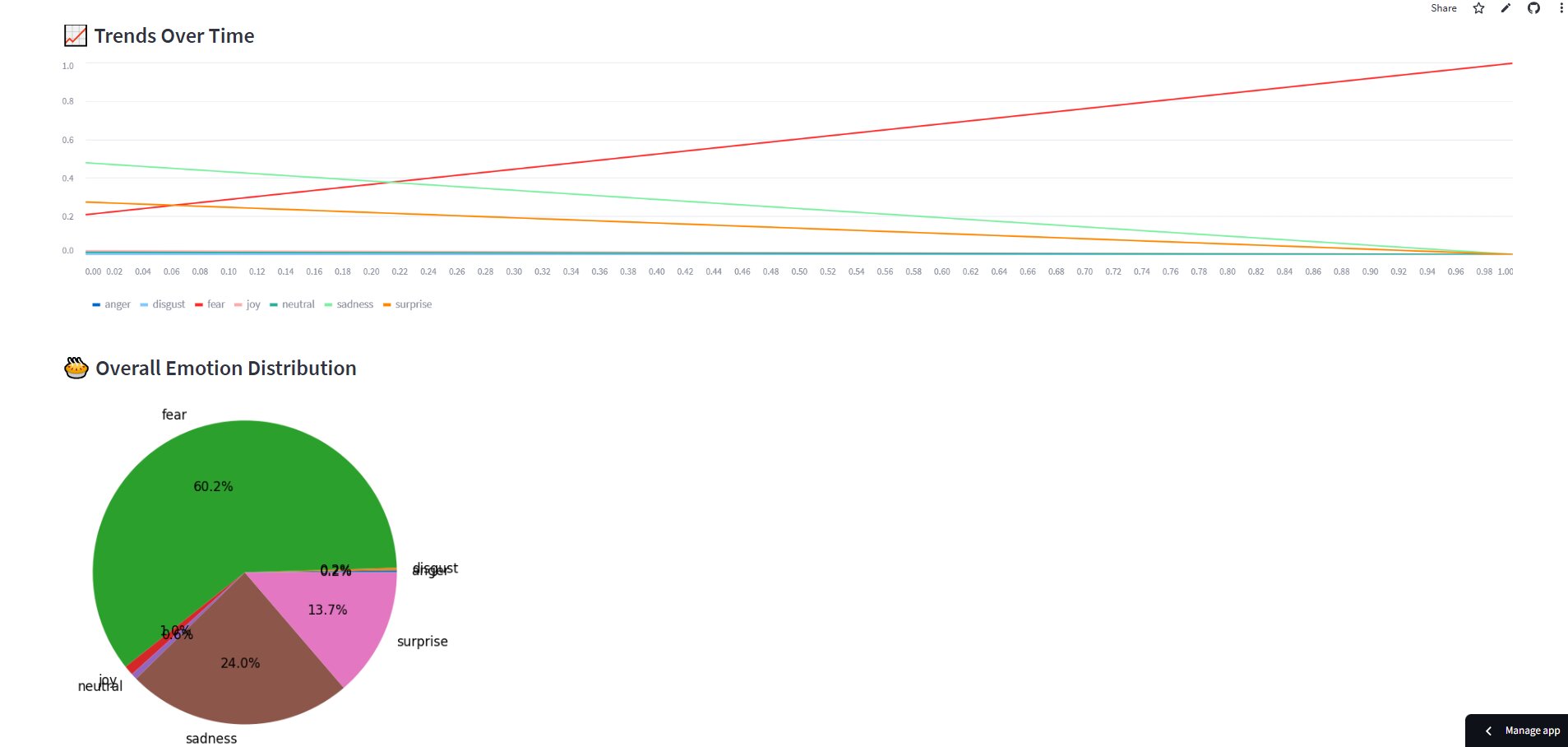
How to design interactive visualizations to track emotions over time.
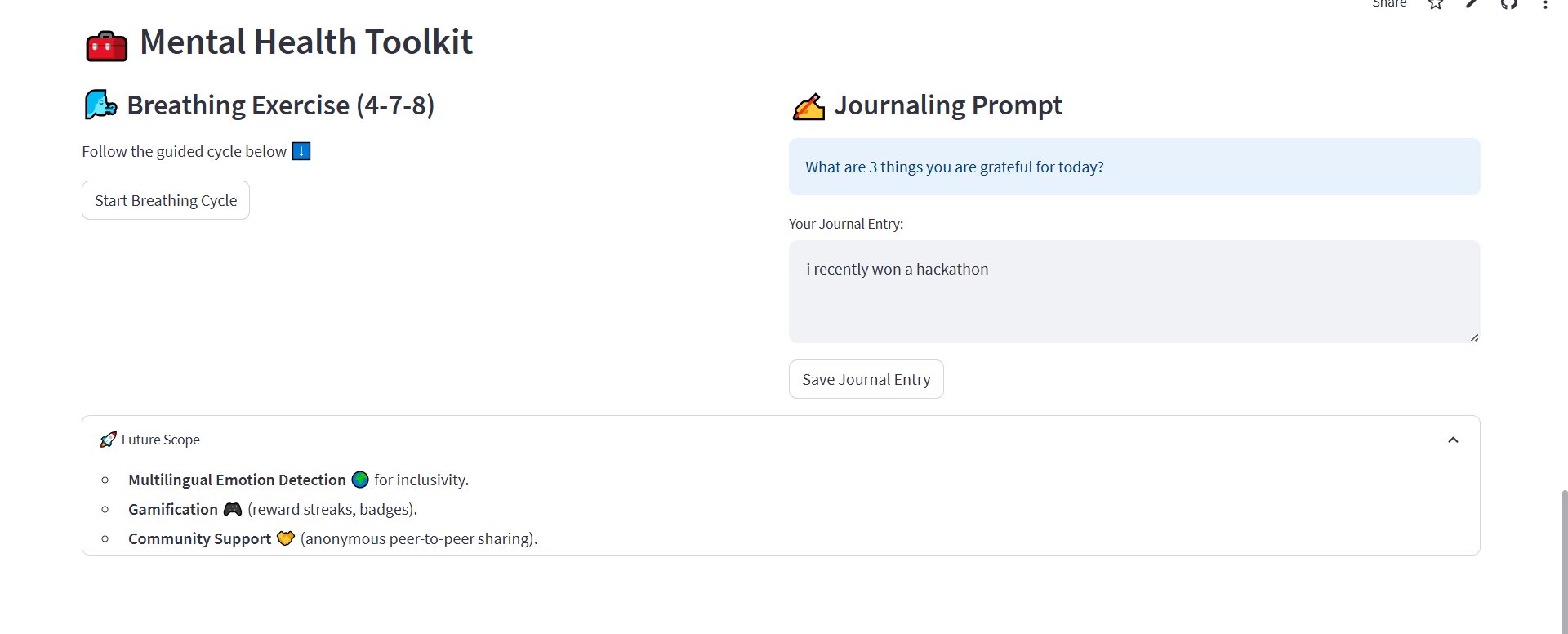
Integrating multiple mental health tools like breathing exercises, journaling prompts, and coping strategies into a single platform.
Handling deployment challenges for AI models in a Streamlit web app.
How We Built It
Frontend: Streamlit for interactive web interface.
Backend: Python + NLP pipelines for text emotion analysis.
Visualizations: Matplotlib and Plotly for emotion bar graphs, trends, and overall distributions.
Personalization: Algorithms to recommend coping strategies based on detected emotions.
Extras: Built a mental health toolkit including guided breathing exercises and journaling prompts.
Challenges Faced
Deploying PyTorch-based models on Streamlit with dependency issues.
Ensuring real-time emotion detection while keeping the interface fast and responsive.
Designing intuitive visualizations that communicate complex emotional data clearly.


Log in or sign up for Devpost to join the conversation.