
Inspiration The ongoing armed conflict in the eastern part of the Democratic Republic of Congo (DRC) has caused immense suffering, including physical harm, displacement, sexual violence, and tragic deaths. These traumatic experiences have led to severe mental health issues such as depression, anxiety, and chronic stress. Recognizing the long-term effects of these problems—such as generational trauma, cycles of violence, and reduced economic productivity—we were inspired to create a solution that addresses the mental health needs of the affected communities. Our goal is to provide accessible, culturally sensitive, and effective mental health support to help individuals and communities heal and rebuild.
What It Does Our solution is a mobile and web application designed to provide mental health assessments and support for residents of the eastern DRC. The app offers:
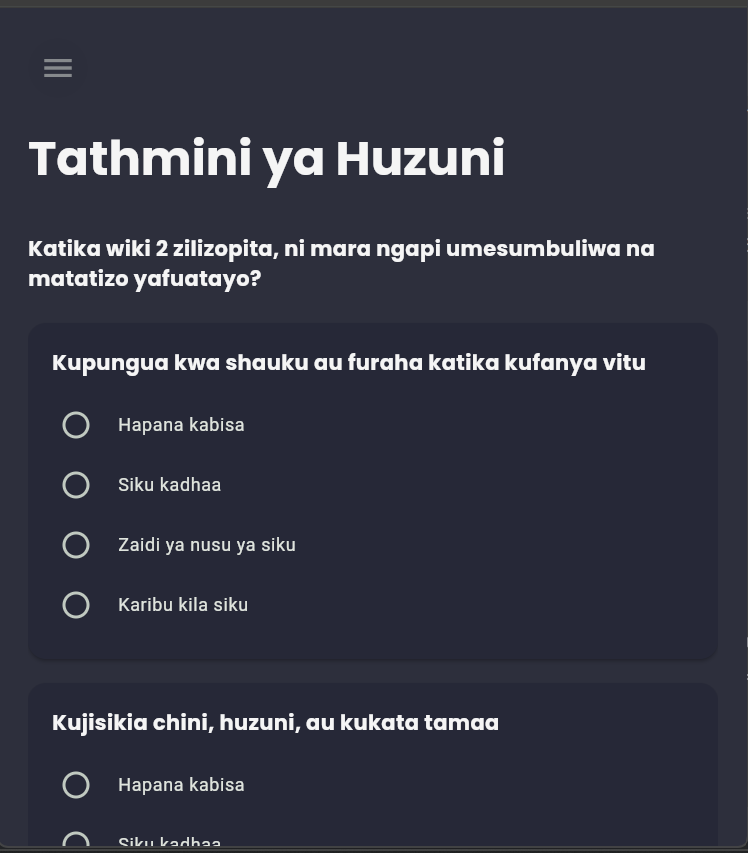
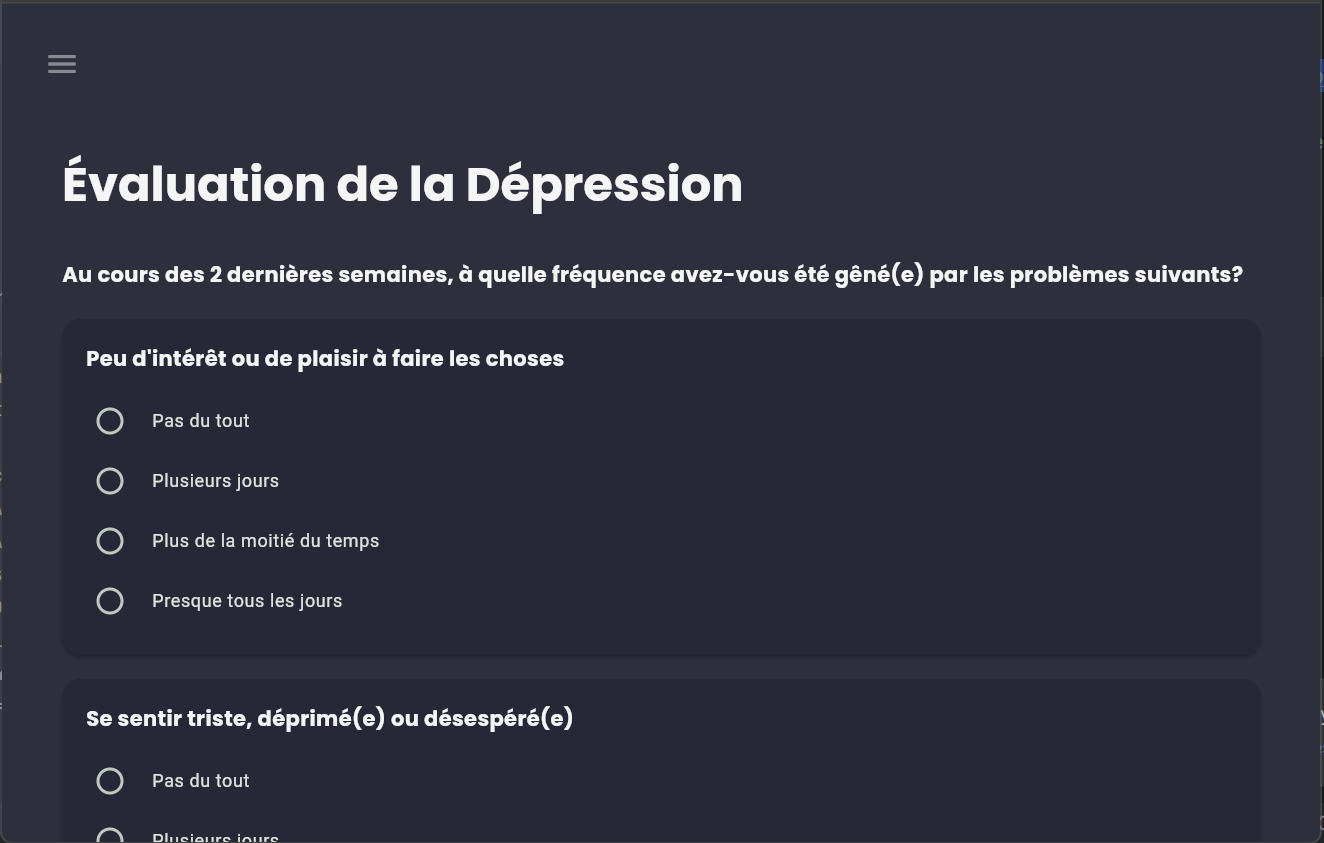
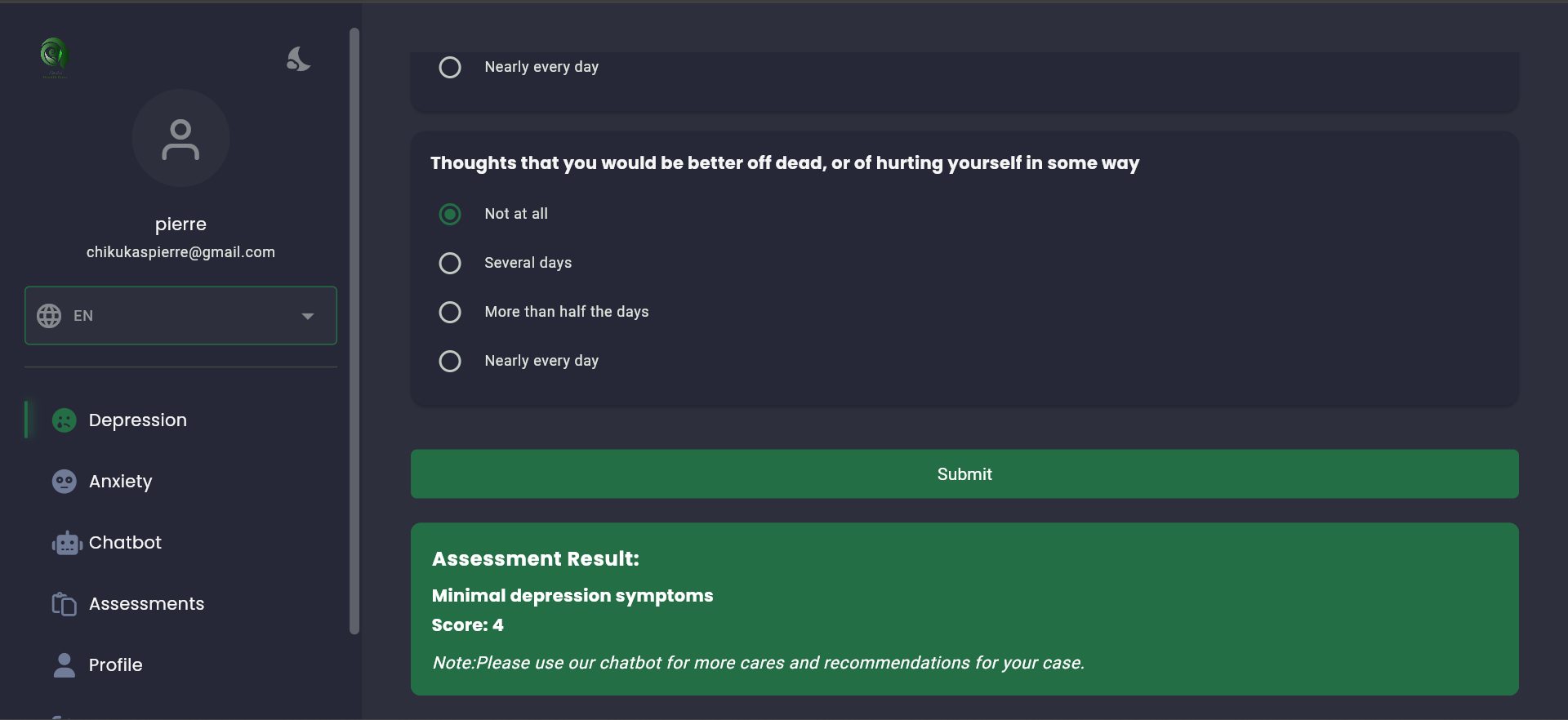
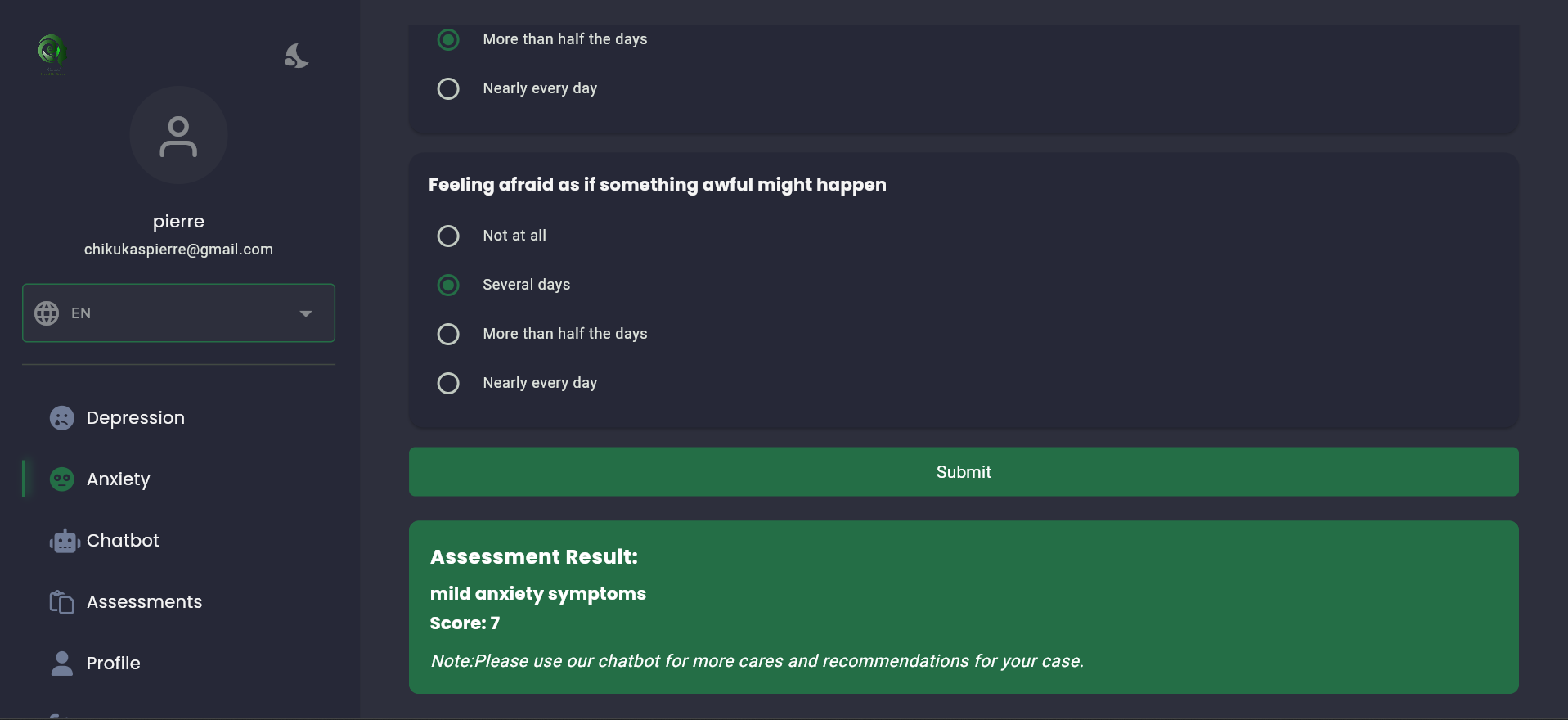
Mental Health Assessments: Using clinically validated tools like GAD-7 (for anxiety) and PHQ-9 (for depression), users can assess their mental health status.
Personalized Recommendations: Based on the assessment results, users receive tailored recommendations for coping strategies, self-care, and professional support.
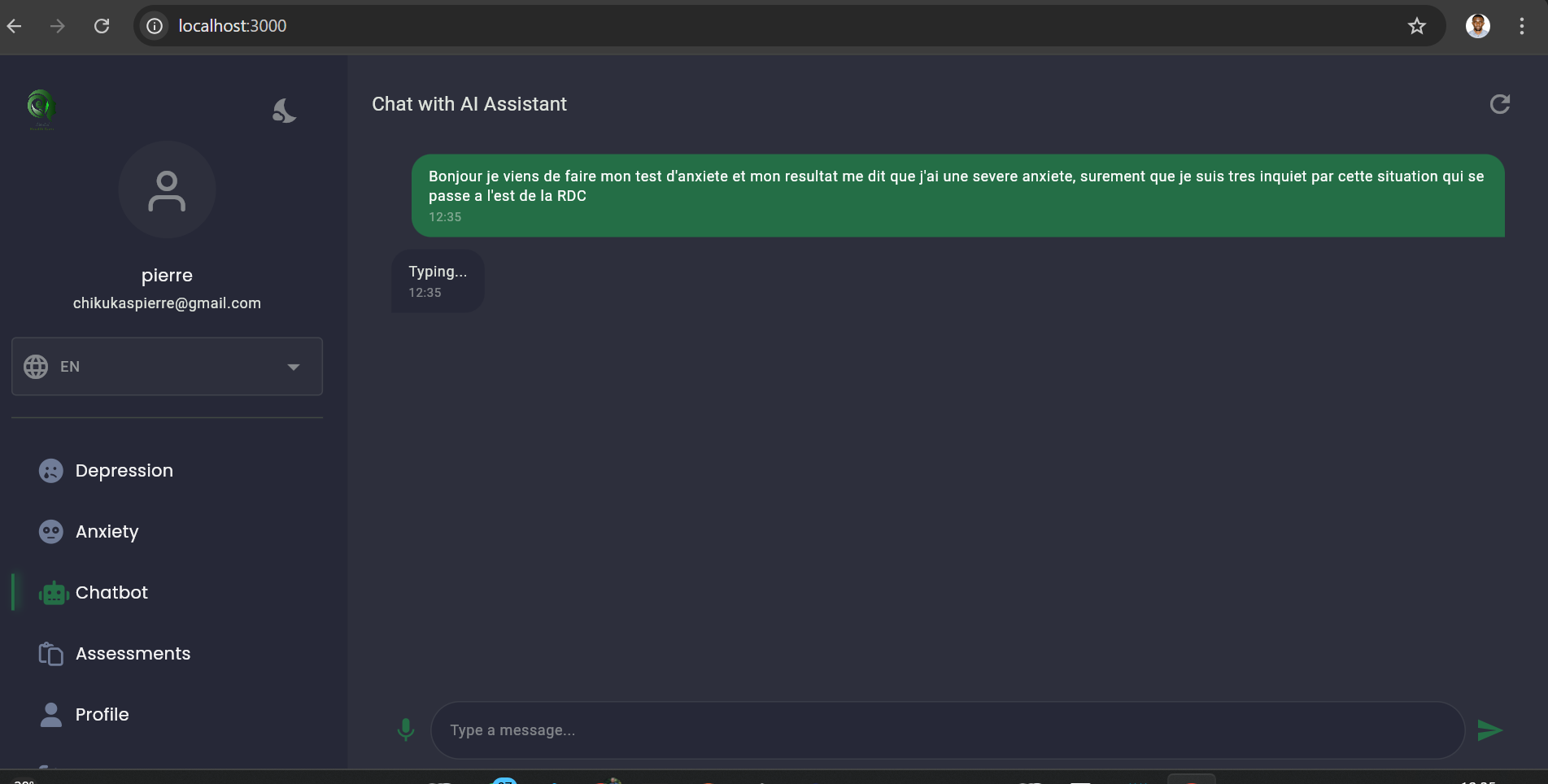
AI-Powered Chatbot: An AI chatbot provides immediate emotional support, resources, and guidance to users.
Progress Tracking: Users can track their mental health progress over time and identify patterns in their well-being.
Accessibility: The app is designed to be accessible to people with limited internet connectivity and low-end devices.
How We Built It Frontend: Built using Flutter to ensure a seamless cross-platform experience (mobile and web).
Backend: Developed with Spring Boot to handle user data, assessments, and recommendations.
AI Model: Implemented using Django for natural language processing and chatbot functionality.
Deployment: Hosted on Render for scalability and reliability.
Collaboration: Our team worked collaboratively, leveraging agile methodologies to ensure timely delivery and iterative improvements.
Challenges We Ran Into Limited Internet Connectivity: Many users in the eastern DRC have limited or unreliable internet access, making it challenging to deliver real-time support.
Cultural Sensitivity: Ensuring the app's content and recommendations are culturally appropriate and resonate with the target audience.
Data Privacy: Protecting user data and ensuring compliance with privacy regulations in a region with limited infrastructure.
Resource Constraints: Working with limited resources and ensuring the app runs smoothly on low-end devices.
Accomplishments That We're Proud Of Successfully developing a functional and user-friendly app that addresses a critical need in a high-conflict region.
Integrating AI-powered mental health assessments and a chatbot to provide immediate support.
Designing the app to be accessible and inclusive, even for users with limited resources.
Building a scalable backend infrastructure that can handle growing user demand.
What We Learned The importance of cultural sensitivity in designing mental health solutions for specific communities.
How to leverage AI and technology to provide scalable mental health support.
The challenges of working in resource-constrained environments and how to overcome them.
The value of collaboration and teamwork in solving complex problems.
What's Next for Mental Health Care Expand Features: Add more mental health tools, such as trauma-focused assessments and group therapy options.
Offline Functionality: Develop offline capabilities to ensure the app works even without internet access.
Partnerships: Collaborate with local organizations, healthcare providers, and NGOs to expand reach and impact.
User Education: Launch awareness campaigns to educate communities about mental health and reduce stigma.
Research and Improvement: Continuously gather user feedback and data to improve the app's effectiveness and relevance.
Scale to Other Regions: Expand the app's reach to other conflict-affected regions in Africa and beyond.


Log in or sign up for Devpost to join the conversation.