-
-
Logo
-
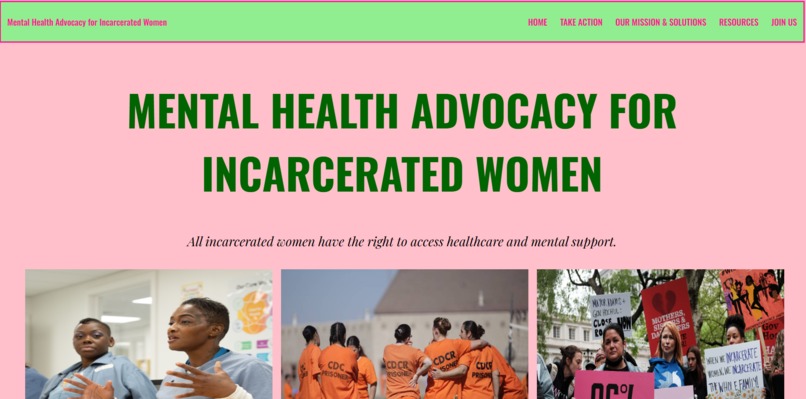
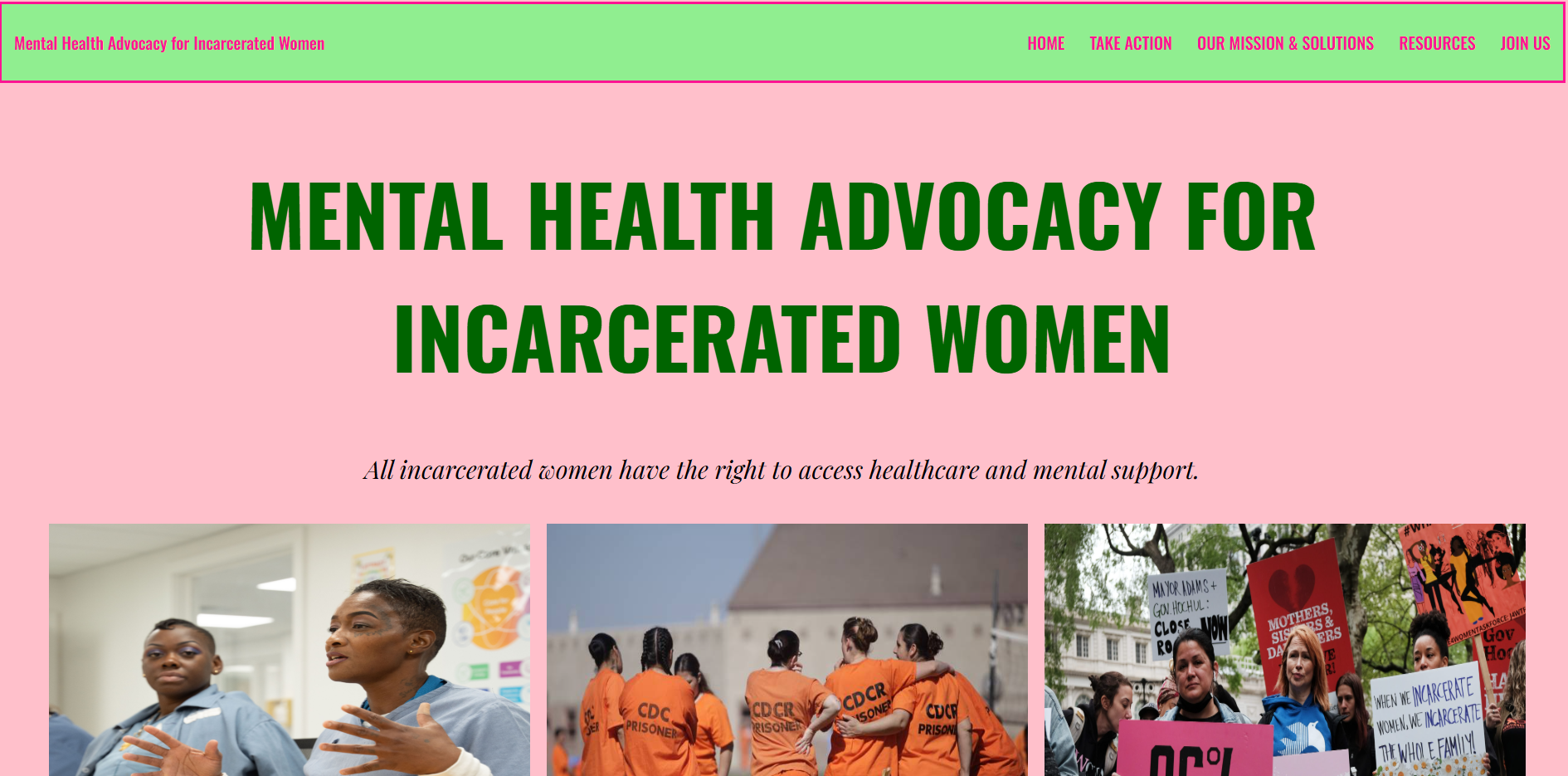
Homepage
-
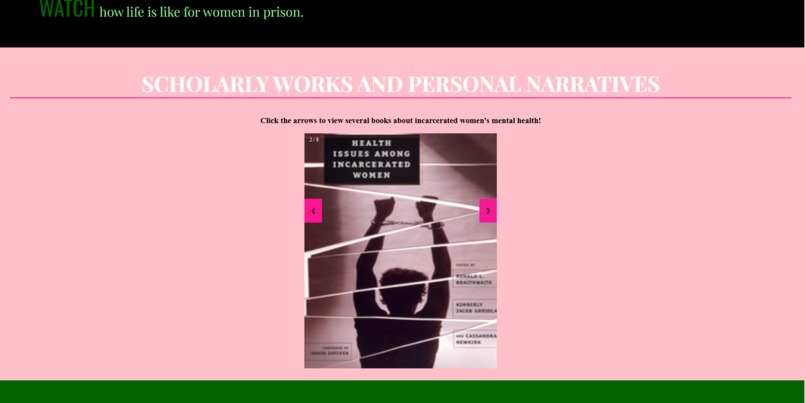
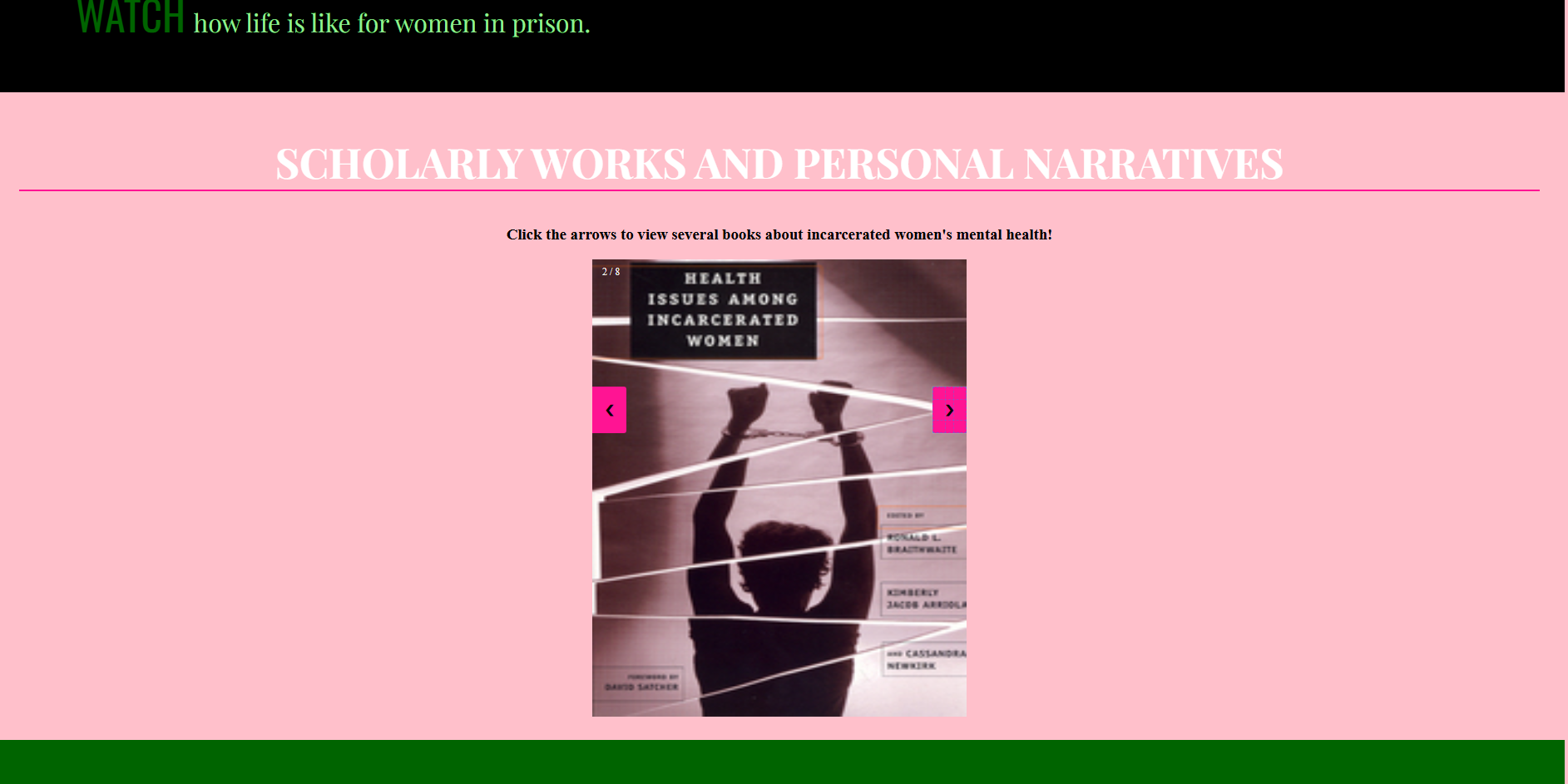
Slideshow with books
-
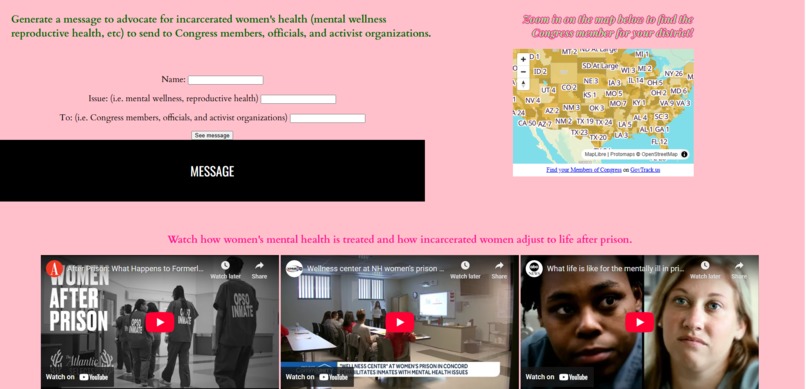
Resources
-
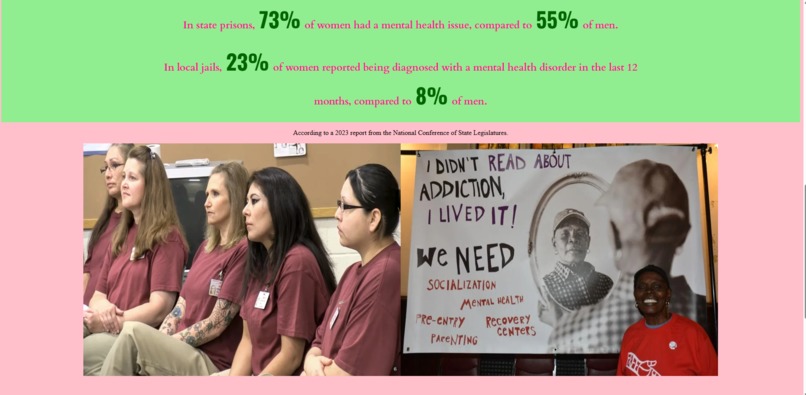
Statistics and Images
-
Contact Us Section
-
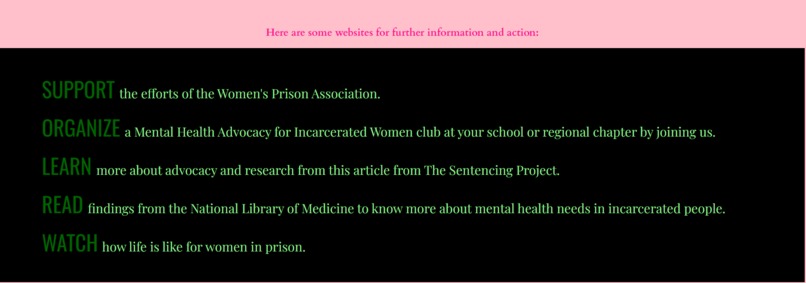
Links
-
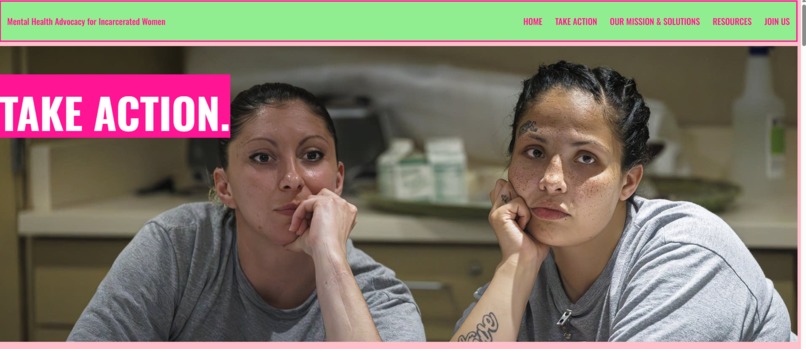
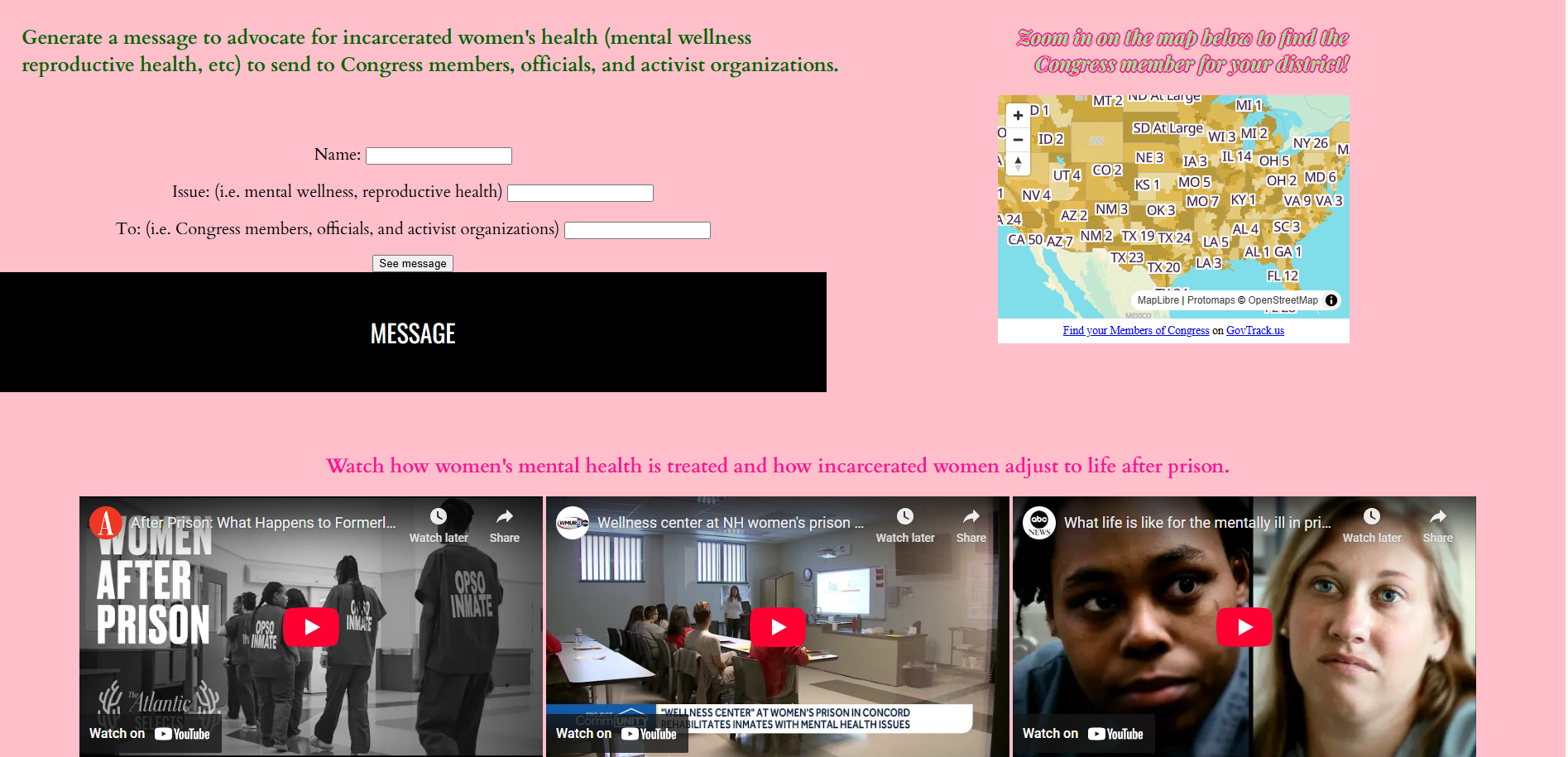
Take Action page
Inspiration
Currently, the US has the largest number of women incarcerated at around 190,600 women (Harvard Kennedy School).
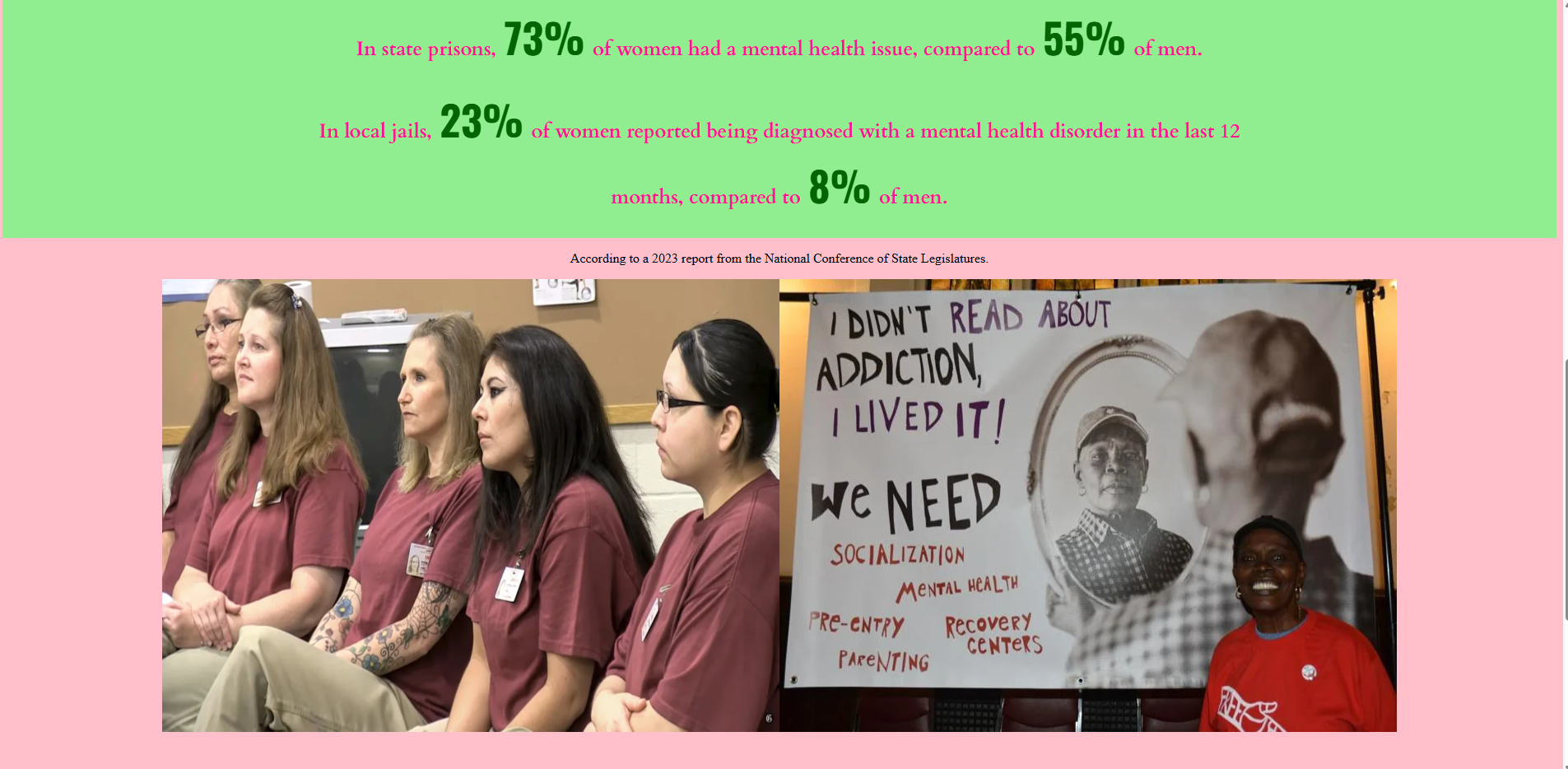
68 percent of women in jail reported having been diagnosed with a mental health condition, versus 41 percent of men (The Marshall Project).
Recidivism (returning to prison after release) rates of women have also increased exponentially in the last decade, with substance related offences being the most imprisoned offence worldwide. (article from the National Library of Medicine) Approximately 55% of women released from state prison for a violent offense are arrested again within 5 years. (Bureau of Justice Statistics)
How are all of these facts correlated? They all tie into the severely inadequate mental health support for women in jail in the US.
Poor mental health in incarcerated women impacts their children and families, pregnancy (if pregnant), and can lead to substance abuse, increasing suicidal tendencies. Women who are released from prison also commonly suffer from Post Incarceration Syndrome (PICS), a psychiatric disorder that causes individuals to have disbelief of freedom, hypervigilance, social withdrawal, insomnia, anxiety and depression, and nightmares and emotional numbing.
How does mental wellbeing of women in jail affect others in society? Increased recidivism rates from not being able to receive proper mental health treatment highly impacts safety and requires unnecessarily large amounts of funding to go to prisons to maintain mass incarceration of prisoners. Children, families, and local communities, especially in underserved and marginalized areas, become trapped in cycles of incarceration.
Without an official resource targeted to youth involvement, this crucial societal issue is hidden to the next generation, hindering future efforts to address and support women in jail.
But with a quick Google search, one finds that while there are programs that support incarcerated women, there are no accessible ways for high school and college students to advocate for the mental health of current and formerly incarcerated women.
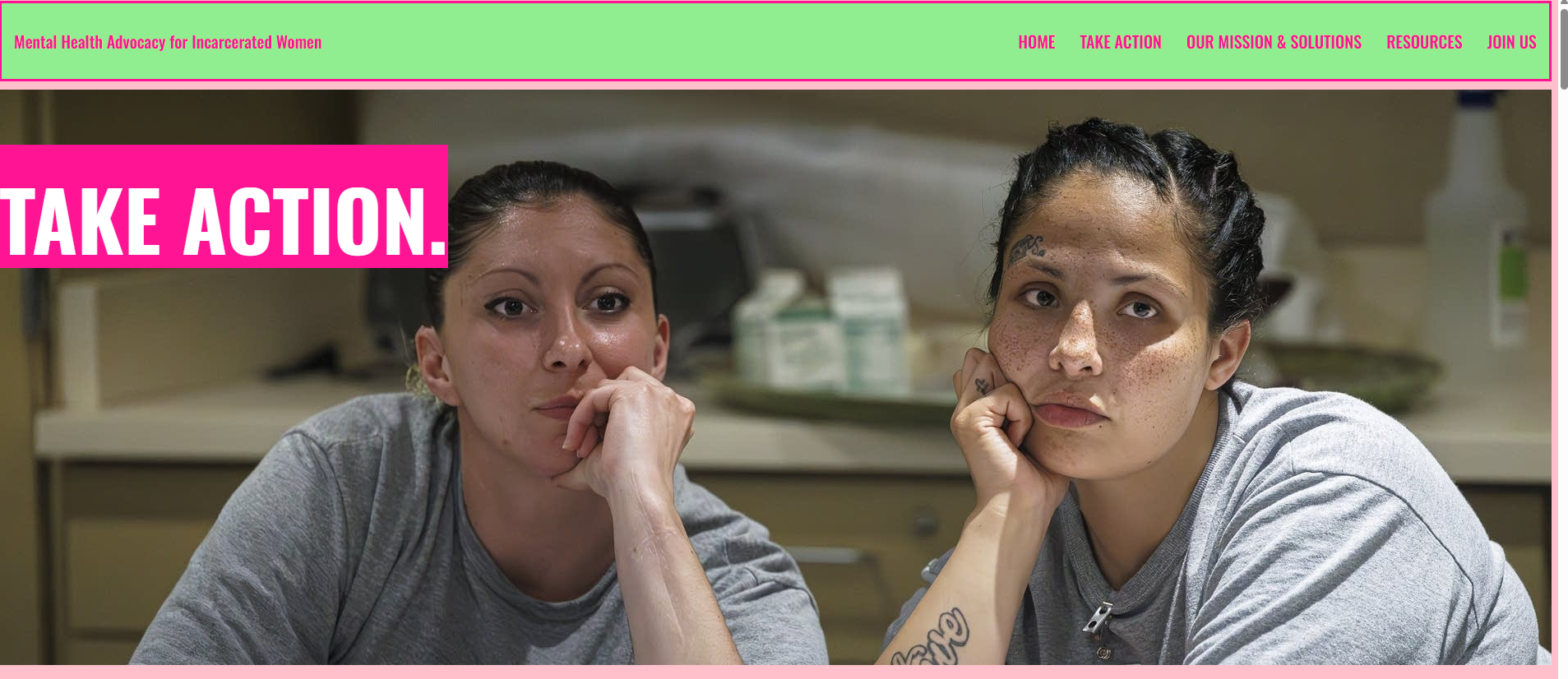
Introducing Mental Health Advocacy for Incarcerated Women (MHAIW), the first website that brings awareness to and promotes youth activism in mental health of incarcerated women.
What it does
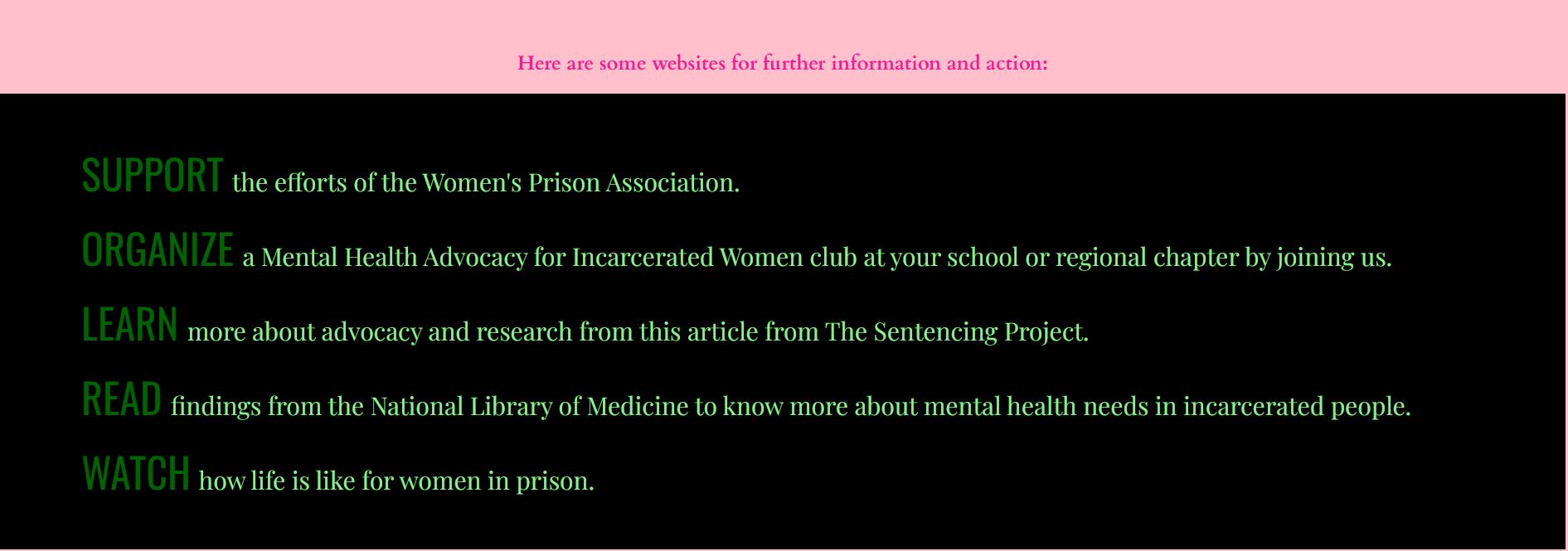
The MHAIW website includes interactive educational resources, opens opportunities to connect with mentors, and provides the foundation for youth to start their own club dedicated to supporting incarcerated women's mental health at their school.
How we built it
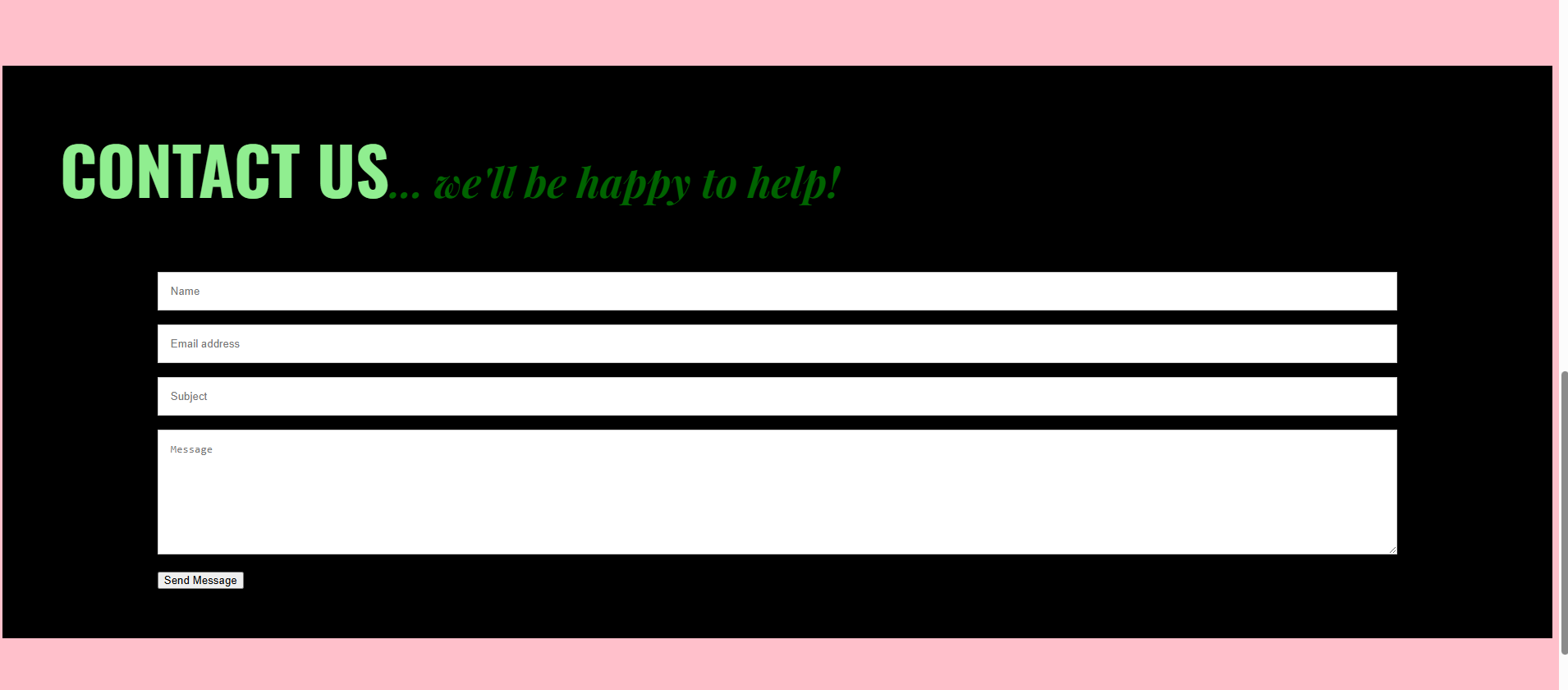
First, I created a sketch/layout of how the website would look like and then used HTML to build the website, starting from finalizing the Homepage and working through each page after. After I built a rough beginning draft of the functions of the website, I focused on detail and style with CSS (for example, I used pink and green throughout the website to symbolize femininity and mental wellness respectively). I also added images, researched, and incorporated links, along with interactive features such as buttons, a text generator, and a slideshow. These elements required the use of PHP and JavaScript. Once I finished the first draft of the website, I began to implement new ideas and further develop my website, whether it be a Contact Us section or a map to find local Congress members.
Challenges we ran into
As my first tech-related project, there were several obstacles and issues that I ran into. The biggest one was solving various errors, along with needing to overcome challenges that arose as I learned how to code a website for the first time. I struggled with figuring out how to code the Contact Us page and image slideshow especially. However, I believe that my knowledge in web development grew immensely through this project.
Accomplishments that we're proud of
I'm proud of being able to create my first website from scratch!
What we learned
I learned a lot about CSS, HTML, JavaScript, and PHP, including implementing functions such as buttons, images, links, and interactive features like text generators.
What's next for Mental Health Advocacy for Incarcerated Women
My hope is to create a MHAIW app that provides a platform for students to chat with their mentors, track their volunteer hours and view outreach activities, and connect with other students involved in MHAIW.

Log in or sign up for Devpost to join the conversation.