-
-
-
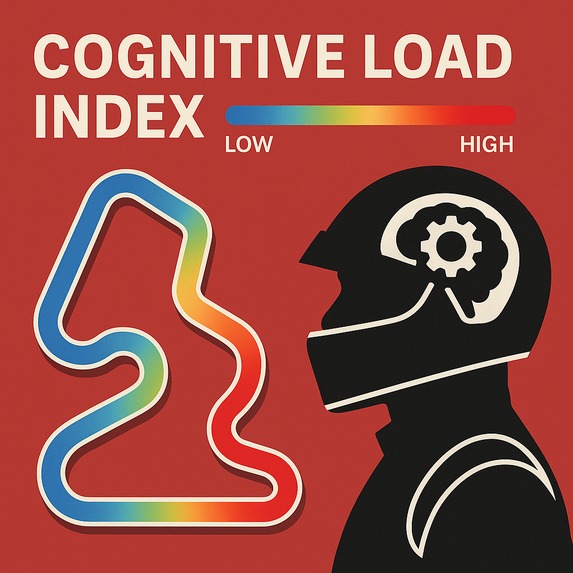
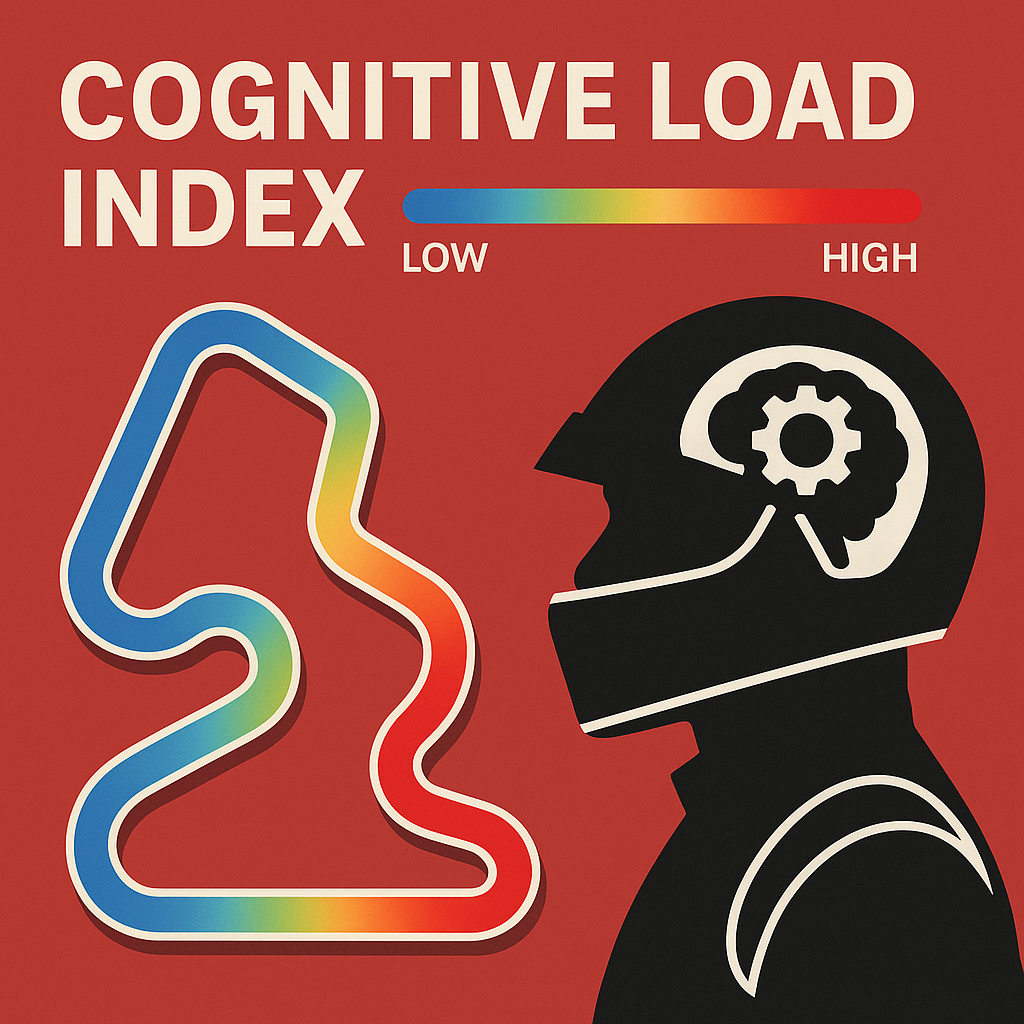
Cognitive Load Index heatmap visualizing mental fatigue across the racetrack
-
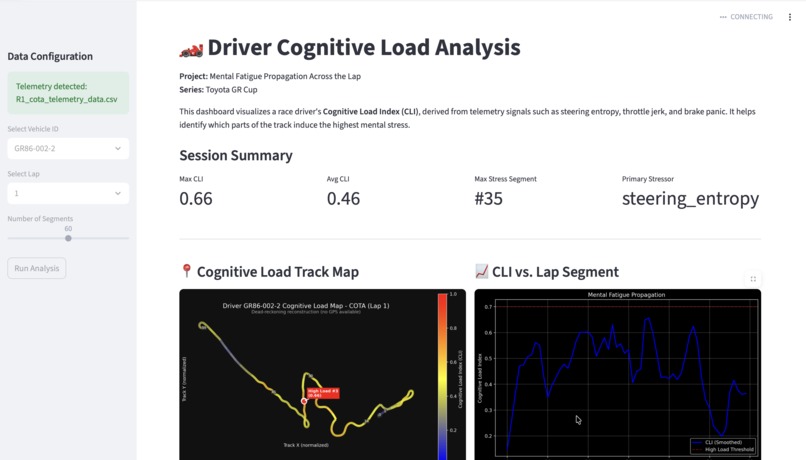
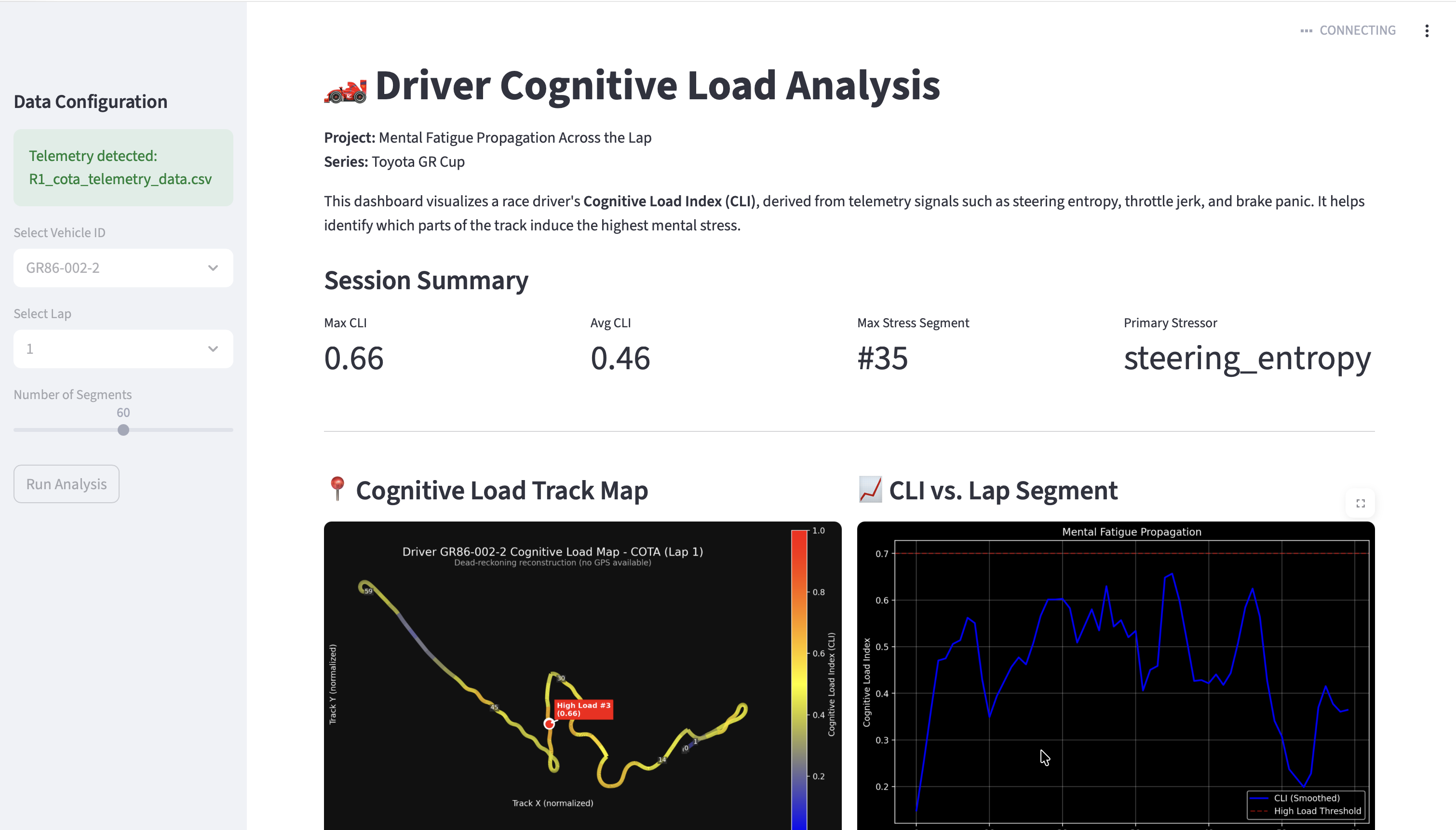
Dashboard showing telemetry-based Cognitive Load Index analysis, including session summary, track heatmap, and CLI graph.
Inspiration
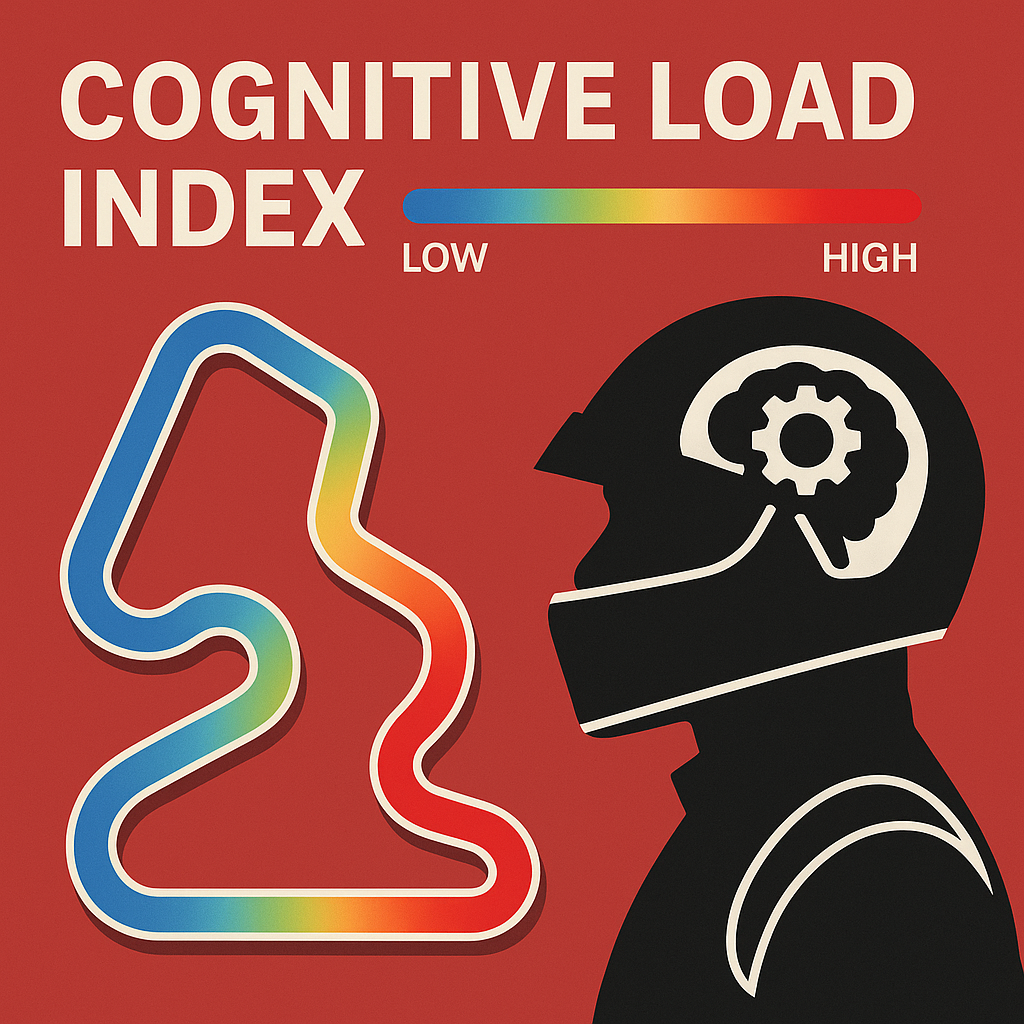
I’ve always been fascinated by how much pressure a racing driver experiences beyond just speed and physics. Cars are covered in sensors, but drivers aren’t — their mental load is invisible. I wanted to measure and visualize the hidden cognitive strain drivers feel on every turn so teams can understand not only the car’s limits, but the human limits too. That idea became the core inspiration for my project.
What it does
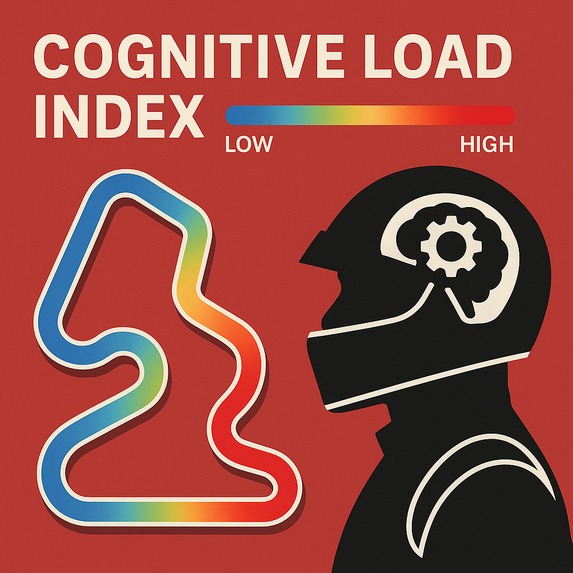
My system takes raw GR Cup telemetry and transforms it into a Cognitive Load Index (CLI). It analyzes braking variance, steering entropy, acceleration instability, and speed fluctuations, then projects the output onto the racetrack as a heatmap. This exposes where the driver is mentally overloaded, perfectly focused, or at risk of fatigue affecting precision and performance.
How we built it
I built a complete data pipeline from scratch: 1-Loaded and cleaned noisy raw telemetry. 2-Normalized time gaps and segmented laps. 3-Engineered micro-metrics that correlate with cognitive effort. 4-Combined those metrics into a mathematical model that outputs a continuous CLI curve. 5-Mapped CLI values to track geometry and visualized them as a smooth, intuitive heatmap.
Challenges we ran into
The biggest challenge was that no standard formula for cognitive load exists, so I had to experiment, test, and iterate to find a meaningful approach. I also dealt with messy telemetry, inconsistent sampling rates, missing frames, and the difficulty of aligning timestamps with the physical layout of the track. Making the heatmap readable, clean, and engineer-friendly was another tough step.
Accomplishments that we're proud of
I’m proud that I successfully built a model that translates complex telemetry into something that reflects human mental performance. The final heatmap clearly highlights cognitive high-stress zones, revealing parts of the track where the driver struggles or excels. Turning raw racing data into a visualization of the driver’s mind is something I consider a big accomplishment.
What we learned
I learned how to preprocess real motorsport telemetry, design a weighted performance model, and build accurate track-mapped visualizations. More importantly, I gained insight into how physical driving behaviors correlate with mental effort, and how data can expose patterns humans can’t see on their own.
What's next for Mental Fatigue propogation
Next, I want to strengthen the model with machine learning, incorporating biometrics such as heart rate or eye-tracking data to refine cognitive load estimation. I also plan to move toward real-time analysis so cognitive-strain alerts can be generated during active laps. Eventually, this system could improve driver coaching, reduce fatigue-related errors, and contribute to safer, smarter racing.


Log in or sign up for Devpost to join the conversation.