-
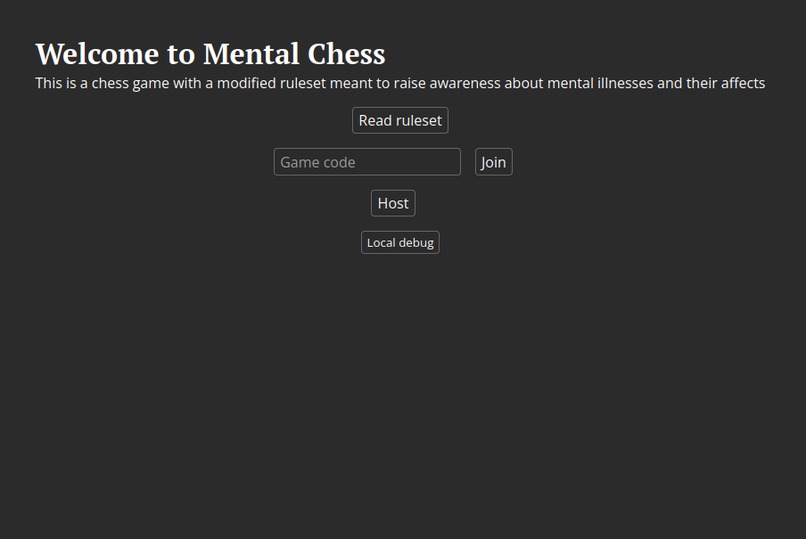
The home page of the website
-
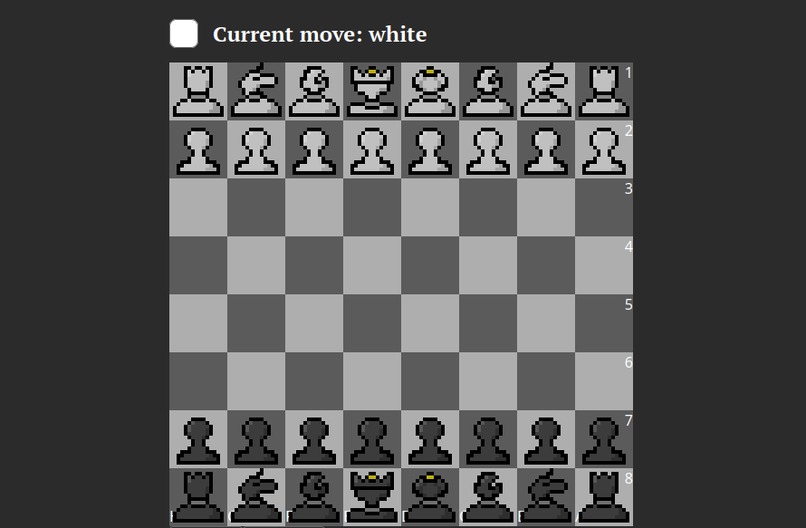
The chess field and its visuals
-
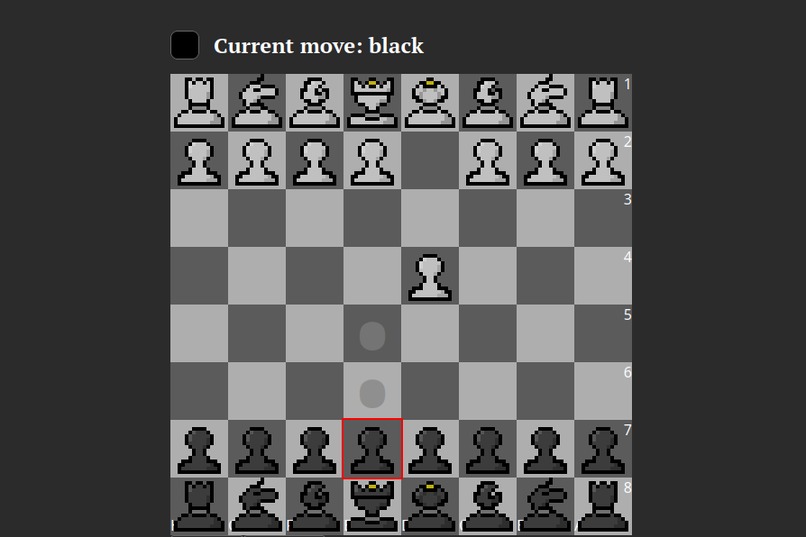
All moves work like in chess, and all possilbe moves are highlighted
-
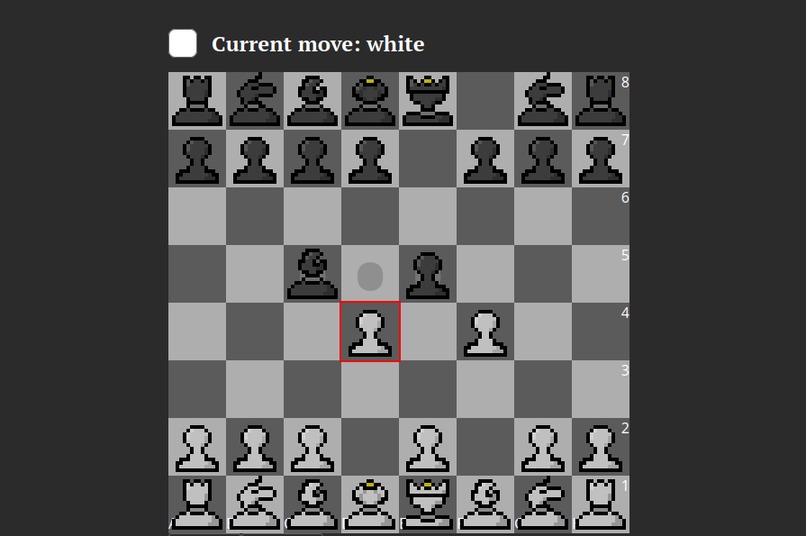
For every piece taken, the other side will develop some condition
-
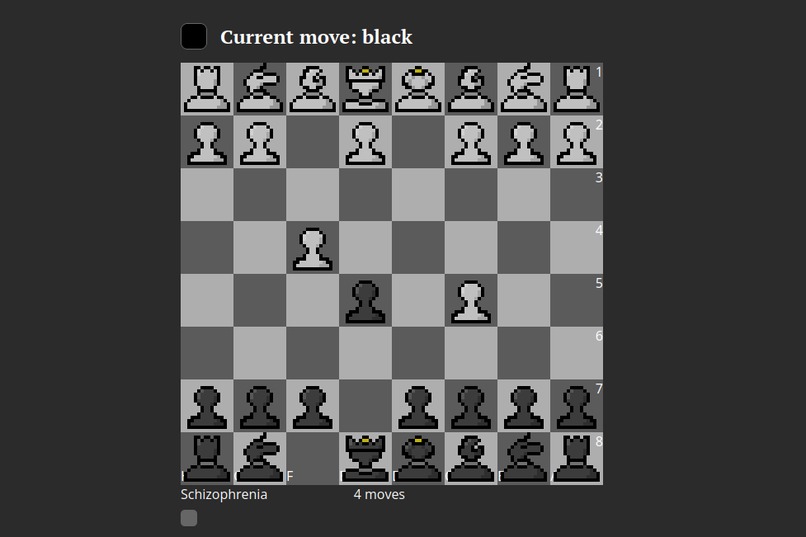
Upon their bishop being taken, black now develops schizophrenia
-
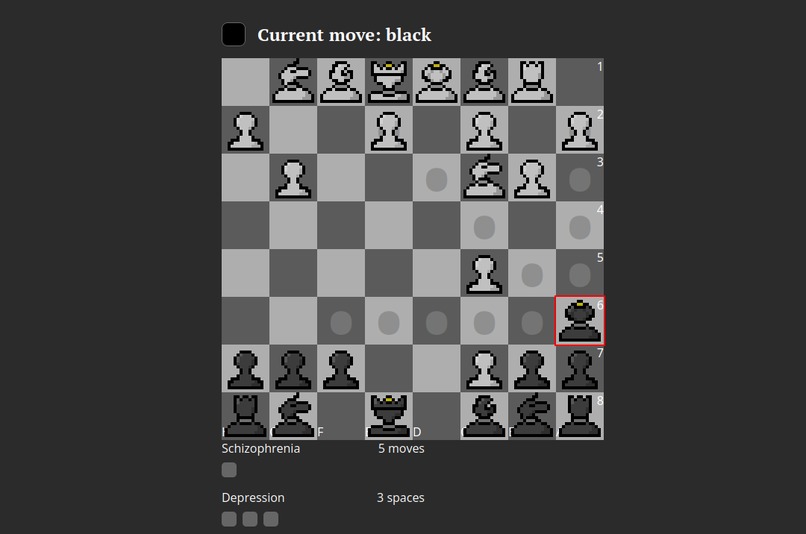
Showcase of the Queen's movement options being decreased due to "depression"


Inspiration
The project "Mental Chess" was inspired by Jacob's experiences during the summer when going through a rougher time mentally. As a result, he started playing chess which helped escape life for a little, without sucking him in like social media does. His personal experience, combined with the massive popularity of chess, made it an innovative way to spread awareness of the effects of mental illness.
What it does
Mental Chess is a version of chess with a modified rule set that further punishes players for losing piece. Each piece that a player loses, they will develop a mental illness depending on the piece they lose. Of course, these effects do not represent every way mental illnesses can affect people as each person may experience them differently - instead, we hope to not only simply raise awareness on some of the many ways that these mental illnesses may manifest, but to also spread the love of chess to people who might be better able to relate to a game that recognizes the problems they are facing.
How we built it
We built the web app from scratch using TypeScript, React.js, and Node. The majority of the time was spent building up a framework for chess from scratch, where as adding the additional rules and features was quite quick. All of the logic is run client-side, with the exception of a small back-end app to link two games together using web sockets.
Challenges we ran into
The largest problem we ran in to was the implementation of the pawn, as it has multiple edge cases and odd movements Beyond that, time synchronization between clients was also problematic. Both issues, however, were solved, although it took quite some effort.
Accomplishments that we're proud of
- We built a working chess app in under 2 days
- We came up with and implemented a new rule set on top of the existing chess rule set.
What we learned
- Gustavs: I can contribute to the team without have deep or specific knowledge of the technologies used
- Ivars: I can relay on others with significantly less experience to get the job done without running in to too many walls in the process.
- Jacob: Smartly splitting up a larger project and managing everyone's time well can make the project feel significantly less daunting.
What's next for Mental chess
In the future Mental Chess could receive updates expanding upon the different effects that mental illnesses can have on the king, ass well as adding a local play mode and a basic chess version without the added rule set. If the project gains more traction it could be worth adding an analysis mode and match history.
Built With
- react
- typescript
- vite


Log in or sign up for Devpost to join the conversation.