-
-
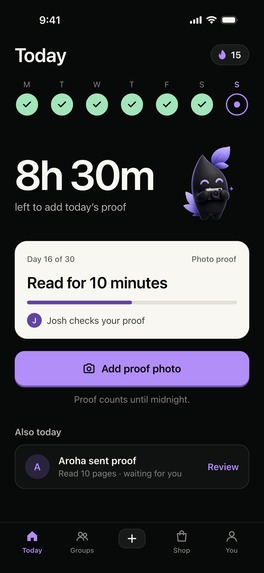
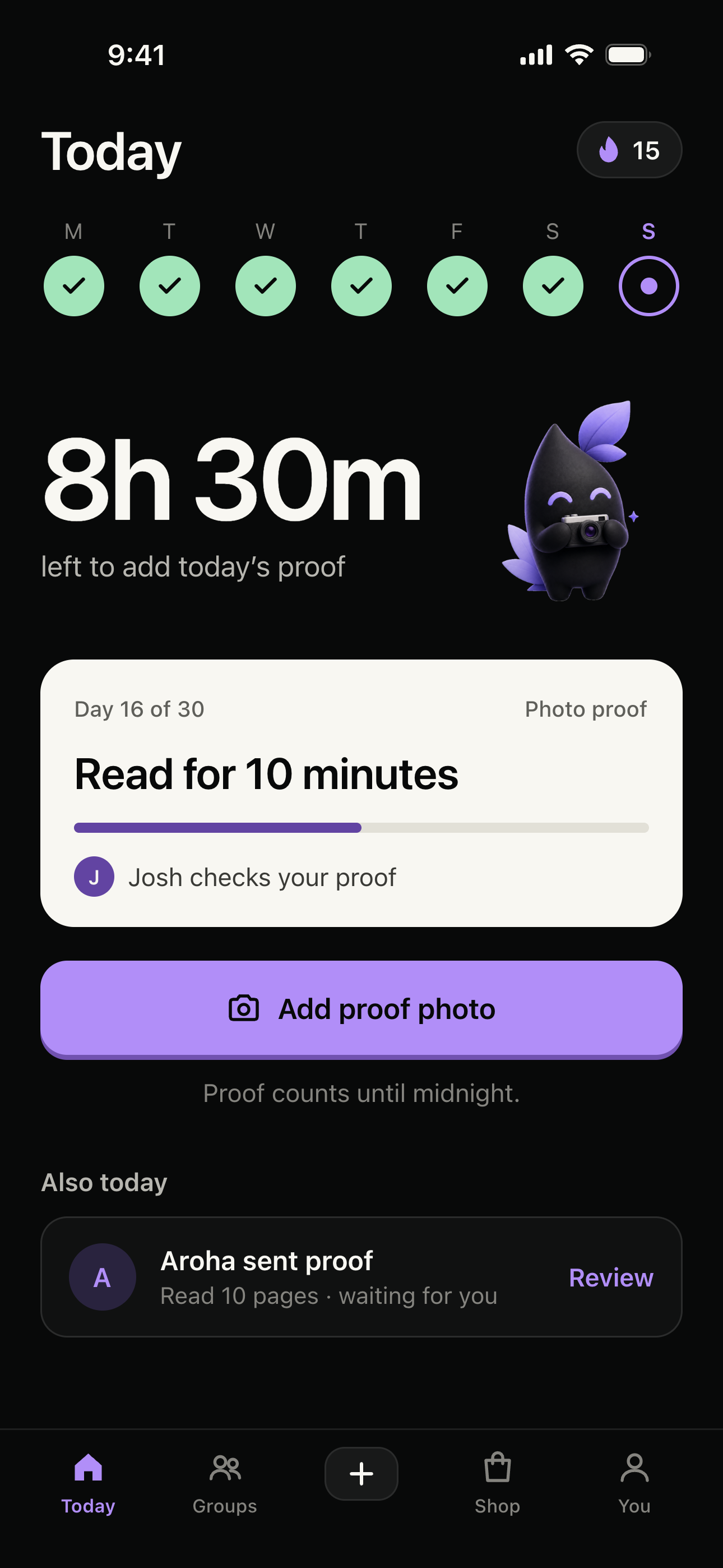
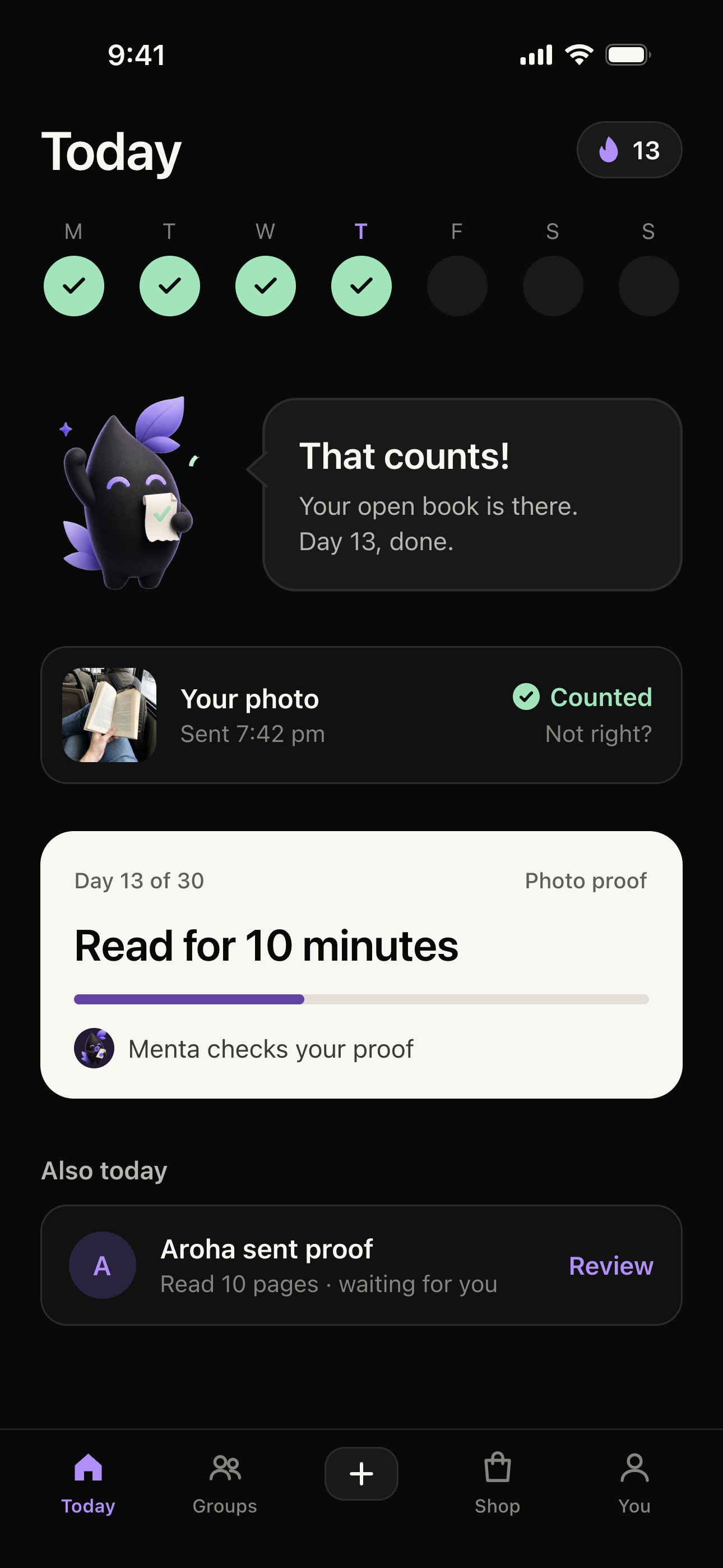
The new Today screen. Your streak for the week and how long you've got to send proof.
-
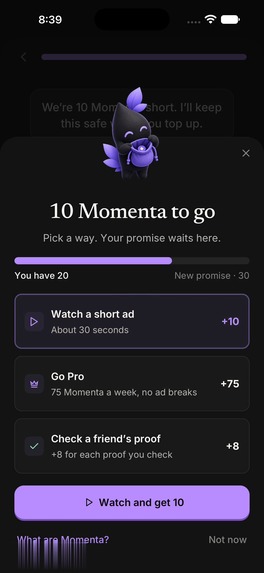
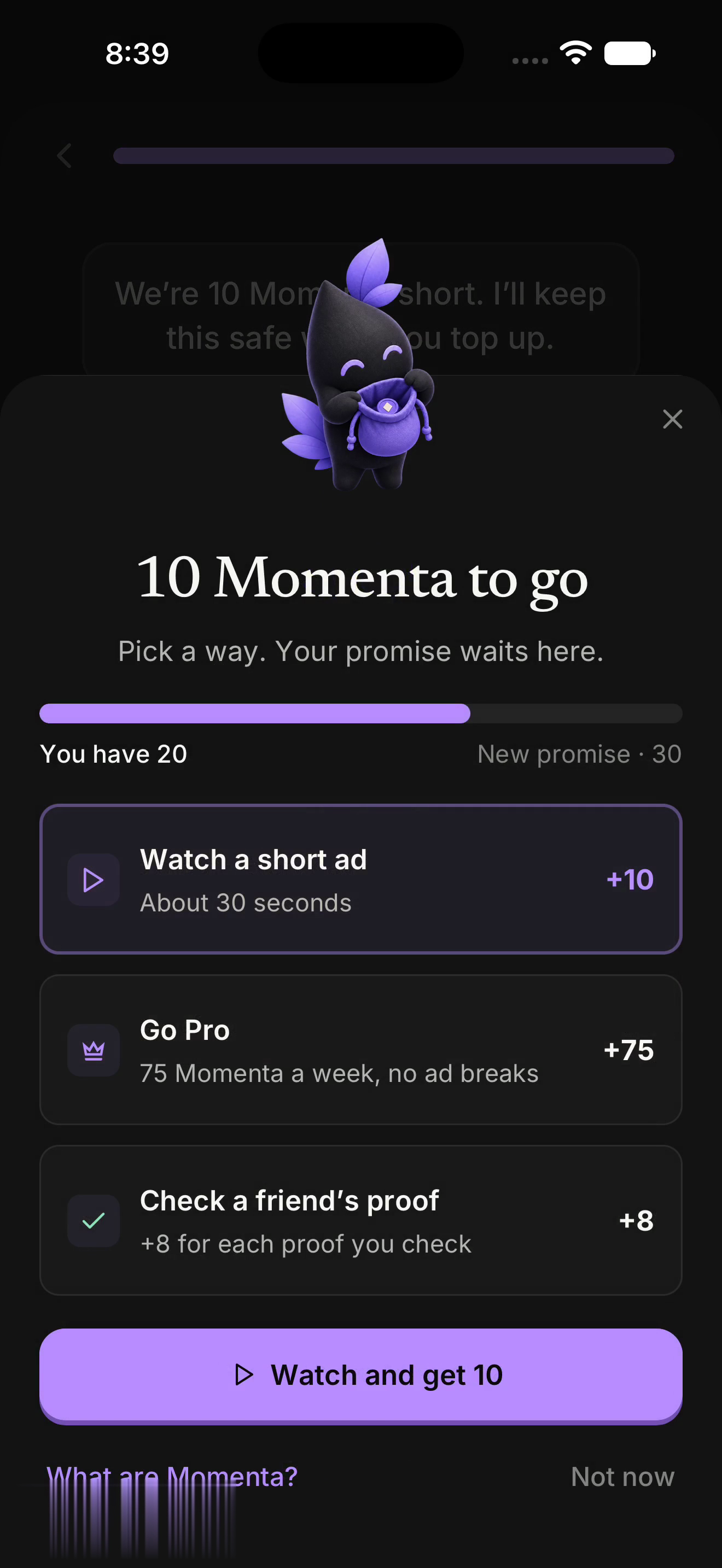
Short on Momenta? Watch a short ad for 10, go Pro, or check a friend's proof.
-
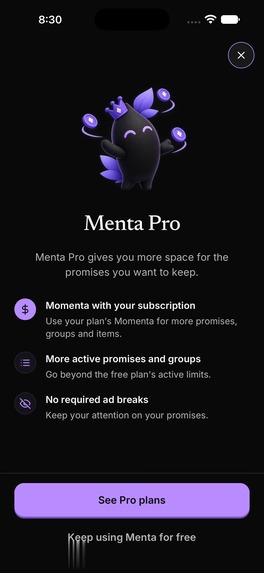
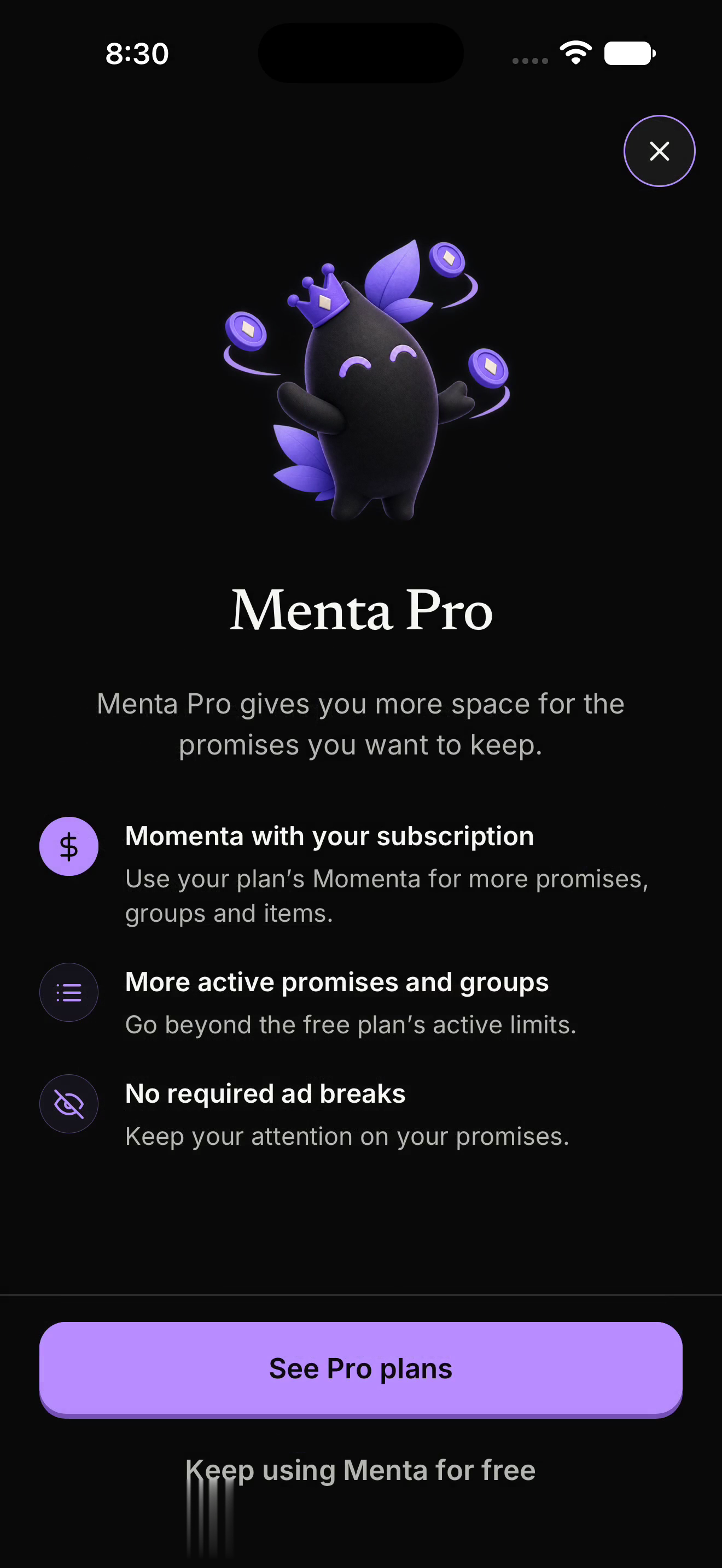
Menta Pro. More room, Momenta every week and no ad breaks.
-
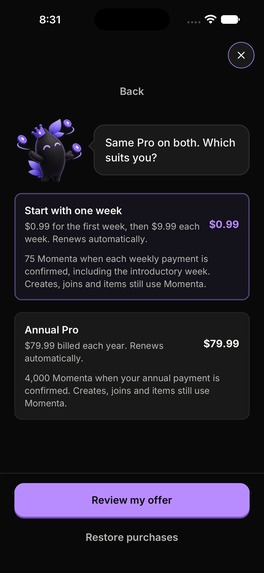
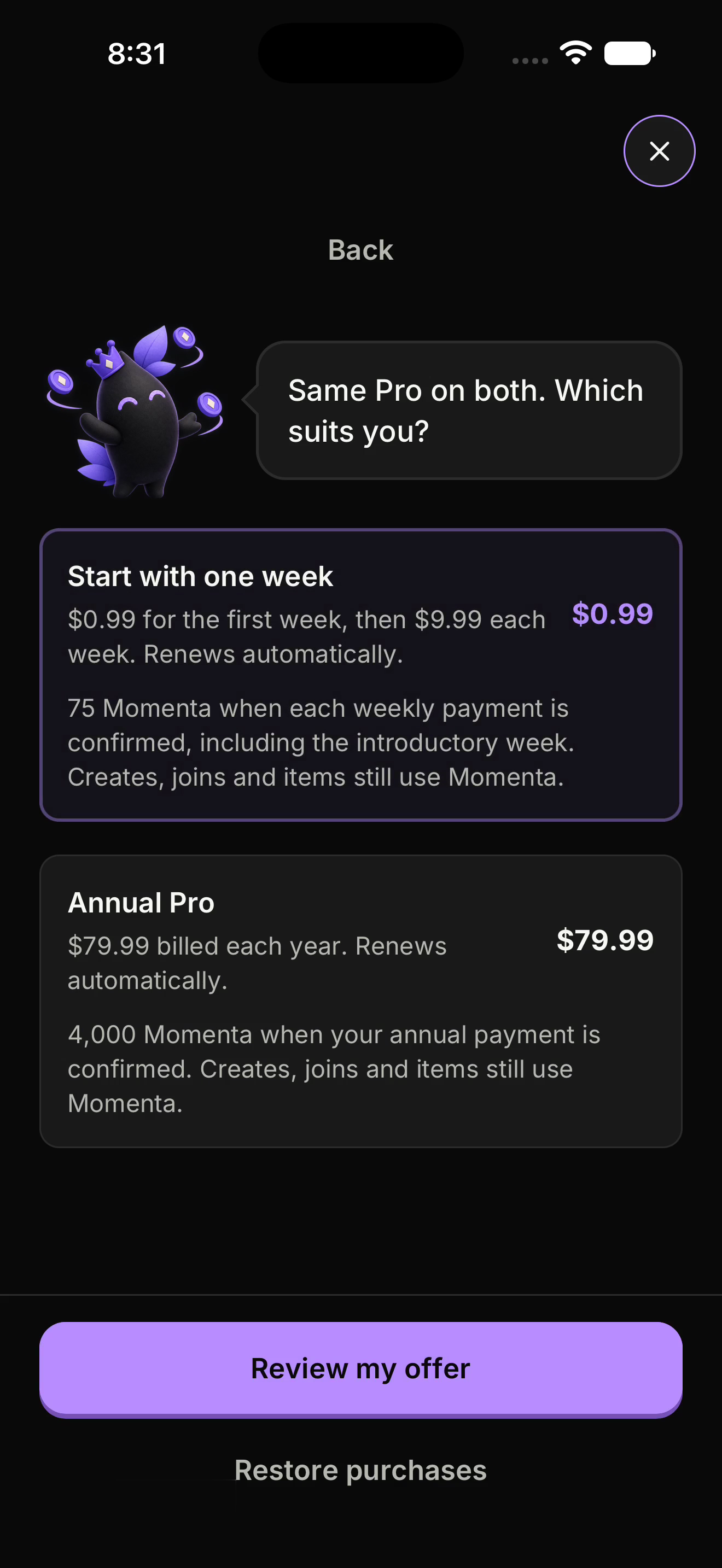
Pro plans. $0.99 for the first week, then weekly or yearly.
-
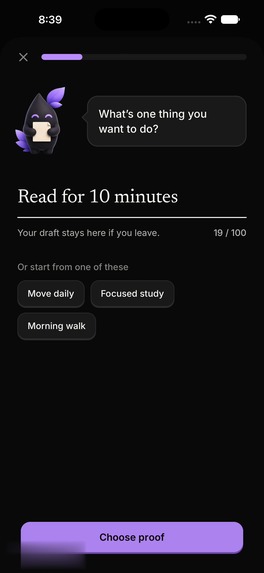
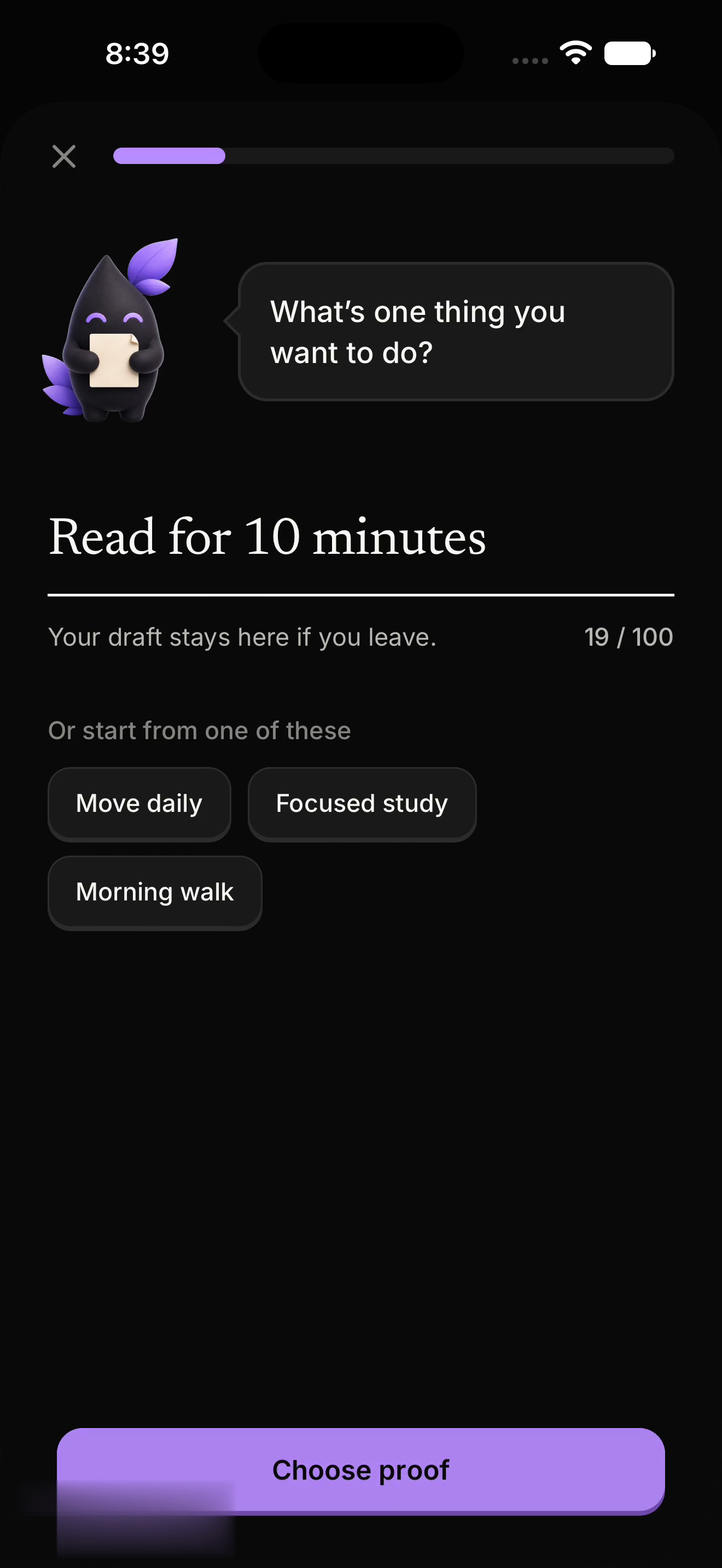
Making a promise. Type what you're going to do, then pick how you'll prove it.
-
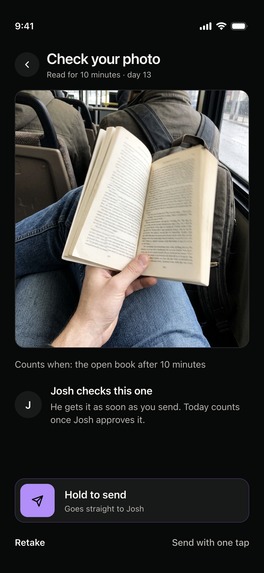
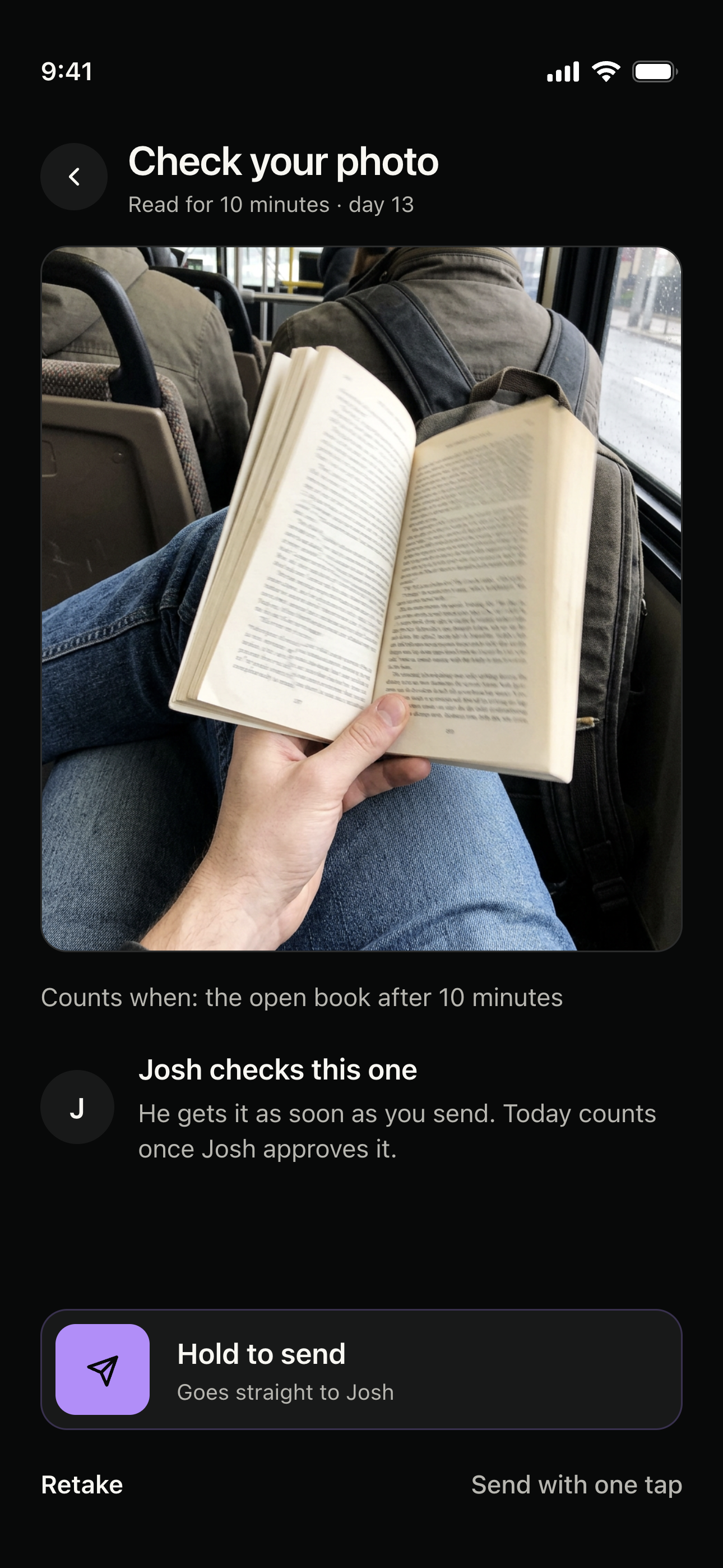
Sending proof. Hold to send and Josh gets it straight away.
-
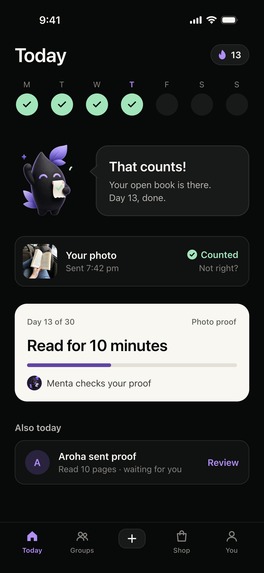
Menta Check (AI promise checker). Menta looks at your photo and tells you if it counts.
-
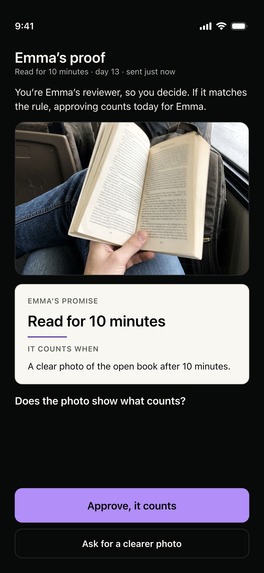
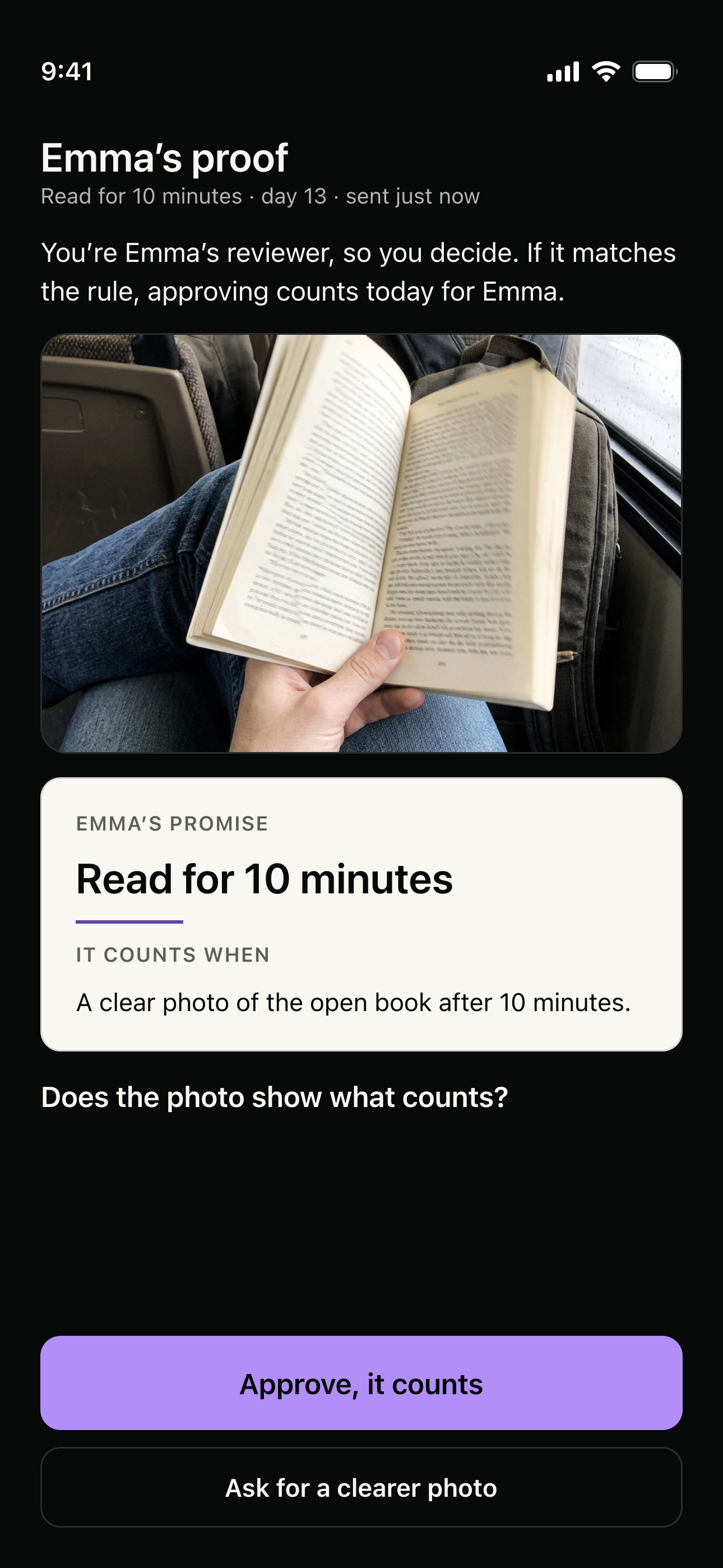
Josh checks Emma's proof and approves it, so her day counts.
-
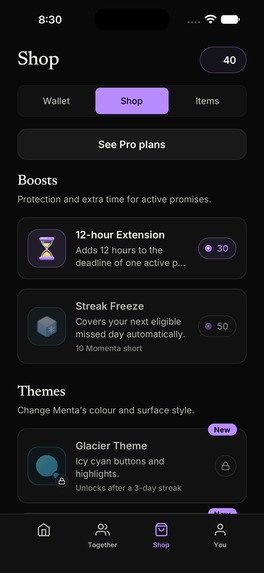
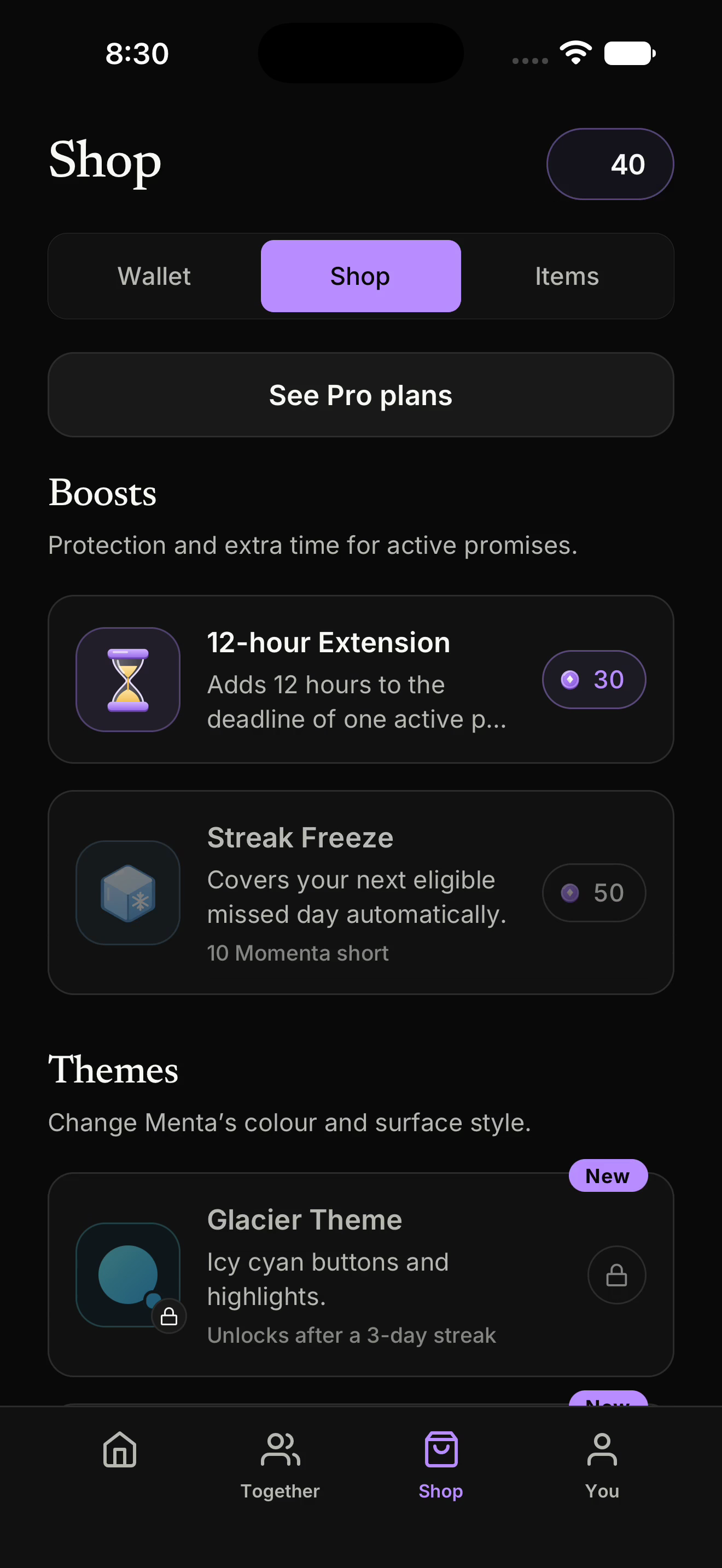
The shop. Streak freezes and 12-hour extensions, paid with Momenta.
-

App Icon

Inspiration
So me and my friend were trying to build a habit together, and I was trying to help keep him accountable. Then he started sending me spreadsheets. I love my friend, but I don't love going through a spreadsheet every single day to tick off that he did one thing.
I looked on the App Store and there were a couple of apps that kind of fit, but nothing that really ticked every box. I wanted something with the simplicity of BeReal. You take a photo and you're done. But I also wanted the fun gamification stuff Duolingo does really well, like streaks, a currency and streak freezes. That's what led me to build Menta.
What it does
You pick a promise, like reading for 10 minutes a day. You pick how you're going to prove it, a photo, a note or a video. Then you pick who keeps you accountable. That can be a friend, Menta Check (AI promise checker), or just yourself.
When you send your proof, your reviewer gets a notification. They either approve it or ask for a clearer photo, and if it's approved in time your day counts. It works one on one or in a group, and you don't all need to be doing the same promise.
Menta Check (AI promise checker) came from my testers. They kept asking how come the app can't tell when the proof is wrong. Honestly that was something I'd overlooked.
How it makes money
The whole app is centred around the in-app currency, Momenta. It comes from the word momentum. Pretty much every action that builds towards your promise costs Momenta, so creating a promise, creating a group or joining one. You earn it by keeping your streak, reviewing a friend's proof and inviting people. You can't buy it, so you can't just pay your way around a streak.
I wanted Menta to be free for as many people as possible. Every free user gets 4 promises a month and can have 3 going at the same time. But the app also has to make money. So when you're short on Momenta you can watch a reward ad or go Pro. Free users also get an ad break after every 2 proofs they send. I steered away from banner ads because they don't feel great in the app.
Pro is 99 cents for the first week, then $9.99 a week or $79.99 a year, all through RevenueCat. Pro used to just be a Momenta stipend. Now it comes with Menta Check (AI promise checker), no ad breaks and higher limits, and each check costs me less than a cent.
How I built it
I built it with Expo and React Native because that's what I had the most experience with. Supabase is the backend, RevenueCat handles Pro and the ads, and OneSignal handles notifications. The over the air updates have been huge. I can fix things the same day instead of waiting on Apple review. A lot of it was built with AI agents, and I designed every screen in Paper first.
Challenges
Retention is the hard part. You need someone who's already committed to building a habit, and then you have to keep them coming back. Getting my first users was honestly embarrassing. It was calling in favours and asking people to try it. And sometimes I'd use my own app and think, why don't I like using this? If I'm feeling friction, a user definitely is.
What I learned
The first step is to build something awesome. The second step is telling people about it. Marketing was all new to me, UGC, Facebook ads, Apple search ads. Our Noise videos have passed 24,000 views, and it took a while to find a format that worked.
What's next
Getting Menta in front of people beyond my own circle. I know there's a market for this because I've met the people who are it.
The code is open source at https://github.com/ImDanielGitHub/Menta
Built With
- admob
- amplitude
- expo.io
- onesignal
- posthog
- react
- react-native
- revenuecat
- sentry
- supabase
- tanstack-query
- typescript


Log in or sign up for Devpost to join the conversation.