-
-
Thumbnail
-
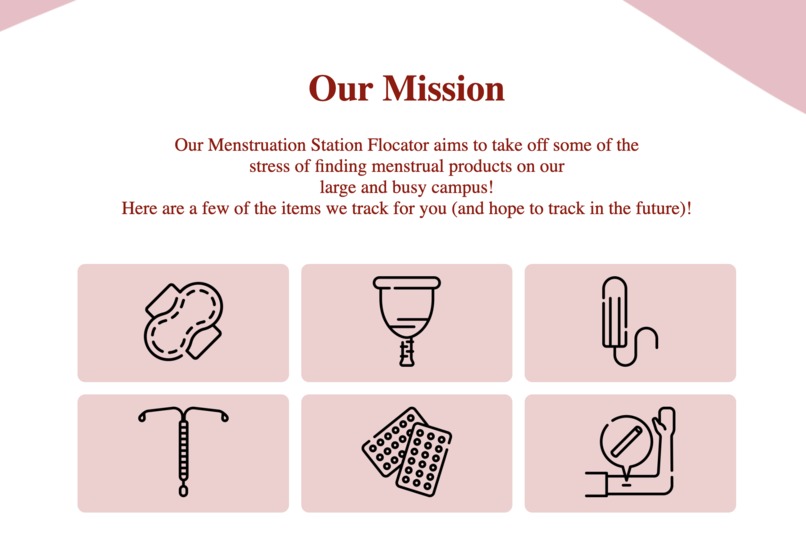
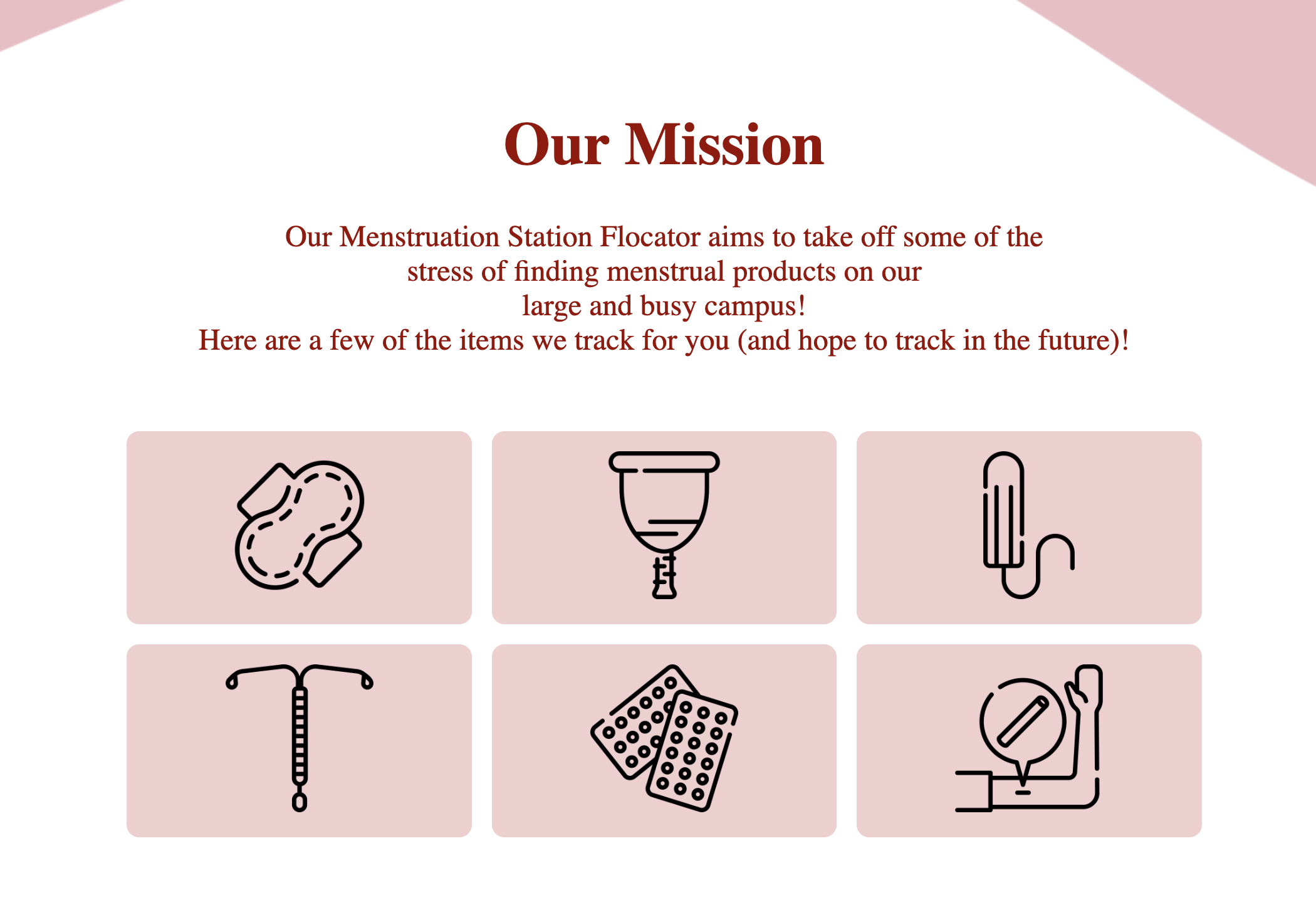
Our Mission Statment
-
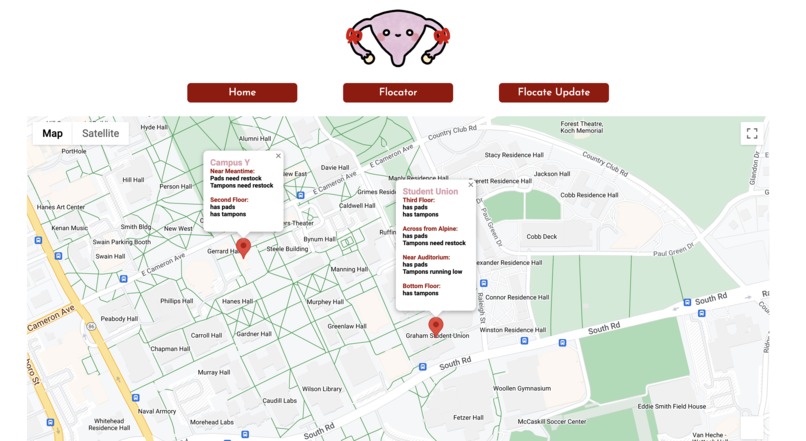
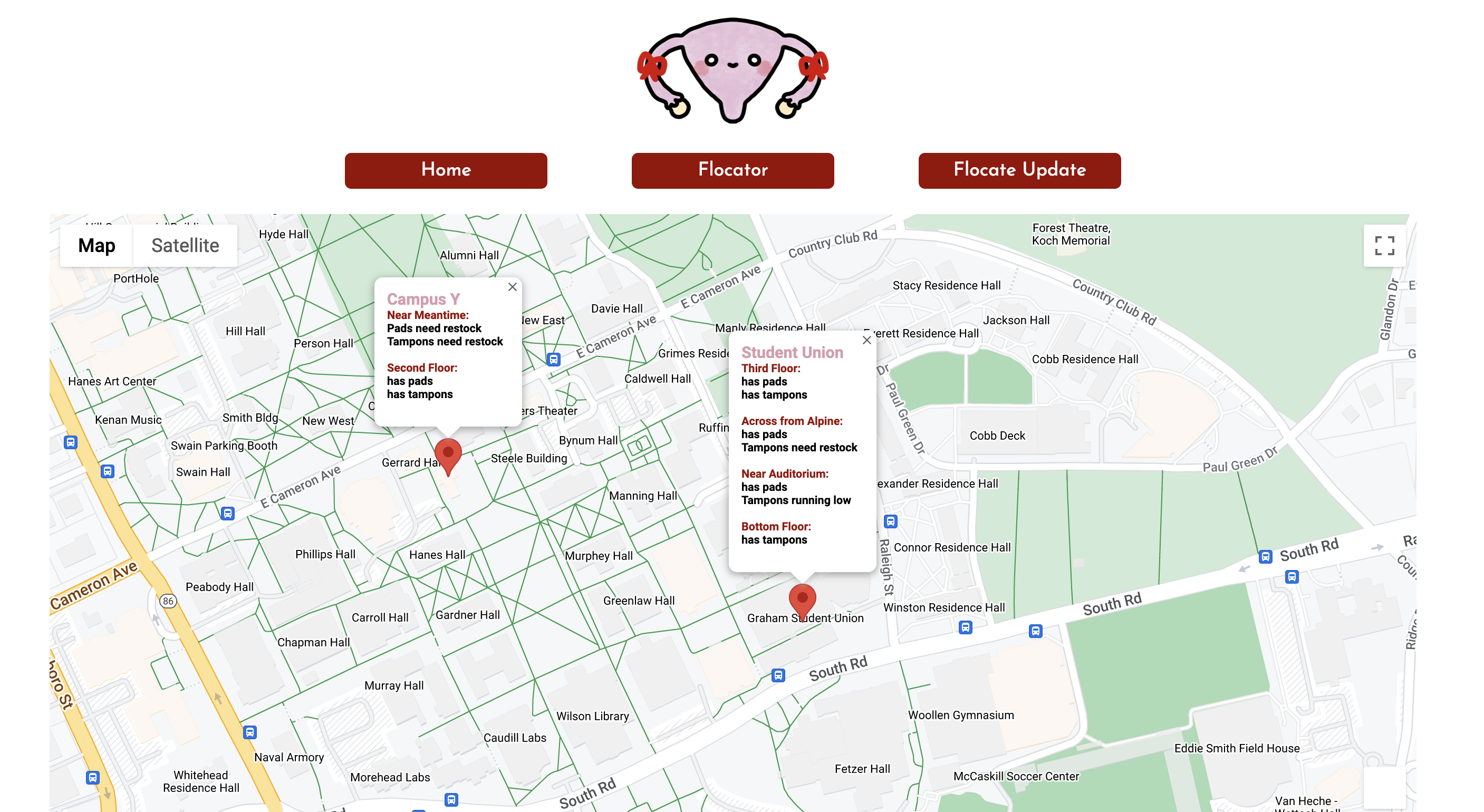
Flocator tab with Google Map showing buildings with bathrooms that have menstrual products
-
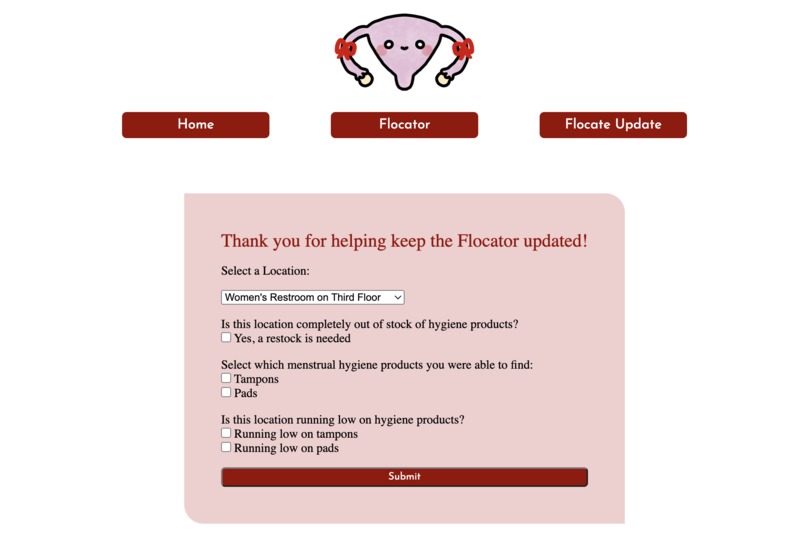
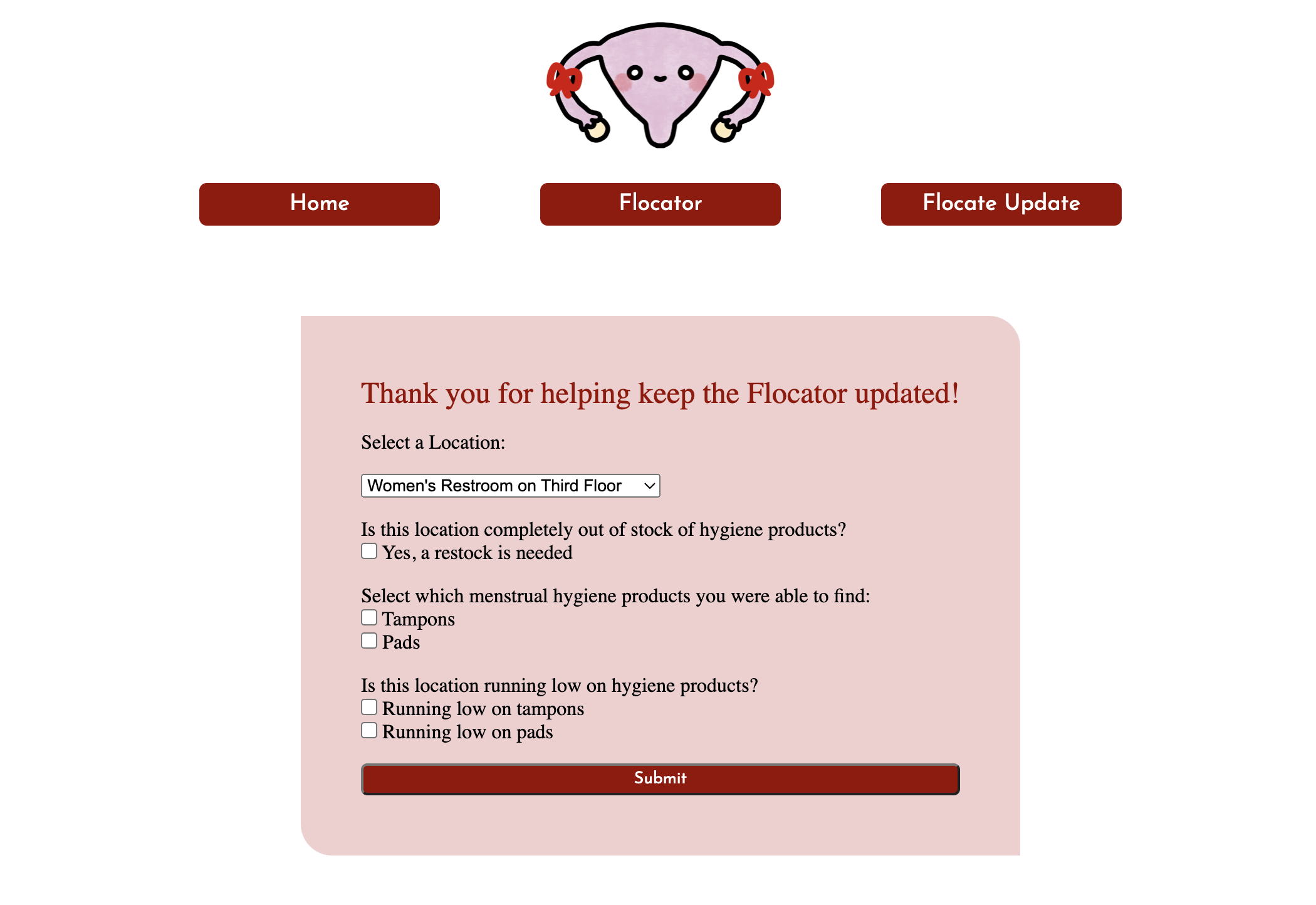
Flocate Update tab that helps update the Flocator
Inspiration
We recently heard of a new campus initiative called FlowForward that strives for menstrual equity on UNC's campus and they recently held an audit around campus to track the availability of menstrual hygiene products.
This inspired us to create the Menstruation Station Flocator to make updated information easily available to UNC students about where they can find pads and/or tampons and which locations may be running low or out of stock of menstrual hygiene products. Furthermore, students can easily help keep the Flocator updated by filling out a quick form on the Menstruation Station website.
What it does
The Flocator tab on our website displays a map that is populated with color-coded pins that let users know which menstrual hygiene products are located where on campus and if those locations may be running low or not. Users can also fill out a form which our tool will process to update the Flocator map!
How we built it
We built the Menstruation Station using HTML, CSS, JavaScript, the Google Maps JavaScript API, and Flask.
Challenges we ran into
We initially tried to build our application using Taipy but found that it was difficult for us to adapt to showing the map so we decided to use the Google Maps API instead and lean on our web development skills. We also ran into challenges being able to run the live server on our machines but we troubleshooted those efficiently! We then ran into challenges integrating our frontend and backend to be able to pass data efficiently and simplified our implementation by using dummy data for the time being.
Accomplishments that we're proud of
We are proud of our abilities to collaborate effectively and continuously update our strategy based on our progress. We are proud of the ease of use of our website and the interactivity offered through the Flocator map!
What we learned
We learned how to scale our project effectively to the proper technologies and our abilities. We became familiar with git's collaborative features, the Google Maps JavaScript API, building a backend with Flask, and integrating a frontend and backend. We also built upon our web development and project planning skills.
What's next for Menstruation Station - Flocator
As for what's next, as a group we were inspired by on-campus pursuits to increase the availability of menstrual products. Clubs like Flow Forward could eventually use our platform to input and utilize data to restock or educate certain departments here at UNC-Chapel Hill on providing these products. Other maps for things like contraceptives would also be a great addition to our platform, to link users to resources for birth control and diva cups. In order to control and protect the integrity of our data, we would be interested in writing a script for preventing bot submissions and other incorrect data (whether that be on purpose or accidentally with user error). This web app could also be integrated into existing systems within the university, for workers to use and for maintenance. We would also like to connect the front end with a more sophisticated backend and database.


Log in or sign up for Devpost to join the conversation.