-
-
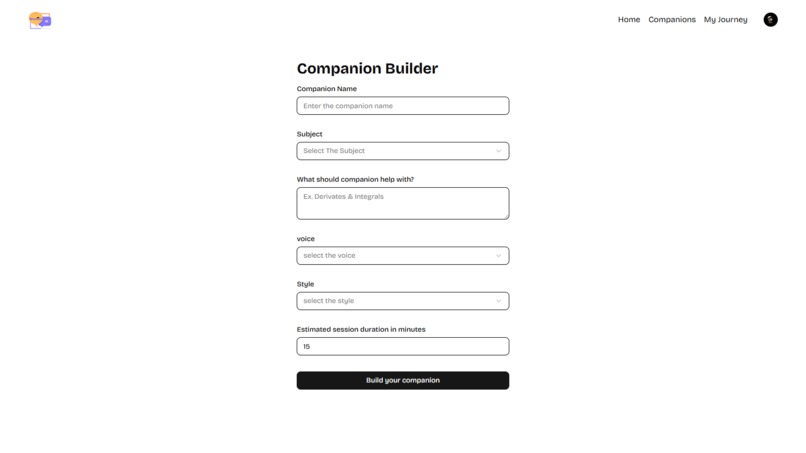
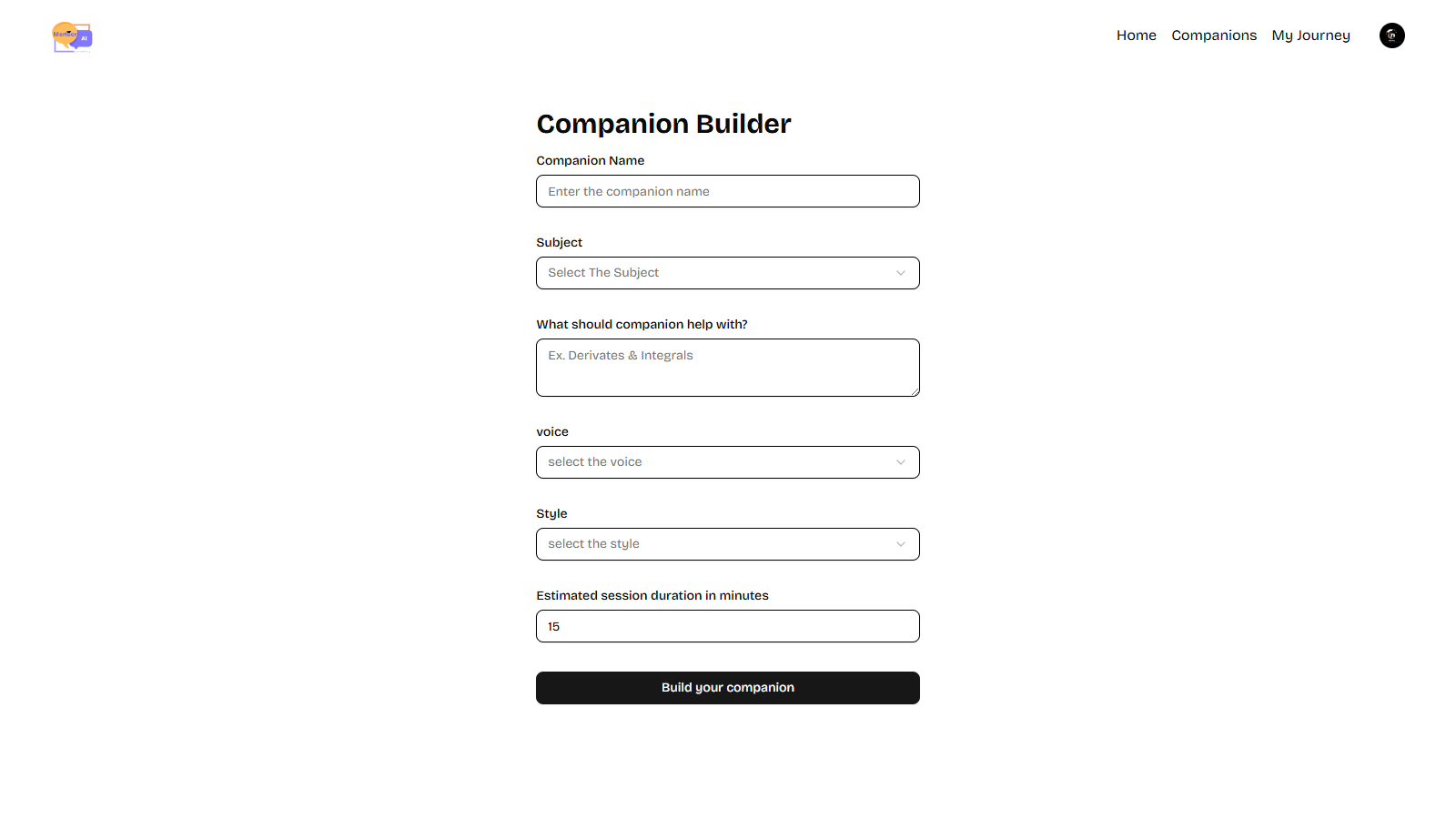
Add Companion screen to create your custom model
-
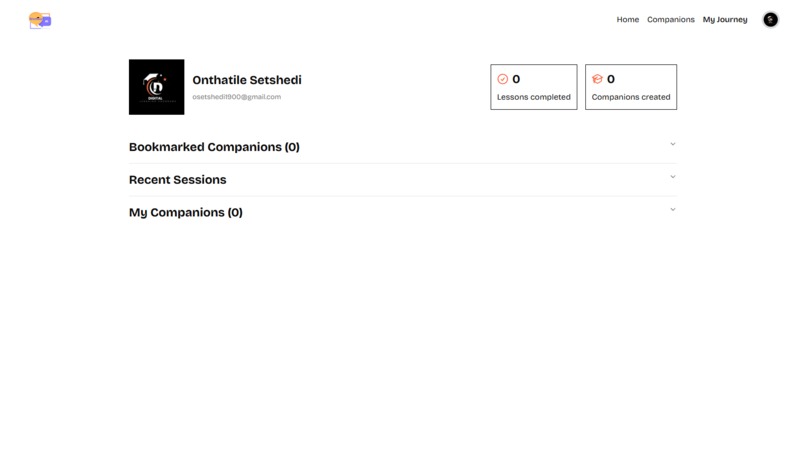
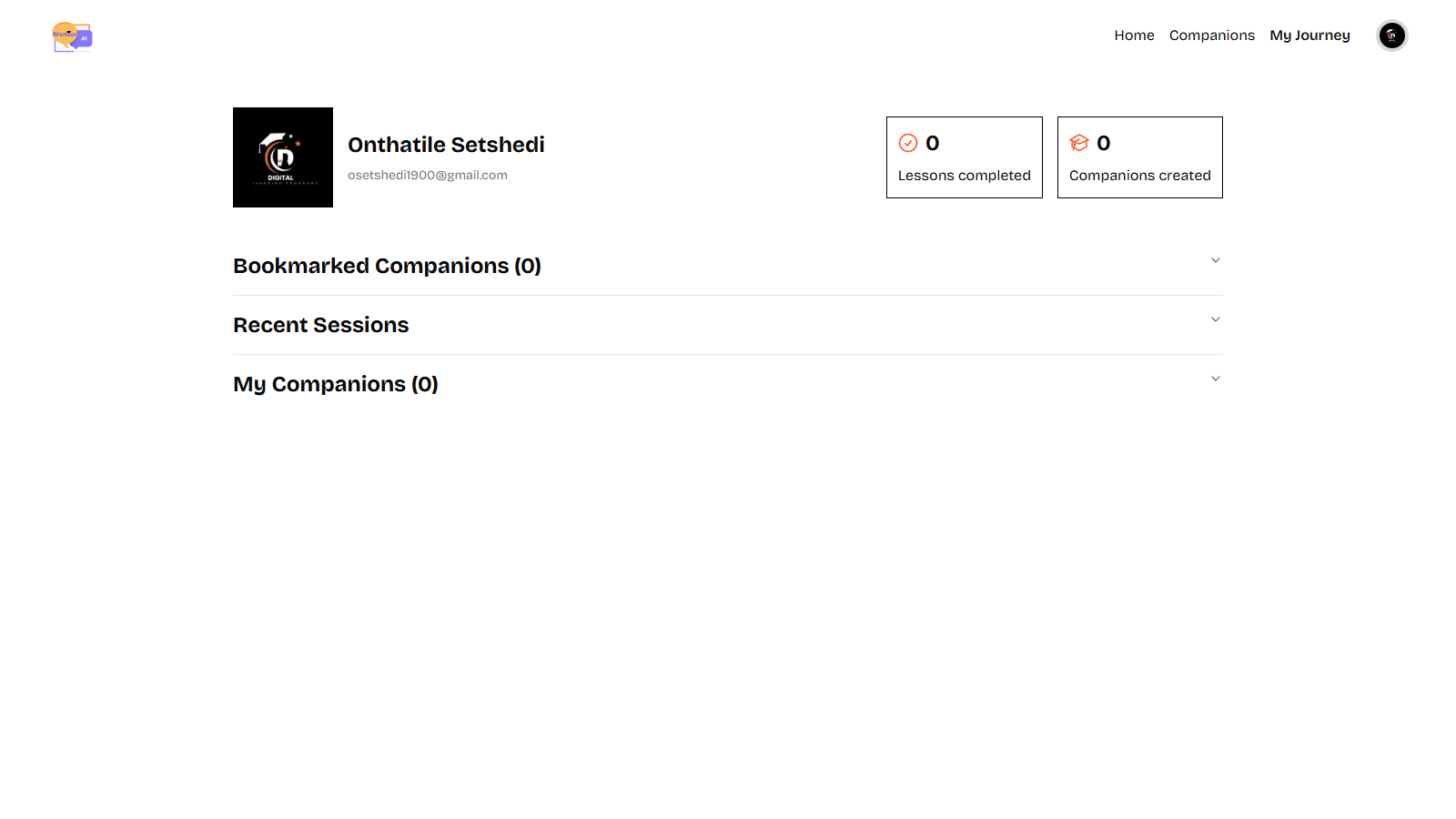
Your mini tracker
-
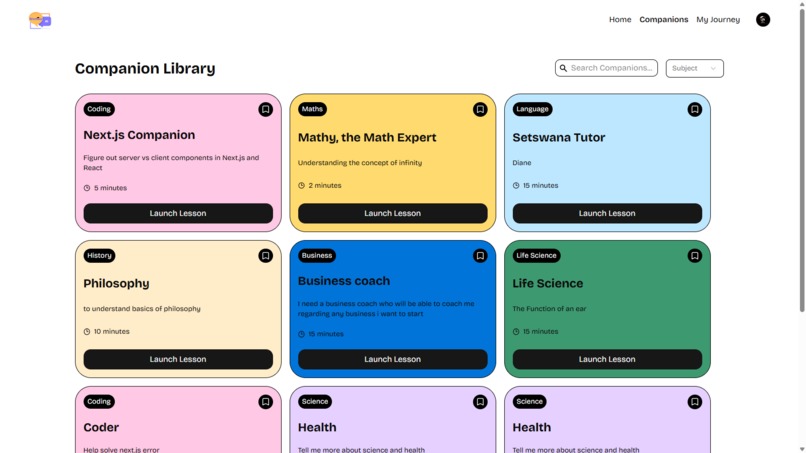
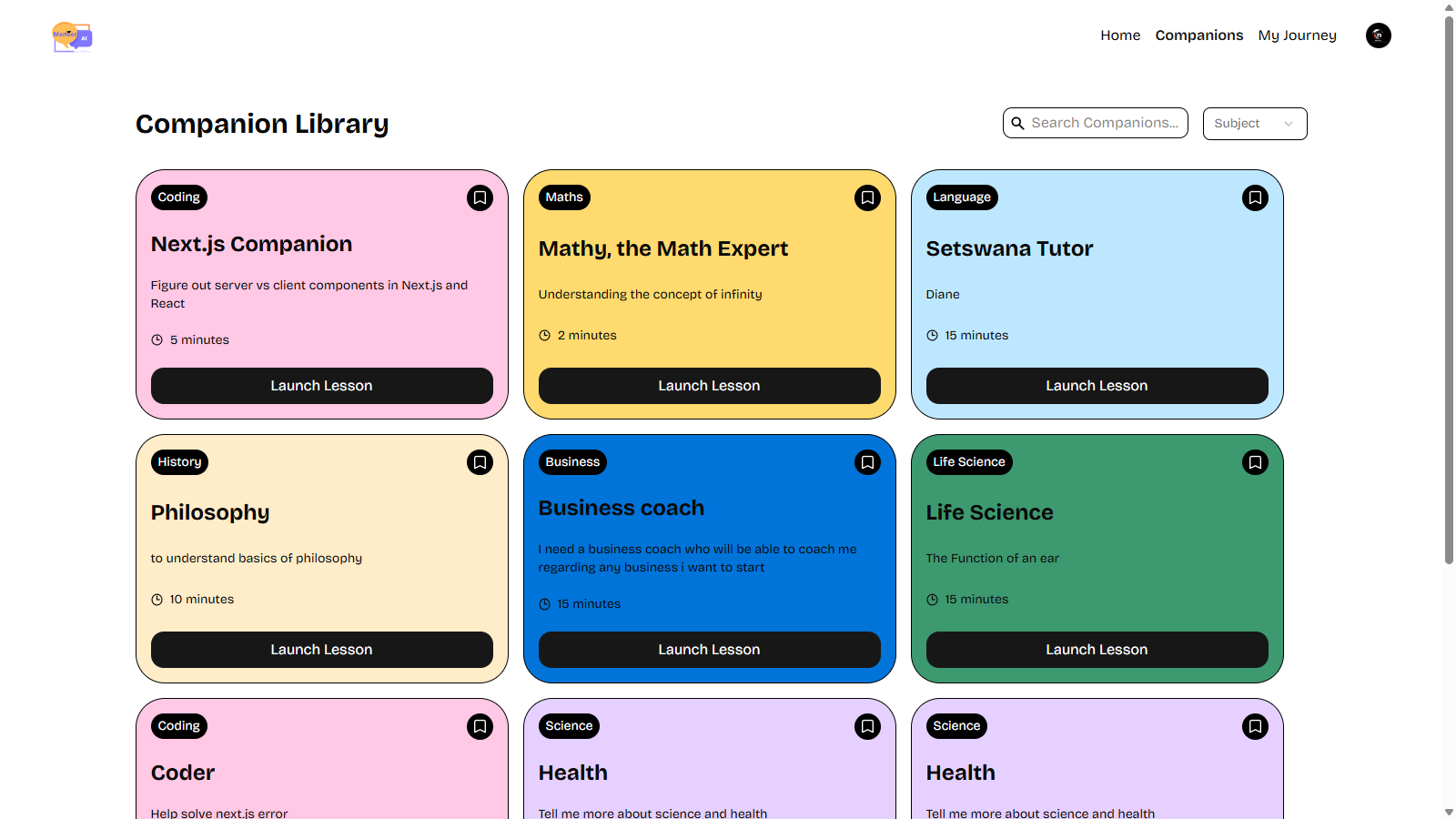
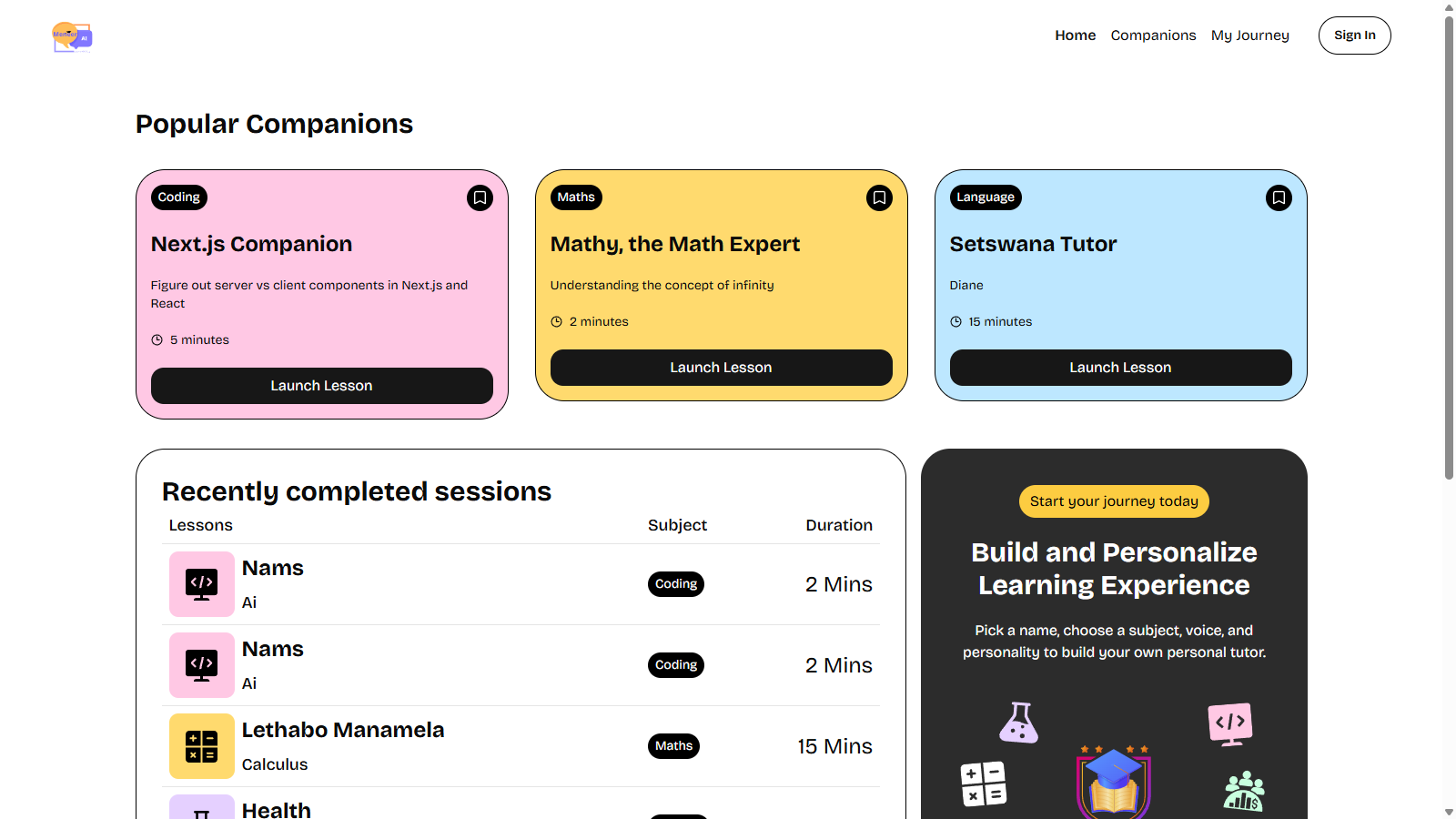
Different companions
-
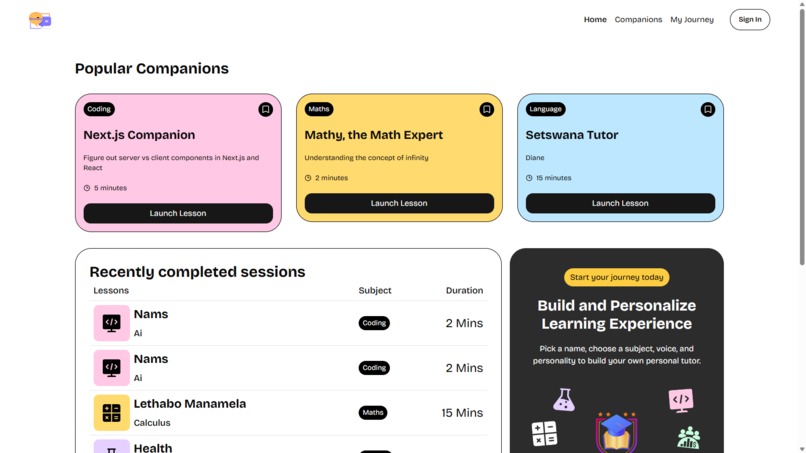
Home screen
-
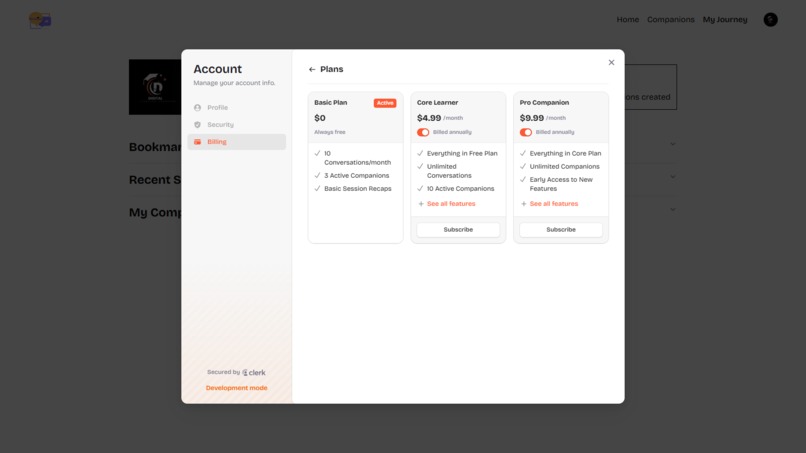
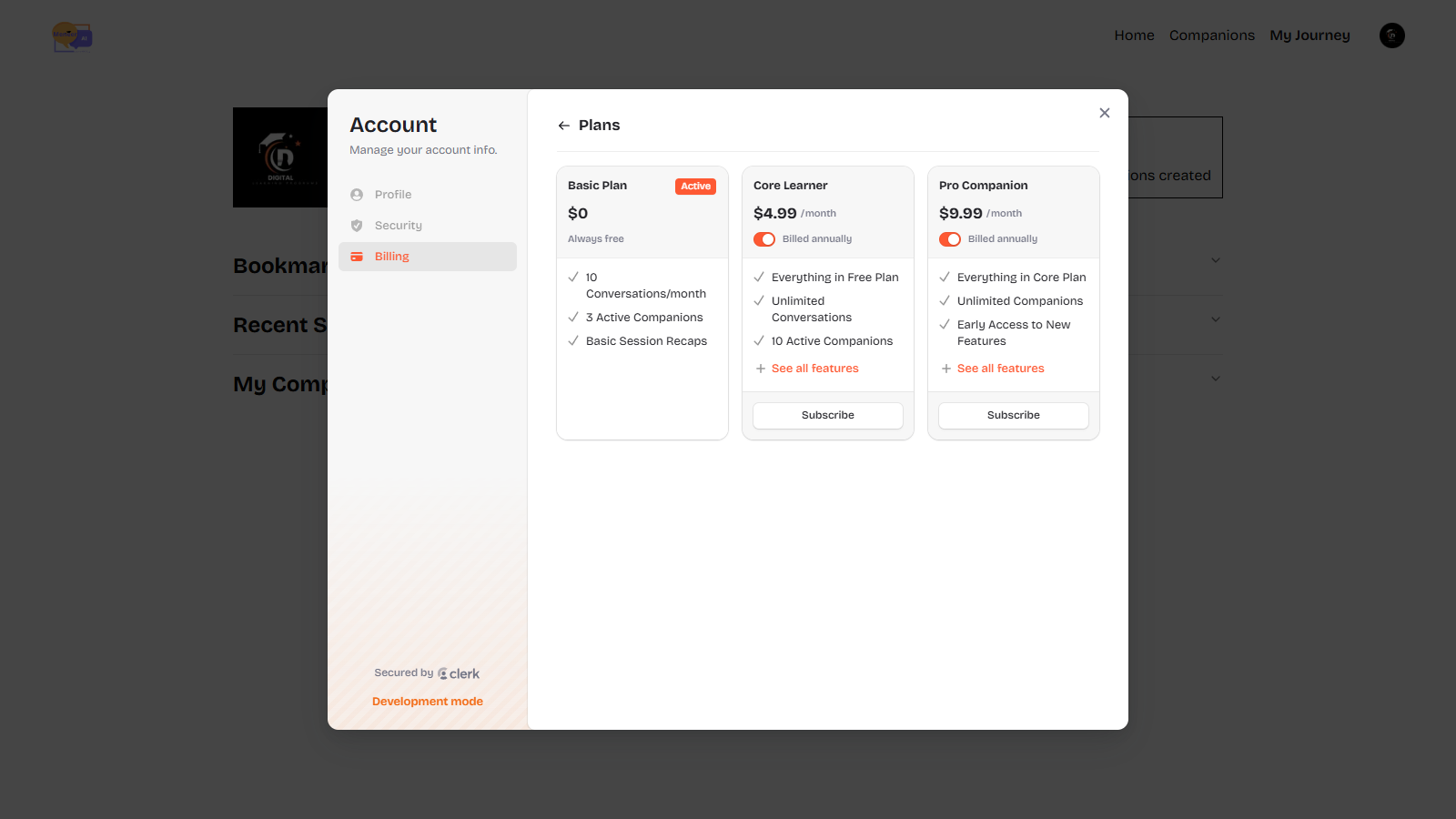
Billing section, but we will remove it soon
Inspiration
Growing up in South Africa, we saw firsthand how many students, especially in rural areas, lack access to consistent, quality education—particularly in STEM subjects. The shortage of qualified teachers, overcrowded classrooms, and lack of personalized support motivated us to build Meneer AI: an online AI-powered tutor designed to provide interactive, personalized, and accessible STEM education for high school and tertiary learners.
We wanted to create something relatable, which is why we chose the name "Meneer"—a familiar, local term for a teacher in Afrikaans, giving the AI tutor a human-like presence.
What it does
Meneer AI is an AI-powered online tutor designed for African high school and university students, with a focus on STEM subjects. It allows students to:
1.Interact with personalized AI tutors through both text and voice
2.Track their academic journey with the “My Journey” dashboard
3.Receive tutoring in math, science, and tech subjects, all online
By simulating real conversations with a smart tutor, Meneer AI creates a more engaging and personal learning experience—right from a mobile phone or browser.
How we built it
We used a modern web stack to ensure a smooth and scalable experience:
*Frontend: Next.js 15 with TypeScript for dynamic routing and performance
*UI: Tailwind CSS & Radix UI for responsive, accessible design
*Voice AI: Vapi.ai for real-time, natural language conversations
*Authentication: Clerk for secure user login and profile management
*Database & Backend: Supabase (PostgreSQL) for storing user data and progress
*State Management: React Context and Server Actions
*Monitoring: Sentry for bug tracking and error logging
*Animations: Lottie for interactive learning animations
*Validation: Zod and React Hook Form for clean user input
The architecture is fully modular, with reusable components and a clean folder structure that separates core features like /companions, /my-journey, and /subscription.
Challenges we ran into
Voice latency on slow networks: We had to fine-tune Vapi.ai configurations for suboptimal internet conditions.
Multi-language support: Designing prompts and tutor behavior to adapt to regional languages without losing academic quality was tough.
Personalization logic: Making each AI tutor feel distinct while maintaining curriculum integrity took careful prompt engineering.
Mobile optimization: Ensuring smooth performance on lower-end smartphones required UI and logic simplification.
Accomplishments that we're proud of
Successfully deployed real-time voice AI tutors in a live education setting
Built a fully functional learning dashboard with user progress analytics
Enabled local language(Currently English) interaction, improving accessibility for underserved learners
Created a scalable system that can serve students across the continent
Designed a product with real potential to close the tutoring gap in Africa
What we learned
How to blend AI with education in a practical, meaningful way
Best practices for building scalable SaaS platforms using modern technologies
The importance of designing for constrained environments and low-bandwidth conditions
How to balance usability, accessibility, and tech complexity for diverse African users
Why human-centered design is essential when building for real-world problems
What's next for Meneer Ai
1.Curriculum Expansion: Add more subjects aligned with African exam boards, and be able to track performance and create tests and exams to prepare students.
Language Scaling: Introduce tutors that speak Swahili, Zulu, Yoruba, and more
Mobile App: Release a dedicated Android version for better offline accessibility
4.Pilot Program: Launch school-based pilots in South Africa to see how students will react to it and also what we can improve
Community Integration: Add a student forum and peer-learning features
Small-Model AI: Optimize models for faster responses and edge deployment
Performance Benchmarks
Tested on 3G (WebPageTest + Chrome Lighthouse):
- First Contentful Paint: 2.3s
- Time to Interactive: 3.6s
- Total Page Size: 1.2MB
- Avg Voice Response (Vapi.ai):2.9s
- Daily Data Usage Estimate: 12–15MB/hour
All benchmarks measured under real-world mobile conditions using Lighthouse and WebPageTest.
Built With
- clerk
- lottie
- next.js
- radixui
- react-hook-forms
- sentry
- supabase
- tailwindcss
- typescript
- vapi.ai
- vercel
- zod


Log in or sign up for Devpost to join the conversation.