-
-
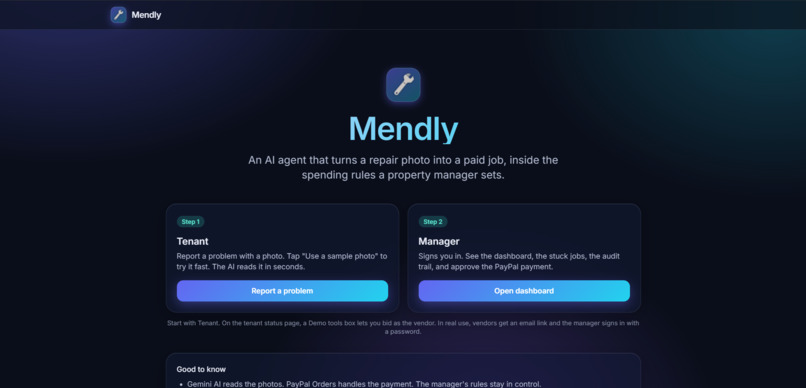
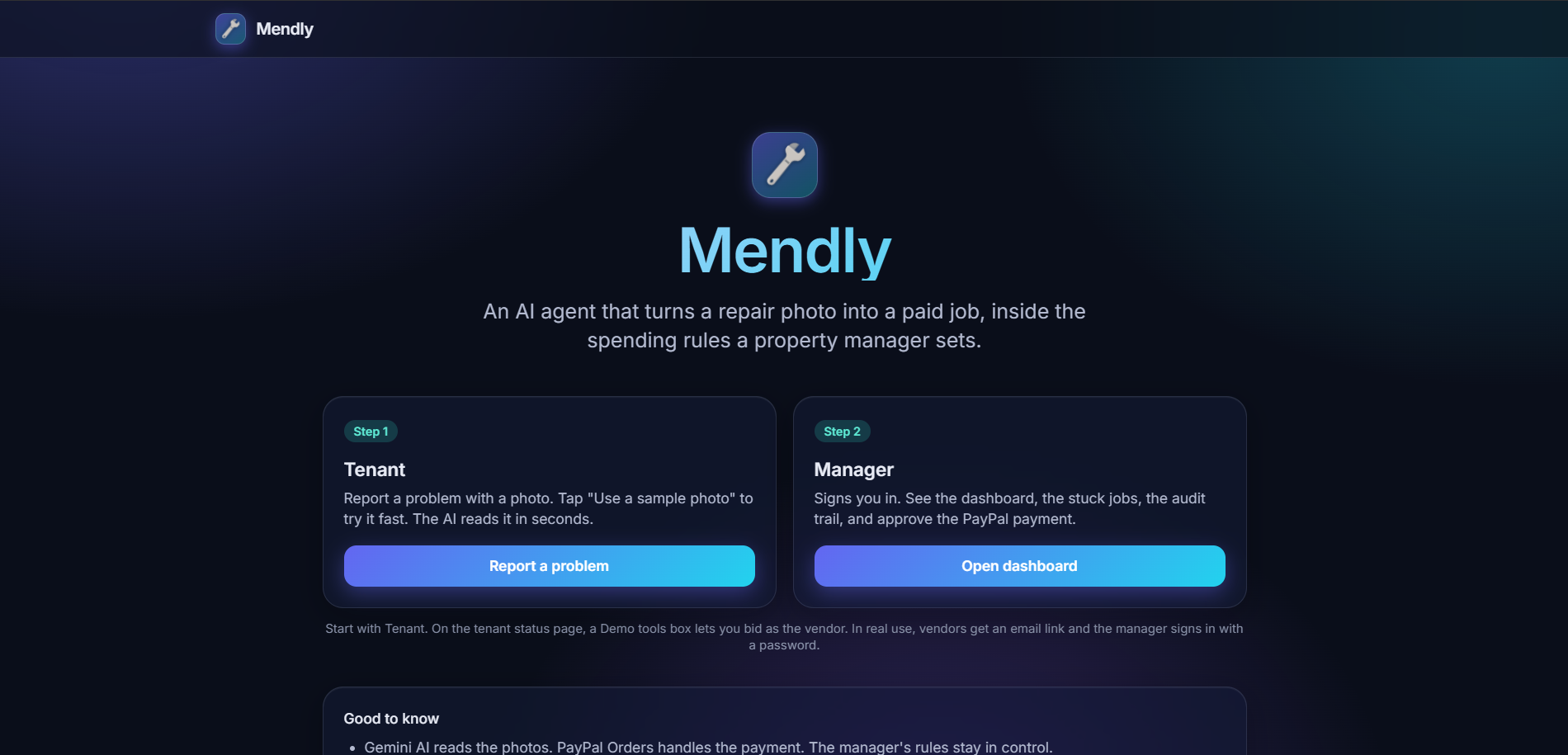
Mendly's front door: report as a tenant or open the manager dashboard. Maintenance that runs itself, and you keep the ownership.
-
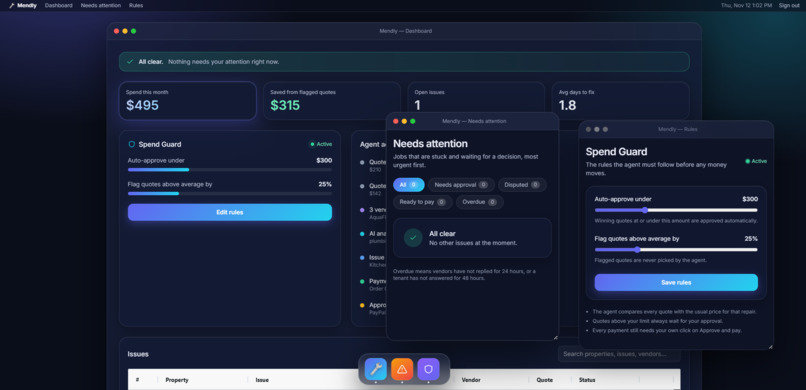
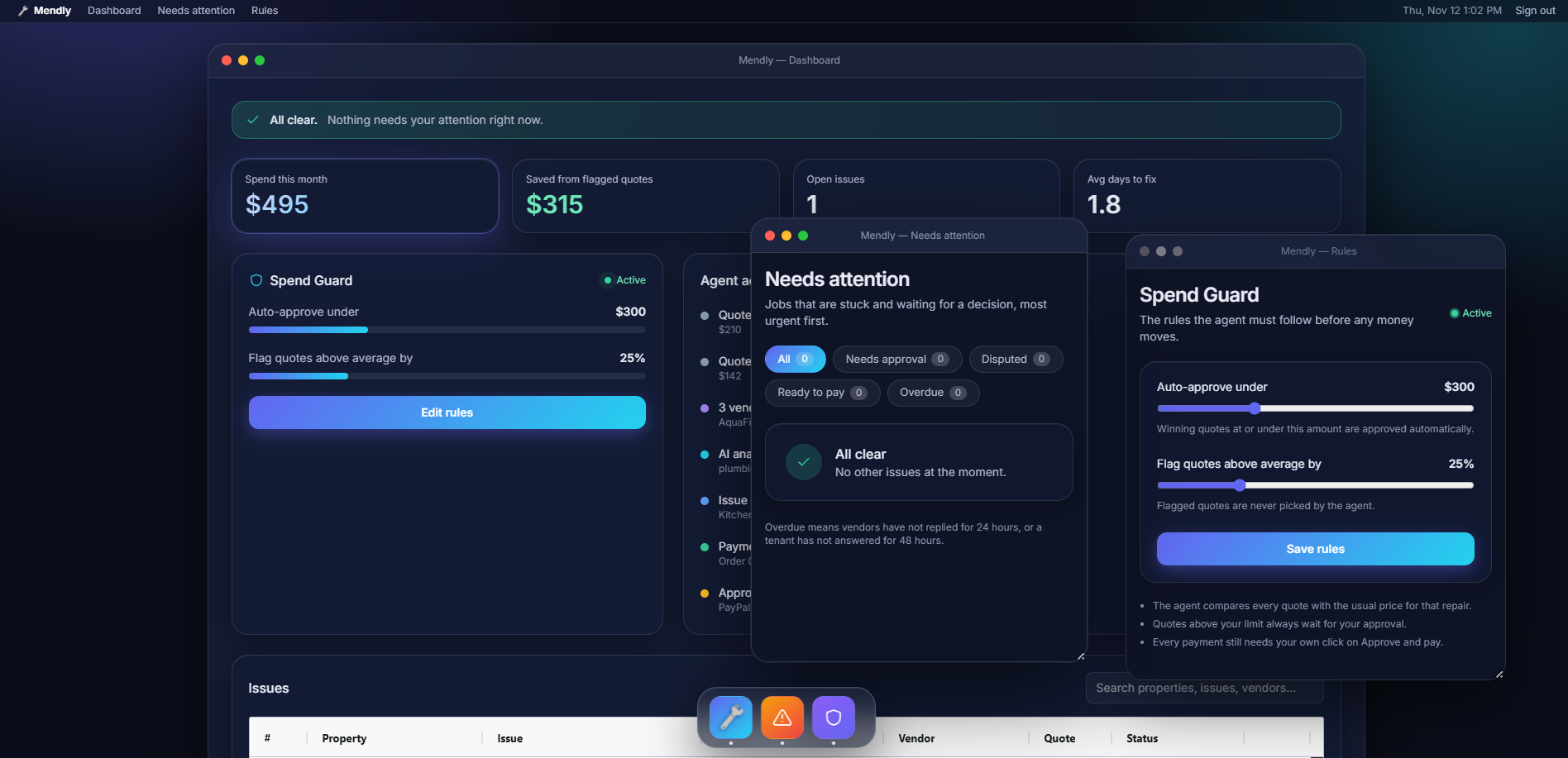
The owner's control room. Spend Guard sets what the agent may do alone, and everything else waits for the owner.
-
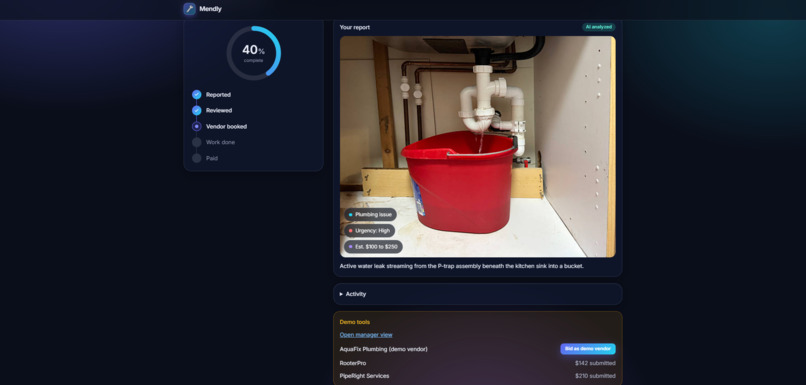
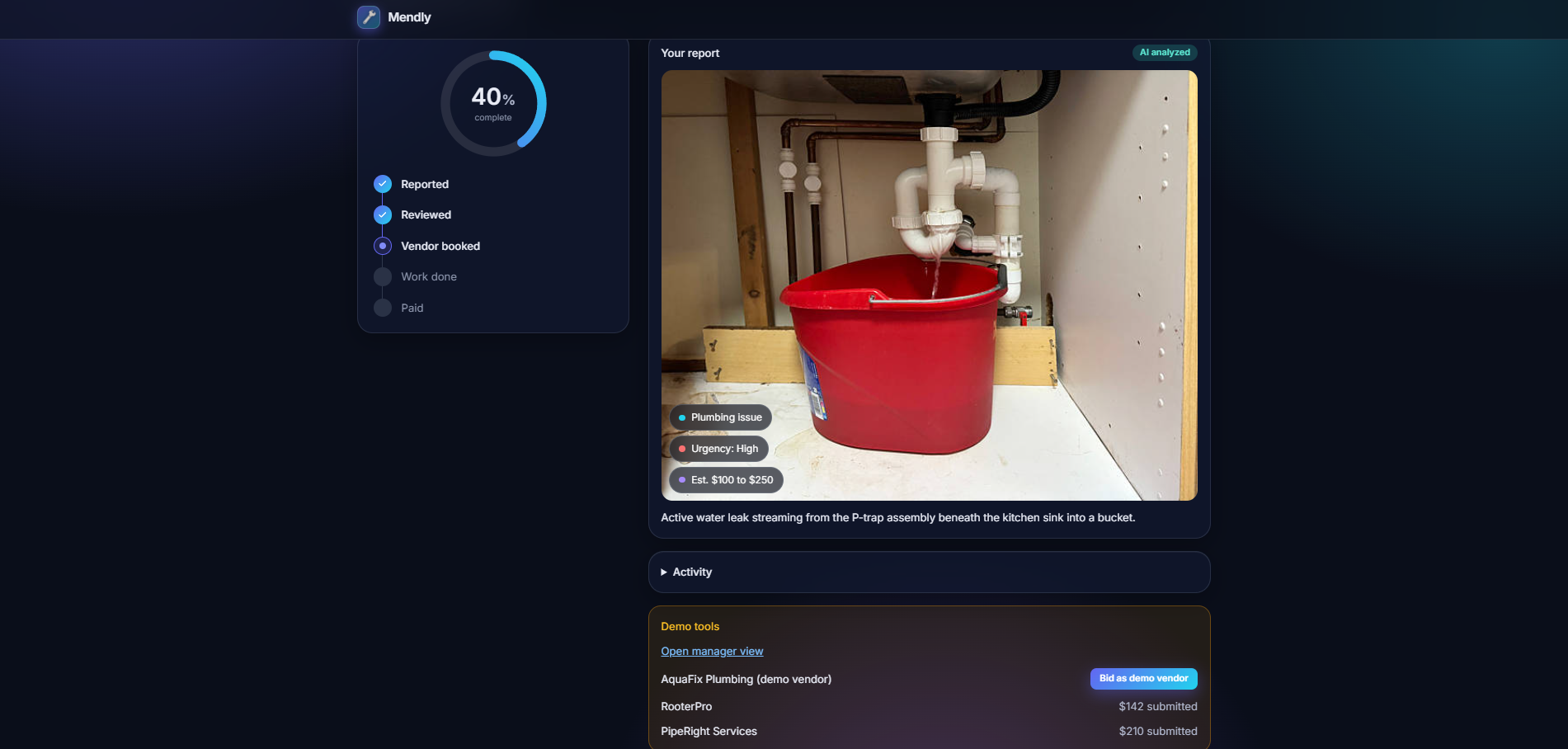
Gemini reads one tenant photo and returns the trade, urgency and a fair price range. Vendors then reply with quotes.
-
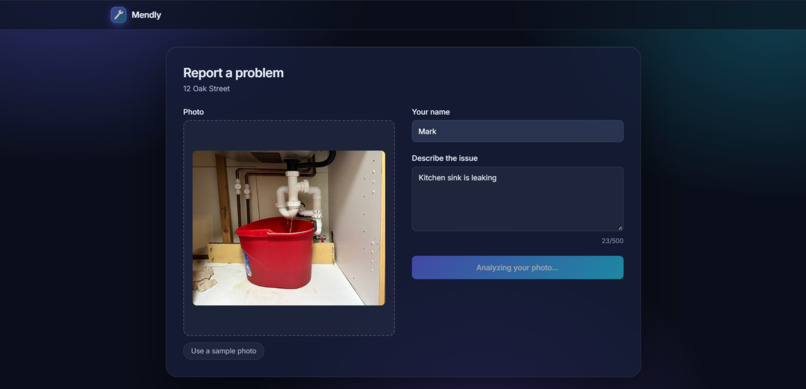
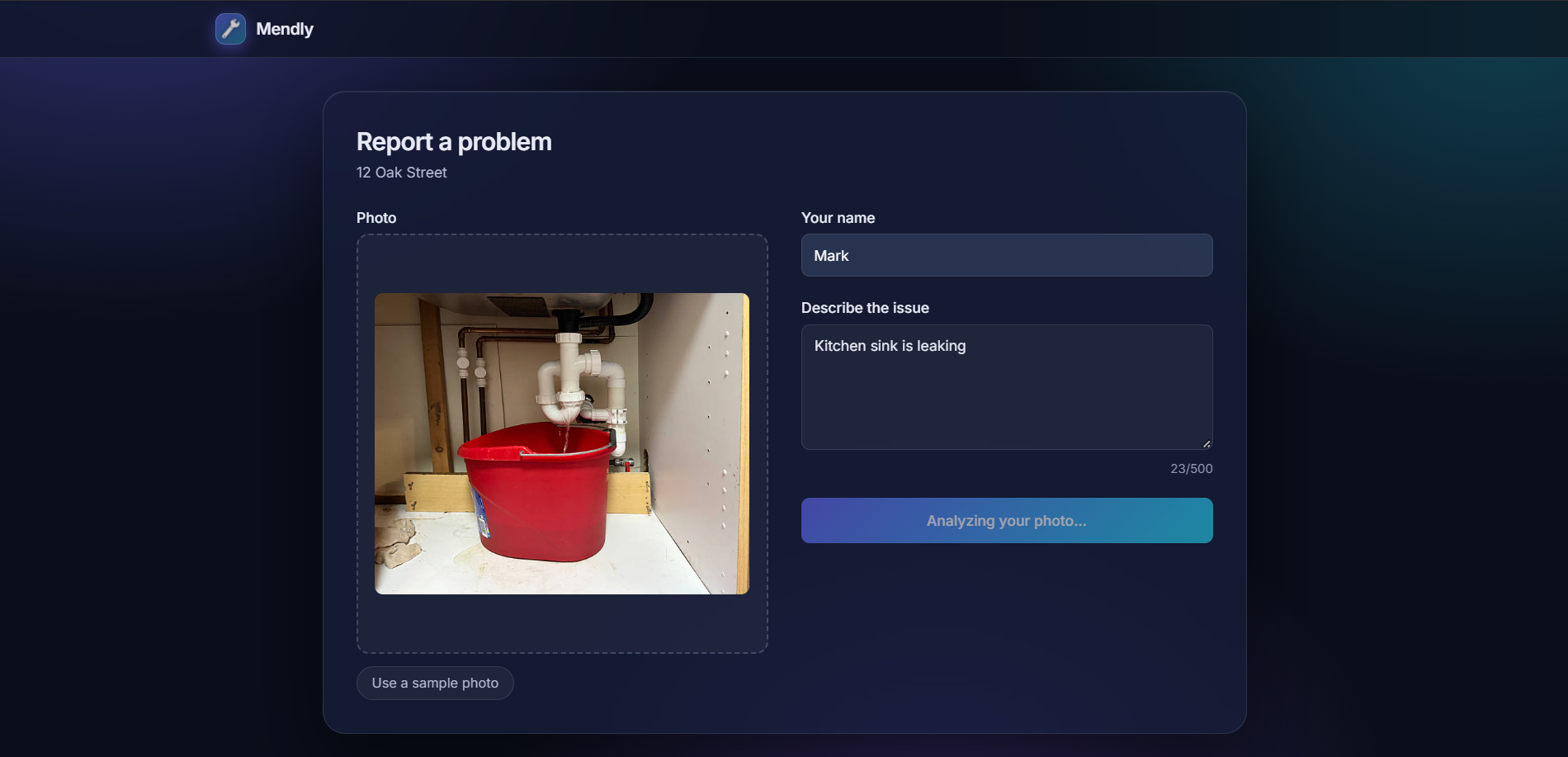
The tenant's side: one photo and one line, no forms and no phone calls.
-
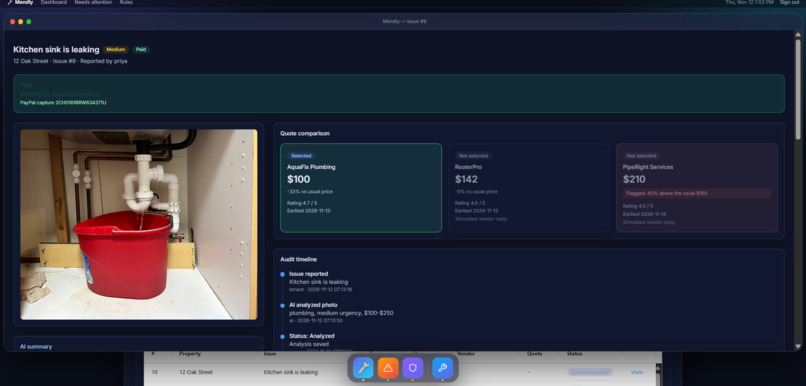
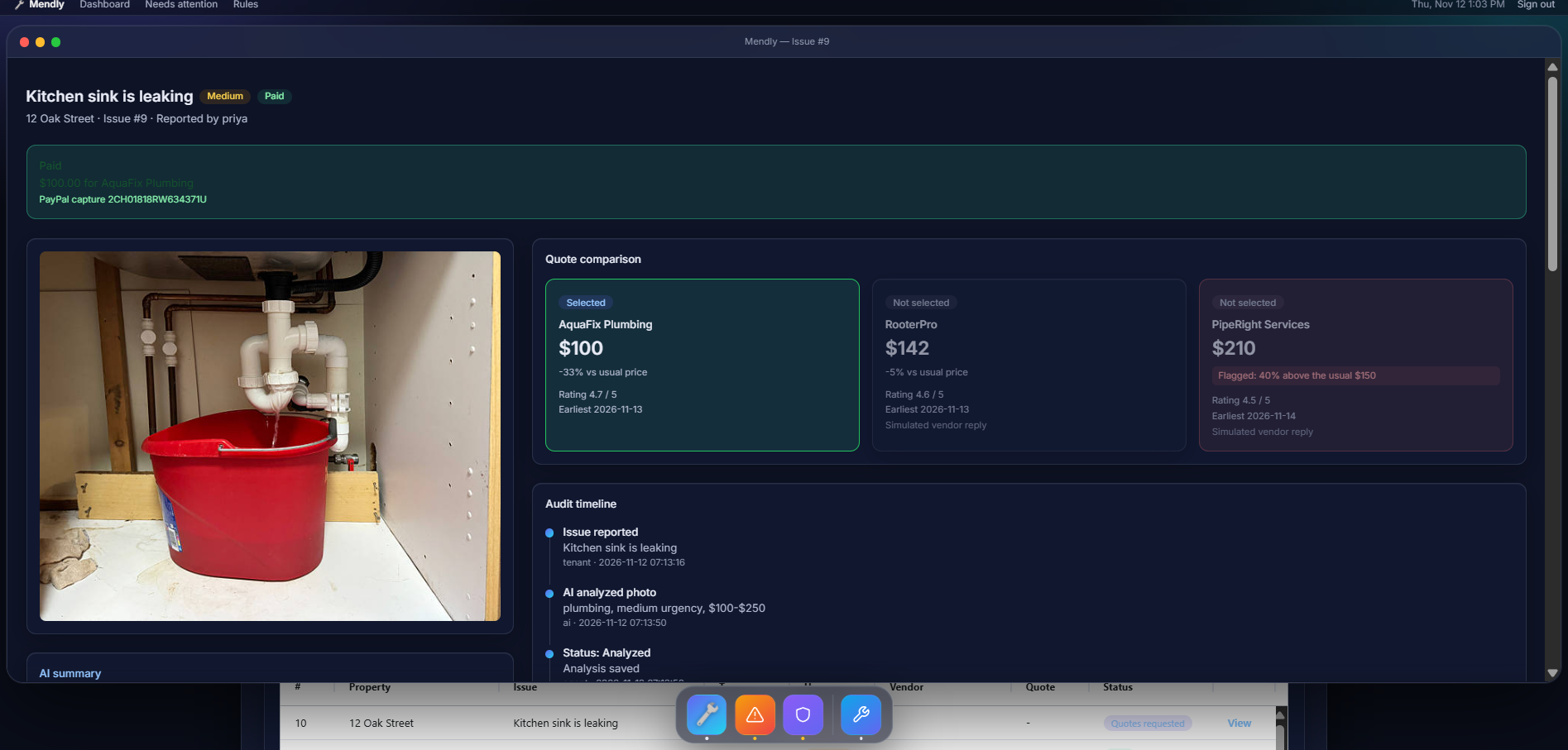
The agent flags an overpriced quote, then PayPal pays the fair vendor.
-
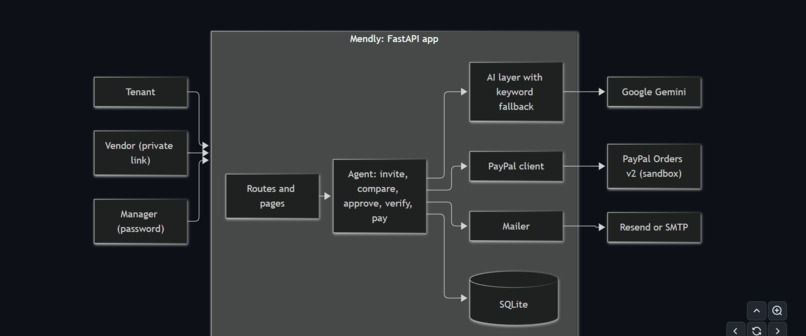
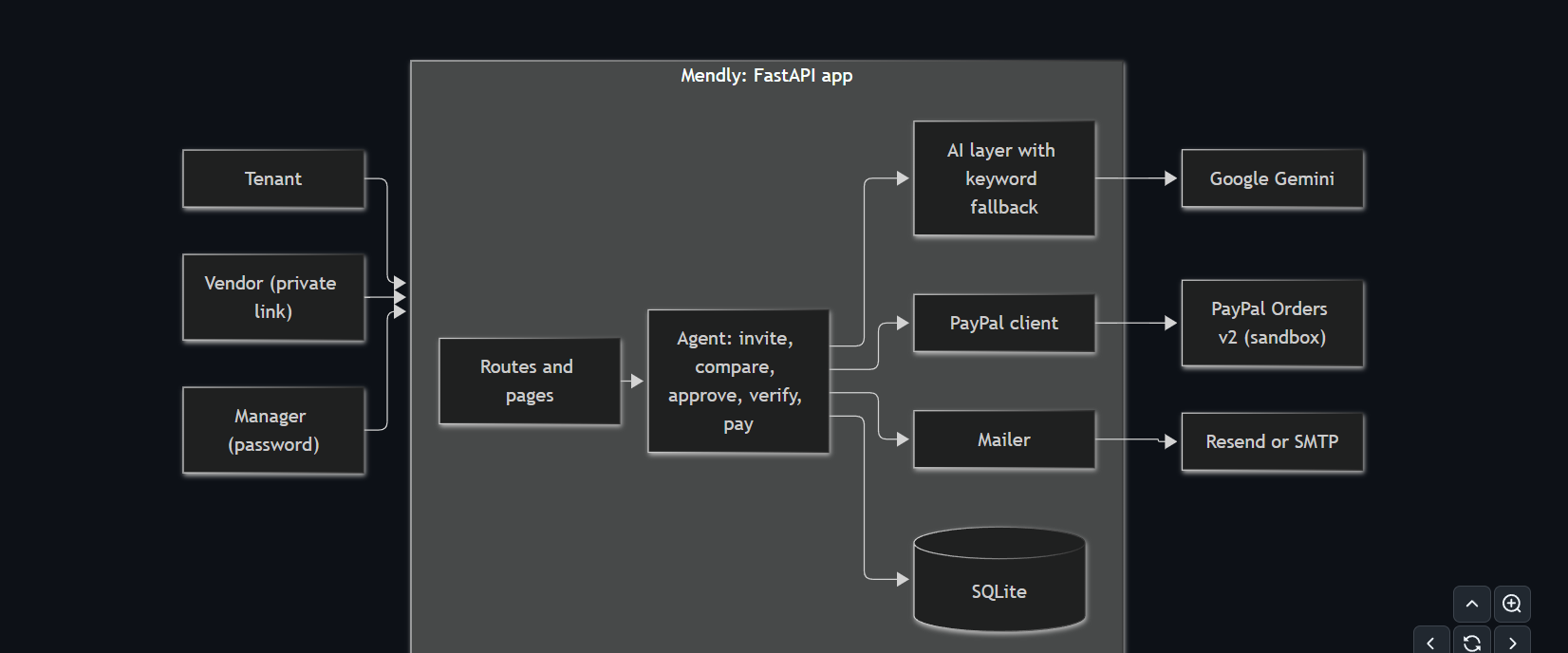
How it fits together: Gemini judges, code enforces the rules, the manager approves, and PayPal moves the money.
Inspiration
Every rental home has the same loop. A tap leaks. The tenant sends a blurry photo in a group chat. The manager phones three plumbers, compares prices from memory, books one, later asks if it's really fixed, and then has to pay. None of that is skilled work. It's chasing.
I wanted to see if an agent could do the chasing, while the person who owns the property keeps ownership of every dollar. Mendly is for small landlords and property managers with roughly 10 to 50 homes: too busy to chase every repair, too small for enterprise software.
What it does
Maintenance that runs itself. You keep the ownership.
- A tenant reports a problem with one photo and one line.
- Gemini diagnoses it: the trade, urgency and a fair price range.
- The agent invites up to three vendors by private link, with no accounts.
- Every quote is checked against the usual price for that repair. Quotes that are too high are flagged and never picked.
- Gemini picks the best value from what's left. If the price is above the manager's limit, the agent stops and asks.
- The vendor does the work and uploads an after photo. Gemini compares before and after and returns a confidence score.
- The manager approves the payment, and PayPal captures it. The job closes as Paid, with a full audit trail.
An agent that isn't a yes-man
Most AI agents agree with whoever is talking to them. Mendly is built to push back, and it takes orders from one person: the owner.
- It pushes back on vendors. A quote more than 25% above the usual price is flagged and never picked, however it's worded.
- It pushes back on the tenant's word. "It's fixed" isn't enough. Gemini checks the before and after photos, and "still broken" opens a dispute.
- It pushes back on itself. Below a 70% confidence score, it doesn't guess. It escalates to a human.
- It listens only to the owner. The manager's Spend Guard rules are the only thing that changes what the agent is allowed to do, and only the manager can approve spending and click pay. Vendors and tenants can influence the facts, but they can't change the rules.
That's the design principle: the AI judges, code enforces, and the owner decides.
How I built it
- Gemini plays three roles: it reads the repair photo, ranks the quotes, and verifies the finished work.
- Plain code enforces the rules: the 25% price flag, the auto-approve limit and the 70% confidence threshold are code, not prompts, so the AI can't talk its way past them.
- PayPal moves the money: Orders v2 in the sandbox. The manager approves on PayPal's own page, then Mendly captures the payment. Each attempt has its own request ID, so a double click can't pay twice.
- Safe by design: if Gemini is down, the agent falls back to simple rules and says so in the activity log.
- Stack: Python, FastAPI, SQLite, Jinja2 templates, Pillow and httpx.
The principle behind it: the AI judges, code enforces, the manager approves, and PayPal pays.
Challenges
- Payments: I first tried PayPal Payouts to send money straight to vendors, but my sandbox account's country was not allowed to send payouts. I moved to Orders with manager approval, which suits the "you keep the ownership" idea better.
- A subtle PayPal bug: after resetting demo data, new jobs reused old request IDs, so PayPal returned stale orders. I fixed it by tying each ID to the job's creation time.
- AI limits: Gemini quota errors pushed me to build a model fallback chain and a rules-based fallback.
- Free hosting: the demo server resets when it sleeps, so the app reloads its starting data on every start.
What I learned
The hard part of agentic commerce isn't getting an AI to spend money. It's deciding what it must never do alone. Putting hard rules in code and judgment in the model made the system easier to trust, and easier to explain.
What's next
- Pay each vendor directly to their own PayPal account
- WhatsApp and SMS instead of email
- Repeat-issue detection, so a tap that keeps leaking raises a flag early
- Vendor sign-up with trade and rating checks
- Many properties and many managers
Try it
Open the live demo and use Report a problem, then the Demo tools box on the status page. The first load can take about a minute while the free server wakes up. Everything runs in PayPal's sandbox, so no real money moves. Most vendors are simulated, and one can be played by you.
