-
-
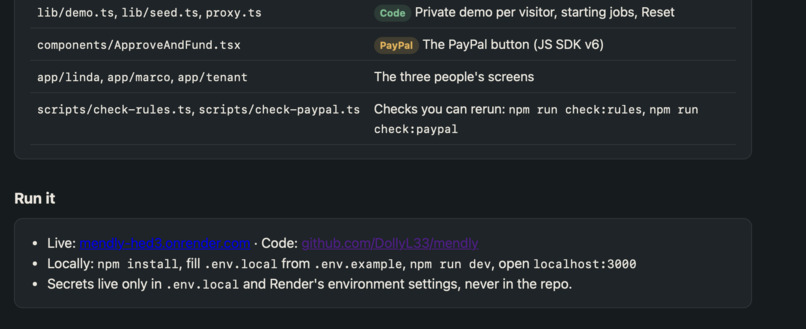
Map(3)
-
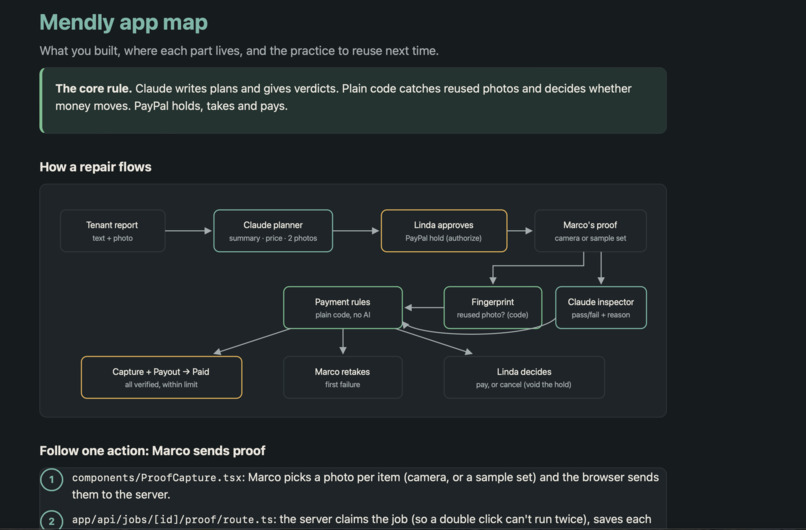
Map(1)
-
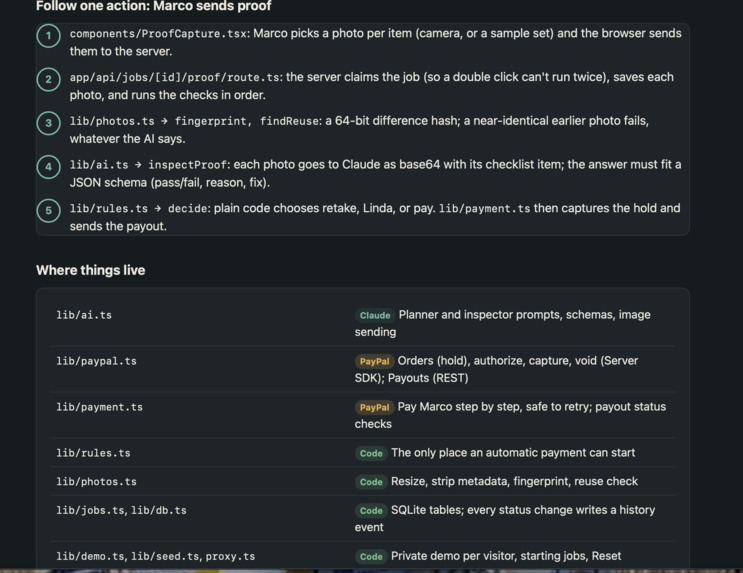
Map(2)
-
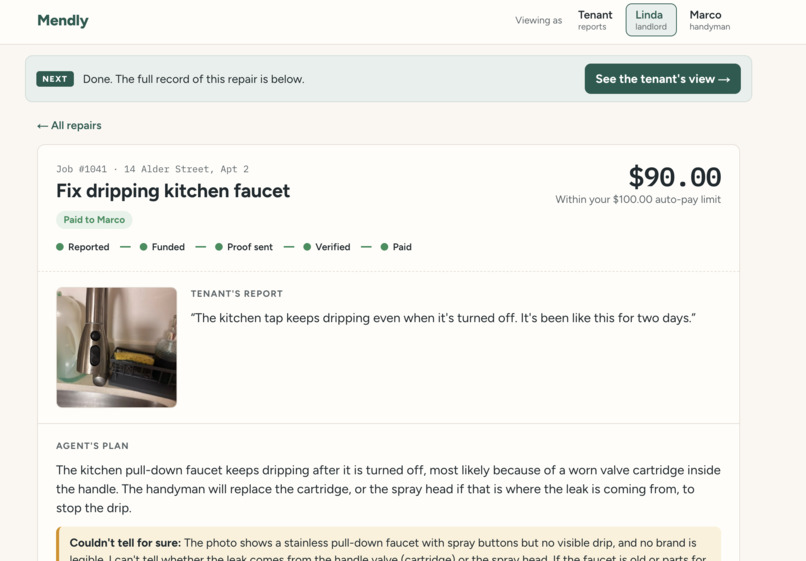
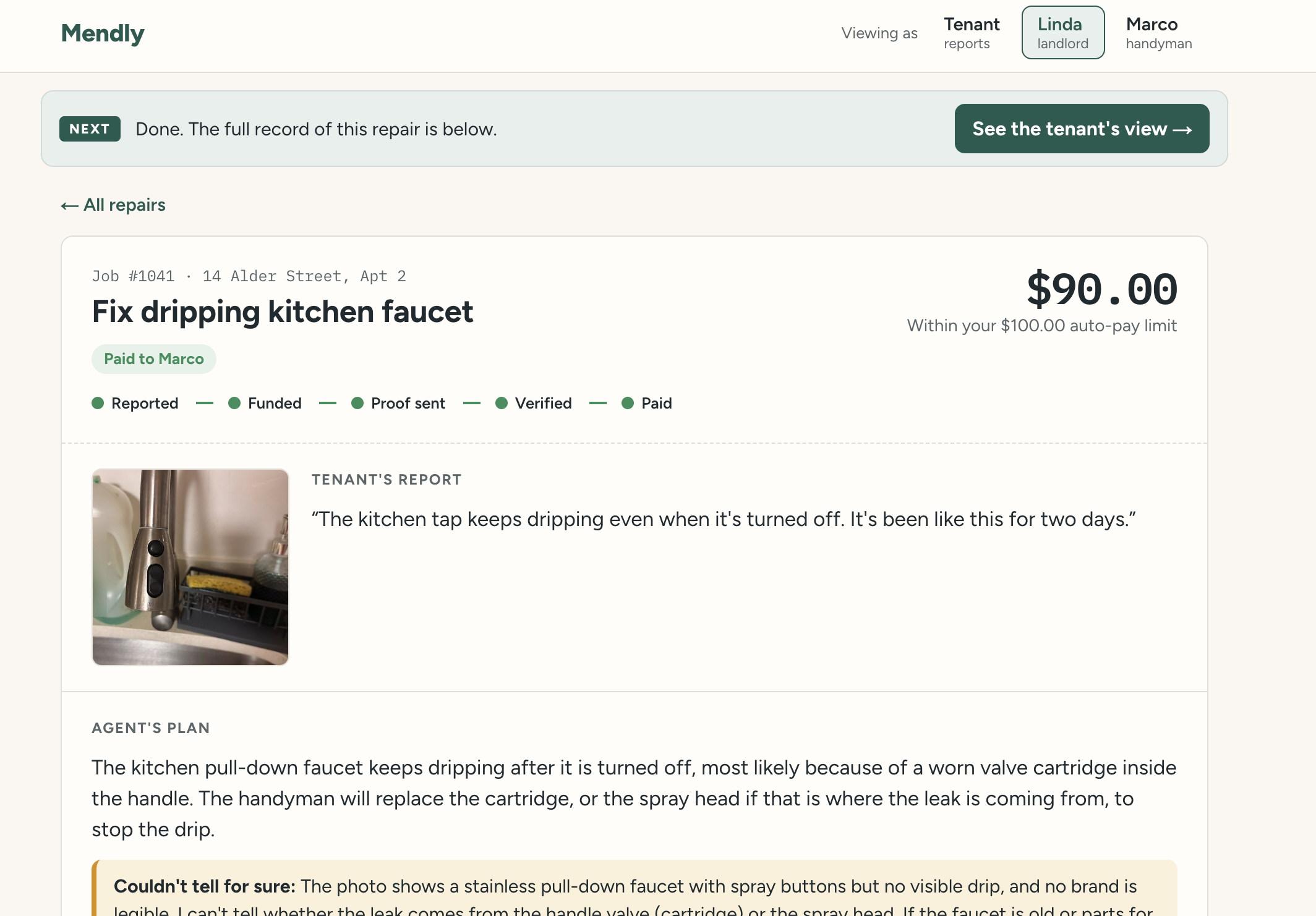
Landlord view to inspect pictures
-
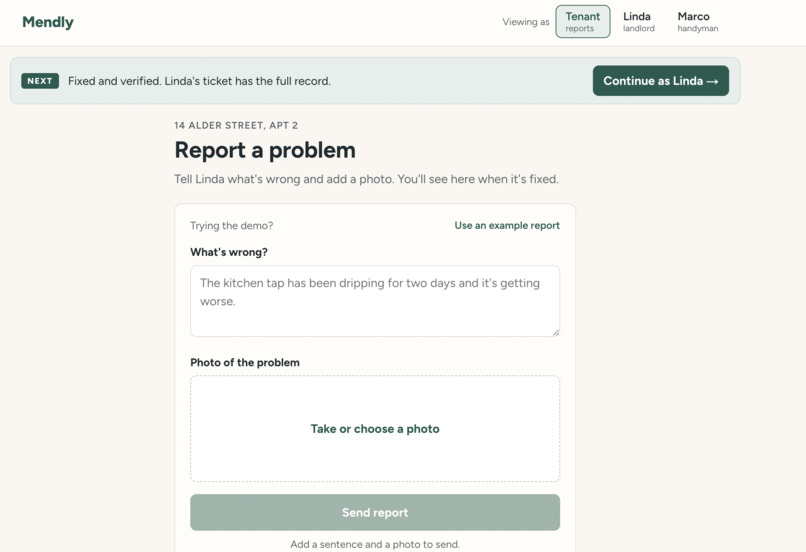
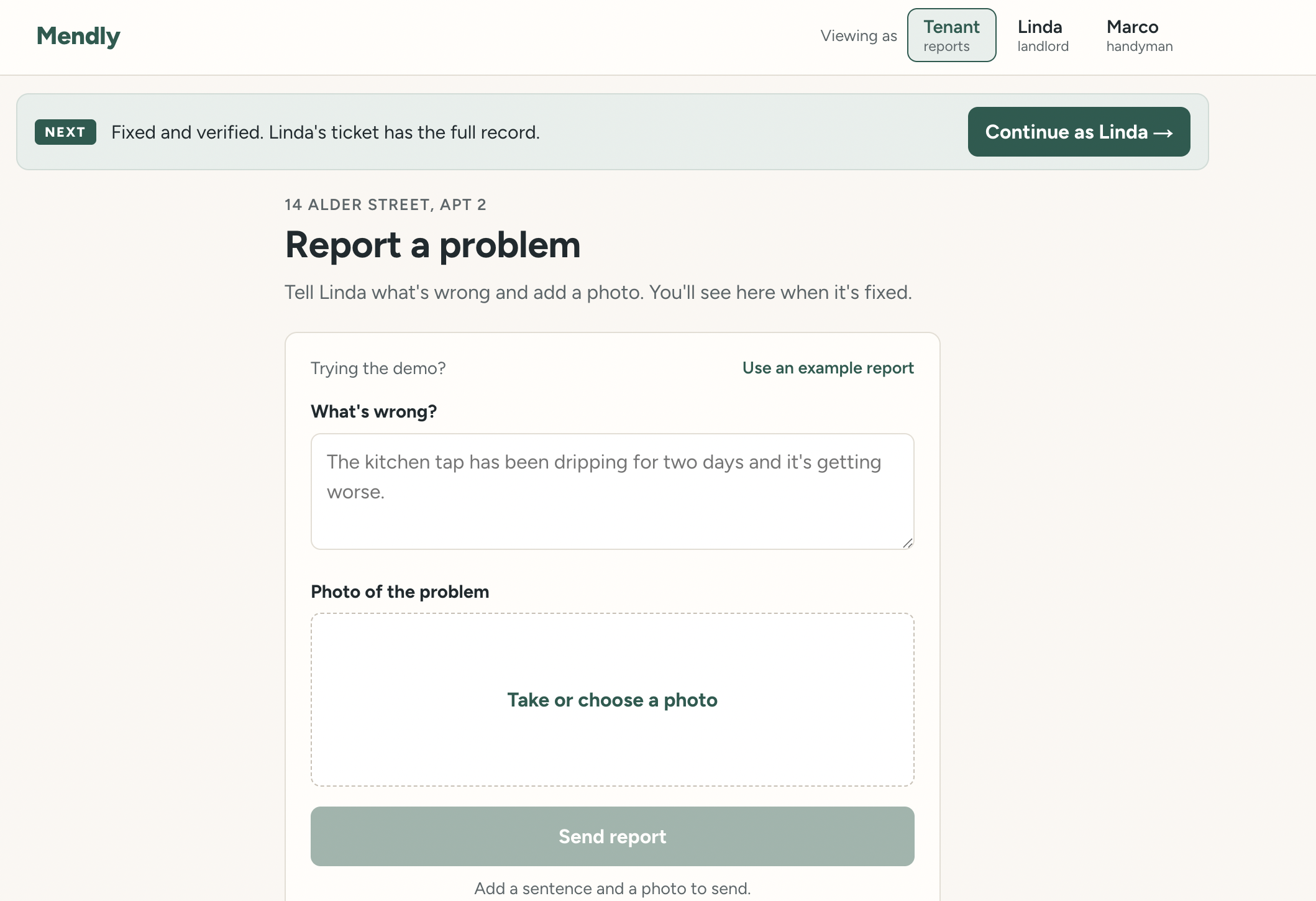
Tenants View to report problem and attach pictures
-
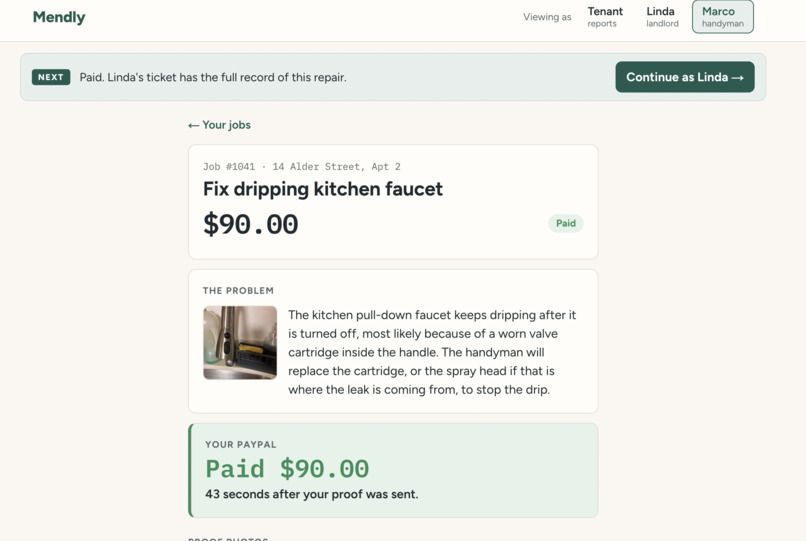
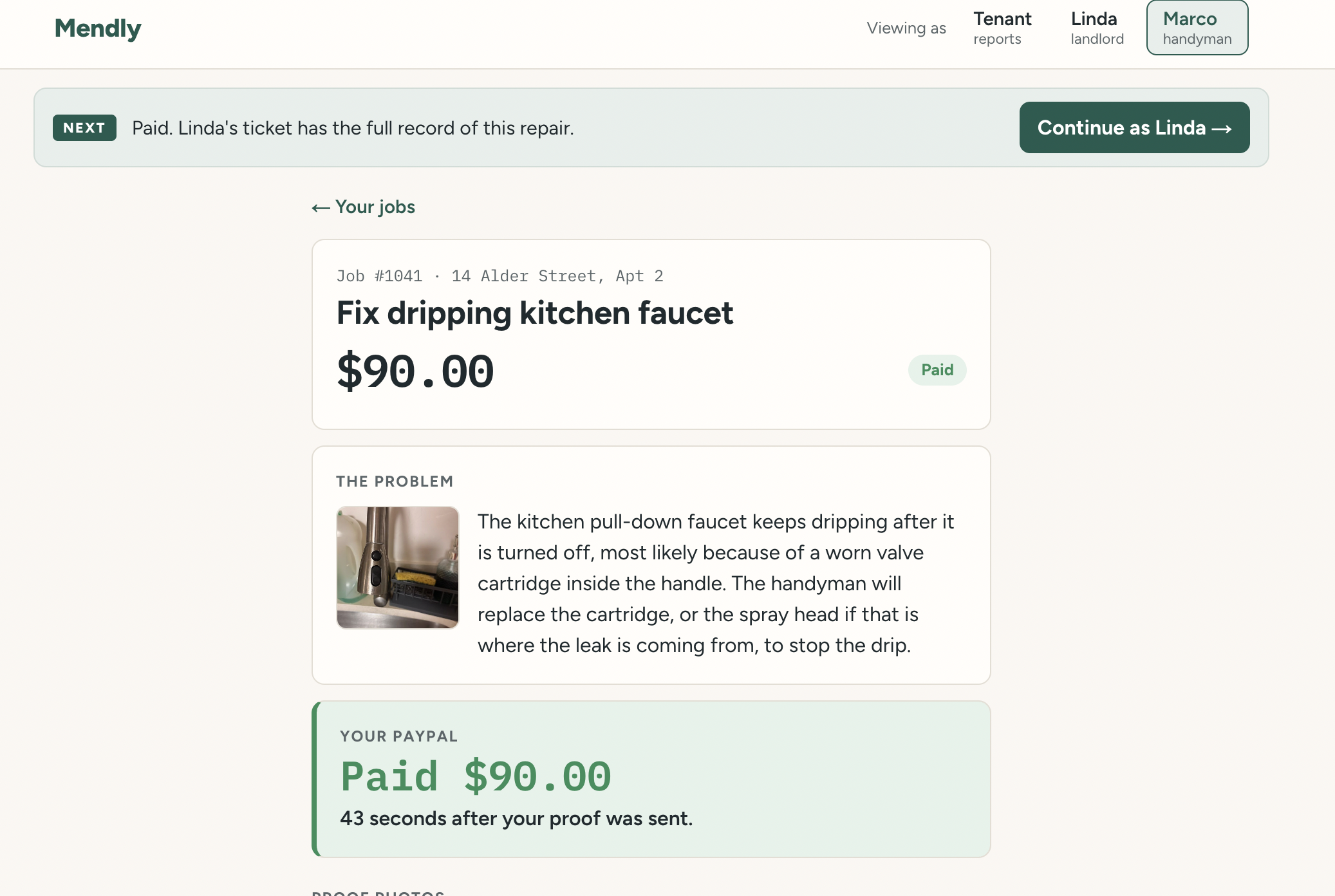
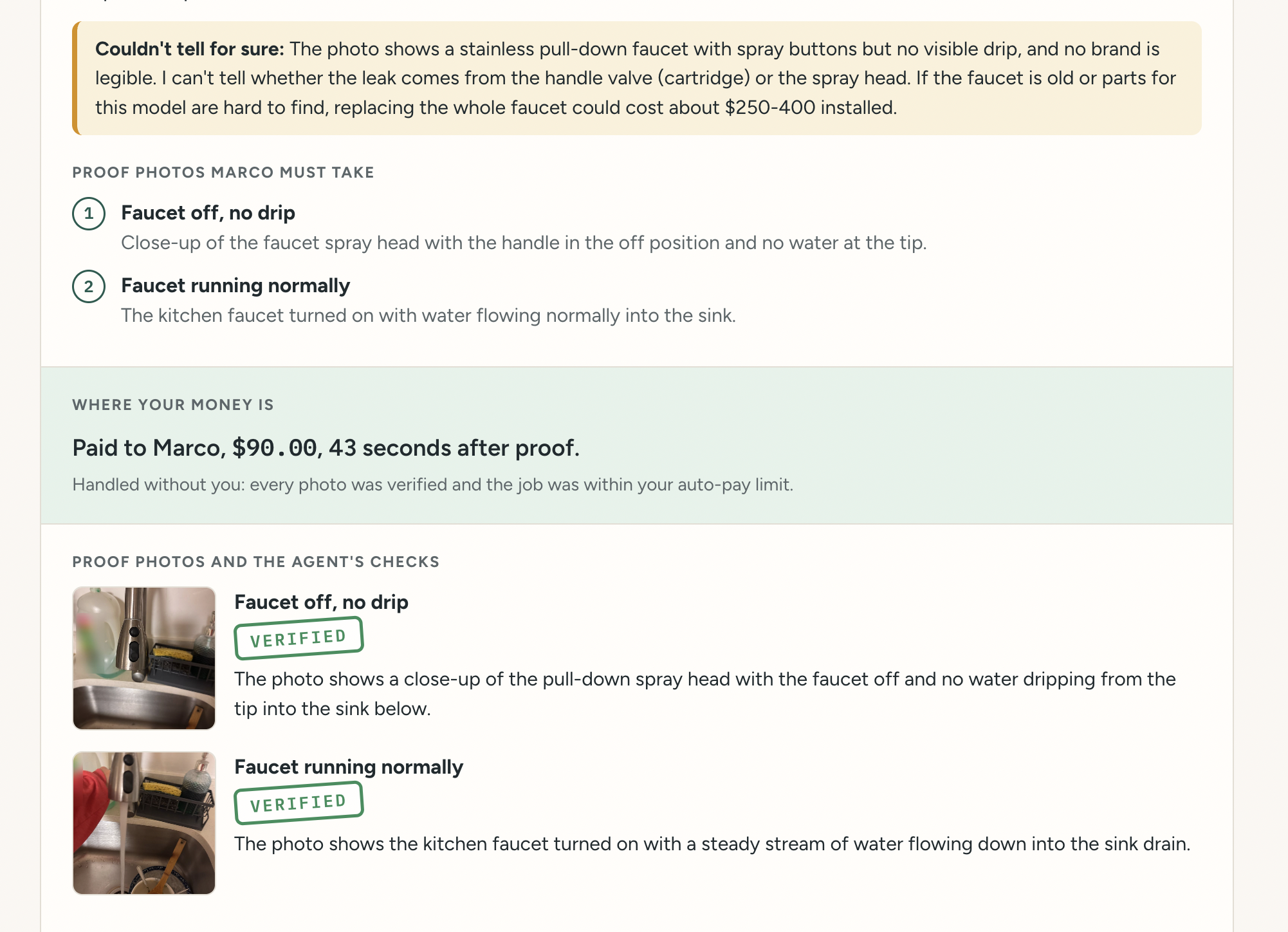
handyman send proof of the repair and recieves automatic payment
-
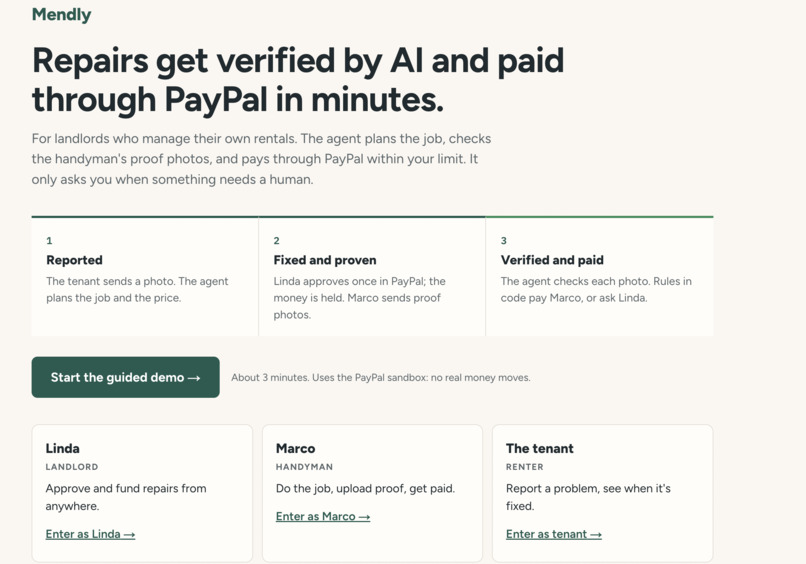
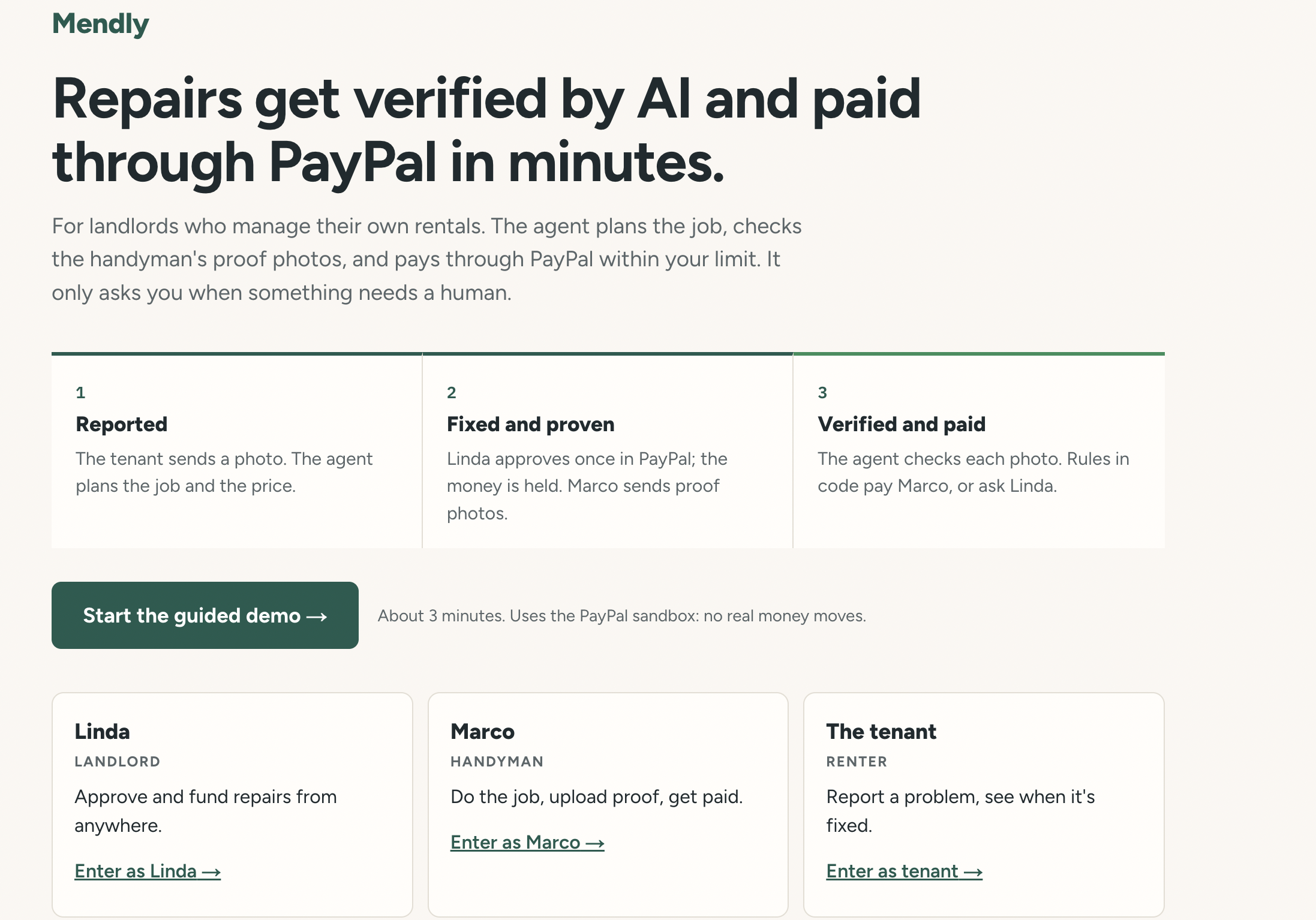
Cover Page
-
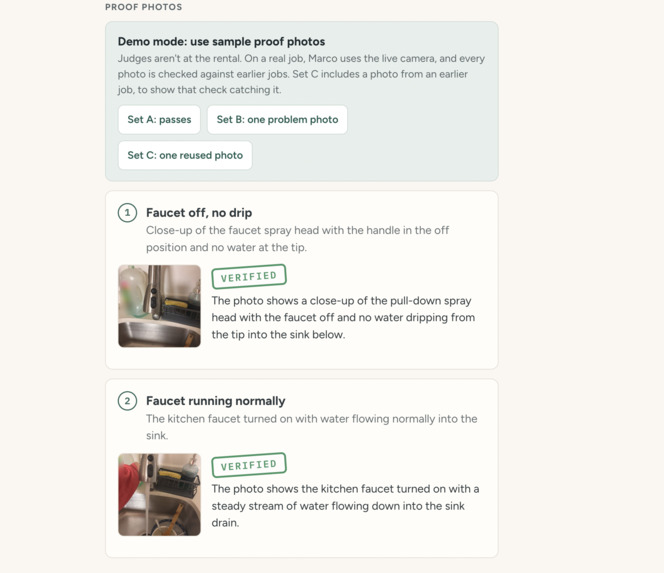
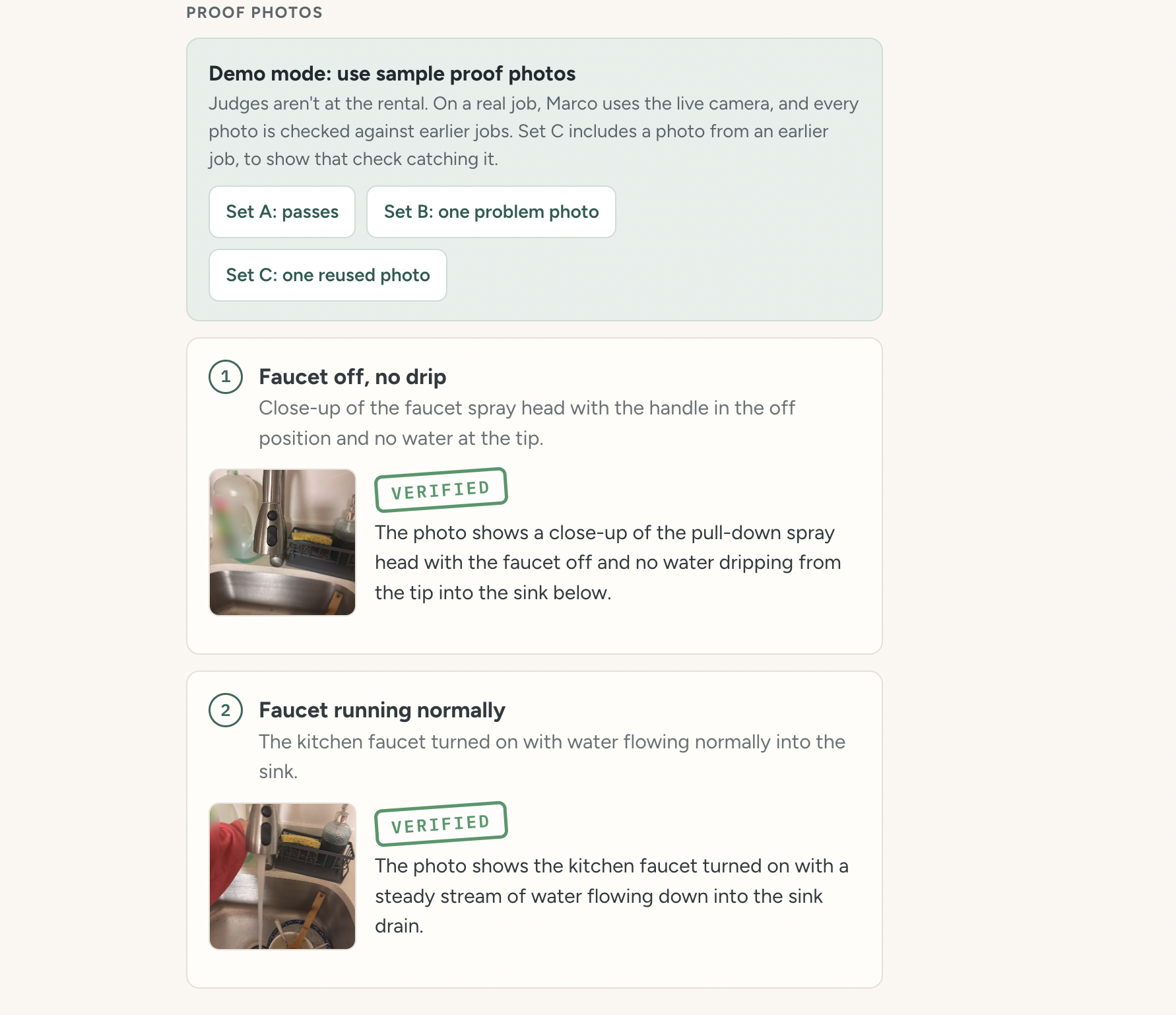
repair proof photos are verified by mendly
-
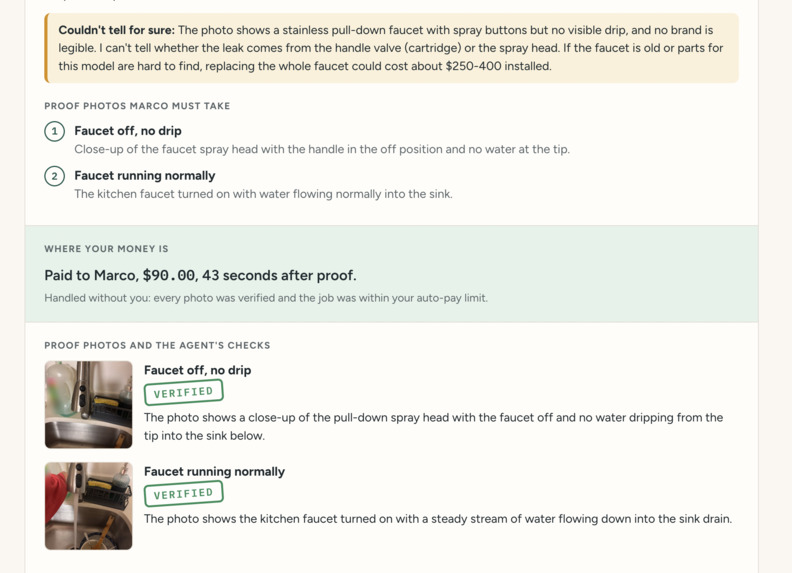
Agent assigns job to Handyman and pays via paypal once the job is done
Inspiration
Landlords who manage their own rentals often live far from them. When something breaks, they pay for a repair they can’t see, so they hesitate, ask for more photos, and pay late. On the other side, independent handymen wait days or weeks to get paid, and many feel awkward chasing clients. Surveys show 85% of freelancers are paid late at least some of the time, and many lose days every year chasing invoices.
The problem that bothered me is that both sides are waiting on the same thing: someone has to confirm the work was done before anyone pays. PayPal can already hold money and pay people instantly, but nothing in between can tell whether a repair was actually finished. I wanted to see if an AI agent could fill that gap safely, so a handyman gets paid in minutes and a landlord only pays for verified work.
What it does
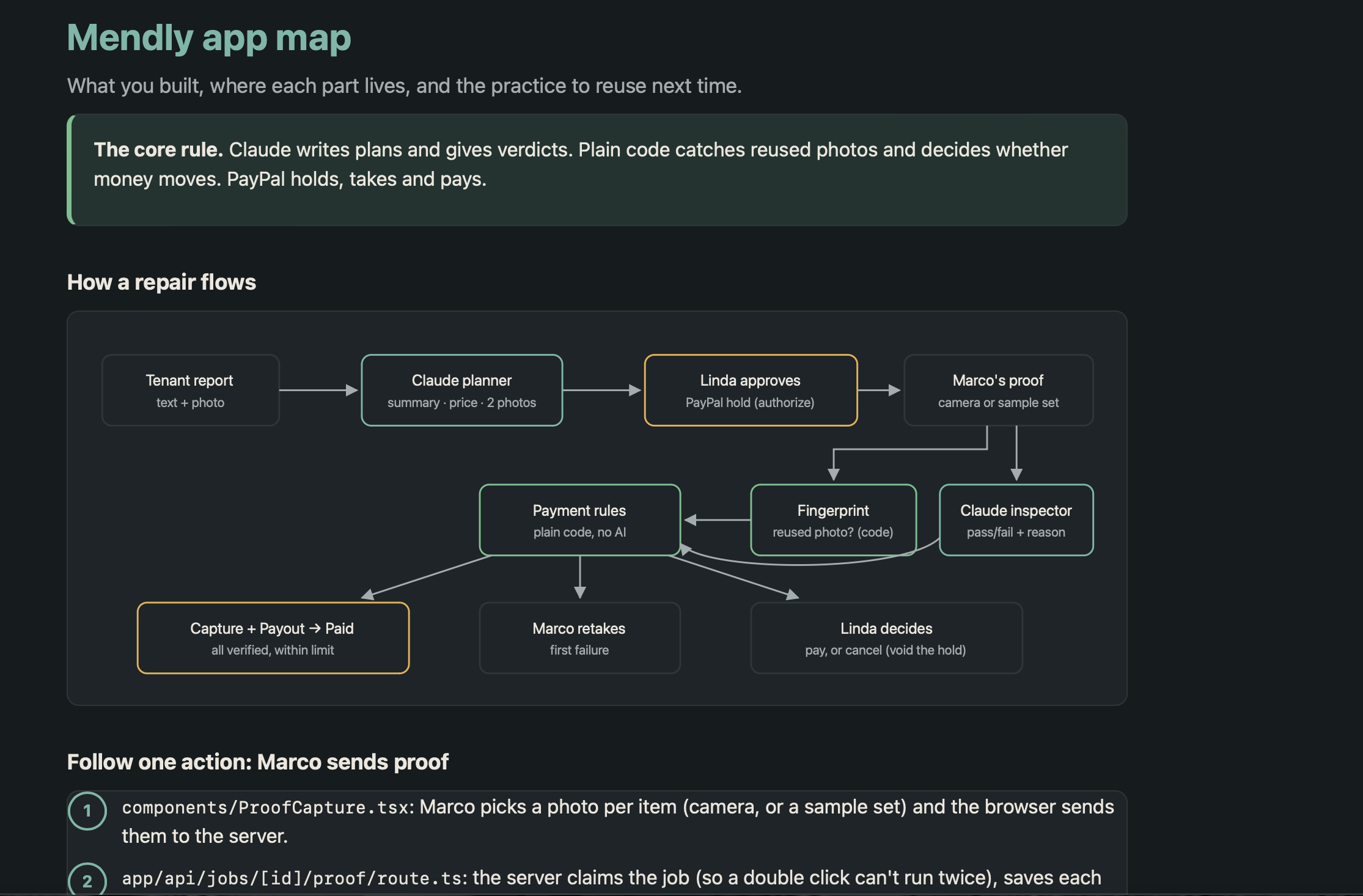
Mendly is a repair agent for landlords who manage their own rentals. A tenant reports a problem, say a dripping kitchen tap, with one sentence and a photo. Mendly’s agent turns it into a job plan with a price and the exact proof photos the handyman must take, and Linda, the landlord, approves it once in PayPal. The money is held on her account, not charged. When Marco, the handyman, finishes and uploads his proof photos, the agent checks each one against the checklist. If everything passes, PayPal captures the payment and pays Marco within seconds. If a photo doesn’t prove the fix, or looks reused from an earlier job, no money moves and Linda is asked to take a look.
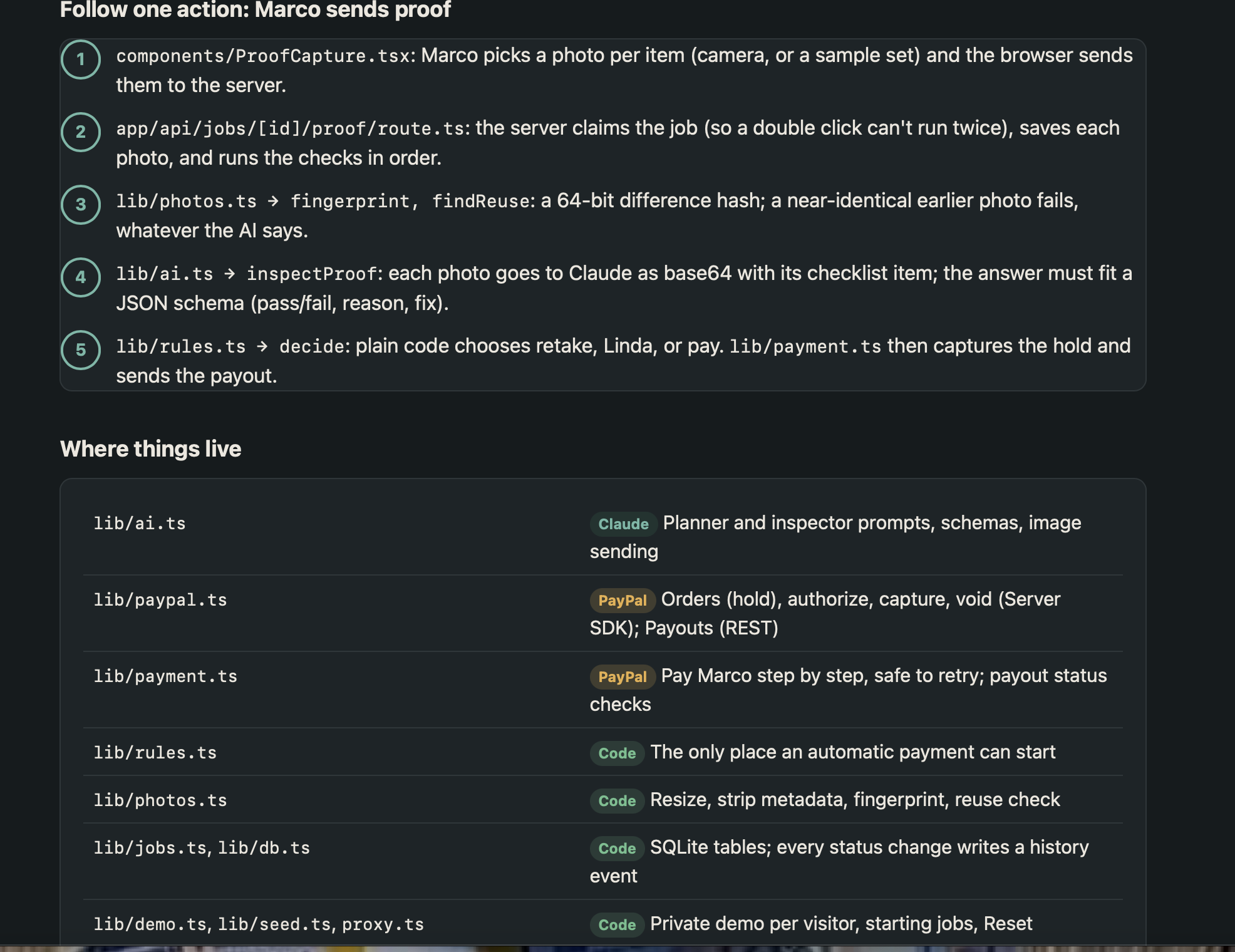
How we built it Next.js for the web app, with three roles (tenant, landlord, handyman), a role switcher and a guided demo for judges. Claude, used in two separate calls: Planning: reads the tenant’s report and photo, then writes the job plan, price and proof checklist. It says plainly when it isn’t sure. Verifying: looks at each proof photo and returns a structured verdict for every checklist item, with a reason. PayPal: Orders API with authorize: holds Linda’s money when she approves. Capture: charges it only once the work is verified. Payouts API: sends Marco his money. Status updates come from PayPal’s responses [and webhooks, if you used them]. Photo fingerprints (perceptual hashing) to detect when a proof photo was already used on an earlier job. Render to host the app so judges can try it live.
The design rule I’d like judges to notice: the AI never decides whether money moves; the code does. Claude only reports what it sees in the photos. Fixed rules in the code then decide: payment is captured only if every checklist item passes, no photo is flagged as reused, and the amount is within the landlord’s limit. Anything else pauses and goes to a human. So even a confident but wrong AI answer, or an instruction hidden in a photo, can’t release money.
Challenges we ran into
Reused-photo flags. Photo fingerprints flagged photos that were different but looked similar [e.g. the same faucet from almost the same angle], so I had to tune how similar two photos must be before they count as reused, so real cheating is caught without false alarms. Mixing up Linda’s and Marco’s accounts. At one point the PayPal sandbox accounts were swapped, so money moved the wrong way. Sorting out which account pays, which holds and which receives taught me exactly how the flow works. The PayPal sandbox popup was slow on my phone, so I recorded the demo on desktop and designed a demo mode with sample photos for judges who aren’t at the rental.
Accomplishments that we’re proud of
The moment it all clicked was watching a real sandbox payout land in Marco’s account: Linda’s held money was captured and $85 reached Marco about 27 seconds after he submitted his proof photos. No one pressed a “pay” button; the work was verified and the rules released the money.
I’m also proud that the system catches a cheat: a reused photo is flagged, the payment stays held, and the landlord is asked to check. Trust was the whole point, and seeing that work felt as good as the payment.
[If the $85 vs the $90 job price reflects a platform fee or something else, say so in one line, or use matching numbers.]
What we learned How PayPal holds and payouts work: authorizing an order holds the buyer’s money without charging it; capturing charges it later; Payouts sends money to someone else. Combining them lets you pay only when work is proven. How the AI reads photos: Claude can judge whether a photo shows what a checklist asks for, but it needs clear, checkable criteria, and it should be allowed to say “I’m not sure” instead of guessing. Base64 and images: sending photos to the AI meant converting them to base64, and keeping them small enough to avoid slow requests and errors. Planning before building: deciding the story, the three roles and the rule that code, not the AI, controls money, before writing code saved me from rebuilding things later. Designing for judges: a demo that works for someone who knows nothing about the project needs its own care: demo logins, sample photos and clear next steps.
What’s next for Mendly Real-world launch details: live camera only, location and time checks on photos, and a small holdback (for example 80% paid instantly, 20% after 48 hours). Paying the handyman directly through PayPal’s platform setup for marketplaces, and payouts to Venmo by phone number. Trust building over time: auto-pay unlocks for handymen with a clean track record. More kinds of jobs: cleaning between tenants, painting, moving, lawn care, and inspections, anything that can be proven with photos. More users: small property managers, Airbnb hosts, homeowners abroad, and adult children arranging repairs for elderly parents who live far away. More languages, so tenants and handymen can use it in the language they’re most comfortable with.
Built With
- anthropic-api
- better-sqlite3
- claude
- claude-code
- next.js
- node.js
- paypal
- paypal-ai-toolkit
- paypal-js-sdk
- paypal-orders-api
- paypal-payouts-api
- paypal-server-sdk
- react
- render
- sharp
- sqlite
- typescript
