-
-
-
-
-
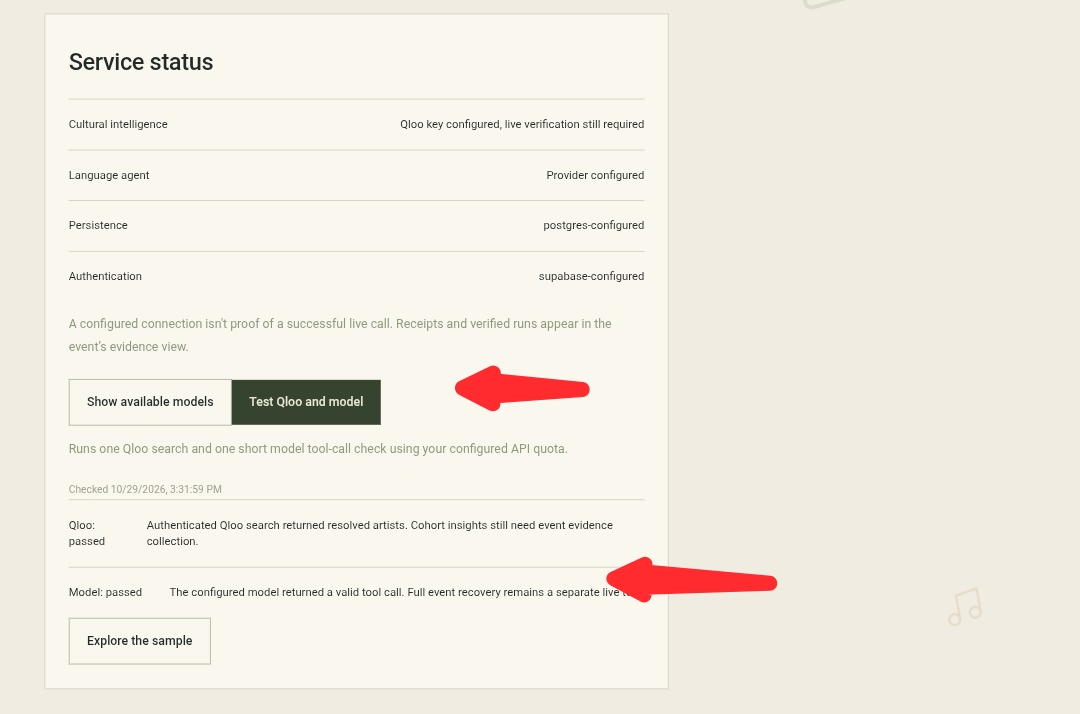
qloo and agent test
-
Inspiration
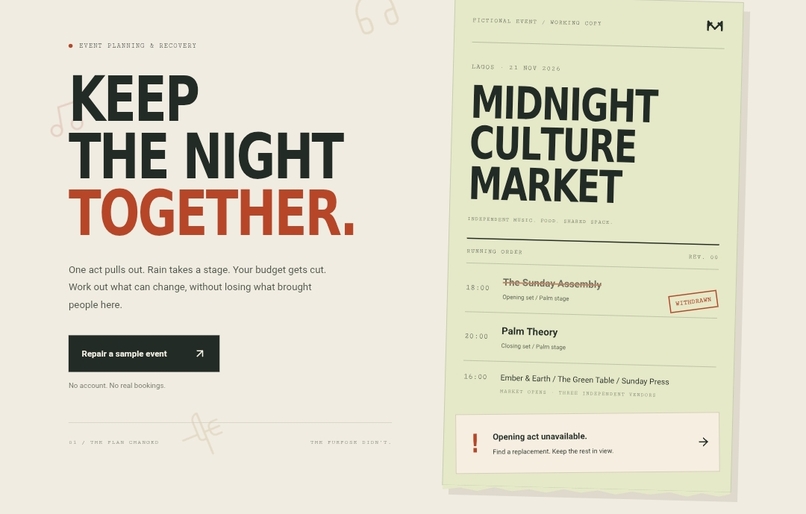
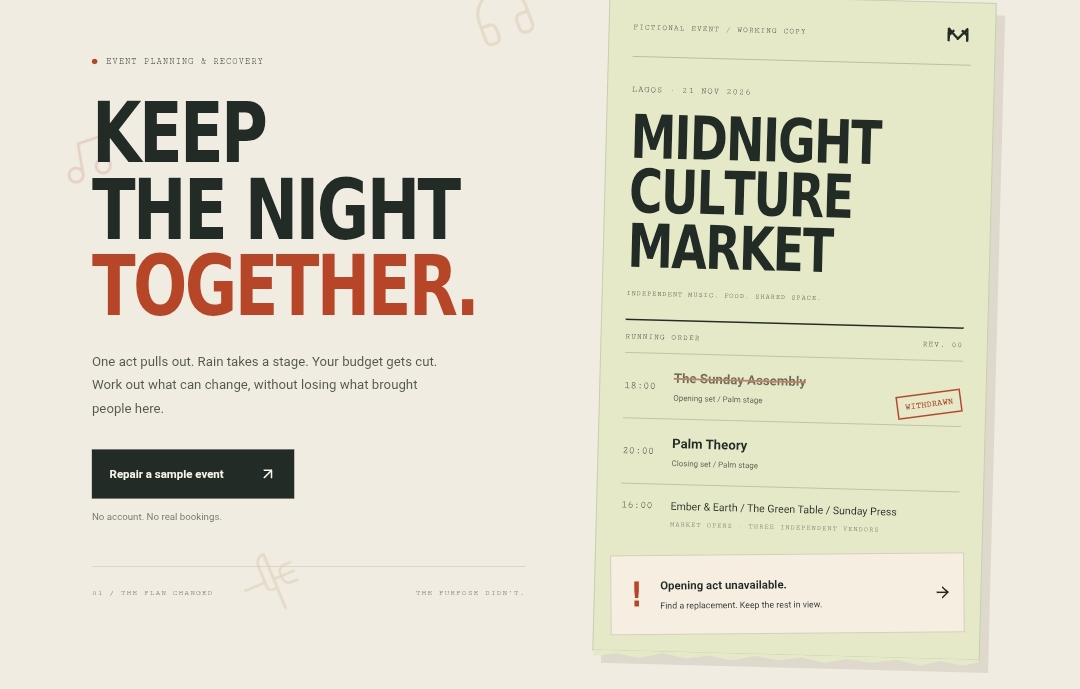
When an opening act cancels, an organizer has to replace more than a name on the running order. The replacement needs to fit the audience, budget, schedule and available space, while preserving the feeling that made the event worth attending.
That problem inspired MEND. I wanted to explore how Qloo’s cultural intelligence could support practical event decisions, with clear evidence and the organizer remaining in control.
What it does
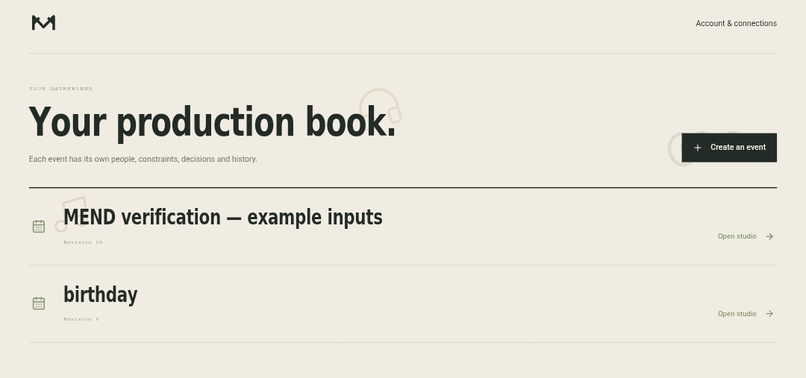
MEND helps organizers plan and repair music-led markets, pop-up festivals and cultural gatherings.
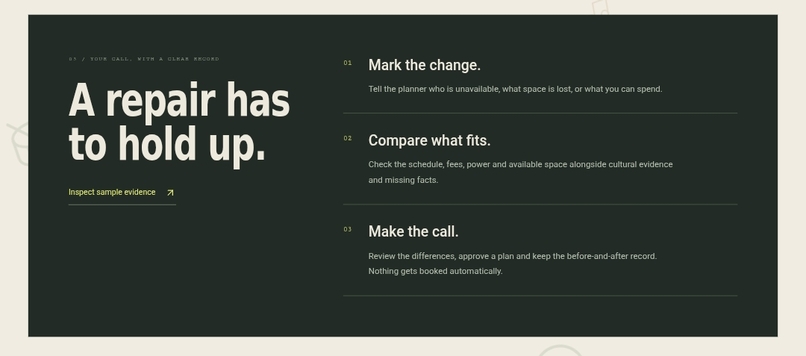
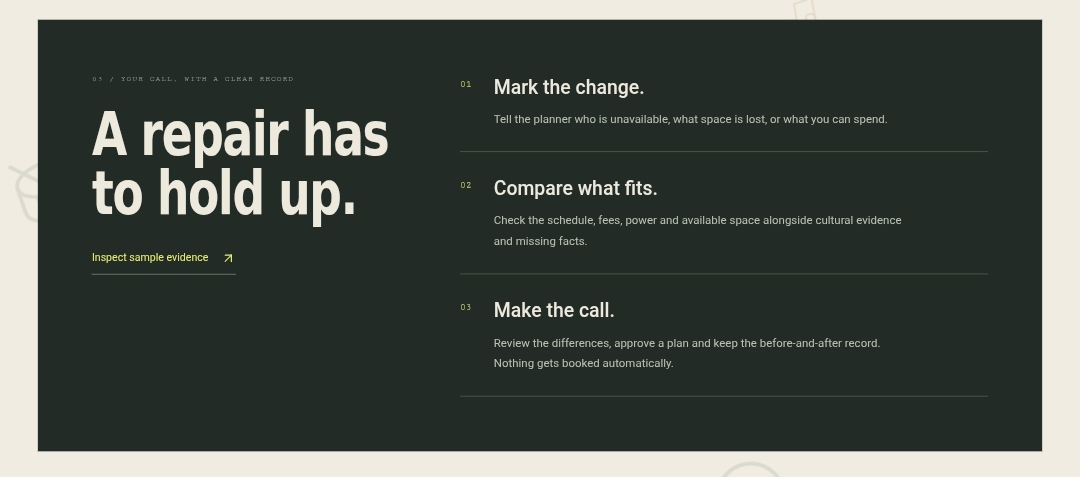
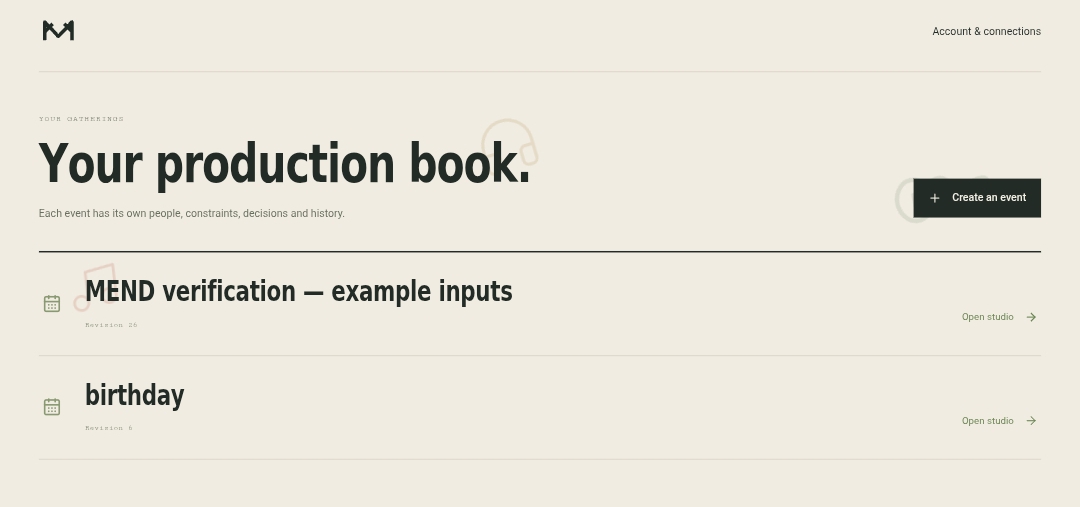
Organizers define their audience groups, participants, booking terms, programme and site constraints. When someone withdraws, rain affects a space or the budget changes, MEND proposes alternatives and shows their tradeoffs.
Qloo supplies cultural preference evidence. The planner checks operational constraints, and a bounded AI assistant can investigate changes and prepare a proposal. The organizer reviews and approves the final decision.
Recovery reports preserve the original plan, approved changes, checks, source references and remaining unknowns. MEND doesn’t automatically contact performers or make bookings.
How we built it
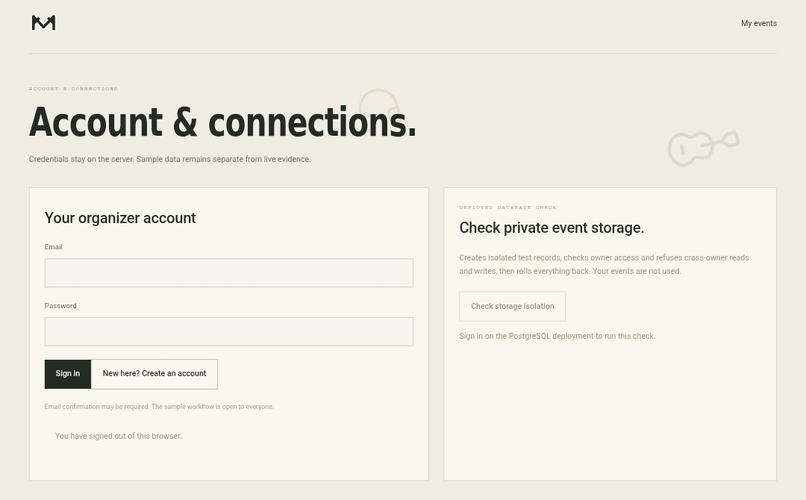
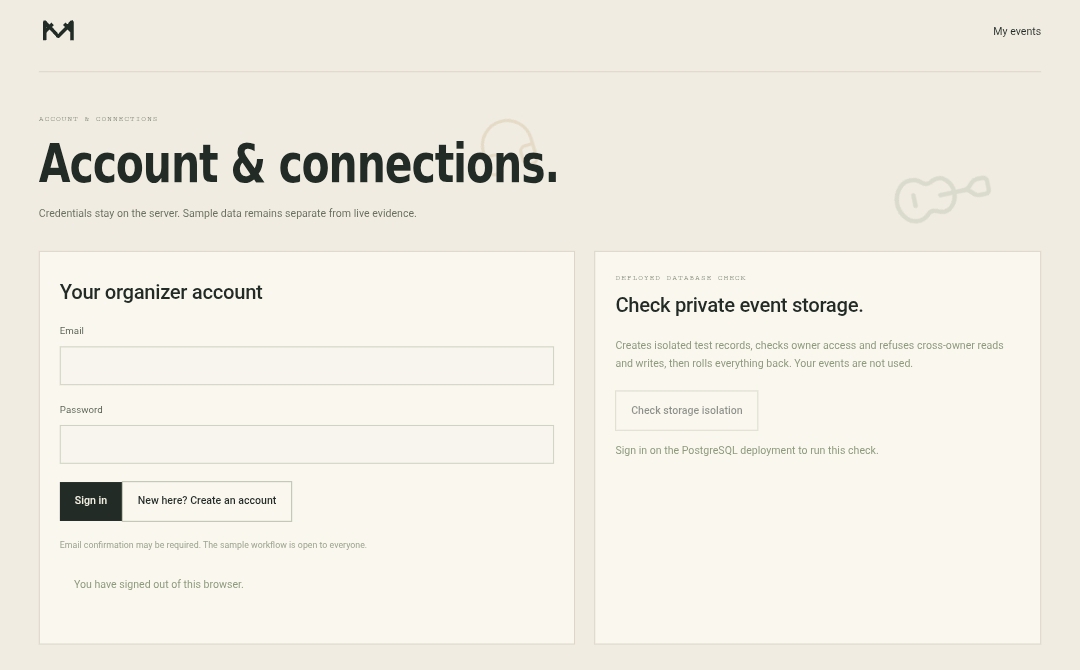
I built MEND with Next.js, React and TypeScript, deployed on Vercel. Supabase handles authentication, while PostgreSQL and Prisma support saved events and revision history.
The Qloo integration resolves audience interests and participant identities, then collects audience-specific affinity evidence. MEND converts query-relative results into disclosed ordinal planning signals rather than treating them as attendance predictions.
A Groq-powered language model works through bounded tools. Deterministic server checks enforce constraints, while explicit human approval controls changes to the active plan.
The public sample provides an accessible demonstration with fictional participants and synthetic cultural scores. Saved live events keep their evidence separate.
Challenges we ran into
A major challenge was keeping cultural fit separate from booking feasibility. A strong affinity result cannot establish availability, fees or venue suitability. Unknown operational facts therefore block live approval.
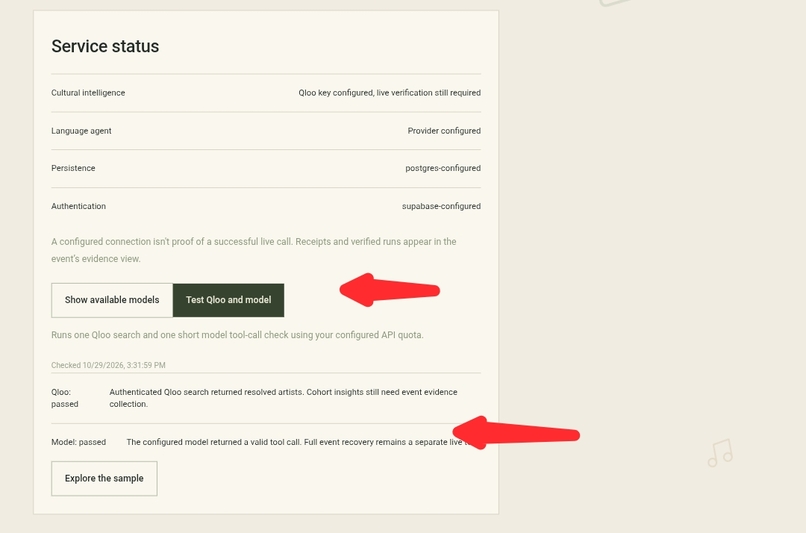
I also worked through deployment output issues, authentication redirects, provider configuration and unreliable model tool calls. Clear tool boundaries, request limits and recorded failures helped make those problems inspectable.
Another challenge was presenting evidence honestly. Sample interactions, live API responses, persisted proposals and measured organizer impact each establish different things.
Accomplishments that we're proud of
The public sample completes the cancellation-to-proposal-to-approval-to-report workflow.
The isolated live test produced Qloo-backed conditional proposals using three stored audience-specific artist batches. Evidence remained consistent after PostgreSQL reload, and the interface distinguished model-requested tools from deterministic server checks.
Local verification passed 178 automated tests alongside type, lint and build checks. Live approval correctly remained blocked where booking facts were unconfirmed.
What we learned
Cultural intelligence becomes useful when it supports a decision an organizer can inspect and act on.
An agent’s explanation needs to agree with saved records and deterministic checks. Missing information should stay visible, and a useful refusal can be as important as a successful proposal.
We also learned that software tests establish behavior, while organizer benefit requires actual user measurements.
What's next for mend
The next step is a complete recovery with a real organizer, confirmed event facts and explicit approval, followed by a saved report and reload verification.
I also plan to validate independent vendor reference profiles, complete physical-phone testing, and collect consented organizer study results to measure task time and errors.
The goal is to learn whether MEND helps organizers make better-supported recovery decisions under pressure.
Built With
- and
- groq
- next.js
- postgresql
- prisma
- qloo-api
- react
- supabase-auth
- tailwind-css
- typescript
- vercel-ai-sdk
- vitest
- zod

Log in or sign up for Devpost to join the conversation.