-
-
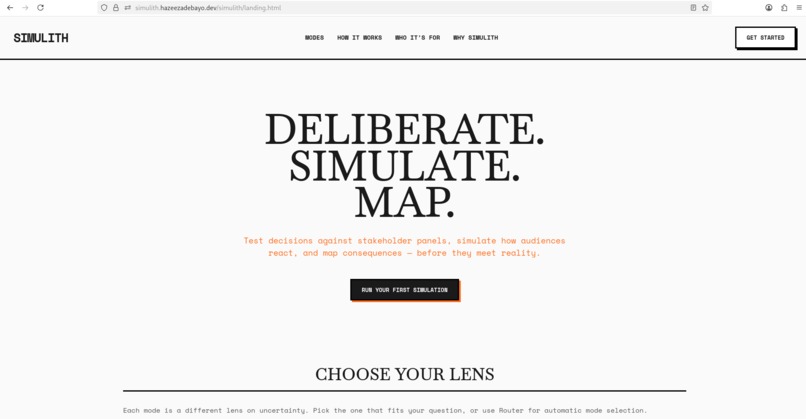
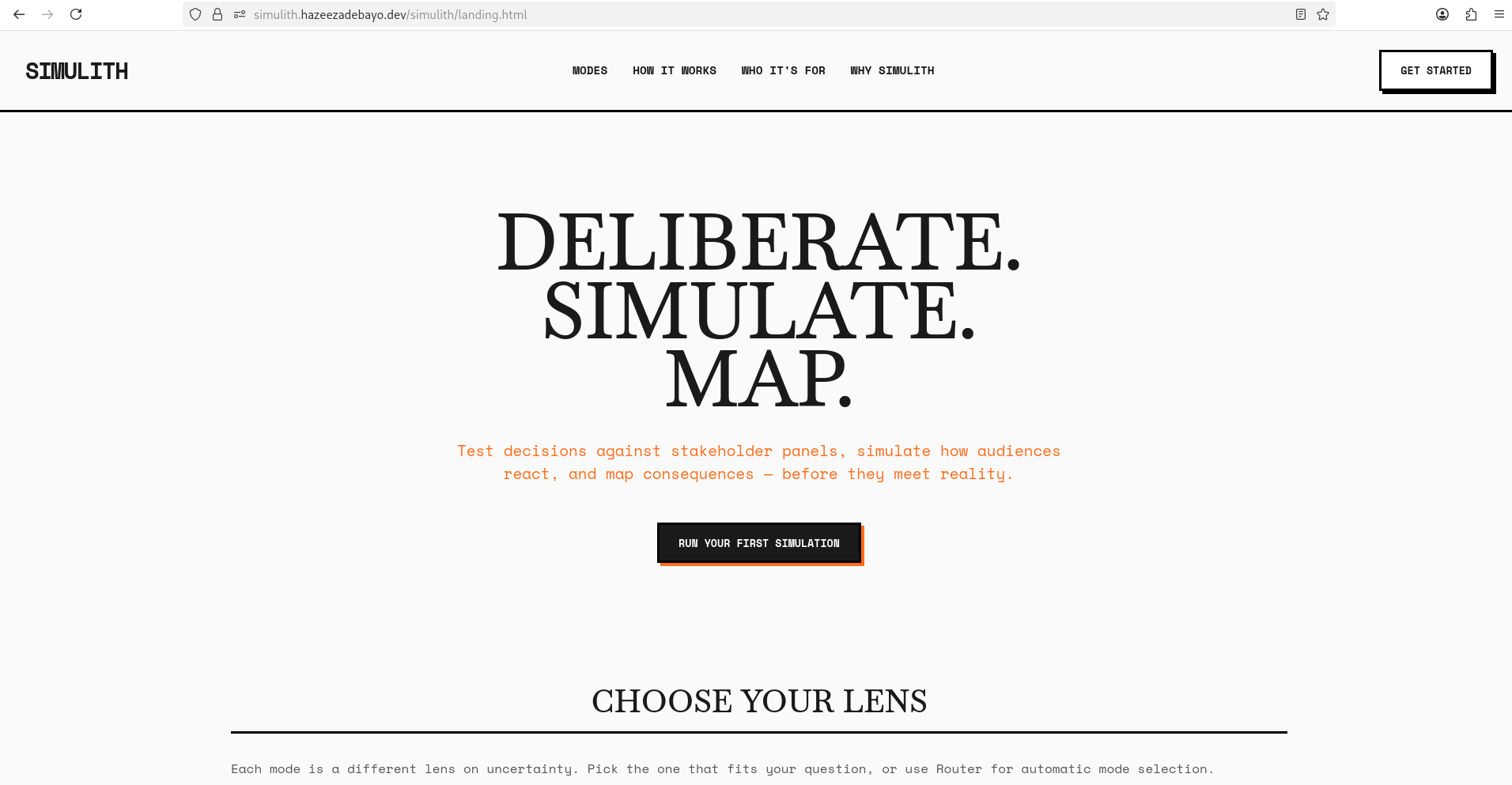
web page landing page
-
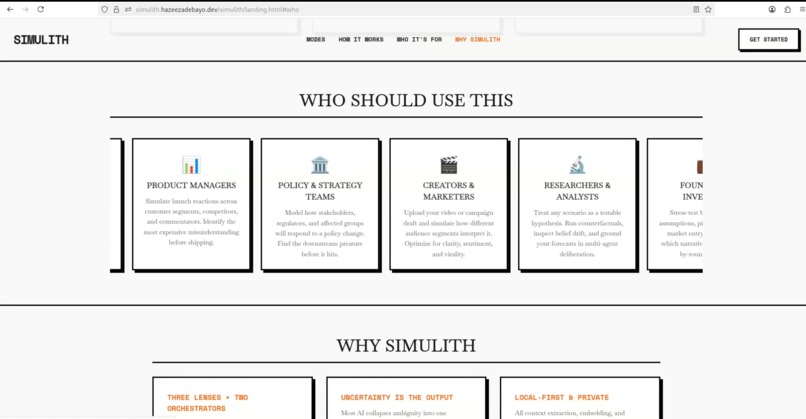
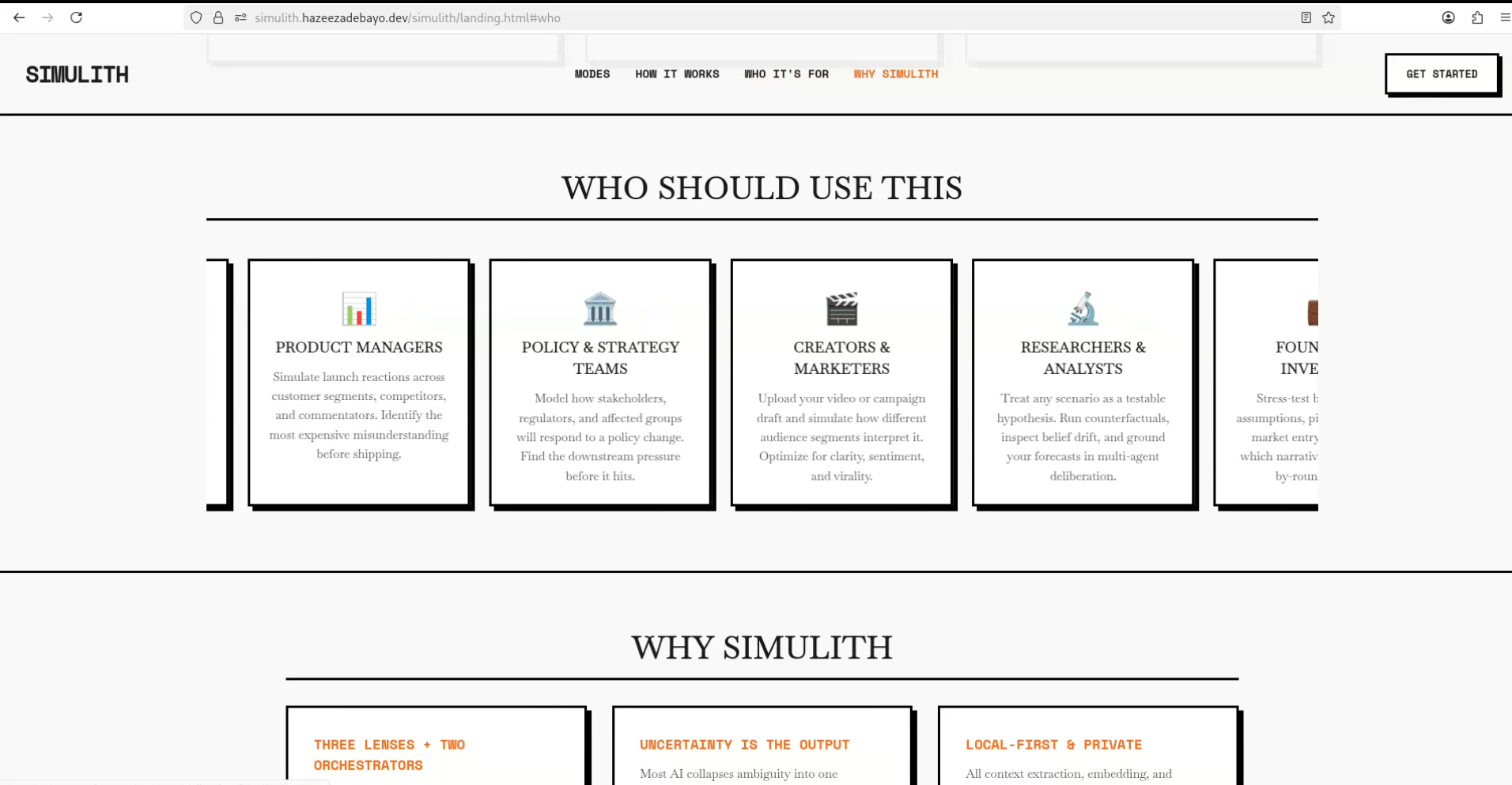
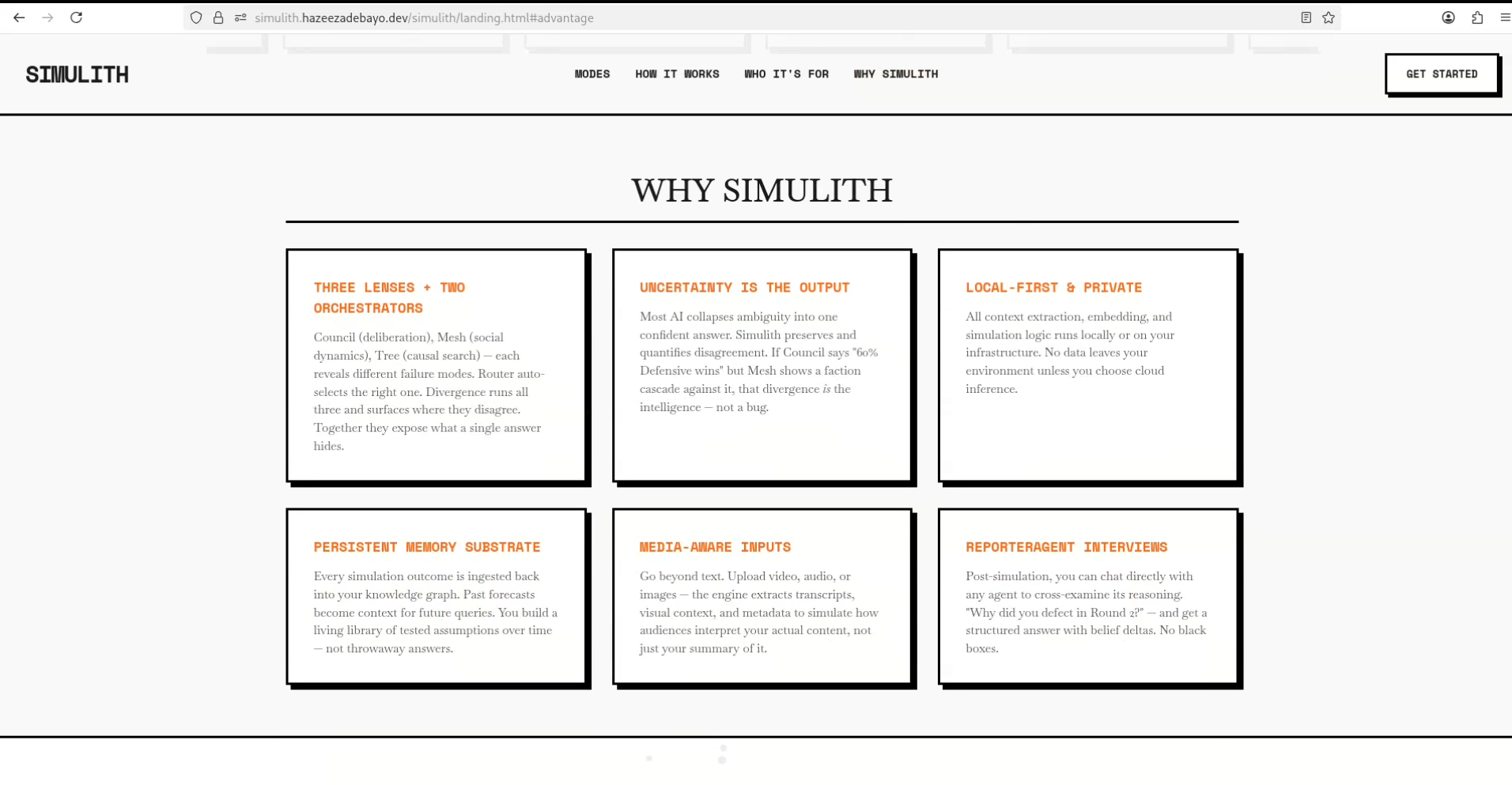
who can use it (landing page)
-
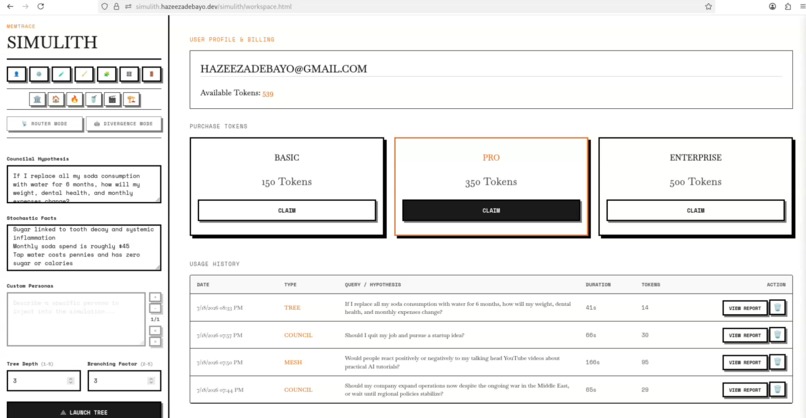
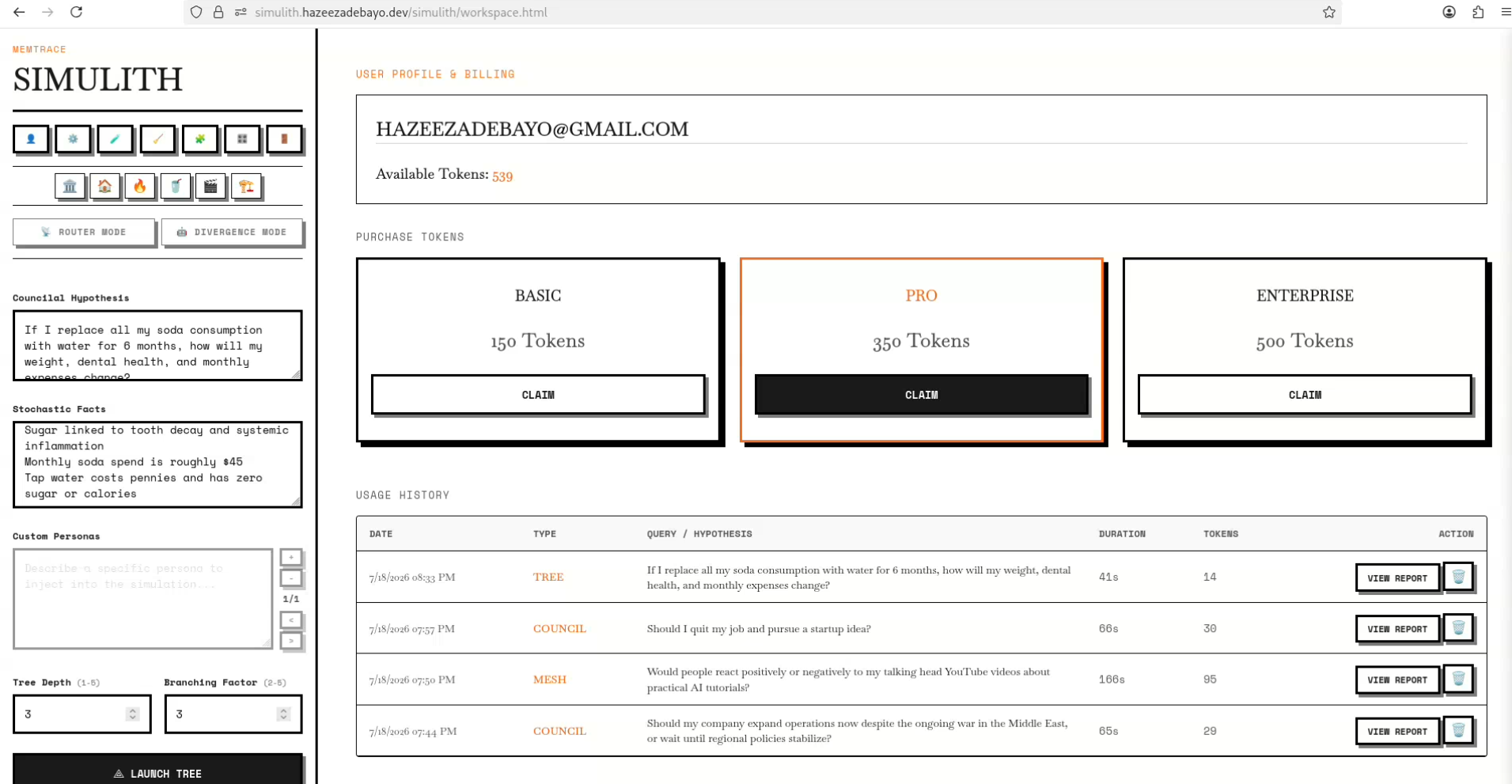
profile page
-
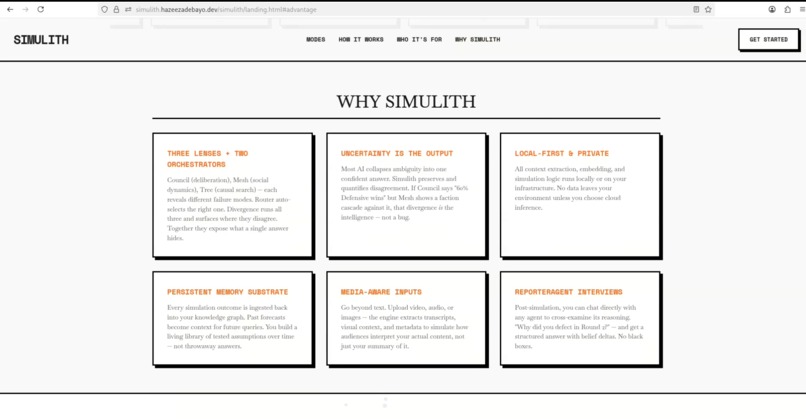
other available features (landing page)
-
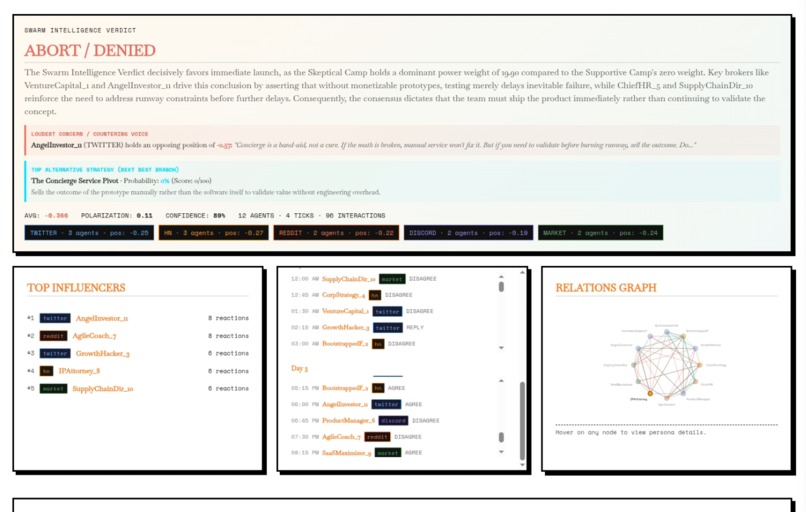
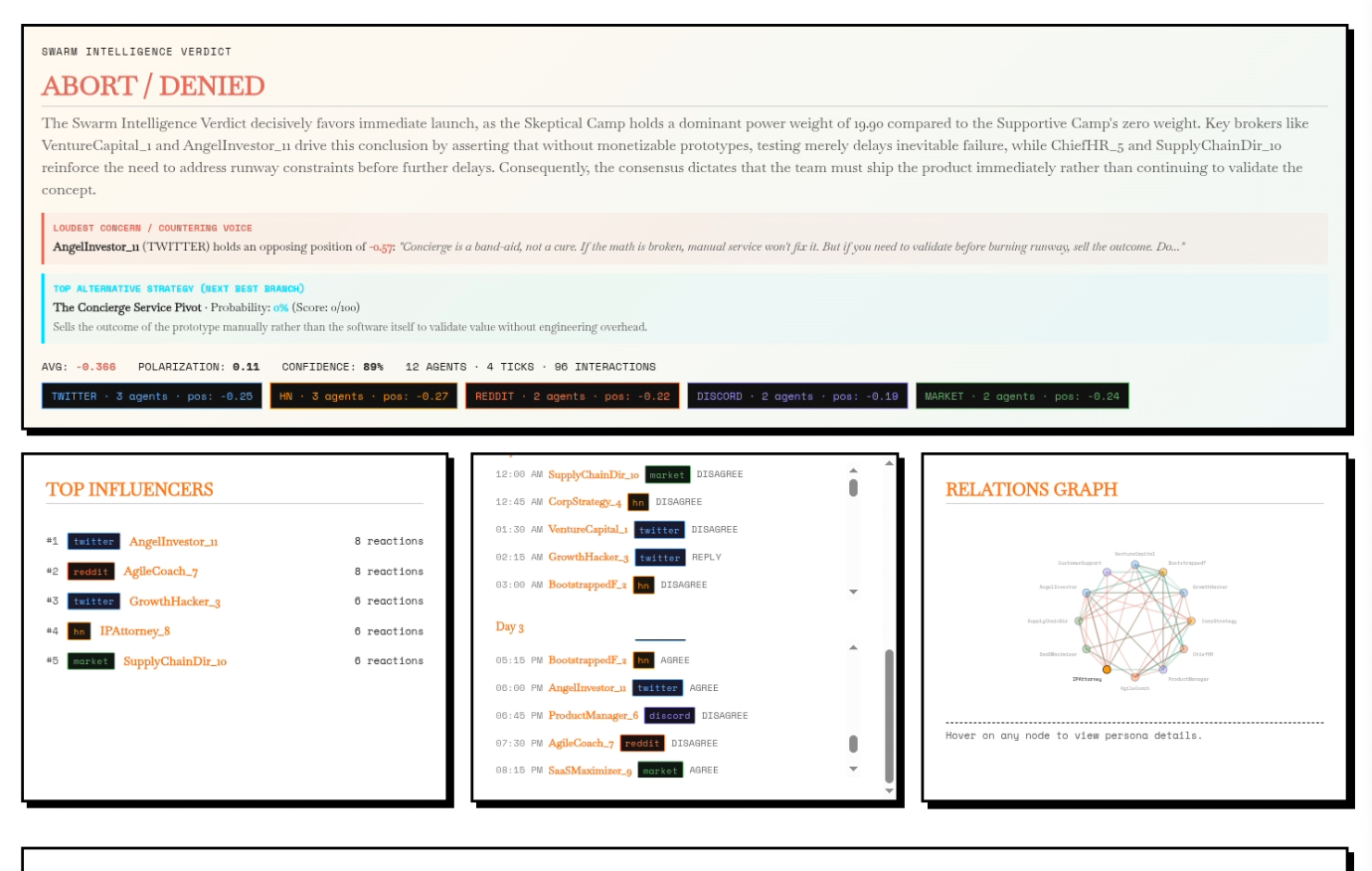
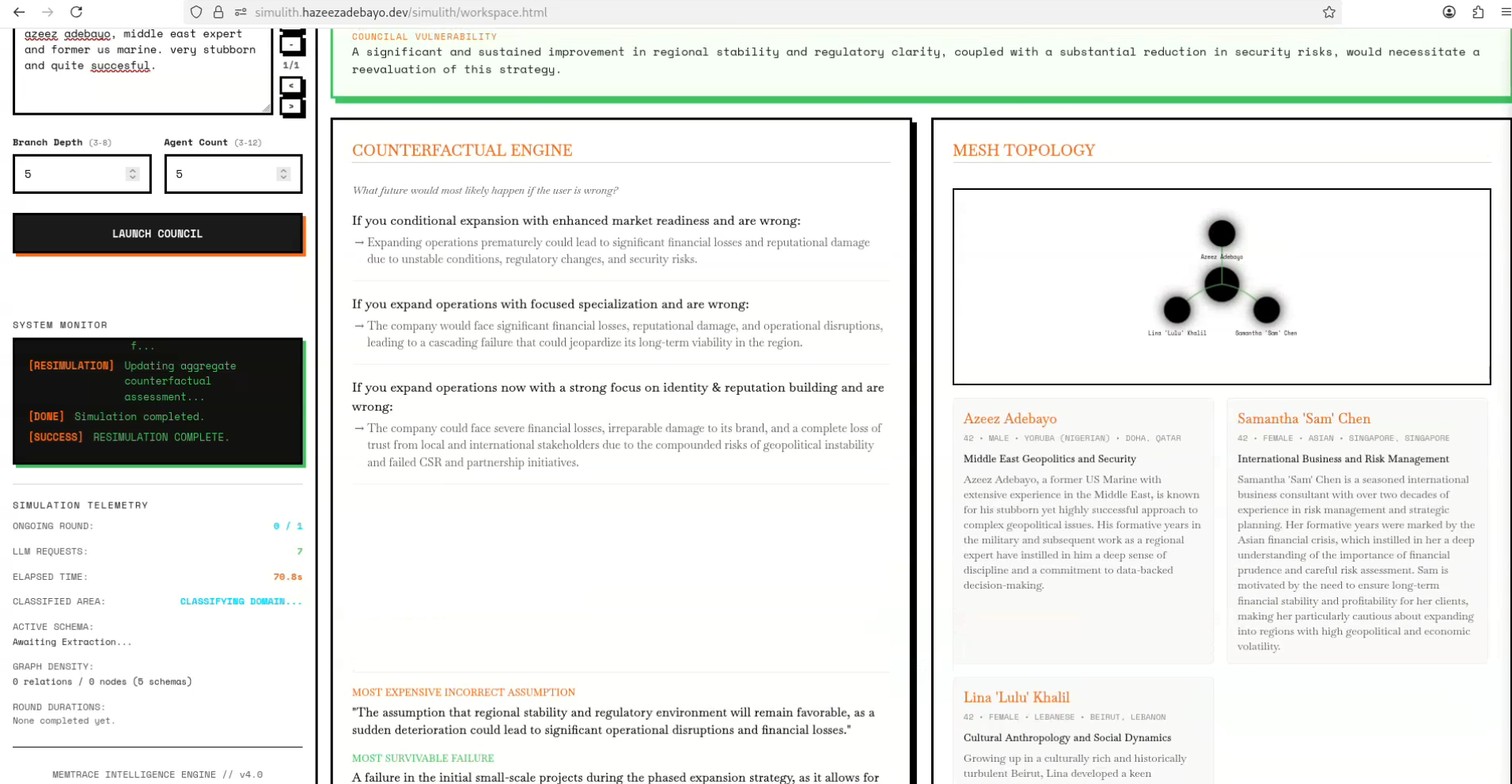
mesh mode results page demo
-
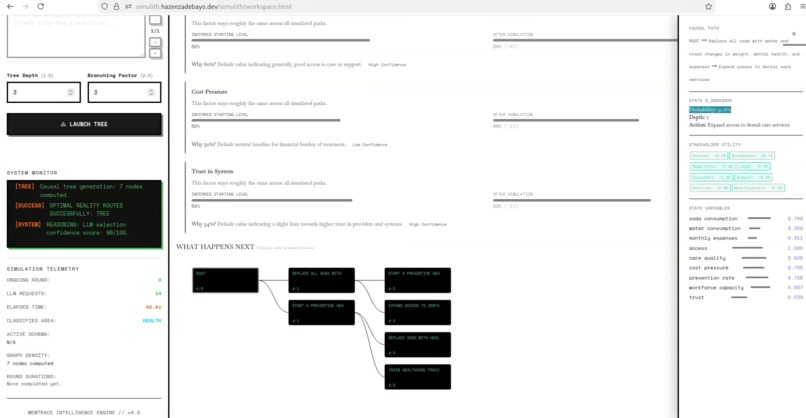
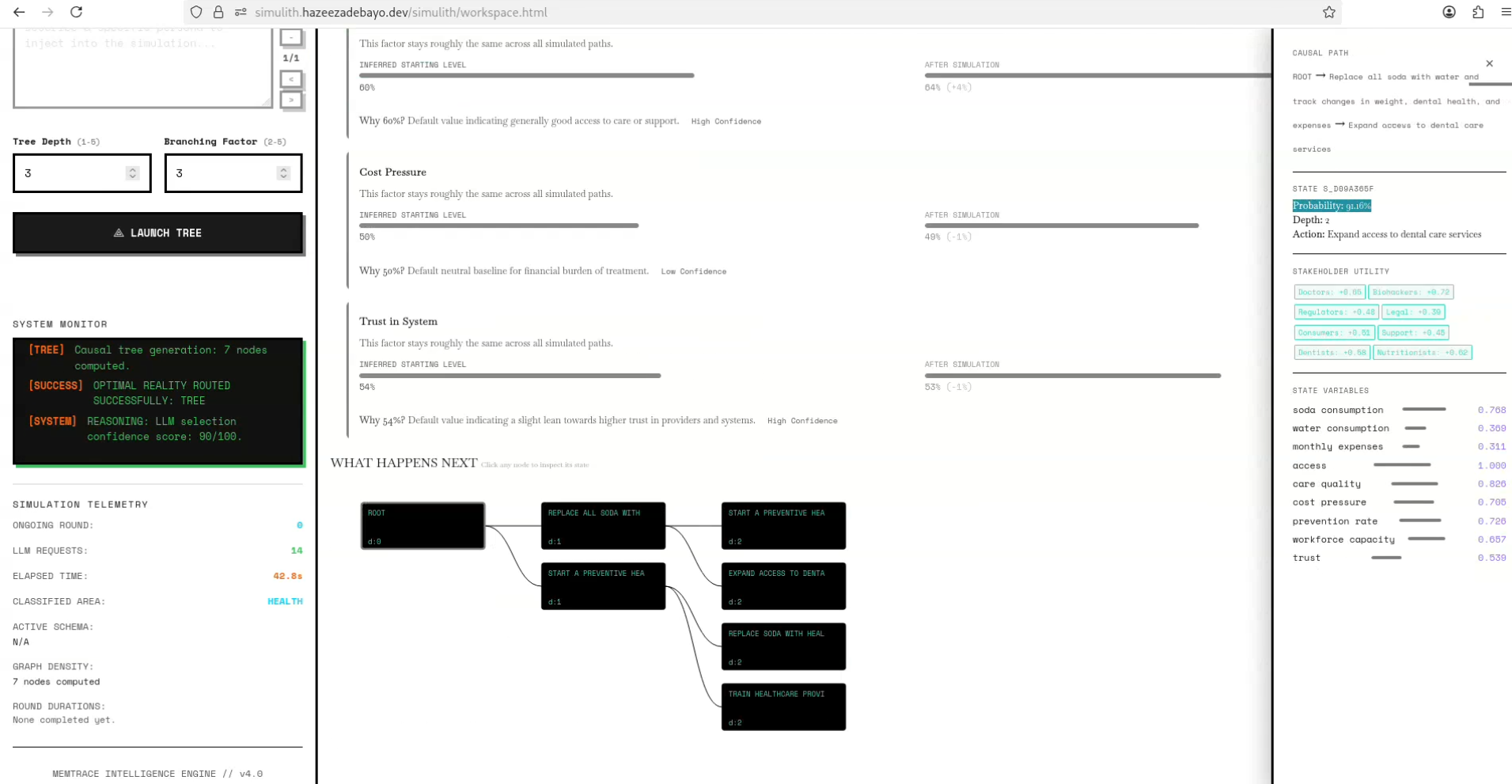
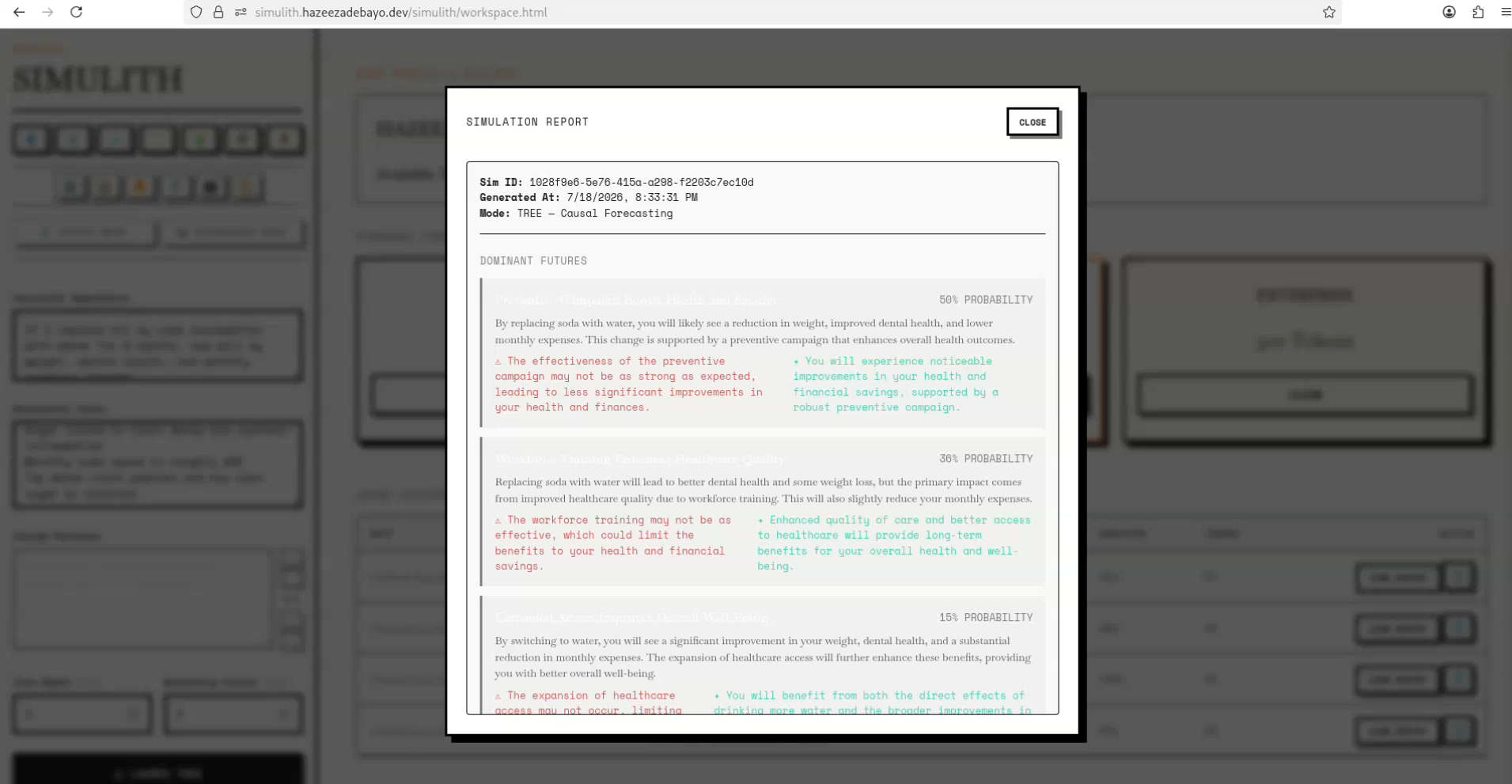
tree mode results page demo
-
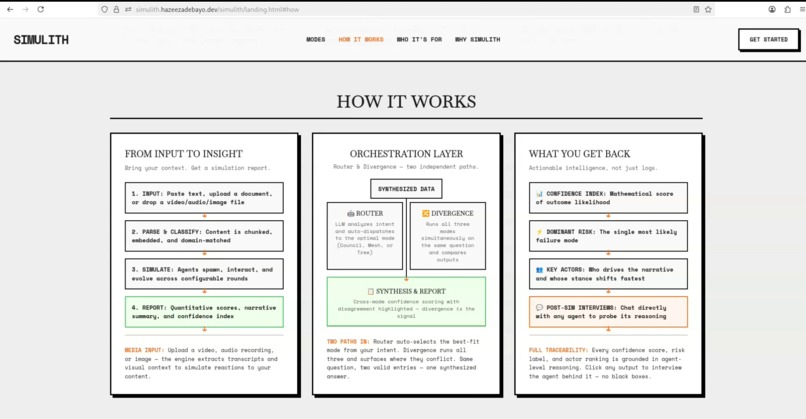
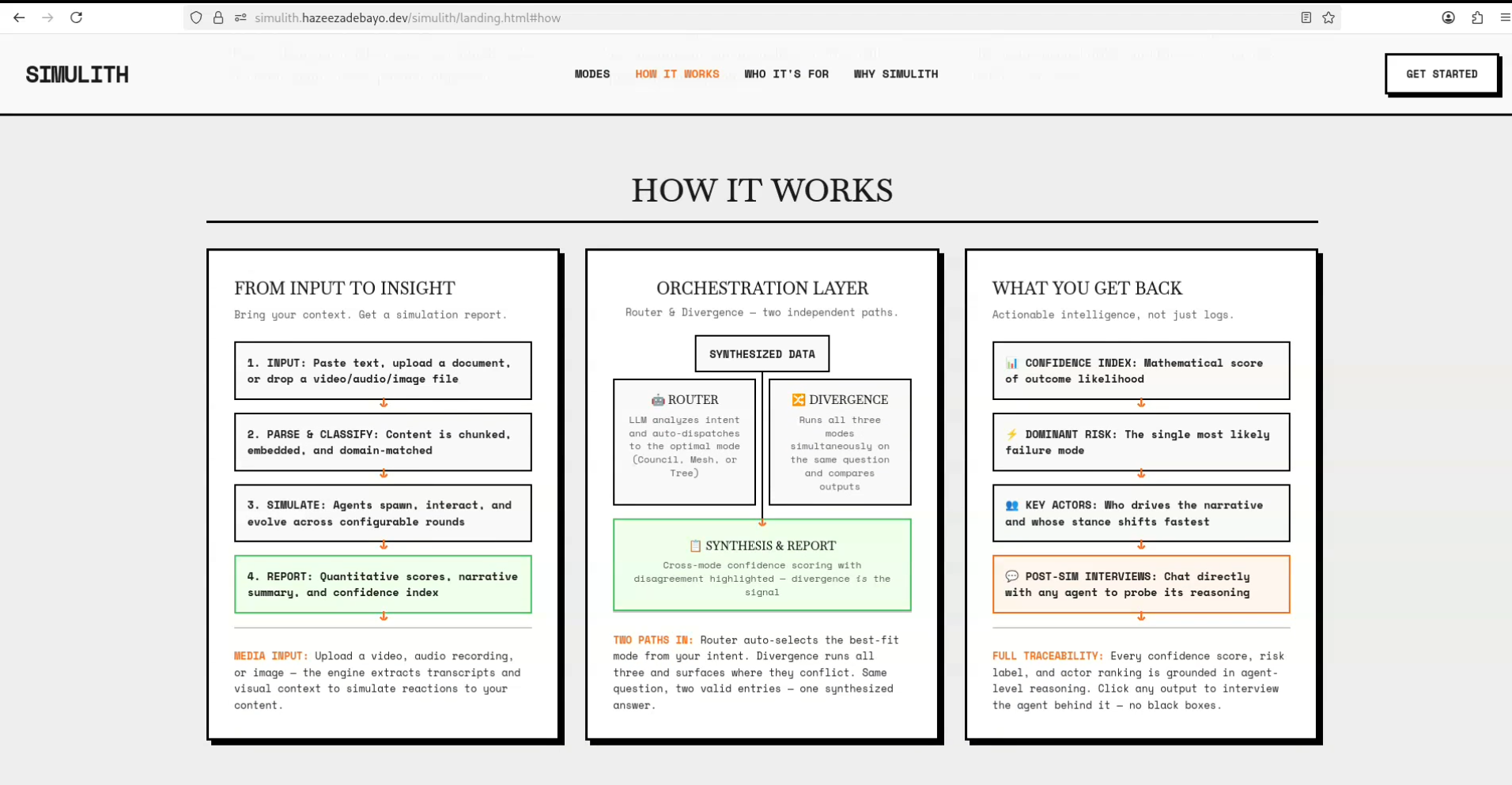
brief informational overview on how it works (landing page)
-
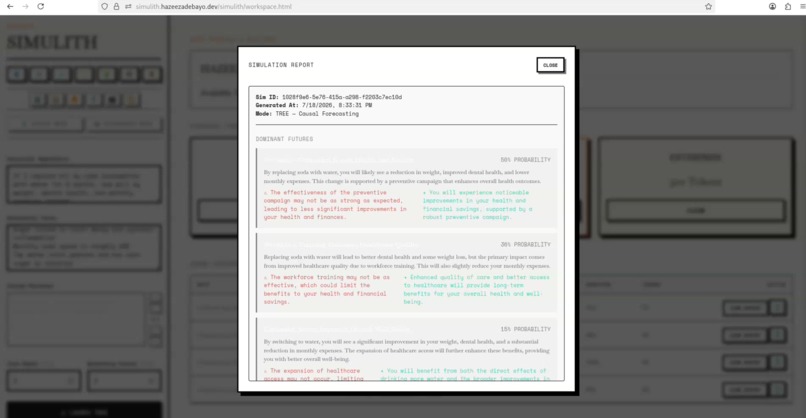
profile page simulation history view
-
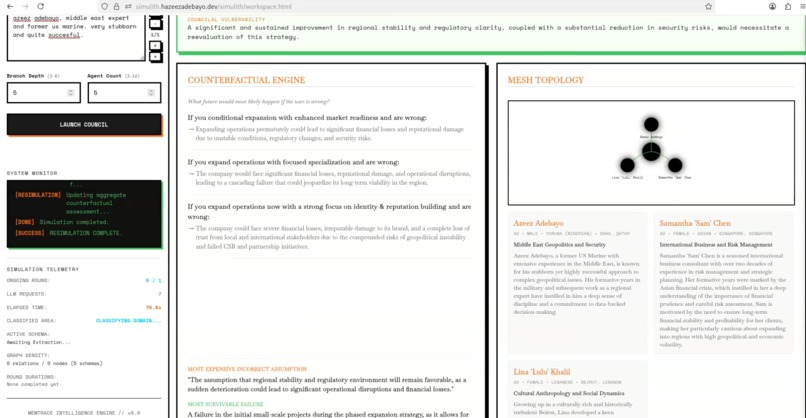
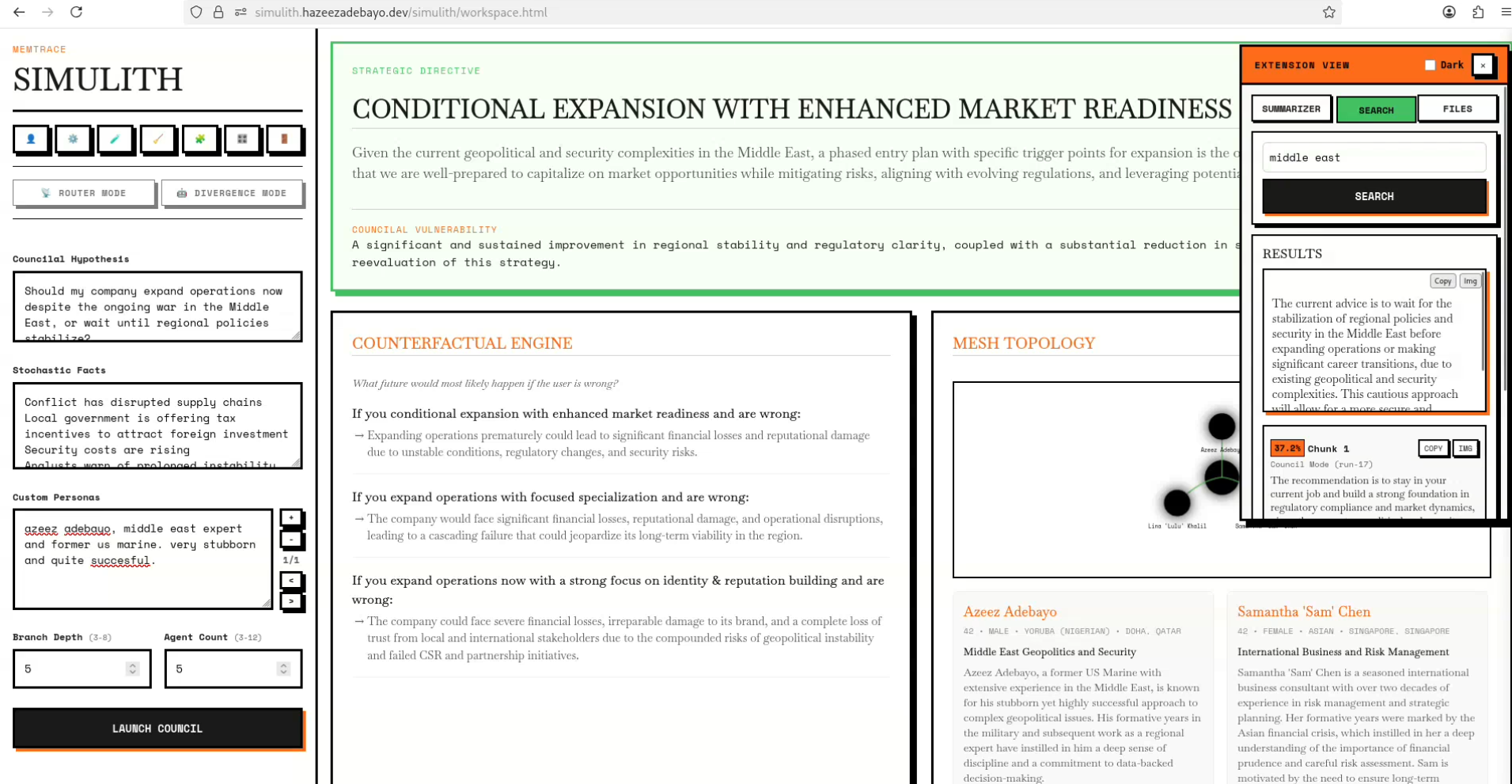
council mode results page demo
-
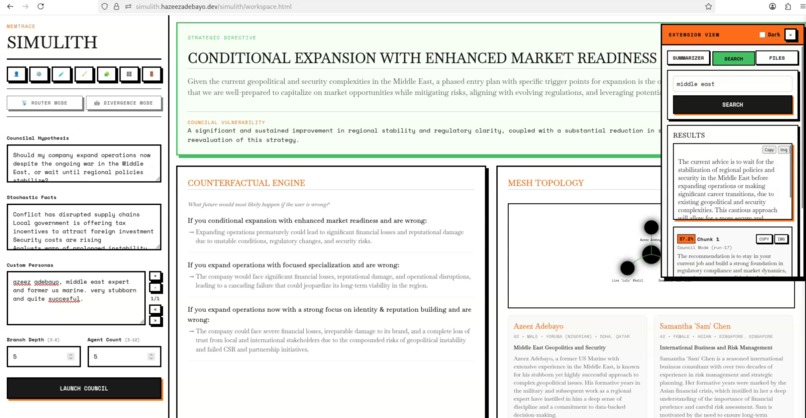
extention view with GraphRAG functionality and demo query
Inspiration
Large language models are excellent at producing answers, but important decisions rarely fail because we lack an answer—they fail because we only considered one perspective. Whether launching a startup, introducing a company policy, making an investment, or navigating a personal dilemma, the biggest risks often come from blind spots rather than missing information.
That observation inspired Simulith. Instead of asking "What is the answer?", I wanted to ask "How does this decision hold up when examined through fundamentally different ways of reasoning?" The goal was to build an AI system that doesn't simply generate advice, but actively stress-tests decisions before they're made.
What it does
Simulith is a multi-perspective decision stress-testing suite powered entirely by Qwen Cloud. Instead of relying on a single reasoning pipeline, it evaluates decisions through three complementary intelligence engines.
- Council Mode simulates adversarial expert deliberation between diverse stakeholders.
- Mesh Mode models how opinions, trust, and narratives evolve across dynamic social networks.
- Tree Mode projects cascading future consequences through probabilistic causal expansion.
An orchestration layer either routes a problem to the most appropriate reasoning engine or executes all three simultaneously in Divergence Mode. Rather than treating disagreement as a failure, Simulith interprets epistemic divergence as valuable information, exposing blind spots that a single reasoning process would likely miss.
Every simulation is grounded in persistent GraphRAG memory, enriched with live external evidence through autonomous tool use, and continuously improves as previous simulations become part of future reasoning.
How we built it
Simulith was built around Qwen3.7-plus for reasoning and Qwen Embedding for semantic memory. I designed three independent reasoning engines that share a common orchestration pipeline while remaining architecturally independent.
The backend is a modular Node.js/Express application deployed on Alibaba Cloud Simple Application Server, with persistent memory powered by ApsaraDB RDS PostgreSQL using pgvector. A Chrome extension enables one-click ingestion of articles, documents, webpages, and other online content so users can immediately stress-test real-world scenarios.
An autonomous tool-selection pipeline decides when additional evidence is required, retrieving information such as encyclopedic context, developer sentiment, market data, or fact verification before simulations begin.
Challenges we ran into
The biggest challenge was designing three reasoning engines that were genuinely different instead of three prompt variations of the same model. Each engine needed its own reasoning philosophy while still producing outputs that could be synthesized into a coherent recommendation.
Designing Divergence Mode was equally challenging. Generating disagreement between AI systems is straightforward; determining whether that disagreement represents uncertainty, hidden assumptions, or meaningful risk is much harder. I ultimately chose to treat divergence itself as an informative signal instead of something to average away.
Persistent memory was another significant challenge. Building a GraphRAG pipeline capable of converting unstructured information into entities, relationships, and semantic embeddings while maintaining retrieval quality required several iterations.
Accomplishments that we're proud of
I am particularly proud that Simulith goes beyond a traditional multi-agent system. Rather than producing multiple opinions and selecting one, it combines adaptive routing, autonomous tool use, persistent memory, and epistemic divergence into a unified decision intelligence architecture.
I am also proud that the project is fully deployed on Alibaba Cloud, built around Qwen Cloud APIs, integrates long-term GraphRAG memory, and provides an end-to-end experience—from browser context ingestion to live, evidence-backed decision stress testing.
What we learned
This project fundamentally changed how I think about AI systems. I learned that better decisions do not necessarily come from larger models—they come from better reasoning architectures or harnesses.
Building Simulith reinforced that memory, orchestration, autonomous tool use, and complementary reasoning strategies become significantly more powerful when combined than when used independently. Most importantly, I learned that disagreement between intelligent systems is not a weakness to eliminate, but a source of insight that can help people make more robust decisions.
What's next for memtrace-simulith
Although I built Simulith as a solo project, one of my biggest goals after the hackathon is to build a team around this vision. Simulith is fundamentally about combining diverse perspectives to make better decisions, so it feels fitting that its future should also be shaped by people with different backgrounds, experiences, and expertise. I believe the best ideas emerge through collaboration, and I'd love for today's "I" to eventually become a genuine "we."
The hackathon version proves the core idea works, but it only scratches the surface of what Simulith could become.
The next step is turning it into a full SaaS platform with integrations into the tools people already use every day, such as Slack, Gmail, Microsoft Teams, Discord, Linear, Jira, Zapier, and similar services. Instead of manually copying information into Simulith, I want it to understand the context of an organization directly from its existing workflows.
One feature I am particularly excited about is expanding custom personas. Today, users can describe personas through text, but manually recreating an entire organization is tedious. I'd like Simulith to automatically build representative personas from workplace communication, organizational roles, and interaction patterns—always with the user's permission—so simulations can reflect how real teams are likely to think, disagree, and make decisions.
I also want to significantly increase the scale of our simulations. The current implementation already supports multi-agent reasoning, but our longer-term goal is to support thousands of autonomous agents interacting simultaneously, enabling much richer organizational and societal simulations.
From a product perspective, I also want to explore sustainable pricing. Simulith will remain open source and continue supporting local models for developers and privacy-conscious users. At the same time, I'd like to offer an affordable hosted service for people who simply want powerful decision simulations without having to manage infrastructure or AI models themselves.
Finally, I see today's Council, Mesh, and Tree engines as the beginning rather than the end. As I continue researching decision science, we'll add new reasoning frameworks whenever they provide genuinely different perspectives. Our long-term vision is for Simulith to become an extensible reasoning platform where multiple complementary intelligence architectures work together to help individuals and organizations make better decisions before committing real-world time, money, and resources.
Built With
- alibaba
- alibaba-cloud
- apsaradb-rds
- cloudflare
- css3
- docker
- express.js
- github
- graphrag
- html5
- javascript
- node.js
- postgresql
- qwen
- qwen-embedding
- qwen3.7-plus
- rest-api
- sqlite
- turso


Log in or sign up for Devpost to join the conversation.