-
-
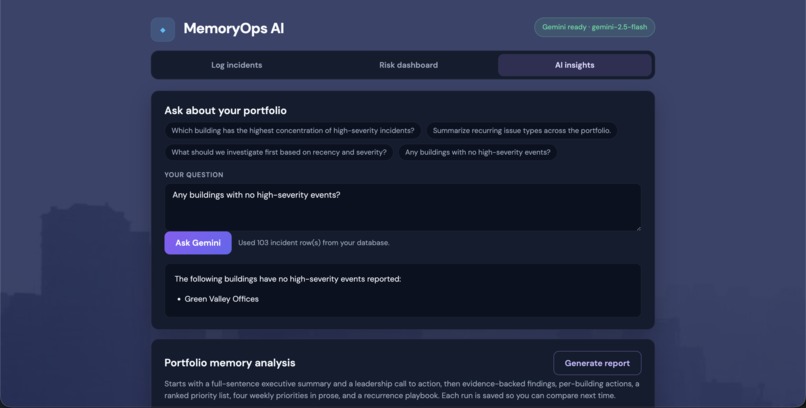
gemini
-
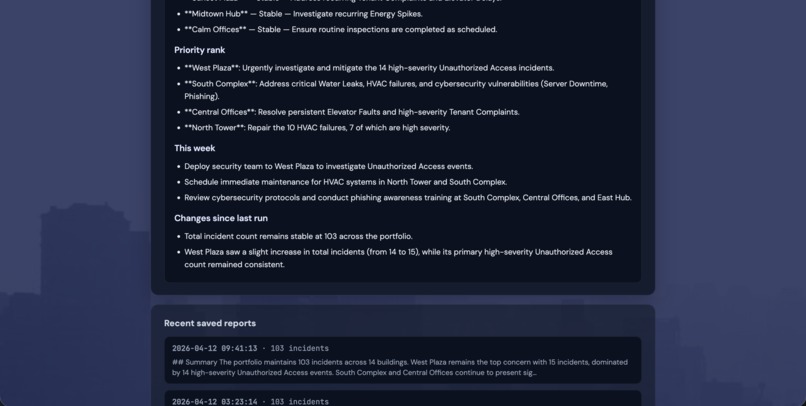
memory analysis answer 2
-
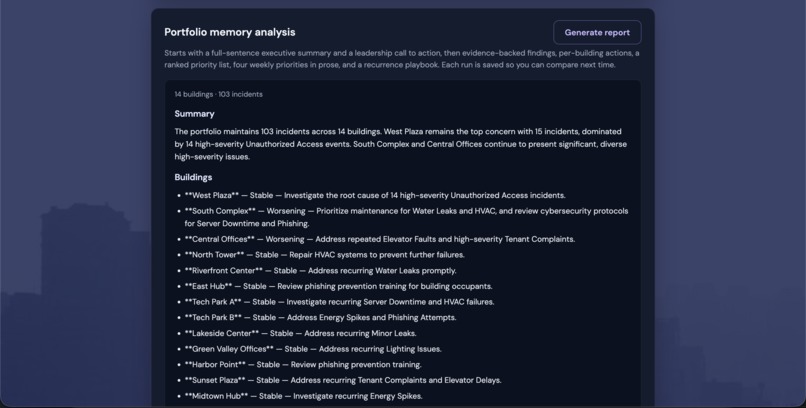
memory analysis answer 1
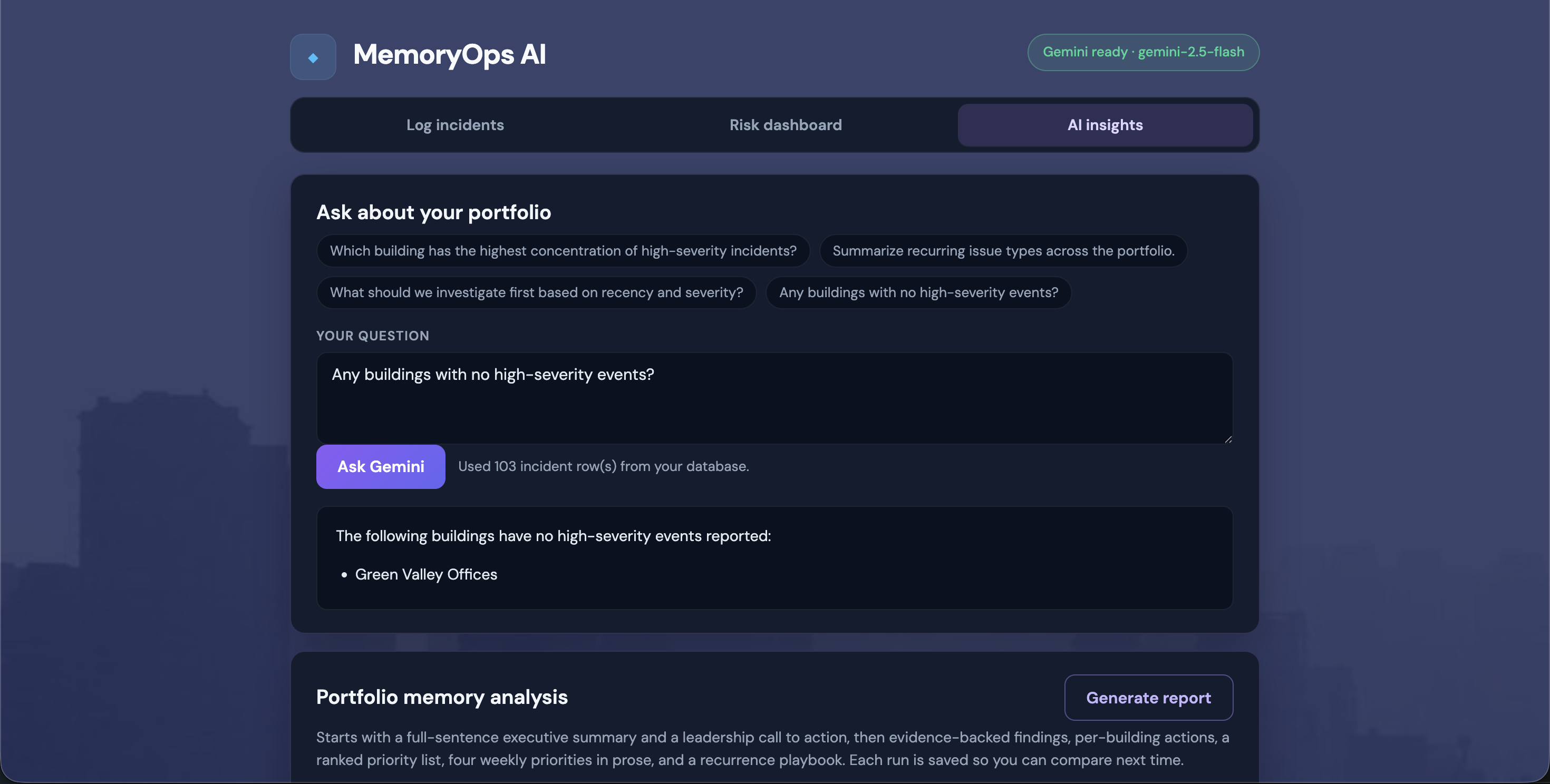
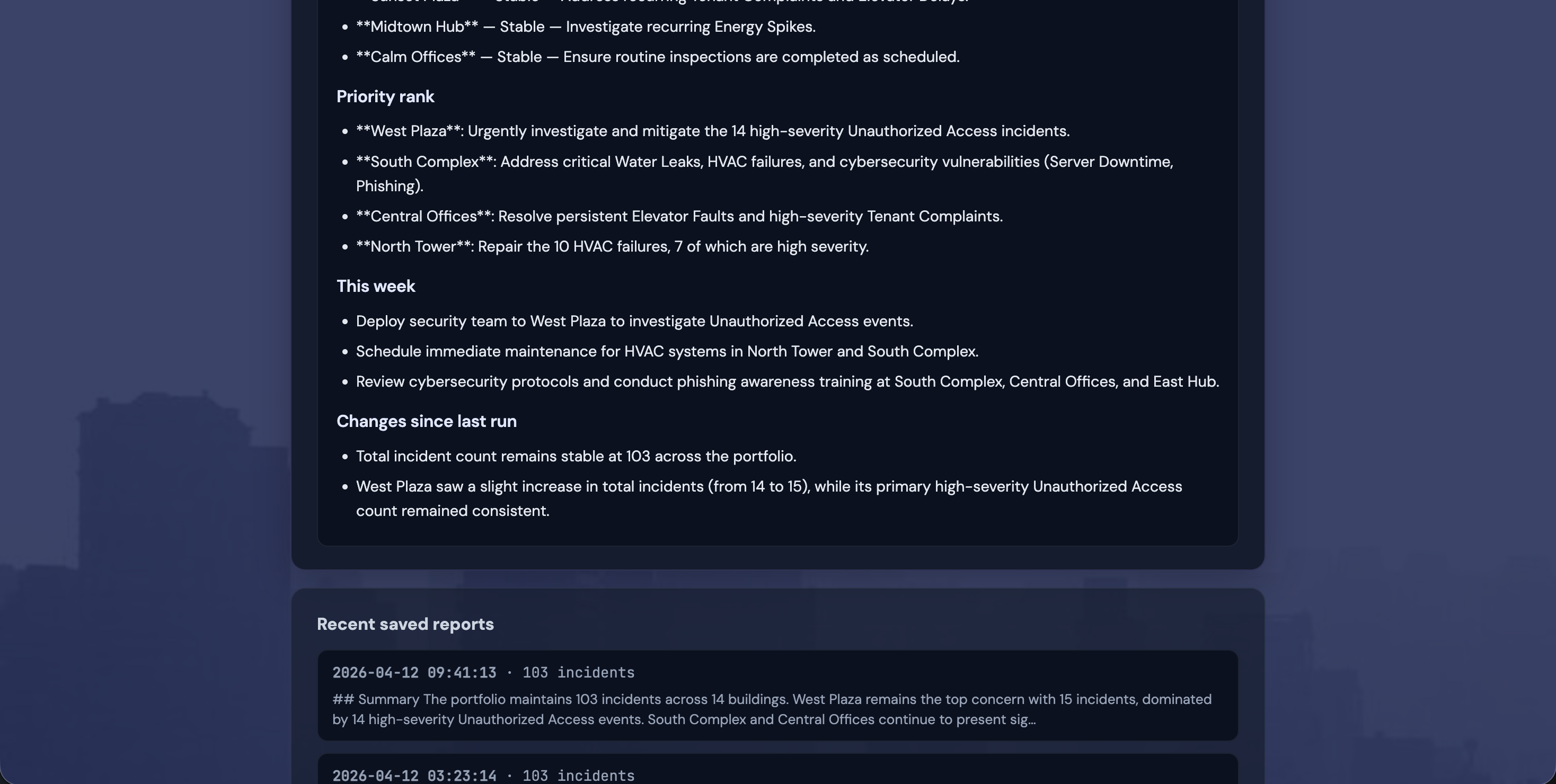
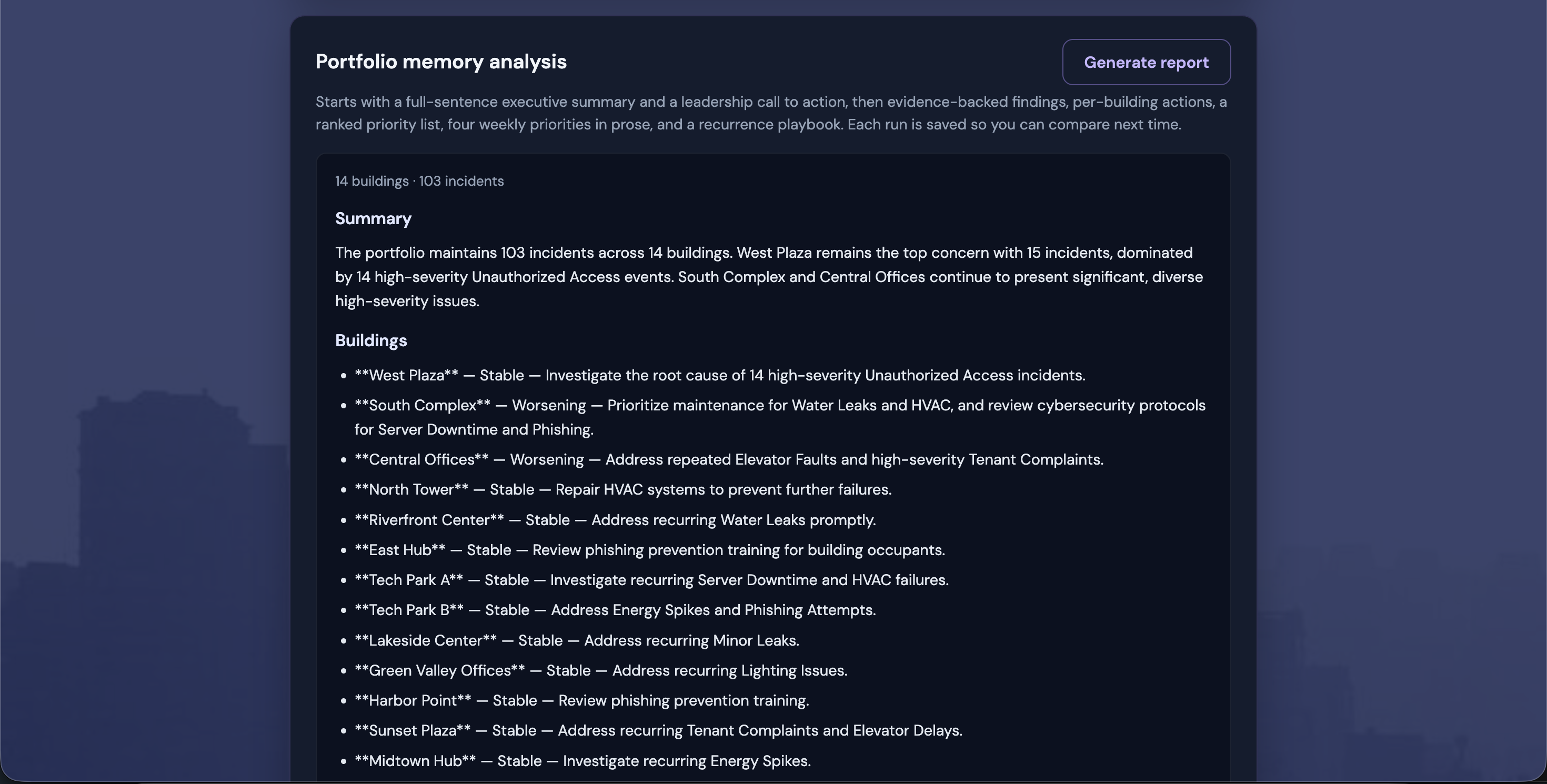
We built MemoryOps , an intelligent system that helps real estate teams learn from past building events to make smarter, data-driven decisions.
In large-scale real estate operations, buildings generate thousands of incidents from maintenance failures and tenant complaints to energy inefficiencies. However, most systems treat this data as temporary logs, and once an issue is resolved, the information is often forgotten. This leads to repeated failures, higher costs, and inefficient operations.
These challenges have real consequences. Unplanned maintenance can increase operational costs by up to 30%; repeated equipment failures lead to costly downtime; and inefficient energy use accounts for nearly 40% of a building’s total operating expenses. Additionally, poor response to tenant issues can reduce satisfaction and increase turnover, directly impacting revenue.
MemoryOps addresses this by transforming building data into long-term memory. Instead of discarding incidents, it stores them as “memories,” identifies patterns over time, and uses them to explain risk and recommend proactive actions. It also highlights energy consumption trends, helping teams reduce waste, lower costs, and support sustainability goals.
We built the system using Python and Flask for the backend, SQLite for memory storage, and HTML, CSS, and JavaScript with Chart.js for the frontend dashboard, integrating the Gemini 2.5 Flash API to enhance intelligent insights and reasoning. One of our biggest challenges was merging the frontend and backend systems seamlessly while ensuring smooth data flow and real-time updates. We also faced difficulties integrating the AI API and structuring data as meaningful “memory” rather than simple logs. Through debugging, restructuring our data model, and refining our logic, we successfully created a system that is both functional and scalable.
Acting like a living museum of building history, MemoryOps enables organizations to understand what went wrong, why it happened, and how to prevent it. By shifting from reactive problem-solving to proactive intelligence, it improves efficiency, reduces downtime, enhances tenant experience, and drives measurable business impact.


Log in or sign up for Devpost to join the conversation.