Inspiration
Traditional AI assistants can answer questions, but they often forget what happened before. We wanted to build an agent that could learn from previous incidents and use that experience when handling new ones. MemoryMesh was inspired by how real engineering teams rely on past incidents, fixes, and postmortems to solve recurring problems.
What it does
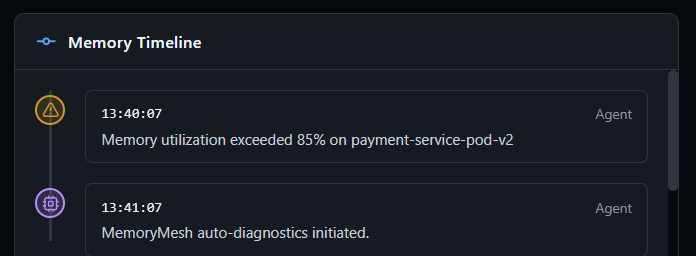
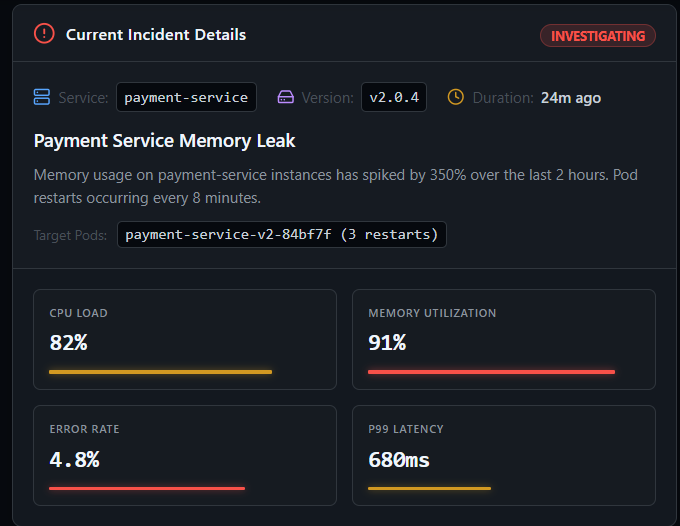
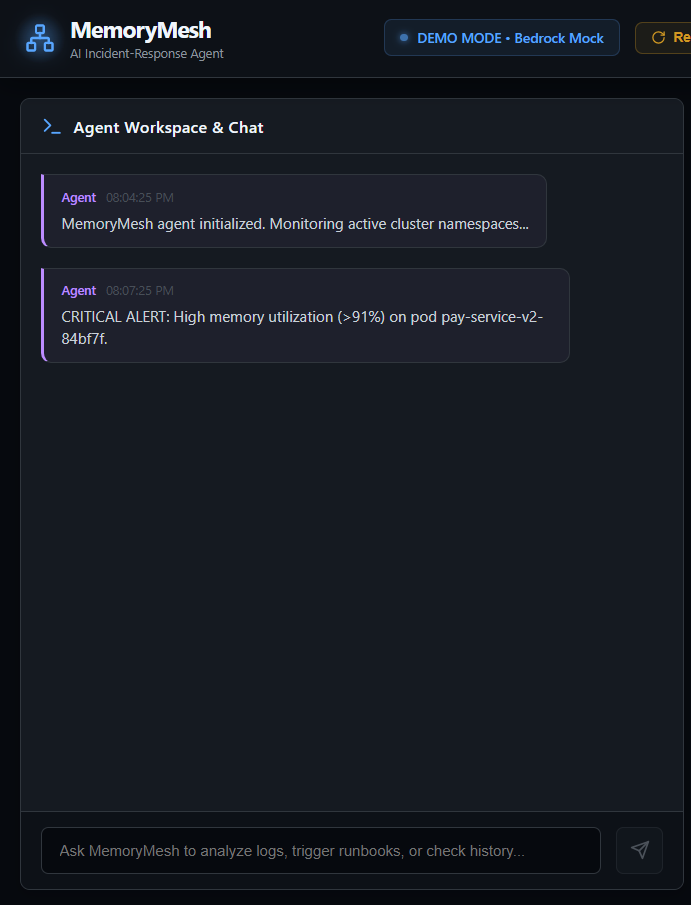
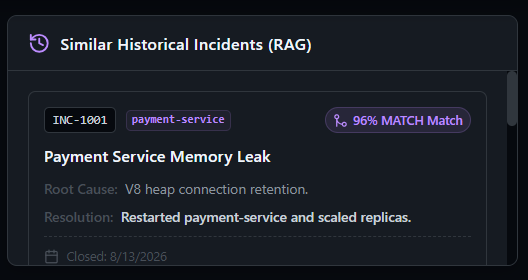
MemoryMesh is an AI incident-response agent with persistent memory. It analyzes a new incident, searches CockroachDB for similar historical incidents using vector search, uses that context to recommend an appropriate action, and stores the outcome as new memory for future incidents.
How we built it
We built MemoryMesh with an AI agent powered by OpenAI, CockroachDB as its persistent memory layer, and AWS services for cloud execution and storage. CockroachDB stores structured incident data and vector embeddings, allowing the agent to retrieve relevant past experiences. AWS Lambda handles backend execution and Amazon S3 stores incident artifacts.
Challenges we ran into
The biggest challenge was designing memory that was actually useful instead of simply storing chat history. We had to determine what information should become long-term memory, how to retrieve the most relevant incidents, and how to feed that context to the AI without overwhelming it.
Accomplishments that we're proud of
We are proud of building an agent where memory is a core part of the reasoning process. Instead of treating CockroachDB as just a database, MemoryMesh uses it to connect past incidents, decisions, actions, and outcomes with new problems.
What we learned
We learned how to build an agentic system with persistent memory, semantic vector search, database-backed reasoning, and cloud deployment. We also learned how important memory design is when building AI systems intended for repeated real-world use.
What's next for MemoryMesh
We plan to connect MemoryMesh with real monitoring and observability platforms, automatically detect incidents, execute approved remediation actions, improve memory through feedback, and support multiple engineering teams and services.
Built With
- agents
- ai
- amazon
- amazon-web-services
- cockroachdb
- lambda
- node.js
- openai
- react
- s3
- search
- typescript
- vector

Log in or sign up for Devpost to join the conversation.