-
-
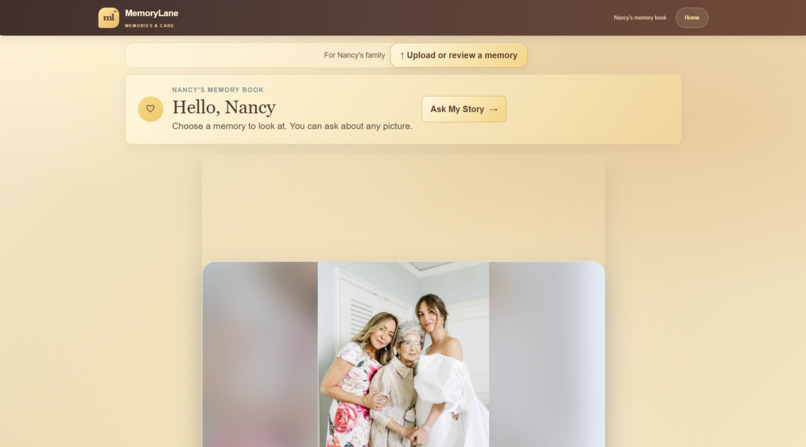
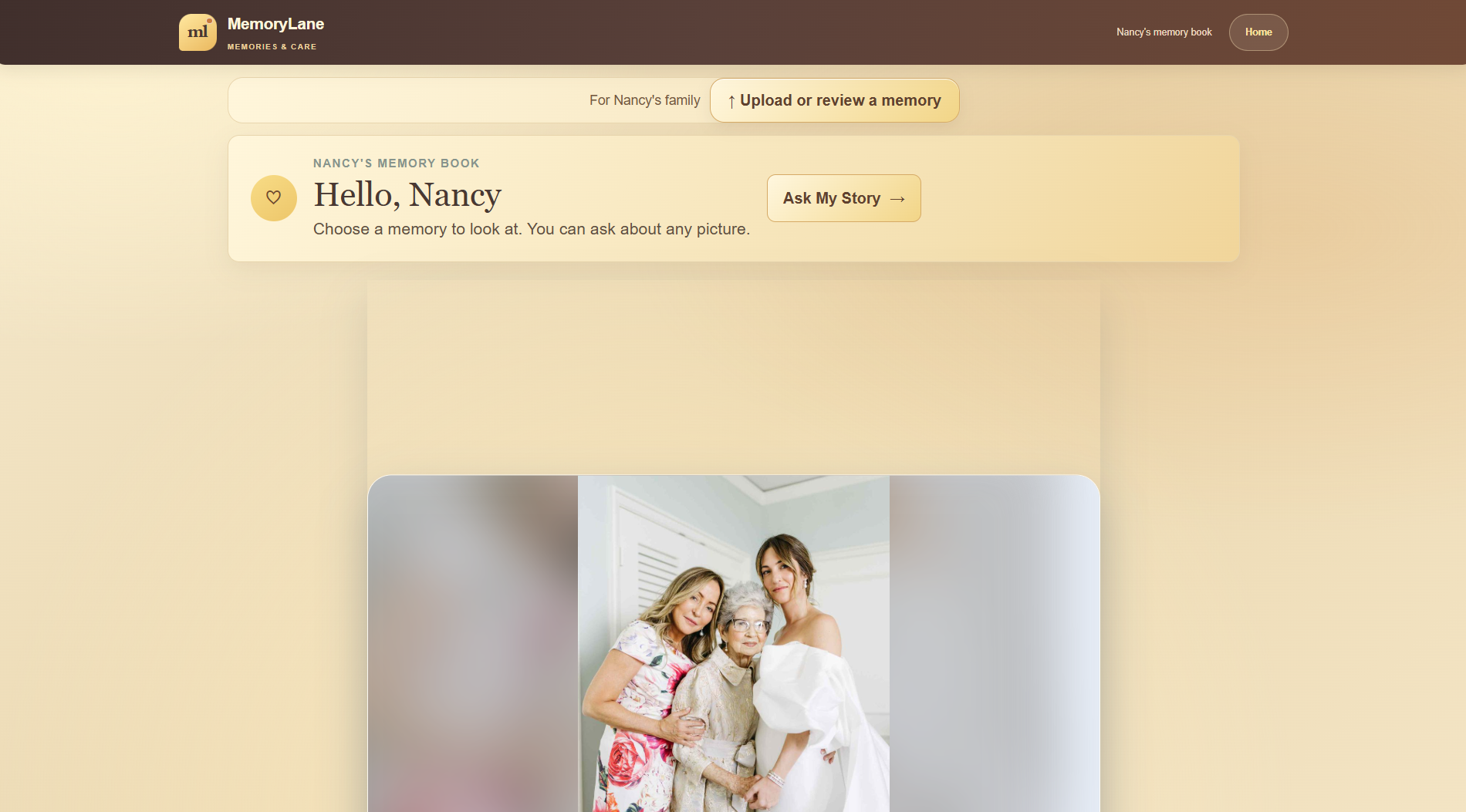
Memory Viewer
-
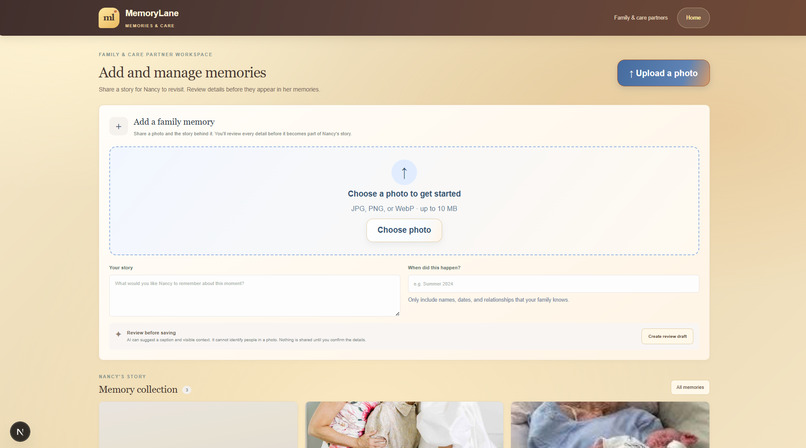
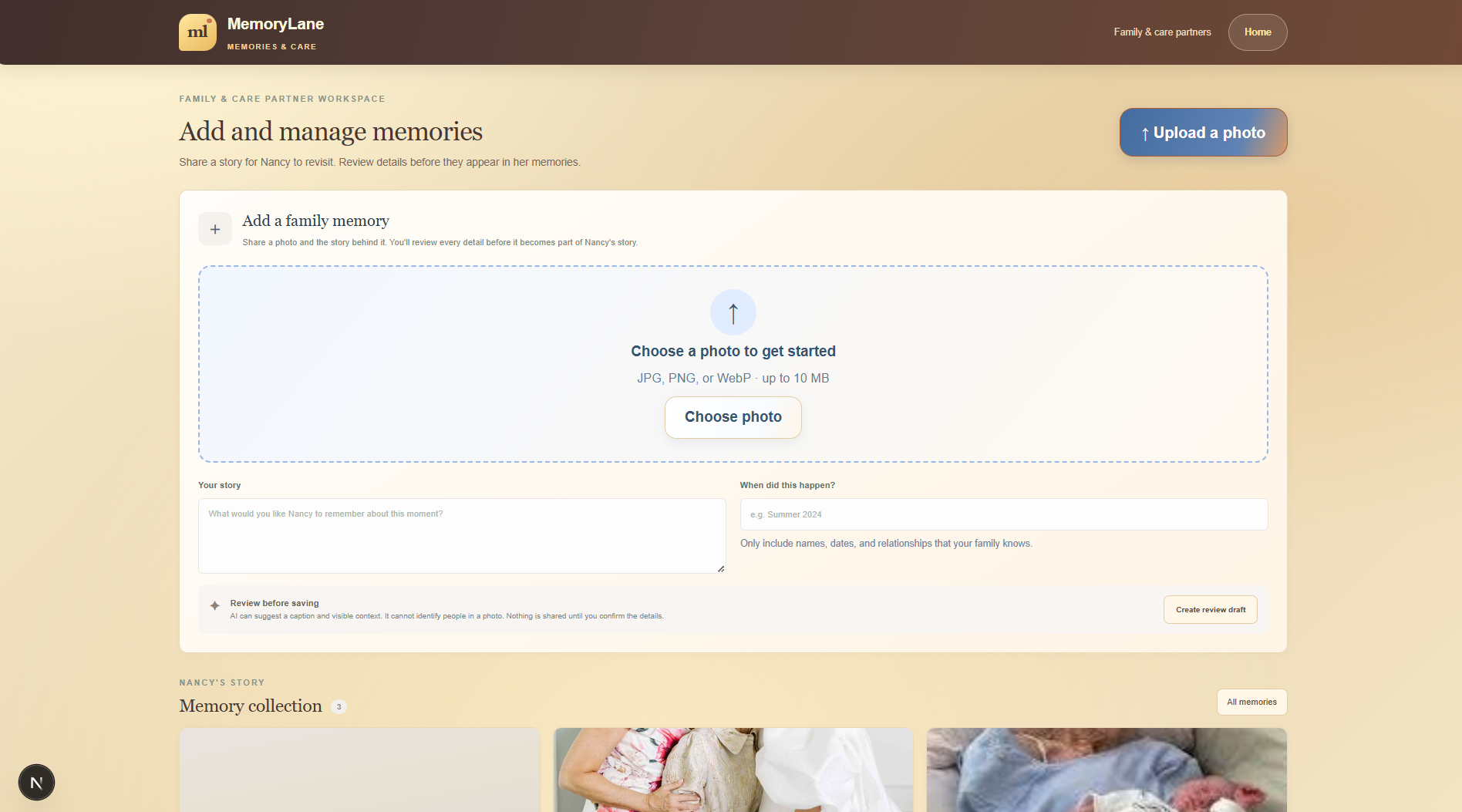
Family Members Method Of Uploading Memories
-
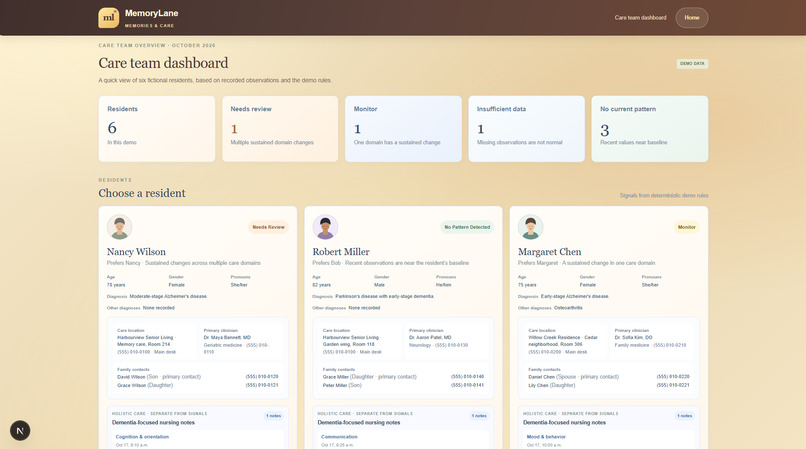
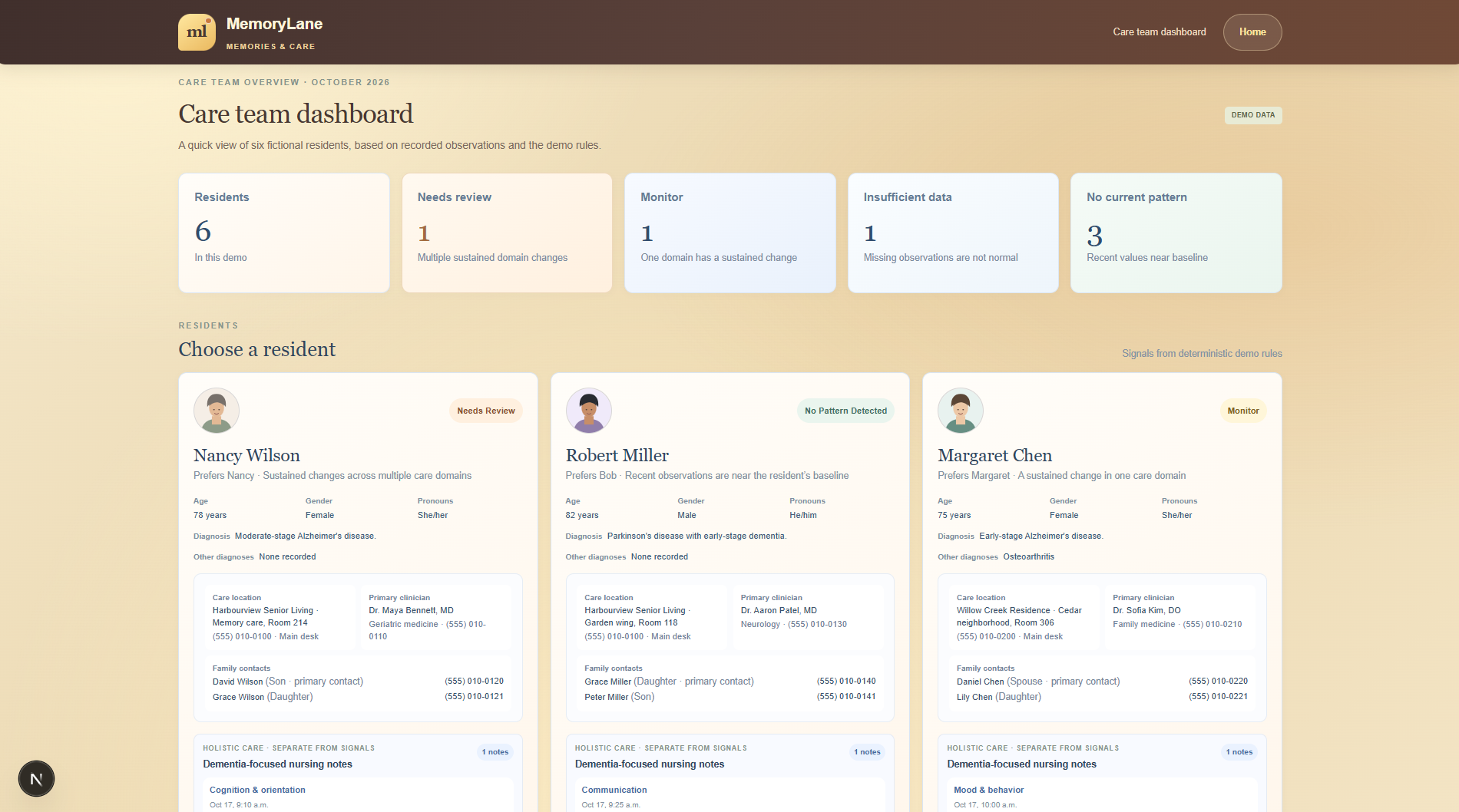
Main Dashboard of Caregiver Workspace
-
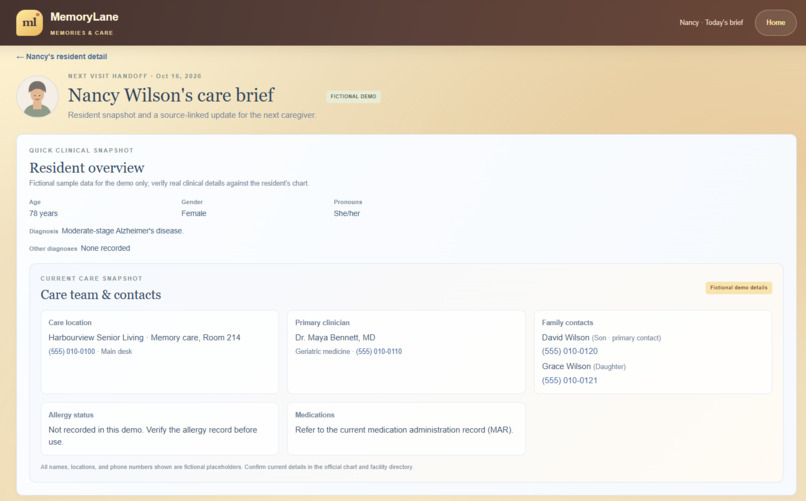
CareBrief Per Resident
-
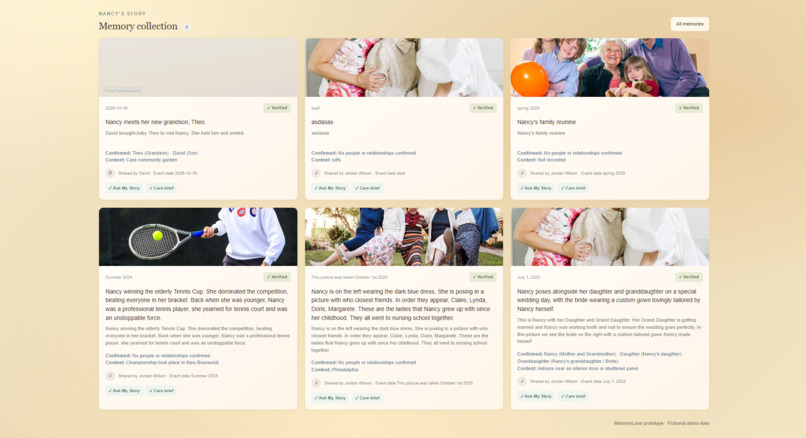
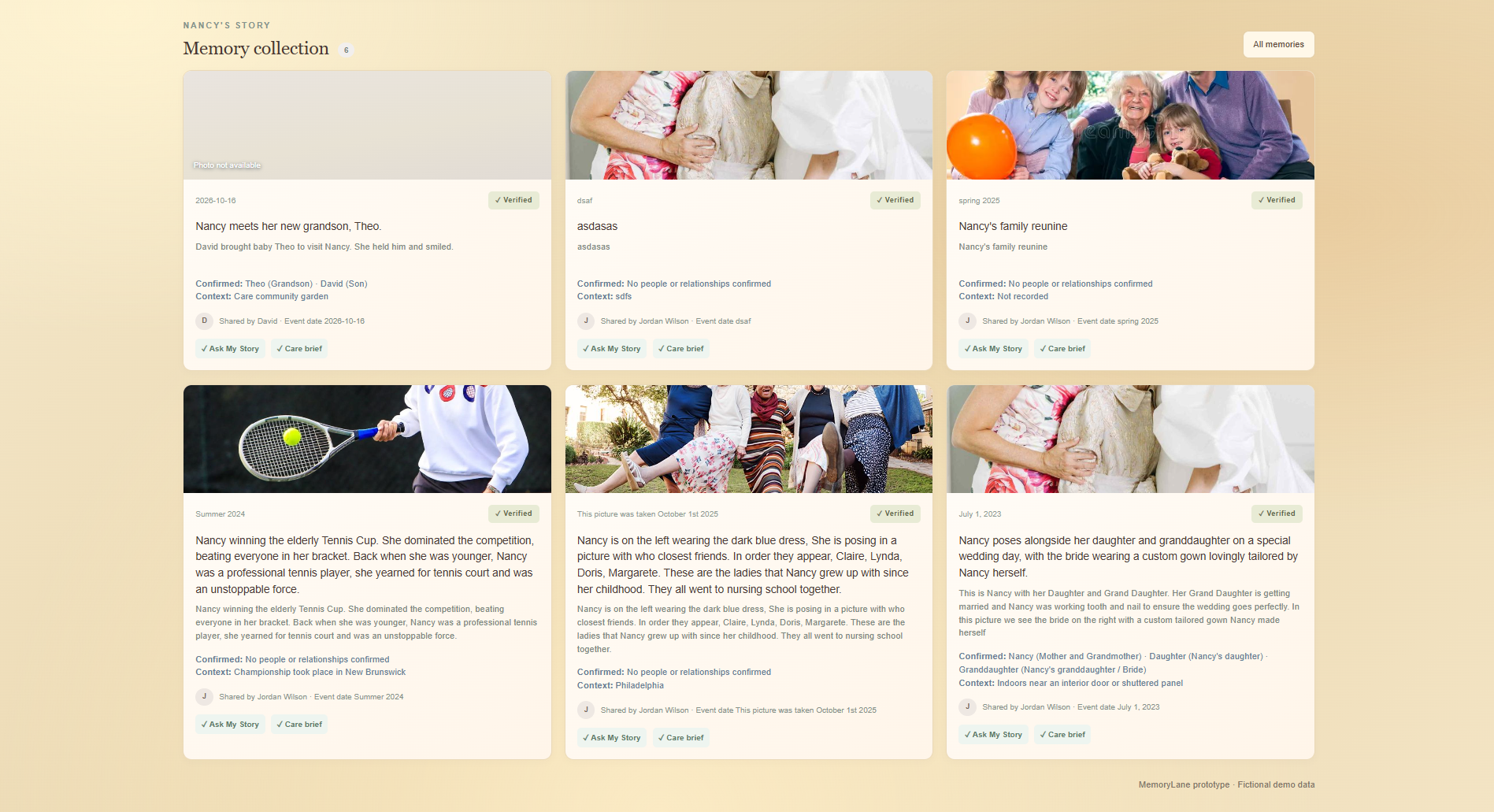
Memories Archive
-
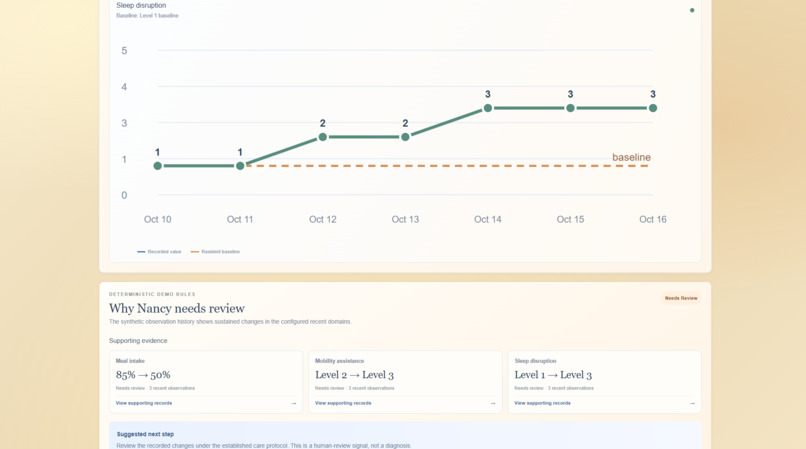
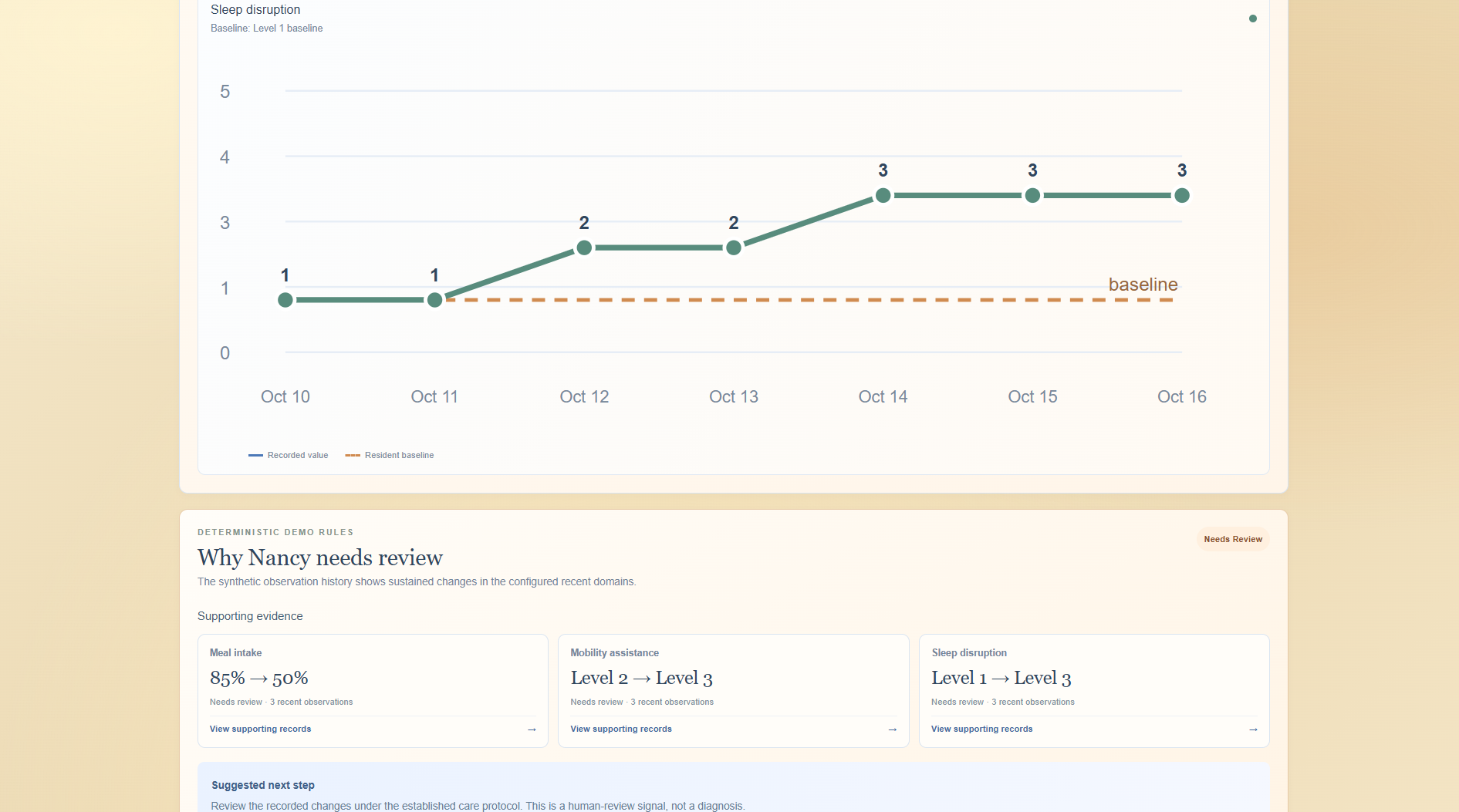
Patient Stats
-
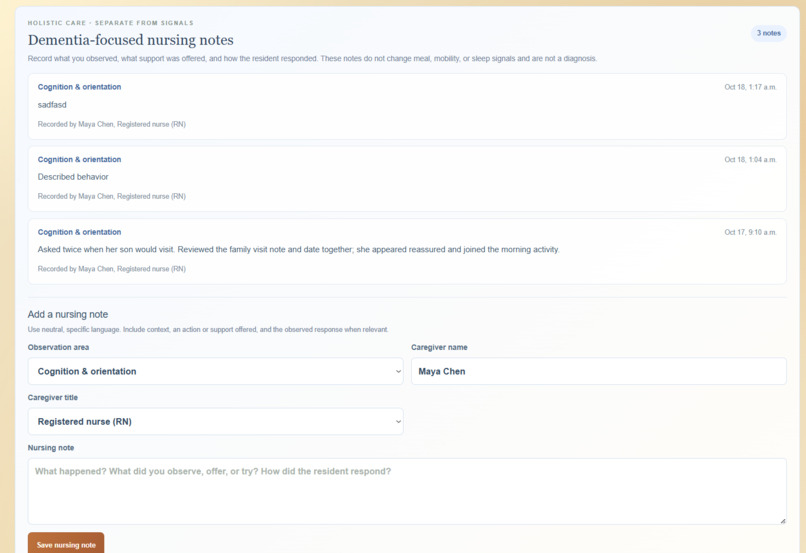
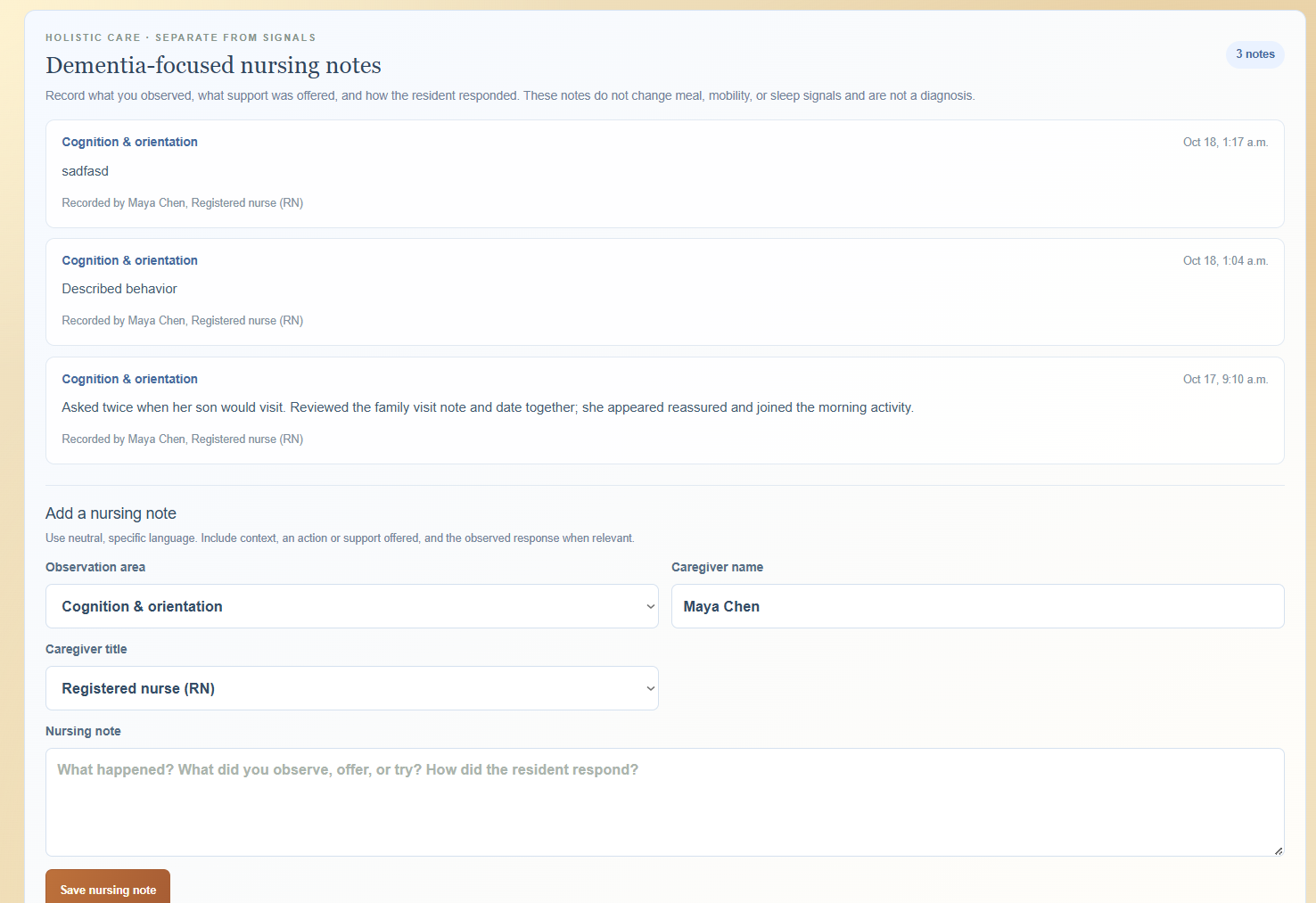
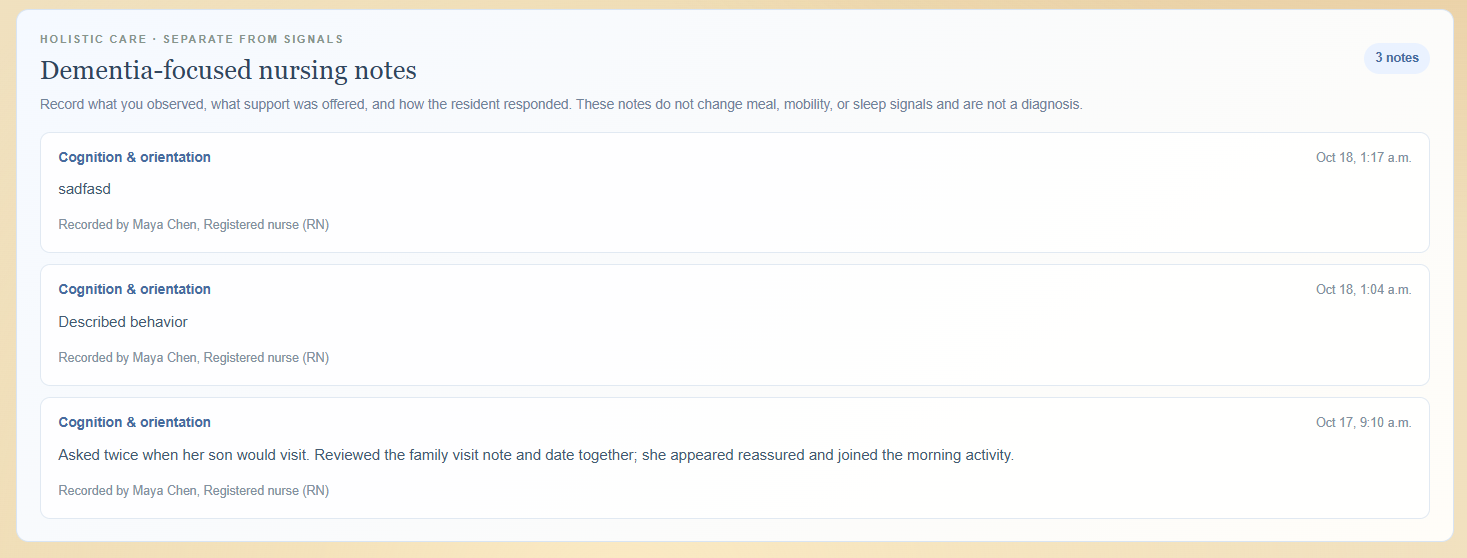
Nurse Notes
-
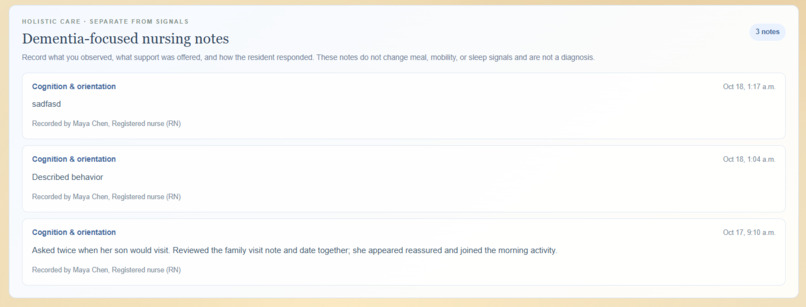
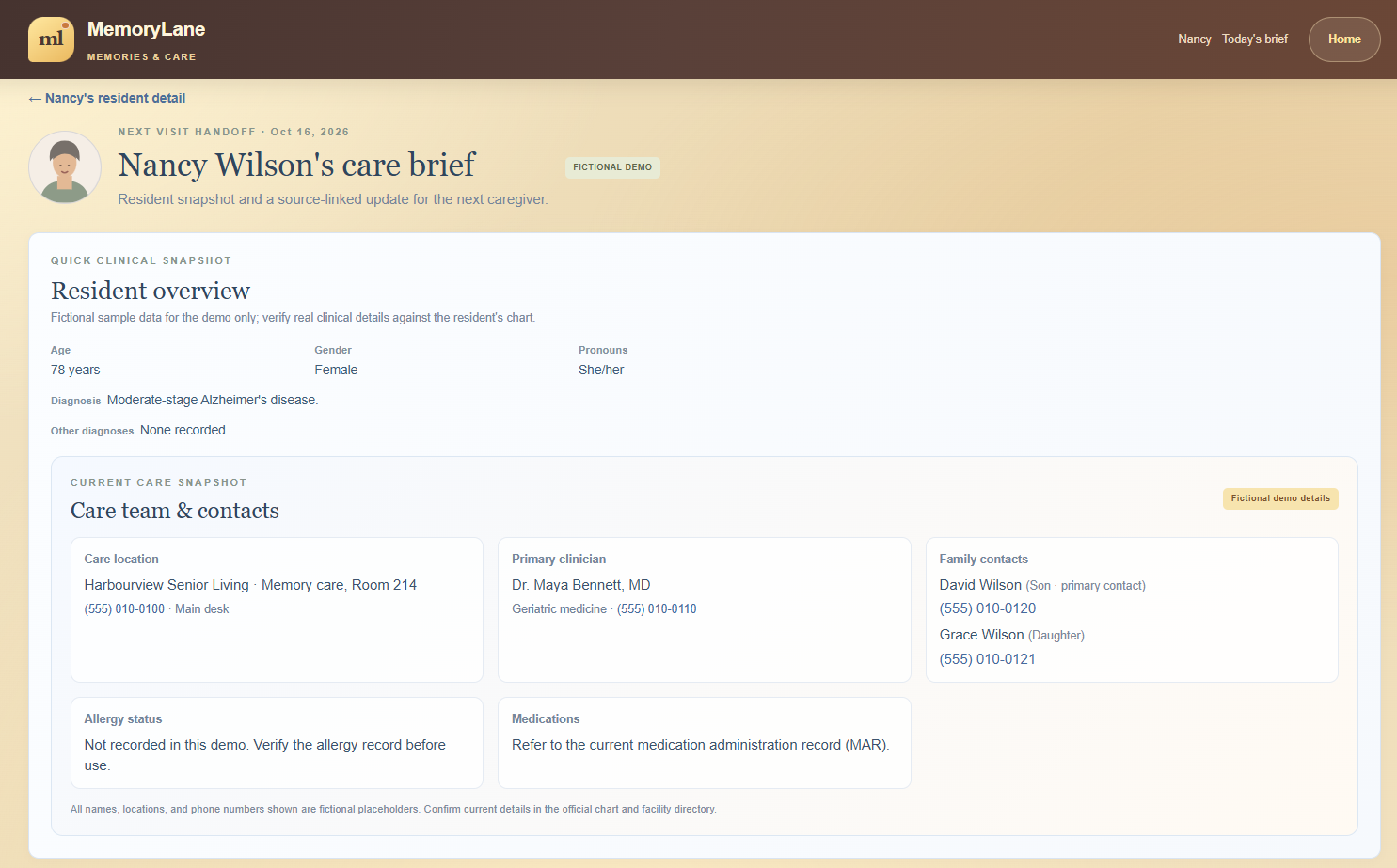
Nurse Handoff
Inspiration
From personal experience often, it is observed that home care residents unfortunately don't receive the same degree of attention to care compared to hospitals or long-term care homes. By the time treatment would be beneficial conditions worsen more than need be. Care often involves a family, care team, and resident who each know different parts of a person’s story. Important family context can be separated from day-to-day care notes, leaving the next caregiver without information that could help them connect with the resident. We wanted to centralize a simple handoff which could bring those pieces together. MemoryLane helps preserve family memories, make approved details easier for a resident to revisit, and give caregivers a clearer view of recent observations and follow-up.
What it does
MemoryLane has two demo experiences: Family Memories: Families contribute photographs, stories and personal information. AI drafts structured entries; an authorized family member verifies the details. Resident Overview Care Brief: The next caregiver receives a concise briefing containing relevant verified personal context, recent structured observations, changes from baseline and follow-up needs.
How we built it
We built MemoryLane as a Next.js App Router application using React and TypeScript. Its API routes handle AI-assisted memory drafting, questions grounded in approved memory details, speech-to-text, and text-to-speech.
Care signals come from a deterministic TypeScript rules engine that compares seeded observations with configured baselines. The demo uses fictional data, with new memories and care updates saved in browser storage. Gemini assists with memory and language tasks; it does not generate care signals or verify family-provided facts.
Challenges we ran into
- Designing a clear experience for three different roles: family contributors, residents, and caregivers.
- Keeping the resident’s memory book simple and readable while still making photos, descriptions, and question controls easy to use. We focused hard on the elderly user experience.
- Ensuring AI suggestions remain drafts for family review instead of treating generated details as verified facts.
- Managing the project github, we had several conflict with commits, working
- Integrating AI and voice features while keeping the demo’s core experience useful when those services are unavailable.
Accomplishments that we're proud of
- We connected family memories and caregiver handoffs into one prototype rather than treating them as unrelated features.
- Integrating Gemini API for TTS and STT features, additionally converting Gemini Base64 into interpretable context for the resident to use.
- The Care Brief keeps verified personal context, care observations, and follow-up information visibly separate.
- We designed the care signals as prompts for human review, not diagnoses or predictions.
- We turned our idea into something practical
- Passive Cognitive Tracker - Tracked the frequency of questions regrading residents questions to memories. catching confusion spikes and sending warnings of early signs of worsening dementia.
- Hybrid Memory Logging: Both care givers and family members may check into the app to provide info on the patients states. All in aid to catch it early.
What we learned
- We learned that connecting information is only useful when its source and status are clear. A family-confirmed memory, a recorded observation, and an AI suggestion need to remain distinguishable.
- We also learned that “easy to use” means different things for different people. The resident experience benefits from fewer choices and larger controls, while caregivers need evidence, context, and a way to document what happens next.
- We dived deep into integrating API endpoints with Gemini's API into our project/
What's next for MemoryLane
- Replace browser-local demo storage with a secure backend and persistent image storage.
- Add appropriate authentication, permissions, and audit history before supporting real families or care teams.
- Test the senior and caregiver experiences with users and accessibility guidance.
- Improve the memory review workflow so families can manage sharing permissions and correct details over time.
- Refine the care handoff with feedback from caregivers, while keeping signals transparent and human-reviewed.
- Expand beyond fictional demo data only after privacy, security, and clinical review requirements are addressed.
Built With
- javascript
- nextjs
- node.js
- react
- typescript
- vercel

