-
-
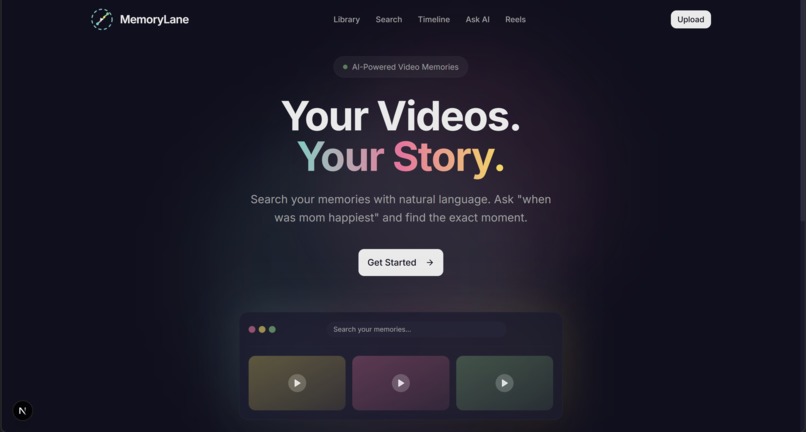
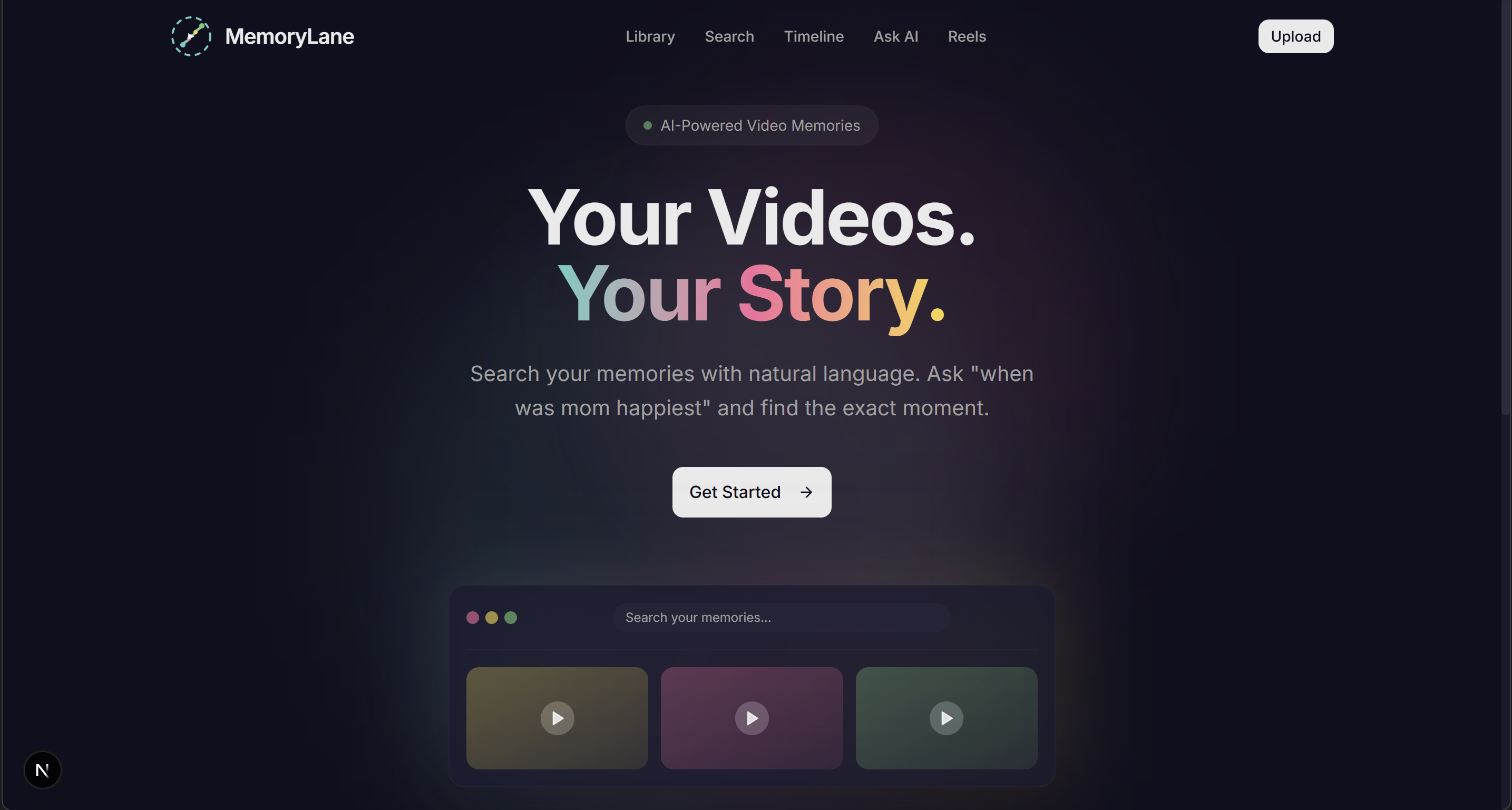
Landing Page
-
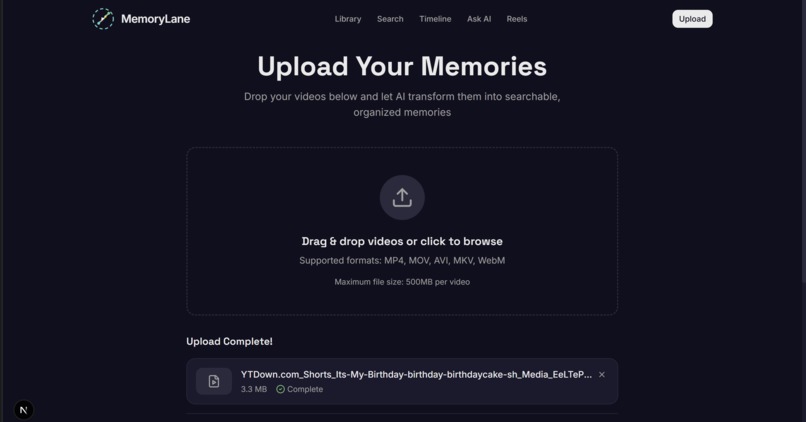
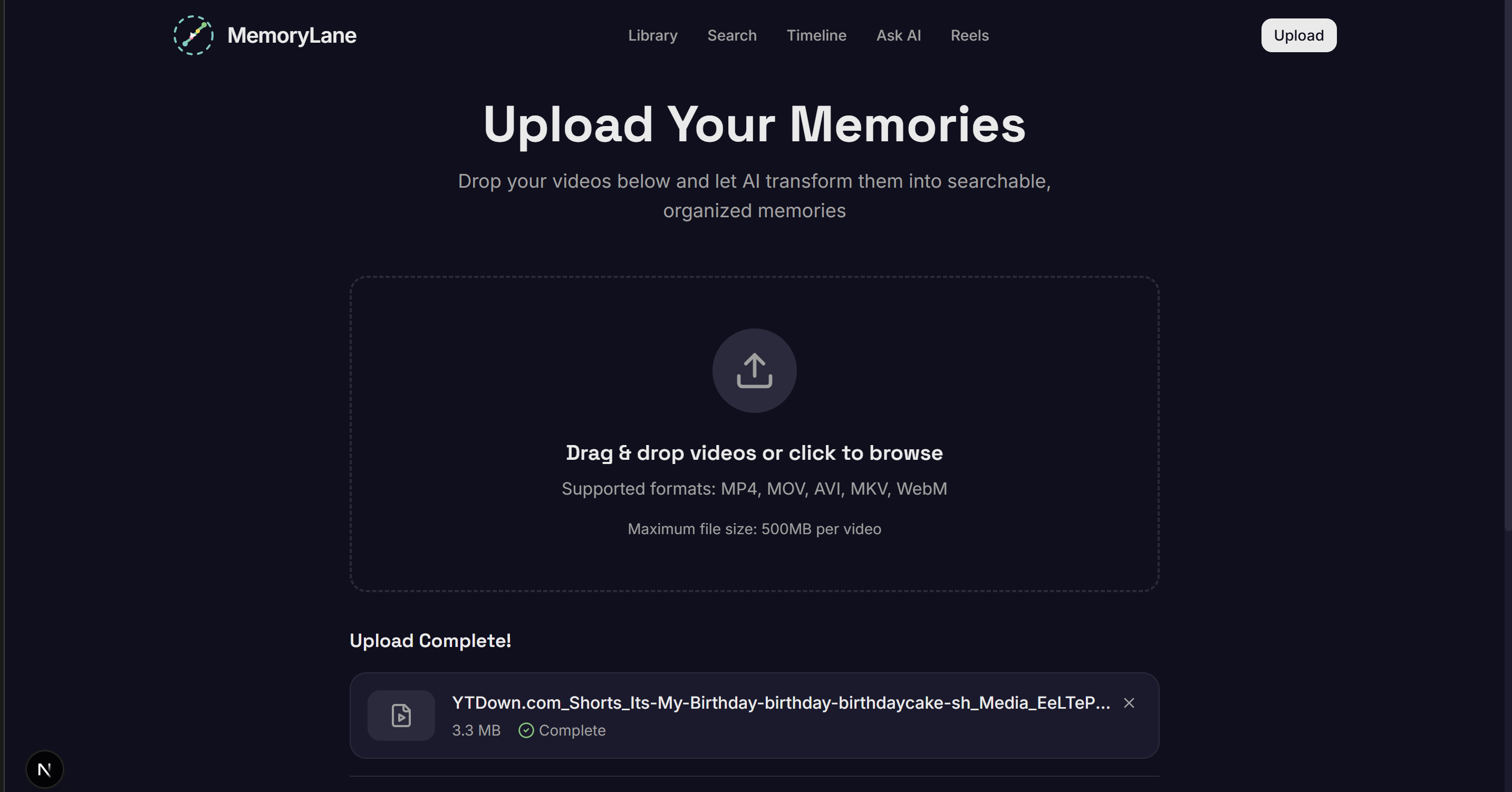
Video Upload Screen
-
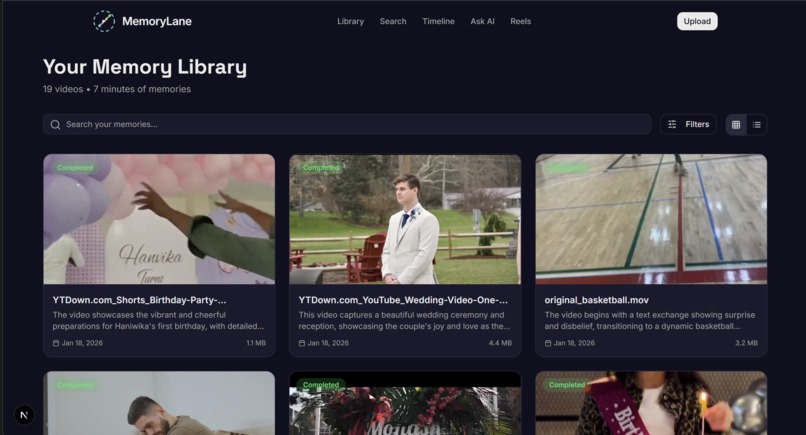
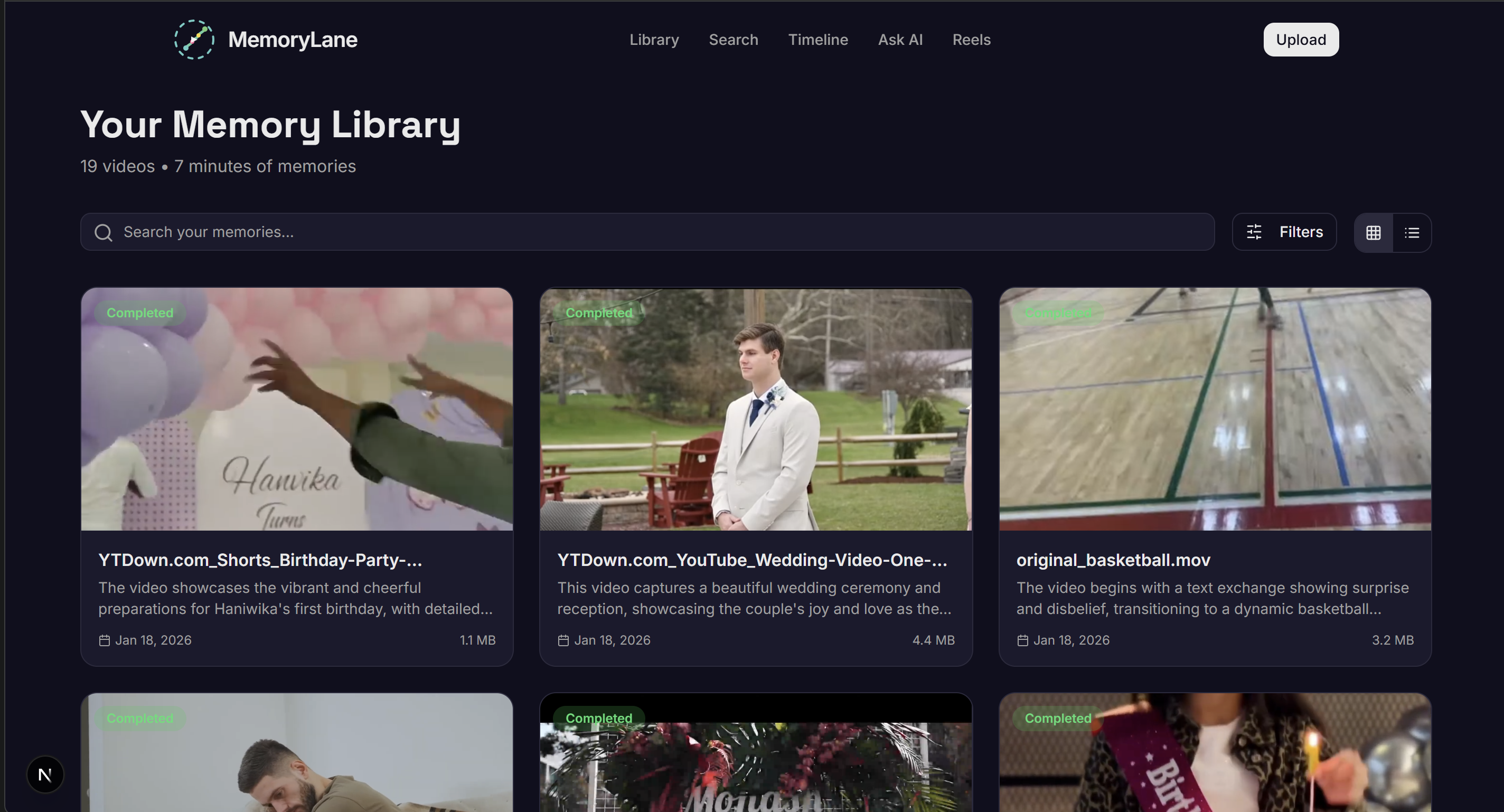
Video Library
-
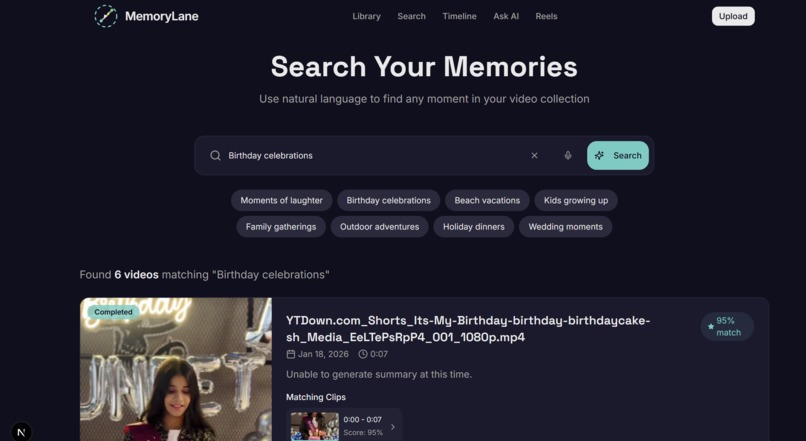
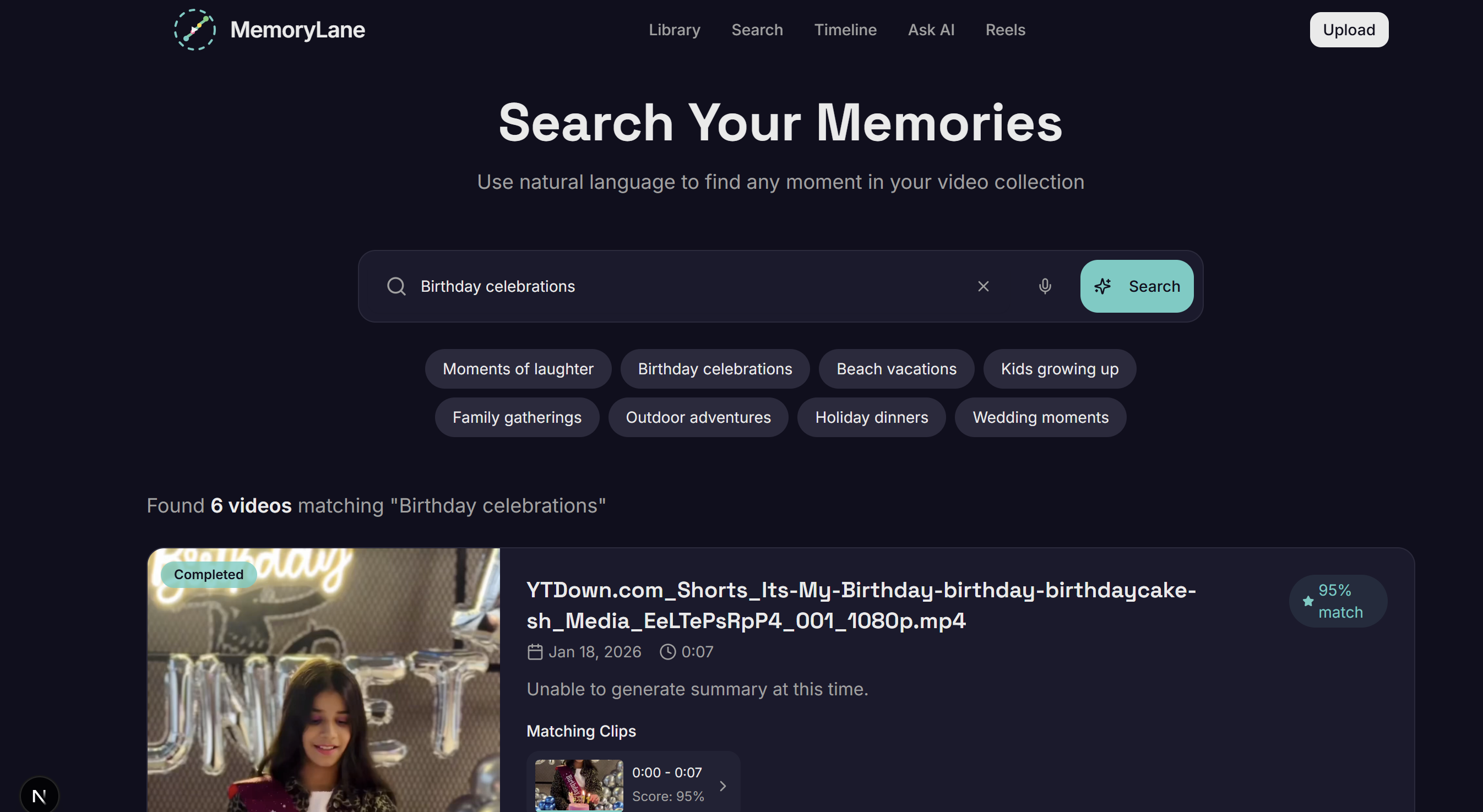
Search Your Memories
-
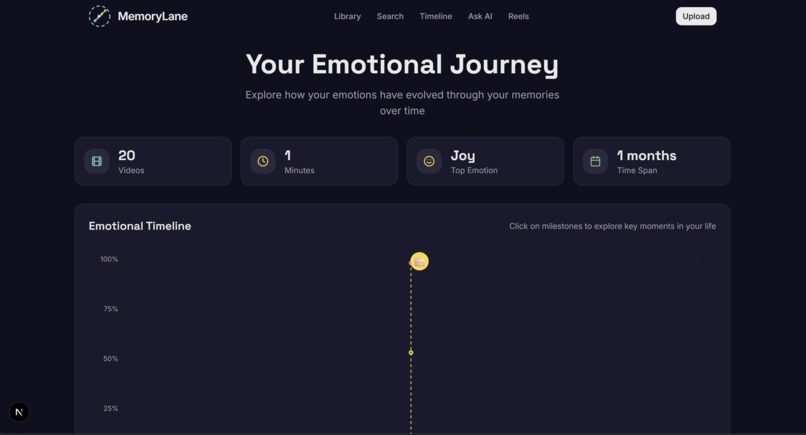
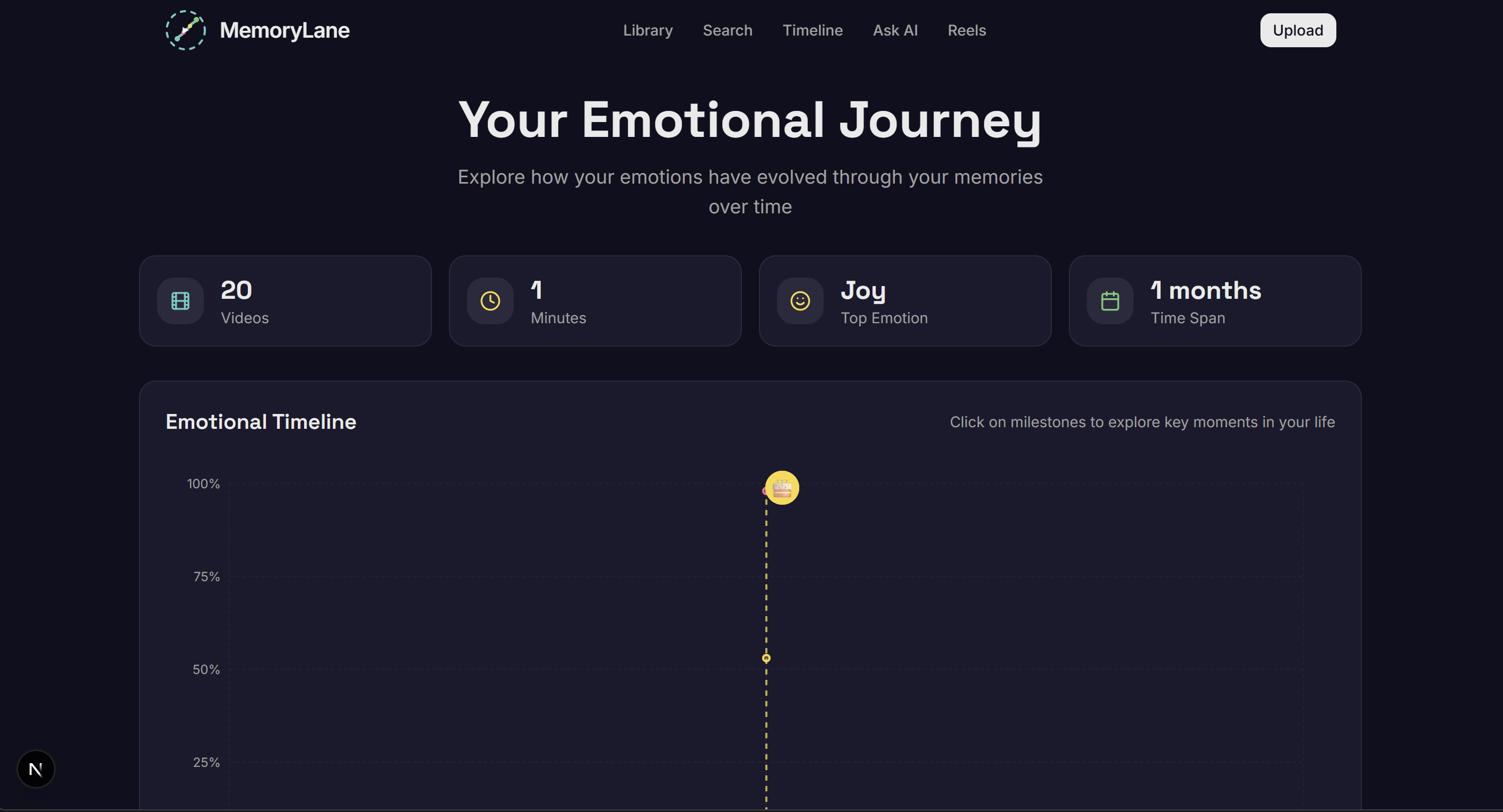
Emotion Journey Timeline
-
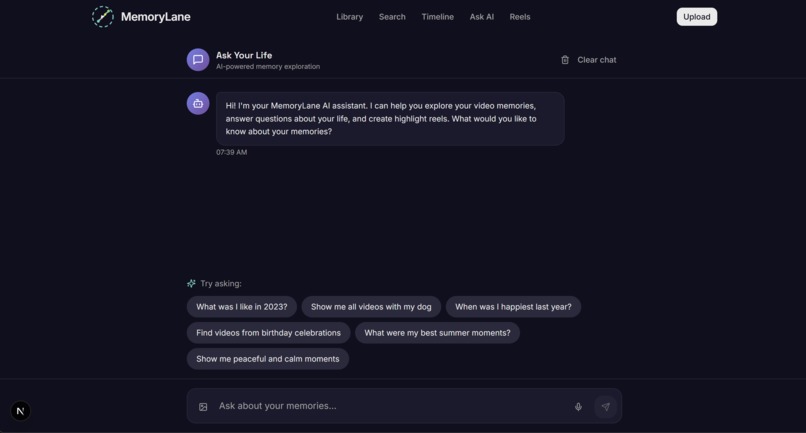
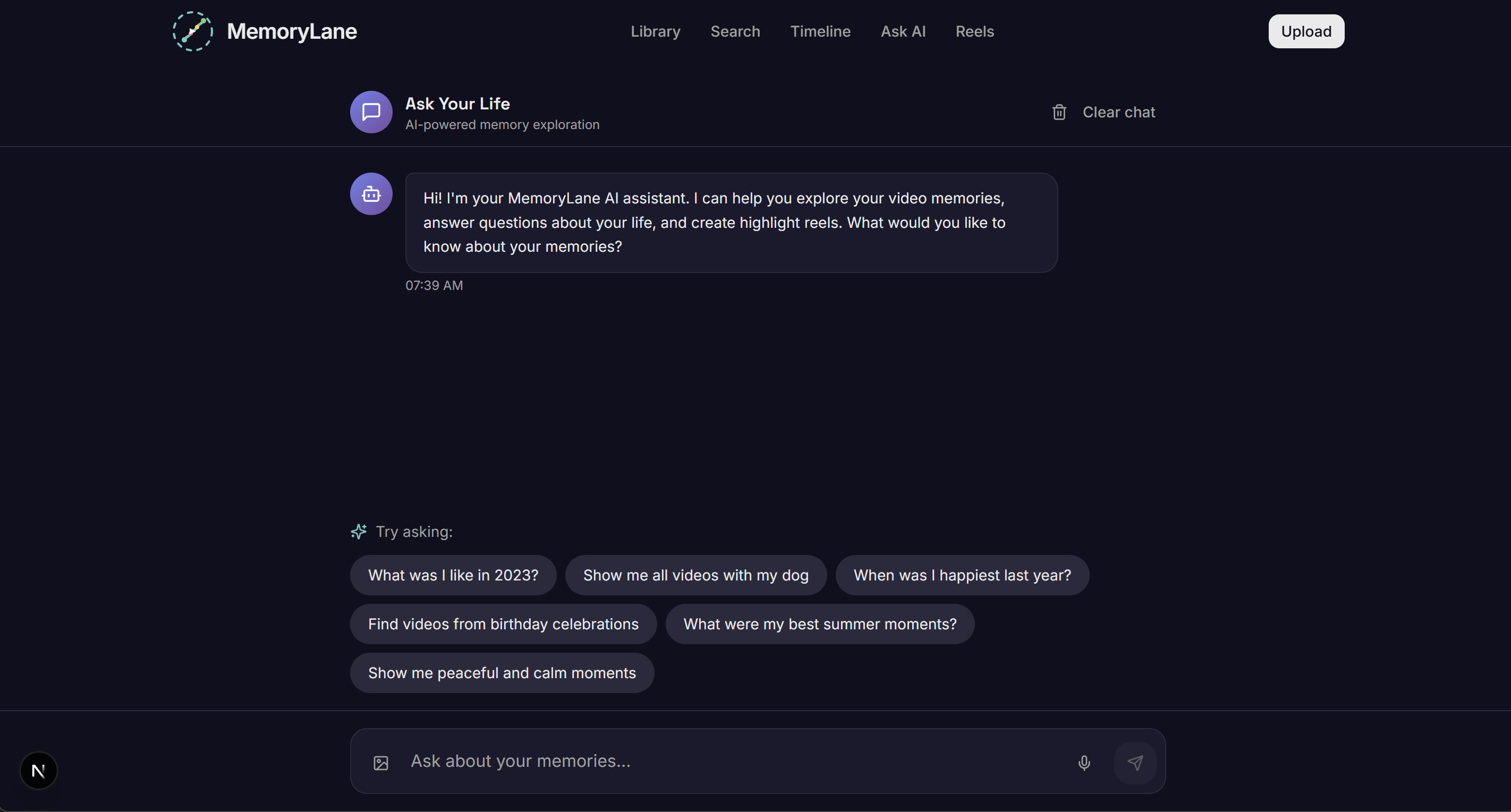
AI Memory Chatbot
-
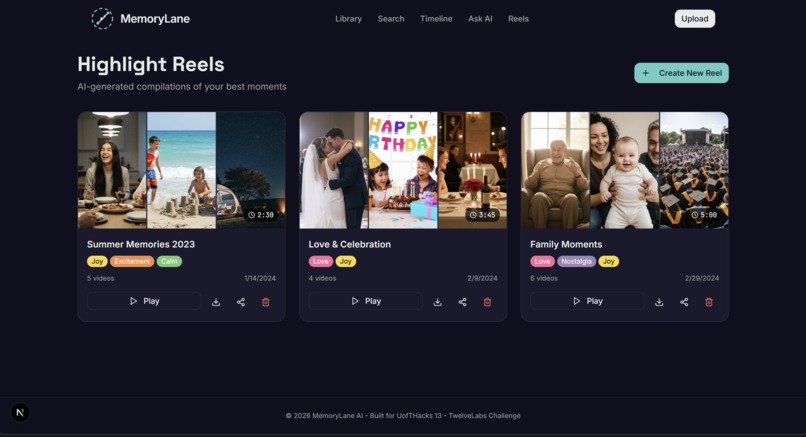
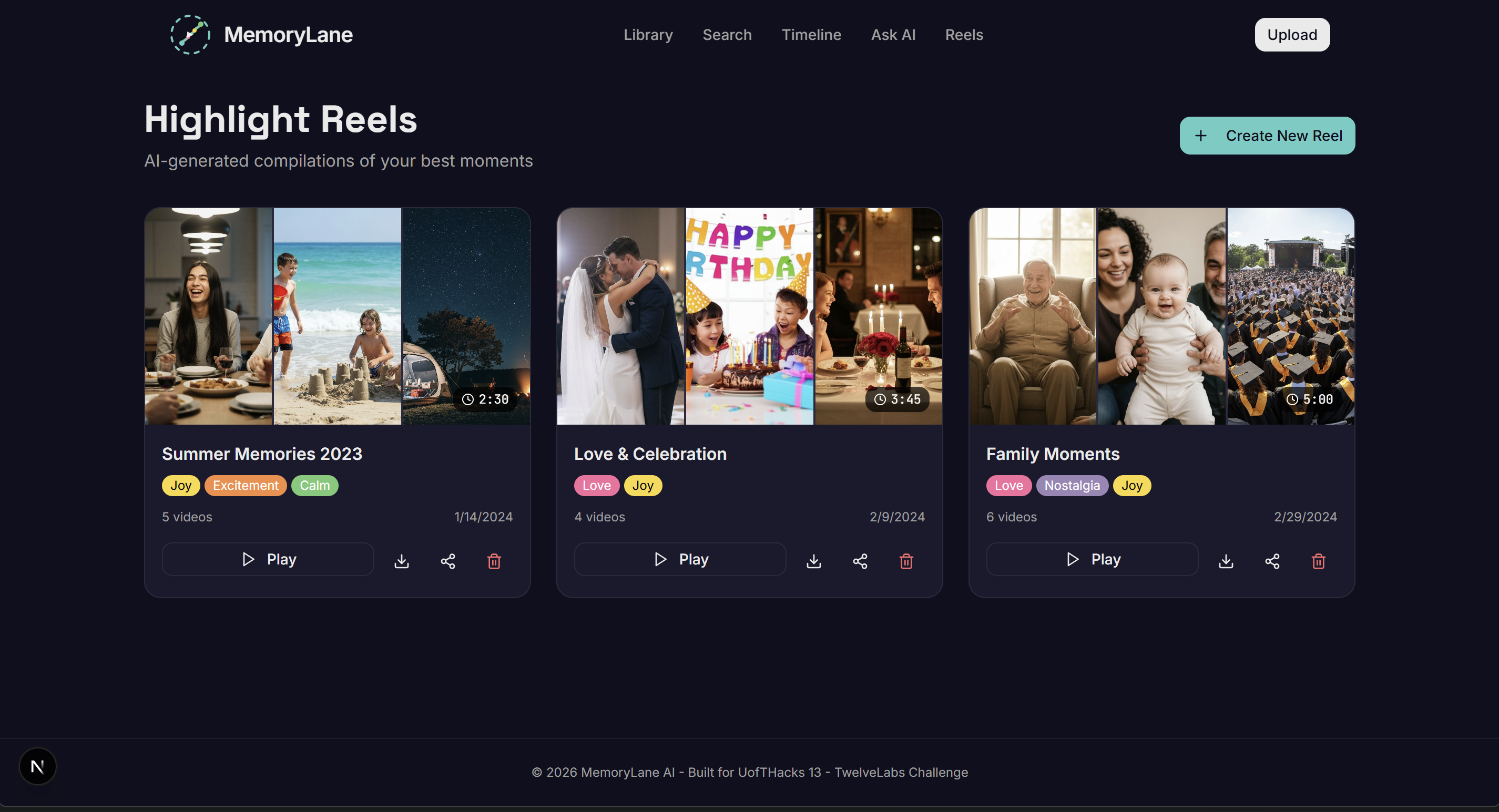
Highlight Reel Generator
Inspiration
We all have years of videos buried in our camera rolls, but when we actually need a meaningful moment, a family laugh, a milestone, a trip, or a loved one, it’s almost impossible to find. Video has become the most personal form of data, yet it’s the hardest to search. We wanted to build something that turns scattered personal footage into an organized story of identity so you can actually revisit the memories that shaped you.
What it does
MemoryLane AI transforms your personal videos into a searchable, emotional autobiography. Instead of endlessly scrolling through years of footage, you can upload your camera roll and search naturally for moments like “moments of laughter” or “that camping trip where we got lost” and instantly get results with exact timestamps that jump directly to the right clip. It also organizes your memories into an interactive emotional timeline so you can explore different chapters of your life and includes an AI assistant that lets you chat with your memories (e.g., “What was I like in 2019?”). To make memories even easier to relive and share, MemoryLane AI can automatically generate highlight reels by stitching together your best moments into a shareable video.
How we built it
We built MemoryLane AI as an end-to-end web app with a clean, interactive frontend and a backend pipeline that can handle video uploads and processing smoothly. The frontend is built with React, TypeScript, and Tailwind, with Framer Motion for animations and D3.js for the emotional timeline. On the backend, we used Node.js and Express to connect everything together, and we stored uploaded video files in Firebase Storage while keeping all video metadata, search history, and generated memory data inside Firestore. For the AI side, we used TwelveLabs for video indexing and semantic search with timestamped results and Gemini to power summaries and the chat assistant.
Challenges we ran into
One of our biggest challenges was making video processing feel smooth and reliable in a hackathon setting, since uploading and indexing videos can take time and it is easy for the user experience to feel slow or broken. We also had to connect multiple moving parts together at once, including upload, storage, video indexing, semantic search, and generating outputs like an emotional timeline and reels, so even small bugs could break the entire demo flow. Another challenge was turning raw video understanding into something meaningful and personal, because the app is not just about finding clips; it is about understanding emotion and identity over time.
Accomplishments that we're proud of
We are proud that we built a full end-to-end experience that actually works as a real product flow, not just a concept. MemoryLane AI takes personal videos and turns them into something people can interact with in a magical way by letting users search their memories using normal language and instantly jump to the correct timestamps. We are also really proud of the emotional timeline concept because it makes personal video archives feel like a story instead of random files, and it connects strongly to the identity theme. Overall, we focused heavily on making the demo feel clean and visually polished, because we wanted the project to feel like something people would genuinely use.
What we learned
We learned how to build with video understanding tools in a real workflow and how different video is compared to text when it comes to search, structure, and speed. We also learned a lot about designing a product around human emotion rather than just features, since the real “wow” in this project comes from helping someone relive meaningful memories. On the technical side, we learned how to coordinate a full pipeline that includes uploads, storage, AI processing, and UI feedback, while keeping everything stable enough to present confidently.
What's next for MemoryLane
Next, we want to expand MemoryLane AI into a full identity platform rather than just a video search tool. We plan to add voice search and voice chat so the experience feels hands free and natural, along with smarter automatic organization that groups memories into life chapters and meaningful eras. We also want to build an identity and personality layer that generates a personalized memory profile, including a personality type and emotion patterns over time, so users can understand how they’ve changed. On top of that, we want to improve highlight reel generation with better storytelling and editing controls, add private sharing with stronger privacy settings, and support collaborative family vaults so memories can be preserved and explored together.
Built With
- express.js
- firebase
- geminiapi
- nextjs
- node.js
- react
- tailwindcss
- twelvelabsapi
- typescript


Log in or sign up for Devpost to join the conversation.