Inspiration
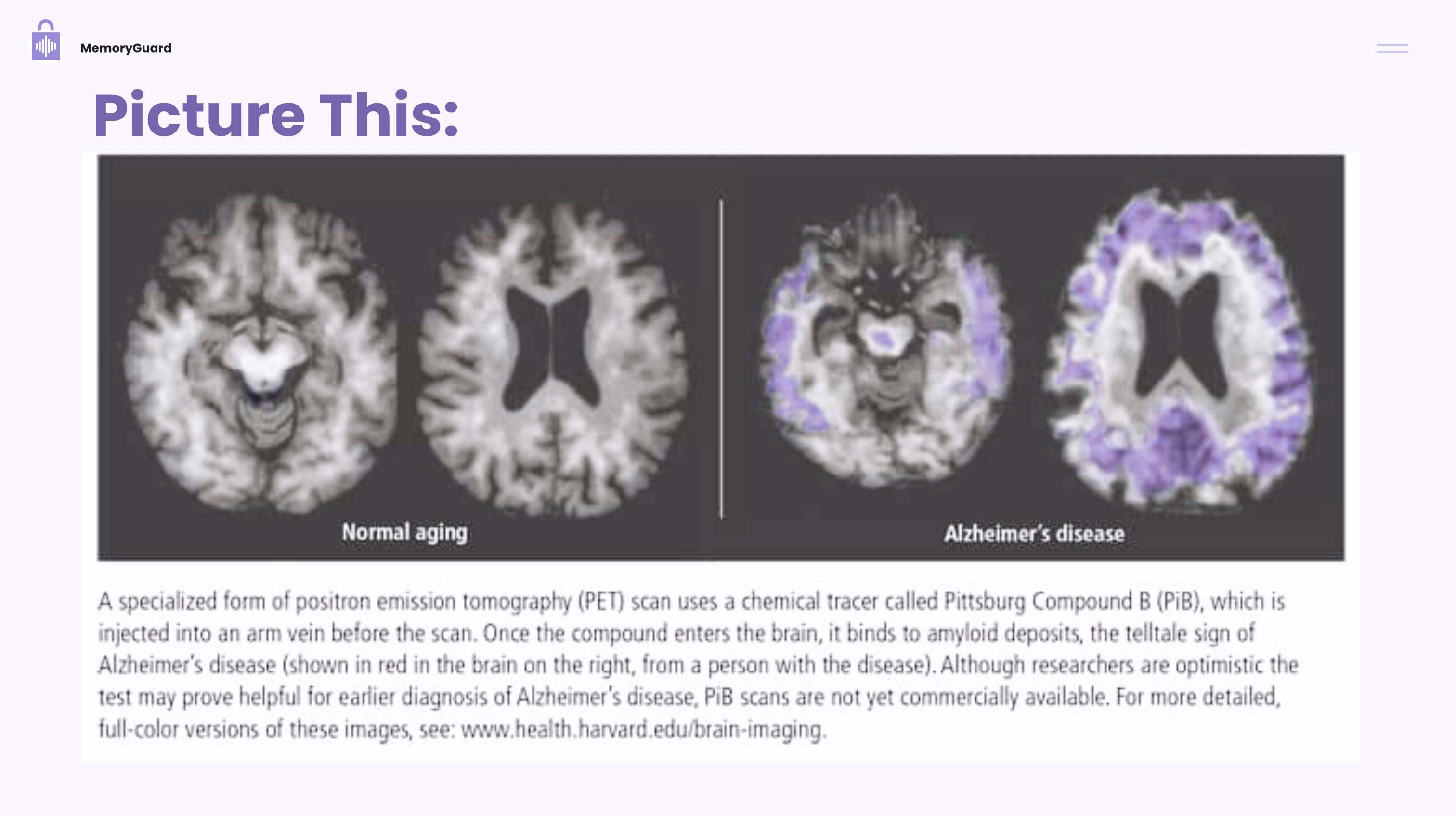
7 million Americans live with undiagnosed cognitive decline. Alzheimer's is detected 5-10 years too late when brain damage is irreversible. Early detection could delay onset by 2-3 years, saving families decades of suffering. With some of our team's family members suffering from Alzheimer's in 3rd world countries. They don't have the resources to get a proper diagnosis. As such we developed this tool to make prediagnoses more affordable and accessible. MemoryGuard will be the world's first consumer-grade AI system that detects Alzheimer's and dementia through daily voice conversations, identifying cognitive decline 5+ years before clinical symptoms appear. Using advanced voice biomarker analysis, MemoryGuard enables early intervention when treatments are most effective, potentially saving millions of families from the devastating progression of undiagnosed dementia.
What it does
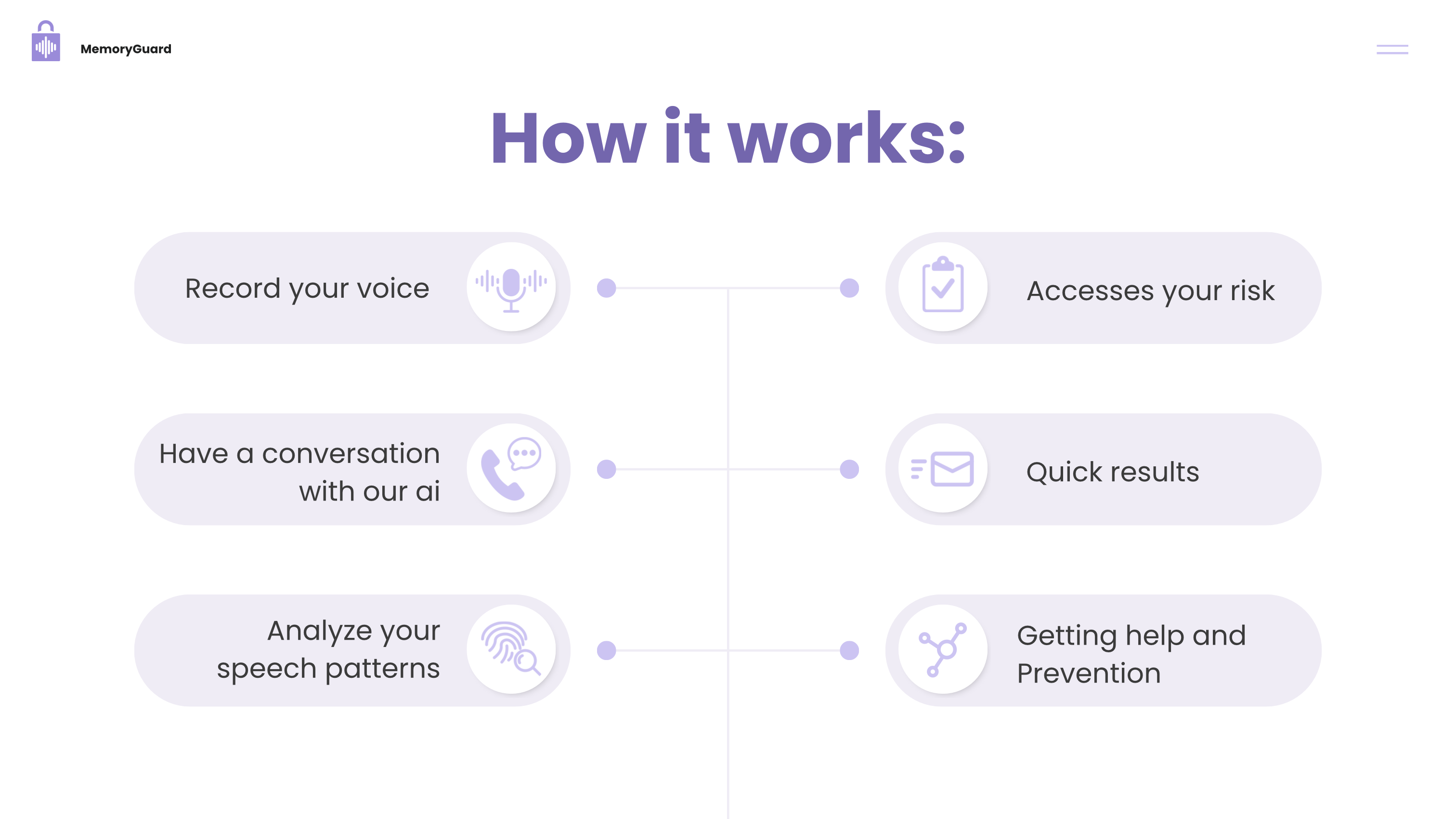
MemoryGuard analyzes speech patterns utilizing AI models to detect signs of alzheimer's 3-5 years before diagnosis. Provides deep analysis on memory formation, word retrieval and speech timing and uses gemini to provide a score determining risk of Alzheimer's and phsycological analysis. Additionally, utilized gemini if paitents have more questions.
How we built it
Frontend: HTML, Gemini, Figma Backend: Implemented using Python and Flask Voice Processing: Deepgram API for transcription, Librosa for audio analysis AI Models: Gemini for risk assessment and patient education
Challenges we ran into
-Real-time Transcription: Converting live voice conversations into accurate timestamped transcripts for AI analysis
- Pipeline Integration: Building a seamless end-to-end pipeline connecting voice capture → transcription → biomarker extraction → AI assessment
Accomplishments that we're proud of
Successfully built a comprehensive AI-powered Alzheimer's detection system featuring real-time voice analysis, Deepgram transcription, and advanced biomarker extraction powered by Gemini. We developed custom models that can identify speech patterns, and vocabulary to determine patient risk of Alzheimer's through multi-modal cognitive assessment.
What we learned
We learned how integrate multiple APIs to utilize their strengths to complement each other.
What's next for MemoryGuard: AI-Powered Early Alzheimer's Detection
Immediate Next Steps (Week 1-2)
- Refine accuracy through clinical validation studies fine tuning
- Implement FDA regulatory compliance pathway
- Create beta testing program with medical partners
- Develop mobile application interface Short-term Development (Month 1-3)
- Launch controlled beta with 1,000 families
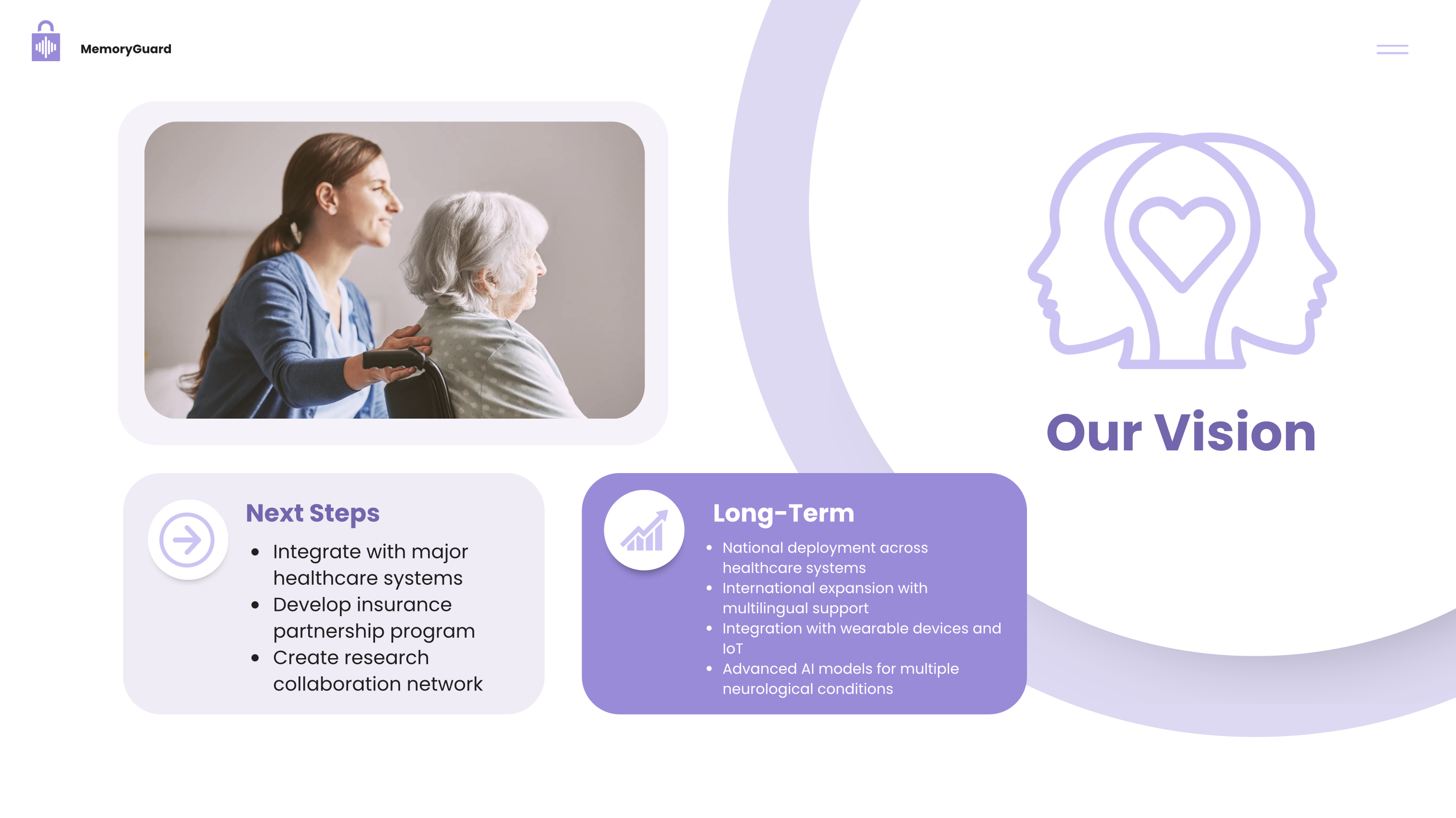
- Integrate with major healthcare systems
- Develop insurance partnership program
- Create research collaboration network Long-term Vision (6-12 months)
- National deployment across healthcare systems
- International expansion with multilingual support
- Integration with wearable devices and IoT
- Advanced AI models for multiple neurological conditions


Log in or sign up for Devpost to join the conversation.