About the Project
Inspiration
MemoryForge was inspired by a simple but important problem: AI assistants can have powerful conversations, but they often struggle to maintain useful long-term context. Important information can become difficult to find, and users may have to repeat the same instructions, preferences, or project details again and again.
We wanted to build a workspace where AI agents could work with persistent memory in a structured and useful way. This led us to create MemoryForge, an AI multi-agent workspace designed to organize agents, memories, workflows, analytics, and system activity in one place.
What We Built
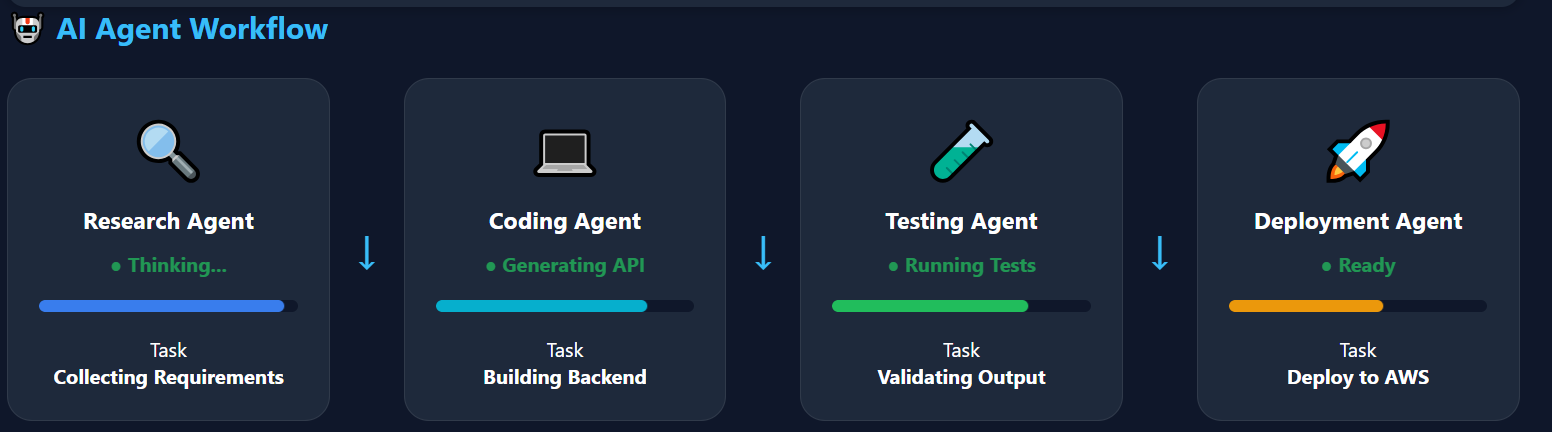
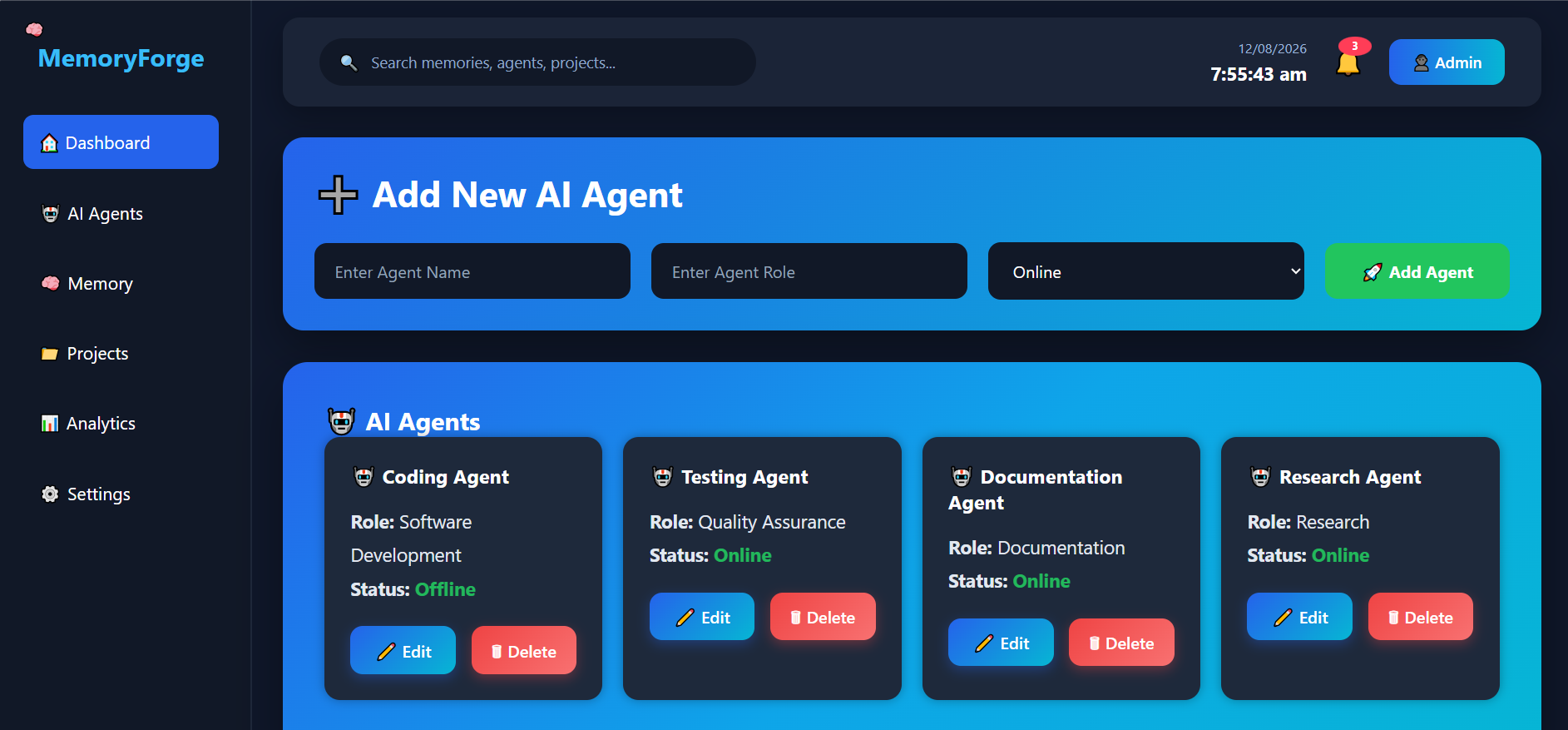
MemoryForge provides a centralized workspace where users can manage AI agents and their memories. The application includes features such as:
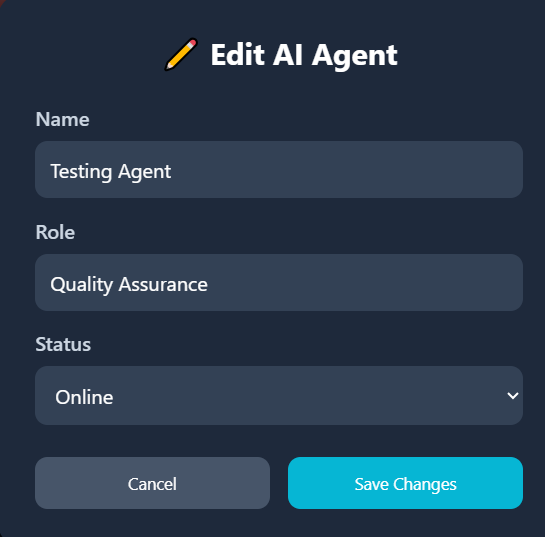
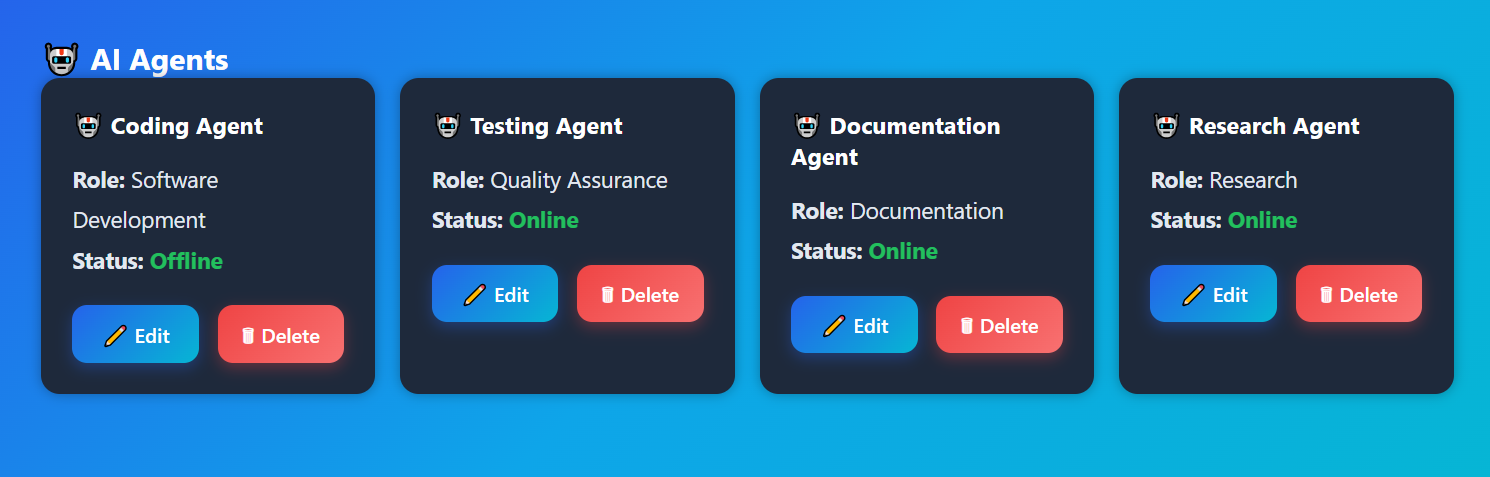
- AI Agent Management — create, edit, and manage different agents.
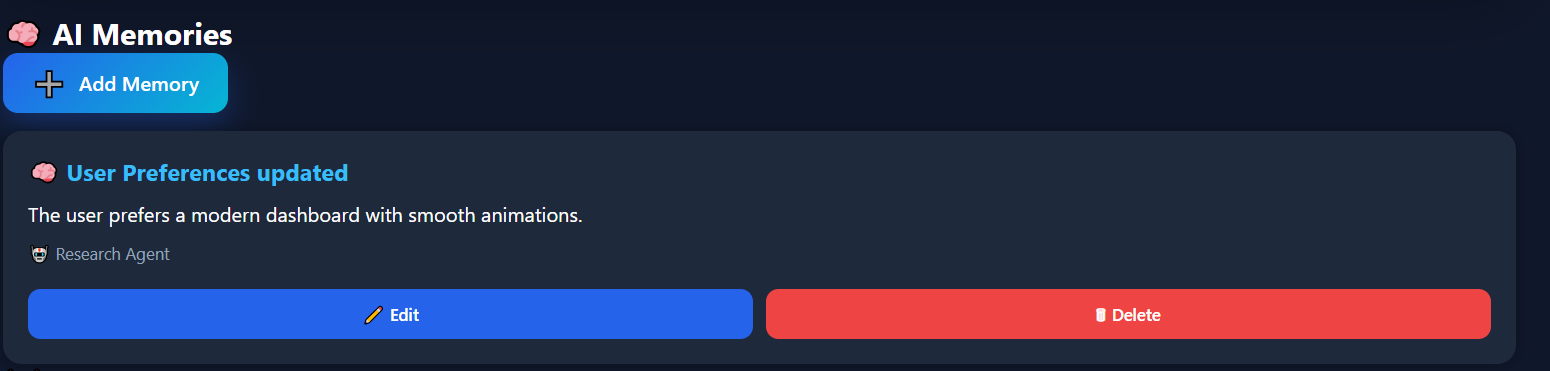
- Persistent Memory — store and manage important information that agents can use later.
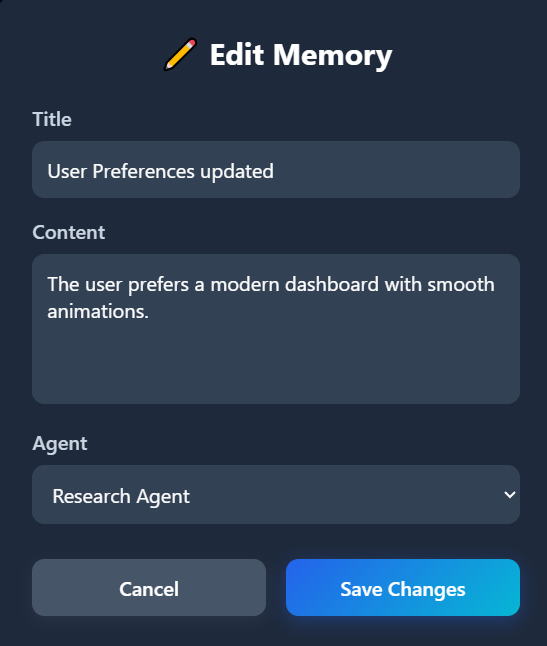
- Memory Editing — update or remove stored memories when information changes.
- Workflow Management — organize how agents and memory can be used together.
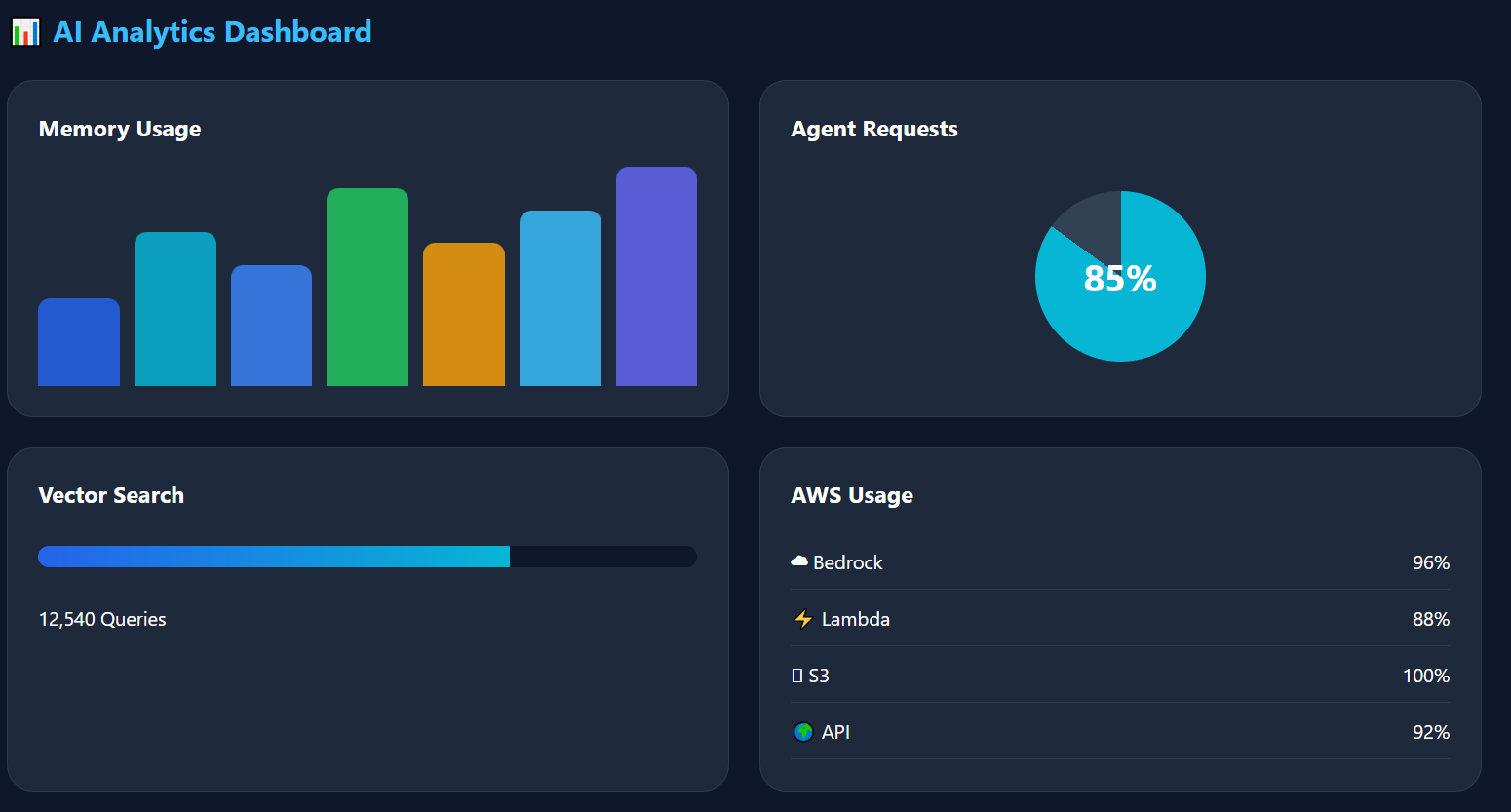
- Analytics — provide an overview of activity and stored information.
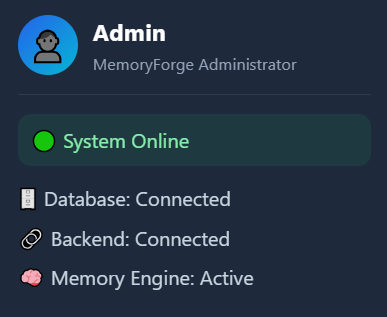
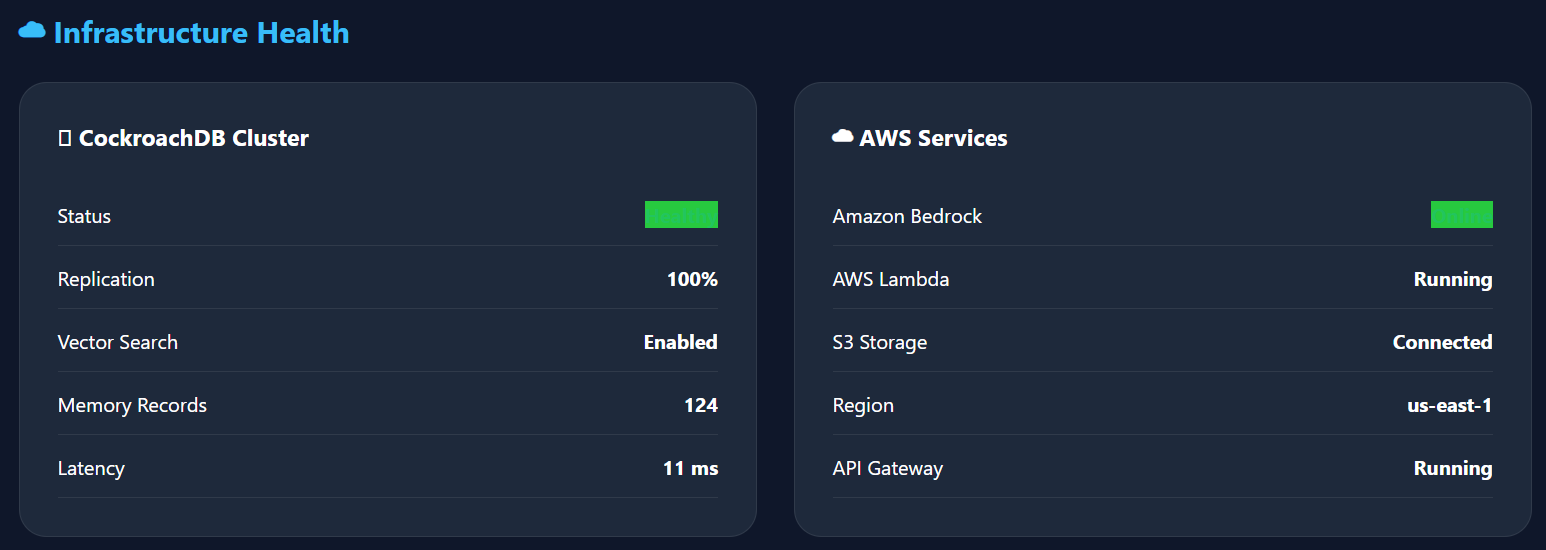
- Cloud/Database Status — monitor the application's backend and database connection.
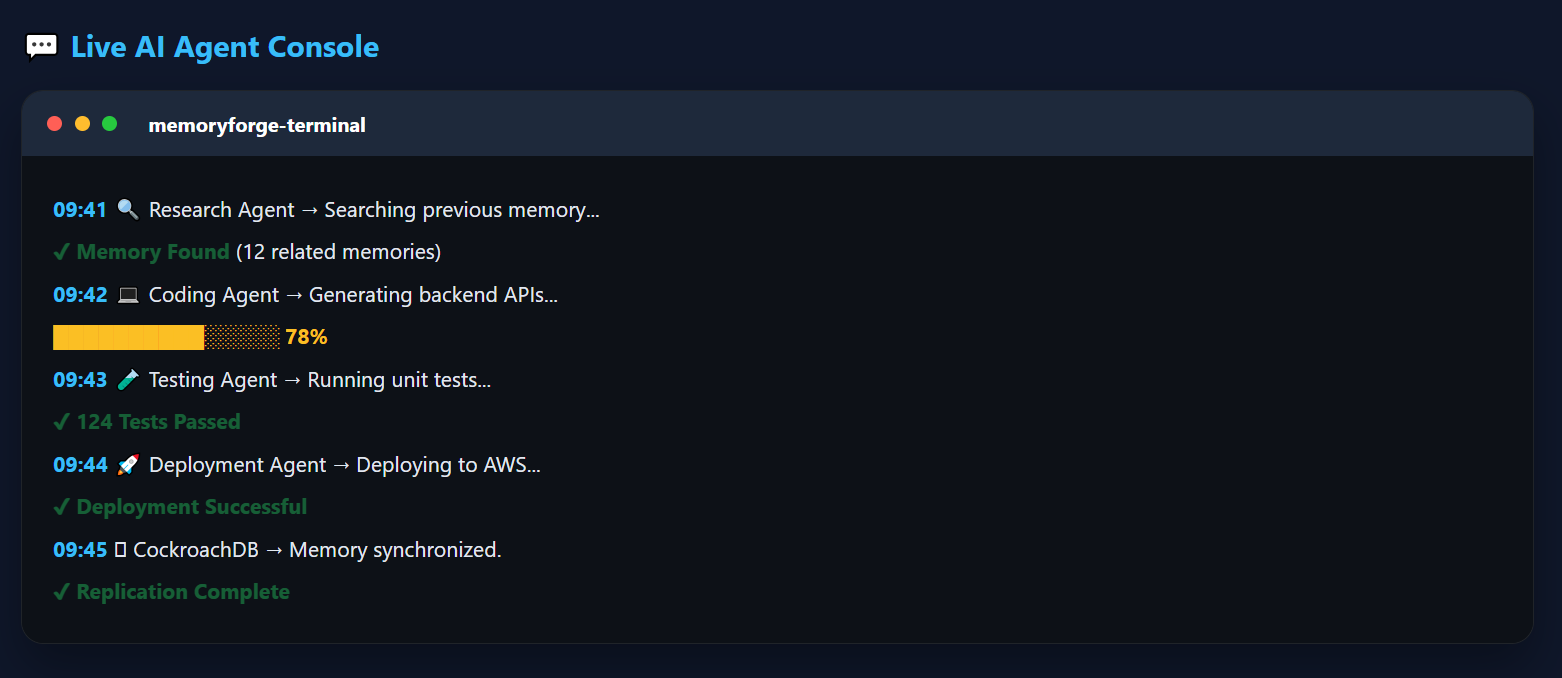
- Developer Console — provide visibility into system activity and API operations.
The goal was not simply to create another chatbot, but to demonstrate how a memory layer can become the foundation of a more useful multi-agent AI workspace.
How We Built It
We built MemoryForge as a full-stack web application. The frontend was developed using TypeScript, Vite, HTML, and CSS, while the backend was built with Node.js and Express.
For persistent data storage, we used CockroachDB, which allowed us to create a reliable database layer for agents and memories. The backend communicates with the database through PostgreSQL-compatible connections.
The overall architecture can be summarized as:
$$ \text{User} \rightarrow \text{Frontend} \rightarrow \text{Backend API} \rightarrow \text{CockroachDB} $$
The frontend provides the user interface, the backend handles API requests and application logic, and CockroachDB provides persistent storage.
We also designed the interface as a dashboard so that users can manage multiple parts of the system without switching between different applications.
What We Learned
Building MemoryForge taught us much more than just how to connect a frontend to a database.
We learned how to:
- Build and structure a full-stack application.
- Create REST API endpoints using Express.
- Connect a Node.js backend to CockroachDB.
- Design database tables for application data.
- Connect frontend components to backend APIs.
- Implement CRUD operations for agents and memories.
- Debug frontend and backend communication issues.
- Work with environment variables and database configuration.
- Think about AI systems in terms of memory, agents, workflows, and persistent context.
- Develop and troubleshoot a project under hackathon time constraints.
One of our biggest lessons was that building an application is an iterative process. A feature may look complete from the frontend, but it still requires the backend, API, database, and error handling to work correctly together.
Challenges We Faced
One of the biggest challenges was connecting all parts of the system reliably. We encountered issues involving frontend API requests, backend routes, database connectivity, environment variables, and local development servers.
We also experienced database resource limitations during development. These problems forced us to understand the difference between an application-level problem and an infrastructure-level problem instead of assuming that every error was caused by our code.
Another challenge was implementing interactive features such as Save, Edit, Add Agent, and memory management. Making a button appear on the screen was only the first step. We had to make sure that the action reached the correct API endpoint, updated the database, and then reflected the change back in the interface.
Debugging these issues taught us an important development principle:
A full-stack feature is only complete when the entire path from user action to database and back works correctly.
Final Outcome
MemoryForge became our demonstration of how persistent memory can be integrated into an AI multi-agent workspace. Instead of treating conversations as isolated interactions, the project explores a system where information can be stored, organized, updated, and reused.
Through this project, we gained practical experience in full-stack development, database integration, API design, debugging, UI development, and AI-oriented system architecture.
Most importantly, MemoryForge showed us that building an AI application is not only about generating intelligent responses. It is also about building the infrastructure that allows AI systems to remember, organize, and use information effectively over time.
Built With
- agents
- ai
- amazon-web-services
- api
- cockroachdb
- css
- database
- express.js
- full
- html
- javascript
- memory
- multi-agent
- node.js
- persistent
- postgresql
- rest
- stack
- systems
- typescript
- vite

Log in or sign up for Devpost to join the conversation.