-
-
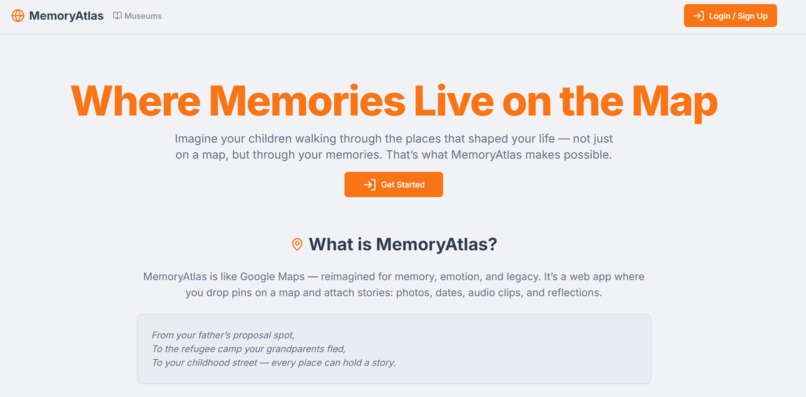
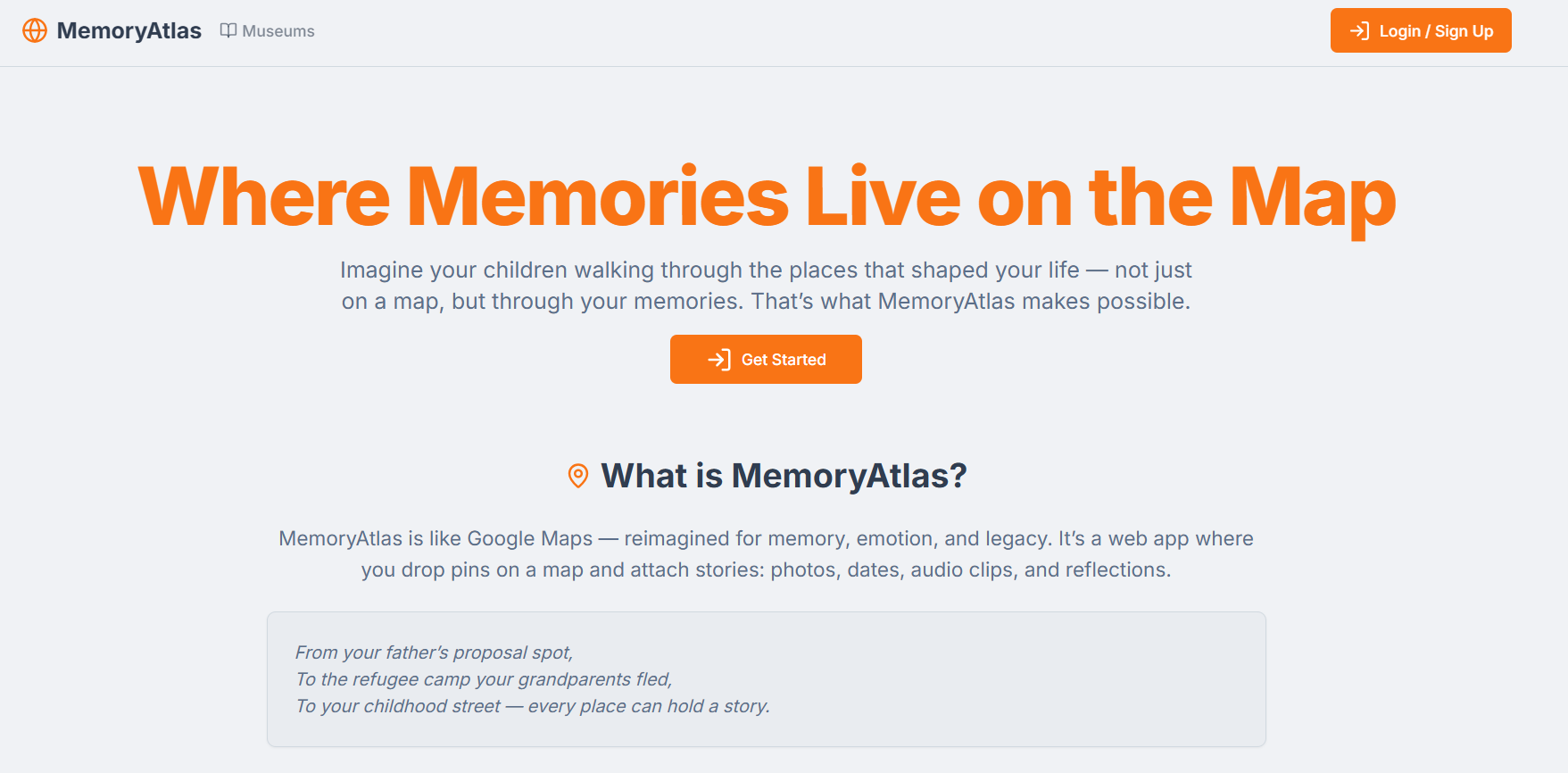
Home Page Hero Section
-
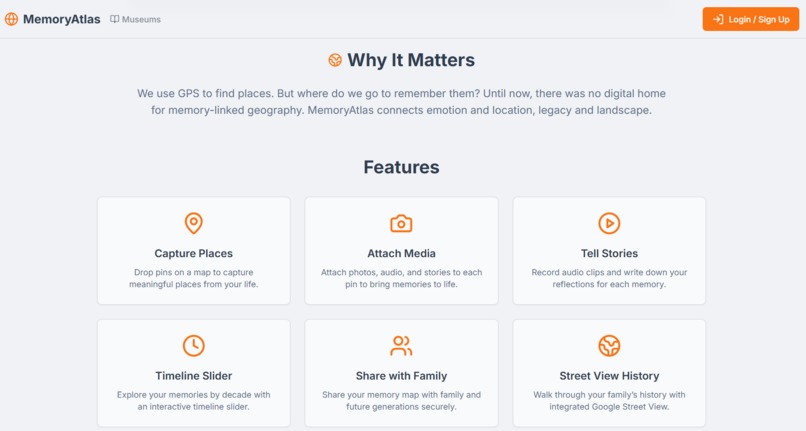
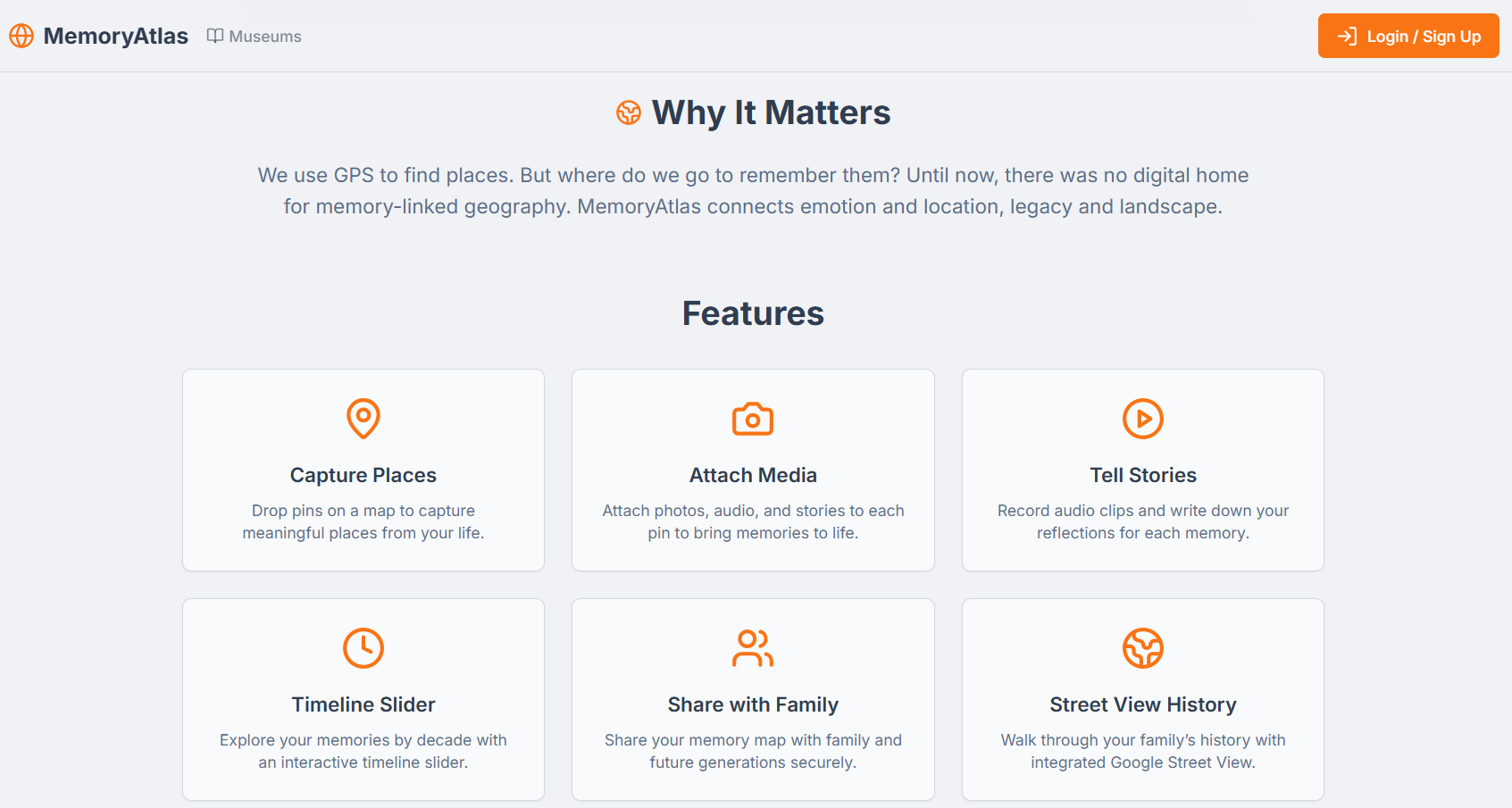
Home Page Features Section
-
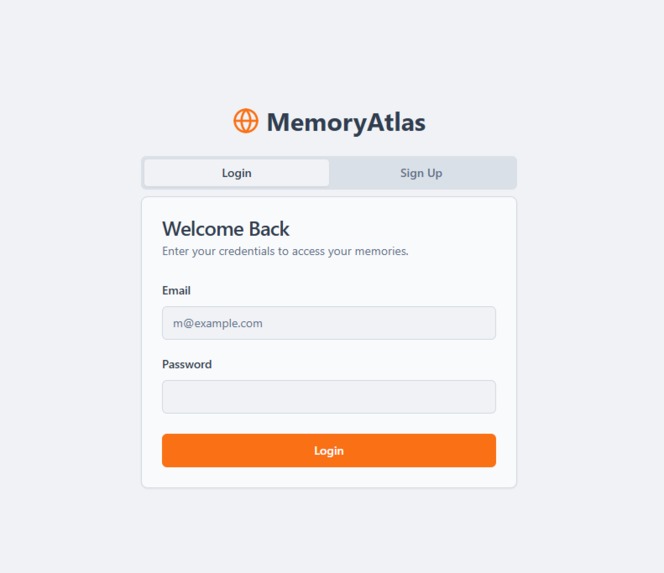
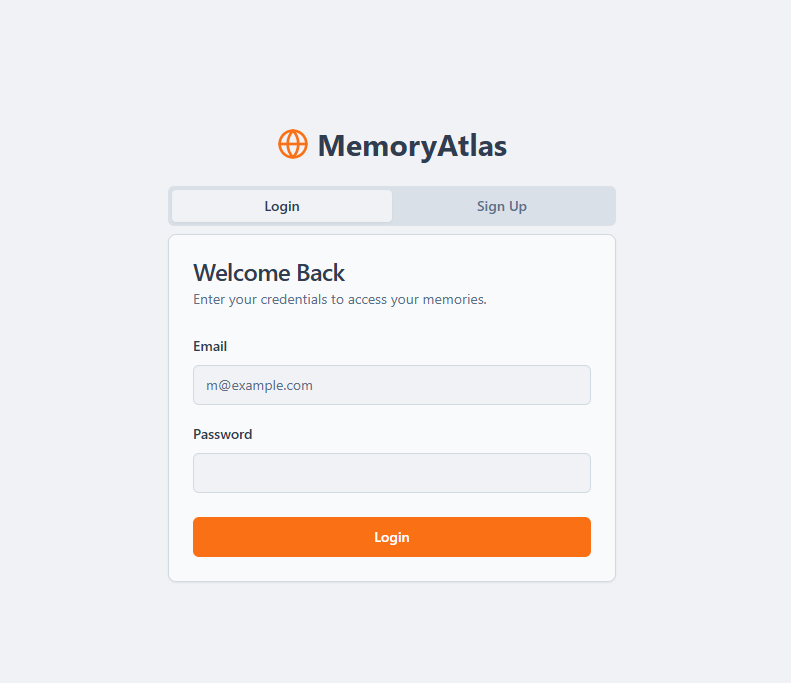
Login/Signup Page
-
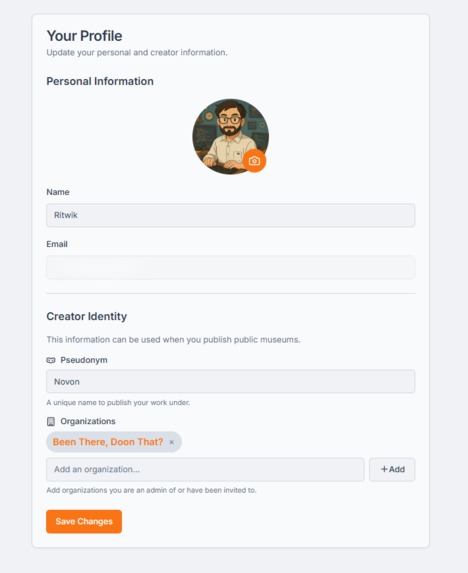
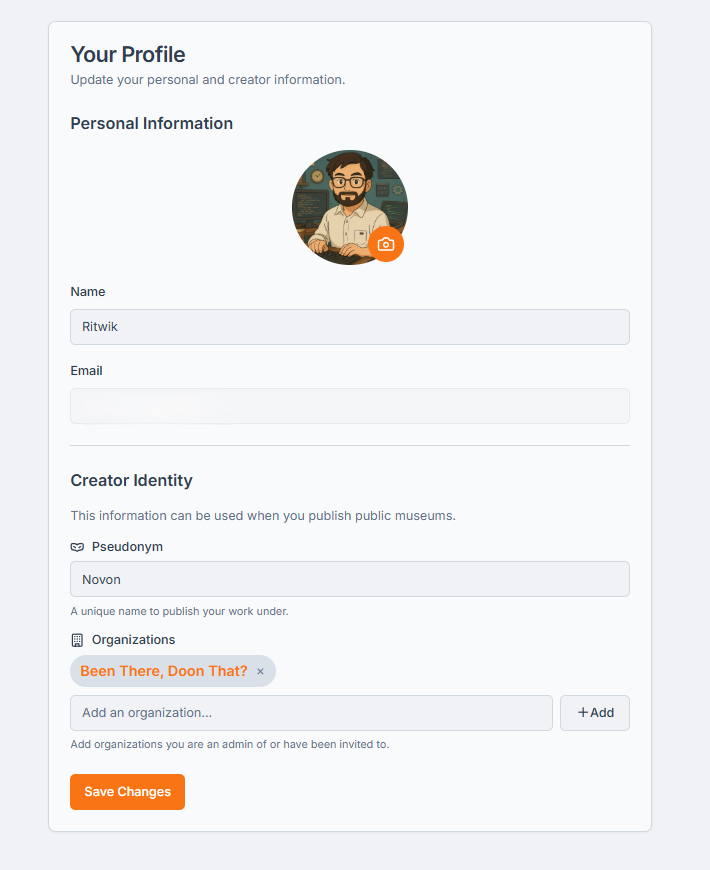
Profile Page
-
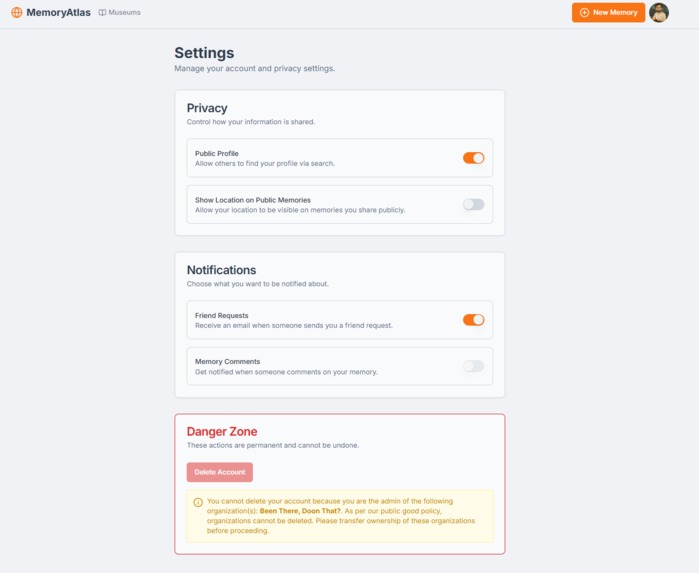
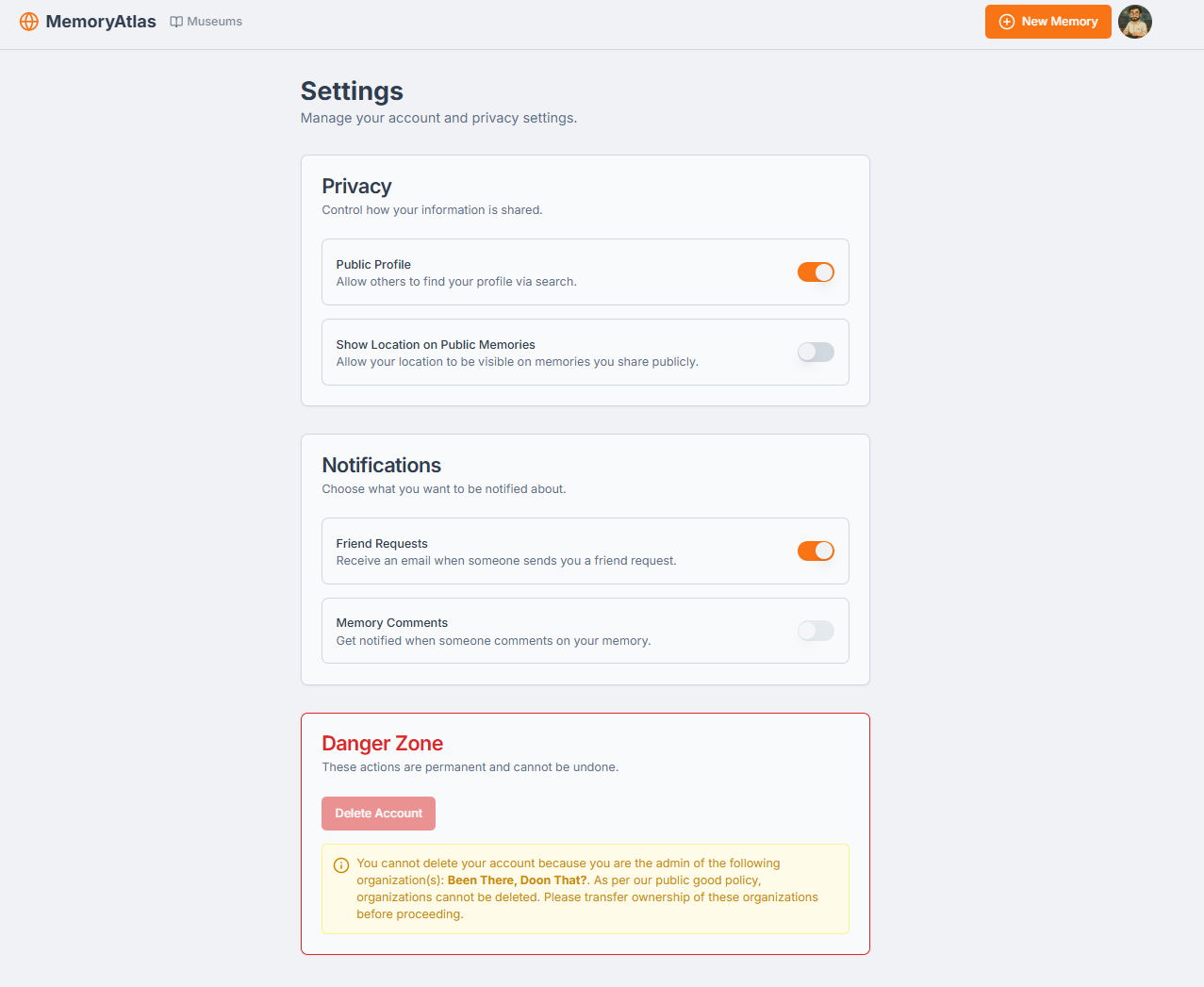
Settings Page
-
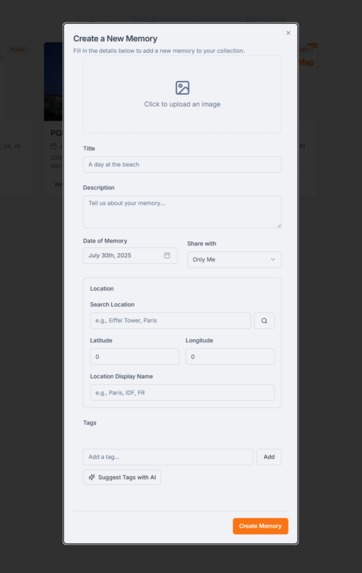
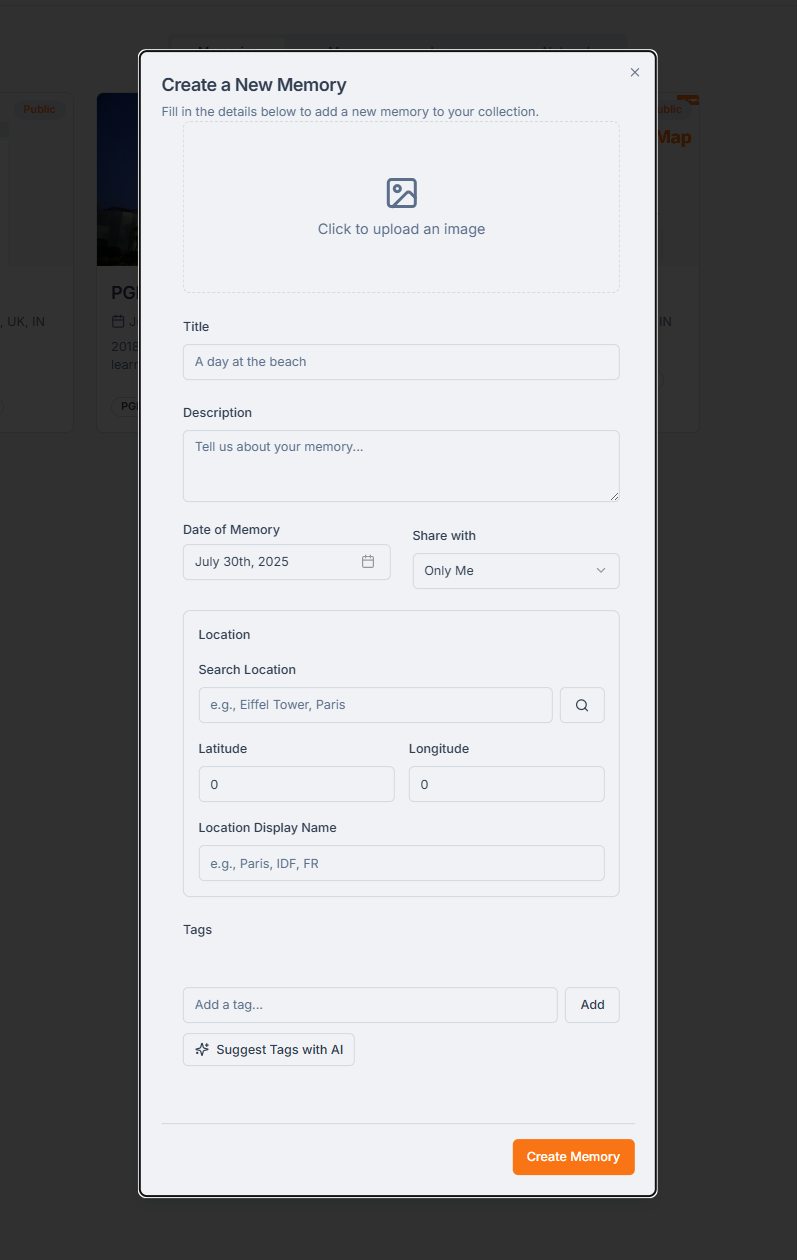
Create New Memory Modal
-
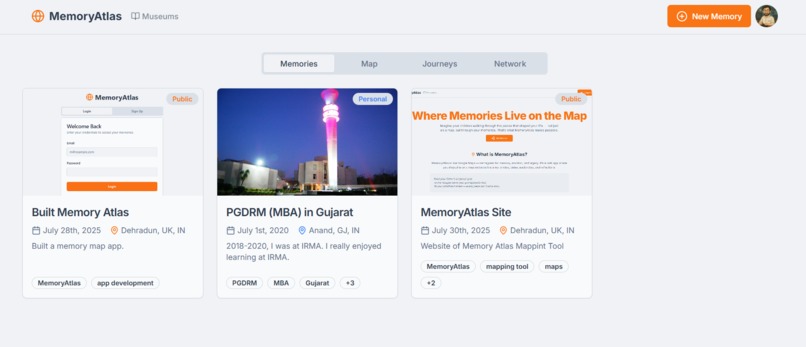
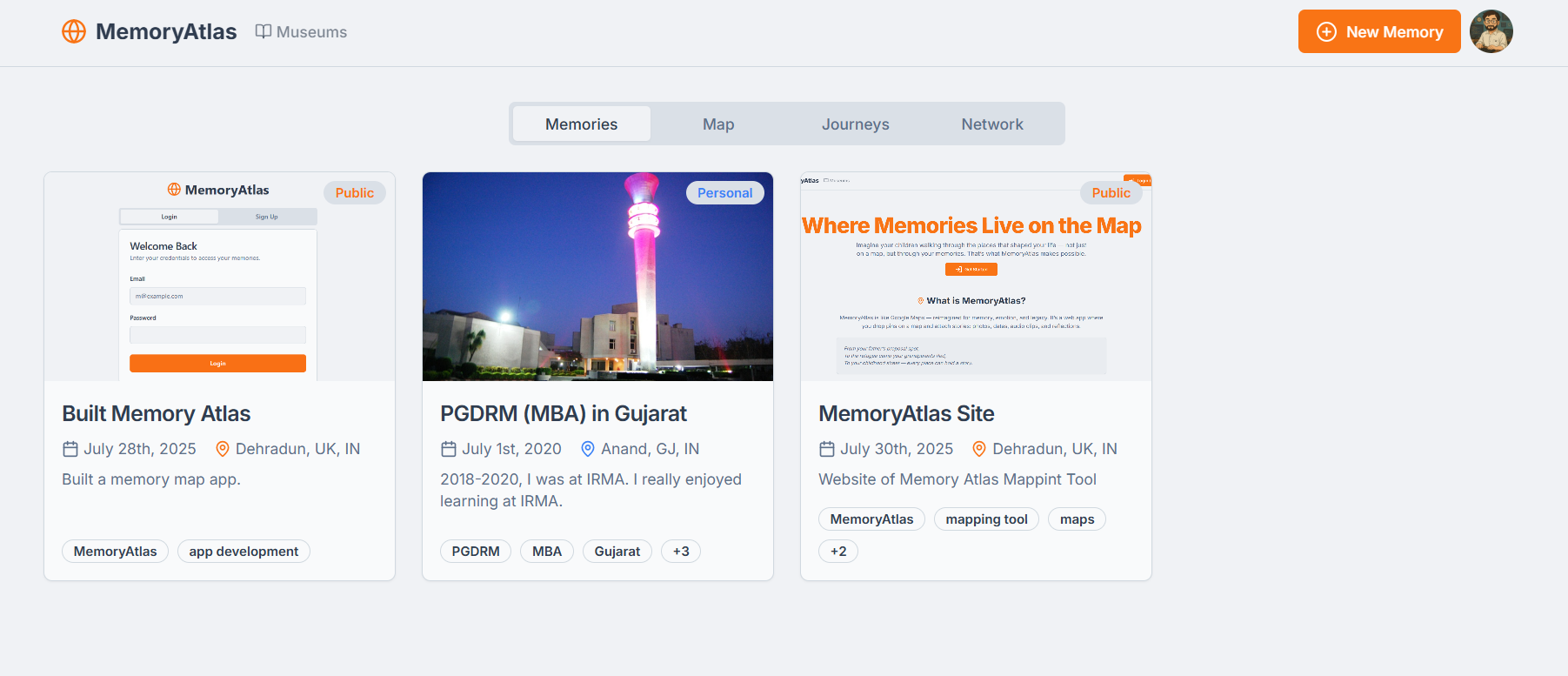
Memories Page
-
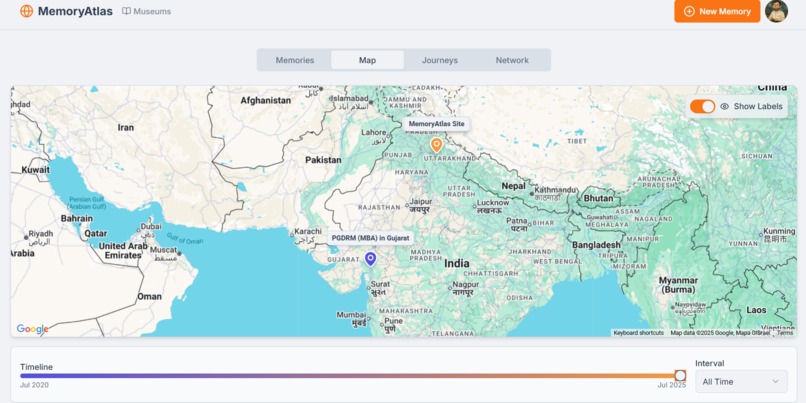
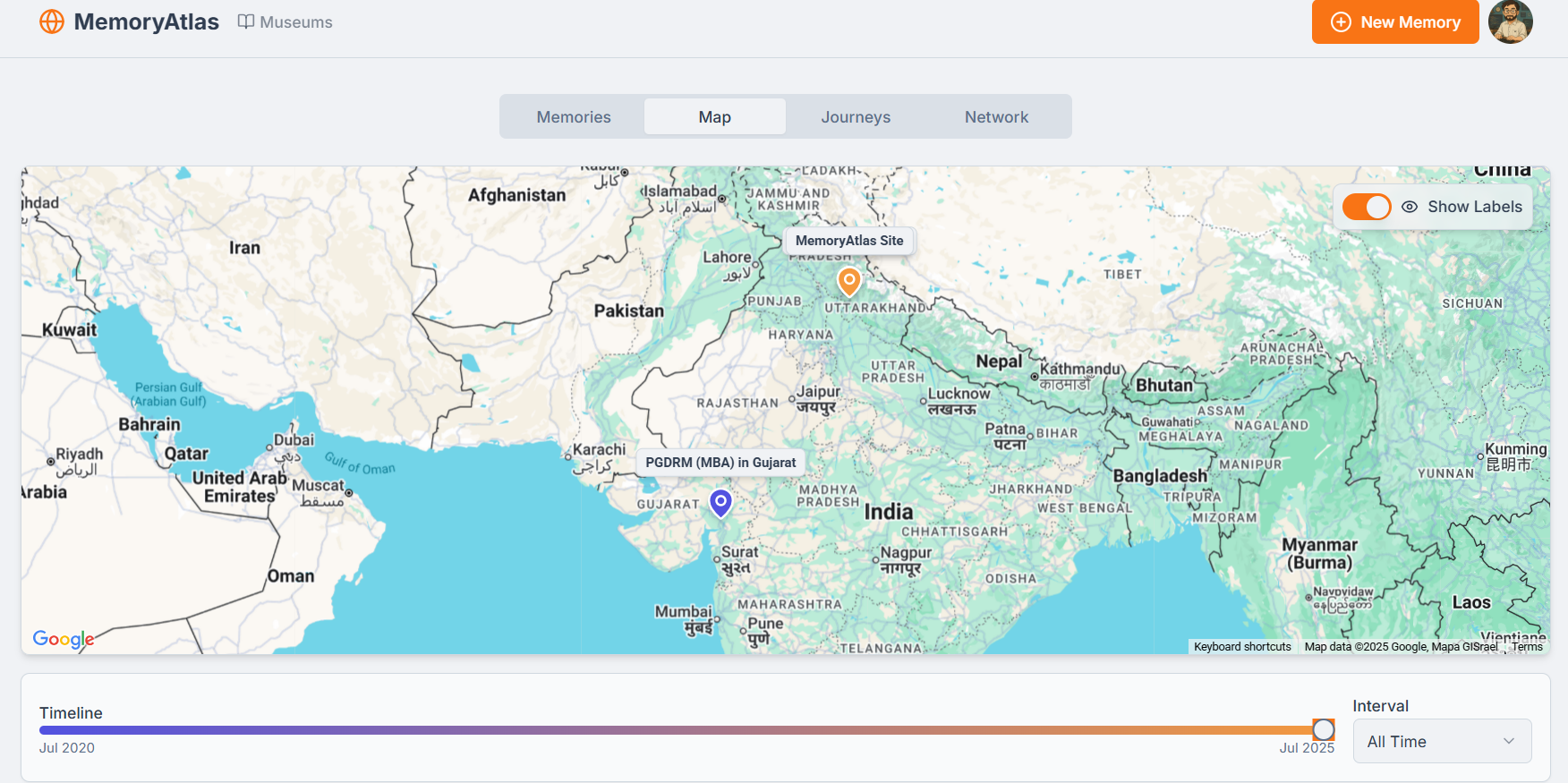
Map Page
-
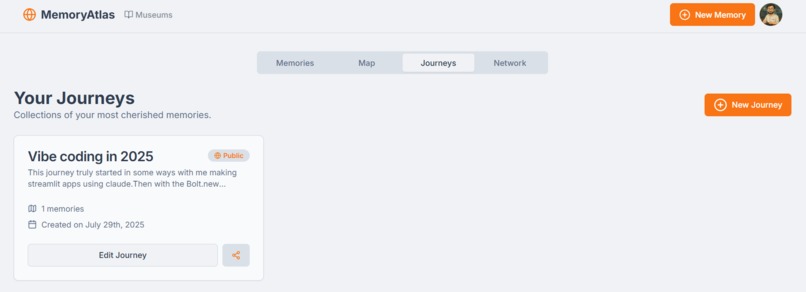
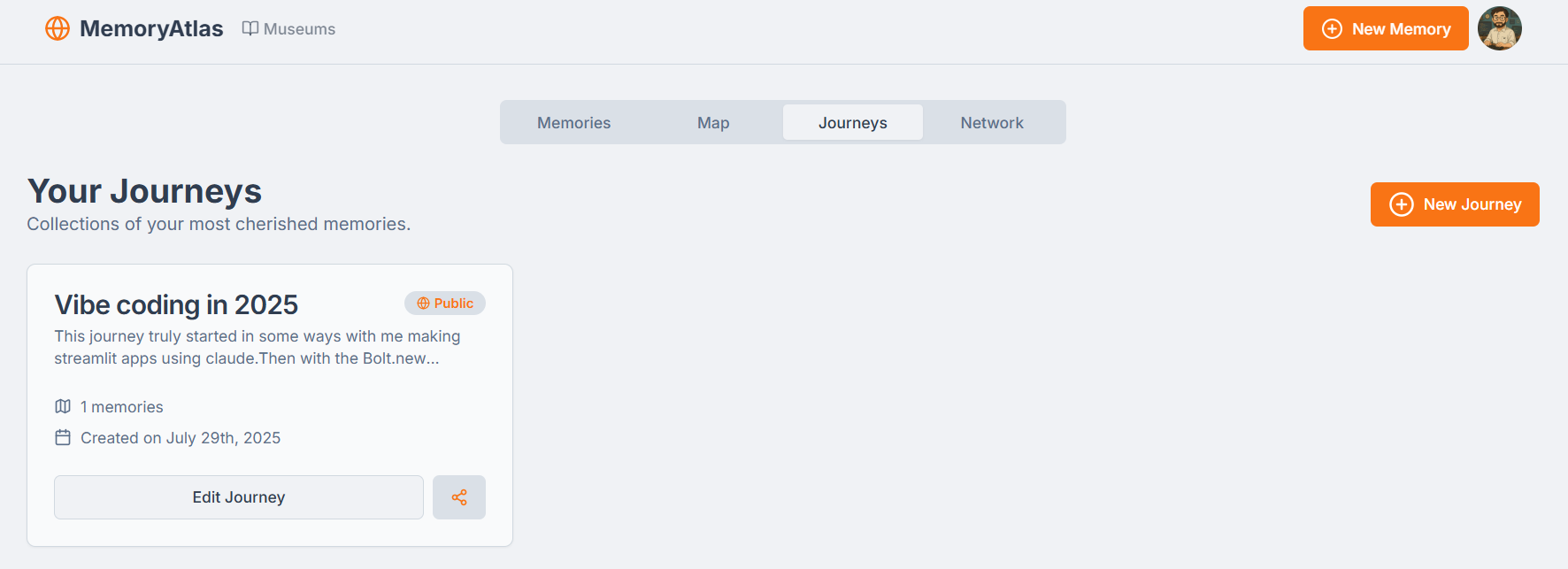
Journeys (Collection of Memories) Page
-
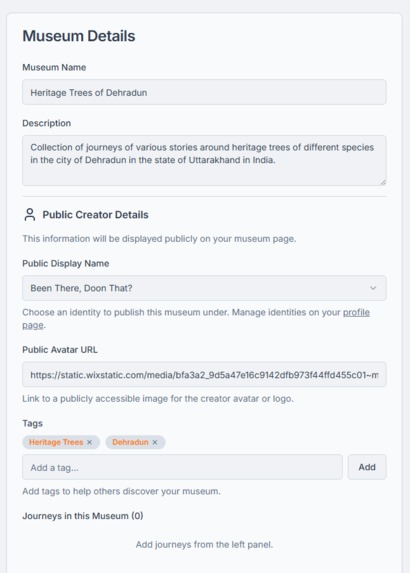
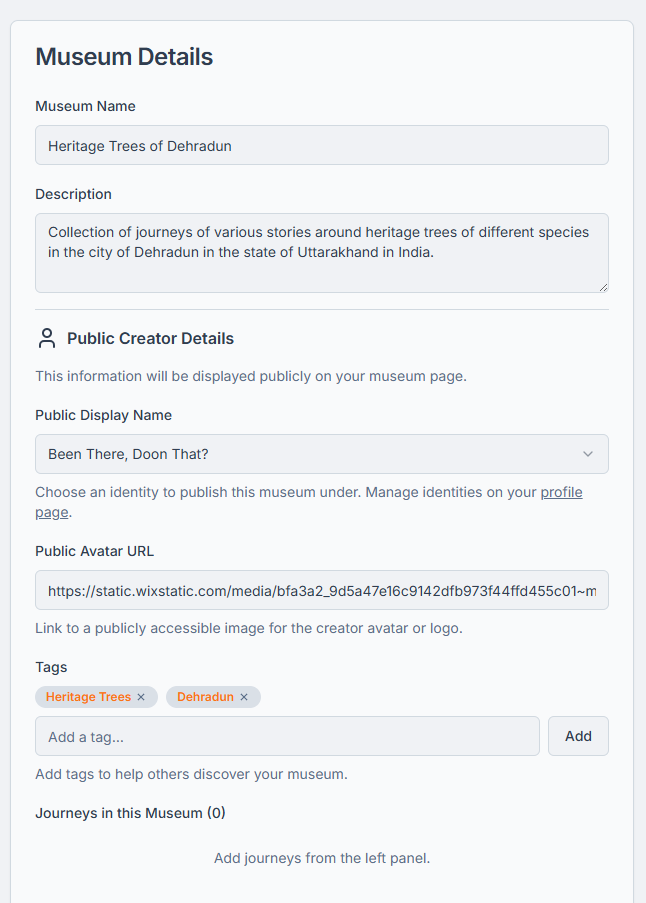
Museum (Collection of Journeys) Creation Creation
-
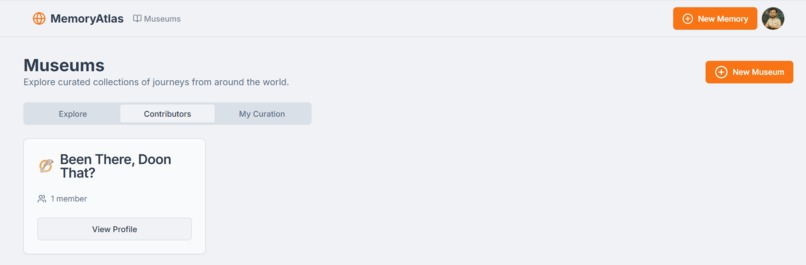
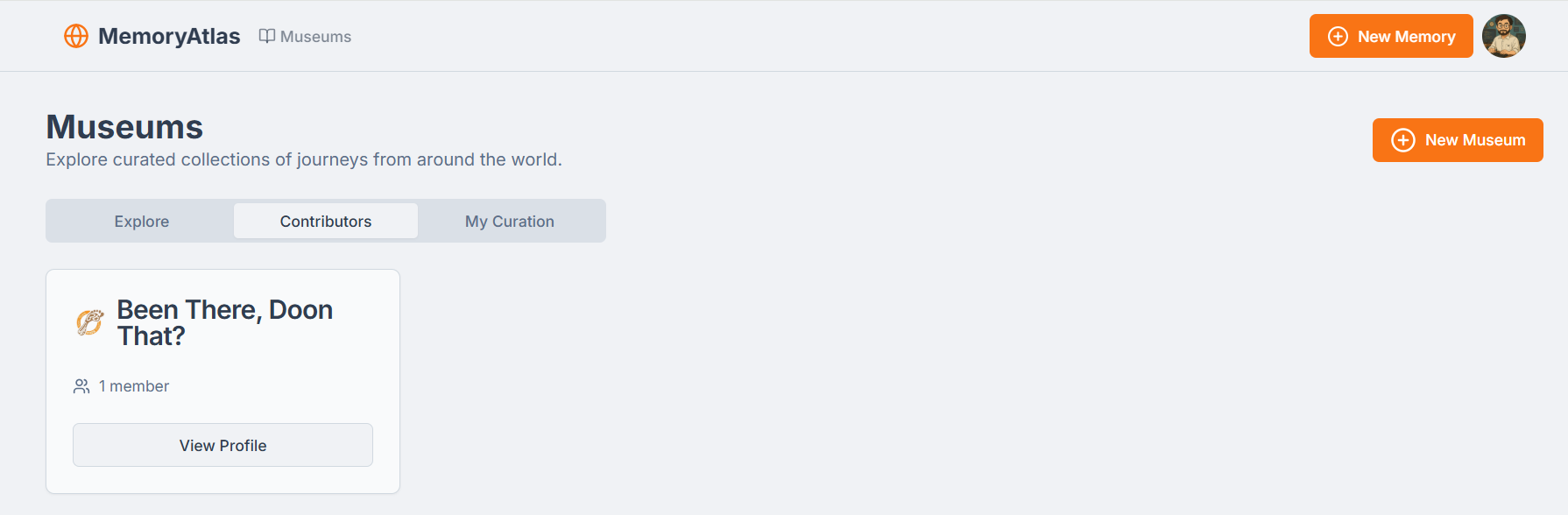
Museums Page
-
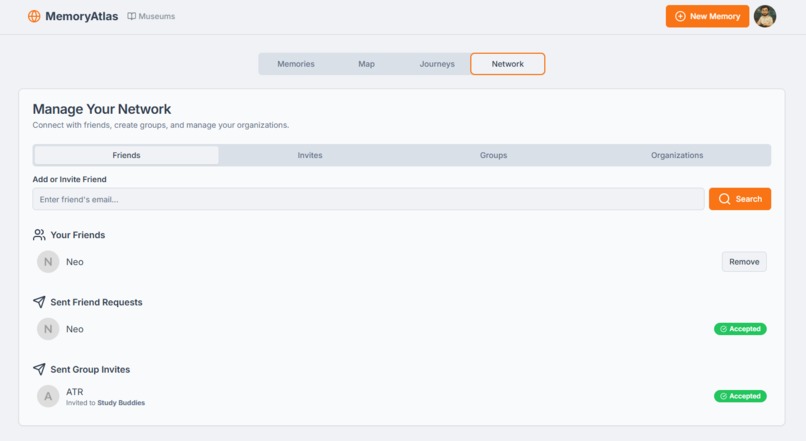
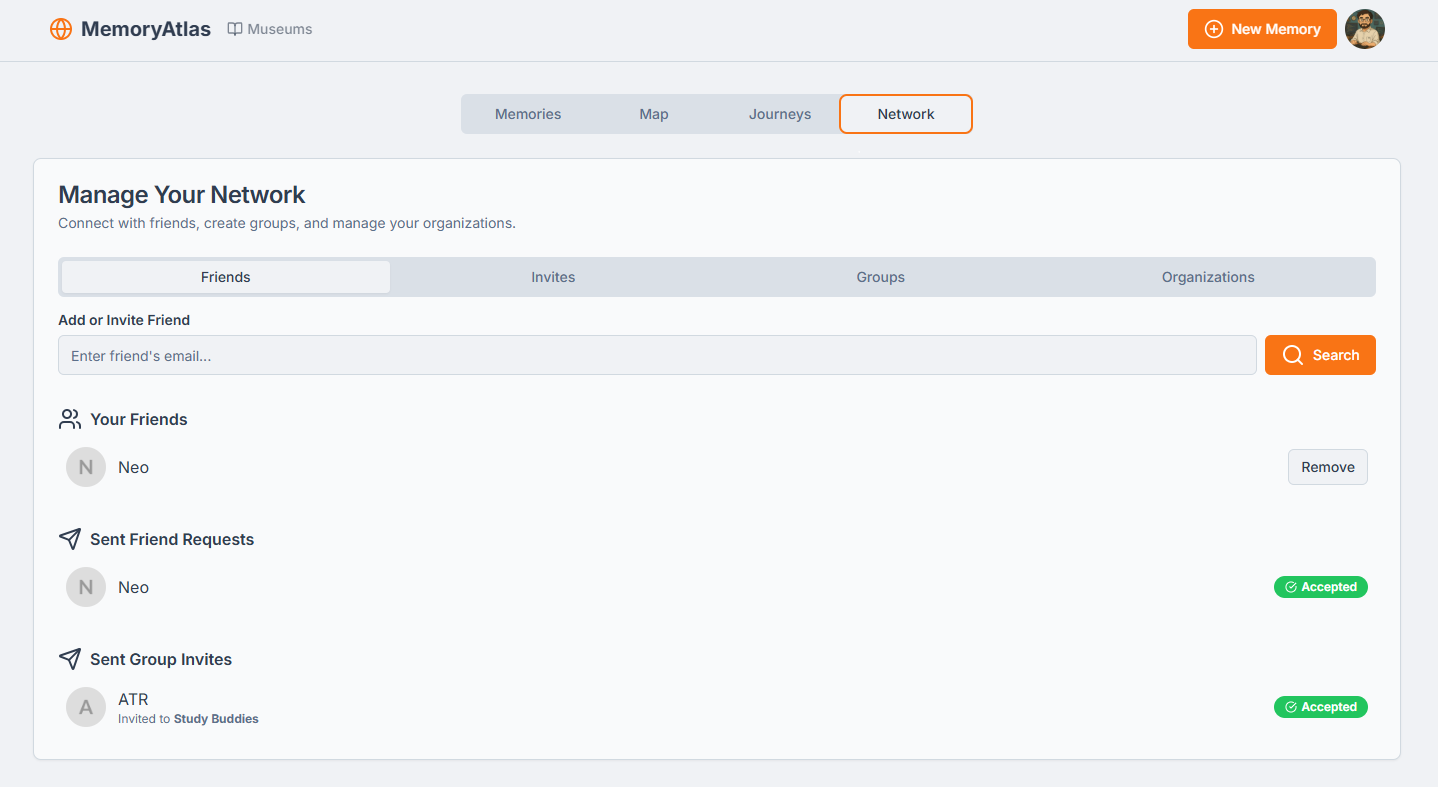
Manage Network Page
-
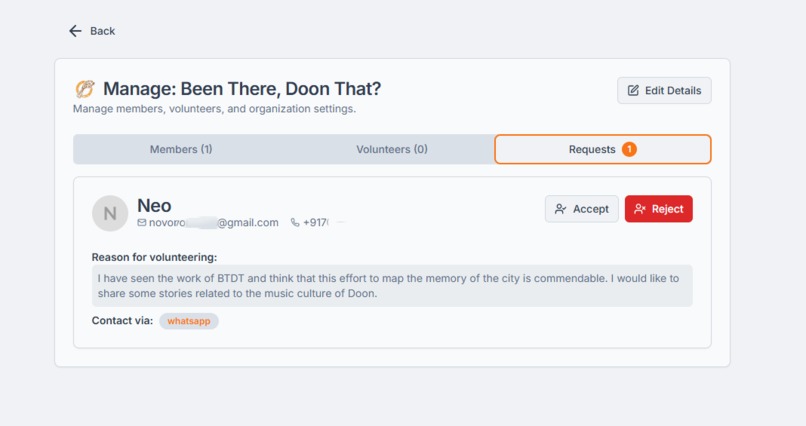
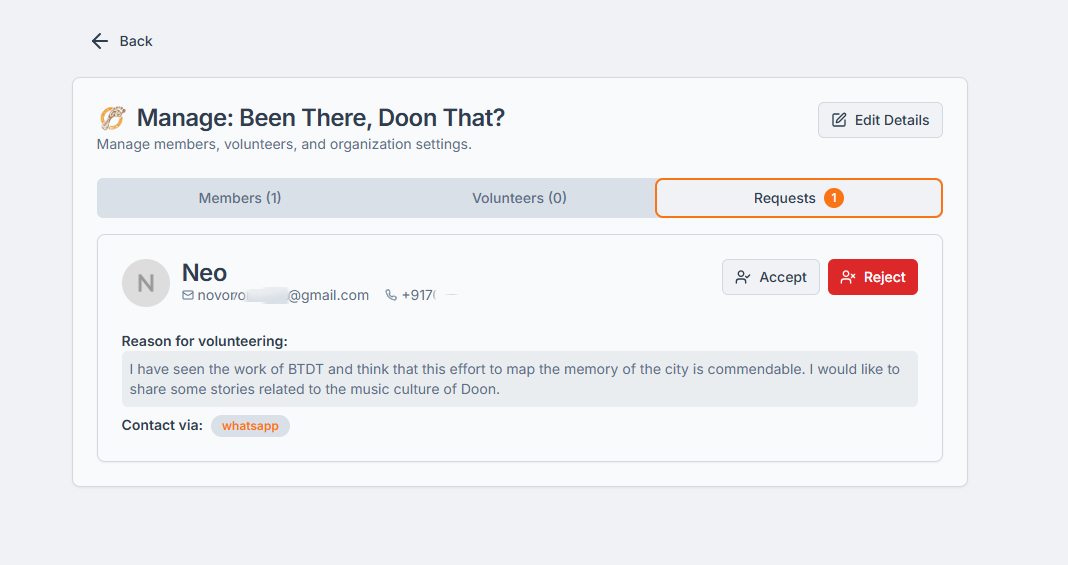
Organization Management Page
Inspiration
Maps show us where we are-but not who we are. We asked: What if your children could walk through the places that shaped your life-not just on a map, but through your memories? From childhood homes to migration stories, every place carries meaning. Yet, there was no digital platform connecting geography with memory, emotion, and family legacy. MemoryAtlas was born to bridge that gap-for families, citizens, and communities.
What it does
MemoryAtlas is a web app that lets families and individuals drop memory pins on a map-linking real-world locations to personal stories, photos, audio, and dates. You can browse memories over time with a timeline slider or hopefully soon walk through your history using Street View.
A new Museums feature also enables NGOs and cultural workers to create public journeys-documenting community history, migration paths, and local legacies.
How we built it
We used Next.js 15 to build a full-stack, production-grade app that feels native on both desktop and mobile. Key components include:
- Google Maps JavaScript API, Places API, and Street View (soon) for geospatial interaction
- Firebase Authentication for secure, scalable sign-in.
- Firestore as our real-time NoSQL database
- Firebase App Hosting for deployment
- Custom domain setup at
memoryatlasapp.com - Resend for email invites, alerts, and user onboarding (Right now only invite mails work)
- Generative Language API for auto-tagging and future storytelling enhancements
- Firebase Studio was the IDE. It is exceptional. I only vibe coded for 3 days to build MemoryAtlas.
The design was optimized for emotion-first UX and mobile responsiveness.
Challenges we ran into
- Managing real-time geospatial queries and timeline filters with Firestore
- Ensuring reliable domain-based email delivery with Resend
- Keeping the UX simple despite growing feature scope (Museums mode, etc.)
- Formatting modals for responsiveness was also a pain point.
Accomplishments that we're proud of
- Launched a full-featured memory-mapping platform on a custom domain
- Achieved reliable email onboarding with domain-authenticated mails via Resend
- Delivered a fluid mobile-first experience
- Expanded from personal memory mapping to public cultural storytelling
- Received meaningful feedback from early testers-emotional impact was real
What we learned
- How to build emotion-first UX in a map-based app
- Optimizing Firestore for spatial + temporal queries
- The importance of email deliverability in onboarding flow
- The power of mixing private legacy with public history storytelling
What's next for MemoryAtlas
- Shared family trees and collaborative timelines (It is there but more tests need to be done)
- Smoothly integrating Street View and decade-based filters into the map UI
- AI memory enrichment (caption suggestions, metadata summarization)
- QR-code location markers for physical sites (memorials, hometowns, etc.)
- Lightweight mobile app for travel journaling
- Partnerships with NGOs and museums for cultural documentation (1 NGO in the pipeline already).
Built With
- css
- custom-domain
- dkim
- firebase-authentication
- firebase-hosting
- firebase-studio
- firestore
- google-cloud
- google-generative-language-api
- google-maps
- google-maps-javascript-api
- google-places
- google-street-view
- html
- next.js-15
- openai-api
- resend
- spf

Log in or sign up for Devpost to join the conversation.