Inspiration
We all take screenshots every day—important messages, ideas, notes, products, documents, code, places, and moments we want to remember. But after hundreds or thousands of screenshots, finding one specific piece of information becomes surprisingly difficult. The problem is not that we lack storage; it is that our digital memories are disconnected and difficult to retrieve.
This inspired us to build MemoryLens—a personal visual memory engine that turns screenshots into meaningful, searchable memories.
What it does
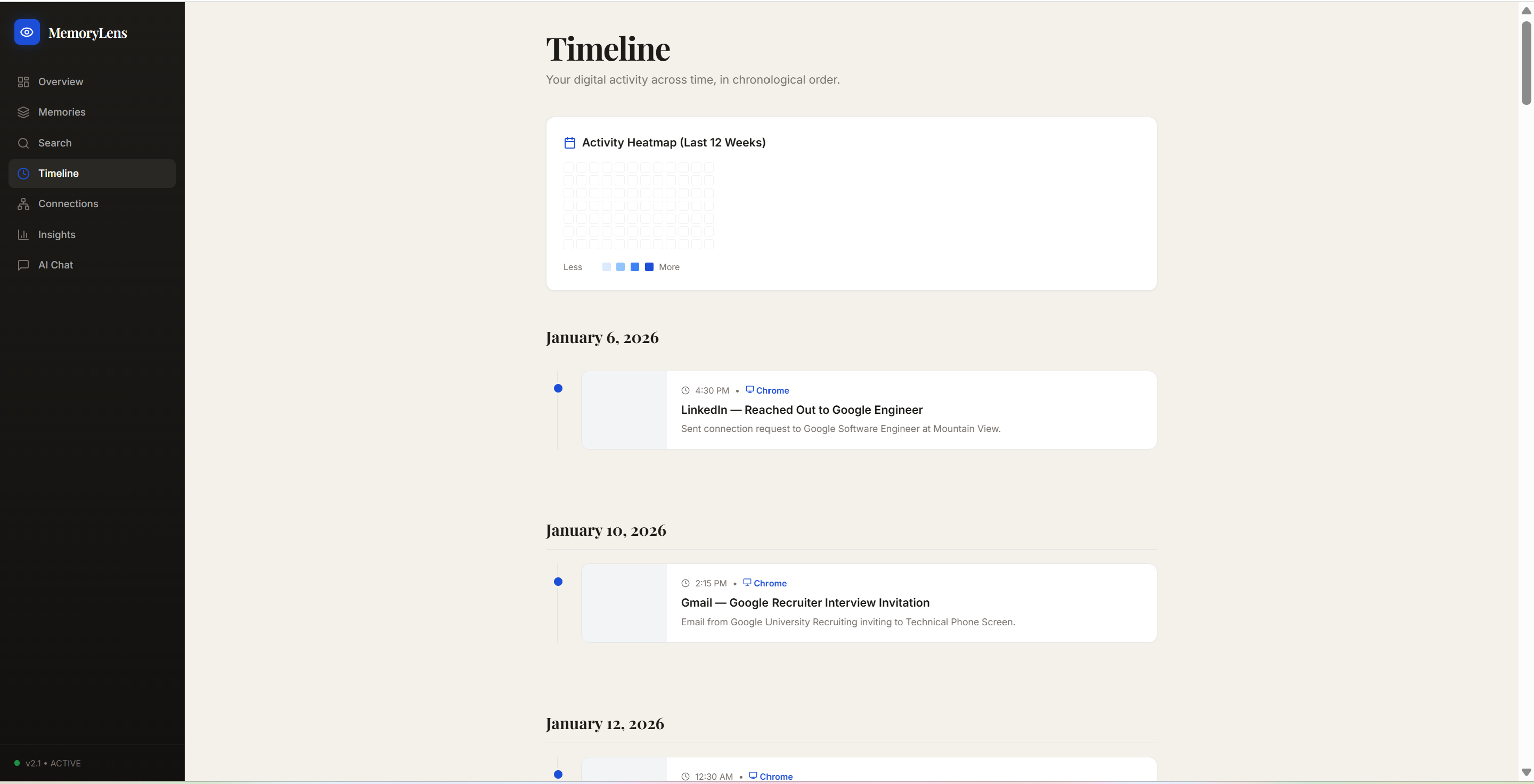
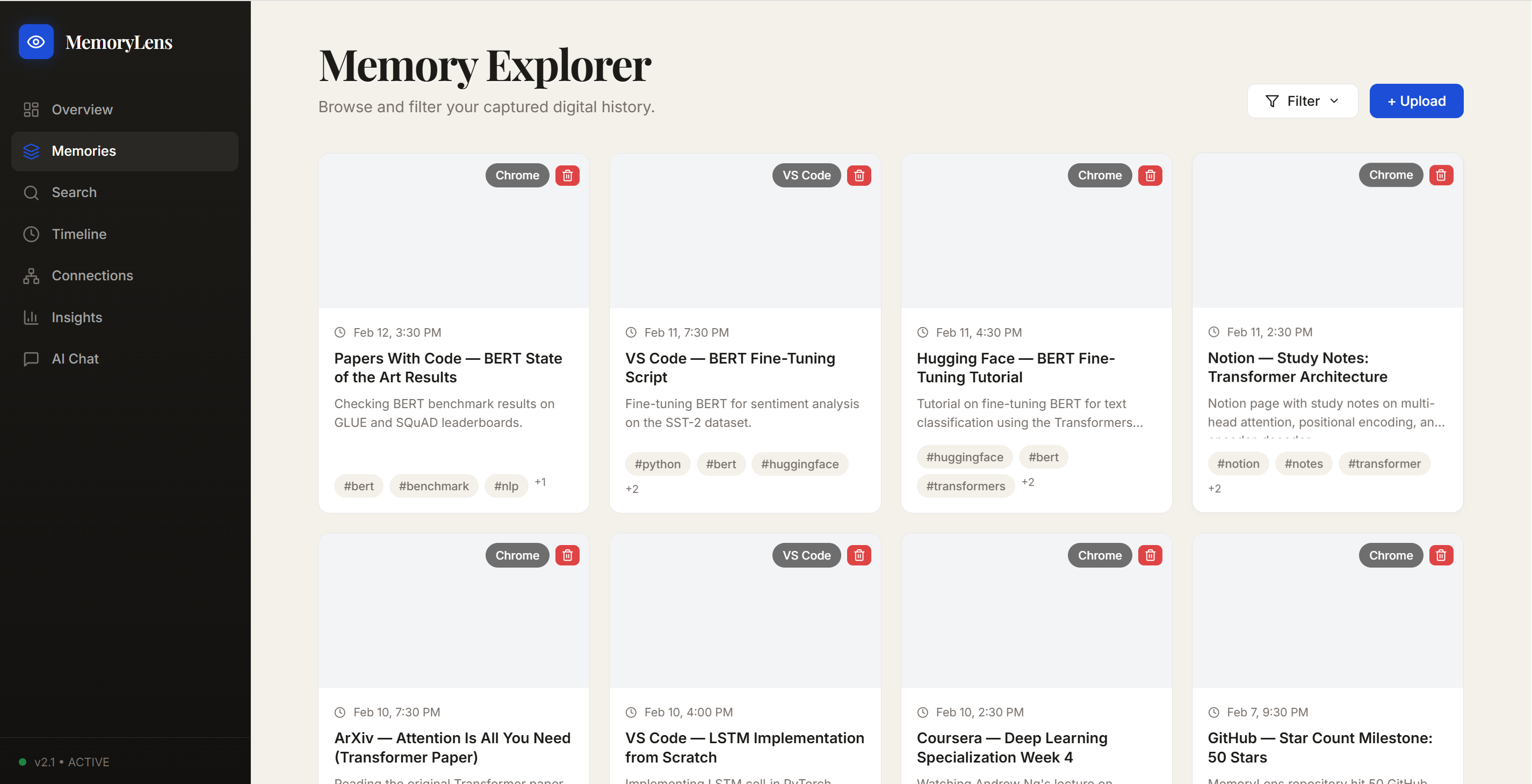
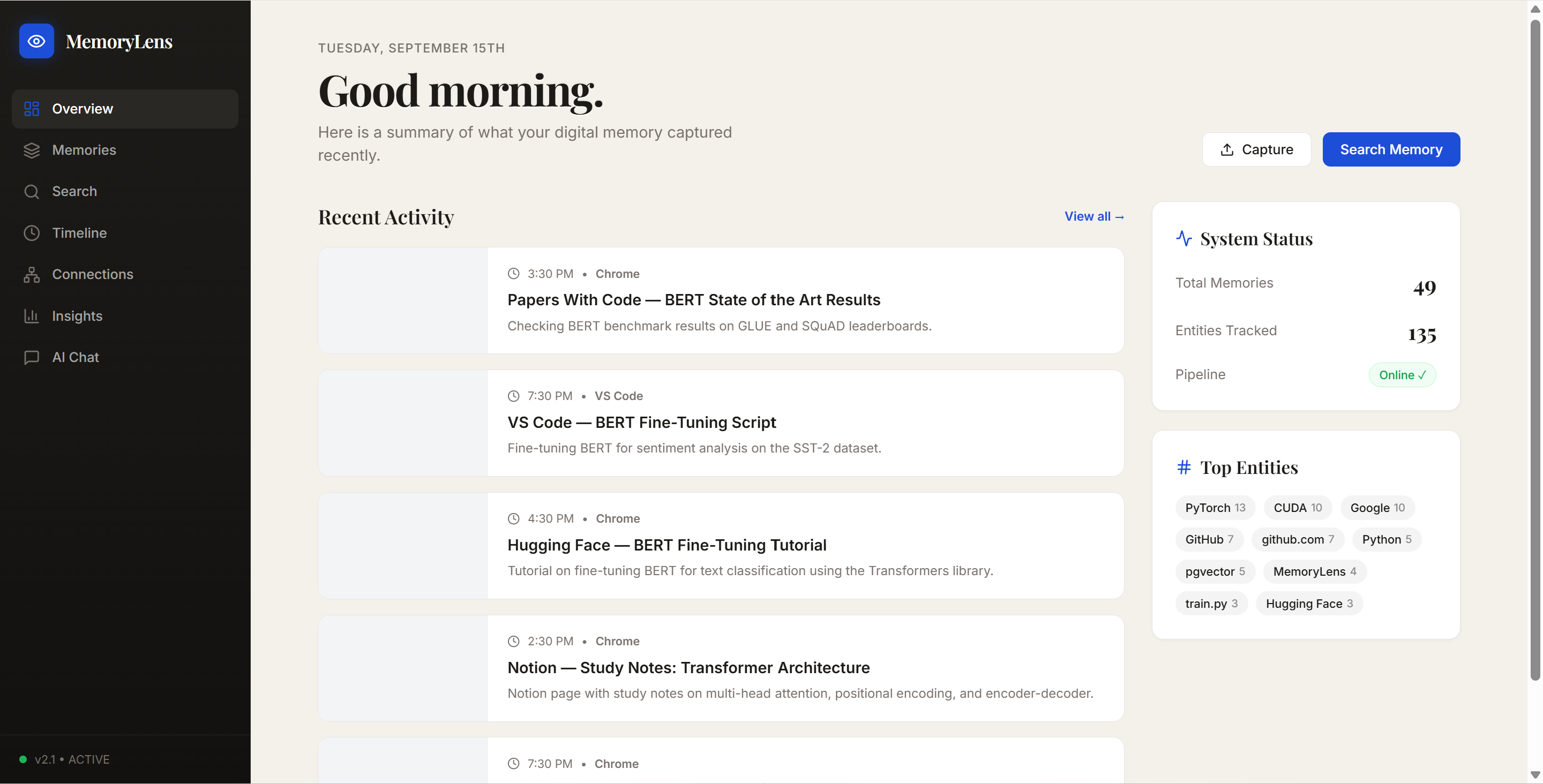
MemoryLens goes beyond simply storing screenshots. It understands the content inside them and helps users retrieve memories based on what happened, when it happened, who or what was involved, and the context surrounding it.
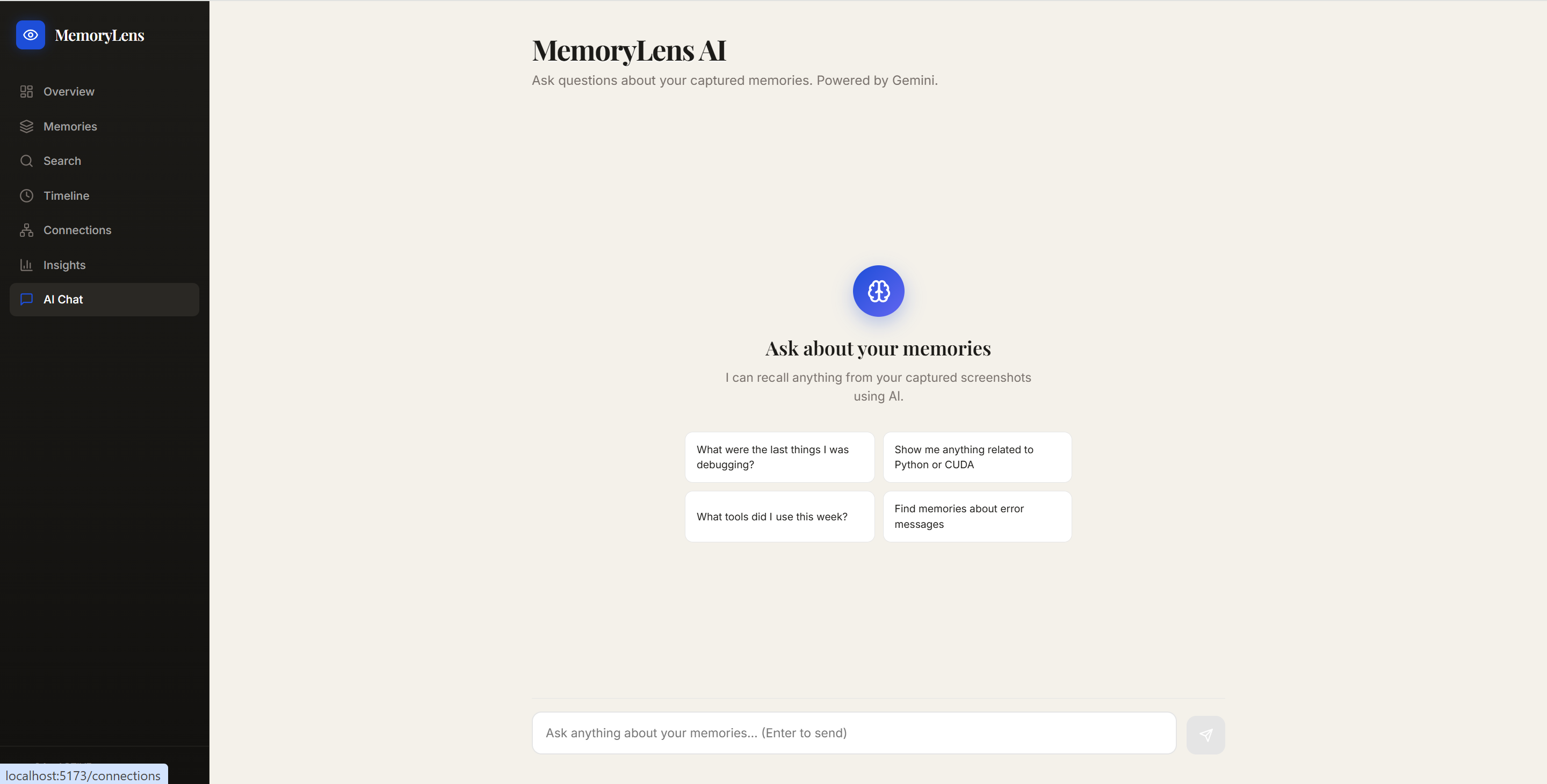
Instead of remembering which screenshot contained something, users can simply describe what they remember and let MemoryLens find the relevant information.
For example, a user could search:
"The screenshot where I saved that AI project idea."
or
"Show me the website I saved about internships last month."
MemoryLens is designed to make personal digital information feel more like human memory—searchable by meaning rather than filenames and folders.
How we built it
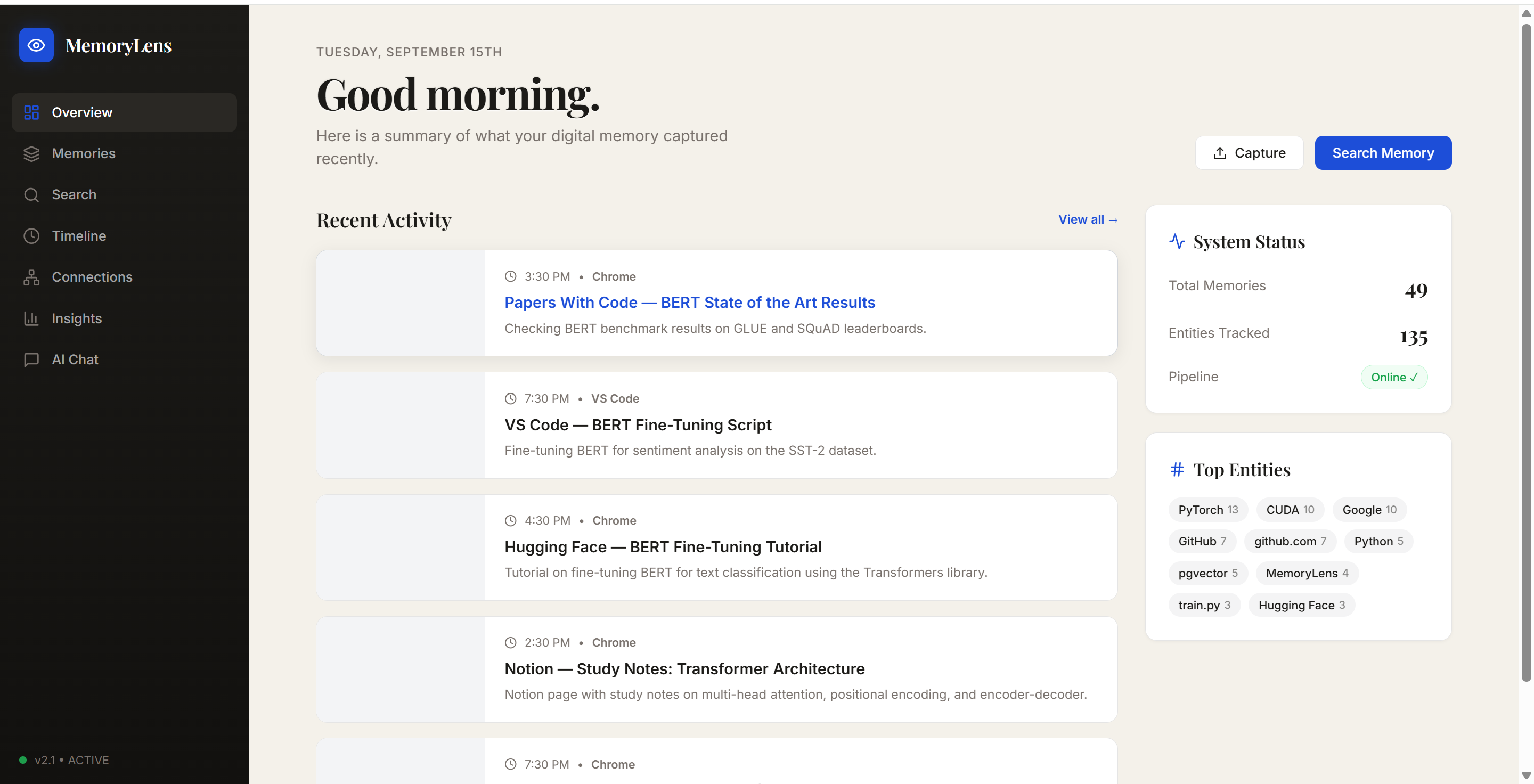
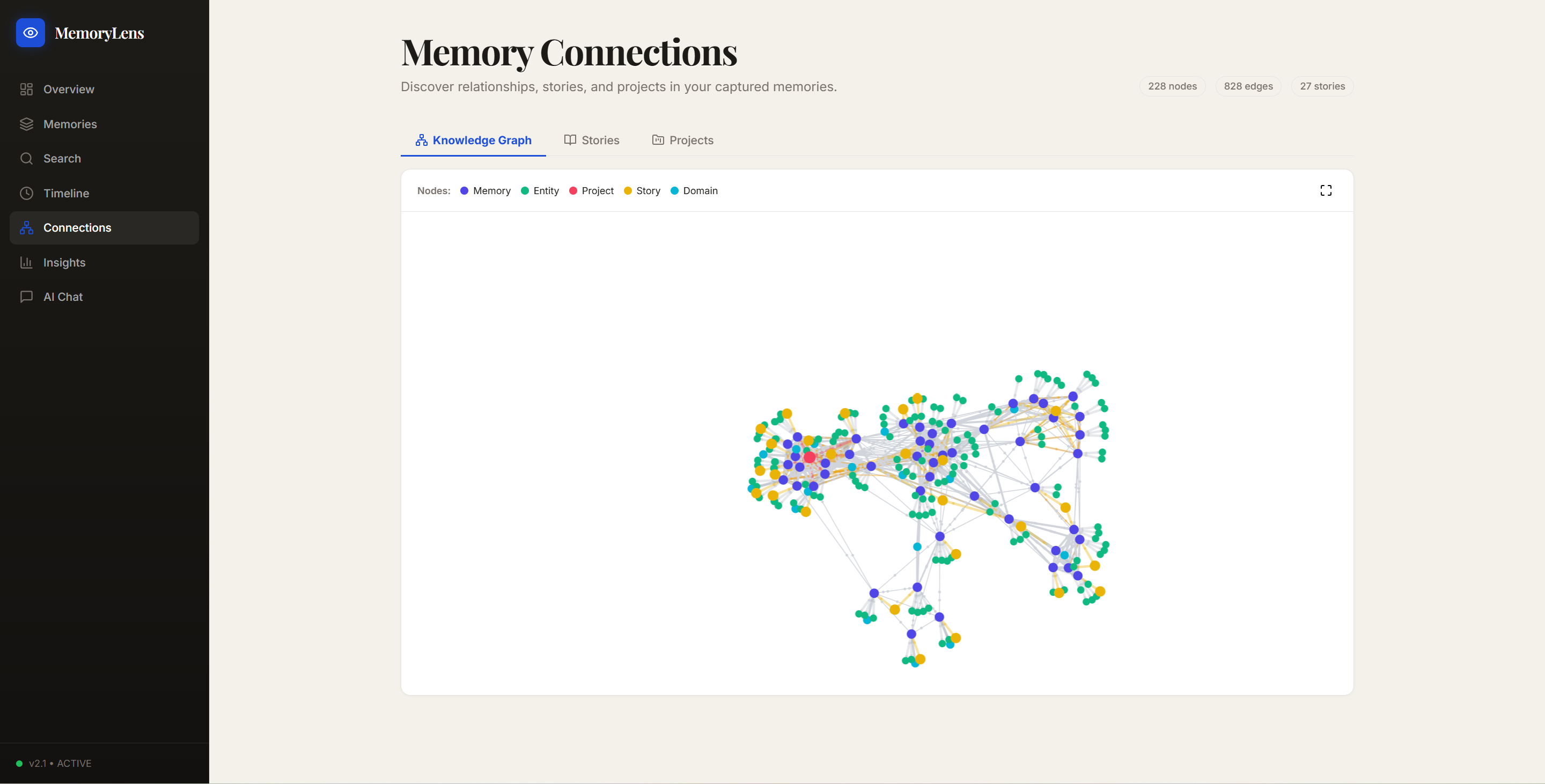
We built the project around an AI-powered pipeline that processes screenshots, extracts useful information from their visual and textual content, organizes the extracted information into searchable representations, and connects related memories.
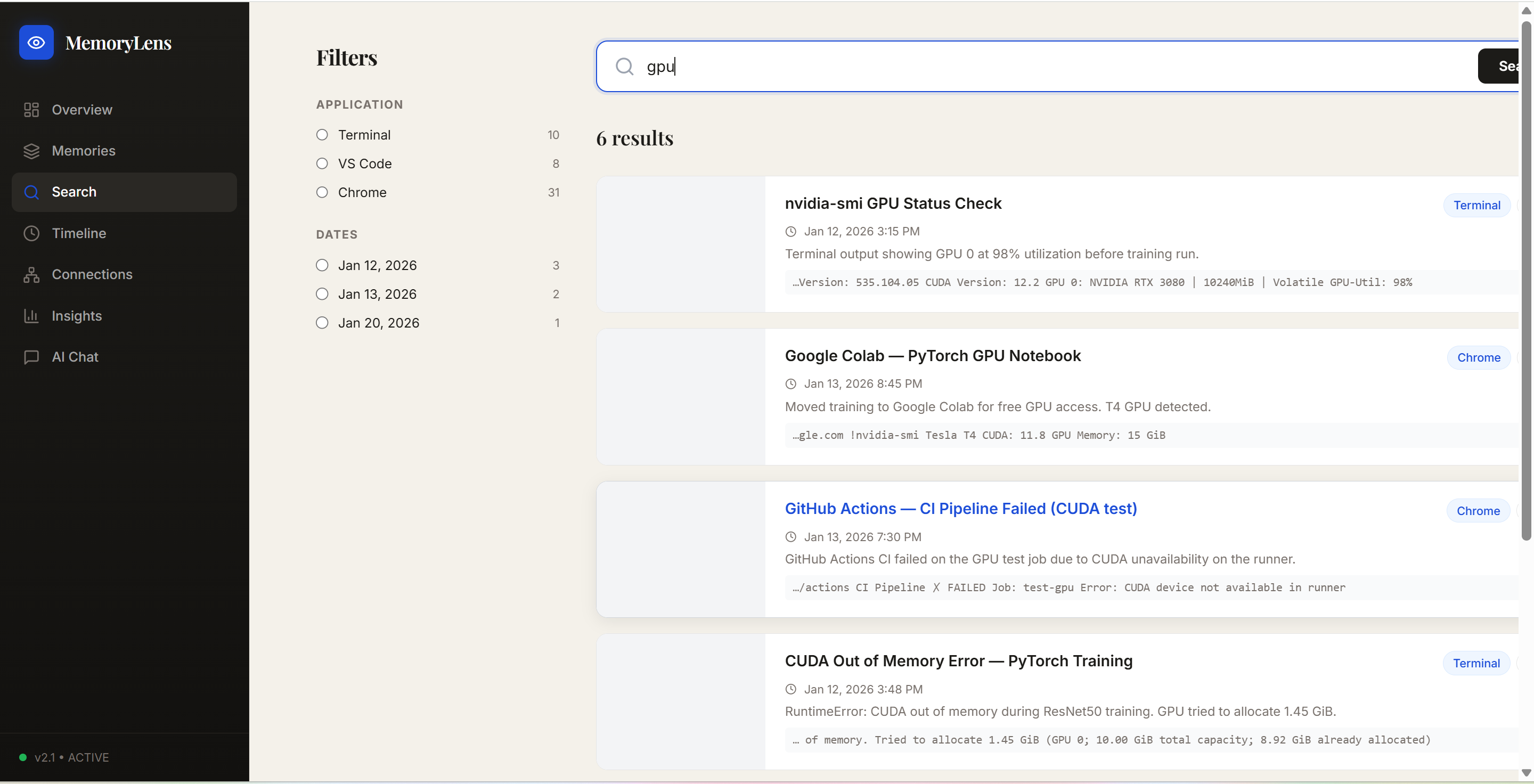
The application combines a user-friendly interface with AI-based understanding and semantic retrieval. This allows a natural-language query to be matched against the meaning of stored memories rather than relying only on exact keyword matches.
The goal throughout the implementation was to keep the experience simple for the user while handling the complexity of understanding and organizing the information in the background.
What we learned
Building MemoryLens taught us that creating an AI application is not only about using a powerful model. The real challenge is designing the complete system around the model—data processing, information extraction, retrieval, context, user experience, and reliability all matter.
We also learned how important it is to convert unstructured information into useful representations that an AI system can retrieve effectively. Designing a system that understands context rather than just matching words was one of the most valuable parts of the project.
Challenges we faced
One of the biggest challenges was dealing with the highly unstructured nature of screenshots. A screenshot can contain text, images, links, code, interfaces, conversations, or several different types of information at once.
Another challenge was making search results genuinely useful. Simply finding screenshots containing similar words is not enough—we wanted MemoryLens to understand the user's intent and retrieve the memory that is actually relevant.
Balancing AI capabilities with speed, accuracy, privacy, and a simple user experience was also an important part of the development process.
Why MemoryLens matters
MemoryLens explores a simple idea: our digital lives contain a huge amount of information that we have already seen, but remembering where we saw it is difficult.
Instead of forcing people to organize everything manually, MemoryLens aims to let AI organize and understand those memories for them—so they can focus on remembering what they need, rather than where they stored it.
Built With
- api
- css
- pgvector
- postgresql
- pydantic
- python
- react
- typescript
- vite


Log in or sign up for Devpost to join the conversation.