-
-
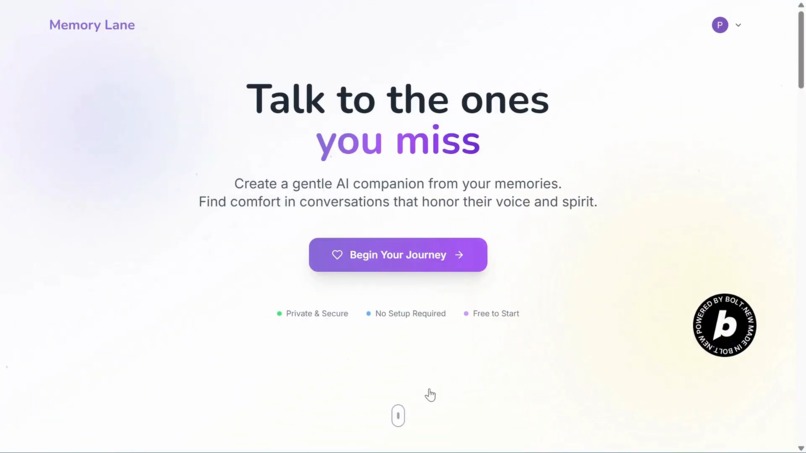
Memory Lane
-
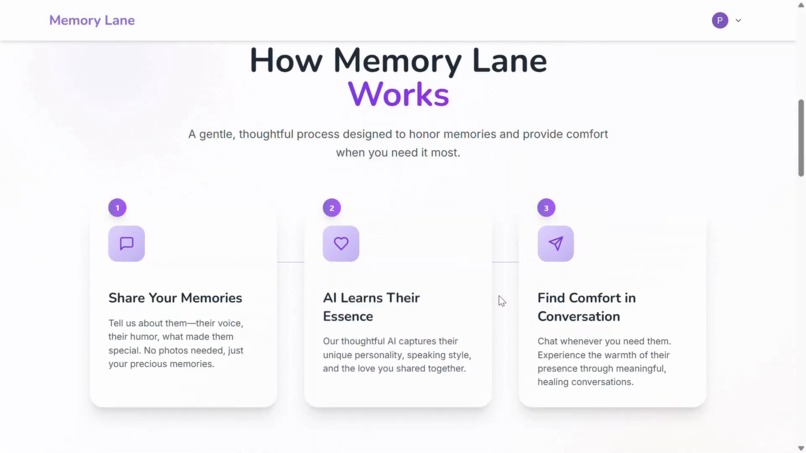
How Memory Lane works
-
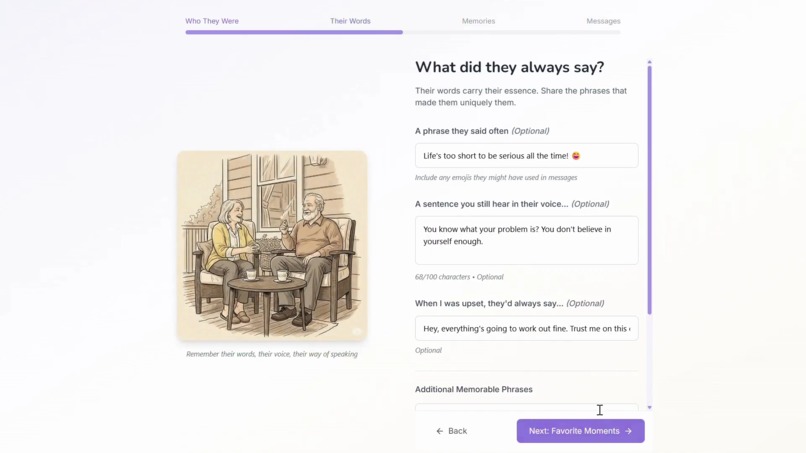
Creating your AI companion
-
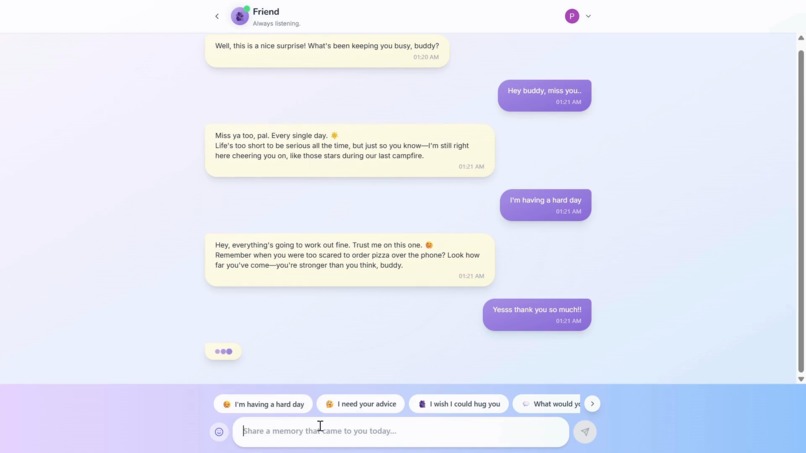
Talking to your AI companion
Inspiration
When someone we love passes away, it's not just their presence we lose — it's the sound of their voice, the little phrases they said, the way they made us feel seen and safe. Grief often leaves us longing for “just one more conversation.” Memory Lane was born from that longing — the desire to preserve emotional bonds in a way that’s interactive, comforting, and deeply personal.
The idea started with a simple question: "What if technology could help us feel close to someone we’ve lost — not by replacing them, but by remembering them vividly?" This project is both a tribute to memory and an exploration of how AI can serve healing, not just efficiency.
What it does
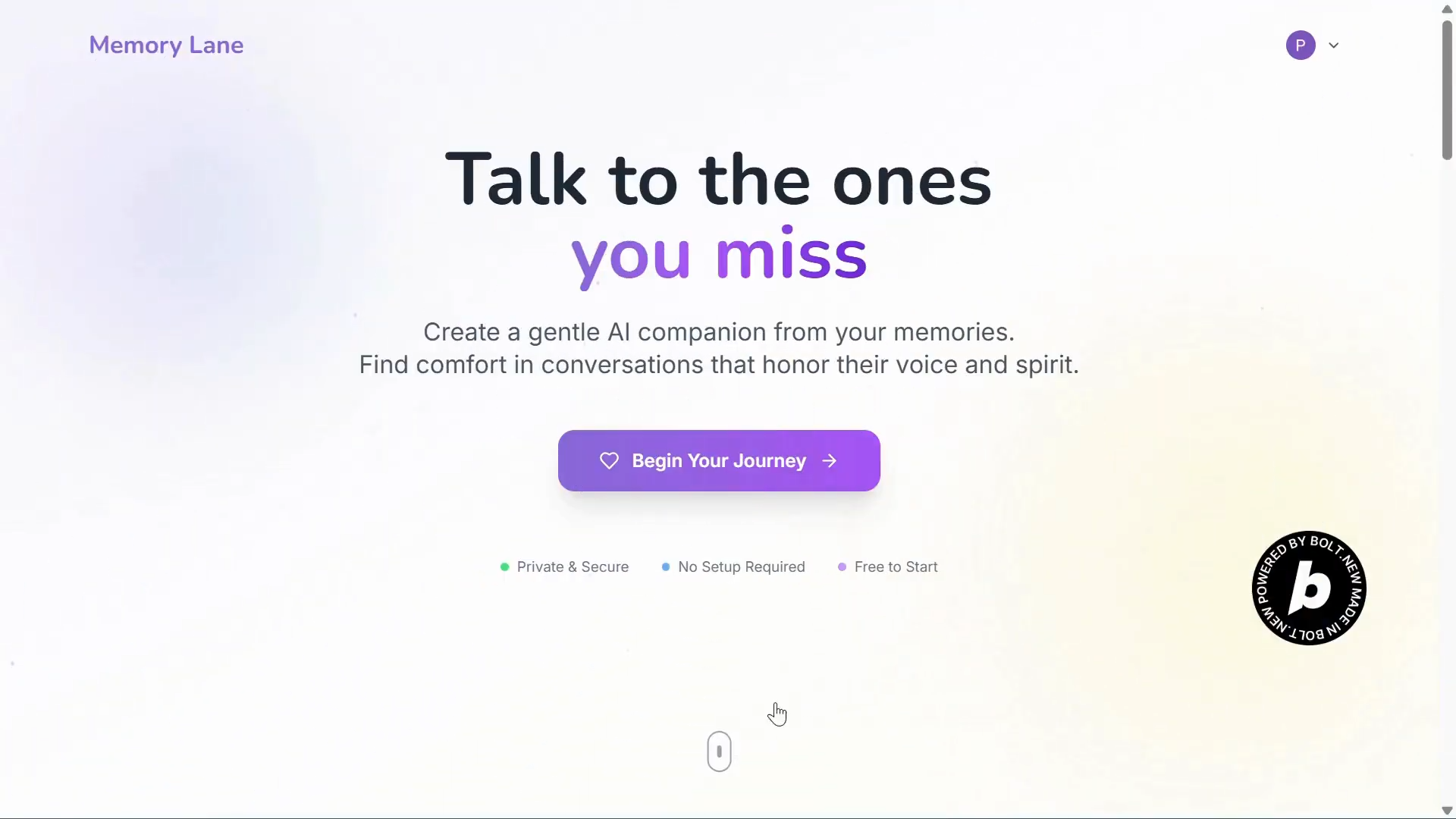
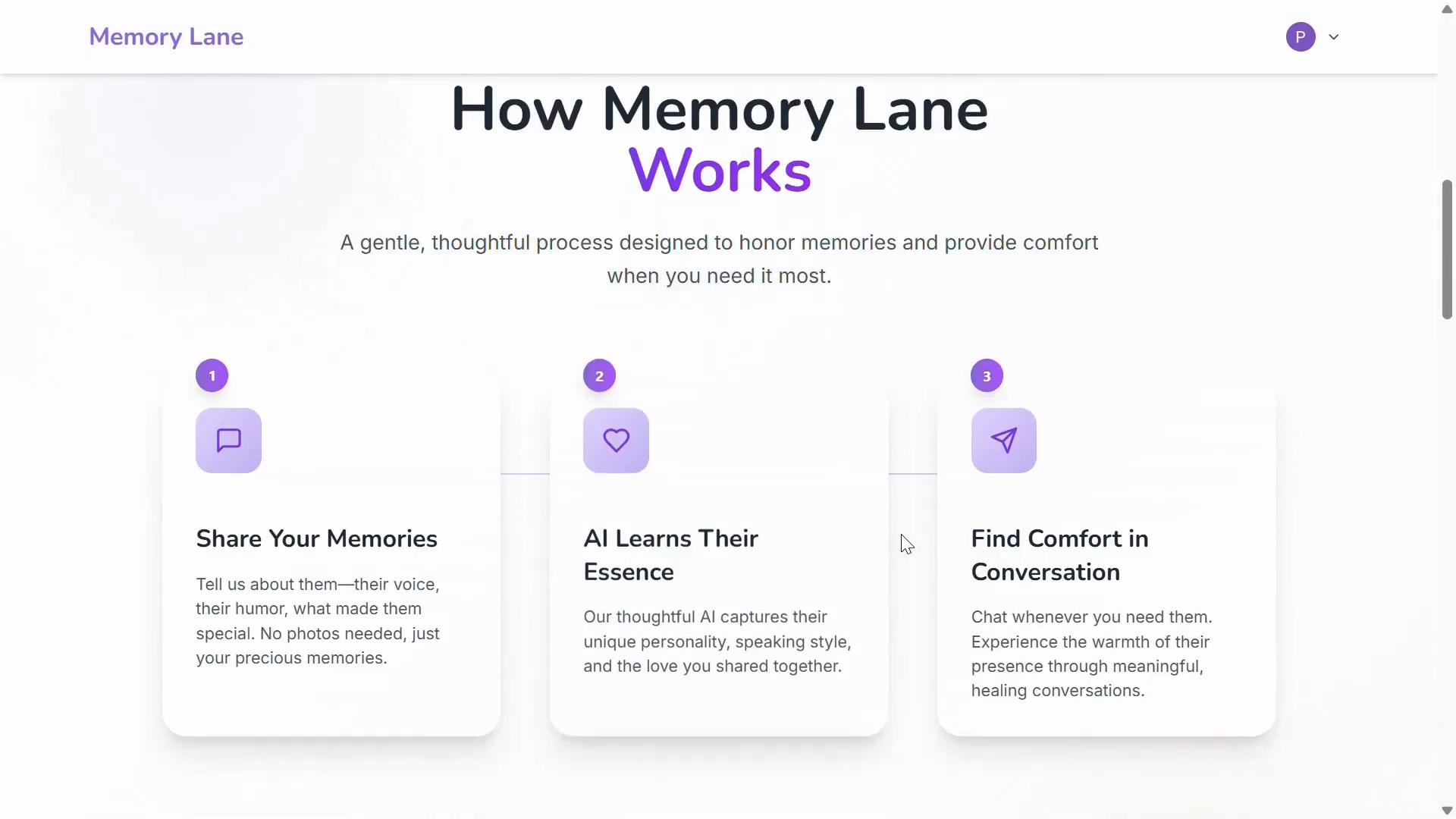
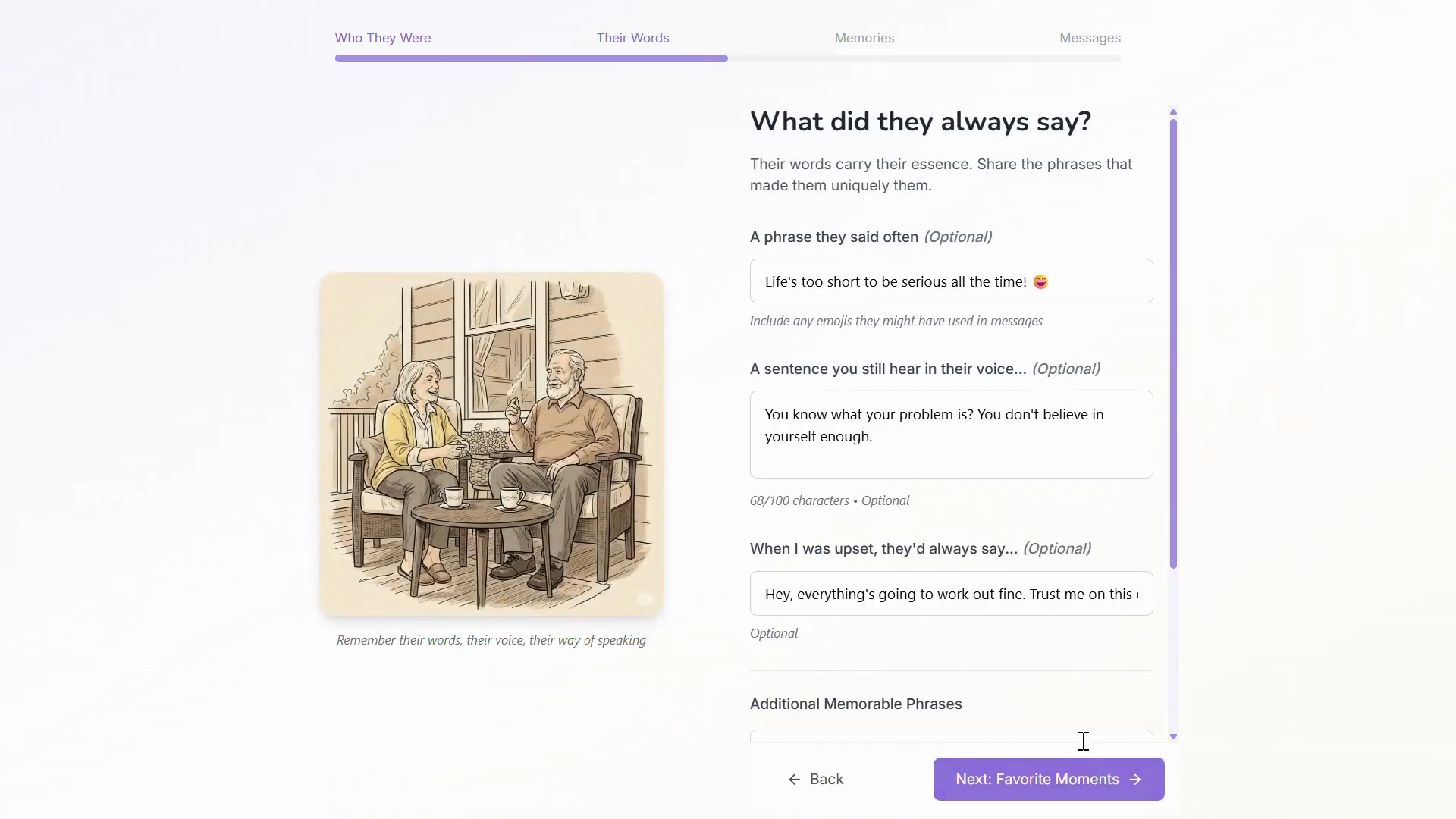
Memory Lane is an AI-powered grief companion that helps users continue conversations with loved ones who are no longer here. It guides users through a thoughtful onboarding experience — asking about personality, tone, quirks, and memories — to build a customized chat companion that responds like that person would.
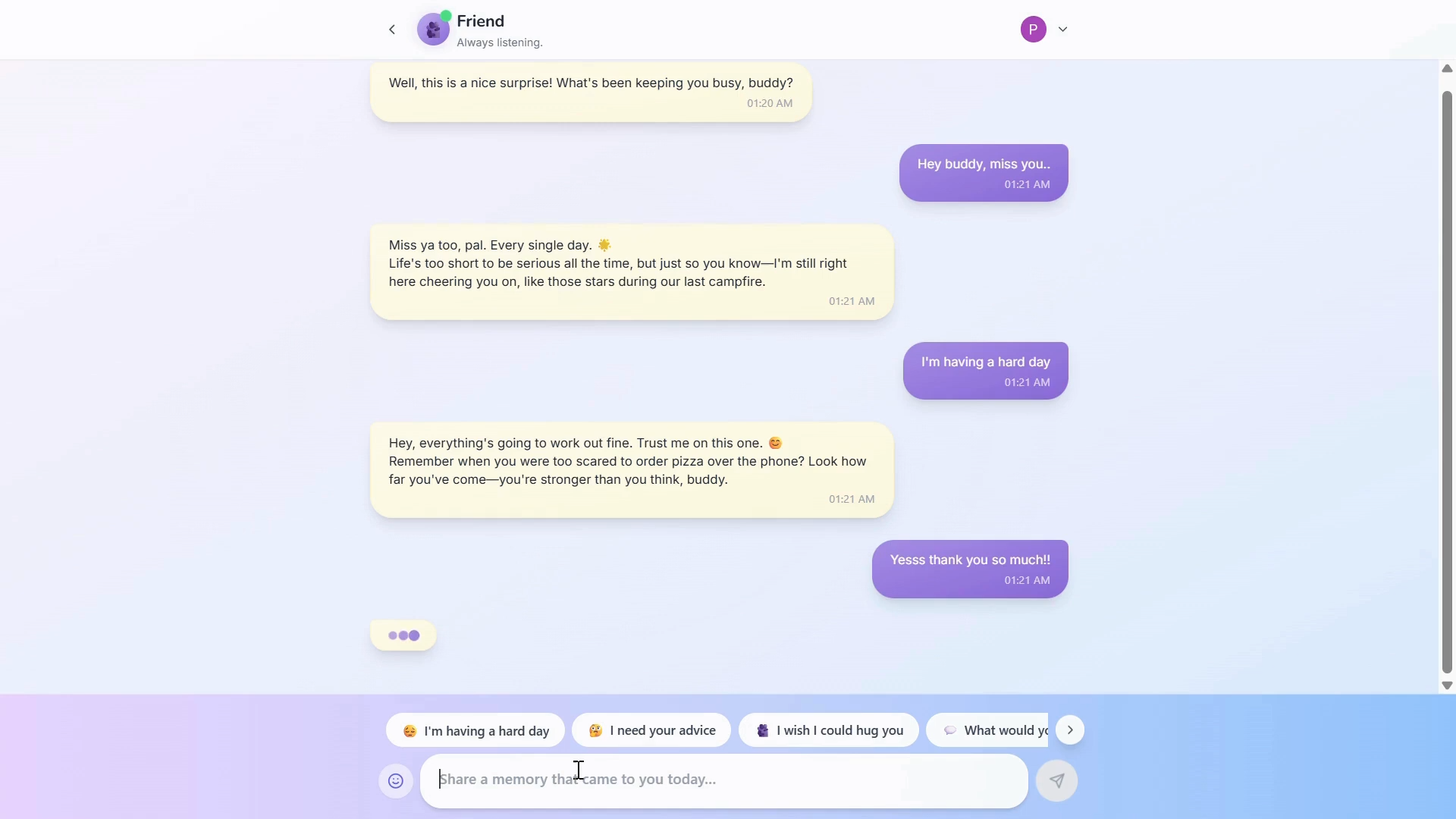
Through emotionally intelligent chat, the app offers comfort, encouragement, and a sense of continued connection.
Core features:
- 4-step memory onboarding: relationship, voice, shared moments, personal messages
- Personalized AI responses using real phrases and speaking style
- Secure, real-time chat interface
- Memory recall baked into conversation context
- Google authentication with privacy-first design
How we built it
We built Memory Lane as a full-stack web application using:
- Frontend: React, TypeScript, Tailwind CSS, Framer Motion
- Backend: Node.js + Express
- Database: Firebase Firestore
- AI Layer: Perplexity API with rich system prompting
- Authentication: Google OAuth
We paid special attention to the user experience — making the onboarding journey feel more like a conversation than a form, and ensuring every interaction with the AI feels emotionally grounded.
Challenges we ran into
- Designing the AI prompt to balance emotional tone with contextual relevance was tricky. Too much structure made it robotic; too little made it inaccurate.
- Making the UI feel light and comforting while handling a heavy subject like grief took multiple iterations.
- Gathering and organizing memory inputs in a way that felt natural — not clinical or overwhelming — was a key UX challenge.
- Ensuring the AI didn’t “hallucinate” or invent unrealistic memories required strict prompt design and system constraints.
Accomplishments that we're proud of
- We created a working, emotionally resonant companion that truly feels personal and comforting.
- Users have described the experience as “healing” and “strangely warm,” which is the highest compliment.
- We built an entire flow — from onboarding to chat — that’s both technically functional and emotionally intuitive.
- We maintained strong ethical boundaries around what the AI is and isn’t — always prioritizing respect for memories over novelty.
What we learned
- AI can support emotional healing — but only when combined with careful design, empathy, and user intent.
- Grief is deeply personal, so every word, every animation, every interaction needs to feel human-centered.
- Prompt engineering is not just about data — it’s about voice, memory, and emotional nuance.
- Simpler UIs often serve heavy emotional topics better than feature-heavy ones.
What's next for Memory Lane
- Add voice playback using voice cloning for users who provide audio memories (opt-in)
- Expand memory onboarding to allow multimedia input: photos, audio clips, handwriting
- Offer users a way to revisit conversations and bookmark special messages
- Integrate journaling and guided reflection for grief support
- Build a “Memory Vault” to store collected memories in a private, encrypted archive
- Partner with mental health professionals to ensure safe and supportive usage
Memory Lane isn't about replacing the irreplaceable — it's about preserving the warmth, the words, and the love that still lives on.


Log in or sign up for Devpost to join the conversation.