-
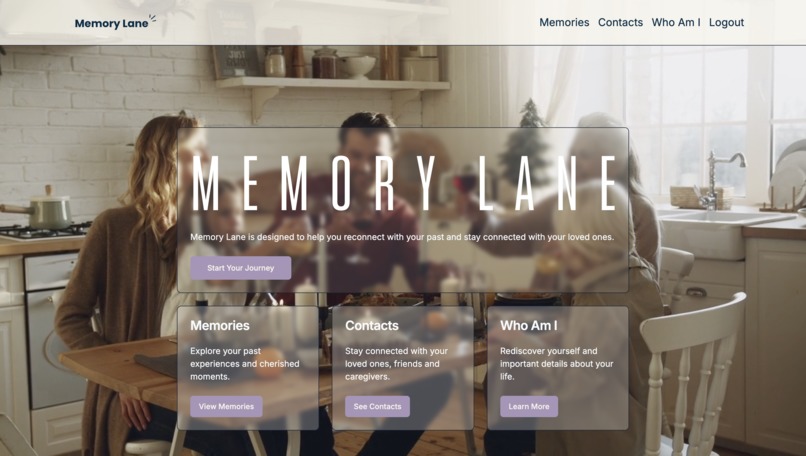
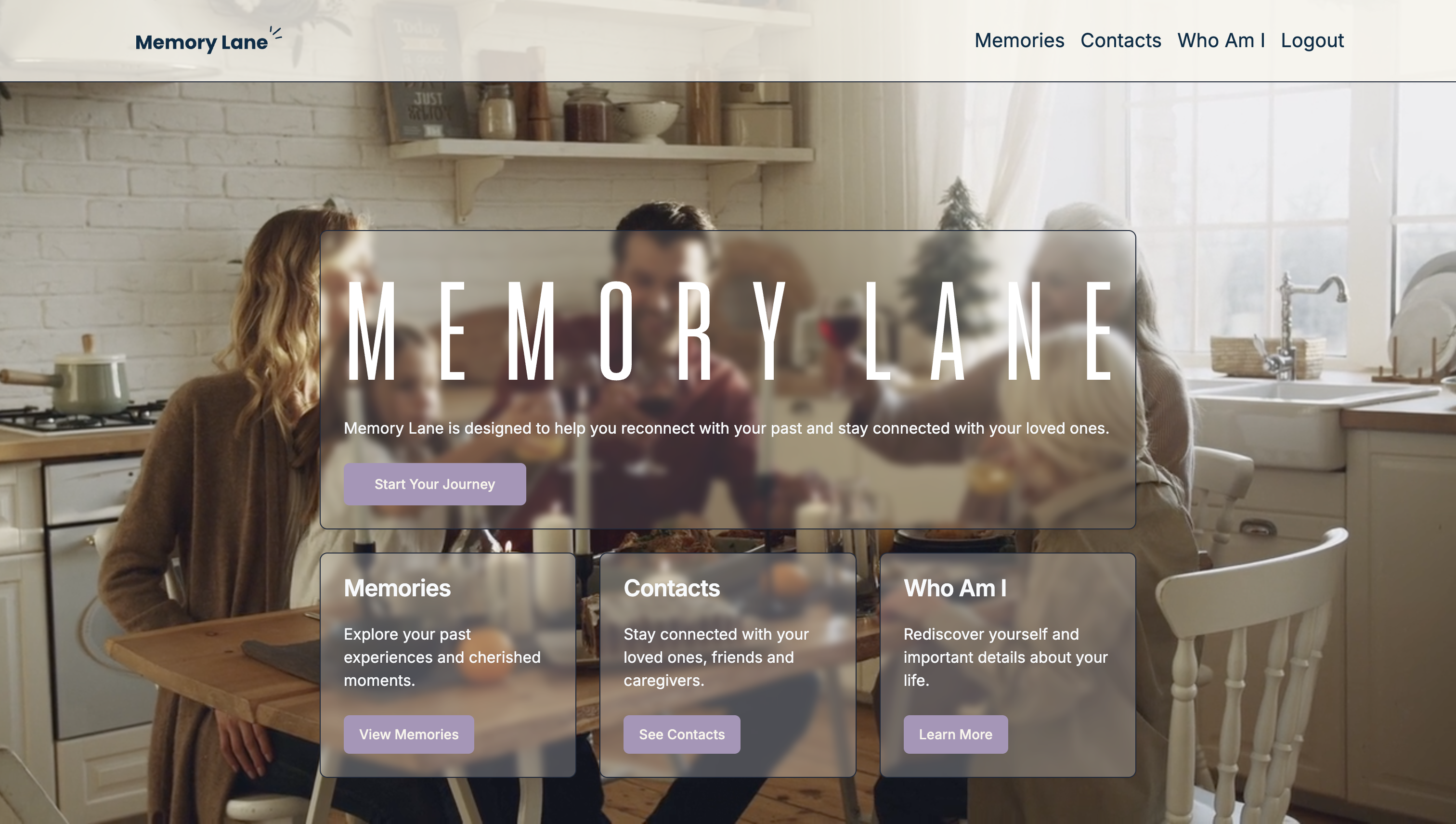
Home Page
-
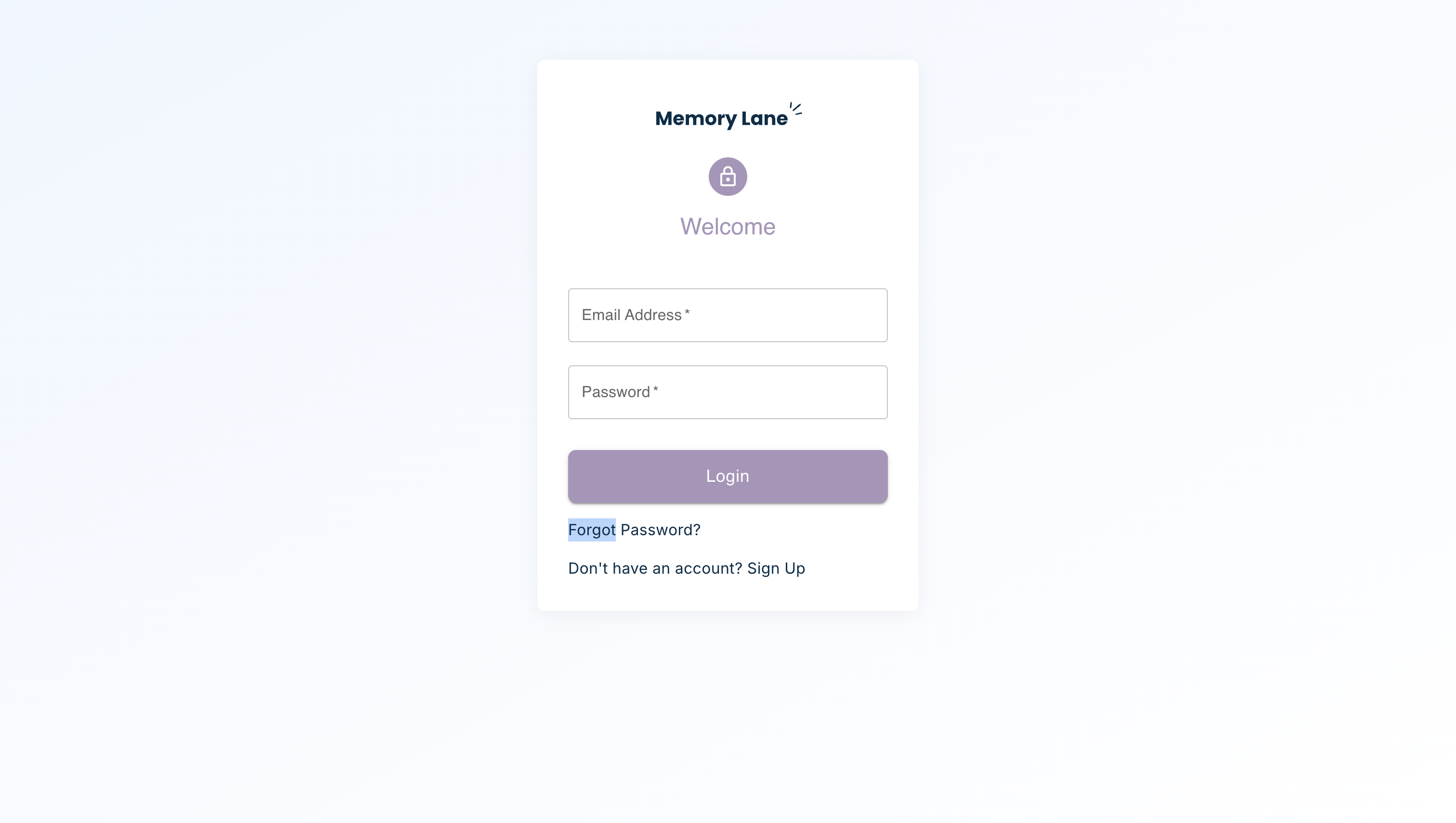
Login Page
-
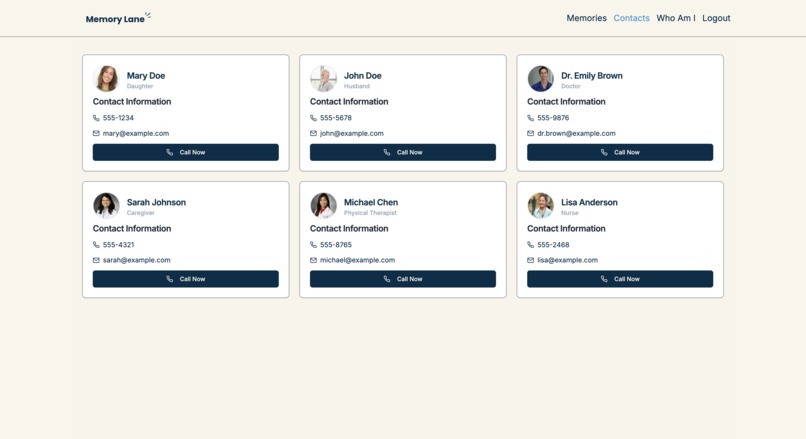
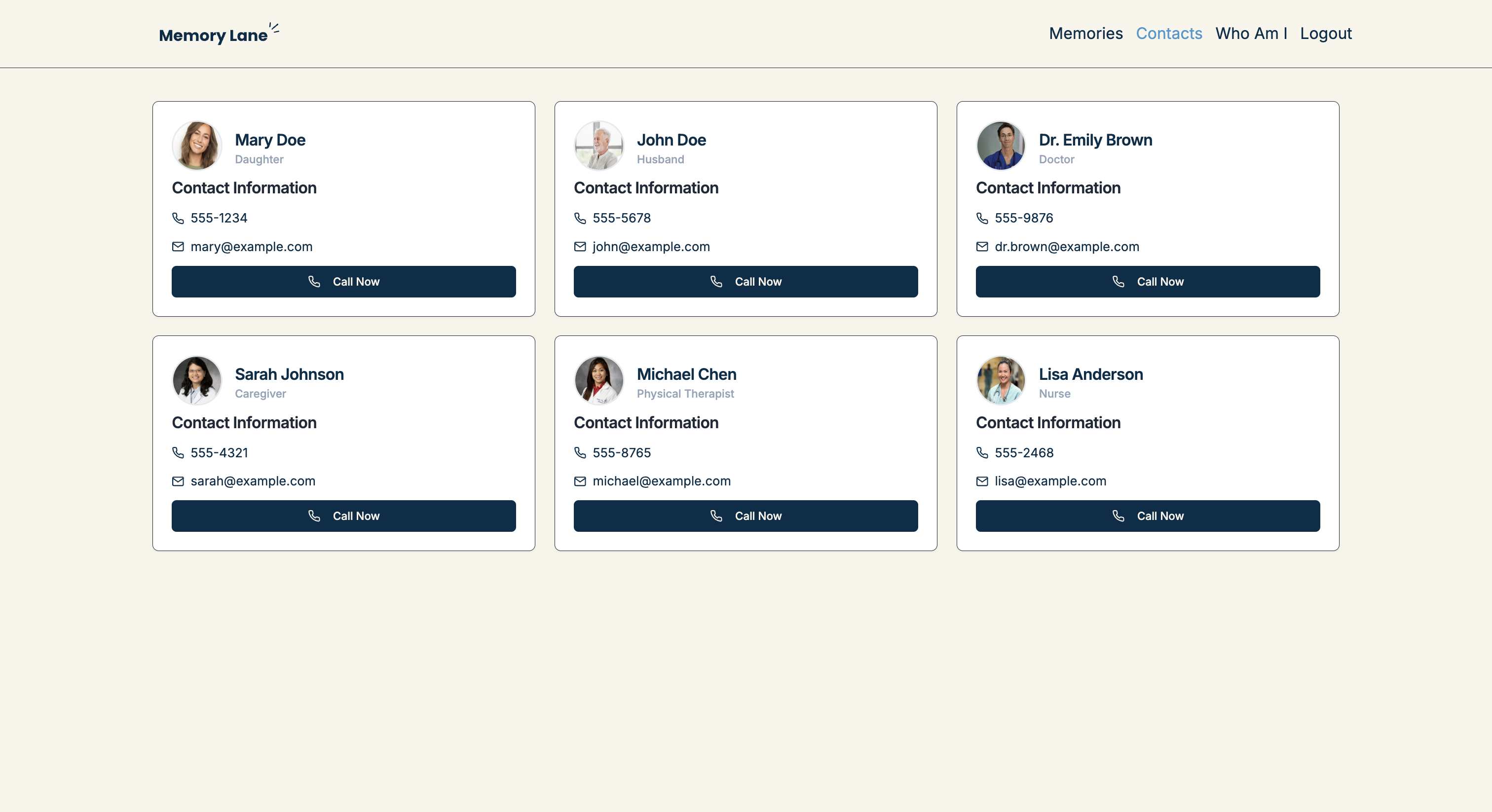
Contacts Page
-
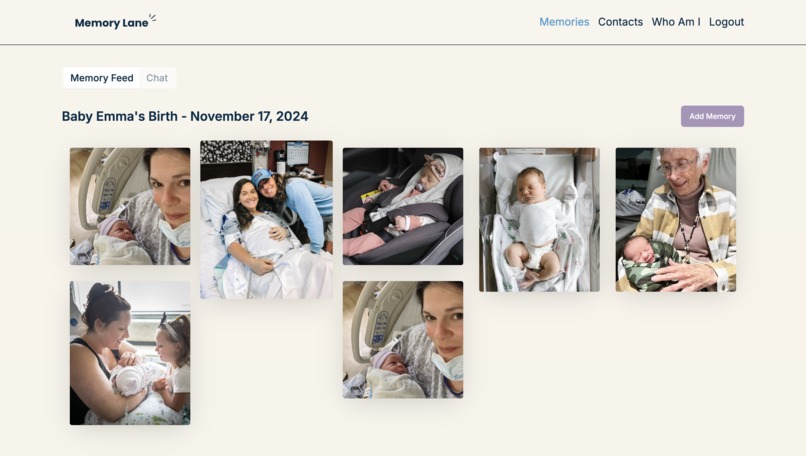
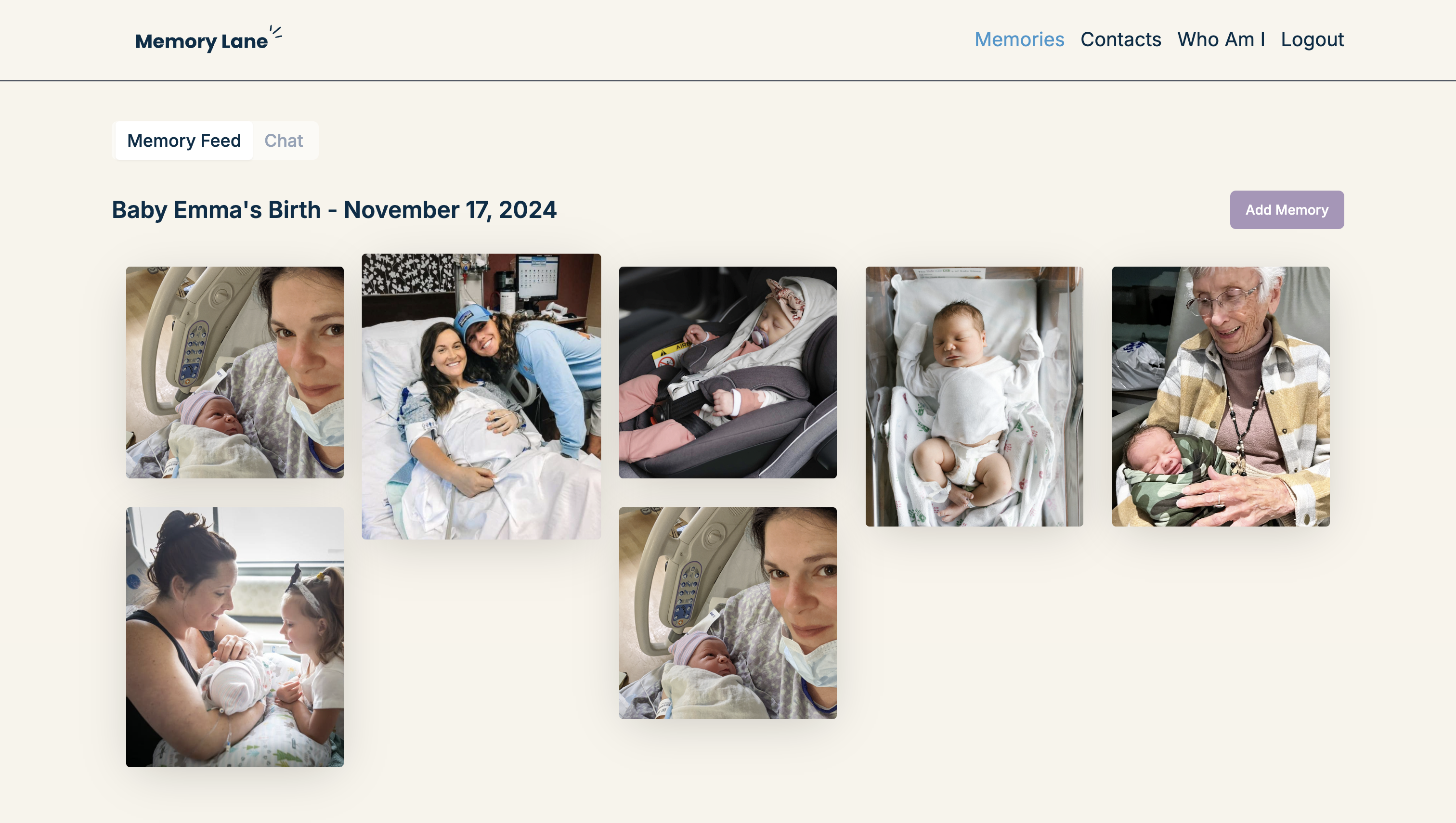
Memories Page
-
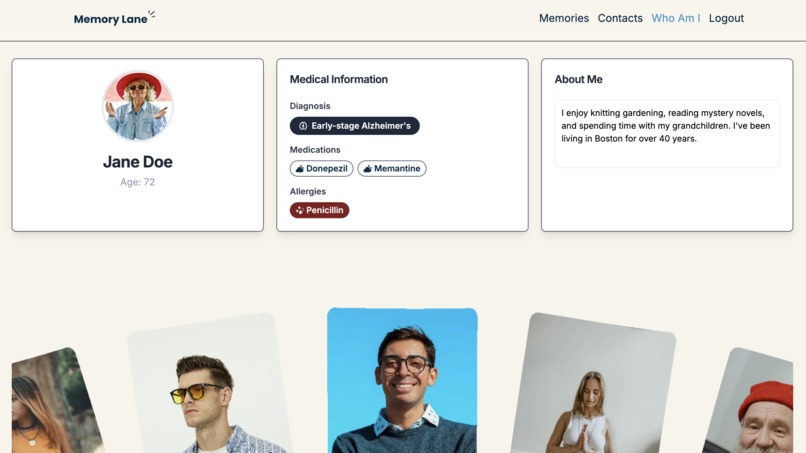
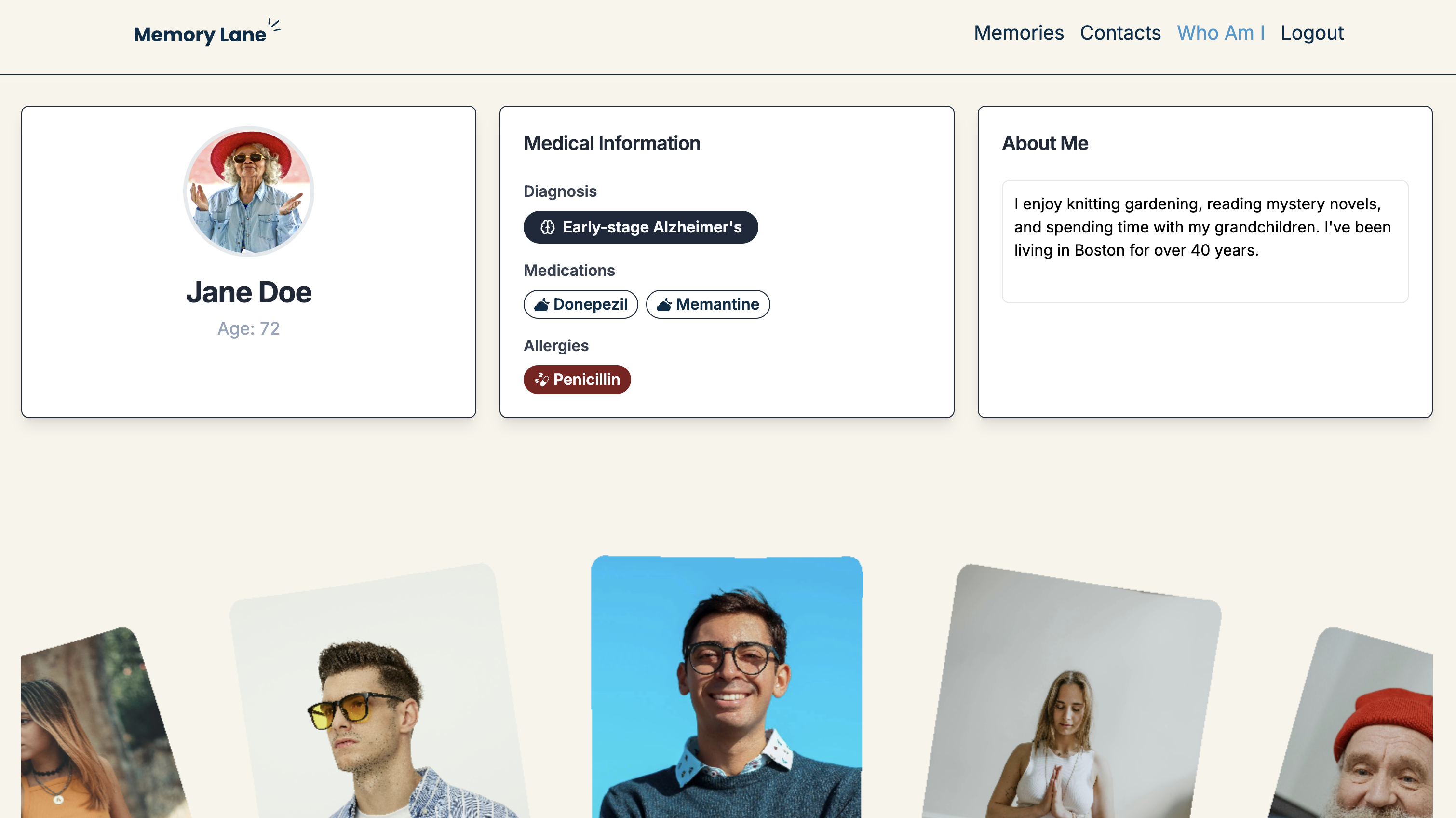
Who I Am Page
-
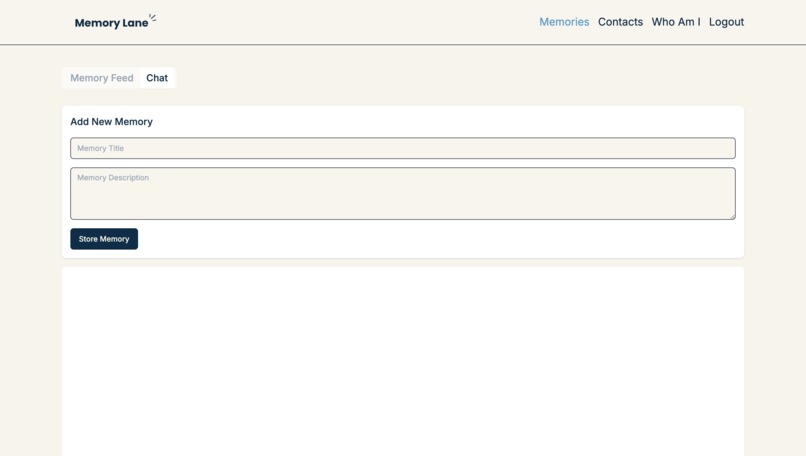
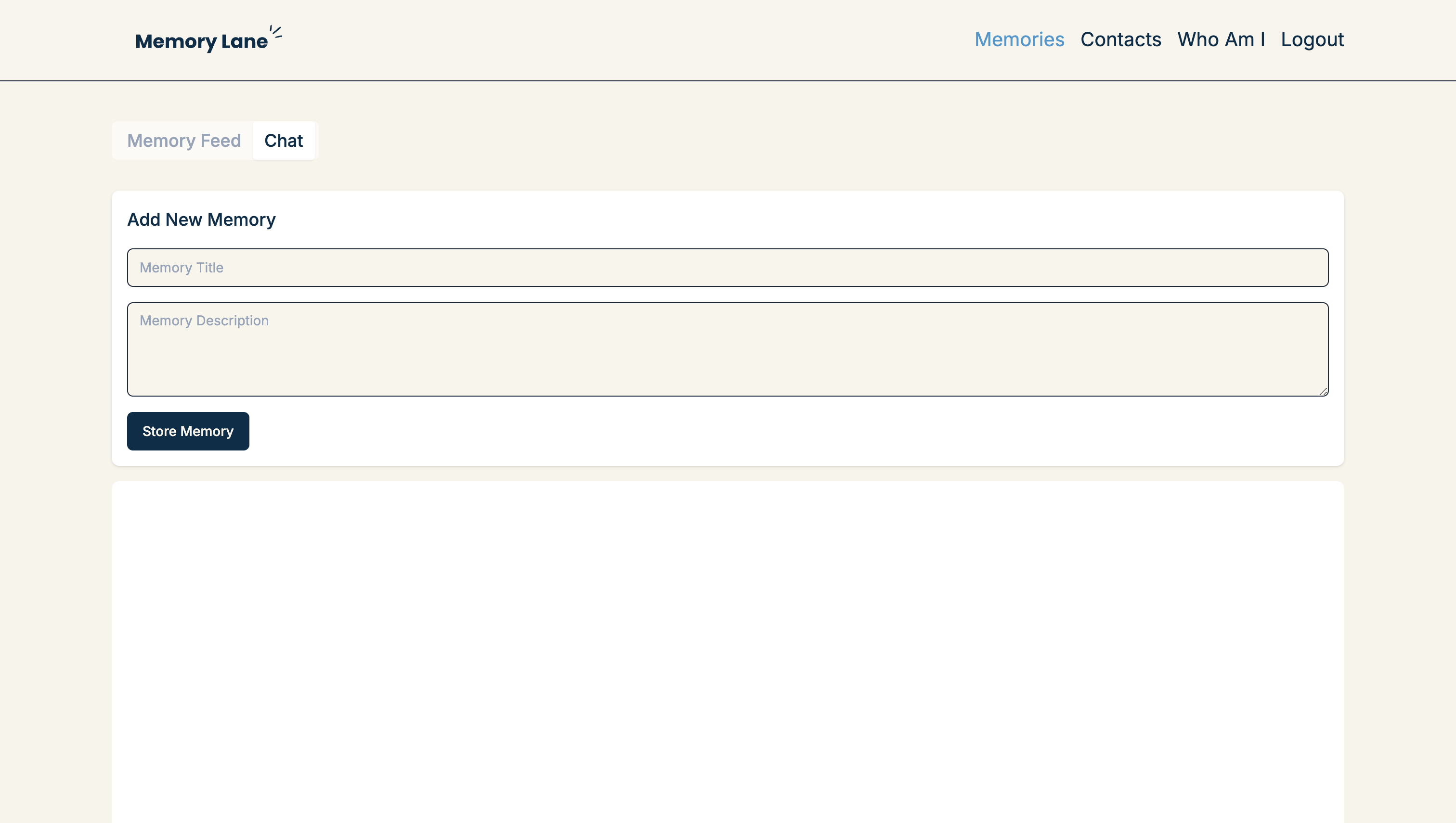
Memory Chatbot
Inspiration
As Alzheimer’s diagnoses continue to rise globally, the emotional toll grows heavier for patients and their loved ones. Navigating the heartbreaking reality of memory loss, the gradual decline of bodily function, and the fading sense of self can be overwhelming. It’s an emotional journey filled with challenges, uncertainty, and profound change. We aim to make this challenging journey a little easier.
What it does
Our website offers a safe, user-friendly space for preserving cherished memories, important contacts, and personal life stories of those affected by memory loss. With carefully stored photos and thoughtfully designed information cards, we aim to provide gentle reminders of their identity and the loved ones who support them. Our goal is to create a sense of familiarity, security, and connection, ensuring that no one feels lost in their journey.
How we built it
Our application leverages Next.js for both front-end development and back-end logic. For persistent storage and retrieval of vectorized data, we utilize the Pinecone vector database. This database enables us to perform Retrieval Augmented Generation (RAG) on a user's memories, allowing for efficient and contextually relevant recall of information.
Challenges we ran into
Our development process involved integrating AI capabilities with the Pinecone vector database for Retrieval Augmented Generation (RAG). This integration presented significant challenges, requiring careful consideration of data flow, query optimization, and response handling to ensure accurate and timely retrieval of information from the vectorized memories. This focus on front-end design meant prioritizing intuitive navigation, a streamlined interface, and visually appealing presentation of retrieved information, all while maintaining responsiveness and performance.
Accomplishments that we're proud of
Our chat function allows users to store memories through journal entries and later ask questions to recall them. It provides tailored responses based on past interactions, creating a rich and more interconnected personal history. For those in the early stages of Alzheimer’s, this tool helps preserve memories and maintain connections with loved ones.
Designed with a user-centered approach, our platform prioritizes accessibility and emotional well-being. It enables patients and families to revisit cherished moments, reinforce identity, and stay connected, offering comfort and support as they navigate memory loss together.
What we learned
Our team acquired various skills throughout this project. Daniela and Paulina learned GitHub, API integration, and version control, including Git branching and parallel development. Sri worked on combining code with Gemini to implement a RAG model for memory retrieval. Ella focused on intentional design for the specific population of users experiencing memory loss as well as front-end development. Paulina also gained experience with Devpost, Next.js, and purposeful design. Terrence learned to integrate Firebase, improving platform functionality. Through this process, the team expanded their technical knowledge and collaboration.
What's next for Memory Lane
In the future, we envision expanding Memory Lane into a collaborative platform where family members and friends can actively contribute to preserving cherished memories. This multi-user interface will allow loved ones to add meaningful moments, important contacts, and personal stories, creating a more comprehensive and enriched memory archive. By enabling shared contributions, we aim to strengthen connections and provide patients with a more profound and personalized experience. With AI-driven retrieval, users will have seamless access to these memories, fostering familiarity, comfort, and continued engagement with their loved ones.
Built With
- backend
- components
- frontend
- gemini
- javascript
- next
- pinecone
- rag
- react
- tailwind

Log in or sign up for Devpost to join the conversation.