Built solo by Ajit Rawat for the Qloo Agentic Hackathon.
Inspiration
Reminiscence and personalised music are part of everyday dementia care, and the research shows small but real benefits for quality of life and communication. The hard part is never the idea; it is preparation: finding the songs, films, food and places of this person's youth, in their culture, every week. Generic playlists drift to the same Western "greatest hits", and a generic AI answer can't show why an item fits or check its years. I wanted an agent that does the preparation honestly, with evidence for every suggestion.
What it does
- A caregiver adds a few public favourites (a singer, a film, a dish, a place), where the person grew up (town level) and anything to avoid. No personal details.
- The agent matches each favourite in Qloo; when there are several matches, the caregiver picks one.
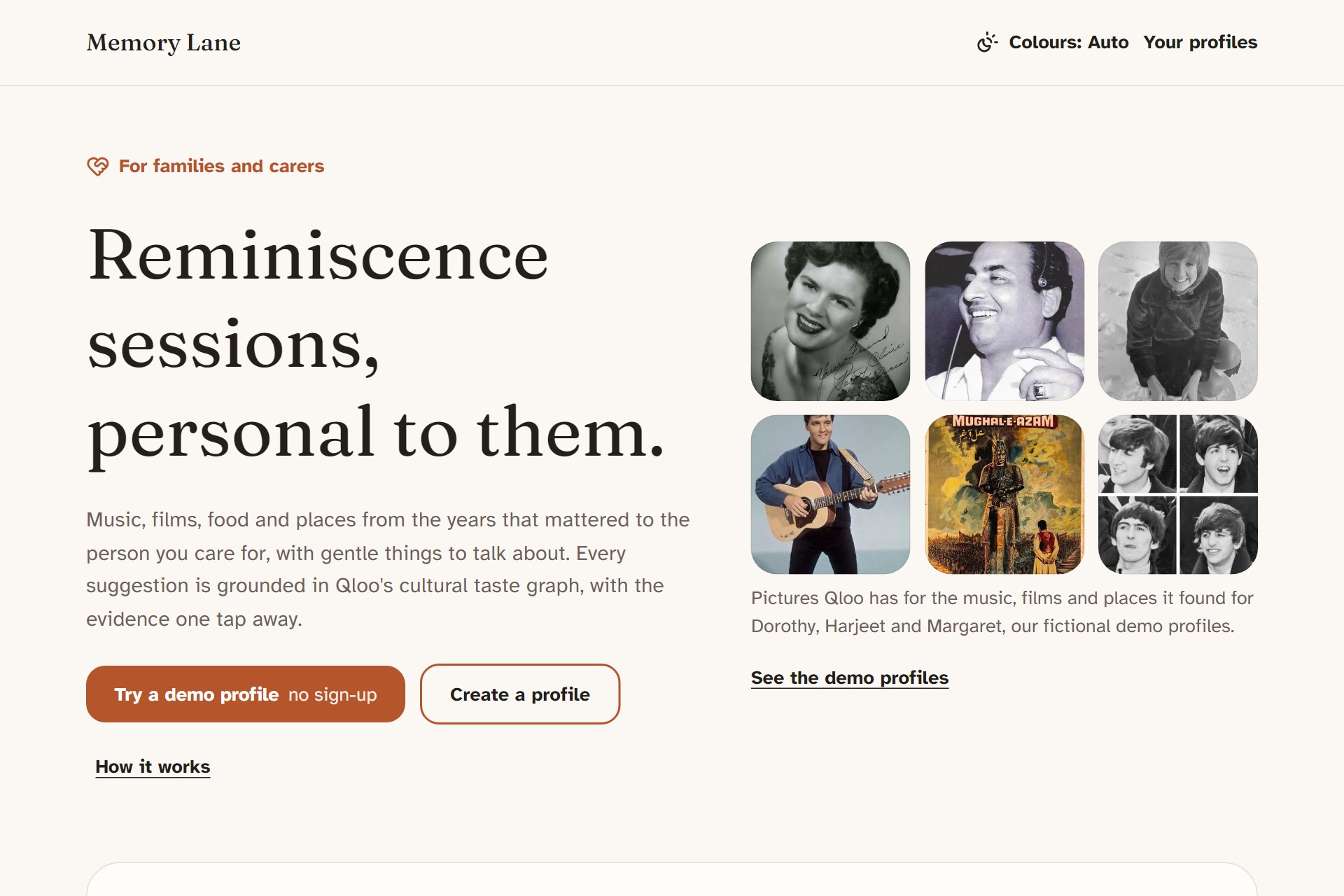
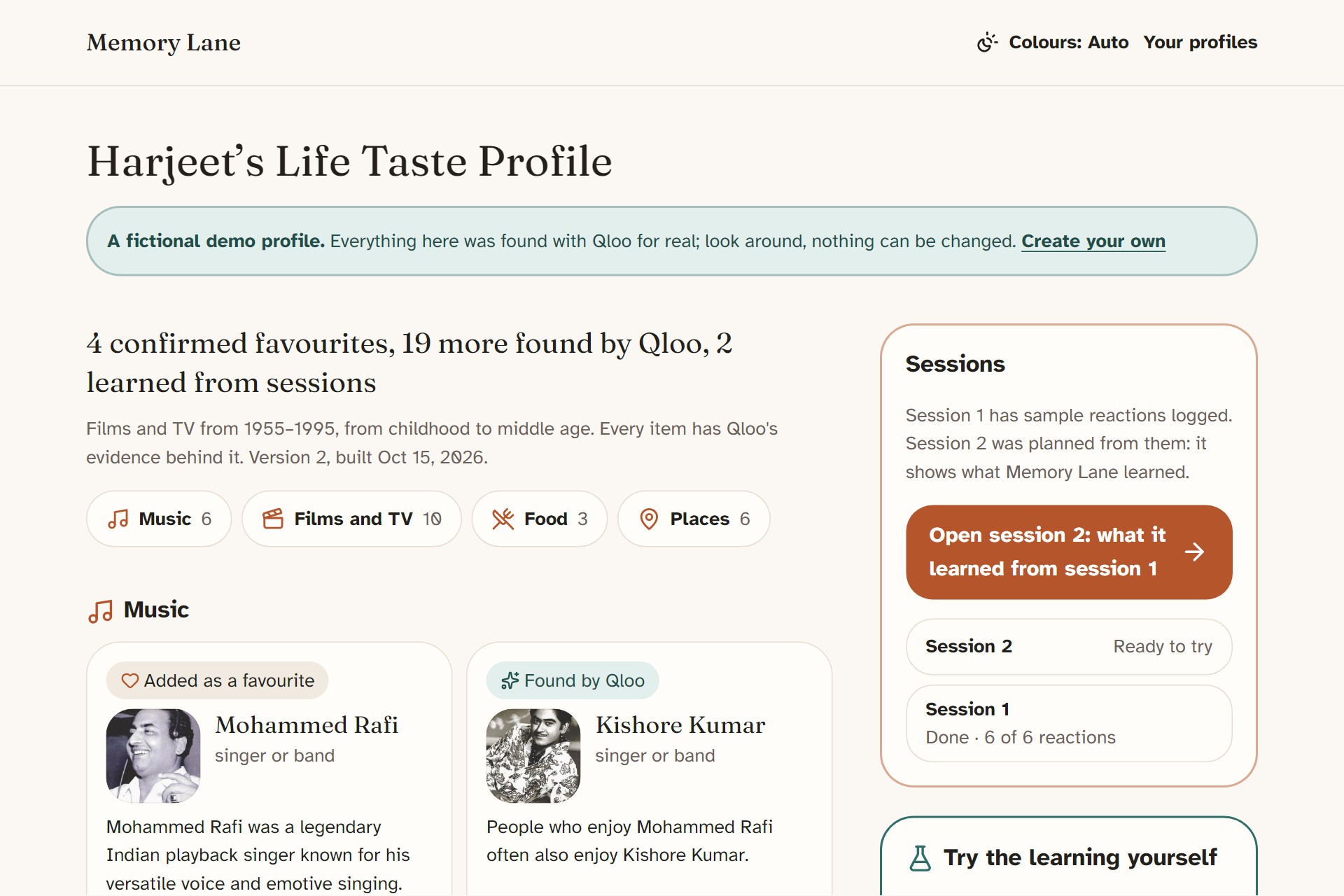
- It builds a Life Taste Profile with Qloo, domain by domain: singers from the singers they love, films and TV from their films and shows (kept to their era), places in and around where they grew up, and dishes from Qloo's food tags. When Qloo leaves a gap, an AI model proposes era-typical names that count only once Qloo matches and ranks them. Every item carries the Qloo call behind it and shows Qloo's own picture (the singer, the film poster, the place).
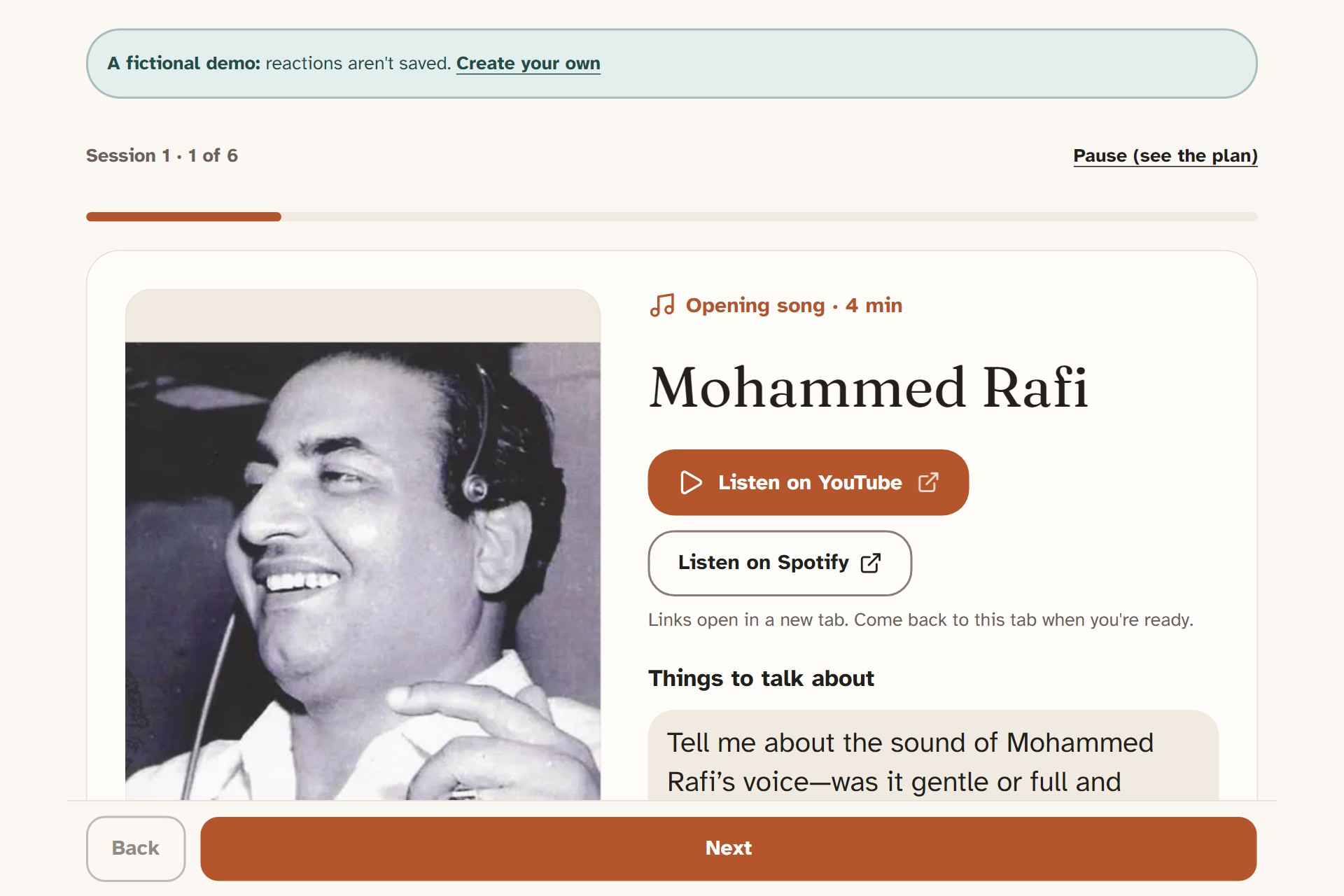
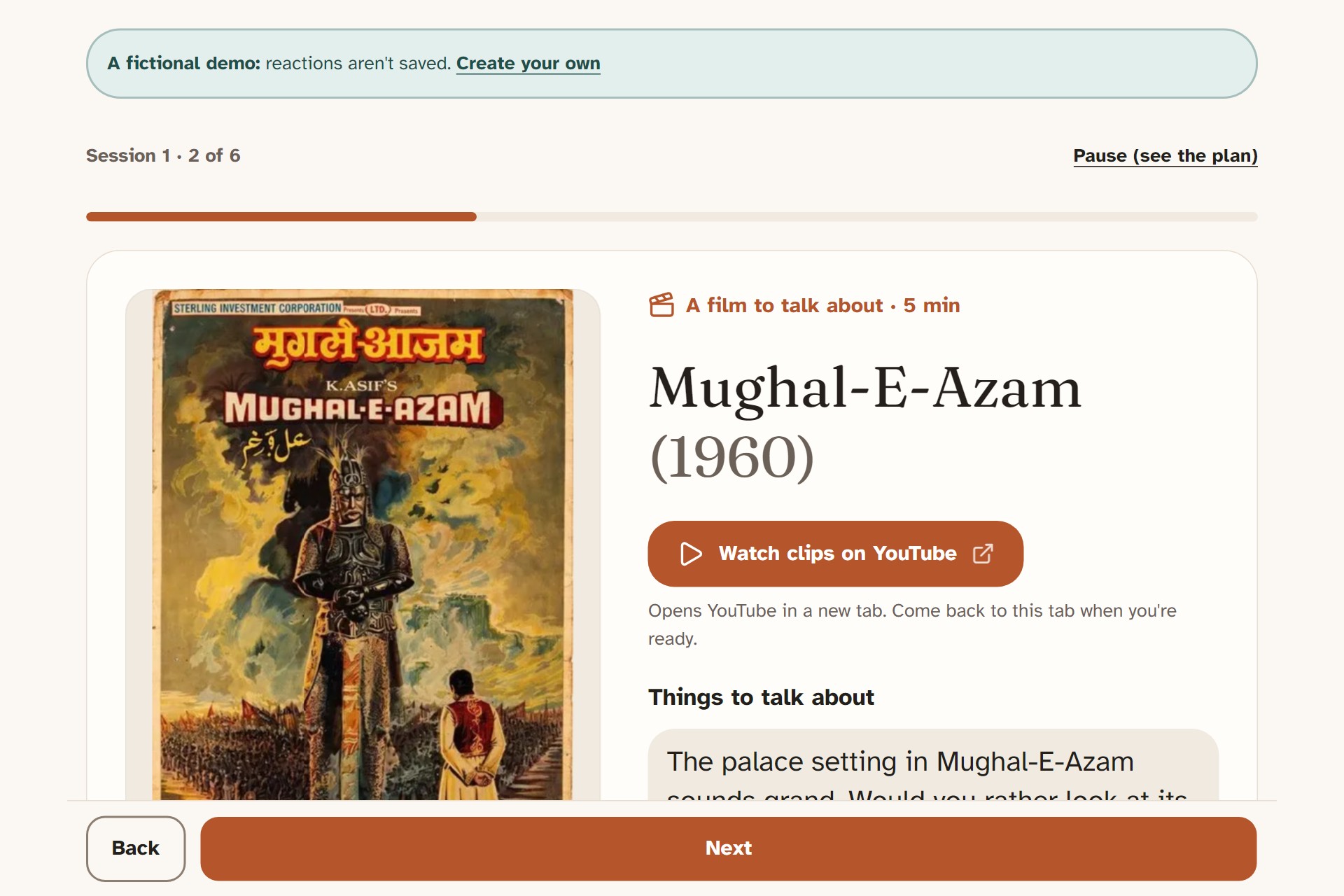
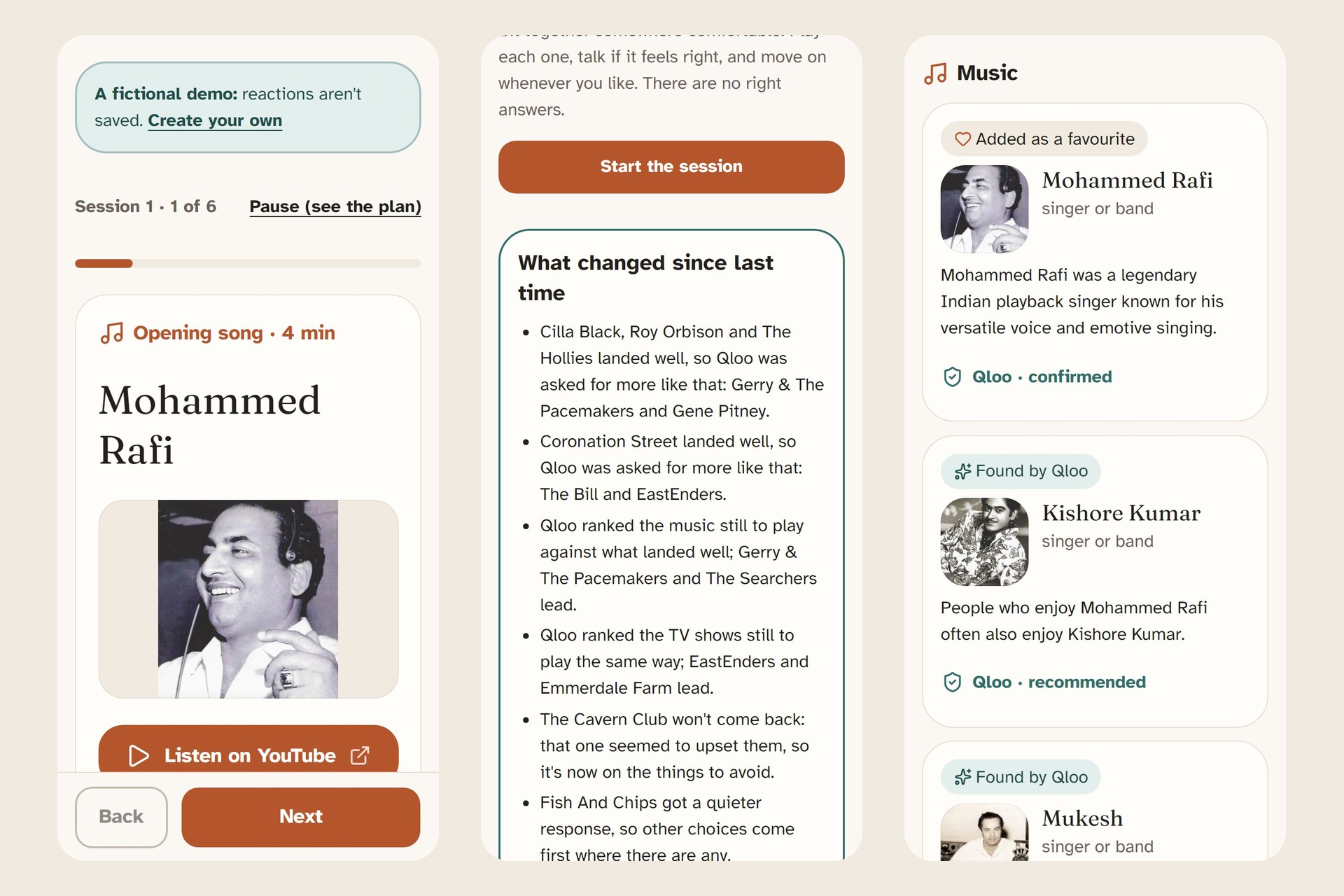
- It plans a 25-minute session (opening song, a film or TV memory, food, a place, "your choice", closing song): familiar favourites first, then what Qloo found, with gentle prompts written by the AI about each item in particular and checked in code (they invite, never test), and links to YouTube, Spotify or Maps. A one-item-at-a-time player shows the picture to look at together.
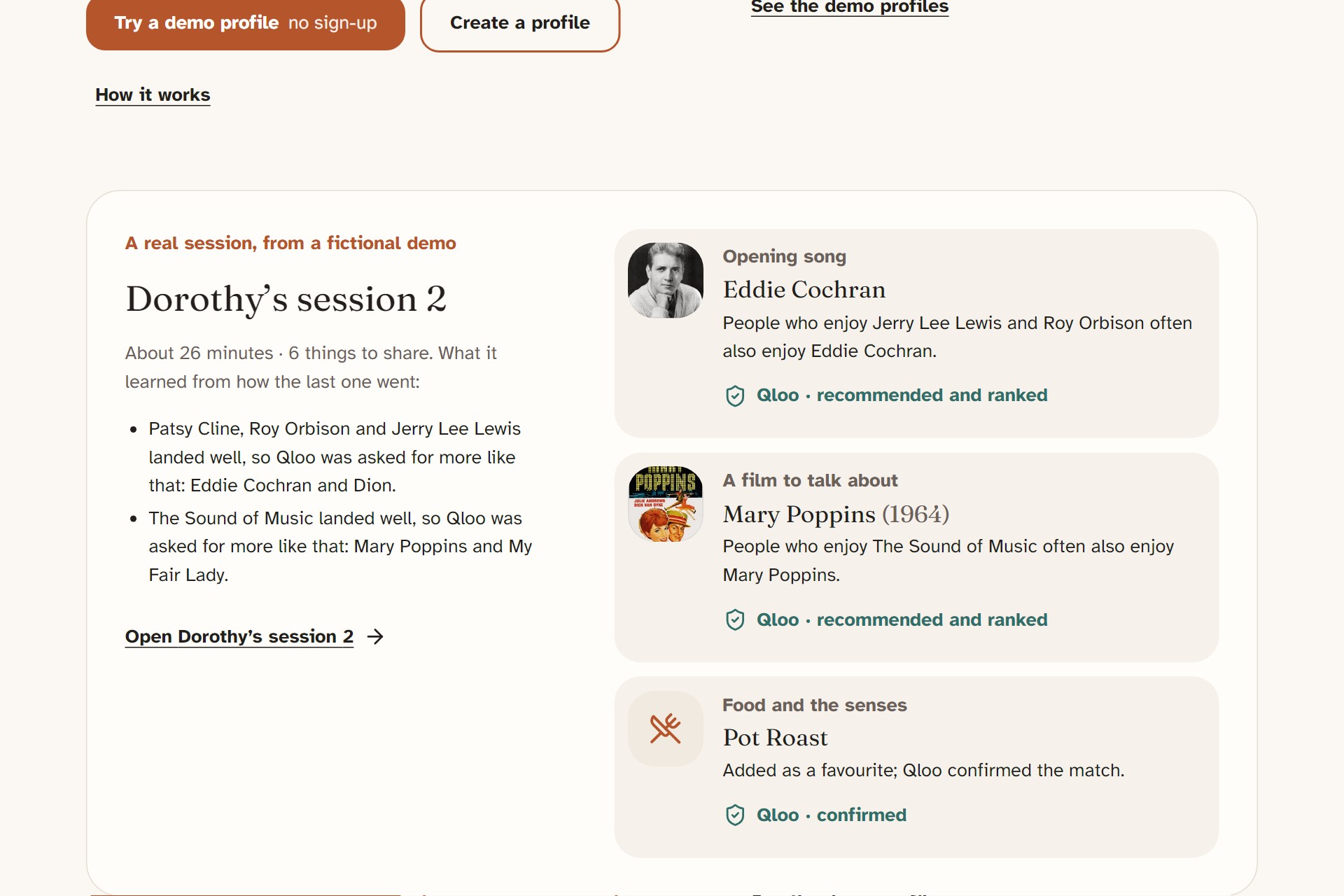
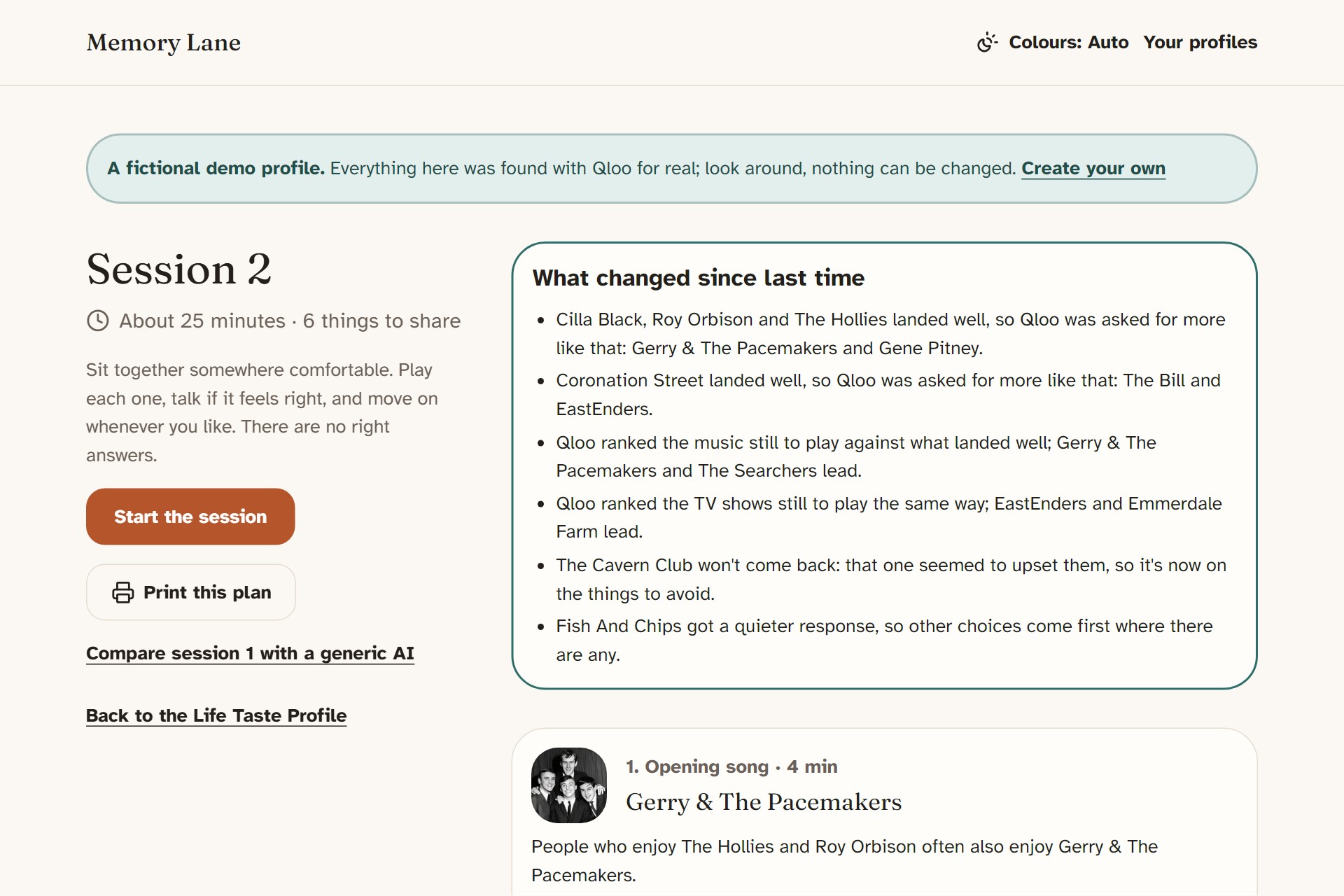
- The caregiver taps how each item landed. Next time, Qloo is asked for more like what they sang along to,
qloo_rankorders everything still to play against it, anything upsetting never returns, and the plan explains what changed.
How we built it
- Agent stages: Stage 1 match (
qloo_describe,qloo_find_tags, caregiver confirms) → Stage 2 Life Taste Profile (qloo_recommendper domain withexplain, places withfilter_location, food tags for town and region,qloo_rankto decide which AI proposals count) → Stage 3 session (template, prompts, links built in code) → Stage 4 learn (qloo_recommendmore like what landed,qloo_rankfor what comes next, learned avoid-list). - Qloo decides, code verifies: validators drop anything without Qloo evidence, anything on the avoid-list (reading Qloo's own descriptions, with related words for painful topics), wording that makes claims about the person, memory-test prompts, prompts two items share, and links outside allowed search pages.
- Qloo access: only through
qloo mcpfrom the agent service, behind a gateway with an allow-list, strict argument schemas, a personal-data guard, caching, budgets and an evidence record per call. Qloo's item pictures are allow-listed and served through the web app's image optimizer. - The AI model (OpenAI
gpt-6-luna, structured outputs) proposes names for gaps, writes prompts for items already chosen, and plays the "generic AI" in the comparison; it never decides what's in a session, and it only ever sees public facts. Its spend is capped per day, device and network. - Stack: Next.js 16 on Vercel, a Fastify agent in Docker on Render, Postgres on Neon, zod schemas shared by both. 200+ tests on synthetic Qloo envelopes and a fake AI; no Qloo data in the public repo.
Challenges we ran into
- Era without a decade filter. Qloo has no release-year filter in the MCP tools, so films and TV are kept to the person's years by
release_yearin code, singers are ordered by the decades Qloo's descriptions mention, andqloo_rankpushes later names down. - Asking the right question per domain. With all favourites at once, a UK persona got American dramas; asking TV with her TV favourite and singer brought British soaps, and asking places near Liverpool with her singers found the city's music landmarks.
- AI proposals need Qloo to decide. The model's TV suggestions for an Indian childhood were good ("Ramayan", "Mahabharat"), but Qloo knows several shows by those names; the agent picks each title's entity from the person's years before asking Qloo to rank them.
- Places and food near a town are mostly businesses. Only lasting landmarks are kept (not hotels, bars or new venues), and only named dishes (restaurant styles and "Punjabi"-style labels are left out); when nothing is left, the profile says so instead of guessing.
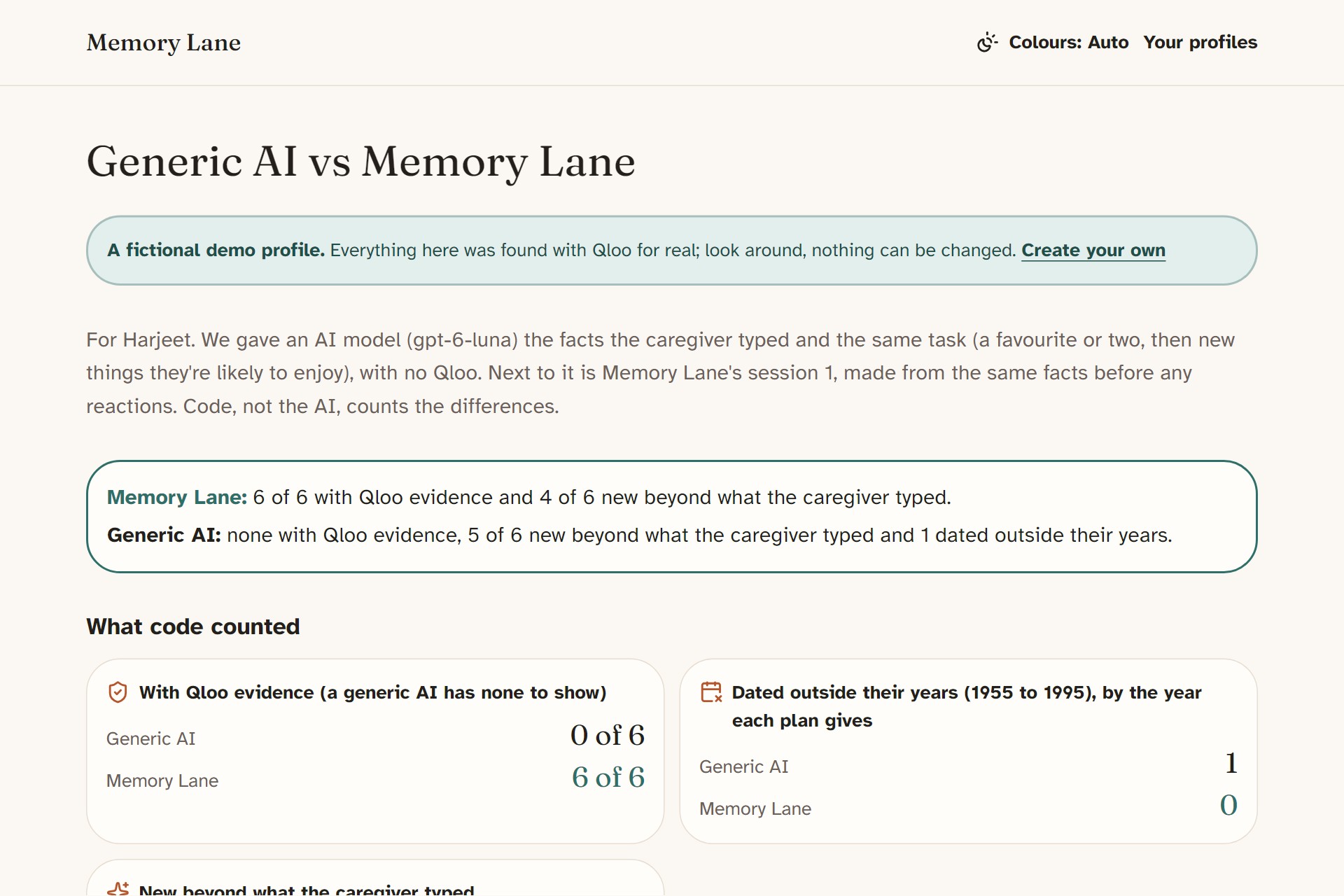
- A fair comparison. A first generic-AI baseline only handed back the favourites; asked for the same task with the same wording rules, it makes a reasonable plan, so the page now counts what really differs: evidence, years and checks.
Accomplishments that we're proud of
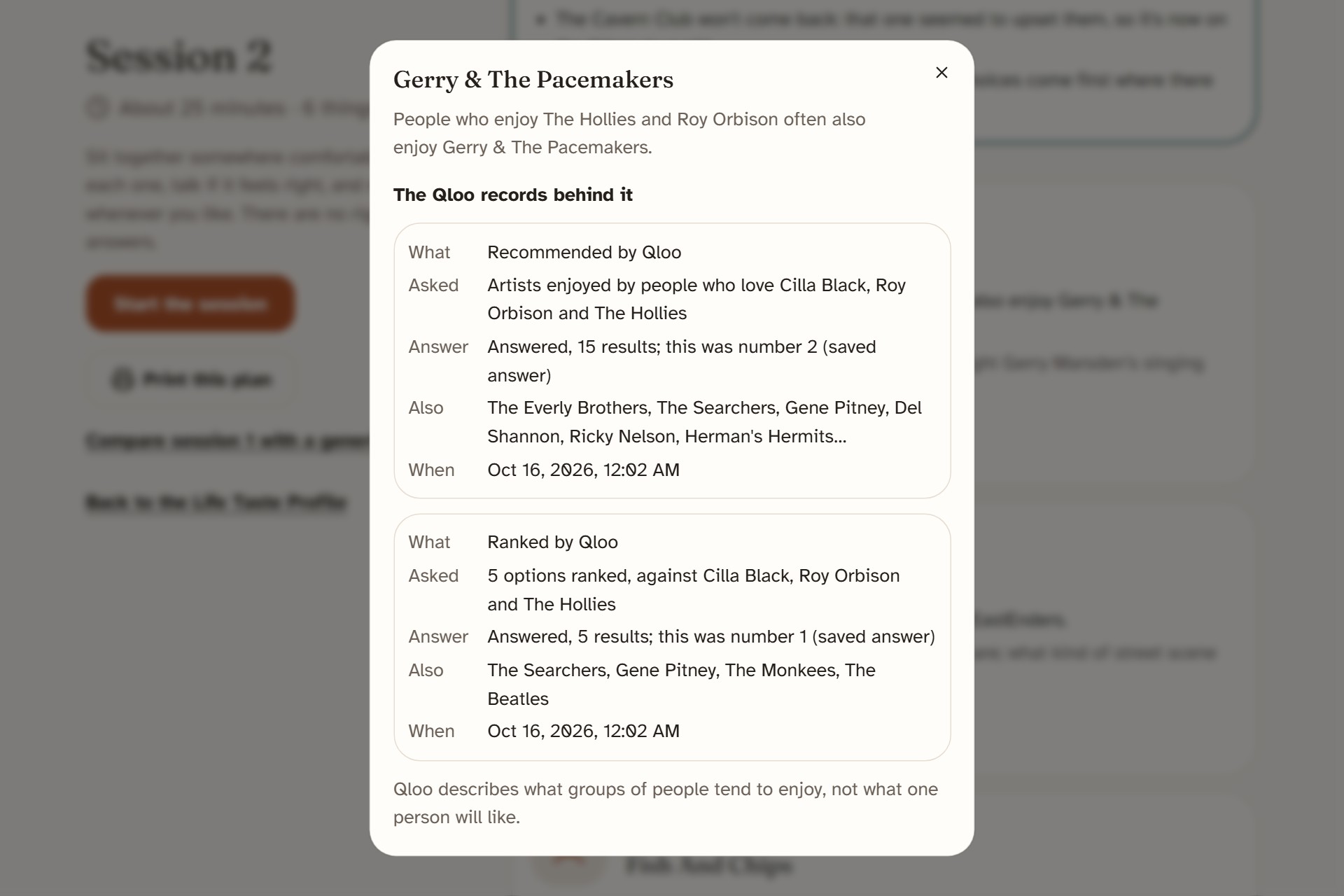
- Every item on every screen is grounded: one tap shows the exact Qloo calls (what was asked, with the favourites by name, what Qloo answered, and where this item sat in that answer), with Qloo's picture.
- A real learning loop where Qloo, not our code, decides the order of the next session.
- An honest comparison: given the same facts, task and wording rules, the same AI without Qloo makes a reasonable plan, but 0 of its 6 items can show why (Memory Lane: 6 of 6 with Qloo evidence), and nothing checks its years (one song for Harjeet predates his years). Counted in code, on the page.
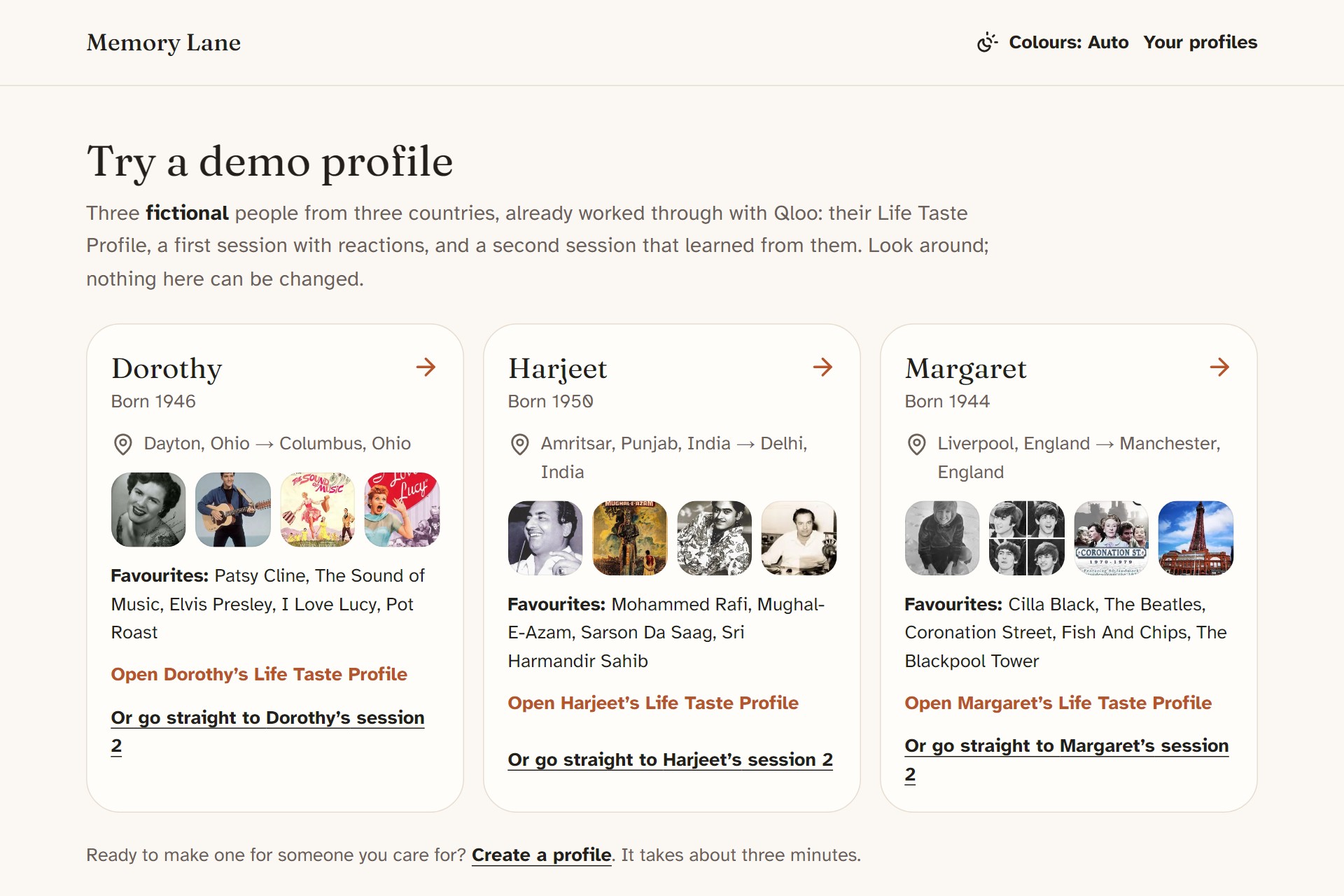
- "Try the learning yourself": judges can copy a demo persona, react, and watch session 2 planned live.
- Accessible screens for older caregivers: phone-first with large type and a one-handed player, wide layouts on laptops, a colour button (Auto / Light / Dark), honest states; Lighthouse accessibility 100.
Who it's for, and how it grows
Families caring for a parent at home, and care homes and day centres where activity coordinators run reminiscence for many residents. Families: a free tier with a few sessions a month, paid for unlimited sessions and sharing with siblings or carers. Care homes: a per-resident subscription with a coordinator view. Channels: dementia-care associations, care-home groups and memory cafés.
What we learned
Qloo is remarkably era- and culture-faithful when it is asked with the right signals for each domain; the agent's job is choosing those signals well, checking every answer, and being honest about gaps.
Known limitations
Qloo describes what groups enjoy, not what one person will like; "songs" are singers and bands (the link searches their songs from the decade they're remembered for); places aren't dated, so a few landmarks are newer; food is lighter than music; one model run per profile in the comparison. Reminiscence is an activity, not medical care.
What's next
Multilingual prompts (Hindi and Punjabi for the India persona), a coordinator view for care homes, accounts with device transfer, and pilots with care homes and memory cafés.
Testing instructions
Open https://memory-lane-sable-rho.vercel.app → Try a demo profile → pick a persona → Open session 2: what it learned from session 1 → read "What changed since last time" and tap a green "Qloo ·" chip to see the evidence. Then open Generic AI vs Memory Lane on the profile. To run the learning loop yourself: Try the learning yourself → play session 1 and tap reactions → Finish → Plan the next session. To test the full agent: Create a profile with 2–3 favourites. If Qloo's shared quota is used up, the app says so honestly and the demo personas still work.
Built With
- docker
- drizzle-orm
- fastify
- neon
- next.js
- node.js
- openai
- postgresql
- qloo
- qloo-mcp
- react
- render
- tailwindcss
- typescript
- vercel
- vitest
- zod

Log in or sign up for Devpost to join the conversation.